
FROM INVENTION TO MARKET: THE POW BANDAGES STORY WITH CHRIS ABBOUD | E088
EPISODE OVERVIEW
How does an everyday problem become a new product? Chris Abboud, mechanical engineer and co-founder of POW Bandages (Pressure on Wounds), joins George Stroumboulis to discuss the path from idea to invention. They explore prototypes, patents, manufacturing and the work of building a business around a practical solution.
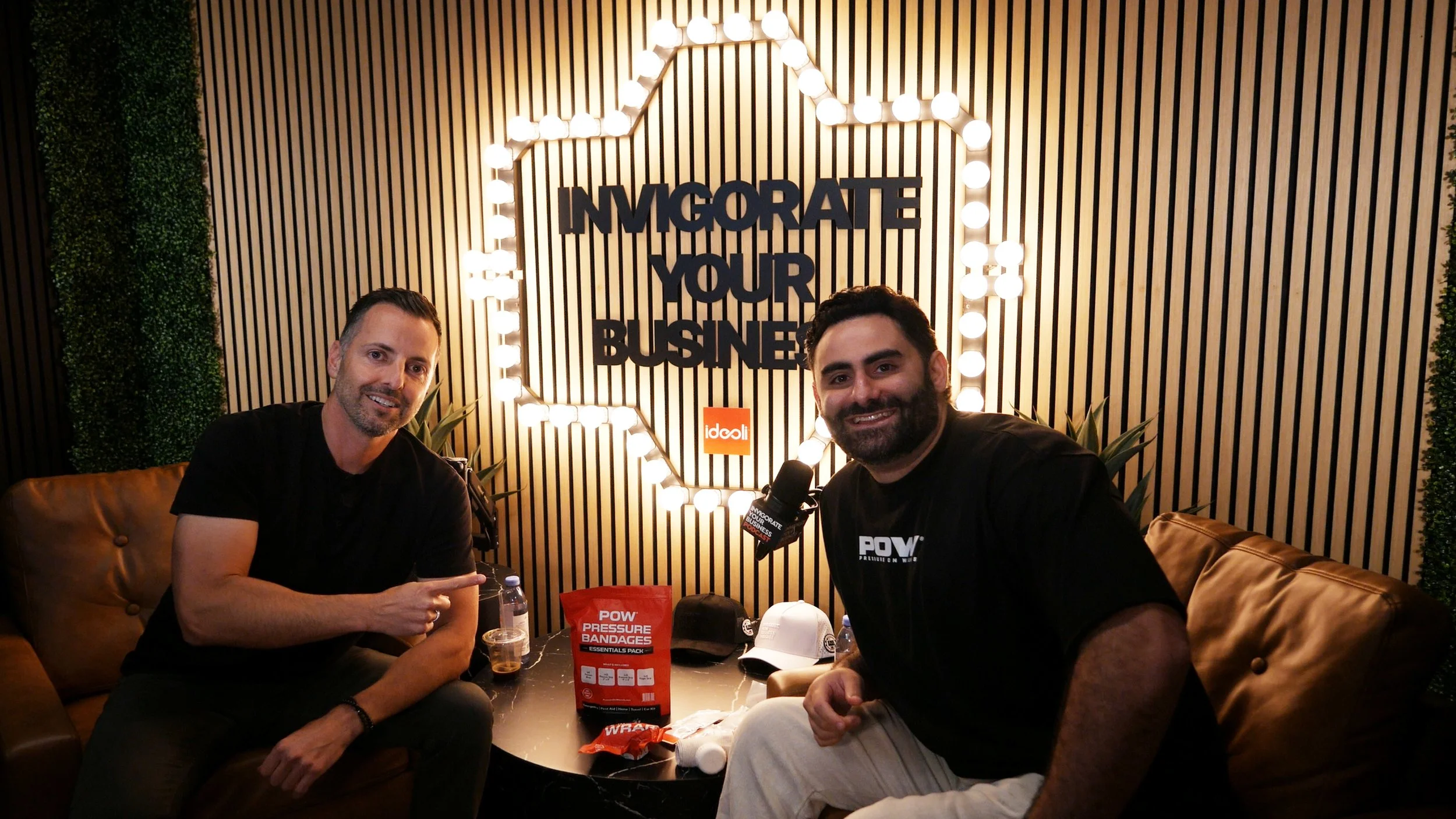
George Stroumboulis with Chris Abboud and POW Bandages in the podcast studio.
ABOUT THE GUEST
Chris Abboud is a mechanical engineer, entrepreneur, and the inventor and co-founder of POW Bandages (Pressure on Wounds), a product designed to apply targeted pressure directly to a wound.
His entrepreneurial journey began with a practical challenge faced by healthcare professionals. Drawing on his engineering background, Chris turned that problem into an idea and worked through prototypes, patents, manufacturing and the challenge of bringing a new product to market.
His story explores the intersection of engineering and entrepreneurship: recognizing an overlooked opportunity, developing a practical solution and building a business around it.
POW Bandages Website: Visit the website
POW Bandages Products: Explore the products
Instagram: Follow POW Bandages
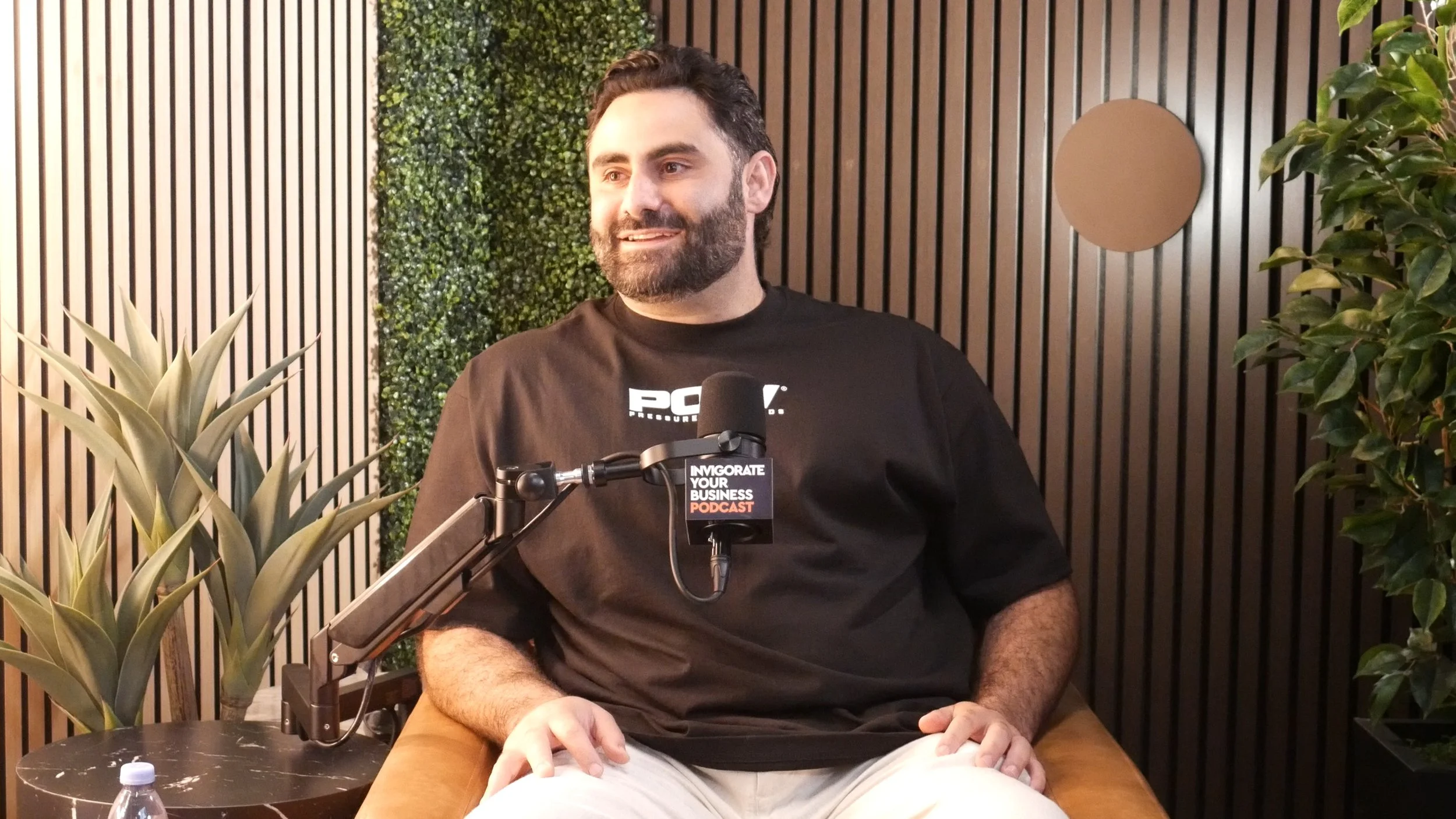
Chris Abboud, inventor and co-founder of POW Bandages.
INSIDE THIS EPISODE
From invention to market: the POW Bandages story.
Recognizing a practical problem and finding a product opportunity.
Applying mechanical engineering to invention and prototyping.
Protecting an idea through patents and intellectual property.
Finding manufacturing partners and managing product development.
Building customer demand, distribution and a business around an invention.
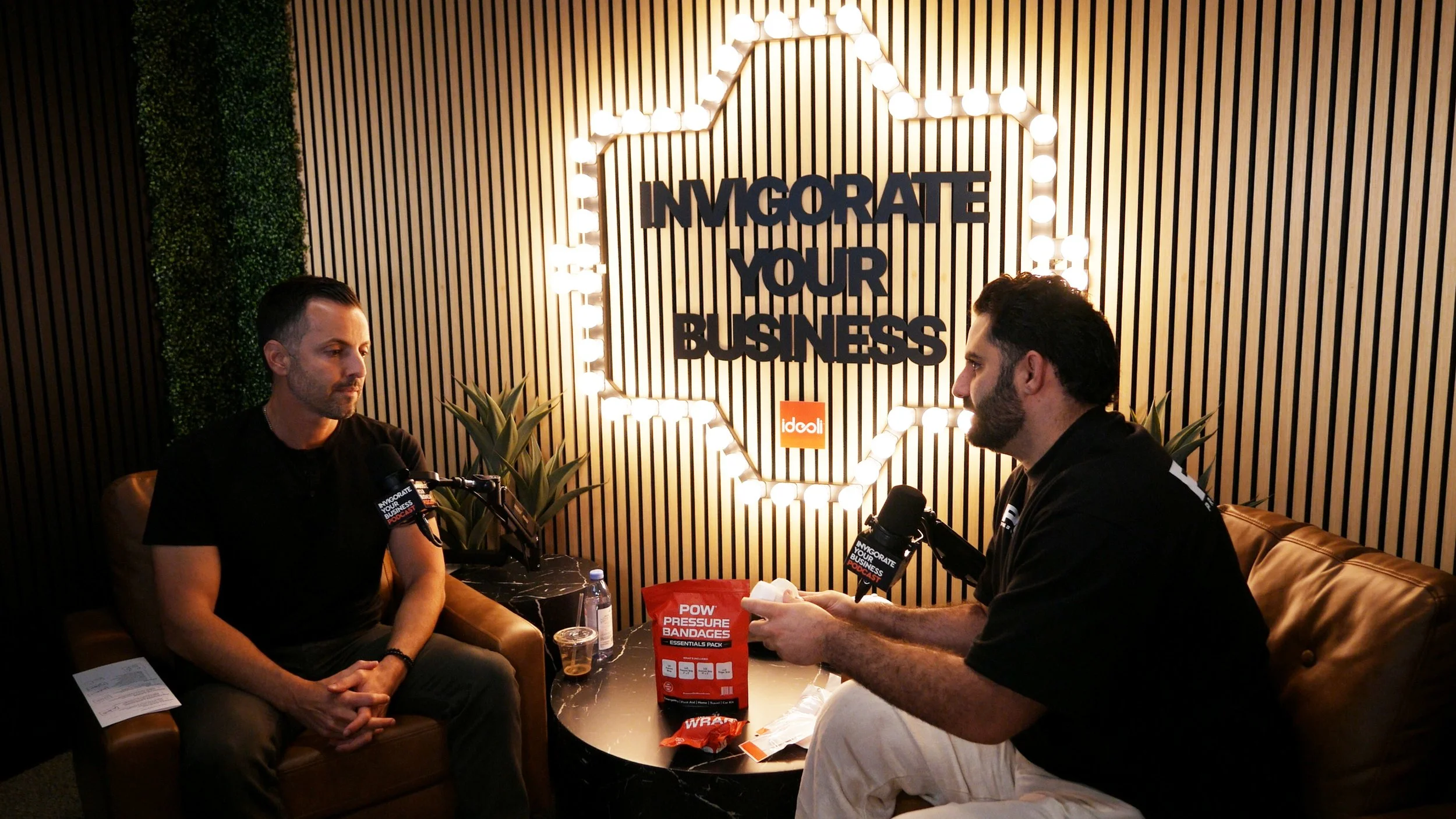
Chris Abboud demonstrates a POW Bandages product during his conversation with George Stroumboulis.
EPISODE QUESTIONS & TAKEAWAYS
HOW DID THE IDEA FOR POW BANDAGES BEGIN?
The idea grew from a practical challenge described by healthcare professionals. Chris applied his mechanical engineering background to developing a product designed to deliver targeted pressure to a wound. The conversation follows the work of turning that idea into a functioning product.
WHAT DOES POW STAND FOR?
POW stands for Pressure on Wounds. The name reflects the product's focus on applying targeted pressure directly to a wound.
WHAT CAN ENTREPRENEURS LEARN FROM CHRIS'S JOURNEY?
The discussion explores recognizing an overlooked problem, developing prototypes, protecting an invention, working through manufacturing and bringing a new product to market. These topics connect the engineering process with the practical work of building a business.
EARLIER FOUNDERS INTERVIEW
Watch the previous POW Bandages founders interview
HOST INTRODUCTION
Today, I'm joined by an entrepreneur and inventor who proves that some of the most innovative businesses begin by solving a simple, everyday problem.
Chris Abboud is a mechanical engineer, entrepreneur, and the inventor and co-founder behind POW Bandages, short for Pressure on Wounds, an innovative medical product designed to apply targeted pressure directly to a wound.
What began as a conversation about a challenge faced by healthcare professionals turned into an entrepreneurial journey involving engineering, product development, prototypes, patents, manufacturing, and the challenge of bringing a completely new product to market.
Chris took his engineering background and applied it to an established industry, challenging conventional thinking about how bandages work and creating a practical solution with real-world applications.
Today, we're going behind the scenes of invention and entrepreneurship. How do you recognize an opportunity others overlook? How do you turn an idea into a functioning product? What does it take to protect your invention, manufacture it, and ultimately build a business around it?
Chris, welcome to Invigorate Your Business. I'm excited to hear your story.
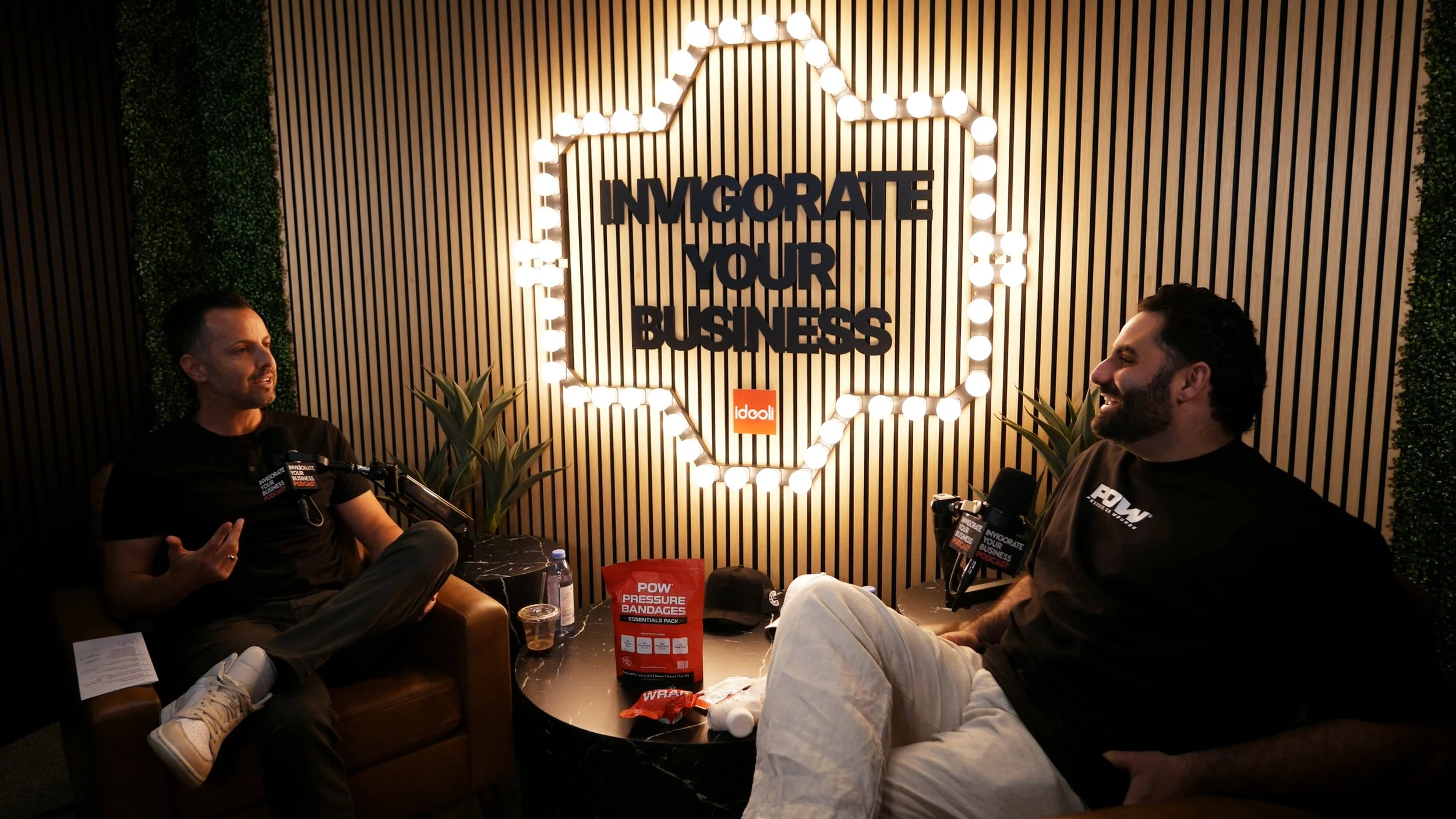
George Stroumboulis and Chris Abboud discuss invention, engineering and entrepreneurship.
ΠΕΡΙΓΡΑΦΗ ΕΠΕΙΣΟΔΙΟΥ
📍 Στο επεισόδιο, ο Γιώργος Στρουμπούλης φιλοξενεί τον Κρις Αμπούντ (Chris Abboud), μηχανολόγο μηχανικό, εφευρέτη και επιχειρηματία πίσω από τα POW Bandages (Pressure on Wounds), έναν καινοτόμο επίδεσμο σχεδιασμένο να ασκεί στοχευμένη πίεση σε τραύματα. Συζητούν πώς ένα πραγματικό πρόβλημα στον χώρο της υγείας οδήγησε στη δημιουργία μιας κατοχυρωμένης εφεύρεσης, τις προκλήσεις της ανάπτυξης πρωτοτύπων, της παραγωγής, των διπλωμάτων ευρεσιτεχνίας και της εμπορικής αξιοποίησης ενός νέου προϊόντος. Ο Κρις μοιράζεται τα επιχειρηματικά μαθήματα που αποκόμισε και εξηγεί τι χρειάζεται για να μετατρέψει κανείς μια απλή ιδέα σε μια πραγματική επιχείρηση.
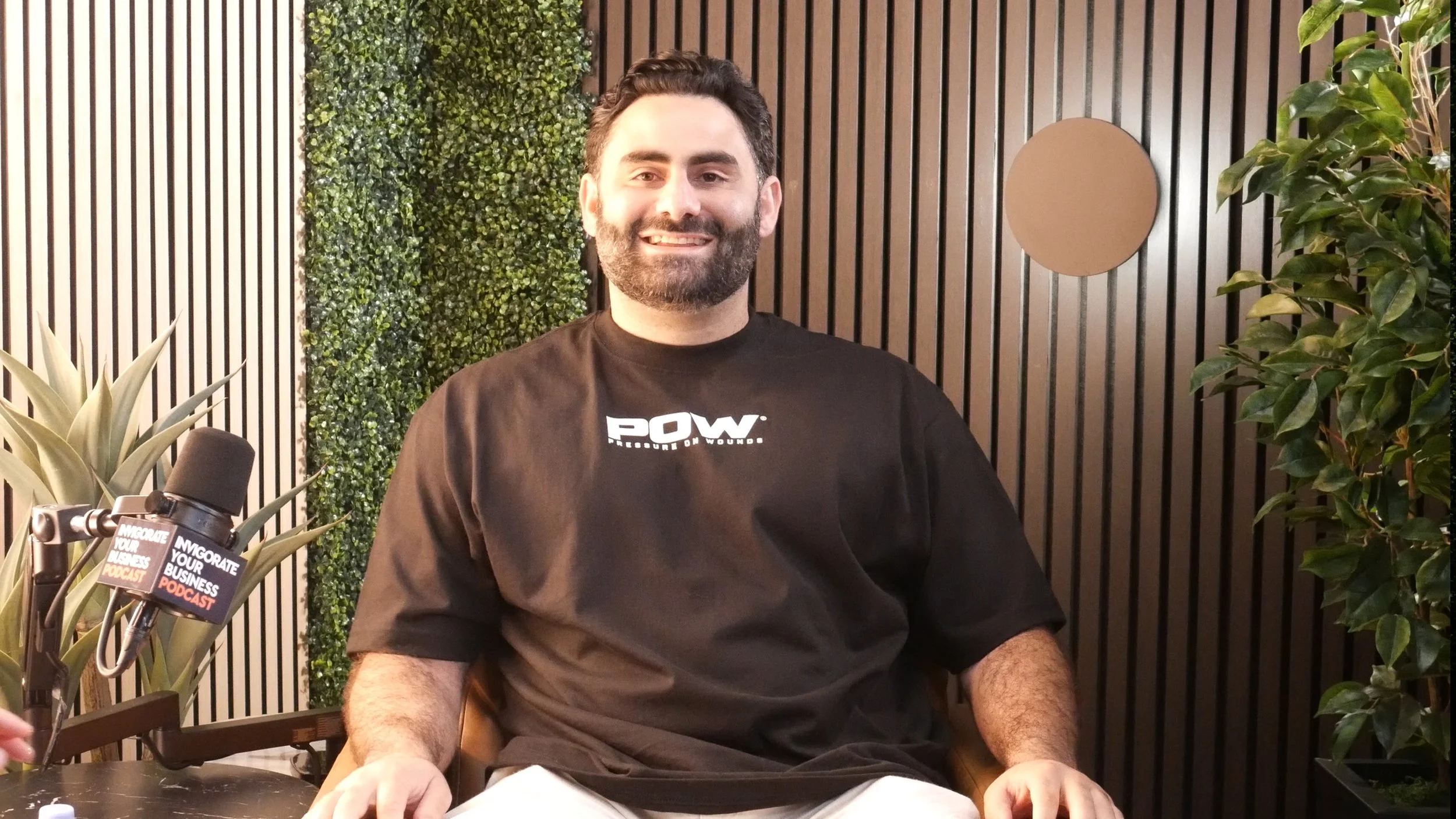
Chris Abboud in the Invigorate Your Business podcast studio.
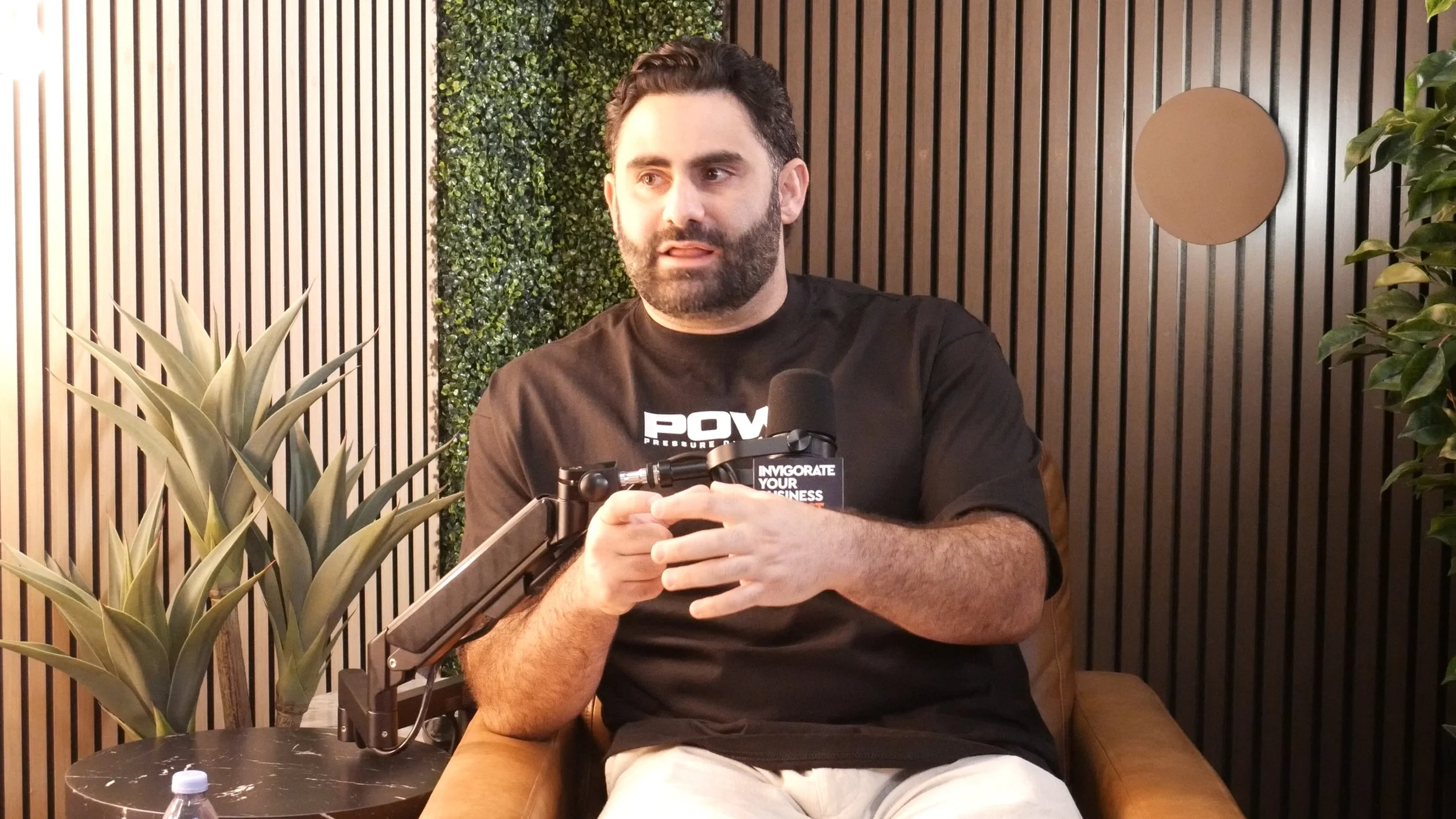
Chris Abboud explains the story behind POW Bandages.
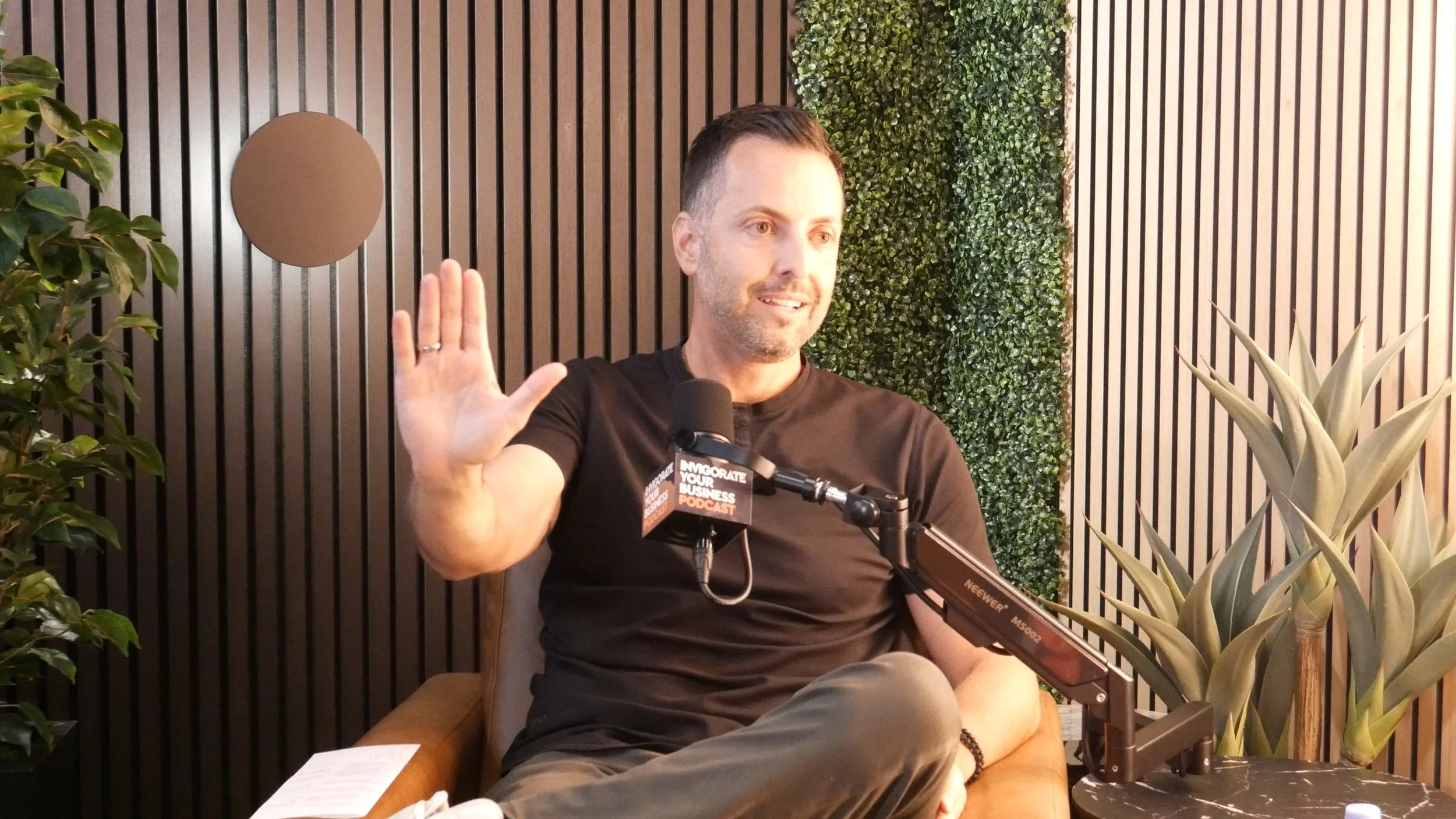
George Stroumboulis hosting the conversation with Chris Abboud.
EPISODE CHAPTERS
0:00 WELCOME AND WHAT YOU’LL LEARN
3:02 ENGINEERING BACKGROUND AND MANUFACTURING EXPOSURE
6:05 PROTOTYPING TO MARKET WHY MOST IDEAS STALL
11:00 HOW POW WAS BORN FROM DIALYSIS
13:20 PRESSURE DOME DEMO AND BANDAGE SIZES
19:31 FINDING THE RIGHT BUYER AND EDUCATION
25:50 OVERSEAS MANUFACTURING AND INVENTORY PLANNING
30:04 OVERSEAS MANUFACTURING TARIFFS AND COMPLIANCE
37:42 PATENTS TRADEMARKS AND COPYCAT REALITY
44:17 SUCCESS FAITH AND THE MISSION
45:15 AI TRADE SHOWS AND SCALING SALES
55:23 CLOSING AND STAY INVIGORATED
Reinventing the Bandage with Chris Abboud | E088
FULL SHOW TRANSCRIPT
Transcript edited for clarity.
WELCOME AND WHAT YOU’LL LEARN
GEORGE STROUMBOULIS 0:00
Welcome to another episode of Invigorate Your Business with George Stroumboulis. On today's episode, I get to sit down with inventor and entrepreneur Chris Abboud. Chris is the founder of Pressure on Wounds, also known as POW. He is revolutionizing an industry that we've known for decades to have very little innovation in. It's the bandage industry.
We're going to talk about what it takes to start a new idea, a new business, bring a product to market, the engineering, the manufacturing overseas, how to market it, how to spend limited dollars to expand your brand globally. So enjoy this episode starting now. My name is George Stroumboulis, and I'm extremely passionate about traveling the world, meeting new people, and learning about new businesses. Join me as I sit down with other entrepreneurs to learn about their journeys. This episode of Invigorate Your Business starts now.
Okay, so we're going to start this off today. I am sitting with a very creative guy who understands how things are made, how things work. I'm going to start off by reading an intro and then we're going to jump into this. This is going to be a fun podcast because it's a world that I love about having an idea, figuring out how it works, legally protecting it, going overseas, manufacturing partners, bringing it to market. Chris does everything.
So today I'm joined by an inventor who proves that some of the most innovative businesses begin by solving a simple everyday problem. Chris Abboud is a mechanical engineer, entrepreneur, and the inventor and co-founder of POW Bandages, short for pressure on wounds, an innovative medical product designed to apply targeted pressure directly to a wound.
What began as a conversation about a challenge faced by healthcare professionals turned into an entrepreneurial journey involving engineering, product development, prototypes, patents, manufacturing, and the challenge of bringing a completely new product to market. Chris took his engineering background and applied it to an established industry, challenging conventional thinking about how bandages work and creating a practical solution with real-world applications. Today we're going behind the scenes of invention and entrepreneurship.
How do you recognize an opportunity others overlook? How do you turn an idea into a functioning product? What does it take to protect your invention, manufacture it, and ultimately build a business around it? Chris, welcome to the show. Thank you, George. Awesome, man. This is did we capture that? So we're good. We're good. You can use that in your marketing now moving forward.
CHRIS ABBOUD 2:37
Thank you, man.
GEORGE STROUMBOULIS 2:38
So Chris, we've known each other for years through social gatherings, mostly your family's, you know, different parties and events and everything. And I remember my brother-in-law first told me, he's like, I gotta introduce you to Chris. He's he does stuff overseas and he invents stuff and he builds it. I remember when we started chatting, it was just naturally we always talked about business. So I'm glad we're sitting down today. Yeah, me too, man.
ENGINEERING BACKGROUND AND MANUFACTURING EXPOSURE
GEORGE STROUMBOULIS 3:02
Awesome. So tell me about yourself, tell me about your background, like what did you study? Like what, and then we'll get into the business side.
CHRIS ABBOUD 3:08
Yeah, I've always been an entrepreneur and took after my dad. He's a serial entrepreneur, and he's always setting up businesses, doing real estate and stuff. So I always followed him around. And when I grew up, he always wanted us to do big things, and I wanted to do big things also. But growing up, Shark Tank, I love that show. I love the stories, the powerful emotions, the new ideas, trying to make a change. So that show really inspired me to do something to make my own products and stuff.
So that's kind of I from an early age I wanted to make products and try to be an inventor.
GEORGE STROUMBOULIS 3:41
Yep.
CHRIS ABBOUD 3:42
And so I was originally gonna do business in school, but I decided, you know, I don't want to just I could I could learn business by doing business, so I need I need to actually learn how to make products because I need to be able to invent by myself. Engineering costs are expensive. So exactly. So if we did mechanical engineering [unclear] and from there I learned I worked in factories, I worked in a lot of manufacturing settings.
GEORGE STROUMBOULIS 4:06
Over overseas domestically, like where were you domestically.
CHRIS ABBOUD 4:09
Domestically, yep. I worked at a factory called TMX in Santa Ana. And I that was like my first exposure to you know mass production and also quality control and you know 3D printing and a bunch of everything like that. And we were doing product projects like for SpaceX. Oh wow with like really high end high-end stuff, but they were also making hookahs, too. Okay, yeah. So that kind of started off another discount, family discount, right? Yeah, they were they were manufacturing everything. So I got to learn a lot there.
Just the different types of machining processes, like what what it takes to make a product.
GEORGE STROUMBOULIS 4:44
Yep. So different materials, like it's it's a whole science to it, right? Like just types of materials, all that stuff.
CHRIS ABBOUD 4:50
Yeah, yeah. Yeah, no, I mean when you want to man make something, it's it's you have to decide, you know, materials, manufacturing processes, and all that stuff. So I got like I have a lot of exposure to different manufacturing processes, which kind of helped me with this, because this is textiles, which I'll like get into it. Yep. It's different than some of the stuff that I started with. But it's all it's all the same.
So I started just building up my experience and I and I went from that and then I started tinkering with 3D printing and design on my own. Okay and just creating different ideas like and different inventions at my house. And whether they worked or not, I you know I just wanted to create and stuff.
GEORGE STROUMBOULIS 5:25
So like what what type of stuff were you tinkering with? Like stuff around the kitchen, like what what were some stuff there was dude, there's so many.
CHRIS ABBOUD 5:32
I mean, I would make brackets. I would make at one point I we I don't smoke hookah anymore, but at the time I was smoking hookah, I made I made what's it called? Instead of using charcoal, I made an electric burner so to replace charcoal.
GEORGE STROUMBOULIS 5:45
You were ahead of your time with that, yeah.
CHRIS ABBOUD 5:48
Like before the e-cigs and stuff, so so just anything I anything I was just trying to tinker with with anything. So but I was also just focused on my school and my career as well. So when I was I was really drawn toward manufacturing in general. So when I when I graduated, I worked
PROTOTYPING TO MARKET WHY MOST IDEAS STALL
CHRIS ABBOUD 6:05
At I worked at a few companies, but I got a lot into injection molding. Yep. Also the CNC manufacturing. So injection molding is like plastics. Yep. So I got that exposure. I worked on there's a product called New Face. I worked on that product, it's like it's like a dermatology product where it like massages the skin, like removes wrinkles. Like laser style or it's it uses like vibration to remove wrinkles.
So I yeah, I worked on just different products and then I started my own firm where I was you know, people come to me with ideas and I would build it from you know idea to manufacturing and then launch.
GEORGE STROUMBOULIS 6:39
So so that firm when you launched that, it was you have a product idea, come to me, I'll help work the engineering side. Does it make sense? How do we build it? And you would help them find the factories, production, bring it over, like you would start to finish. Yeah, exactly. Okay.
CHRIS ABBOUD 6:55
But I really specialized in what's it called? I had manufacturing experience, but I really specialized in proof of concept prototyping and creating like a really realistic prototype, which is the most important part. You want to be able to prototype your product first so you know it works, people see how it looks, do they like it, they can feel touch it, and you know that is like a really big you know step. And then once you do that, once you have a product that works and looks good, then you can start talking about manufacturing. Yes.
So it just kind of transitions like that. So I mean, I'm sure you know where the lighting I think one time we talked about prototyping.
GEORGE STROUMBOULIS 7:29
We talked, and you were asking such detailed technical questions, and I'm like, oh wow, okay, this guy's an expert in this space. But one of the famous quotes from Elon Musk is yeah, yeah, we made the prototype, now we got to figure out the manufacturing, right? Like to you can do the prototype, but to do that in mass production is a whole other set of skill sets and everything, right? Like taking it there. Did you see from your experience how many of the prototypes you worked on for clients that actually they brought to market?
CHRIS ABBOUD 7:56
Not that many, but I mean, I yeah, not that many because it it takes so much effort and money. So even if you get past the prototyping phase, there's a there's a massive investment for tooling costs and for to fund your inventory.
GEORGE STROUMBOULIS 8:09
Yes.
CHRIS ABBOUD 8:10
And then once you know do that, then you have to get ready for launch, you have to do product photography, you have to do the website, you have to you have to do marketing, ads, all that stuff, you know, it's it could be you know almost a hundred thousand dollars to get you to that spot. So do people calculate the numbers before they get to there? Maybe not. Then they realize you know it's the numbers don't make sense.
GEORGE STROUMBOULIS 8:33
Yeah. But it's great having a firm like that where it's like, hey, for a few grand, I can get you to here. Yeah. Right. And then from there you gotta evaluate plus the passion. How many people want to start stuff, have good intentions, but don't actually follow through. Yeah.
CHRIS ABBOUD 8:46
Yeah, you could yeah, you could always make the numbers, you know, work at on some level. But yeah, you want to get to at least do I even have something that's even works or is even useful.
GEORGE STROUMBOULIS 8:55
Yeah, absolutely. So before we get so it's it's not pow, it's POW. Is it how do you pronounce it? We say pow. Pow, okay, good. So pressure on wounds. But going back to the Shark Tank, I laugh because it's like, you know, immigrant families, immigrant families. I remember watching Shark Tank too with my dad. And like if you had to go with like the reaction of the parents watching Shark Tank, and like, that's a stupid idea, or this like it was so comical to me seeing that, even to this day with my father-in-law.
This is bullshit as they're sitting on the couch in their underwear eating chips, you know. So, anyways, I always gotta they should do a behind-the-scenes Shark Tank just to show the reaction. Yeah. So, so did you always have a desire? Like, this seems like it's a perfect avenue to go on Shark Tank. But before we get into that, what is POW? Like, what is it?
CHRIS ABBOUD 9:43
So, POW is it there it stands for pressure on wounds, and that's what our products do. They put pressure on the wound. And pressure matters in first aid, it's one of the oldest ways and most effective ways to stop bleeding, applying pressure to a wound. And it's a life-saving technique. So, but applying pressure manually with your hands, there's fatigue, there is inconsistency in how much pressure you're being applied, and so you want to have that consistent pressure, and you want to be able to have it all the way up to you get to the hospital.
So our bandage is they put pressure directly on the wound until you get to where you need to go.
GEORGE STROUMBOULIS 10:16
Yeah. So so what is it I know you're not a doctor, I'm definitely not a doctor, but like when there's a cut, automatically our body tries to clot it to stop it. Yeah. And that's a slower process, obviously, depending on the size of the wound.
CHRIS ABBOUD 10:30
Your body wants to clot, but the blood's flowing out. So it doesn't have a chance for the platelets to collect to collect in one area. So by you putting pressure on the wound, you're stopping the blood flow. You're putting, you're slowing down the you're putting you're stopping the blood flow and you're slowing it down so that the platelets have a chance to start collecting in one area. Then that's when the clotting happens. So it takes a little time to for the clot to form.
So that pressure gives it that time to for the blood to stop and then you to form that clot.
GEORGE STROUMBOULIS 10:57
Yeah. So where did this idea come from?
HOW POW WAS BORN FROM DIALYSIS
GEORGE STROUMBOULIS 11:00
You did you wake up one day and like, hey man, I'm I'm gonna revolutionize how bandages are are hitting the market?
CHRIS ABBOUD 11:05
No, so the we met a dialysis nurse, me and my dad at the Cheesecake Factory.
GEORGE STROUMBOULIS 11:10
Dialysis nurse, Cheesecake Factory.
CHRIS ABBOUD 11:12
Okay, this sounds my dad's always meeting people all the time everywhere we go. He's he's a social butterfly. So he we give him we used to give him crap for it, but he's I mean he brings so many opportunities to our family and to and to me. So immediately when we when when we started talking and my dad saw the idea. He worked as a phlebotomist, so he had some exposure to blood draws and stuff, and how some people have a difficult time forming a clot, so you need to put a lot of pressure.
So when he heard that this dialysis nurse is sitting there, each patient, dialysis patients, they go in for hours getting their their tra their treatment, they and the needle that they put into the artery is really big, so it could be very life-threatening because they can't form a clot, they and they're older, and so they're minimum they hold for 15 minutes, but it in serious cases it could be 30 minutes an hour if it's not ble if it's not stopping, they call the ambulance and then they send them to the hospital and they'll even put a tourniquet on them to stop the blood flow.
Because they could you could die from an arterial bleed. So when he told us the idea, it was it was an amazing idea, but it was a really you know raw idea. It was every everybody in the industry knows I didn't know, but everybody in that world knows pressure works. So let's say in a military scenario, if somebody has a bleed, they'll put a tennis ball, they'll put a rock, and then they'll wrap.
GEORGE STROUMBOULIS 12:31
Oh, really?
CHRIS ABBOUD 12:31
Yeah, they'll put anything to put something on top of the wound and then to create that pressure.
GEORGE STROUMBOULIS 12:36
Yeah. Which like little kids, we go and the kids get a little shot, right? They're putting a little cotton ball and they're trying to make it work. So you're finishing your chicken parm at the Cheesecake Factory, and then what it goes off, like, hey, you know what? I think we could design something here.
CHRIS ABBOUD 12:49
Yeah, no, I he had the idea, so then we then my dad was like, Oh, I I know the perfect engineer to do it. So that yeah, then from there, I just I just I thought it was an amazing idea too. Yeah by when I heard it and started making prototypes, and I would give it to him and then he would take it back to the clinic and try them.
GEORGE STROUMBOULIS 13:09
Come on. And so did you do a market analysis at that point, like while you were getting into it, like hey, what's on the market, what's similar? Yeah, you know what I mean? Like, how do you how do you go about the creative process?
CHRIS ABBOUD 13:19
No, I just
PRESSURE DOME DEMO AND BANDAGE SIZES
CHRIS ABBOUD 13:20
Was focusing on making a product that would work at at first.
GEORGE STROUMBOULIS 13:24
Okay, yes. And trying to see so like you have like an incredible kit here. The branding is just so clean, right? Like it's just nice branding as well. Walk us through this. Like what what's your pitch, you know, the sizes, is it paper cut all the way up to shit. I just got shot. Yeah, you know?
CHRIS ABBOUD 13:41
So pressure matters where anytime there's any type of bleeding, depending on if it's a small wound up to a large wound. So for a large wound, it could be life-threatening. Yeah, but for a small wound, it could it could also be, you know, it's not it, it's not life-threatening, but it's an inconvenience. You're gushing out blood and you want it to stop, so you could either get to the emergency room to get stitches or to just you know continue cooking that day.
So we have different sizes available, and they all revolve around this patented pressure dome, and we have the different sizes for the different types of wounds. So this is our largest one that goes up to two inches.
GEORGE STROUMBOULIS 14:16
So for the listeners, if you're not watching this on video, we're we're gonna put up the links as well to see it.
CHRIS ABBOUD 14:21
Yeah, so this is this is the largest one, so that's two inches. Yeah, two inches. Okay, and this is I mean, this is perfect for a lot of different cuts, and but it could be like I was telling you, it's not just for gunshot wounds, it's also for if you get if you cut yourself a glass or you or you get punctured by something, right? You put this on and it will cover most wounds.
GEORGE STROUMBOULIS 14:40
And it'll cover that until you get your medical attention and go on.
CHRIS ABBOUD 14:44
Yeah.
GEORGE STROUMBOULIS 14:44
So so how easy do you put this on? Like, is it I feel like that's a serious accident, right?
CHRIS ABBOUD 14:50
Yeah, yeah, for sure. It's a serious accident. So so like is someone expected to put that on themselves or yeah, so the I mean it's pretty easy to put on, like I throw it throw it on.
GEORGE STROUMBOULIS 14:59
So all right, I just got shot by a nine millimeter, right?
CHRIS ABBOUD 15:03
All right. So wherever the wound is, you place it directly on, and then you just start wrapping. So we designed it so that anybody can do it a ten-year-old even. You just put it on like a normal wrap. If you want more pressure, you just like increase the tension of the wrap.
GEORGE STROUMBOULIS 15:26
Nothing's getting out of here. Are you kidding me? Oh, yeah, yeah. You see that right there. So you're freaking out, you have this there. So who who's the ideal person? Like what what what are the channels you're gonna try to get this to?
CHRIS ABBOUD 15:42
Let me show you the smaller one. Yeah, that one might be more for like or the smaller one. These are everyone is individually. If you've ever had trouble getting the liner off, you can stretch it on the other. that. [unclear] and that would go like a and then just place it on like a normal band-aid.
GEORGE STROUMBOULIS 16:04
Yeah, that's awesome.
CHRIS ABBOUD 16:05
So wherever that
GEORGE STROUMBOULIS 16:06
Even on this one you feel that, yeah.
CHRIS ABBOUD 16:08
This one can be used on the finger, it can be used on the arm.
GEORGE STROUMBOULIS 16:13
Yeah, this is Okay, so the different sizes, like did you do research on what are your typical sizes? Like this pretty much covers the gamut.
CHRIS ABBOUD 16:20
Yeah, I did.
GEORGE STROUMBOULIS 16:21
Anything bigger than two inches, like we got a bigger problem, right? Yeah.
CHRIS ABBOUD 16:24
So the yeah, the two inch one I kind of based off of, you know, I wanted to I wanted to cover most gunshot wounds, but I also wanted to cover most lacerations, like from either a knife cut or a glass cut. So it was hard to come up with dice sizes [unclear], but it was all just trial and error. Yeah.
GEORGE STROUMBOULIS 16:38
You know, so okay, awesome product, great packaging. What's the feedback been? Like how long since the Cheesecake Factory to today? Like how long has that?
CHRIS ABBOUD 16:47
Yeah. Because we at first we were doing prototyping and then yeah, you can just take it off. And then we were doing prototyping and then we got the patents filed, and we wanted to make sure that we had the patents locked in before we really put a lot of money behind it. So once that happened, I think it's been like six, five, six years. Five, six years, yeah. But when we really launched and took it seriously, it was a year ago.
GEORGE STROUMBOULIS 17:13
A year. Okay. So all this prep this is great for the listeners who everyone listening, everyone has ideas. Yeah. Whatever it is, it's like, oh, wouldn't it be better if this, this, and this? Just to hear on something you may think is as simple as bandages, right? It's I think I read it's a $25 billion industry. No, half of that is here in the United States. Is that more or less what you've like it's a massive industry. To just come to market and really push it. We're talking three to four years of just prep if you're gonna do it right, right?
Like engineering, prototyping, legal patent, setting it up, and then coming out to market. So it's just it takes a special person to be able to execute and bring it. Just getting to this point is a success. Like you and your father should be very proud up until this point, you know?
CHRIS ABBOUD 17:59
Just having a working product is is a success. And then and then also being able to launch is another huge milestone. And then getting the sales and then the great customer feedback is another huge milestone for us.
GEORGE STROUMBOULIS 18:12
Absolutely. And working with your father and not killing each other is another huge milestone up until now, right? Yeah. So let's talk about partnership, right? So your father's Jason. Yeah. Okay. So you guys obviously started this together. How is it working with your father? Because you speak very highly of him, right? Like he's a hustler, you know, great connector, personable. Like obviously you have him on a high pedestal. Yeah. How is it actually working with him?
CHRIS ABBOUD 18:37
It's definitely difficult to work with any family member, but facts. It's also there's really great benefits too, because you could there's 100% trust between the two of you, but you just might butt heads on it on how to do things.
GEORGE STROUMBOULIS 18:49
Yeah. You know, like what are examples in this? Like, does is it about like the strategy, the approach? Because when it comes to the product, like that's your expertise, right?
CHRIS ABBOUD 18:58
Yeah. I mean, for the product development part, I was mostly doing all the all that stuff, and then he would he would chime in on his I his opinion and stuff, but I think I took the charge on the product side. Yep. When it comes to business, he's you know, he had a lot he has his opinions about how to launch, how to communicate with customers, and how to do things. And I think that we agree on the most things. It's always just with me and my dad is how do we get there?
GEORGE STROUMBOULIS 19:24
Yeah, which which is great. So a year in, what has been the plan to get it to market?
FINDING THE RIGHT BUYER AND EDUCATION
GEORGE STROUMBOULIS 19:31
Like what what have you guys been doing and then where are you going from here?
CHRIS ABBOUD 19:34
Well, it changed a lot. I think initially we were we started dialysis and we were trying to market toward the hospitals. So that was the first few months, but we quickly pivoted because ours is really pre-hospital care.
GEORGE STROUMBOULIS 19:48
Okay.
CHRIS ABBOUD 19:48
It has really great applications in the hospital, but once you're in the hospital, it's like it's a controlled environment. You have doctors, you have nurses, they can they can make ivory things [unclear], they could they could do things. But before the hospital, it's really important to control bleeding. It's life threatening. And you wanna you wanna have the reason why I really like this part, you want to be packaged, ready to go for a doctor to attend to you. Right.
So we initially we were doing pre-ho we were trying to go for the dialysis. We but we were getting resistance on pricing. And we were getting and there's also a lot of red tape to get into the hospital.
GEORGE STROUMBOULIS 20:25
Yes. So certifications too? Like there's that different certification bodies, all that type of stuff? It's certifications no.
CHRIS ABBOUD 20:32
I think that we went through the FDA process. You still have to go through FDA for this. We have to abide by their compliance. So we had we hired a c we hired a c a consultant company to basically tell us what the FDA requires.
GEORGE STROUMBOULIS 20:49
And ChatGPT, by the way.
CHRIS ABBOUD 20:54
We asked ChatGPT too. But they yeah, class one is a lot easier than other medical devices. Class one.
GEORGE STROUMBOULIS 21:01
Yeah. So this is where again, in my business, we make lighting B2B, like there's channels. This is this is hard. This is you're creating a whole new like channel, right? What's your competitive what's the competition here? It's hey, just put pressure on the wound. It's literally a function that you're competing with, right? It's your fingers, yeah. It's your fingers, yeah. You're competing with that, which is an easier story where it's like, hey, if you're panicking, if you're seeing blood, you know, that that's what you're competing with.
So it it's going to take a lot of education for you know B2B to the consumers. So how do you go about trying to educate them with the resources that you have?
CHRIS ABBOUD 21:39
So it's find your market, you know, and we found our market when in the when we went to this show in North Carolina, special operations medicine. It was all, you know, badass guys. Oh, really? Yeah. Like military type show? Guys in Ukraine, you know, guys in I don't think there was a lot of Russians there, but French, Foreign Legion, Polish, German, Americans, a lot of American servicemen who just really green berets, really guys who've seen everything and they've done everything. And they've all been shot.
GEORGE STROUMBOULIS 22:10
Unifying factor.
CHRIS ABBOUD 22:12
And everybody knows the pressure on the pressure on the wounds works. Yes. So when we put this on them, at first they're like, What is this thing? Is it is it is it a pile of gauze or or what is this thing exactly? We put I'm like, put it on, put it on them, and they're like, dude, this thing puts a massive amount of pressure on the spot that you want it. Yeah. So that was a huge confidence booster, and we're like, okay, we found our market, this tactical medicine market.
So we started really going to those trade shows and we met so what the you know, your basic first aid kit, and then there's advanced trauma care where you people have like bug out bags, they have different types of supplies that they tourniquets, pressure bandages. So we really got into that market. So that one that one's giving us a lot of room to grow into the other markets that we want to get into general general consumer, household, you know, outdoors, yes, workplace safety.
GEORGE STROUMBOULIS 23:05
Okay. And then how do you like how do you that's the easier, not the easier, it makes more sense. They get it, right? There's nothing on the market like up until now, like gauze, you put gauze, you try to figure it out.
CHRIS ABBOUD 23:17
There are pressure bandages, which we found out after we made the product. I didn't I didn't know this actually. So we found out after we got on the market, there are pressure bandages, but they're really complicated to use.
GEORGE STROUMBOULIS 23:26
Okay.
CHRIS ABBOUD 23:26
And only medics, you know, really know how to use them. They require training. You have to like you have to go loop and tie and twist and you know, pull. It's like a Bop It. Yeah. Exactly.
GEORGE STROUMBOULIS 23:37
Yeah, like under pressure. It's not just this is you put it on within like seconds, right? Like it's it's easy. Definitely dummy proof. So where do you go from now? Like the next five years, like where do you go like from an investment standpoint? It's not cheap. Like up until now, there's been investment right across the board. So like how do you how do you deal with like the financial constraints and trying to grow at the same time?
CHRIS ABBOUD 24:02
Yeah, I mean, right now we're at we're at a stage where we're where we're we have some sales, so that could help us with our inventory demand. Yep. So but we're we're still putting in some money. And then marketing is also the biggest cost usually, like paid ads.
GEORGE STROUMBOULIS 24:16
Yep.
CHRIS ABBOUD 24:17
So I'm learning about that direct to consumer. How you want to, if you want to generate sales online, you have to do paid ads.
GEORGE STROUMBOULIS 24:23
Yes.
CHRIS ABBOUD 24:24
And that's a whole nother, you know, there's a whole economics behind that that I'm still learning.
GEORGE STROUMBOULIS 24:29
Yeah, of course. Every everything's still learning, but it seems like at this point, like you target those decision makers, right, at those shows, like those are good dollars spent towards promoting this. Oh, yeah. Versus an ad coming up with Suzy Homemaker, right? And it's like, how do you do that? Which by the way, every kid around the world will take a box of bandages and just play with them, take them off band. I would lose it on my kids if they if I had a box of these and they just started playing with them.
Like, do you realize like the cost on this? So so what is a cost compared to like an alternative?
CHRIS ABBOUD 25:02
I mean, band-aid, I think a box is like 10 bucks and you come with a lot of strips, but these don't put pressure and they're like for cut little minor cuts and scrapes. So for our category, we're very price we're very price competitive with the other bandages. Like there is the H bandage like for this like compared to this large one. Yeah. That one runs for like $13. So tourniquets are like $35. Yeah, so it's so we're we're competitive with that space.
But if you're talking about your normal band-aid, it's it's not it's not a normal band-aid, it's a it's actually a pressure device. So it's it's it's gonna be more. I think that these smaller ones we do three for twelve for the smaller ones. This kit, it comes with seven bandages total and it's forty dollars.
GEORGE STROUMBOULIS 25:45
And it's forty dollars. Yeah, and then from a manufacturing standpoint, so these are manufactured
OVERSEAS MANUFACTURING AND INVENTORY PLANNING
GEORGE STROUMBOULIS 25:50
Overseas? Yeah. China. Yeah. Okay. How is it balancing requirements, inventory, stock? Like a kids. [unclear] Like how how has that been?
CHRIS ABBOUD 26:05
It's basically a guess when you don't have sales. Right. So you do your best guess. And now that we have some data and we could do some demand planning, we're we're doing that. So we're we're buying ahead of time and we're trying to account for, you know, we don't want any shortages. But we are close to s we sold out of what we had. So we barely made it where we where we got close to a point where we didn't have any inventory and we had product you know ready to sell.
GEORGE STROUMBOULIS 26:36
Well, your benefit here, I'm sure production turnaround, right? Like for a new order within 30 days, right, to produce maybe.
CHRIS ABBOUD 26:42
You know with China, everything is three months. You know, it's like a quarter.
GEORGE STROUMBOULIS 26:47
Yes. If if are you putting these on a boat or are you air freighting?
CHRIS ABBOUD 26:50
Well, air freight. I can only do like a hundred on air freight.
GEORGE STROUMBOULIS 26:53
Oh, really?
CHRIS ABBOUD 26:53
Or we're ordering like ten thousand at a time.
GEORGE STROUMBOULIS 26:55
Like, yeah. So you need 90 day cycles to 45 to produce, 45 on the water. Yeah.
CHRIS ABBOUD 27:01
Dude, it's it's I mean you know with demand you guys have a lot of demand planning, right? Absolutely. Yeah, it's a push and pull type of thing.
GEORGE STROUMBOULIS 27:08
Absolutely. And you know, now everyone's delaying when they want to order, right? Like nobody wants to fork out cash when they don't need it, right? So, you know, we always have the hey, rush, rush, rush, stop, and then hey, let's release the order. Can we get in 30 days? In 30 days, like we're still in production, but you don't want to lose the order, and then you start factoring air freight or ocean, you know, rapid service. It it's just it's a constant trying to figure it out and keeping the consumer happy.
What's your turnaround right now on like products? Depends. If it's local distribution, two weeks, right? For a lot of stuff. If it's a fully custom custom, we s we always quote 90 days, but that's on how fast the client's moving. Okay, here's our engineering drawings. We need your sign-off. Oh, back and forth, back and forth. If that takes an extra month, that's in addition to what we quoted. Yeah. But the minute a PO is is given, deposit paid, and we release, depending on the molds, we need 45 days to produce and another 25 days on the water.
So, like we're we're 65 to 75 days is what typical.
CHRIS ABBOUD 28:15
So you guys do ocean shipment too?
GEORGE STROUMBOULIS 28:17
Ocean to and we'll do ocean to Los Angeles, right? And then most of the times we'll just truck it across the country when it needs to go to the East Coast, Canada, and then we ship to Europe as well. But it but it's always shifting, and then the cost of containers, right? Like go pre-COVID, you could ship a 40-foot container for $2,500 from China to Los Angeles. During COVID, it got up to almost $30,000 for the same container. Right? And now with the war, war's plural, yeah, it's back up there.
So it's it's this constant yo-yo, then you're trying to explain to the consumer why certain prices are a certain way.
CHRIS ABBOUD 28:54
Yeah, it's a lot. I had that problem with my customers when I was still doing contract manufacturing. Like it's how do you communicate to a customer that the shipping went up by like a hundred X?
GEORGE STROUMBOULIS 29:04
They think you're gouging them just across the border, yeah. Right? Like last year, everyone was you know, Trump's tariff war with China, what was going on? We went from 33% within 35, 40 days, someone could fact check this. It went from 33%, which was locked in for eight years since his first term, to 153% within like six weeks, let's say. Yeah. And it was increments, it was like 33, 54, 70. But and every time we would tell our clients, because all our custom orders that were on the water or getting ready to ship were exposed to that.
You can't call customs here in the US and be like, hey man, just just pause it, just send it back to China. So our exposure was massive, and then you have to communicate to the clients. Luckily, it was all over the media, so you'd be like, hey, you know what's going on. We got a share in the cost here. There's obviously pros and cons manufacturing overseas, but man, it's not fun when it gets out of hand like that.
CHRIS ABBOUD 30:00
It's getting to the point now though, where where I'm looking at Mexico.
OVERSEAS MANUFACTURING TARIFFS AND COMPLIANCE
CHRIS ABBOUD 30:04
Yeah. So like right now I'm actually well I have to because the if we want to get a federal contract for the military, we have really high interest in military applications for the especially our large wrap. They don't really care about the small ones, they care about the large ones. Yes. So they want us to abide by TAA compliance. So we have to either TAA you have to manufacture with an ally. It could be Taiwan, it could be Mexico, Colombia, and you know, it just isn't.
GEORGE STROUMBOULIS 30:30
Not Canada right now. Right? I don't think yeah, I don't I mean Canada's tariffs, they're going back and forth. I think it's like 30%. Wow. So wait, with the cost with this, obviously everything's cheaper in China. Government contracts you know made in America, and obviously if it made sense, you would want to as an American make an American. Absolutely, we just same. We've tried. We're not big enough for we're not Apple, right? Like we're not we're not a semiconductor company where it's like, yeah, we'll build a plant, we'll make it work.
We would go out of business or we'd have to sell our product times four, right? And we'd still go out of business because we wouldn't be competitive. When it comes to this type of material, this type of product, can you manufacture locally or no?
CHRIS ABBOUD 31:11
Well, there's a lot of problems with manufacturing this because there's we don't make that many textiles in America. Okay. Like for the cotton or for the tape. So even if you're manufacturing here, let's say, you still be sourcing materials from overseas. Yes. I think there's only like two suppliers that would supply this the material, but even it even if we get the material, we still have to process it in Colombia. Oh really? So there's not there's just not even that many many material suppliers for textiles in in America. Yes.
You could maybe do plastics or metal, but not but not necessarily textiles. And our product is mostly textiles. Our dome is plastic, but it's also wrapped in cotton. Our wraps are either they're they're all they're all cotton wraps.
GEORGE STROUMBOULIS 31:53
What so why why cotton though? Is that it obviously it absorbs blood, but is there an issue with that going in the wound or no? Like what what other materials could you use if it if it wasn't cotton? Cotton's the most skin safe.
CHRIS ABBOUD 32:05
The other ones are plastic, you know, synthetic polyester, latex, and gotcha. So we do we wanted to do something though with skin safe.
GEORGE STROUMBOULIS 32:13
Skin safe, okay yeah. The importing here, like we'll see it quite often where it's like, oh no, this manufacturers made in America. Really? Because their drivers are from Taiwan, their chips are from Japan, right? And they're bringing stuff from China and assembling here. Yeah. So is that made in America? It's not. It's not made in America, but it it's it's how you brand it. It's not changing what we're trying to do here. But there, from my knowledge, in my space in lighting, there's not one single manufacturer that's truly made in America.
CHRIS ABBOUD 32:43
Yeah. There's there's a there's a company in our space that they're say they're all America, American made, and they call out other people that aren't American made. And I was it was brought to my attention that they don't make it in America, and it's on their labels that they make, and they chose all the countries that they make it from.
GEORGE STROUMBOULIS 32:59
Oh yeah. But what you could do, I mean again, I'm you could bring in the components, assemble it down in Santa Ana, California, boom, made in America. Right? It's there's like certain if it's assembled and it's over 70% of the materials, there's stuff to get around that, but again, you shouldn't have to get around it. Yeah.
CHRIS ABBOUD 33:17
I mean, but we're not Henry Ford. It's like hard to like make it assembly line. It's like there's already so much stuff that goes into like it's a into like launching a product, making your product.
GEORGE STROUMBOULIS 33:27
Absolutely.
CHRIS ABBOUD 33:27
And then to like also like bring manufacturing in-house, that's a huge investment. It's not it's not a small thing. You have to do the warehouse. Absolutely. You have to pay for employees, you have to pay for workmen's comp. Everything is expensive here.
GEORGE STROUMBOULIS 33:38
Absolutely. Depreciate [unclear], especially California. We're we're in a very tough state, you know, when it comes to that specifically. What is the plan? You're here, you got a lot of work ahead of you. You guys are gonna scale, you're gonna grow. What is your dream when you're looking at this in your early 30s? What like what where where you want to be towards the end of your 30s with this company?
CHRIS ABBOUD 33:58
I mean, I want it I want it to be widespread. I want everybody to recognize I want to bring attention to pressure. I want people to know that you know, the importance of pressure on putting pressure on the wound to stop bleeding. I want to bring awareness to bleeding control in general, because it's it's a very preventable death. And I want to have our products in the general consumer's hand on every, you know, in everybody's first aid kits at home, in their car.
And I want to be you know, a recognizable name in the tactical market with the professionals that, you know, do this for a living.
GEORGE STROUMBOULIS 34:28
Yeah.
CHRIS ABBOUD 34:29
And yeah, I don't want to be in workplace safety [unclear], I think is a huge area I want to be in, because there's a lot of accidents that happen in factories, job sites, stuff. So I just I want this to be, you know, as widely consumed as as possible.
GEORGE STROUMBOULIS 34:42
Hey man, I love it. It's ambitious. Do you see yourself do you see like one of the big dogs down the road saying, hey, I like what they're doing, and how do you prevent other competitors just entering the market? Is it speed to market? Is it like how how do you try to shield yourself while focusing on your goal?
CHRIS ABBOUD 34:58
Yeah, I don't it's you know, I we had a lot of fear before we launched, and I'm like putting fear to the back burner right now because I don't want to think about what could happen because it prevents you from making things happen, you know. So there's a lot that could happen. There's a lot, but we want to position ourselves the way we can capture the most market share. We want to do as the best we can, and if something comes, we'll consider it. But we want to grow this as much as we can, you know, be a part of it.
Because this isn't just something that is like an improvement on a product, this is something that could change bleeding control, this is something that could really change the way we manage wounds. So and it's it's a big thing. So I want to be a part of that journey, you know, to the end.
GEORGE STROUMBOULIS 35:39
Yeah. This is a Shark Tank product. Like I you've applied. Have you tried to apply to get this on the show? Because I feel like it would be perfect. Like Mr. Wonderful fighting with you know, Cuban or someone to get on this.
CHRIS ABBOUD 35:52
I did apply like if I think a month ago. Okay. So we'll see what they say. But I want to I want to go on the show, but you need to be ready to be on the show too. You need to have the numbers. Yep. You need to have everything in line. I think that we've lowered the risk. We know people want it. We know it works. That's a huge risk lower. Well, we need to raise our revenue to a point where we're not gonna get you know a crappy deal when we go on the show.
GEORGE STROUMBOULIS 36:15
Yeah, you gotta proof of concept. You've got to make sure your dad's there next to you. Right.
CHRIS ABBOUD 36:20
Yeah, he's the negotiator.
GEORGE STROUMBOULIS 36:21
He's the negotiator. We're gonna do a rapid fire here, okay? Okay. So it's it's your preference or how it relates to you. So when I ask you, inventor or entrepreneur? Oh dude, entrepreneur. Entrepreneur, okay. With inventor inside of you.
CHRIS ABBOUD 36:37
Yeah, with inventor inside of me.
GEORGE STROUMBOULIS 36:38
Okay. What's your favorite invention ever? Not one of yours, but like just something where you're like, ah, that's let me think about that one. That one's hard. Yeah. Come back to that. What's the favorite invention you've ever had made?
CHRIS ABBOUD 36:51
No, this one is my favorite. Yeah. I've made other like little cool things, but this is my favorite.
GEORGE STROUMBOULIS 36:55
Yeah, I still think the hookah one's cooler than this, right? Okay, so prototype or finished product? Oh. Prototype first. Yeah. Yeah. Finished product later. Isn't it again from the lighting standpoint, some of the most exciting if I look back over a decade, like I remember the prototypes we were chasing for like a WeWork account, right? And 3D printing and MacGyvering this and that, and then getting it and plugging it in. And it's like something so special about that. Yeah.
And then seeing it mass produce after tens of thousands of units is awesome and cool, but it's the prototype because it it tells a story, right? Where you were, what you're trying to do. You're trying to it prototyping is something else.
CHRIS ABBOUD 37:35
Yeah, I wish I had everything dark [unclear]. I think I do have some documented, but the amount of changes that you make in the process is
PATENTS TRADEMARKS AND COPYCAT REALITY
CHRIS ABBOUD 37:42
Insane. And I'll I'll actually say this one thing don't rush to get a patent. Wait to get a patent because we did we were kind of rushed to get a patent, but our product changed like crazy. Oh, it did, eh? Yeah, and like we didn't know really know how it was gonna be manufactured, we didn't know how it was gonna be assembled, we didn't know exactly how it was what the domes were gonna look like, all that stuff. So wait till you actually have a full-fledged product, you'll actually get a better patent result.
GEORGE STROUMBOULIS 38:04
Patent result. And talk to me quickly on just patents in general. Obviously, it's always great to say patent pending, it it's a great storyteller. You do protect processes, but talk to us from your experience. You filed many patents over the years, right? Yeah how important are patents in general, not just about your product.
CHRIS ABBOUD 38:22
I don't even know anymore, to be honest. I don't know. But it's but it's important to to actually have something novel and then because if these things cost a lot of money. But there's design patents which are just on but on the form of the you know of the pro of the product, which are easily changeable. But a lot of knockoffs they don't they don't care about reinventing a new design, they'll just copy you straight up. So that could actually protect you.
GEORGE STROUMBOULIS 38:46
Yes.
CHRIS ABBOUD 38:47
Utility patents are on the concept or on a manufacturing process, something more abstract that that you need to describe and really work out. And that could that could give you broader protection. Right. I think trademarks though are are really useful as well because copycats are also copycats are lazy. They'll just they'll copy they'll use your name or they'll use something that you trademarked, you know. So having a mix of things will help you. Yeah. But I think trademark protection can give you the I think the it's the least expensive.
Like it's like maybe five thousand dollars versus like fifty thousand.
GEORGE STROUMBOULIS 39:28
But then you have a global product. Doesn't matter if this is Afghanistan, here, wherever, protecting that on a global scale is hard, right? Like the factory that you're making this at can be selling it on Temu, right? Or yeah, like you're just exposed to that. Yeah, over my career, like we've been, you know, sued or we got a letter from Philips Lighting about a certain process in our product. And again, it didn't stand, but we spent tens of thousands of dollars just to respond and legal and it was a lot. It's a waste of time.
It it's a waste of time, but it's good to have.
CHRIS ABBOUD 39:59
But you have to have it, yeah.
GEORGE STROUMBOULIS 40:00
Yeah, yeah.
CHRIS ABBOUD 40:01
We got the POW trademark, which was a huge deal.
GEORGE STROUMBOULIS 40:03
You did so as POW, it's POW. Pow, that's it. Is it the the design trademark or is it on the actual letters? The word. The word, okay. Yeah, yeah, that's a big deal. Did you do that internationally as well or just in the states?
CHRIS ABBOUD 40:16
Yeah, we did but we did it in the states right now. I think we're pending internationally.
GEORGE STROUMBOULIS 40:20
Yeah, yeah, that's a big deal. Yeah, awesome. Okay. What's the most expensive lesson in your career?
CHRIS ABBOUD 40:27
The lawsuit. I had a big lawsuit with well by the biggest lesson, I think was it I forgot the guy's name, but it was you know you can't do business with good business with bad people, you know. And I had an opportunity to work with somebody that you know I it promised a lot of business, but he was he was not a good guy.
GEORGE STROUMBOULIS 40:49
Not a good guy.
CHRIS ABBOUD 40:50
Yeah, and you know, I had there was a lot of red flags, you know. And I'm just trying to do my best to make good products, to and to gain experience and stuff, and you get taken advantage you get taken advantage of by people like that. So just who you do business with matters.
GEORGE STROUMBOULIS 41:04
It really does. And the older you get, the more you realize that. Like early on, I would see people that we were doing some stuff with or partnerships, and I'm like, man, socially, this person is not a good person. The way he treats people and is in their circle is not a good person. And are we just chasing dollars at the end of the day? Yeah, right. Like obviously you gotta do some stuff to make money, but yeah, that that's a big deal. In my mid 40s right now, it's it's a big deal.
If I if it doesn't make sense socially and I don't trust you around my family or my kids, maybe it's hard to do business with somebody like that. Yeah, it's very hard to do that. Yeah, so that that was your lesson. Okay. Who's your dream retail partner? Ooh. Maybe say a few, all the ones you want to get into.
CHRIS ABBOUD 41:47
Yeah, I would retail would be nice to be in the CVS, Target, you know. I think those are the top two.
GEORGE STROUMBOULIS 41:53
Yep. And then how do you how do you scream when you're down the shelves? Like I always get anxiety going to CVS and I have a list from my wife, especially when it's cold and flu season with the kids. Get this manuka that like I get stressed out going there because there's thousands of options. Like, how do you how do you stick out on the shelf?
CHRIS ABBOUD 42:09
Mark market demand, so we're not I would say we're not ready yet for that because we need more people need to know about our product and why it's different, and they need to be able to spot it on a shelf because they need to have their decision made before they get there. Yeah. Yeah. So if they see us, hey, that's pow. Yeah, we'll grab it.
GEORGE STROUMBOULIS 42:25
It's on the list, right? Manuka, this, this, this, pow, right? Like you're actively going there. Yeah, and CVS is the powerhouse in this country. What's the best advice you've ever received? Best advice. I don't know about that one. That's a hard one. Even personally, not even related to work. Like it's who you who you marry is born [unclear]. Oh, geez.
CHRIS ABBOUD 42:48
It could be it's like a make or break decision. Biggest decision ever.
GEORGE STROUMBOULIS 42:51
Yeah, it's a make or break. We were talking off camera before about a friend, right? And just going through stuff, like it can make or break your career.
CHRIS ABBOUD 42:59
Choosing a business partner is a big deal. I think also choosing the person you're gonna spend the rest of your life with is an even bigger deal.
GEORGE STROUMBOULIS 43:05
Absolutely.
CHRIS ABBOUD 43:06
Because you're building, you know, you're building, you know, your company, which is like your family, you know, you're the people you're gonna be, you know, the people you're the person you're gonna raise kids with. I haven't done it yet, but I just gotta do it. You started the process, yeah.
GEORGE STROUMBOULIS 43:19
Congrats, by the way. That's a big deal.
CHRIS ABBOUD 43:20
Yeah.
GEORGE STROUMBOULIS 43:20
So first decision made. Yeah, business partner is the toughest thing as well, right? Like, aside from that, is if you're gonna go, you know, family members, there's pros, they always got your back, but like finding you always hear the horror stories of business partnerships. Yeah. Touch wood I've been blessed with a business partner where like we just figure it out and we you gotta complement each other. Yeah, like that's it. You can't have two people of the same, you're just gonna butt heads, you know. Two more here.
What's a product that's already on the market that you would reinvent that or can be improved?
CHRIS ABBOUD 43:50
Oof.
GEORGE STROUMBOULIS 43:50
And these are a lot on the spots, right?
CHRIS ABBOUD 43:52
Yeah, I gotta think about these. You know, I'm so locked in on bandages right now. Good. I would reinvent the tourniquet. Oh, the tourniquet.
GEORGE STROUMBOULIS 44:00
But hold on. Bandages are are something where you wouldn't even think they can be reinvented. Yeah. Like that's got to be one of the hardest things where you're like, you know what? I'm going to reinvent this.
CHRIS ABBOUD 44:08
Yeah, I never thought about it. Yeah.
GEORGE STROUMBOULIS 44:10
No. Before that before I got introduced to it. Your dad being social and Cheesecake Factory probably to this. Last one.
SUCCESS FAITH AND THE MISSION
GEORGE STROUMBOULIS 44:17
How do you define success today? Like today, where you're at? Like what's success to you?
CHRIS ABBOUD 44:23
Success is, you know, what the work that you accomplish. You know, like are you producing good work? Like you know, what I'm I'm proud of proud of this. I'm proud that we're I'm putting putting something good out there. We're saving lives, we're not, you know, destroying lives. Like if I was making weapons, you know, I wouldn't I wouldn't be proud of myself at the end of the day. Also the what you give to people, the and you know, the impact on pu your people's lives, you know, I'm a big you know churchgoer and faith is huge for me.
So your relationship with God, these are all things that you know drives you know are our success to me. Like am I am I giving back to my community? Am I giving back to my family? Am I giving back to my friends? You know, am I serving? These are all super important things for me. Come on, man.
GEORGE STROUMBOULIS 45:09
CRISPR president [unclear], let's go, baby. Last last thing, it's been a great conversation.
AI TRADE SHOWS AND SCALING SALES
GEORGE STROUMBOULIS 45:15
AI. Okay. In this world, starting a business, being a smaller business and growing, like how have you used you know AI in general? Any advice, like setting stuff up, getting ready for trade shows? Like, how are you using it and where do you see it helping you with your business?
CHRIS ABBOUD 45:31
AI is really good on the engineering development side. It's good for concept generation, and I'm using it a lot for that. Like creating renderings, creating packaging concepts, and getting a variety of ideas and helping, you know, organize, you know, the chaos in an inventor or an entrepreneur's head, yes, and kind of organize that stuff. I like that a lot. I think it's also good for I'm not really great with emailing, you know, and calendar setups and stuff like that. So it's like acting like a personal assistant.
I connect it to you know all my email and my calendar, and it helps me with stuff like that and keep me organized. I haven't gotten like crazy with it, with the bots and whatnot, but it's just it just helps me, you know, be more effective on a day-to-day basis.
GEORGE STROUMBOULIS 46:12
Yeah, absolutely. Plus, the engineering world is so chaotic, there's so many back and forth and this and that. Like it sometimes it feels like you're cheating, but people will say, Oh, it's gonna replace the engineers. Well, no, if you're a Chris who has an idea and you use it to your advantage, it's only gonna help people like you do what you need to do. You know what I mean?
CHRIS ABBOUD 46:32
Yeah, it relies on inputs. So, I mean, if if if you're coming up with something new though, where you're humans, we can imagine they can't it can't imagine on its own. No. So you know, you need to st it still need an input. So I think it will make people more creative, you know?
GEORGE STROUMBOULIS 46:46
Yeah. Moving into 27, any big trade shows that you guys are gonna be doing or is it 27?
CHRIS ABBOUD 46:52
I want to do more workplace safety ones because that's the huge sector that we haven't touched yet.
GEORGE STROUMBOULIS 46:57
Okay.
CHRIS ABBOUD 46:57
So we want to be in all the con like I said, contractors, and we want to be in all the kitchens and whatnot, because you know, if somebody cuts itself with a finger and you know, in the kitchen, that could but you know, there's a lot of liability and there's a lot of safety too. We want to be able to make bleeding control easy for them. Absolutely. So that that's one that's one area that that we're gonna focus on in 2027.
GEORGE STROUMBOULIS 47:20
Amazing. And then as you're scaling up, what are other members of the team and gaps that you're gonna be filling over the next few years?
CHRIS ABBOUD 47:27
Well, we need more sales reps. And I need yeah, we need more sales reps, that's it, right now. And then yeah, thank you that's it. Just help us out. Because we have something that works, we have something scalable, we just need money and sales. You know?
GEORGE STROUMBOULIS 47:40
Amen. Doesn't matter what industry you're in, sales cures everything.
CHRIS ABBOUD 47:43
And if yeah, it feels good to be in that position, by the way. Yes, I don't have to make any more decisions about the product or whatnot. I'm still innovating, but yeah, now we're just we have something that sells. Let's sell it.
GEORGE STROUMBOULIS 47:54
Absolutely. What do you call the actual what do you call the pressure point? Like, what is that?
CHRIS ABBOUD 47:59
That's people call it different things, man. They call it pressure point. Yeah. Pressure puck. Pressure dome, pressure disc. I've heard I've heard like I've heard different things. One guy called it a you know, put the ball in the hole.
GEORGE STROUMBOULIS 48:10
Put the ball in the hole of Jesus [unclear]. What do you call it? Like, what is the term?
CHRIS ABBOUD 48:14
I started with pressure dome and pressure point, but pressure point and dome.
GEORGE STROUMBOULIS 48:17
Is it just hollow plastic?
CHRIS ABBOUD 48:19
Yeah, well, it's yeah, it's it's you could feel it. Like it's like a hard it's like a hard plastic dome.
GEORGE STROUMBOULIS 48:24
It's a hard plastic dome.
CHRIS ABBOUD 48:25
Yeah. But we have different sizes come out, so it's not just gonna be a dome. We have like a bar coming out, like for a long laceration that you could like swivel. So there's gonna be different iterations. We'll call that one the pressure bar. The pressure bar. I like that.
GEORGE STROUMBOULIS 48:40
The pressure bar. It sounds like a fitness studio. Yeah, that's awesome, man. I feel like we chatted about a lot of good things. You're on a great path. I geek out over this didn't exist a few years ago, and then where it is today, and then seeing the social media, the websites, and where you guys are taking it. I love the family aspect of it. It's it's exciting, man. I appreciate you sitting down. Is there anything you want to share with everyone? Like we'll put the links up, but like where can they get in contact? Oh, yeah.
CHRIS ABBOUD 49:10
Oh well, yeah, you can go to pressureonwounds.com. That's you could get all this stuff on there. Okay. We fulfill it from our warehouse and we'll ship it directly to you. And you can follow us on social media, pressure on wounds, TikTok, Instagram.
GEORGE STROUMBOULIS 49:22
Okay. So you have that handle for all those accounts?
CHRIS ABBOUD 49:24
Yeah, pressure on wounds, yeah. Fantastic. Yeah. I was gonna ask you, do you go to trade shows a lot? Good question. We used to.
GEORGE STROUMBOULIS 49:30
Earlier on, we would go to trade shows. It was good to get our sales team together, right? And you'd have that camaraderie for three days. The last one we did several years ago, I remember we spent all in like 70 grand to go to the show. The 20 by 20 booth, the people flying in, the hotels of this and that. And what came out of it was reinforcing with existing clients a couple leads that maybe turned into something. And it was just a lot of headaches for what we do.
What we've done the last couple years was more of the boutique shows where they'll, hey, you know what? We have the director of procurement from this hotel group, right? You pay to play and you come in. We've done that, but most of our sales over the last decade has just been through hey, we did great on this job, they think of us for the next one, and then that person left this company, went there, and brings us with them. So we've kind of organically expanded. So to answer your question now, no, we don't have a trade show budget or plan.
CHRIS ABBOUD 50:26
Yeah.
GEORGE STROUMBOULIS 50:27
Yeah. It's a lot of noise for what we do.
CHRIS ABBOUD 50:29
I don't know your I mean, I recommend anybody who has a new product go to trade shows because it it it helped us a lot. Because we were kind of we gave us good customer feedback, got straight to the people that we're gonna be selling to, and the people that know what they're doing. And also we met all the distributor partners that we that we were gonna work with. And I don't know, maybe we'll get to a point where we don't need to go anymore.
We have enough brand exposure, but it really helped us get those distributor relationships because those bring in that cash flow. Yes. That will help you, you know, grow.
GEORGE STROUMBOULIS 51:00
Well, but that's great advice. The other thing is new products, you're out there, you're still refining your messaging, you're still hearing questions where like, I never really thought of that. Let me like it's good because you get that instant feedback, good or bad.
CHRIS ABBOUD 51:12
Yeah.
GEORGE STROUMBOULIS 51:12
Right? Like at the shows. We're over a decade, so like we've we're still figuring out our messaging and everything. Like it's nothing's ever perfect. All right, I gotta go look for more trade shows, is what you're not [unclear].
CHRIS ABBOUD 51:24
I help refine my pitch, you're right, too. Oh, you're but once you're established, I guess it doesn't it doesn't matter so much. You just want to have you know a presence.
GEORGE STROUMBOULIS 51:31
Yeah, but you know what? Three years ago we thought we were established, the market kind of shifted, economy, all this stuff. We had to revisit our pitch again, we had to reinvent ourselves. So I guess the longer you're doing something, you're exposed to just being attacked. Yeah right from within, from without. But I love, yeah, the shows are fun. Because it's not easy sitting there and talking to 80 people in a day, right? It's not it's exhausting.
CHRIS ABBOUD 51:55
It's also like yeah, no, it's not. Traveling and stuff is insane. Yeah, but yeah, no, we're still we're still in like the baby phase, so it's it's fun for us though.
GEORGE STROUMBOULIS 52:04
But your dad's loving it, eh? He loves the shows, he's yeah, yeah.
CHRIS ABBOUD 52:07
The last show we went right he hurt his leg right before we went, and he was like basically crippled. Like he was on a he was on crutches, okay. And we're like, what are we gonna do?
GEORGE STROUMBOULIS 52:16
Like wrap up a pressure on wound, right?
CHRIS ABBOUD 52:18
Yeah, well he did that first, but we found the electric scooter, and dude, and he was he was scooting around to the whole trade show with we had we had POW on each side of the scooter. Are you kidding me? He made it like a like a banner, you know, smart action. Yeah, and he bought he had our product and he got to talk to every single he loves to do that anyway. But being on the scooter, this was this was the first one where it was massive where it was really overwhelming. So having a scooter was perfect. That's so smart.
And when you're handicapped, too, people treat you nice.
GEORGE STROUMBOULIS 52:48
So when's the next show? You're gonna put on a fake brace.
CHRIS ABBOUD 52:52
We're honestly considering it. I might get one too, man.
GEORGE STROUMBOULIS 52:54
Exactly. Well when is the next major show?
CHRIS ABBOUD 52:58
I have to check. I think next February. It's 2027. Yeah.
GEORGE STROUMBOULIS 53:03
So you have time going into just talk finances really quick. The year's coming to an end. I'm not gonna ask you what you guys are doing, but like from what your targets were. Are you at your revenue targets, like where you wanted to be at the end of this year?
CHRIS ABBOUD 53:16
Yeah, we I but we sold out of our first batch, which was like 10,000 pieces in three months. Come on, dude. That's a big deal.
GEORGE STROUMBOULIS 53:22
Yeah, it's a big deal. Factory loves you when you do that. Yeah, right.
CHRIS ABBOUD 53:24
So we ordered 20,000 now, so and we're we're expecting it to sell out of this batch in a couple months.
GEORGE STROUMBOULIS 53:29
So at 20,000 units, again, a lot of it's guessing because you don't have historical data. How do you allocate 20,000 units to like the bigger versus the small, the medium? Like where's the thought process on what you're ordering of the 20,000?
CHRIS ABBOUD 53:42
We're demand planning now. So I mean, our this is like out of our retail bag. Yep. And so that's gonna be we have a retail segment. This is our really our big distributor one. That's the big one, okay. This one is where all the distributors, the first aid companies, the trauma, EMS, they order in huge bulk at the time. So so we're ordering a lot more of the pressure wraps right now.
GEORGE STROUMBOULIS 54:02
Is that shrink wrapped on purpose just from a shipping standpoint?
CHRIS ABBOUD 54:06
The vacuum seal ensures sterility. So because it's vacuum if the vi if it wasn't vacuumed anymore, you'd be like, oh, that's not sterile anymore because some air went in.
GEORGE STROUMBOULIS 54:16
Because you're putting on an open wound. Gotcha.
CHRIS ABBOUD 54:17
Yeah, gotcha. But sterile it doesn't even matter anymore. Because like people say once it's open, it's no longer sterile. Right. You know, and nothing's sterile about bleeding control.
GEORGE STROUMBOULIS 54:26
There's dirt, there's you know Yeah, and typically you're probably in an environment that Yeah. You know, yeah.
CHRIS ABBOUD 54:33
You want it to be as clean as possible before it hits the wound.
GEORGE STROUMBOULIS 54:36
But at that point you got bigger problems than is it sterile or not, right? Exactly, yeah. No, that's exciting, man. So 20,000 units, you're gonna sell those out by the first show in February and then order up again. That's the goal.
CHRIS ABBOUD 54:48
Just keep yeah, keep ordering, and we're managing our finances now. Like we're we're just like, where do we put our allocate our money? Do we put it in you know more inventory, or do we spend 20 grand on European distribution? Because we have that.
GEORGE STROUMBOULIS 55:00
Right.
CHRIS ABBOUD 55:00
You know, we have guys in Saudi Arabia, we have a lot of global interest right now.
GEORGE STROUMBOULIS 55:05
I mean, there's a lot of action going on around the world, right? Like unfortunately, but yeah, that's exciting, man. Well, I wish you and your family continued success on your engagement, on growing this, and then we'll we'll keep talking, man. Thank you, George. Appreciate it, man.
CHRIS ABBOUD 55:21
It was fun.
GEORGE STROUMBOULIS 55:21
That was good, man.
CLOSING AND STAY INVIGORATED
GEORGE STROUMBOULIS 55:23
Thank you. Thanks for listening to this episode of Invigorate Your Business with George Stroumboulis. Please hit the subscribe and like buttons and follow me on all the main podcast streaming channels. Also, please share your comments when you can. I appreciate your help in expanding this network to a worldwide audience. Until next time, stay invigorated.