
LOS ANGELES MAGAZINE PUBLISHER WITH CHRIS GIALANELLA | E067 PODCAST
LISTEN TO THIS EPISODE




ABOUT THE GUEST
Chris Gialanella sits at the intersection of media, culture, and influence. As a publisher, media executive, and on-air personality, he has helped shape some of Southern California’s most recognizable lifestyle brands - including Los Angeles Magazine and Orange Coast Magazine. His work spans television, print, and digital media, giving him a unique lens into how cities, brands, and leaders are seen, heard, and understood across the region.
With a career built around storytelling and connection, Chris has interviewed major celebrities, covered defining cultural moments, and built relationships that bridge business, entertainment, and community. His expertise goes beyond visibility - he understands credibility, reputation, and what it truly takes to build influence in today’s shifting media landscape.
Chris continues to be a defining voice in West Coast media, connecting audiences with the people and stories that shape Southern California.
Chris’s Instagram: https://www.instagram.com/christophergia/
LA Magazine’s TikTok: https://www.tiktok.com/@lamag
LA Magazine’s Instagram: https://www.instagram.com/lamag/
LA Magazine’s Website: https://lamag.com/
George Stroumboulis sits down with Chris Gialanella - Publisher of Los Angeles Magazine and one of LA’s most influential media connectors. They dive into his path through the publishing world, the evolution of Los Angeles culture and business, and how he built a network that bridges brands, creators, and communities.
“I just feel like they’re people — whether it’s Julia Roberts or the cashier at Ralph’s. Say hello, be genuine, and have a real conversation.”
MEDIA RELATED TO THE EPISODE
George Stroumboulis sits down with Chris Gialanella — Publisher of Los Angeles Magazine and a leading voice in the city’s media landscape. They dive into his rise in publishing, the shifts happening across Los Angeles, and how he built a powerful network connecting brands and creators.
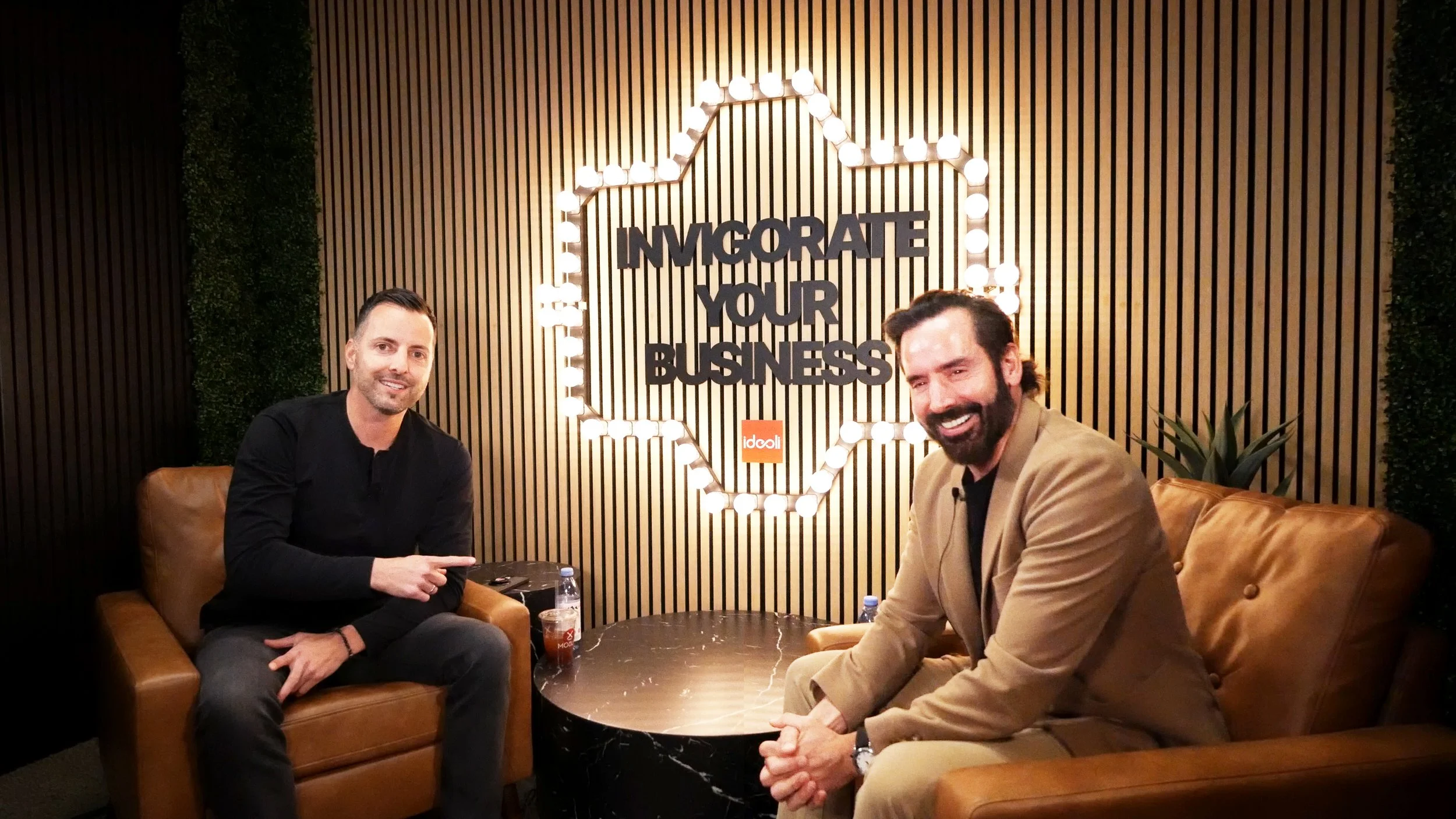
George Stroumboulis sits down with Chris Gialanella — Publisher of Los Angeles Magazine and a major connector across Southern California’s business and creative communities. They discuss his path in media, the changing face of LA culture, and the role of authentic relationships in modern publishing.
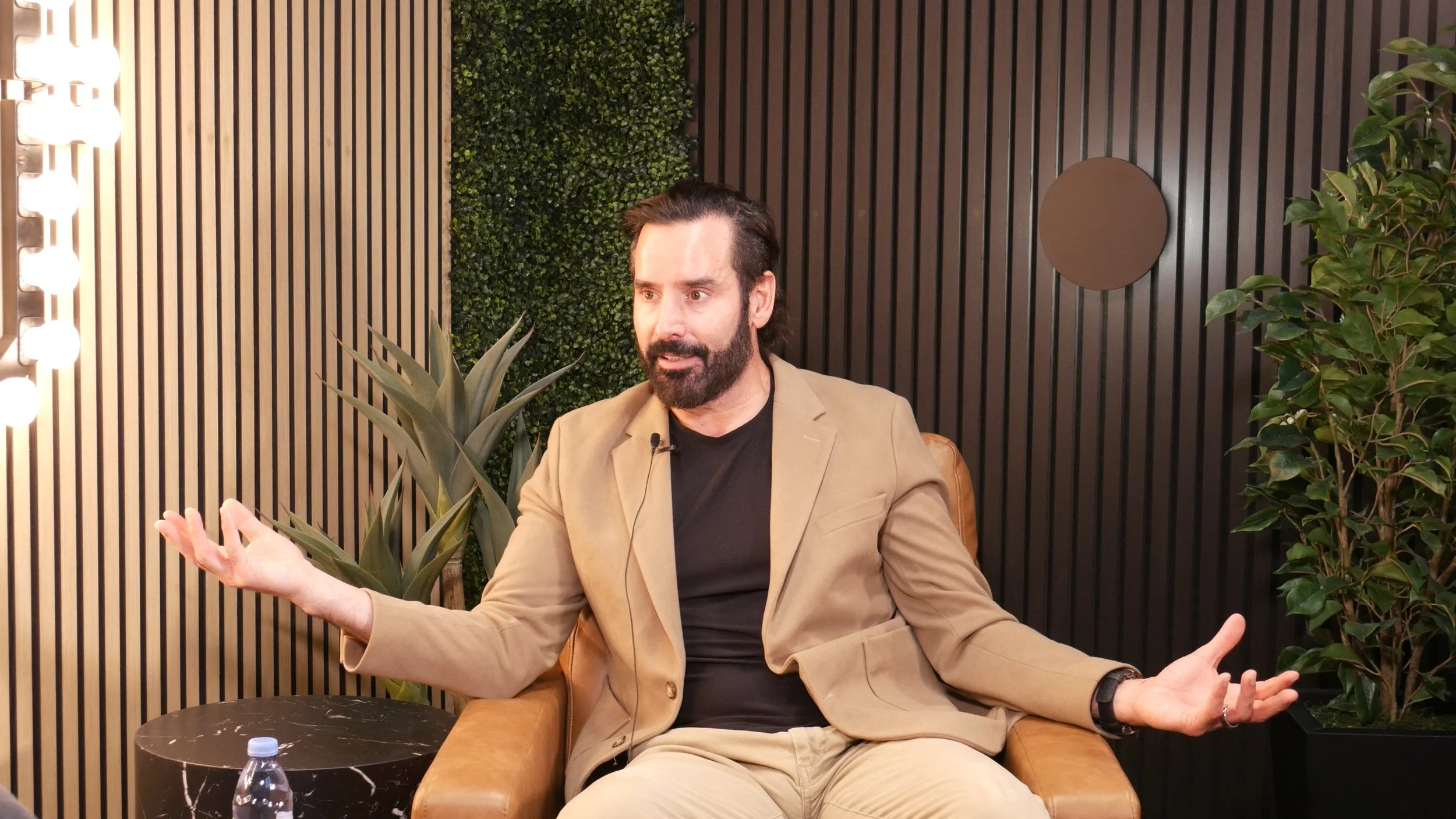
George Stroumboulis sits down with Chris Gialanella — the Publisher behind Los Angeles Magazine and one of LA’s most connected media leaders. They unpack his journey through the industry, the evolution of the city he covers, and how he brings together brands, talent, and audiences.
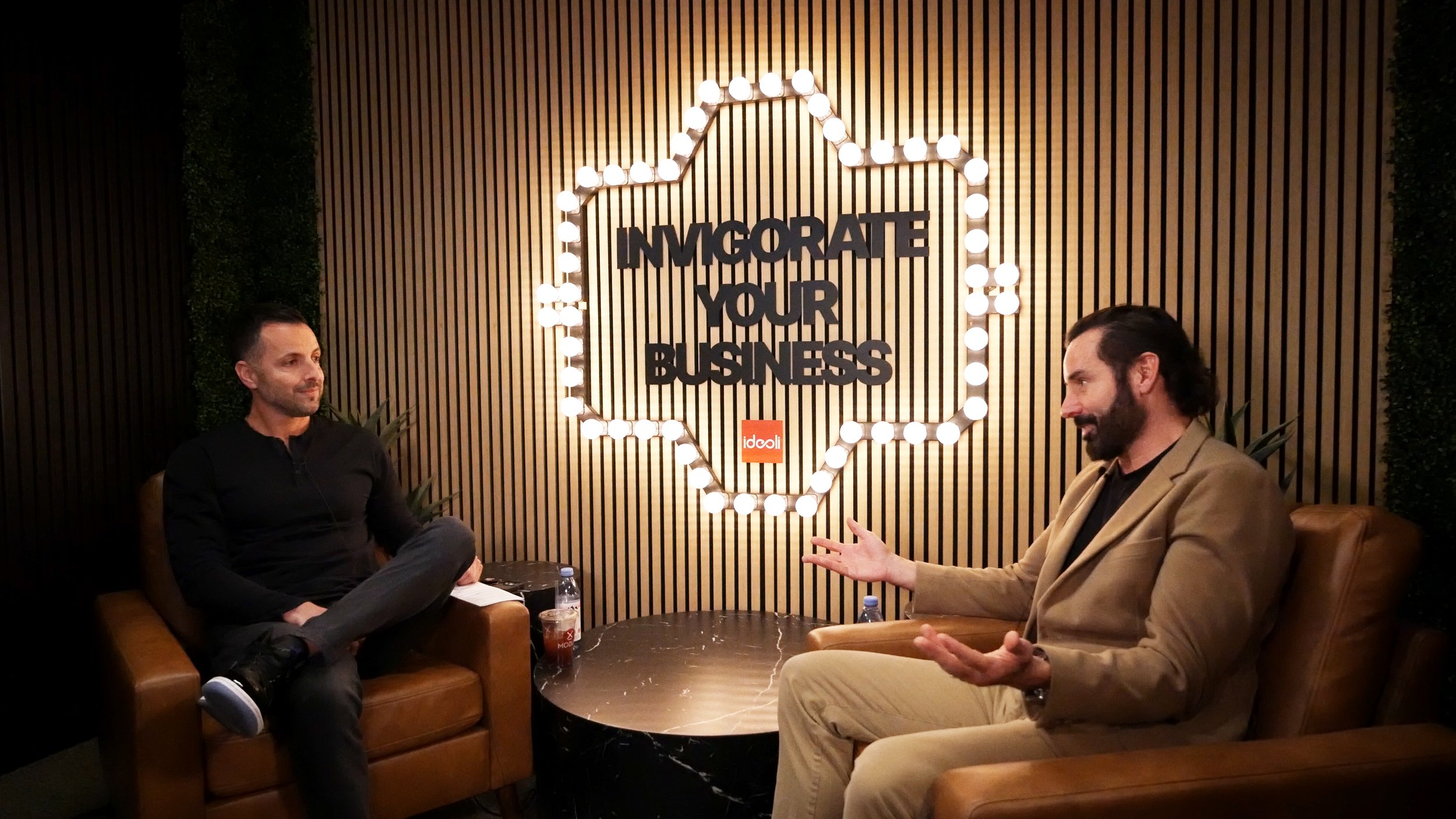
George Stroumboulis sits down with Chris Gialanella — Publisher of Los Angeles Magazine and a key connector in LA’s media and lifestyle scene. They talk through his career in publishing, the trends shaping Los Angeles today, and how he built a network that unites business leaders, creators, and communities.
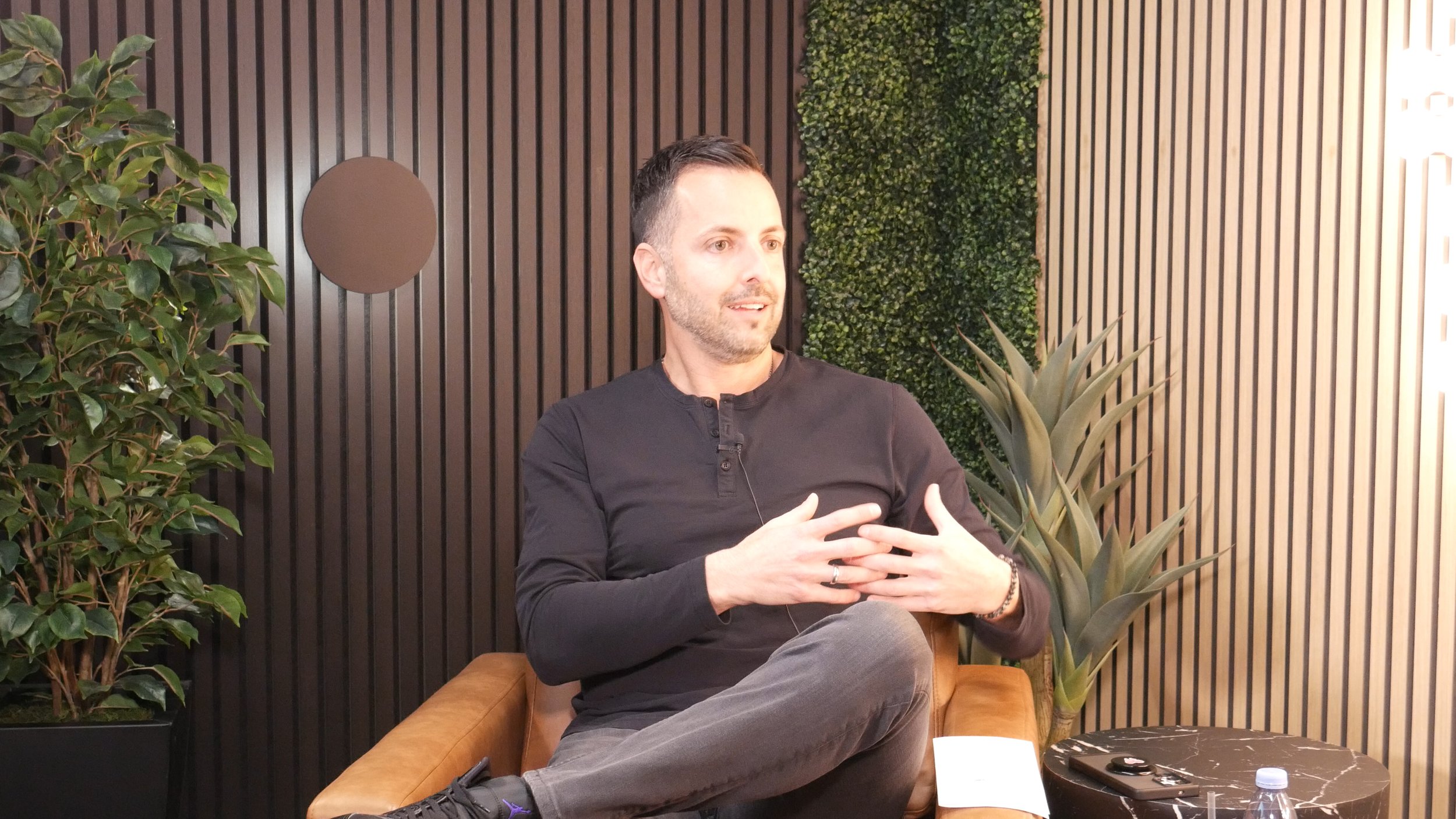
George Stroumboulis sits down with Chris Gialanella — Publisher of Los Angeles Magazine and one of LA’s most influential media connectors. They explore his journey through the publishing world, the evolution of LA’s culture and business scene, and the relationships that have shaped his career.
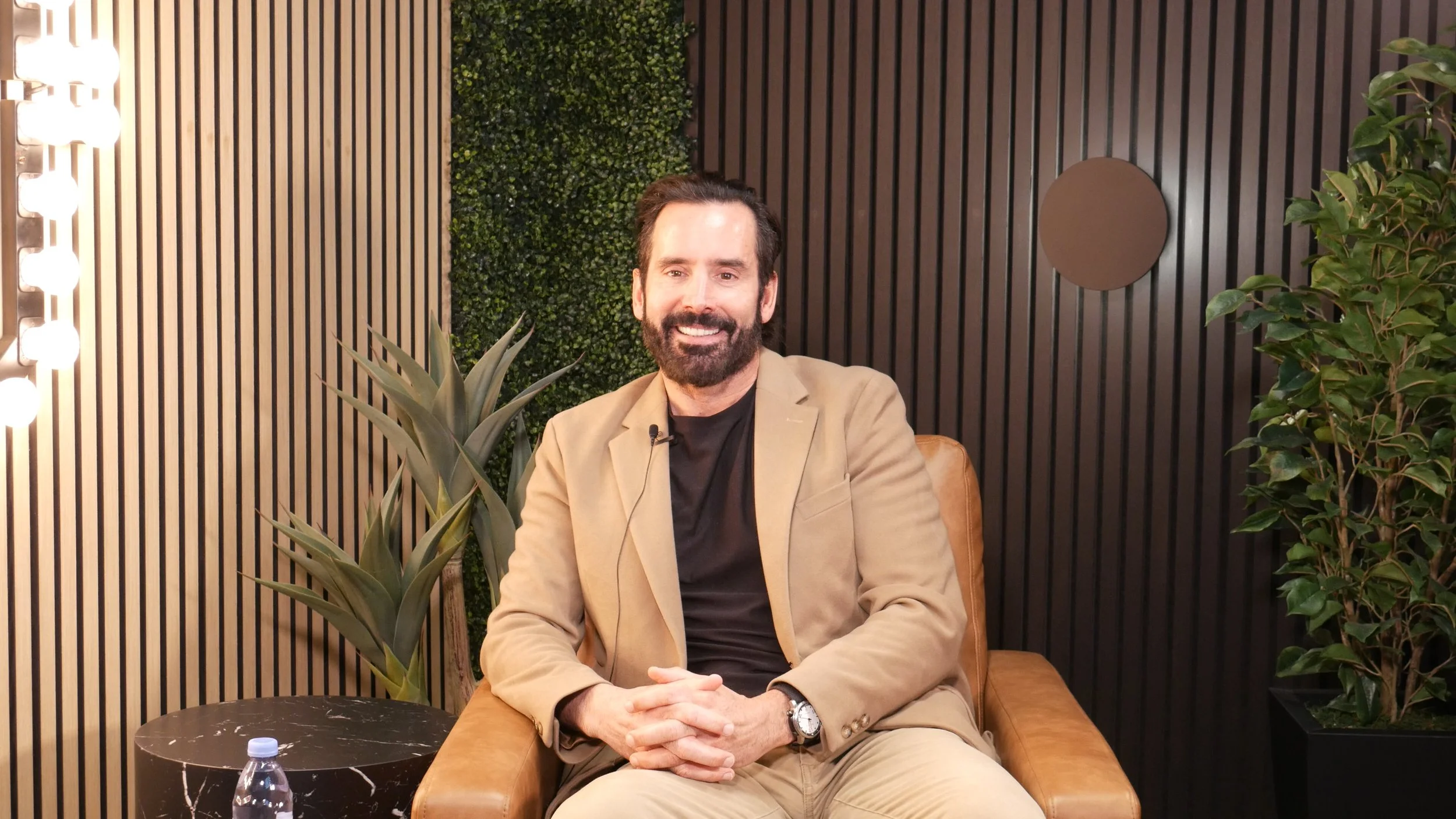
George Stroumboulis sits down with Chris Gialanella - Publisher of Los Angeles Magazine and one of LA’s most influential media connectors. They dive into his path through the publishing world, the evolution of Los Angeles culture and business, and how he built a network that bridges brands, creators, and communities.
ABOUT THE “INVIGORATE YOUR BUSINESS” PODCAST
The Invigorate Your Business with George Stroumboulis podcast features casual conversations and personal interviews with business leaders in their respective fields of expertise. Crossing several industry types and personal backgrounds, George sits down with inspiring people to discuss their business, how they got into that business, their path to the top of their game and the trials and tribulations experienced along the way. We want you to get inspired, motivated, and then apply any advice to your personal and professional lives. If there is at least one piece of advice that resonates with you after listening, then this podcast is a success. New episodes weekly. Stream our show on Spotify, YouTube, Apple, Amazon and all other platforms.
ABOUT GEORGE STROUMBOULIS
George Stroumboulis is an entrepreneur to the core, having launched several ventures across multiple industries and international markets. He has held senior-level positions at progressive companies and government institutions, both domestically and internationally, building an extensive portfolio of business know-how over the years and driving profit-generating results. George’s ability to drive real change has landed him in several media outlets, including the front page of the Wall Street Journal. George was born in Toronto, Canada to his Greek immigrant parents. Family first. Flying over 300,000 miles a year around the world puts into perspective how important family is to George’s mental and emotional development. With all this travel to global destinations, the longest he stays even in the most far-out destination is 3 days or less - a personal rule he lives by to make sure he is present and involved in family life with his wife and three daughters. To read about George’s global travels, stay connected with his blog section.
STAY CONNECTED WITH GEORGE STROUMBOULIS
STREAM & LISTEN TO THE PODCAST:
SPOTIFY: https://open.spotify.com/show/1rW2CmxQoiJNEPOZupJlvd
YOUTUBE: https://www.youtube.com/user/Stroumboulis
APPLE iTUNES: https://podcasts.apple.com/us/podcast/invigorate-your-business-with-george-stroumboulis/id1607693240
AMAZON MUSIC: https://music.amazon.com/podcasts/8fc03929-71b3-483a-a64e-153e30b3d462/invigorate-your-business-with-george-stroumboulis
STROUMBOULIS SITE: https://www.stroumboulis.com/podcast
PODCAST SITE: http://www.invigorateyourbusiness.com
FOLLOW GEORGE STROUMBOULIS:
INSTAGRAM: https://www.instagram.com/georgestroumboulis/
YOUTUBE: https://www.youtube.com/user/Stroumboulis
LINKEDIN: https://www.linkedin.com/in/Stroumboulis/
TWITTER: https://twitter.com/Stroumboulis
FACEBOOK: https://www.facebook.com/georgestroumboulis
TIKTOK: https://www.tiktok.com/@georgestroumboulis
CONTACT GEORGE DIRECTLY: https://www.stroumboulis.com/connect
FULL SHOW TRANSCRIPT
George Stroumboulis: 0:00
Welcome to another episode of Invigorate Your Business with George Strombolis. Today I sit down with Chris Jalinella. Chris is the publisher of Los Angeles magazine. This magazine is iconic, right? It's been around for decades. It is the forefront of where culture meets influence. And Chris is someone that embodies that likability factor on how to communicate to people, whether it's his editorial team, whether it's potential advertisers in his magazines, or whether it's A-list celebrities. He represents this publication. He attends all the red carpets, whether it's the Oscars, the Golden Globes, he's interviewed some of the biggest names around the world. And we're going to learn a lot of things from Chris today on how to properly communicate, how to position yourself for success. So enjoy this episode starting now. My name is George from Bollis, and I'm extremely passionate about traveling the world, meeting new people, and learning about new businesses. Join me as I sit down with other entrepreneurs to learn about their journey. This episode of Invigorate Your Business Starts Now. This is awesome. We're going to roll into this. Starting this now, I'm going to start off with an intro, kind of give people, the listeners, uh an idea of who you are, and then we're going to dive right into this. Lots to cover. So today's guest sits at the intersection of media, culture, and influence. He's a publisher, media executive, and on-air personality behind some of Southern California's most recognizable lifestyle brands, including Los Angeles Magazine and Orange Coast Magazine, also Pasadena magazine. Through television appearances, print, and digital media, he helped shape how cities, brands, and leaders are seen and understood, from Los Angeles to Newport Coast and beyond. He's interviewed some of the biggest celebrities in the world, covered iconic cultural moments, and understands firsthand how credibility and relevance are actually built. He's someone who understands not just visibility, but credibility and how real influence is built in today's media landscape. I'm excited to welcome Chris to the show.
Chris Gialanella: 2:16
Hey, George, thanks for having me. I think you answered everything. I think I can I can leave, right?
George Stroumboulis: 2:19
That's it.
Chris Gialanella: 2:19
Let's go.
George Stroumboulis: 2:21
The shortest podcast ever. I love it. I love it. But but it covers, man, like I've been following you for a few years now. And uh anytime I see like what you're doing, I just I get tired watching it, not tired of you, just like, how does he do this? He's one guy. He's on TV, he's hosting events. Last night we're gonna talk about the Golden Globes, but last night, you probably got home in the wee hours of the morning. You're at the Golden Globes, your socials, every imaginable celebrity, you were there talking, photos, all this stuff. Like very approachable. So just welcome to the show, man. That was a lot.
Chris Gialanella: 2:55
Thanks for having me. Excited to be here. I love Orange County. You know, I've lived down here for six years of my life, and probably six of the best years I've I've had. Right. What a great community it is down here. So great, great to be here.
George Stroumboulis: 3:08
Awesome, man. Thank you. So, I mean, we're gonna jump into your background, what you're doing, all this stuff, the influence that you and your company have. But just talk to me the Golden Globes. Literally, last night you were there, one of the biggest events.
Chris Gialanella: 3:19
You know, it's funny, award season is back. I mean, it's it's a pretty exciting time, obviously, in Los Angeles and for Los Angeles Magazine. We actually won Entertainment Magazine of the Year for the LA Press Awards that just happened. So it's kind of exciting. We had a great cover last year with Coleman Domingo, Sebastian Stan, and John David Washington, which really pushed us over the edge. So we're really LA, we're really more about lifestyle, the best place to shop, dine, hike, real estate doctors, but entertainment is huge. So being at a lot of these shows and and hobnobbing with, you know, producers, directors, actors is part of the culture of what we do. So last night was really a summary of the best movies. I think there's some really great movies out there now. And I think in the world today, people are going to the movies and watching movies a lot more than they did before. So it was great to just be there and and witness and see people's hard efforts, you know, paying off with the great award show.
George Stroumboulis: 4:16
Yeah, absolutely. So going to an ish uh an event like this, and every A-list celebrity is there and you're on the media side, right? Like, how do you even go in there to try to get what you need to go back and and fulfill it? Yeah, yeah.
Chris Gialanella: 4:29
So it's c we kind of divide and conquer. So my editor Jasmine and I, and whoever else, we find ways, because obviously we do a lot of coverage and we get invited to these events for the coverage opportunities. Sometimes we'll do red carpet interviews, which I've done at, you know, Elton John and a couple other events as well, or we just come as simply guests and kind of experience what's happening. So this whole weekend between the BAFTA tea party, there were the Astra Awards, and then there were there was also the Independent Spirit Awards, and then the Golden Globe. So there's just a lot of activity going on. And you kind of see a lot of the same nominees at a lot of these award shows, but really the the pinnacle is the Oscars, right? So this is kind of like a tease to see what's gonna happen. So I think being at these events is important because you wanna people want to know what celebrities are doing, right? Everyone wants to like get the inside scoop. And it's kind of fun to be on a red carpet and kind of see how it all comes together. And it was really fun last night because um Tiana Taylor, who is who is just such an amazing actress, wanted to meet Julia Roberts. So I saw her on the red carpet. She saw Julia and she was nervous. She's like, why? So I capture that moment in Halloween magazine, too, where we had that moment there where the two of them met. And it's kind of an iconic meeting between two Golden Globe winners, because she won the Golden Globe last night, coming together and kind of like the generations of the new act, the new acting people with some of the legendary people like Julia Roberts. So it's fun to capture things like that, too.
George Stroumboulis: 5:57
Oh, absolutely. So, like a Julia whose season she's been around has an incredible name. How do you think she perceived Tatiana winning? Like her in the world.
Chris Gialanella: 6:05
Oh my god. I think she was so excited, you know, to and I think, you know, Tiana is an amazing actress. I mean, I first saw her in that um Kanye West video, which you'll watch another time, but she's incredible. Really incredible. So it was really cool to witness.
George Stroumboulis: 6:20
Amazing. So when you go to an event like this or the Oscars, I'm I'm curious on how, like, how do you define what a good show is for you as Chris when you're going there? Like what are you trying to do? Is there a game plan? Do you just kind of go?
Chris Gialanella: 6:32
I mean, it really depends on you. Obviously, you want to get great content for for our magazine, but also networking. I mean, I'm on the business side too. So for me, I always want to find relationships and find ways to work with a lot of these big studios. Like we do a lot of really big events in LA coming from our women's event. We had Power Silton on our cover. Uh, we do a big Pride event in June in LA. We do a big men's event. So we do a lot of sort of celebrity kind of ish events as well as other events, but are always looking for sponsors, always looking to kind of network and find new ways to work with different studios. Right, right. So that's kind of another reason why we like to go is to kind of network and meet those people.
George Stroumboulis: 7:11
Yeah. So you're trying to make those connections.
Chris Gialanella: 7:12
And so, exactly.
George Stroumboulis: 7:14
So you you have this natural ability. I truly believe you can't teach someone how to do this, but you can walk up to anyone, right? And we talked about off-camera just being in the service industry and being a waiter and all that stuff. But going up to The Rock or Julia or talking to the barista who's giving you coffee, like is that innate? Like, is that your Italian upbringing on how to communicate? Like, how do you you know?
Chris Gialanella: 7:38
I just feel like they're just people, right? It's like having a conversation with anybody, the the cashier at Ralph's and Julie Roberts, you say hello. My name is Chris. I'd love to say hi to you. And, you know, if you want to get a picture, you ask for a picture. But I think it's important to also have a conversation with somebody, not just run up to random people and get selfies. It doesn't make sense, you don't want to come across like that. You want to come across genuine. And I feel like I've always maybe it is my upbringing, and I always feel like I always wanted to be genuine. And I really care what people have to say and how they live their life and all that. I really, I'm interested in people. Right. That's really what it is. Either you have to be interested in people in order to be able to do any of this kind of stuff.
George Stroumboulis: 8:16
Yeah. Like you you're you're not doing five days a week events and social outings if you don't like being around people and communicating. You can't fake that and be that guy. Exactly, exactly.
Chris Gialanella: 8:26
But as I say, what you see on Instagram and Facebook isn't really what what everything is. I mean, my life is really business. You know, like we uh we have to keep the lights on, right? So, you know, I spend a lot of time working with my teams to figure out ways to generate good revenue to keep us going, whether it's selling an ad in the magazine, doing some sort of special profile, having an event, you know, getting sponsorships. Like it all adds up. You know what I mean? So we're an iconic brand, especially in LA, we're 65 years, Orange County, we're 50 years, Pasadena, we're 15 years. So we're we're legendary brands, right? But we have to still keep those brands going. And how do you do that in this environment, right? So those are things that we're always trying to figure out what to do.
George Stroumboulis: 9:09
Yeah. And we're we're talking five, six, seven decades in print media, and to be now in 2026 onwards and still thriving, that's not easy, right?
Chris Gialanella: 9:19
Yeah, yeah. It's funny, I met the original publisher, Jeff Miller. He started Los Angeles magazine in 1961. We're celebrating our 65th anniversary now. Congrats. And it's so fun. Thank you. It's fun to see the archives of what, you know, all older magazines then and looking at the ads and the content. And, you know, we have a great writer named Chris Nichols who does a column at the end of LA Magazine called Ask Chris. He's like a historical editor who finds these great stories. We just did one on Dick Van Dyke, obviously turning 100 years old. Yep. And our goal now is to feature people who are still alive that have been in LA magazine to celebrate them at the end of the year at the Los Angeles Magazine's 65th anniversary ball that we want to do. Honor them at the ball, right? Which is kind of a fun thing to do too. People like Morgan Fairchild and, you know, Joan Collins and Dick Van Dyke and people who were in the magazine as part of our culture back then and making them relevant today. So that's like one example of like how LA magazine is evolving. But I met Jeff Miller's um widow, Katherine Lee Scott. She was in Dark Shadows, she was an actress, and I had lunch with her recently, and she was, you know, she came armed with old photos and stories, and so it's fun to kind of keep the tradition of Los Angeles magazine going. And then Orange Coast magazine, 50 years, that was started by Bob Guccione, that we all know from Penthouse. He started Orange Coast as sort of like um Orange County being the playground to Los Angeles back then in the 70s. So covers had beautiful women in bathing suits, and it was very sort of that kind of style. You know, John Wayne and all the people that lived down here. And that's kind of where Orange Coast was at that time, but also to see it evolve today, we're really the authority in in Orange County from the best doctors, lawyers, you know, you name it, those best places to eat and hike. So we're kind of keeping the consistency too of Orange Coast.
George Stroumboulis: 11:17
More sophisticated than what it was.
Chris Gialanella: 11:19
Exactly. Okay.
George Stroumboulis: 11:20
And while we're talking, what what's Pasadena?
Chris Gialanella: 11:22
Like, Pasadena is obviously a great community. Yeah. Um, Pasadena is, you know, kind of like, I don't want to say a sleepy town, but kind of a vibrant community. There's so much to do there. And obviously, we just did a big um partnership during the Rose Bowl uh with Visit South Dakota, came to us. We partnered with them on their float and supporting them and getting the brand out. So we do a lot of different types of things in Pasadena. Obviously, with with what happened with the fires in Altadena, we actually gave back to the community too. Awesome. Honoring the firefighters. So it's a really great community, Pasadena. I mean, it's like if you want to take a staycation, that's the place to go.
George Stroumboulis: 12:01
Pasadena, yeah. I I like we're kind of jumping around, which means it's a great conversation. But you you had mentioned the fires. All right, I want to talk about that later, but like let's jump into that now. Yeah. Uh last year, officially a year ago, right, with the uh the fires in in LA. And uh I first heard, like I was getting text and messages from around the world from friends in Europe and South America. Are you okay? Are you like geographically? They had no idea, Newport versus and uh a lot of the time I was going to your channels, right? IG for updates. Like you it evolved and it was like, hey, what's going on today? And like just getting that information was just incredible. Like, did was that the original plan?
Chris Gialanella: 12:42
It's funny, the same thing happened to me that happened to you. I was getting phone calls. Okay. My mother was calling being like, are you funny, you know, she didn't really understand that, you know, the Palisades was about, you know, a 15-minute drive from where I live. I could see the fires, I could smell the fires, I was okay, but it wasn't burning, nothing was burning around me, right? So I did a lot of those Instagram videos simply for people that didn't live in LA that wanted updates. Because the news sometimes can paint a picture where it looks like it looks like the whole city's on fire. Yeah. If you don't live here, you know, you don't know. So I started doing a lot of, and it's funny because they uh those videos had a lot of views and people like expected it and they said, hey, what's happening today? So I did a constant um realm of videos that I think were very helpful for people. Oh, absolutely just kind of speaking about what's really happening from my point of view. Yeah, you know, and then what happened during the fires was we kind of pivoted our covers and we wanted to give back, obviously, because you have to also be relevant to what's happening in LA. You know, you want your covers to reflect the community. So we asked three artists, Robert Vargas, um Garen Swing, and Mr. Brainwash, to create really cool themed covers that were iconic. And Mr. Brainwash did a great cover that you could see on in LA, on LaBray on one of the buildings. Robert Vargas did a fireman shot, and then uh Garen Swing did a really cool picture of a fireman with his daughter and their iconic photos. And then we complemented those photos with a really cool comedy night that we hosted where we had 10 comedians come in and showcase what they're made of. All the proceeds went back to the Pasadena fire relief. You know, we believe laughter is the best medicine. Absolutely. So that's kind of why we did that. So the the beauty, if you want to say the beauty of the fires, even though it was so devastating, the community came together. Yep. And it was so nice to see, because many people think Los Angeles, everyone's in their cars, were so spread out, but it was nice to see everybody coming together. Yeah, that's huge. And that was a big part of it. And even in Orange County, I mean, the Newport Beach Fire Department was up there in the Palisades. Right. Which is which is so great to see that everyone really, no matter what your political beliefs are, no matter how how you live your life, we were all affected by it.
George Stroumboulis: 14:55
Yeah, and and you would see on the news there was always the political spin, and it's like, can we as hard as it is, can we just keep that out of there? Like, let's make sure everyone's safe, getting the resources they need. So that's that's great to hear. Um, but devastating, right?
Chris Gialanella: 15:08
That's gonna be years before they Yeah. I mean, it's funny. One of my um associates, she lost half of her house and all to Dina, and I went out there to to see her her home and just to see. I mean, she got lucky, her house stayed, but all around her was just nothing. Jeez. You know, and people really lost a lot. And you know, there's a great organization that we work with called A Sense of Home. And this is really interesting. What they do is they provide brand new furniture, brand new plates, brand new art, anything you need that's brand new, right? They have a warehouse where families go, you apply, and then the families come to see what the setup is. Oh, wow. Before it goes to your home, which is really unique. Yeah and they've changed a lot of people's lives, especially fire victims who literally have nothing. Come now. And we even hosted a um retail donation center for LA Magazine. We rented out a a a spot in Marina del Rey, had all these donations come in, and then we actually gave out merchandise. There were families from the Palisades, from Alta Dina. People needed socks, people needed blankets, people needed anything. And honestly, it was really interesting because these very wealthy people who lost everything were coming to the donation center. Saying, I need a pair of sneakers. You know, I need something. Jeez. We even had, you know, and I even there was one woman that came who was sort of a homeless woman in the community. I knew she was homeless, right? She came, but you look, you help people out. Absolutely. That's what it's all about. Good, man. And to be able to spearhead that, that's a big deal. Yeah, yeah. So we owe again, LA magazine or we're we're about giving back to the community.
George Stroumboulis: 16:47
So well, that's what it is. So go back. So you're in print now, you're you're doing events at uh you're getting in front of celebrities, you're supporting local communities, but is that always what you wanted to do? For our events, like as a career. As a career, like go back to New Jersey.
Chris Gialanella: 17:03
I don't know how I got involved in this, George. I mean, honestly, I I was I always liked politics. I was a political science major. I uh got a job in DC right after I graduated. I got an internship. Funny story, my grandmother is the one that got me the internship then. Um, Congressman Dean Gallo, he was our congressman at the time, was on the Memorial Day parade waving to everybody. My grandmother ran out because it went right by her house and stopped him in his tracks and said, My son's graduating, he needs an internship. And I think he was probably like, Wow, what grandmother would say that? He goes, Well, tell him to call my office. So I called and wound up getting an internship in DC because of my grandmother. Was she owed in a spatula? Oh my god. And it's funny, I I have my grandmother's macaroni pot. I grew up in New Jersey. Yes. We call macaroni, we call it grey, it's a gravy pot. So I have it to this day, and everybody wants it. So I feel like she's always with me. Obviously, her soul and her heart always is, but the fact that I have this pot too reminds me of her and that internship that she got me. That's incredible. So she's her name. Let's hear it. Her name is Esther. Esther, okay. And you know, she passed away in 1998, and I I miss her. You know, I miss her cooking especially too. Oh my God. Sunday, Sunday gravy. Oh man. You know, she would she would cut up chicken with her hands. Yeah, yeah. We ate it. Like nobody cared. Exactly. That's kind of how the whole thing works. So yeah, she got me into politics and I worked in D.C. And then I wound up moving back to New Jersey, getting a job in the city for this company called PIMS who distributed press releases and videos, which eventually moved me out to Los Angeles. Early 20s now? Yeah, I was 24 when I moved here in 94. So I've been out for 31 years. So lived most of my life in California.
George Stroumboulis: 18:49
Okay, so you move out when you're 24, and that was more PR media, right? PIMS was in that space. Okay.
Speaker 2: 18:56
Yep.
George Stroumboulis: 18:56
Curious. What they offer then. Is a lot of that stuff being replaced now online?
Chris Gialanella: 19:00
Oh, absolutely. I mean, back then it was printing, press releases, and slides of so you you reach the press, but you did it in a different way. Everything was mailed and all that. So when I get mailed to my office, I'm excited because it reminds me of the old days. But that's kind of how the operation worked, you know. But also the screeners was a big part of what we did back then too, the academy screeners. We had the academy list. And for me, I was a 24-year-old kid who had his hands on all the best movies. Right. So I remember when I met my wife, we were dating, and she knew I had all the movies. I had Goodwill hunting at the time with uh Ben Affleck and Matt Damon.
Speaker 2: 19:38
Yeah.
Chris Gialanella: 19:38
And I remember she called and, you know, we had some mutual friendship. She goes, Can I borrow that Goodwill Hunting from you? You know, so it's kind of funny that the movies I had are, you know, I had some clout. I gave me clout. You kidding me? And then uh so I worked there for six years, and then, you know, I I got engaged, and my fiance, who's now my wife, had brought home a copy of a magazine, this beautiful magazine called Angelino magazine. This is 2000. And she said, you know, you'd be really good in sales. You're so personable, you talk to people kind of like what you were saying earlier. And so I called the gentleman whose face was in the magazine, Michael Kong, who was the founder of Modern Luxury at the time, and I said, I've no experience, but I'm going to work hard and knock on doors and isn't it, commission? So pay me for what I bring in, you know? And he was like, I said, yeah, dude. So I came on board and uh I remember I sold about $50,000 in my first issue, and everyone was in shock. I'm like, what is why's everyone in shock? Isn't this like what I'm supposed to do? And really I learned it's about building relationships, walking up and down the street, going into a store, meeting an owner, meeting a general manager of a hotel, or a chef at a restaurant. Just getting yourself out there to meet because we had a magazine, and if I wasn't going into these places, how would the readers go in? So I always feel like it's so important to have in-person meetings, be people face to face. I think the pandemic really changed all that. At the time it was great to have Zoom meetings and phone and all that, but there's nothing better than seeing somebody one-on-one face to face.
George Stroumboulis: 21:14
Were you brought up like that though? Like where did you learn that in-person?
Chris Gialanella: 21:17
Like, were your parents like that? Like my dad was it's so funny. My dad has always been in sales too, his whole life. He he worked for companies that sold power equipment. Okay. So when the lights went out in New York City in a big high-rise, my dad's companies are the ones that supplied the generators and all that. So he was always involved in business and sales. And I think that's probably where I got a lot of my business sense and my dad. And ironically, my dad's 87 and he just retired like two months ago. It was cute because they had a retirement party for him in New York. And, you know, I went to the party, and it was just nice to see my dad in that environment. That's where he had his life. You know, like he loves business and he and then he told me he might be consulting. Good for Dad, you're eighty s so I think he feels like he doesn't want his brain to stop, you know. And I think I'm the same way when you see me on Instagram at these parties now, here I am like in the next day. My mind's always going too. Yes. So I'm always on the go.
George Stroumboulis: 22:18
Yeah, yeah. So he so clearly that's a great example.
Chris Gialanella: 22:20
So I learned a lot of that from my dad.
George Stroumboulis: 22:22
Wow. To be at 87 in doing that, it's like to tell someone at that age to stop is to tell them die.
Chris Gialanella: 22:28
Yeah. Right? Like Well, we well, I tried to take the keys away because my my dad shouldn't be driving the car either. But that thing go over two L. Yeah, yeah.
George Stroumboulis: 22:36
Step by step. Exactly. That's incredible. So then back here, you start building that in. Talk to me just about sales tactics. Like when you're talking and you're trying to generate business, like what have you learned over the years doing this multiple years, multiple times?
Chris Gialanella: 22:51
I kind of feel like I never want to be the person to walk into a room and have people like avoid me, right? So I feel like sales, if you want to call it sales, is kind of like a first date. You want to ask a lot of questions, right? To really see if it makes sense to take it to the next level, right? Like is your business worthy of being a part of our magazine group or having an event? So I kind of treat everything in that way where I want to know so much about your business, number one. And obviously doing the research before I go into the meeting is always important. But it's always good to have those kind of that way of selling. And then you figure then I always say, here are some opportunities. Let me know what you think. Yes. So we have this opportunity, that opportunity. And even like if even code calling, you know, always say, just give me five, 10 minutes. Don't you want to know what's happening? Don't you want to know what's going on in our world? I might be able to help you. Absolutely. And there's no harm in that, right? So that's kind of how I've always had that approach.
Speaker 2: 23:47
Yeah, yeah.
George Stroumboulis: 23:48
And and clearly it works. Right. So right now, back to LA magazine, Orange Coast magazine. What is the goal? Like when you're looking at the industry over the last five years, 10 years, it's changing. And then you're looking at the future. Is it more geared towards online, more event experiences? Like how do you fight the Ross Right?
Chris Gialanella: 24:09
It's interesting because I feel like we always take a 360 approach between print and digital. I think it's important to have a touch point of everything. Like radio is not going everywhere, going anywhere. So there's always going to be radio. I always feel like print will always be around. People still like to touch and feel. And our magazines have subscriber bases, so people still pay money to receive the magazine. But we also find unique ways. And I'll give you an example. So the Super Bowl is coming to California in two weeks, right? So I'm doing a new opportunity called Road to the Super Bowl. So we start in Los Angeles and we end up in San Francisco and we make stops along the way. I'll bring a video guy, I'll bring an influencer, we're creating 60-second reels of different venues. So we want our readers and our viewers to know where to stop if they're taking a road trip up north. So places like the city of Santa Monica is celebrating their um Route 66, right? It's a hundred years. So we're gonna do something on the pier there. We're going to the Malibu Beach and we're gonna showcase a brunch item there. Then we're gonna go to visit, you know, wherever it is along the way. So we have all these different stops, and these are marketing ways for these businesses to kind of try something new, right? So they'll get a 60-second reel, they'll be part of a digital story. It's just something unique, right? So those people that say, oh, we don't believe in print. Well, guess what? Uh that's okay. We have these opportunities. Absolutely. So we we always have to be in the forefront of new ideas. And I'm always somebody who I'll try anything. Why not? Absolutely. We're happy to try different things to see how they work. And I treat my team the same way. If anyone has any ideas, you get credit for it, number one. And let's try it. Let's see what we could do.
George Stroumboulis: 25:49
Yeah, absolutely.
Chris Gialanella: 25:50
So this is something that's and I want to kind of take this concept to the road to Coachella, the road to the wine country in San Diego. So then you kind of create this kind of road trip vibe. Because we are we're Southern California, right? Where else do we want to go? So it's kind of a unique thing. So I'm excited to see how this whole thing plays out.
George Stroumboulis: 26:07
So I'm curious uh for tourists that are coming in, it's mostly like your circulation here, it's mostly residents, right? But like what about tourists that come in? Like how do you they're coming to LA?
Chris Gialanella: 26:19
So important. It's so important. So we have obviously distribution at a lot of the hotels. So obviously and also at the airport. Yes. We're in you know, Delta uh Sky Lounge, where we have a we have an LA magazine store at LAX. Yeah. We're working on an Orange Coast store here at John Wayne. So it's important to kind of capture the the tourist, obviously, because A, you want them to come back, but it's a lot of business, especially for restaurants. I mean, there's like they've done surveys where someone will have one meal at a hotel and then every other meal is out, right? So usually they have breakfast at the hotel and then they're constantly out. So restaurants, the perfect target is a tourist, right? Yes. So and the tourism is great even in Pasadena during the holidays. Our our November, December issue of Pasadena magazine like flew. Right. There were so many people in town for the Rose Bowl and all that going on. Like, how else could you find out what to do and where to go and where to shop in one easy place in a magazine, right?
George Stroumboulis: 27:15
And it's true. Like for me, life is busy, especially with three young kids running a business. Most of the time I read a magazine is on a plane, even if I've bought it or I have a couple or I'm using the one that's there, or hotels. Like for me, that's my biggest attention span, which I'm sure is the norm for a lot of people.
Chris Gialanella: 27:32
Yeah, absolutely.
George Stroumboulis: 27:33
Um, Pasadena. So 10 years I've been living here in Orange County. I've never been to the Rose Bowl up until like six months ago when they had the soccer tournament going on. Oh, yeah, yeah. What a nightmare getting in and out with the traffic and paying the local guy to park there. It was incredible being there, but like what a process getting in and out.
Chris Gialanella: 27:52
What an iconic place. I mean, in the middle of this beautiful residential area is the Rose Bowl. Yes. I mean, it's unique. I mean, UCLA have all their football games there. There's so many. They also do a lot of there's a big food event they do called Masters of Taste there every every April. There's so many great things to do. Plus, there's so much physical activity. People are jogging and walking, and it's a whole life of its own. You know, it's really cool.
George Stroumboulis: 28:16
Yeah. If you've never been to LA or California and you see what on TV or movies, and then you're there, you're like, oh, this is what I expect, the trees and the weather. If you're a new magazine launching today, do you think it's easy as a new magazine to try to get into the print space or having an iconic name over decades? You know what I mean?
Chris Gialanella: 28:37
Like Yeah, yeah. I mean, it it really depends. I mean, if there's a need, if it's something unique and different, of course. I think I think it could work. I think um the print space, we always welcome print magazines. I want people to be reading magazines. So yeah, let's do it. You know what I mean? Absolutely. I think I think there's always a place for a print vehicle.
Speaker 2: 28:57
Yeah.
Chris Gialanella: 28:57
For sure.
George Stroumboulis: 28:58
You're originally from Jersey, New Jersey. You're proud of your upbringing, right? With the kids and the childhood and everything. You move out here. Talk to me. Like, what do you miss from the East Coast?
Chris Gialanella: 29:08
Like, what's stuff that besides the uh Italian food and the pizza and the bagels?
George Stroumboulis: 29:14
Yeah, that that's about it.
Chris Gialanella: 29:16
You know, I let me think about what do I miss? Okay, here's something unique that I miss. Yeah. I feel like when I'm in New Jersey, I don't know if you've ever been to the Jersey Shore. Yep. But you could smell the ocean miles away.
Speaker 2: 29:30
Yeah.
Chris Gialanella: 29:31
When you're here in LA or Orange County, you don't smell the salt, the salt air and the salt water, you know? I kind of miss the smells of like a true shore. Yes, yes. Like even here, if if I was in New Jersey, I'd be I'd smell the ocean leaving close to Mesa. Yeah. Right? So I kind of miss like why is that? I don't know what it is. It's kind of unique, right? If you really think about it, even when you're on the beach, yes, you don't even smell the ocean. You're absolutely right. Right? Yeah. It's kind of unique. I've never paid attention to that. Yeah. Yeah. Yeah. I mean, that's this. Well, obviously, I miss my family and all that. All that, all that stuff.
George Stroumboulis: 30:02
So when you move over here, like I I was telling you earlier, I've been here 10 years. I still can't fall in love with LA. Los Angeles, for me personally, it's like there's elements of it that are cool. There's pockets that are like, oh, cool restaurant, cool area. But I never land here and I'm like, oh, I'm back home.
Speaker 2: 30:19
Yeah.
George Stroumboulis: 30:20
New York gives me that vibe. And I'm originally from Toronto, so it's not like I have a bias to New York. Like, what is it that you fell in love with LA, Los Angeles?
Chris Gialanella: 30:28
I think as business relationships, and I think in LA, when you build a community of the right friends and business people, LA becomes a small town, you know, in a weird way. So I love LA. I'm like one of the people who like a lot of people have left LA. Oh, it's it's crazy here. There's a lot of homeless people. Everyone's coming back, you know? And obviously with the Olympics coming, there's going to be a lot of excitement happening in Los Angeles. But I love the culture, I love the diversity, I love that there's something to do every day. It's definitely not a boring place, right? So you can go to the beach, you can go on a hike at Runyon Canyon, you can have some, you know, some great Italian meatballs in the valley, this place that I go called Lito Pizza. There's things to do all the time. Great museums, great, there's just a lot of fun stuff to do in LA.
George Stroumboulis: 31:19
Well, you and you know all the spots, right? So if we're talking food in LA, like where do you go for a hole in the wall that's your go-to? Like this is your last meal you're having. What hole in the wall are you going to? And then you're gonna tell me the top-notch restaurant that you would do.
Chris Gialanella: 31:34
Yeah, well, I mean, I'd mentioned Lito Pizza, so it is, it looks like a hole in the wall in Van Nuys. It's old school in a shopping center. They've got some of the best Italian food I think I've had. Really? Right? Oh yeah, for sure. Actual Italians making it? No, not Italian. It's a Mexican family who own it, but make the best Italian food. Okay, I gotta try it. It's interesting, right? Um, and also speaking of Mexican food, it was interesting. Before I moved to LA, I never had authentic Mexican food. Right. Growing up in New Jersey, I know I don't know what it was like in Toronto, but garbage, garbage in a taco bell, you know. So I was like, wow, what is it? What am I experiencing here? So it's great when you find also a hole-in-the-wall Mexican place or a burrito on Lincoln, Lincoln Boulevard off the truck. You're like, wow, what is this?
George Stroumboulis: 32:16
And there's so many options here that are all good. Yeah.
Chris Gialanella: 32:19
And then um, I I'm kind of an old school kind of guy. I sometimes feel like I should have been living in like the 50s and 60s. So like my go-tos are like old school places, like the grill on the alley in Beverly Hills. It has that kind of old school, kind of like a Smith and Walensky kind of vibe, right? Yeah. The tablecloths and the waiters that like are true waiters, not actors that happen to be waiters. Exactly. Like I like those like Musso and Frank and places that are just so iconic. I love it. So when something closes, I'm devastated. Like what happened to that place? You know, so I kind of always like to support the but obviously there's some great new places all over the place and Facebook Raleigh, you know, and it's kind of nice to see too.
George Stroumboulis: 33:00
Yeah, and we're gonna talk Orange County, but um, so we did the lighting for uh Jose Andres, the Bazaar. Oh, yeah. But the new one that still hasn't opened up in the Frank Gary building across from the opera house. We finished the lighting almost two and a half years ago. The place is done and they still haven't opened. Wow. Yeah, and I'm like dying because like it's absolutely beautiful in there. But I guess during COVID, you know better than anyone what happened in LA.
Chris Gialanella: 33:24
Yeah, yeah, yeah. Which I I think that kind of changed a lot in LA, the pandemic. I mean, a lot of people left the city and people moved out to Palm Springs, moved to Texas, moved out. It really changed. It was a ghost town.
Speaker 2: 33:38
Yeah.
Chris Gialanella: 33:38
I remember there was an iconic photo. God, I can't remember the name of the photographer. We put we printed it in the magazine at the time, and it was the it was on April 10th, 2020, and it was the 10 freeway at five o'clock in the afternoon, and there was not one car on the road. But isn't it kind of interesting that people really did not leave their homes at the time? Like people didn't, you know, you didn't really go anywhere unless you had to.
George Stroumboulis: 34:04
Yeah. And for the listeners outside of California or the country, like the 10 freeways.
Chris Gialanella: 34:08
Oh my God, insane. But it was literally not one car at that time, April 10th. Yeah. I remember my anniversary, my uh 20th anniversary was May of 2020. And my wife and I got married at the Ritz-Carlton and Marina Del Rey, and we wanted to go, and you know, everything was shut down. The swimming pool was covered. And I remember we said, can we just bring it? There was two people working there. The general manager, who was also the valet guy. They had to stay open because I think some people live there. Right. So they couldn't shut down altogether. But there was maybe two people working at that hotel time, which is nuts. That is crazy time, huh?
George Stroumboulis: 34:47
Yeah, it was crazy. And we'll keep the politics out of it. It's just like just around the world. It was crazy. But I remember down here in Orange County, it was like there was that three weeks, and then it just kind of opened up. Oh, yeah, yeah. And there was the beach and it was this. And I'm like, are we allowed to do that?
Chris Gialanella: 35:01
I spent a lot of time down here during the pandemic because everything was open. It was open. It was just business as usual. Then my wife would get mad. You wore your mask, right? I'm like, yes, I wore my mask. But it was definitely an interesting place. Restaurants were open. Oh, yeah. It was really a unique environment here.
George Stroumboulis: 35:15
And Canada, where I'm from, was just shut down years after. It was like three years into it. Yeah. And we were like, wait, what? That was a couple of years ago. But but the the sad part of that is just like how many businesses couldn't survive and back to the restaurant conversation. And like it's never been the same since, right? But I feel like it's thriving. FIFA's coming here, so the World Cup is going to be in LA. There's a lot of good stuff happening here.
Chris Gialanella: 35:39
Yeah, yeah. And also the Olympics, I mean, we're going to benefit too in Orange County. I mean, there's going to be a lot of people coming to town and staying in the hotels and experiencing all these great places that we have to offer in Laguna and Newport. It's going to be it's going to be really exciting. Do you know are there any venues down here in Orange County? I don't, I think Long Beach I know is one of the venues. Okay. I'm not sure. Yeah. You know, we're we're meeting with LE28 to kind of talk about a plan. Okay. But I haven't heard anything yet with Orange County.
George Stroumboulis: 36:05
I mean, then we're going to be dialed in the city. It would make sense.
Chris Gialanella: 36:07
Yeah. For sure.
George Stroumboulis: 36:09
So come down to Orange County, Newport Beach, Laguna. What are your go-to spots here? You've lived here, your son grew up a good portion here.
Chris Gialanella: 36:16
Oh, yeah. I mean, I love obviously Fashion Island and South Coast Plaza are like playgrounds here. I mean, they're I spend so much time there. I mean, I I love like Anki at South Coast Plaza. I love the Scarlett Noodles. I mean, maybe because I'm biased, because they have crustacean in LA. But places like Five Crowns and a restaurant, which we talked about and all these great places. I mean, um, Shelly, who works at a market, makes the best chicken salad ever. So if you haven't had it, you got to go over there.
George Stroumboulis: 36:48
Drop Chris's name for a 10% discount, right?
Chris Gialanella: 36:50
Shelly will make the best. Oh, it's it's it's but also the hotels, I mean the Pendry, the Balboa Bay Resort, the restaurants in they're just great restaurants. They're really good. And also Il Barone is one of my favorites and uh Antonello. Antonello. Those places are awesome.
George Stroumboulis: 37:05
And that's across from South Coast Plaza, right? Yes, yeah, yeah. Yep. And what about hole in the walls? Hole in the wall in the OC? Yeah. Are there any? No, that's uh define a hole. Yeah, I mean that's an oxymoron.
Chris Gialanella: 37:17
Do we count what's the burger place in Crystal Cove? There's like a little off the road. Is that a hole in the road I don't know? No, yeah. Yeah, I know where you're maybe that is. Maybe there's also his dumpy sushi place I used to go to in Santa Ana. I can't remember the name of it, but my son loved it at the time because it had the rotating the sushi where you just pick off what you want. Yes, yes, yes, yes. It was kind of a hole in the wall.
George Stroumboulis: 37:38
I've never been there. I know. Yeah, yeah. Okay, so you said your son. Can we talk about him for a few minutes? Sure, yeah. Uh so he's studying.
Chris Gialanella: 37:47
Can you say where like yeah, he's my son's at B in Boston. Yep. He's at one of the universities there. He loves it, thriving well. He's 20 years old. Yeah. He's gonna be abroad um for the second semester of his junior year. I'm gonna miss him, you know. But I think his parents, and and you know this too, I think the most important thing to teach your kids is independence, right? Being able to be out on your own and and kind of like what my parents taught me. Yes. When I moved to California was really nothing. You know, I had I had a good sense of who I was and what I wanted to do, but I didn't have like my dad's business or my mom's business to fall back on. I did all this on my own. Yes. So I think it's important to teach your kids those things, and that's kind of what I'm trying to teach my son.
George Stroumboulis: 38:29
So what did you do? So your son now entering his 20s, what were you doing when he was five, 10, 15? Were you proactively doing it?
Chris Gialanella: 38:37
Oh, I mean, he's always kind of lived with a different beat, beat in his drum. I mean, he was a very he he loved history, he loves politics. He knew a lot of things that not any five-year-old would know. And for example, my son, actually, when he was two and a half, he always wanted to go to the airport. There was an In and Out Burger by LAX before we moved to um Orange County. You could see the airplanes fly over. So you got your In N Out Burger, you sat in the park, and my son would know every airline under the sun. Come on. Which was crazy for a two and a half year old. Spent a lot of time on YouTube looking at airplanes. And then we moved to Orange County, and there wasn't a place to go by John Wayne that you could watch the airplanes. Yeah, no. So the movie Cars had come out, and my son was really amazed by different cars and different brands, and he would ask people, can I see your keys? Can I see? And then he would tell you what kind of car he had. It was crazy. Then he had a whole NASCAR thing where he loved NASCAR. We went to every NASCAR race under the sun. Are you kidding me? He got involved, and but the beauty was he learned about cities and states. And the funny thing is he also stopped believing in Santa Claus at such a young age because he said to me, Well, all these c all these cities have flags, or countries have flags, but what's the North Pole's flag? So he kind of caught on quite outta here. He was a kid that always had knowledge. He had encyclopedias for birthdays. Like he was just a very interesting, well-rounded kid. And he started a nonprofit when he was nine called Gov Learn to educate kids how politics works. He felt that there was a lack of civics education in the schools. So he would host online classes on election day. He had a Zoom and all these kids would join and he'd answer questions like, What does the judiciary branch do? What's the role of the vice president? So just educating kids on how everything works. Trevor Burrus, Jr.
George Stroumboulis: 40:35
At nine years old. At nine years old. So what what drove him at nine, like to even know what politics are?
Chris Gialanella: 40:40
He just has always been somebody who's been fascinating by the whole process. And you know, and now he's studying international relations, political science, and we'll see. Maybe he wants to go to law school. I'm not sure. But does he have aspirations to be in politics? I mean, everyone thought, oh, he's gonna be the next president of the United States, maybe.
George Stroumboulis: 40:57
He's on a good path. You know? I mean, your grandma would be proud, right? Seeing like where's Governor Gallo, or who was he a senator at the time? No, he's yeah, uh Congressman Dean Gallery. Congressman, yeah, there we go. Yeah.
Chris Gialanella: 41:09
That's the rest of so you know it was funny back then, uh back to Dean Gallo. Those were the days where people smoked inside buildings. And Dean Gallo, uh, he was a big smoker. So I remember I was in there, but the whole place smelled like cigarettes. That's what I remember about him.
George Stroumboulis: 41:24
I'm like, wow, that's interesting. I can't believe that. Were you on Capitol Hill with him? Yeah. Like it they had their office.
Chris Gialanella: 41:30
Uh yep. It was it was right in there. But it was interesting because, you know, he also represents he would go back and forth to New Jersey and then he'd be in D.C. But he was a really but I was in charge of answering all the mail and I learned a lot as working for that guy. It was really interesting.
George Stroumboulis: 41:44
Like whatever he was a political party, whatever he was with, like, did that open your eyes more to like made you want to get further into politics or did it push you away?
Chris Gialanella: 41:54
No, I mean I was really I really wanted to get more involved. I think when you're there, seeing it firsthand, you definitely want to be more involved. Right, right. But then my parents were like, you gotta get a real job. You know, what are you gonna do? So I kind of ran out of my funds, so I had to move back home. Yeah, yeah. Which yeah, you gotta when you're 23 and you're like, oh, I went through college and I lived in DC. Now I'm living back with my parents for a little bit.
George Stroumboulis: 42:18
But now you're seeing with the kids, they'll be like, oh, I'm gonna take a couple leap years and this and that and figure it out. But your son is on a path. That's incredible.
Chris Gialanella: 42:26
Yeah, he's great. So yeah, he's he's he's my soul, he's my he's my best friend. That's awesome. So I'm excited for him. We're gonna miss him. He's leaving soon, and you know, I won't see him for a couple months.
George Stroumboulis: 42:36
Jeez, are you gonna go visit him overseas?
Chris Gialanella: 42:37
Yeah, I'll be overseas. Yeah, I'm looking forward to it.
George Stroumboulis: 42:40
That's incredible. When you have a job like this, a career like this, and it's like, you know, you're doing the road to here, and every day you're out, and there's events, like it's not a normal nine to five clock in, clock out, you're home in time for this. Like it's it's demanding, right? How has that been over the years balancing that with like a young child, then a teenager, then a spouse, got to keep your spouse happy, and you got how do you manage that?
Chris Gialanella: 43:06
You know, you you but you have definitely have to find balance because you can't be everywhere at once. So either I divide and conquer with the team and we figure out what makes sense to go to which events or where to be. But I try to always support any of our partners. So if it's a new hair salon that opened up in Costa Mesa and they need some, hey, we're having an event, I try to pop by. Yeah. Right. I try to be there because it's important, you know, and you want to you want your customers to feel that they're important enough for you to be there, right? They're just as important enough to be at their opening of the hair salon as to be at a Golden Globe event, right? Kind of look at it in the same way too. You know? Just the fact that you make them feel like that means everything, right? Exactly. Yeah, yeah. Exactly. But you know, my my wife actually said the pandemic was so good in in many ways because I wasn't at events. Right. I was home. You know, it's funny because we we decided as a family What TV show have none of us ever seen that we want to get into? That so we started watching Downton Abbey, which I never even knew anything about. Yep. But we watched it from start to finish, and it was just a fun time for the f our family to just watch something so unique and such a beautiful show that took place in like the early 1900s in in in England at the castle and all the c you know. So it was really unique that that time in our lives kind of that show brought us together in a weird way.
George Stroumboulis: 44:29
Aaron Powell See, you had a nice one. We were watching Ozark. Which is like the drug, yeah. And when Ozark finished, we conceived our third child during the pandemic. And that's where, yeah, so a little different story. Yeah, yeah. Uh yeah, it just looking back, incredible. So, but when you're going to the events, do you include your spouse when you can? Is it a different world?
Chris Gialanella: 44:48
Yeah. But you know, we have different worlds. I mean, my wife's a social worker, she works for the school system. So like her days are completely different from my days, right? Like we have different, different worlds and different days, but she'll come and support, you know, we do a lot of tentpole events from food, like Orange County, we do best of OC. Yep. Um LA, we do, you know, our women's events. So my wife comes to support as much as she can.
George Stroumboulis: 45:12
Yes. How how exhausting is it with you're the guy, right? Like you have this business that you're running and operating and growing, but people always want access to Chris or get me here. I need this. I want that. I, I, I, I. Like, how do you balance that?
Chris Gialanella: 45:26
Like, that's gotta be always I I'm trying to still figure that one out. I mean, my problem is I'll answer a DM, even if it's or an email, if it, even if it doesn't make any sense or the magazine, I always feel like someone at least you get a response back. Wow. Whether it's so I always try to write everybody back, or someone sends me a DM on Instagram and I don't follow them. I try to like say hello or whatever.
George Stroumboulis: 45:48
Really quick though, it's not like you have a hundred followers, like you have tens of thousands of followers. So that that's not a good thing. I try.
Chris Gialanella: 45:54
I mean, you know, some someone always, if they have good intentions or hey, can you help support this or I have this great story idea, I'll try to listen to it and help out as much as I can. Sure. Or direct them in the right place. Yeah. You know? That's all. And that's all. In today's world, it's nice to be heard, and I think it's nice to have somebody write you back. Yeah. You know, that's all. Yeah. So you target that. I try to do that as much as I can.
George Stroumboulis: 46:19
That's awesome, man. Um, so when when it comes to like interviews now, I just want to talk, and you've been amazing with the time. I know uh you go, you sit down with a celebrity or someone who has a status, right? Whether you treat them the same as someone else, like what do you what do you try to tap into when when you're talking to them? If you get 30 seconds or two minutes, what are you trying to achieve out of that?
Chris Gialanella: 46:42
I always like to ask somebody where they got their start, right? How did that molded them to be where they are today? And then obviously I like to m have fun with it too. So if we're in LA, I'll ask, like, what's your favorite thing to do in LA? I remember I interviewed Patricia Arquette and such a meaningful, that whole family, there's this wonderful people from Dave and Patricia. And I remember asking her, like, there was a movie called True Romance that came out with Christian Slater back in 1993. It was like one of her starting roles. And when I met her, I wanted to talk about that because it was such a pivotal point in my life where, yeah, maybe the the content of the movie wasn't something that I was interested in, but it was about Los Angeles. Right. And I was living in New York and I was like, wow, I'd love to live in LA one day. I think everybody wants to live in LA one day. I think it was everyone's kind of dream. So when I met her, I said, I think you might be the reason why I came to LA, Patricia. There was something in me that I love seeing Sunset Boulevard and all these really cool places. And I remember she was just kind of, she spent so much time talking to me about so many things. And she was such an interesting person who had heart. And those are the kind of people who I enjoy talking to. Right. You know, she had a lot to share, a lot of history of her family. Her dad was an actor, you know, and she was telling me a cool place to go in Culver City that I didn't know about. You know, so having those kind of conversations are way more interesting than tell me what you're wearing, you know. Yeah, yeah, yeah. You know, so I just enjoy really learning more about the person.
George Stroumboulis: 48:12
Yeah. So you see people, I see people where the minute someone gets a little clout, like you'll see it on a level where it doesn't even mean anything in the end. They get a little clo clout, ego comes with it, or sometimes it doesn't. And then you have these superstars who seem as humble as they can, but then you see on the other side where it's like you're getting asked every angle, someone always wants something from you. It could get exhausting, but like, do you see a lot of people in the in this world that are just so far removed, like have lost reality, or you know what I mean? Oh yeah. Yeah.
Chris Gialanella: 48:46
So how do you how do you deal with that? I mean, again, I try to be courteous, you know. I I try to hear everybody's story out, but like there are a lot of people who maybe aren't relevant now, but who knows? You know, you never know. You never want to, I forgot the term, like you don't know where someone's gonna be in the next few years, right? Like, so you always want to treat people with respect, like a waiter in a restaurant, a cashier, you know, you never know.
George Stroumboulis: 49:12
You never know.
Chris Gialanella: 49:13
So I just I'll smile, I'll nod, but if I'm not interested, I'll I'll just say, yeah, maybe not for not right now, but maybe in the future. Yes. Right? That's always a nice way to put it with somebody.
George Stroumboulis: 49:22
Aaron Powell, you you mentioned the Ritz. Your wife, right? Didn't Sebastian Manascalco work at the Ritz Carlton and I I believe he was a waiter there back in the day. Oh, yeah, you just triggered. We'll fact check that after, but um that was his thing. Yeah, he was a waiter there at the Ritz, which is right on uh off the ocean there, right?
Chris Gialanella: 49:40
Admiral T. Way. Yeah, I believe he was. It's so funny. I saw him this weekend. There was a brunch. Uh there's a new diner in LA on Larchmont called Max and Helens, Phil Rosenthal, who was one of the producers, and and he started Um Everyone Loves Raymond. Oh, yeah. He also has a food show on Food Network, great guy. Yep. So he he opened up this um old school diner with Nancy Silverton, and they had a brunch on Saturday, and he was there. He was there. Sebastian was there, and uh Conan O'Brien was there with Ted Danson. So it was really really fun. I remember I took a photo with him because he was someone who I'm like, wait a minute, I want to meet you. Like he's a funny guy.
George Stroumboulis: 50:21
Yeah, I don't he's a great guy. Well, if that was true, you missed your opportunity. You'll get the next opportunity.
Chris Gialanella: 50:26
Now I should have said you worked at the risk.
George Stroumboulis: 50:28
Yeah, yeah. I'll let's fact check that first. Okay. Who do you get starstruck? Like you you mentioned comedians. I don't, there's really no one out there I go crazy about. Maybe like as a child, it was like Michael Jordan, Wendell Clark was a hockey player. But comedians, or something about comedy, like I'm obsessed with comedy, right? Like uh comedians in cars getting coffee. I love the series. Like, like who would you get starstruck with today?
Chris Gialanella: 50:54
You know, it's funny. I I was okay, Robert De Niro. Uh I met him and I was completely starstruck and may have said something kind of silly. Um You gotta tell us. It was a little silly. It was my theor my thought of getting to talk to somebody and then asking for a photo. Um, I literally didn't know what to say to him. So I just said, Hey, can I get a photo with you? And he just looked at me like I was nuts, you know, and that was kind of an awkward moment because I was so starstruck. And then even this weekend when I I saw Julia Roberts, I was like, wow, I mean, she's so beautiful. When you see somebody like that in person, she's gorgeous. And there was so much I wanted to say to her, but I didn't have an opportunity. Yep. Because she was so engaged with what she was doing that I didn't want to like interfere.
George Stroumboulis: 51:38
You know, what would you say though, if you got that second?
Chris Gialanella: 51:40
Well, it was funny because we all went to this place in Venice where we I used to take my son. It was one of those like mommy and me, or one of those places that and Julia went there too. And I was gonna, and then I couldn't remember the name of it, so I'm like, well, what am I gonna say to her? But I remember like she lived in Venice at the time and she would go there. So like that was kind of a fun common denominator that we're you know, we're parents and we have kids, and her kids are around the same age as my son.
George Stroumboulis: 52:07
See, it'd be weird if you didn't have kids and you knew that. Yeah, yeah, it would be weird. Yeah, so that's good that you have a kid. For sure. Uh and speaking of celebrities, you I read somewhere one of your roommates or you roomed with uh 90210 in in uh Ziering.
Chris Gialanella: 52:23
Oh, okay.
George Stroumboulis: 52:24
Here's the connection. Okay, there's some connection.
Chris Gialanella: 52:28
So a gal who I went to high school with was engaged to him. Okay. Okay, so I came out to LA in '93 to visit, right? And I stayed at Ian's house. And it was like at the peak of 902 and oh. So you can imagine how fun it was to be going out to restaurants and nightclubs with Ayn's earring from, you know, that was a global sensation, that show by the way. And he was such a great guy, and he's from New Jersey. Yeah, great guy. And it's funny, I I reconnect, he wound up, they they never got married or anything. He wound up marrying getting married, and I don't know. But anyway, I saw him, I was asked to be in a fashion show for um a prostate cancer charity called the Blue Jacket Fashion Show. Okay. They do it in New York and LA, and I said, Oh, I'll do it. You know, so I went, and Ayn was one of the one of the models too. So I got a chance to reconnect with them, and it was good to see him. She remembers you, all that stuff. Oh, yeah, yeah, yeah, yeah. Dude, that is so cool. He's a great guy.
George Stroumboulis: 53:27
Um two more things. Again, I know from a time. Uh body transformation.
unknown: 53:32
Right?
George Stroumboulis: 53:32
Oh, fitness. Yeah, fitness, man. Like you uh you look very good for your age. And I'm not gonna give away your age, but you look amazing. I'm I'm a little younger, but like for you, like your shape. We're gonna put B-roll up because the photos are online. But how did you get into that? Were you always into fitness? Were you always like conscious about your body?
Chris Gialanella: 53:52
I was the guy that would like go to the gym and think I was doing a good job and do what eat what you know. But I just I was turning 40 at the time, and I remember I wrote a column in in the magazine about how I want to get the best shape in my life. And this gentleman named Todd Vande Hy was opening up a gym called Stark. And he called me and he said, Hey, I'd love for you to come in and experience what we're doing. I said, Okay, I'll come in. I remember I went in and had these calipers and they did measured my body fat. I never seen anything quite like it. And before you know it, I was like 24% body fat, which I was like, okay. He goes, Well, uh maybe we can get you down to like 12 or 10 or whatever. I'm like, okay, how are we going to do that? What's average, by the way? What is average? I think average is probably about 15. 15, okay, yeah. So what I what I learned from Todd was that you know I worked out maybe three or four days a week for one hour, but it was the steps, making sure I got at least 10,000 steps a day. So the cardio is important, but also what you're putting into your body. So diet. Yep. So I learned so much from Todd about the right things to eat, where most of it's like in the kitchen. That's where you get your abs from, right? So um they were doing a contest called Stark Naked at the time where they took four men and four women in business. They train you in this in this Stark manner, almost like a bodybuilder. And it was a six-month sort of training moment. Then they had a photo shoot, and then you donated money back to a charity based on how many votes you got. And anyway, so I won the first year, which was crazy. How old were you at this time? I was 40, 41, 41. Shape of your life after that? Oh, yeah, yeah. So I was I was really lean, and people were like, whoa, what happened to Chris? Like, you know, so I learned a lot about fitness. And then as the years went by, I've done it a few times. And for me, I always felt like if you feel great on the inside, you're gonna feel great. No, if you feel great on the outside, you're gonna always feel great on the inside. Or is it vice versa? Like, you can remember the right thing. I know what you're saying, yeah. You gotta feel good about yourself in order to be better at be a better dad, a better business person. So that's why I always love fitness.
George Stroumboulis: 55:56
That's incredible, man.
Chris Gialanella: 55:57
So it's always a big a big part of my life. And I also have helped a lot of people along the way. I'll help people with programs, I'll introduce Todd to a lot of people. I just did a podcast with a gentleman in North Carolina called Dad Tough. I interviewed him about his fitness regime because something I'm interested in. I think men, you know, at a certain age, you sometimes you don't know what to do, right? So true. So, you know, and it's good to have like-minded people that could help you. Yes. Plus, it focuses on your mental health. And I think when you feel good about yourself, you're you're good in the world. Absolutely.
George Stroumboulis: 56:28
And I find you could get advice from anyone, anywhere. Everyone always has an opinion, but the most realistic thing is like nothing drastic. Anytime something drastic is introduced, it's gonna taper off at some point. Correct. So, like what you said before, your steps, you're this, you're that. Like if you focus on a few things to maintain, like that's it's what I try to do. But like sometimes I'll go into the gym and be like, do I do this today? And it's kind of in motion, right?
Chris Gialanella: 56:54
But the other thing is like I've always been, and I've Todd and I have kind of thought about this too, because I've always said, like, you gotta be able to have a piece of cake or a croissant every now and again, or or that's cocktail that you want. Like when you limit yourself to all those, for it you can't live your life like that. Absolutely. You gotta have balance.
George Stroumboulis: 57:11
That's that's what's important. Is it very important in your line of work? You obviously you have to maintain your very fashion forward, but like does that help when when you're in these events? Like it gives you the confidence to go and do what you need to do.
Chris Gialanella: 57:24
Oh, absolutely. For sure. You know, and I I just think how you present yourself really speaks volumes of who you are. Yeah. You could judge how someone is based on in their appearance in a way. Yes. Right. So I think it's important.
George Stroumboulis: 57:35
Absolutely. So if you weren't in media today, based on your skill set and everything, like what what would you be doing?
Chris Gialanella: 57:41
I always say, I wish I could literally be a bartender and have a job where I talk to people all day and night about their problems, and then they get to go home and not answer one email, not have to go to one event. So a job maybe, maybe not a bartender, but I'm just saying something that kind of your job, your day ends. Yes. You know what I mean? And you don't have to deal with anything. I always say to my dad, like in the 70s and 80s, like he would have his briefcase, but you know, there were no cell phones, there was no computers, like he came home like he was shut off. That was it. Right? Like, I want I want that. Yeah, yeah, yeah. Like, and they functioned. You know, life went. They did function. And I'm not saying, you know, social media and the internet, but like life may have been better then in a way. You know what I mean? I think our minds weren't everywhere, and I think the state of mental health is probably on the rise because of all this stuff. Yes. Even the young generation with kids and not being invited to parties and seeing what's happening, what other people's lives are, and even like when I mentioned to you, like not everything is what you see on Instagram. No, no, no. Everything's a grind, and you know, we're just trying to keep everybody happy and keep keep the train going.
George Stroumboulis: 58:52
Absolutely. What when those doors close at everyone's home, every household has their own set of problems they're dealing with. Doesn't matter how great it looks, right? Like it's it's always the case.
Chris Gialanella: 59:01
Uh I mean, as kids growing up, I mean, I'm sure in Canada, I remember being out riding my bicycle, hanging out in the neighborhood, and we had something called the six o'clock whistle from the fire department in town. When you heard that whistle, everybody went home. Yes. So my parents had no idea where I was, nobody was tracking anybody. You know, we were all having a good time.
George Stroumboulis: 59:20
Yeah, and now we're scared and you got a call to set up a play date. The doorbell rings, you're like, well, who is it? Dude, are you expecting something like it's gone off the rails, right? It really has. It really has. Um in closing, it's over? No, I Damn! No, I just I I I know from a time standpoint, but like for people just developing people, when they're coming to you, right? Like you have different age generations coming working for you, salespeople, creatives, like for someone to come and work for you, what's what's advice on things to do, things not to do, things you see, um, without sounding old, like back in our day, we used to do this.
Chris Gialanella: 1:00:01
You know, it's funny, I I think number one, punctuality, just being on time. I always give myself a good half hour before any meeting. You always want to be there. And if I am running late, I'm gonna let them know I'm running late. I remember I interviewed somebody or had an interview planned, and you know, it was a four o'clock. Four o'clock comes, person's not there. Four ten, nothing. Check my email, four fifty. Come strolling at four twenty. So unfortunately it's not gonna work out. Yeah. I said, What? Yeah, you didn't, you know, I understand being late and it happens, traffic and but reach out. You know, you have my email. So that person did not get, you know, so that's always number one in my book. And then obviously somebody that has some pizzazz and some personality. You're not afraid to be who you are. Yep. You know, that's kind of and in our world in the magazine world, especially in sales, people want to buy from someone that they trust or someone that they are affable and you can relate to. So I always look for those personalities. Yeah. You know?
George Stroumboulis: 1:01:02
Well, another thing that I I love personally, so I agree with everything is um thank you notes. Like how important are thank you notes, like handwritten thank you notes. Again, I'm 44, but I I I got one, I received one two months ago from someone in the mail, and it just it still hits different. Right now, it's very weird. Like, I'll have a job interview with someone, and they won't even follow up in an email to say thank you for your time. Right, right. Let alone a hand.
Chris Gialanella: 1:01:28
I'm just saying, like, just acknowledge that. So Oh, I I a hundred percent agree with you. I'm a big fan of thank you notes, or even bringing something, a little gift of thanks or anything that makes you stand out. Yeah, absolutely. That's super important. And again, that's the personal connection of being in the room where it happens. Yes. Like making sure that you're present with somebody one-on-one. And a thank you note goes a long way. I'm a big fan of that. I grew up always having to send thank you notes out. Always. It's a big deal. You know? It's a big deal. But you're right. Some people don't even bother. Or you'll interviews, you're on an interview and they're asking, they're not even asking you any questions. They just want to hear what the position is to see if it makes sense for them. It's like nobody has any. Do you think you want to note we're doing? It's weird. It's a weird, weird point.
George Stroumboulis: 1:02:09
So is that generational? Is that there's options in the marketplace? Like, what is that?
Chris Gialanella: 1:02:14
I mean, I uh older people too have been this way. I don't know if it's a sign of laziness or I don't know what it is, but it's a different world today.
George Stroumboulis: 1:02:23
I have a meeting tomorrow night in Boston and Saturday, this past Saturday, so four-day turnaround, swapping messages with this guy. Uh I won't name his name yet, but he's working on this new project. Saw the stuff that we do online. Hey, when can you be here? I'm like, Tuesday. Oh, Tuesday when? I'm like, this Tuesday I'll be there. He's like, but you live in LA, California. Like, we'll be there. My point is, it's like get in front of the people like when you can show that urgency. I used to do 300,000 miles a year flying. COVID slowed that down, which was good. Recalibrate. Get in front of people, right? It's no different than driving down. Like FaceTime changes everything.
Chris Gialanella: 1:03:06
So true.
George Stroumboulis: 1:03:06
They're not preoccupied, you're not on a Zoom and they're, you know, secretly trying to text. It's like, just give me five, 10 minutes, and then I'll know if this is worth pushing or not, you know?
Chris Gialanella: 1:03:16
Totally. Yeah. Now, in your defense, if we were doing a Zoom, I wouldn't be on my phone because you're a pretty interesting guy. I appreciate that. So and and I I really appreciate you giving me this opportunity to meet you and hear about your business. And you're a great guy, your great dad. I met your wife. So appreciate that. She was she was talking to your ear off.
George Stroumboulis: 1:03:36
She's my Grexican, the Greek. Might be my new sales rap. Yeah, there you go. Who knows? She she'll crush it. But you're awesome. Last last thing, really quick. Yeah, yeah. You're on TV a lot. Fox, you know, different networks. You do a lot. You're so natural on camera, right? Like, what are all the tips? Like when you get on there, is it just, hey, I'm talking about this today? And it just comes to you? Are you prepping? Like, how do you prepare for that?
Chris Gialanella: 1:03:58
Um, so we do a segment on CBS now every every other week, and we talk about things that are happening in the magazine. So things that are happening in the magazines are so interesting to me that I just get excited. Right. So I treat it like a conversation and we bring really unique people on, whether it's a chef or somebody doing something really kind of fun. But on those news segments, it's very conversational. So I just kind of we kind of let the let the flow. And I think the anchors, Sheba and Jamie, and Chris and Amber and Kalina at CBS, and the producer, they're just so down-to-earth people that everything just flows, you know. And then when we were with Fox 11, we had Alex Michelson and Marla Tayus, and Marla and Alex are wonderful. Alex now moved on to CNN. Okay. He's doing um the story is at night, which is kind of cool because now CNN has sort of that nine o'clock slot with live, which is kind of fun. And Alex is a one of the hardest working people I've known. He did the issue is a political show where my son Luke happened to go over and meet Alex on. Get out of here. And then Marla is like a new mom who's in her 40s. And so you, you know, these people are friends. And again, we built those relationships. So it makes it easy when you're on the air with people that you know. And even funny, last night um I met Gail King from CBS, and I saw her and I said, Hey, you know, Gail, I'm a you know, my name's Christian, I'm a big fan, and you know, I do this segment, and she was so sweet and like again, because of my relationships with the CBS crew, it's easy to have conversations with anybody. Yeah. You know? But yeah, we just find great content, and that's really what it's about. If it's interesting, we'll make it work. Your company's lucky to have you, man. You're the face of things.
George Stroumboulis: 1:05:40
Thank you. Thank you. Uh best way to stay in contact with you, we'll put up the socials. Oh, okay. Okay, sure. Well, what's the best way to do it?
Chris Gialanella: 1:05:47
Probably Instagram is probably the easiest, right? Yes. At some point. Or shoot me an email at CGL at la mag.com or cglnl at orangecoast.com. Amazing. Yeah, and like again, come to events, we do some great food events. Events every year. I'd welcome people to come, buy a ticket to some of the bigger events, come over and say hi, you know? Absolutely. That's what it's all about.
George Stroumboulis: 1:06:08
You are the pulse of what's going on in Orange County, LA. Like it's it's awesome, man. Yeah, appreciate it, George. Thank you. Thank you, my man. Thanks for listening to this episode of Invigorate Your Business with George Strombolas. Please hit the subscribe and like buttons and follow me on all the main podcast streaming channels. Also, please share your comments when you can. I appreciate your help in expanding this network to a worldwide audience. Until next time, stay invigorated.
CONTENTS OF THIS VIDEO
00:00:00 Setting The Stage: Meet Chris Gialanella
00:03:16 Award Season And Red Carpet Strategy
00:09:05 Approaching Celebrities With Genuine Curiosity
00:12:40 Keeping Legacy Magazines Profitable
00:16:41 Evolving LA, Orange Coast, Pasadena Brands
00:22:05 Community, Wildfires, And Giving Back
00:29:34 Tourism, Distribution, And Airport Presence
00:34:05 Pandemic Shifts, Culture, And LA’s Momentum
00:40:18 OC Favorites: Food, Hotels, Hidden Gems
00:44:22 Parenting, Independence, And Early Civics
00:51:10 Sales Mindset: First-Meeting Tactics
00:55:19 360 Media: Print, Digital, And Road Trips
01:00:45 Work Life Balance And Showing Up
01:05:14 Starstruck Moments And Interview Craft
OUTLINE CRIME IN CANADA AND THE DRIVING FACTORS
🧠 1. Crime Patterns in Canada (Context)
Canada’s crime picture is mixed and complex, not uniform:
Nationally, the overall Crime Severity Index (CSI) increased for several years and then declined slightly in 2024, showing a turnaround after prior rises. Some categories rose while others fell.
Growth in crime rates over the past decade has been noted, especially in certain violent and property crime categories compared with long-term historic lows.
So while broad national crime is not exploding, certain types and local areas have seen noticeable increases.
📍 2. What’s Happening in Toronto
📈 Increased Violent Crime and Youth Offences
Recent data shows violent crimes in Toronto have increased, while property crime has seen modest decreases recently.
Youth-involved offences have also risen slightly, which contributes to the perception of more street-level crime.
🔫 Gun Incidents and Violence Trends
While homicides in Toronto (murders per capita) have decreased from peaks, there have been periods of higher violent crime overall, including gun-related incidents and major assaults.
📌 3. Contributing Factors to Rising Crime Rates
🏙 Larger Urban Dynamics
Bigger cities like Toronto naturally tend to have more crime due to population size, density, and commuting patterns — studies show crime scales with these urban dynamics and commuter flows.
🧑🔧 Post-Pandemic Shifts
Crime statistics in Toronto and elsewhere showed increases after the pandemic, which many analysts attribute to social disruptions, policing changes, and economic conditions rather than one single cause.
🧠 Organized Groups and Gangs
Toronto and the GTA have organized and youth gang activity, which can contribute to violent and property crime patterns in certain neighbourhoods.
📊 4. Crime Is Evolving, Not Exploding
📊 Property vs. Violent Crime
In some years, violent crime indicators rose while other types (like breaking and entering) have fluctuated or even declined recently.
📉 National Perspective
National CSI figures and police-reported crime show some decreases in 2024 in several provinces, including Ontario.
This means crime increases are specific to certain offences and areas, not wholesale spirals everywhere.
🧠 5. High Visibility, Public Sensitivity
People experience or hear about crime differently than how it is captured statistically:
Public perception often focuses on shootings and high-impact events, which gain intense media attention even if overall rates may be stable or modestly rising in certain categories.
Police reporting changes and increased reporting in areas like cybercrime, fraud, and robbery can affect statistics without necessarily meaning more total crime.
📌 6. Key Takeaways You Can Use
Toronto & Ontario
Violent crime has trended upward recently, especially certain assaults and youth-linked offences.
Homicides have not uniformly jumped — some years show declines or shifts between types of violence.
Canada
Long-term data show a rise in several crime categories over the past decade, but also recent signs of stabilization or decline in some measures.
Crime is not rising equally everywhere and is influenced by social, economic, and policing factors.
THE HISTORY OF WEST 4TH STREET BASKETBALL IN NEW YORK CITY
What CPTED Is (Plain English)
Criminals choose targets based on opportunity, risk, and effort.
CPTED reduces opportunity, increases perceived risk, and raises effort — often without people even realizing it.
It applies to:
Homes
Apartment buildings
Retail
Parking garages
Streets and neighborhoods
The 5 Core Principles of CPTED
1. Natural Surveillance
Make it easy to see — and be seen.
Good lighting
Clear sightlines
Windows facing streets and entrances
Eliminating blind spots
Why it matters: Criminals avoid places where they can be seen.
2. Access Control
Control how people enter and move through a space.
Clearly defined entrances
Secure doors and windows
Fencing, gates, controlled pathways
Why it matters: Fewer access points = fewer opportunities.
3. Territorial Reinforcement
Make it obvious what’s public vs private.
Lighting cues
Landscaping boundaries
Signage
Well-defined property edges
Why it matters: Criminals prefer areas where ownership feels weak or unclear.
4. Maintenance & Management
Well-kept spaces signal attention and control.
Trimmed landscaping
Clean properties
Working lights
Repaired doors/windows
Why it matters: Neglected spaces attract crime (“broken windows” effect).
5. Target Hardening
Increase effort required to commit a crime.
Reinforced doors
Security window film
Proper locks
Strong frames and hinges
Why it matters: Criminals want quick, easy wins.
Why CPTED Is So Important Today
🚨 Police Arrive After the Fact
Even the best response times mean damage is already done. CPTED works before police are needed.
🏡 Homes Are Primary Targets
Most break-ins are crimes of opportunity, not planning. CPTED removes opportunity.
💰 It’s Cost-Effective
Many CPTED improvements are low-cost or no-cost compared to alarms, guards, or recovery after a crime.
🧠 It Reduces Fear Without Creating It
CPTED doesn’t make places feel like fortresses. Done right, spaces feel safer, calmer, and more livable.
CPTED vs Cameras & Alarms
Cameras record crime
Alarms notify after entry
CPTED discourages the crime from happening at all
The best security uses all three, but CPTED is the foundation.
Bottom Line
CPTED matters because:
It prevents crime instead of reacting
It changes criminal behavior
It protects families without fear
It works 24/7, even when no one’s watching
What Is Blue Line Home Protection
Blue Line Home Protection is a Canadian security consulting and home fortification company co-founded by Chris VandenBos, a former police officer and CPTED specialist.
They help families proactively reduce the risk of crime — especially home invasions, break-ins, and opportunistic theft — by using proven design-forward security strategies grounded in real policing experience.
Blue Line doesn’t sell fear — they offer smart, practical protection that makes homes harder targets for criminals before anything bad happens.
What They Do — Simple Breakdown
✅ CPTED Consulting (Crime Prevention Through Environmental Design)
This is the science of designing or modifying spaces so they discourage crime naturally — without guards or alarms.
Examples:
Improving sightlines so hiding spots are eliminated
Optimizing lighting around entrances and pathways
Adjusting landscaping to remove blind spots
Strengthening how people see and move through space
✅ Home Fortification
They offer tangible upgrades that make it physically harder to break in:
Reinforced doors and frames
Security window film
Heavy-duty locks and hardware
Threshold and jamb reinforcement
Safe exits and access control
BLOG POST
Credibility Over Clout
How A Magazine Publisher Builds Influence In Los Angeles And Orange County
From Red Carpets To Wildfires, Chris Jalinella Explains How Real Relationships Power Media
Networking Isn’t Stalking: Lessons From The Golden Globes
What Keeps Legacy Magazines Alive In 2026?
BLOG POST
Some people chase clout. We chase credibility. George sits with Chris Gialanella publisher of Los Angeles, Orange Coast, and Pasadena magazines, to reveal how real influence is built in today’s media: one genuine conversation, one thoughtful story, and one reliable follow-up at a time. From a whirlwind Golden Globes weekend to quiet, community-first coverage during California’s wildfires, Chris pulls back the curtain on how legacy brands stay relevant without selling their soul.
We dig into the strategy behind red carpets, award-season coverage, and why the most memorable moments are often unscripted. Chris shares how his team splits roles to capture meaningful interviews, then turns those encounters into lasting partnerships with studios and sponsors. We trace the evolution of city magazines, print that people still pay for, digital that meets them where they are, and events that bring the city to life. Think airport distribution, hotel presence, and road-trip series tied to cultural tentpoles like the Super Bowl.
The conversation moves beyond media mechanics. Chris talks about showing up for neighbors in crisis, building a culture that rewards new ideas, and selling like a human: ask questions, do the homework, and offer options. He opens up about the fitness reset that sharpened his focus, why presentation fuels performance, and how small signals, punctuality, handwritten notes, quick follow-ups—separate pros from pretenders. Whether you’re leading a brand, pitching a client, or just trying to level up your network, this is a masterclass in consistent, relationship-driven growth.
If this resonated, tap follow, leave a review, and share it with a friend who loves smart media and sharper business. Then tell us: which tactic will you use this week?
BLOG POST
Legacy media isn’t surviving on nostalgia. It’s surviving on trust, service, and relentless adaptation. That theme runs through our conversation with Chris Jalinella, publisher of Los Angeles, Orange Coast, and Pasadena magazines, who navigates red carpets and boardrooms with the same skill he brings to neighborhood fundraisers. He explains how credibility is built quietly over years, then displayed loudly on nights like the Golden Globes. The playbook isn’t complicated: show up, listen, add value, and keep your promises. But executing it across print, digital, events, and community partnerships requires systems, stamina, and taste. In an era of short attention spans, their brands still deliver depth: where to eat, hike, shop, and which stories deserve a front page.
Chris breaks down event strategy like a producer. Some nights are about content; others are about relationships. On a crowded red carpet, you choose your angles and split responsibilities so you don’t chase the same quote as everyone else. The goal is to capture human moments that outlive the news cycle, like a nervous introduction between generations of stars. Off the carpet, the real work kicks in: following up with studios, matching brands to tentpole events, and shaping campaigns that blend reels, features, and live experiences. When sponsors see an audience they trust and a team that delivers, they re-up. That’s how legacy magazines keep the lights on without losing their soul.
The most compelling turn in our talk centers on service during crisis. During the wildfires, Chris used social updates to correct national misperceptions and provide calm, local context. The magazines shifted covers to honor first responders, raised funds with a comedy night, and helped furnish homes through A Sense of Home. That pivot—use the platform to give more than attention—strengthened community ties. It proved a point marketers forget: relevance comes from relevance to people’s lives, not algorithms. When brands reflect a city’s needs, readers respond with loyalty that no ad tech can counterfeit.
We also explore the sales mindset behind sustained growth. Chris treats a first meeting like a first date: ask questions, do your homework, and only pitch after you understand the business. He sells options, not pressure. He values punctuality, follow-through, and handwritten thank you notes because details signal character. Cold outreach still works if it respects time and offers insight. And in-person beats virtual when stakes are high. He reminds us that you want buyers who trust you, not just your product. That trust is earned in five-minute hallway chats and reinforced by consistent delivery.
Health and presence play an underrated role. Chris’s fitness transformation—guided by structured training, daily steps, and realistic nutrition—built energy and confidence for the demands of public work. He argues that consistency beats extremes, that a sustainable plan allows a croissant without guilt, and that looking sharp helps you perform. It’s not vanity; it’s readiness. The same goes for on-air segments: prepare enough to speak freely, then keep it conversational. Strong anchors help, but substance drives the segment. If the story is interesting and useful, the audience leans in.
What’s next for city magazines? A 360 approach anchored by print, accelerated by digital, and animated by experiences. Think road-trip content tied to national moments like the Super Bowl, airport and hotel distribution that captures high-intent travelers, and event franchises that connect chefs, makers, and readers. The lesson is evergreen: culture changes, but people still want curation they can trust. Build it, show up for it, and keep earning the seat at the table.
MORE EPISODES



George Stroumboulis sits down with Dean Karnazes, world-renowned endurance athlete, bestselling author, and the legendary "Ultramarathon Man." Filmed in Newport Beach, California, they explore the mindset behind extraordinary resilience, pushing beyond perceived limits, and the life lessons endurance can teach entrepreneurs, leaders, and anyone striving for excellence.