
ORGANIZED CHAOS TATTOO ART WITH GEORGE 'DRONE' PAPADOPOULOS | E063 PODCAST
LISTEN TO THIS EPISODE




ABOUT THE GUEST
Georgios “Drone” Papadopoulos is a Los Angeles–based tattoo artist and mixed-media creator known for his bold, experimental, and instantly recognizable artistic style. Originally from Greece, Drone has built an international reputation through his work with Malaka Tattoo and his dynamic presence in the contemporary tattoo and art community.
His work spans multiple mediums — from graphic and geometric compositions to abstract, emotionally driven pieces — blending precision with expressive, unpredictable movement. Drone’s ability to merge fine-art aesthetics with tattooing has attracted a global clientele, establishing him as one of the most distinctive and forward-thinking creative voices in his field.
Celebrated for his originality, craftsmanship, and fearless approach to design, Georgios continues to shape the evolution of modern tattoo art while expanding his influence across mixed-media art, visual experimentation, and creative platforms worldwide.
Website: https://malaka.tattoo/artist/drone/
Supreme Drone’s Instagram: https://www.instagram.com/supremedrone/
Supreme Drone’s X: https://x.com/Droneskos
George Stroumboulis sits down with George “Supreme Drone” Papadopoulos in Newport Beach, California, for a dynamic and visually charged episode of Invigorate Your Business — exploring tattoo artistry, mixed-media creativity, artistic evolution, the culture of Malaka Tattoo in Los Angeles, and how Drone has built a global following through originality and fearless expression.
“You mark your skin for life — it’s the only thing you’re gonna take to your grave.”
MEDIA RELATED TO THE EPISODE
George Stroumboulis sits down with Georgios “Supreme Drone” Papadopoulos in Newport Beach, California, for a dynamic and visually charged episode of Invigorate Your Business — exploring tattoo artistry, mixed-media creativity, artistic evolution, the culture of Malaka Tattoo in Los Angeles, and how Drone has shaped a global following through originality and fearless expression.
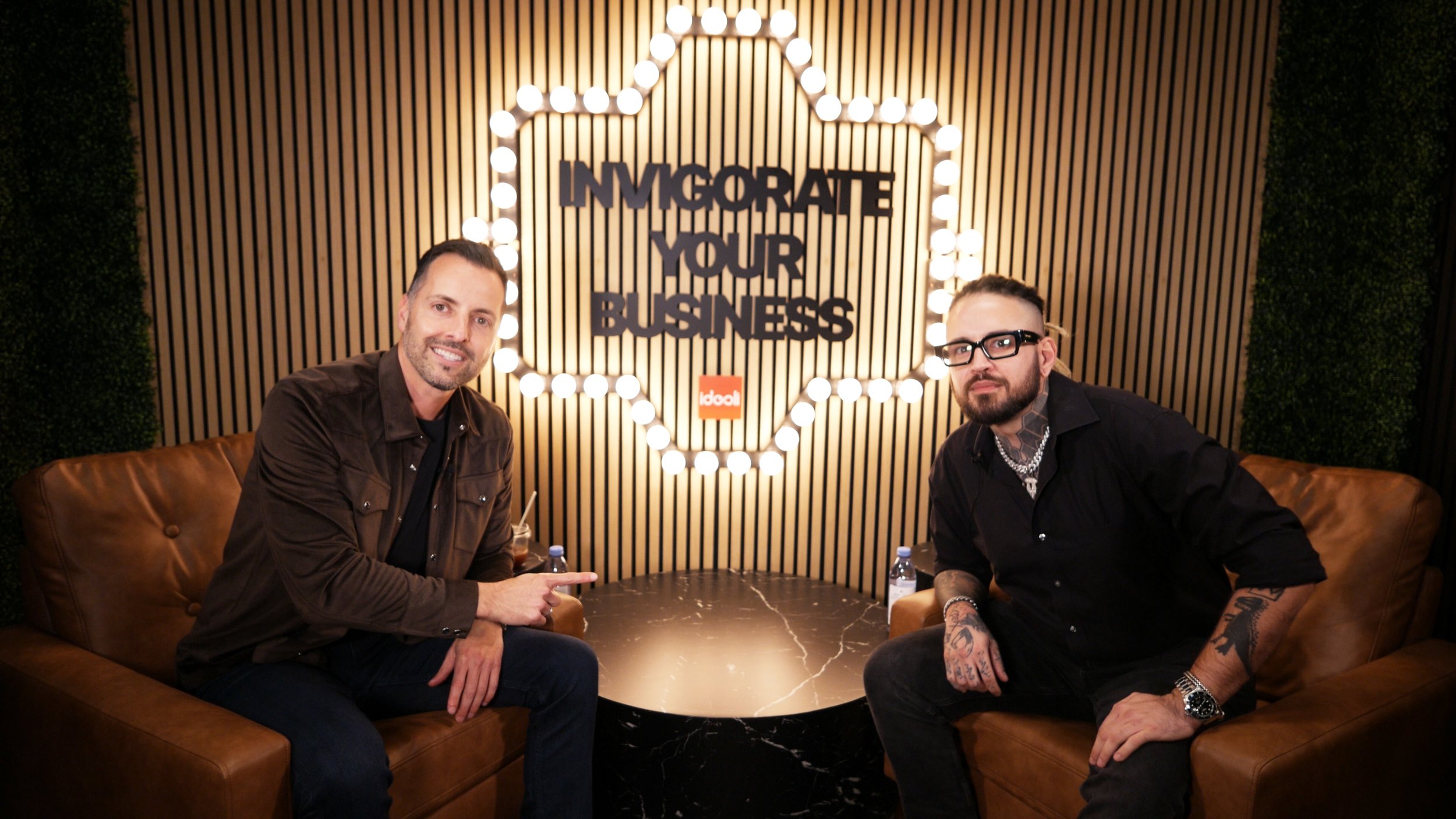
George Stroumboulis welcomes Georgios “Drone” Papadopoulos to Newport Beach, California, for an inspiring episode of Invigorate Your Business — diving into the heart of tattoo art, the depth of mixed-media creation, the vulnerability of personal transformation, and the unique creative community behind Malaka Tattoo in Los Angeles, all while uncovering how Drone built a powerful artistic identity that resonates worldwide.
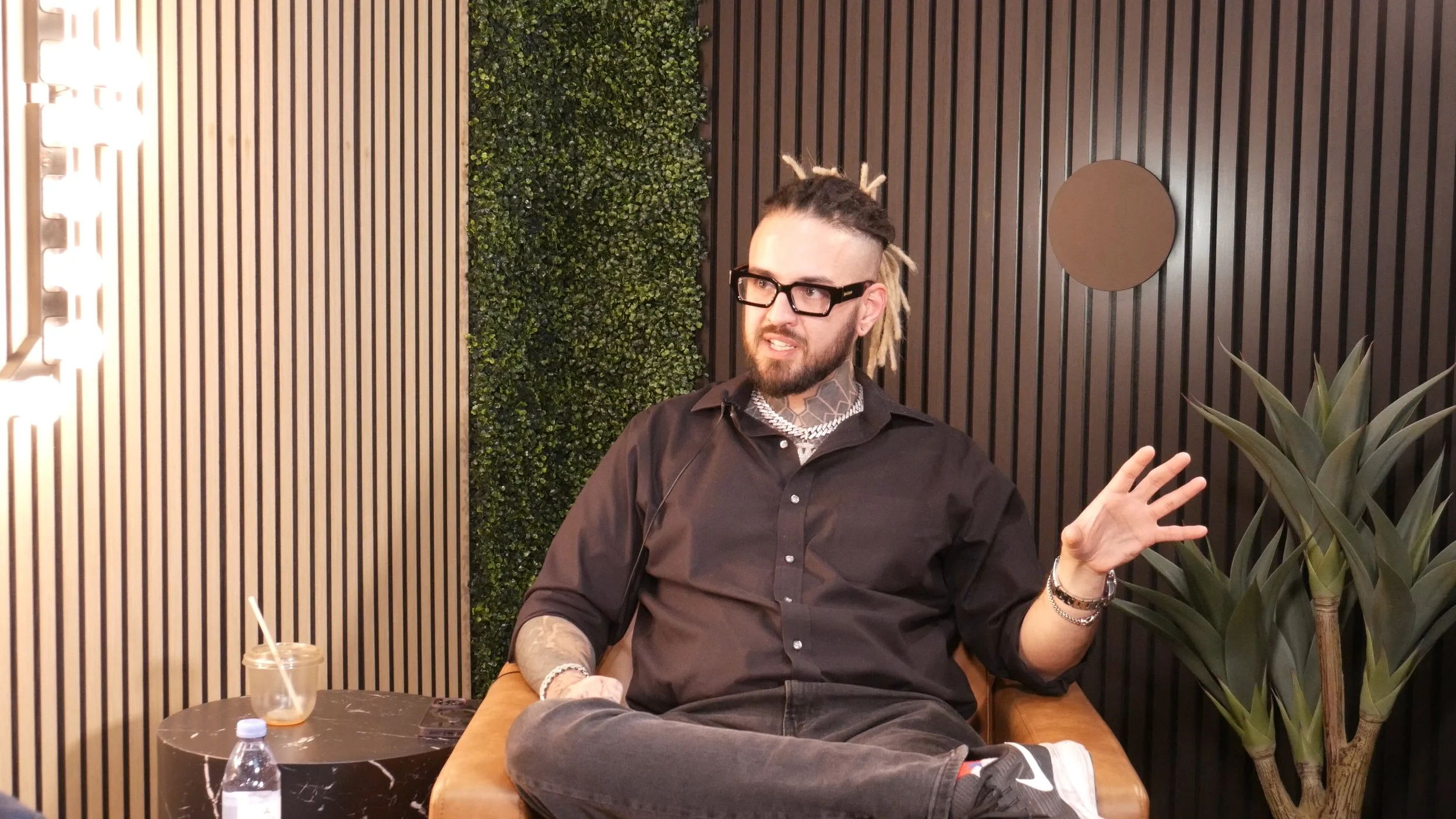
George Stroumboulis sits down with Georgios “Super Drone” Papadopoulos in Newport Beach, California, for a standout episode of Invigorate Your Business — unpacking the business behind tattoo artistry, creative branding, mixed-media innovation, the culture and leadership at Malaka Tattoo in Los Angeles, and the path Drone took to scale his art into an international presence.
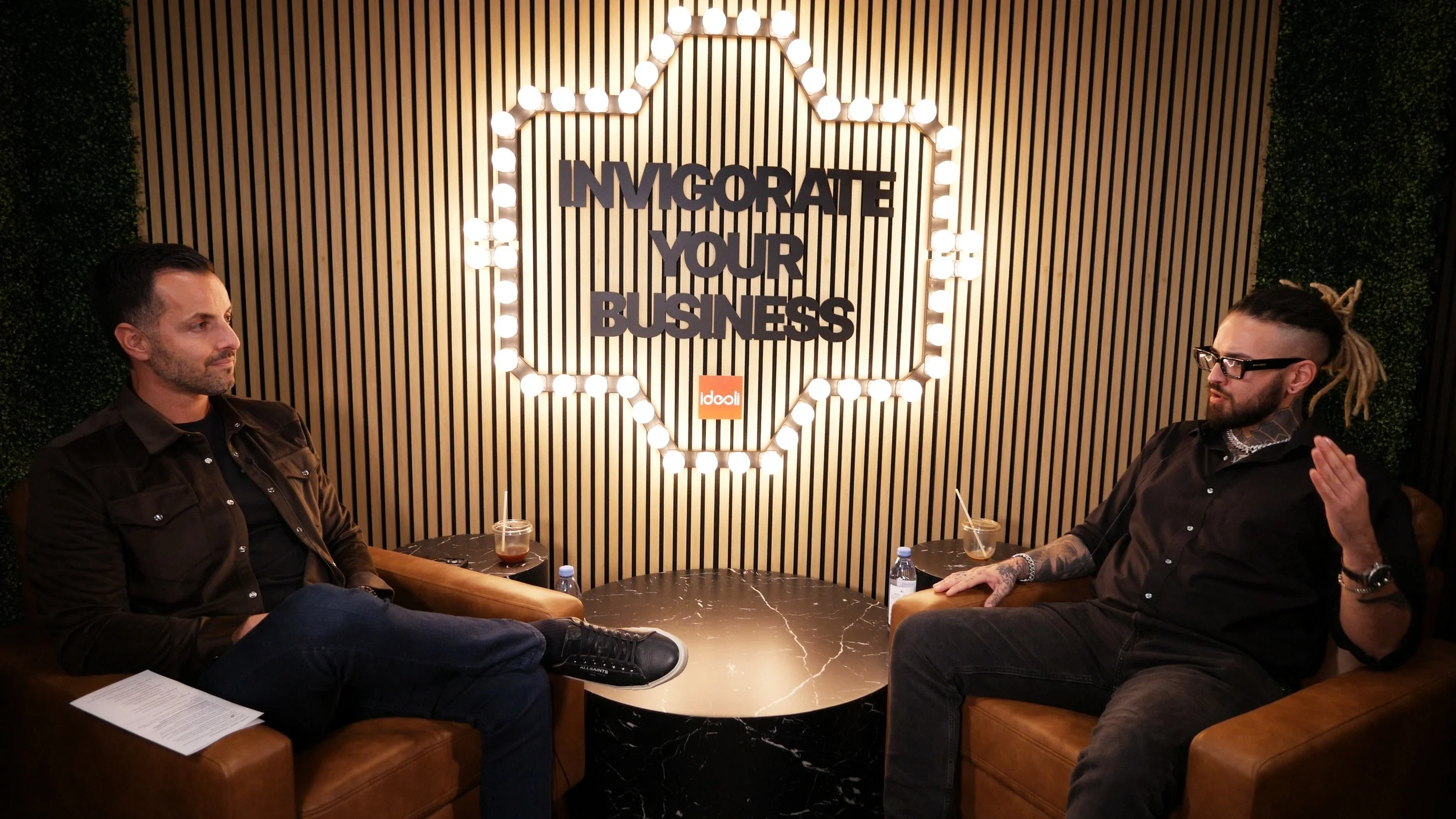
George Stroumboulis sits down with Georgios “Drone” Papadopoulos in Newport Beach, California, for a high-energy episode of Invigorate Your Business — exploring his journey as a tattoo artist and mixed-media creator, his evolution at Malaka Tattoo in Los Angeles, and the process of turning raw artistic passion into a distinct global identity.
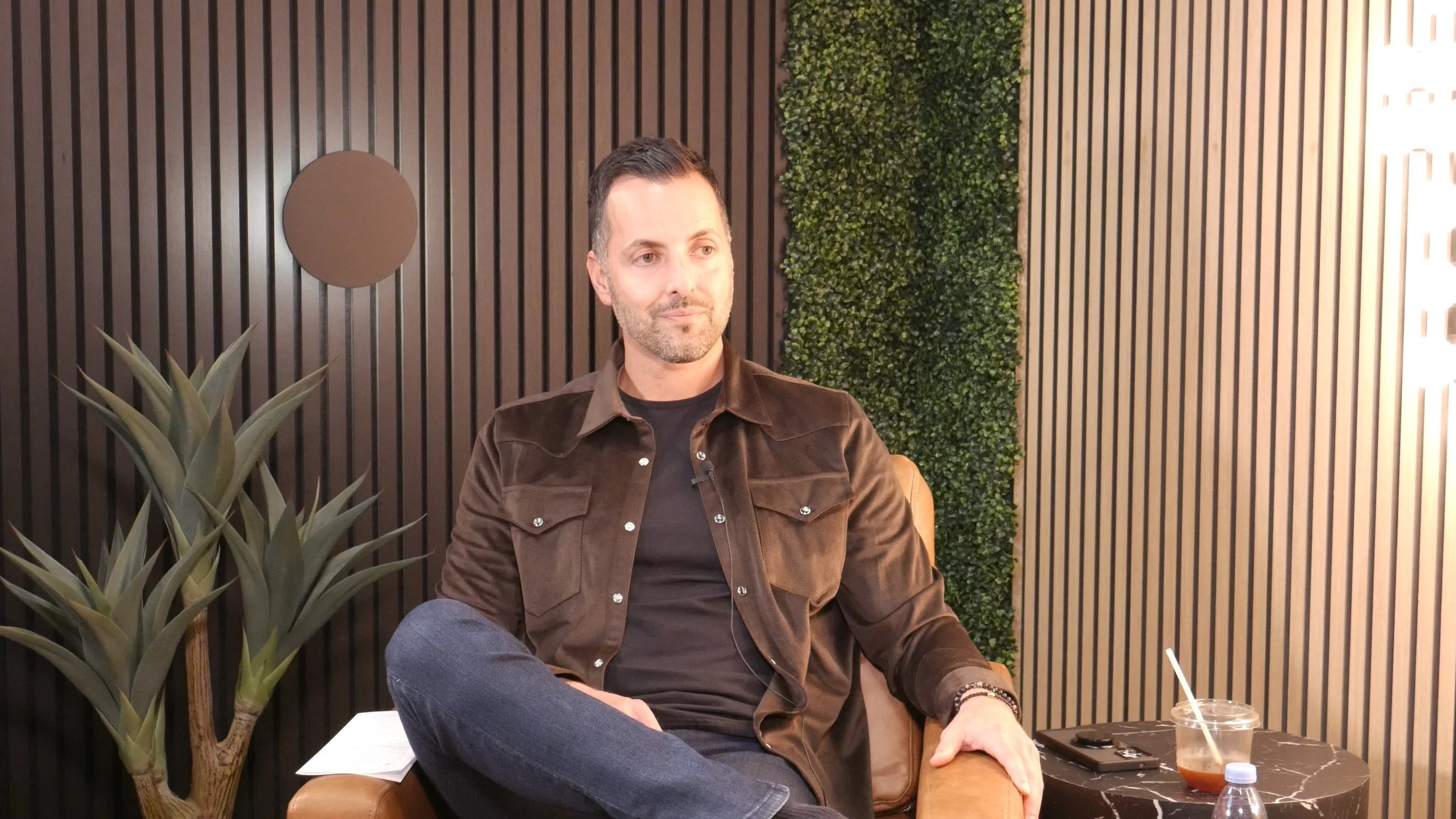
George Stroumboulis connects with Georgios “Drone” Papadopoulos in Newport Beach, California, for a bold episode of Invigorate Your Business — diving into the ink-driven world of tattoo culture, experimental mixed-media art, self-reinvention, and the creative fire behind Malaka Tattoo in Los Angeles, revealing how Drone turned uncompromising originality into worldwide influence.
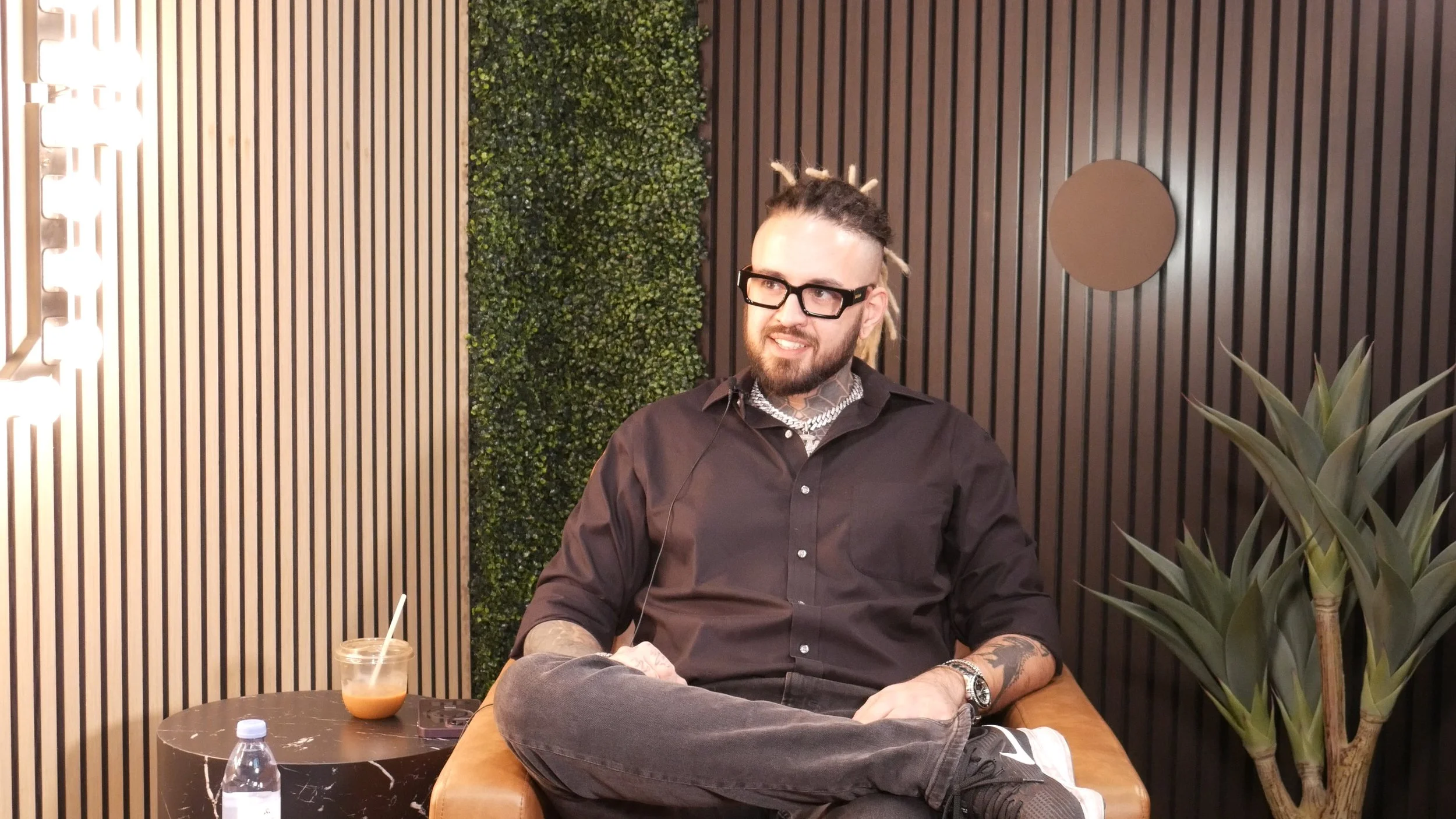
George Stroumboulis connects with Georgios “Drone” Papadopoulos in Newport Beach, California, for a bold episode of Invigorate Your Business — diving into the ink-driven world of tattoo culture, experimental mixed-media art, self-reinvention, and the creative fire behind Malaka Tattoo in Los Angeles, revealing how Drone turned uncompromising originality into worldwide influence.
ABOUT THE “INVIGORATE YOUR BUSINESS” PODCAST
The Invigorate Your Business with George Stroumboulis podcast features casual conversations and personal interviews with business leaders in their respective fields of expertise. Crossing several industry types and personal backgrounds, George sits down with inspiring people to discuss their business, how they got into that business, their path to the top of their game and the trials and tribulations experienced along the way. We want you to get inspired, motivated, and then apply any advice to your personal and professional lives. If there is at least one piece of advice that resonates with you after listening, then this podcast is a success. New episodes weekly. Stream our show on Spotify, YouTube, Apple, Amazon and all other platforms.
ABOUT GEORGE STROUMBOULIS
George Stroumboulis is an entrepreneur to the core, having launched several ventures across multiple industries and international markets. He has held senior-level positions at progressive companies and government institutions, both domestically and internationally, building an extensive portfolio of business know-how over the years and driving profit-generating results. George’s ability to drive real change has landed him in several media outlets, including the front page of the Wall Street Journal. George was born in Toronto, Canada to his Greek immigrant parents. Family first. Flying over 300,000 miles a year around the world puts into perspective how important family is to George’s mental and emotional development. With all this travel to global destinations, the longest he stays even in the most far-out destination is 3 days or less - a personal rule he lives by to make sure he is present and involved in family life with his wife and three daughters. To read about George’s global travels, stay connected with his blog section.
STAY CONNECTED WITH GEORGE STROUMBOULIS
STREAM & LISTEN TO THE PODCAST:
SPOTIFY: https://open.spotify.com/show/1rW2CmxQoiJNEPOZupJlvd
YOUTUBE: https://www.youtube.com/user/Stroumboulis
APPLE iTUNES: https://podcasts.apple.com/us/podcast/invigorate-your-business-with-george-stroumboulis/id1607693240
AMAZON MUSIC: https://music.amazon.com/podcasts/8fc03929-71b3-483a-a64e-153e30b3d462/invigorate-your-business-with-george-stroumboulis
STROUMBOULIS SITE: https://www.stroumboulis.com/podcast
PODCAST SITE: http://www.invigorateyourbusiness.com
FOLLOW GEORGE STROUMBOULIS:
INSTAGRAM: https://www.instagram.com/georgestroumboulis/
YOUTUBE: https://www.youtube.com/user/Stroumboulis
LINKEDIN: https://www.linkedin.com/in/Stroumboulis/
TWITTER: https://twitter.com/Stroumboulis
FACEBOOK: https://www.facebook.com/georgestroumboulis
TIKTOK: https://www.tiktok.com/@georgestroumboulis
CONTACT GEORGE DIRECTLY: https://www.stroumboulis.com/connect
FULL SHOW TRANSCRIPT
George Stroumboulis: 0:00
On today's episode, I sit down with a world-renowned tattoo artist by the name of George Supreme Drone Papadopoulos. George has an incredible story starting in Athens, Greece, and working his way up over the years from a graffiti artist up to a world-renowned tattoo artist. His studio in Los Angeles is called Malacca Tattoos, and people from all around the world fly in to sit in his chair and get the artwork done on their body. George is incredible at what he does, has created an incredible following, and you will hear all about his story starting now. My name is George Stroumboulis, and I'm extremely passionate about traveling the world, meeting new people, and learning about new businesses. Join me as I sit down with other entrepreneurs to learn about their journals. Okay, we're we're gonna start this right now. Okay, let's I'm excited. Reached out to you a while ago. I've been following you for a while, and it's always cool to see people in different arenas doing amazing stuff. And uh you and the whole artistic tattoo world crushing it, right? Global influence. But we're gonna start off. I'm gonna read an intro uh to introduce you and who you are. You're gonna tell me if we polish it and then we'll jump into this, okay? Okay, so uh this is rolling. Yeah, we're good. So today's guest is someone who represents pure creativity, discipline, and artistic courage. George Papadopoulos, better known as Drone or Supreme Drone, is a world-class tattoo artist and mixed media creator whose work pushes boundaries and turns skin into living, breathing artwork. Born in Greece and now based in Los Angeles, he's built a reputation for a style that's unmistakably his. Bold, graphic, abstract, experimental, and emotionally charged. From mixed media visual art to his role at Malacca Tattoo, Drone has curved his own lane, and people all over the world travel specifically to sit in his chair. What I respect about him is that he doesn't just tattoo, he storytells. Every piece he creates carries energy, intention, and authenticity. And in an industry full of imitators, this guy is the definition of original. I'm excited to learn more about his journey, his creative process, and how he turned his artistic vision into a global following. Drone, welcome to the show, brother.
George 'DRONE' Papadopoulos: 2:30
Wow. Thank you for having me. I appreciate it. Thank you for the kind words, man.
George Stroumboulis: 2:34
I appreciate it, man. It's uh Well said.
George 'DRONE' Papadopoulos: 2:36
You've you've studied me, I see, you know.
George Stroumboulis: 2:38
I gotta study. I gotta study, but but again, I'm not a tattoo guy, meaning I don't have tattoos, but I appreciate what goes into it. You don't even have one? I have one little one here that was uh an emotional one that I got after a cousin had passed away. And I'm like, oh, how do I honor him? And I just created this little initial design. And I was living in New York City at the time and just Googled where to go 18 years ago. Wow. And I just went, they cranked it out. And then for the last 18 years, I'm like, I want to get more tattoos. I just don't know what I'm passionate enough about. And then now that I have kids, I'm like, I would like to do something. But again, not about me.
George 'DRONE' Papadopoulos: 3:17
At some point, I'm gonna So you did it after a life-changing event or some some loss, some big emotional uh state. So many people don't realize it, but in tattooing, the biggest uh part of you know our work many times, like a majority of our work, is when that you know occurs, when big events in our life or big changes, a loss, uh a promotion, something, you know, something like changes and you you or you change a chapter in your life and you wanna express that, and you know, you basically mark your skin for life, something that it's the only thing you're gonna take to your grave, basically. That's it. So it's not uh it's really common for people to get even their first tattoo when they get 18, when they get promotion, when they achieve a dream, when they have a loss of a pet or of someone that they love. So yeah.
George Stroumboulis: 4:08
It's always some so that's interesting. And then do you find once someone gets their first tattoo, you always hear that you you get addicted to it, you want more. Is that the case?
George 'DRONE' Papadopoulos: 4:18
I'm doing a first tattoo on someone in two days uh from now. I I he contacted me, he called at a studio to give you like an idea of sometimes how it works. He called maybe six, seven studios, he told me. And when he spoke with me, I didn't just throw a number at him. Because he was like, Oh, I want this from this band on my arm, how much? And I was like, no, let's talk about it. You know, you're 18. I wanna guide you and I wanna see, you know, if you if if that's what you know you should really uh go towards the direction you should get. So it's his first tattoo, and I wanna make him feel comfortable, obviously, you know, because he don't know. He's just calling studios, he's doing his research. He kinda needs guidance and someone to tell him how things work, educate him on the subject too, and not just get it. You get addicted, probably for sure. Because tattoos they are amazing, you know, they are something uh that usually people uh do get to express themselves. And uh many times we can express ourselves through arts, even if that's verbal, like a poem, a song. That's why many people love music and they get lost in music, and you know they are like really into music or arts, and if it speaks to them, they take part in it. That's what that's how tattoos work. That's how it is. So this guy he came, he asked me, and out of the seven studios he called, he called me again after a few hours and he was like, I choose you. And and was that decision based on price alone, or no, I didn't give him a price because he was unsure of what he wants to get really at the end of the day. But he didn't know he was unsure until I actually spoke with him. Because he the only thing he knew is let me call a few studios and ask how much it's gonna cost. And when I talked to him and I threw the ball at his side, like the ball was in his court basically. Yes because I was I made him I asked him some questions to kind of get an idea of why we're doing this, not only what we're gonna do, but why we're doing it. And you know, uh he appreciated it. And many people do. Some others might not like it and might be like, just give me a price, man. Right. You know, and that's really not when you get your first tattoo. Because when you get your first tattoo, it's a big uh moment, it's like something that you've never done before. You're usually, you know, maybe thinking of it for 20 years. I have people that I tattoo in their 50s, and they tell me I wanted to get a tattoo for 30 years now. And my parents didn't allow me to get it. Because I come from a religious or a conservative family, or etc. So for him, he just called me back and he was like, I I am coming to the studio, let's speak about it in person. I like that you just didn't throw me a number, uh, a number at me and just you know, rash it because I'm just another tattoo basically. And he saw my page, he saw I do big projects, and my studio does too. Like my my other 9-10 artists who have at the studio, we all focus on big tattoos. So many of these people think, oh, okay, like they might not even do these small tattoos, they might not be interested in doing them, or uh they will just rash me or you know, not pay the attention that it uh demands, really because it's just a small chip tattoo. But you know, we have to treat everyone the same.
George Stroumboulis: 7:17
Absolutely. But but so like this guy, this is a great story. This example now, what did he end up getting? Was it a physically large tattoo?
George 'DRONE' Papadopoulos: 7:25
We're tattooing him in two days, and he's just gonna get a small tattoo on his arm from one of his favorite bands, which is uh Weir. I think it's W O H I R R. It's just a spiral. But he came to the studio, I took a photo of his arm, I put it on Photoshop, I showed him exactly how it's gonna look on him so he can get a good idea of what it's gonna look like. Yep. Because he don't know, you know. I I that made him feel comfortable, and even if he went to two other studios in the area to get an idea, they didn't sit down for five, ten minutes, pay the attention because it's just a cheap walk-in tattoo. So, you know, why would I do that? Well, in times like now, that uh like our industry is oversaturated, uh, it's like uh the competition is huge, you kind of have to pay more attention and take care of your clients as good as you can. So I did that with him and he appreciated it, and he came and he brought a friend of his. So I might tattoo his friend too. Yes, and then you know, who knows? It's word of mouth.
George Stroumboulis: 8:19
It starts with this, and then maybe he wants something else. Yeah, yeah.
George 'DRONE' Papadopoulos: 8:22
But we already discussed about his next one because he was like, That's my first one, I want this as my first experience, and then I want uh the cover of hybrid theory, a Linking Parks uh album, okay. Which I've done before. It's like a big angel with like a spear and all that.
George Stroumboulis: 8:36
So there's no I mean, okay, let's rewind a bit, right? You're known as you're known around the world. You literally have clients that fly in from Asia, across the states, get like you're known around the world. Obviously, we're gonna put up all your handles and everything, but the the brand you've created, where did you start like this artistic? You you have a graffiti background experience.
George 'DRONE' Papadopoulos: 8:55
I do. I uh my artistic experience started when I was a young boy. Uh I started drawing, you know, painting, uh experimenting with collas, paper collas, and uh when I was around 12 or 13 years old, I started doing graffiti. I started writing my name on the walls in my neighborhood in Athens. I changed my nickname and then I changed it again. I ended up with drone when I was 13 or 14, and since then, you know, that's my street name.
George Stroumboulis: 9:22
Where did drone come from?
George 'DRONE' Papadopoulos: 9:24
Uh where drone came from. I actually, because in graffiti, you just need to do something that looks good and the letters matter. I just put down I wrote down the English alphabet and I circled my favorite letters to draw or do on the wall. So that was my five favorite letters. I mean it was six. S was also one of my favorite ones, but it just didn't make a word. So DR1, which was basically drone. It was just my 13-year-old smart idea of saying I'm Daphne representer one. The first like it's my area.
George Stroumboulis: 10:00
So your area Daphne representing one country.
George 'DRONE' Papadopoulos: 10:03
Yeah, I'm from Daphne, Brahami, with Saius Demetrius, Neasmirnia Neocosmos. So it was just, but Daphne was my primary area. And I was like, okay, let me do the R1. One is just an ending extension of your name, usually if you are the first of your name in graffiti.
George : 10:17
Okay.
George 'DRONE' Papadopoulos: 10:18
Like KRS One, who is a famous rapper. Or, you know, like all these ones out there, they're usually graffiti, right?
George Stroumboulis: 10:24
Really?
George 'DRONE' Papadopoulos: 10:24
It was KS KS uh one. KRS One, it's basically his graffiti tag, you know, or or everyone who is one, you should know it's just usually graffiti right.
George Stroumboulis: 10:33
Graffiti tag. But you did that, you picked that in the end, it has nothing to do with a flying drone, like no connection.
George 'DRONE' Papadopoulos: 10:38
I didn't know drones existed in 2005, you know. Nobody knew drones 2005. Exactly. I looked it up, what it means. And it I I uh I think I read that back in 2005 that it means highway noise from your car, like the drone that the cars do, or uh some noise in the of an airplane. Like drones in 2005. I think I remember Googling it. You know, back then we had uh little cards, 56 kilo BPS, that you'd we didn't have Wi-Fi and all that. You would have to go to the kiosk, buy a card, uh make some coffee and wait for one MP3 song of Eminem to download for three hours. Right. So we didn't really do that, Google things and downloading images. We didn't do that. So and from social media there was uh Joy, GR, and high five. No, it's not even MySpace. Right. So the only drones that existed were some military half a million dollar drones. Who cares? Nobody around me or I didn't know. I obviously drones became commercial afterwards and famous, and they destroyed my game. And then they destroyed, yeah. But this is me now, you know, my mom, my late grandma, everyone calls me drone, so I can't change my name. This is my street name.
George Stroumboulis: 11:44
Even in Greece, when you go back, they call you drone.
George 'DRONE' Papadopoulos: 11:46
Yeah, yeah, I am drone. Right.
George Stroumboulis: 11:48
And then uh for one point you were Supreme Drone, or you go by Supreme Drone.
George 'DRONE' Papadopoulos: 11:51
Yeah, yeah, this came after. If you want, I can stick to how I uh yeah, with the art.
George Stroumboulis: 11:56
Yes.
George 'DRONE' Papadopoulos: 11:57
Supreme this I will get into it in a bit. Uh I started graffiti, I realized that I don't like to do my name on the walls. So I started writing random words on the walls, uh, such as uh alcohol or different words that I was expressing myself and even doing uh big pieces and all that. All over Athens. Athens, yeah, yeah. Okay. I was not huge as a graffiti writer because graffiti is expensive, you know. To make a piece you might need 20, 30 euro. For a 13, 14, 15-year-old boy. I was working since I was 13, but uh I didn't spend all my money in spray cans. I did spend enough.
George : 12:35
Yeah.
George 'DRONE' Papadopoulos: 12:35
Because I was not robbing the spray cans like many graffiti writers did in the past, you know. But uh I realized I hate writing my name, it's too selfish, and it's just off. I don't know. It felt like okay, I'm writing my name right now. I don't like it. Let me just draw something. So I was going to walls in legal spots like uh Polytechnopoli or other places that it's basically asylums. Police don't come in there, you can't get arrested. It's a graffiti-free zone. Uh not graffiti-free zone, I'm sorry, graffiti legal zone. Yep. So you just go there, you get your Suvlaki or your pizza, you sit down and you can draw for five hours if you want to.
George Stroumboulis: 13:14
And where's this?
George 'DRONE' Papadopoulos: 13:15
Just random buildings like shut down buildings, or for example, I was going a lot to Polytechnopoli. Polytechnopoli is basically a university little uh city in the center of Athens, or uh yeah, places that are legal, the legal spots as we call them. Gotcha. And uh I would sit down and I would draw characters or drawings, and then it's it's it's when it hit me I realized I'm not as good of an artist as I thought. You know, I was good at writing letters because since I was a young boy, I was doing it on my books, black books, drawing. But when it comes to drawing, painting, characters, you need to get some maybe study uh illustrative uh you know um lessons. It's technically illustrative and academic drawing that comes into play. So I was 16, uh 15 or 16, and I realized I need help. Like I need to actually stop applying what I know and first learn how to do what, what's going on. Uh I am um at this point I was I did my research for drawing lessons, and uh I found some fine arts uh preparation academic drawing uh private uh schools.
George Stroumboulis: 14:30
In Athens, okay. But at 16, you you realized, hey, I need to get better because you wanted a career in this.
George 'DRONE' Papadopoulos: 14:36
I realized I sucked and I was like, I I want to get better. This is not I I am embarrassed of doing these characters. Like, this is not of course I was looking up to people that were the best in the industry, and that was not healthy. It's not healthy for a kid to look at the legendary status, amazing artists, and be and take it as I took it. Like I was depressed. I was like, damn, will I ever do this in my life? But I was looking at people that did it for 10-15 years, right? And it was just an unfair comparison, you know.
George Stroumboulis: 15:04
Yeah, so far off.
George 'DRONE' Papadopoulos: 15:05
You're just starting. Yeah, yeah. It's like I'm comparing apples to oranges. I just started. I am a baby. I I I had to give myself some time and you know, allow myself to compare me to others in a more healthy way.
George : 15:18
Right.
George 'DRONE' Papadopoulos: 15:18
I was not, but I was also a kid. I didn't have a mentor or a guide or you know, someone. So I was looking at some of the best graffiti writers in the world, basically street artists like uh McLean in Germany, some guys that did murals, realistic, hyper-realistic mural murals, they worked with Carhartt, big companies, and I was like, damn, look at them and look at me, you know. And it was basically my first pieces, so unfair comparison. Unfair. But I was devastated. I was like, dude, quit. Because I either do something 100% or I don't do it. Right. So I was like, no, let's let's try to actually get better. Were your parents supporting you to want to get better? Oh hell no. No, of course. Like what hell no. My parents meant I I'm I've been arrested probably more than 80, 90 times. That's it? For graffiti. Are you serious? Yeah, yeah. And I wasn't even running, you know, like most graffiti writers, you know, they do something illegal and they run. I I wasn't running at some point, after some point that I didn't do my name and I was drawing, and I had 200 euro worth of spray cans to fix a big wall that was full of vandalism uh football team tags, and I was about to do a nice big drawing. I was not about to run. Like cops came, I supported it. I was like, look, this is what I'm going to do, and I wanna do it. And you wanna arrest me for that? Like, I don't I don't wanna run from what I believe in, you know what I mean? And what? It was stupid, basically but they would still arrest you after that. Of course, I was getting arrested the whole time. Or I was bad at running and all that.
George Stroumboulis: 16:47
I was like, But but not to lose sight of like your path, but what does being arrested look like in Athens for graffiti?
George 'DRONE' Papadopoulos: 16:52
It's not a big deal. Like, it's not like USA, it's not a felony. My record is clean, you know. Uh being arrested was technically even even the cops didn't like this because there is paper involved. You know, they have to write it down. If anyone sues afterwards from the building owners, no one ever sued because they saw him, not like some ghetto vandal that wanted to destroy their property. I was basically trying to do good. I I was going only to walls that were messed up by Olympia Cospanaikos, uh football, anti-racist, racist things, everyone battling on the wall with their beliefs and politics.
Speaker 1: 17:26
Yeah.
George 'DRONE' Papadopoulos: 17:26
And uh nobody really sued me, but when they arrest you, they take you to the police station, you get into a little cell which is miserable and uh dirty, and sometimes if it's Friday night or Saturday, you have to stay there until Monday. And uh they write you down, they record you, and then if you're a minor like I was, they have to call your parents. Oh jeez. Somebody has to come pick you up.
George : 17:49
Yeah.
George 'DRONE' Papadopoulos: 17:50
So, you know, as every reasonable, you know, uh parent would feel, they felt like, you know, I was uh just a mess and uh a parasite to society. Right, right. And they were giving me shit for doing it.
George Stroumboulis: 18:06
After 40, 50, 70, 80 times.
George 'DRONE' Papadopoulos: 18:08
Yeah, yeah, yeah. It's it's it was yeah, it was not good.
George Stroumboulis: 18:12
But you're still you're fixing your skill at this point, right? So you're practicing, you're getting better.
George 'DRONE' Papadopoulos: 18:16
Yeah, yeah, yeah. At some point I literally stopped because I I knew I have to put so much work into studying arts and fine art academic drawing. And slowly I saw I was in I was more invested in actually painting and drawing than going to a wall because the wall needs 50 to 150 euro. Jeez. Which in Greece back then was a week of work for me. You know, I was getting paid 2 euro an hour when I worked. So 2 Euro an hour. That's a lot, yeah. Yeah, I like at that point I was working 14-hour night shifts, 5 p.m. to 7 a.m. as a waiter or a bus boy or whatever, and I was getting paid 25 euro.
George Stroumboulis: 18:54
Yeah, and and for the listeners, so even today in Athens, in Greece, the average monthly income in Greece is about 750 euros, 800 euros.
George 'DRONE' Papadopoulos: 19:03
That's the minimum, not the average. But yeah, it's it's really low.
George Stroumboulis: 19:07
Up to maybe a thousand euros a month as well.
George 'DRONE' Papadopoulos: 19:09
The average is probably a thousand to eleven hundred. Yeah.
George Stroumboulis: 19:11
So imagine working a week to get enough to buy spray cats.
George 'DRONE' Papadopoulos: 19:14
Yeah, yeah, yeah. No, it's it it's and and at the end of the day, you know, I did it, but maybe once a week, once every 10 days, once every two weeks. And it's not it's not only it was the money involved. Definitely. Money was the number one factor. Yeah. Because otherwise I would paint every day. There were I knew kids from Voria Proastia of Athens that was like more high-end, you know, areas that they would paint every day and they were 15, 16 years old. And I was like, how do you find a thousand, fifteen hundred euro a month at 15 years old old and you're not even working? Yeah. I'm working my ass off. I can't afford to paint one-tenth of you, you know. That's crazy. But that's when, you know, uh like the the the parents or your financial status is involved. But um Yeah, I drew a lot and uh I was in high school, Likio is high school, senior high school, how you call Likio. Uh yeah, high junior high. Yeah, yeah. The the past the last two, three years of my high school, I was only going with a black book. A black book is usually just a sketchbook, a graffiti writer's carry. I was going just with that in my school. And I'm an MP3 or a walkman. And I I didn't care even my books. So I was a bad student. And uh my my teachers that knew I am a smart kid, I'm good with math or geometry and science and this. They were like, we don't want to do this, but we will catch you for this year. You are gonna stay here. School is not ending for you this year. When I was on third grade of Likio, you know, which is the last uh basically step to never see school again and leave it behind. They did a meeting about me and another kid, and they told both of us, you're not gonna pass, you're staying here next year, except if you, George, go and register for fine arts university, because we had to it's like panelinias that people uh like give exams to enter a college or a university. And to the other kid, they said that about music because he was into music. He was literally all day just that was his passion. We would both go, we were last uh uh desks, telefteatranias did axi, you know, and I we were both sleeping. We were going to school to sleep basically because we were up all night.
George Stroumboulis: 21:19
What what were your parents saying at this point? Oh, they gave up.
George 'DRONE' Papadopoulos: 21:22
After some time my parents gave up. Yeah, yeah. I was a menace to society, so you know, I and I was independent too a lot because I was working, and so I didn't ask for them from them for maths, and uh yeah, it's uh I come from a poor uh background, you know, like not poverty, but we didn't have mats. So, you know, I had to start working when I was 13. And uh if I wanted to provide for myself a new PC, some you know, my my my cigarettes or back then my ganja and like things that we had to, you know, we we needed as teenagers, you know. So all on you, yeah. Yeah, yeah, you know. I didn't I never had like maybe I had five euro every couple months, that's nothing, you know. It's like but no allowance, like normal kids sometimes get, or you know, uh dreams for a college tuition, whatever. That's not in the book. So so they basically had this meeting and they told us if you don't actually try to pursue your dreams, you're staying here, and not only next year, if you do the same shit next year, you're gonna stay the year after. And you're never gonna leave the school. Like, otherwise, just go out in society and be embarrassed by not even finishing Likio. So I had already done the work, I had already prepared for fine arts by going two, three years to that school of uh fine arts academic drawing and preparation for the fine arts university. And uh I was like, here goes nothing, it's for free. You don't go and you uh fill some papers and exams. You're basically going to the fine arts school and you have some statues, okay, sculptures, uh usually ancient Greek sculptures, and you're technically some thousands of people. I think the year that I uh gave the first time, the first year I didn't pass, the second year I passed.
George Stroumboulis: 23:07
To get into the school.
George 'DRONE' Papadopoulos: 23:08
To get into the school, yeah. Many times people just they enter for 20 years and they don't pass. It's really difficult.
George Stroumboulis: 23:13
Oh wow.
George 'DRONE' Papadopoulos: 23:14
Because the acceptance rate is lower than Harvard. So uh usually every year around 80 people pass to 90 or so, and the the participants are over seven, eight thousand, I think. Jeez. So it's really two two-year, three-year program, or it's that's uh for fine arts university. Fine arts university, it's like college, it's like four to five years. Gotcha. Many people take ten, but right that's you know the standard. And uh but um I did it, so I passed Likio. You know, they were like, You're you're uh how they called it uh Kamenoharti. You know, in Greek it's like you're a lost cause. Yeah, you're a lost cause. So we're we don't want you here anymore, like in the school anyway. So here you graduate. Go go good luck with life. You know, because what are you gonna do with your life? You're not a good student, you're not obeying, you're not you're a menace. But did you like that reaction from them, or inside of you was a- I understood it, you know. I wasn't dump, I was just, you know.
George Stroumboulis: 24:11
But did that fuel you? Like, I'm gonna show you, or did you not have motivation?
George 'DRONE' Papadopoulos: 24:14
Obviously, you know, we all I don't think it's only me, but everyone who has been um judged or not accepted by their community or parents or like school teachers, their circle for what they do, and it has to do with arts. I think it goes two ways. Either you're gonna get uh you know depressed and sat down and not do nothing and just stay, you know, stable, no static, how it's it called like tragedy happens and stuff like that. Yeah, you're just gonna sat down and quit. Yeah, you're gonna quit and give up, or the other way is you're gonna just fully invest yourself and go, you know, full throttle on it, which I did, you know. Like I I passed to the university, I went to Thaloniki, and uh I stayed there for almost a year, and then we had the big boom, the economic crisis. Uh, I think 2008 it happened. But in Greece, it didn't directly affect us 2008. It did affect us 2008, but then 9 and 10 were the worst years than 8. Yeah, because uh it's like uh you know uh 2008 it happened, but then the the results and how the society was affected the cup the next couple of years, that's when it hit everyone. And uh it was already bad, yes, and it became worse in Greece. So me and maybe 40 or 50 percent of my university uh dropped out. So basically, you know, 30-40, you know, 40 or 50 percent of the school of the college dropped out.
George Stroumboulis: 25:47
Why? Because they weren't making enough money to stay in there, is that why?
George 'DRONE' Papadopoulos: 25:51
Yeah, I mean, when it comes to survival, you're not thinking let me uh let me study and go to college half my day. You're thinking let me hustle and like pay my bills and try that my best. So most people that were in fine arts, that uh they were not uh being supported by their parents or they didn't have savings, which was many of us. We dropped out, and you know, I was one of the first that I was like, okay, I cannot stay here. I was going uh six hours in the morning to school for uh nude uh figure drawing models, and then I was going for 14 hours night shift to a bar to be a bus boy and a waiter to s to support myself. So I uh I stayed there for almost a year, and I be I went back to my mom, like Athens, uh, after a year, and I was looking like a zombie because I was sleeping three hours a night or four hours a night, and all day was either school and drawing and hustling at the school, and then you know, work, hard work for 25 euro a day. So I was like, I love it, but I can't do that. And same with many other people that uh they didn't do what I did. They were basically at school and their parents couldn't support them anymore. And you know, a few of us we were doing this full-time school and work because otherwise it's impossible. How am I gonna pay my rent in another city? Art supplies, you know, uh the Greek government don't really uh fund these things, you know, you have to provide it for yourself. Oil painting, uh painting colours, all that is expensive. So we dropped out, and uh I already had bought my tattoo machines, and I already knew I wanted to be a tattoo artist. So you knew that in in the school, you knew, hey, I'm doing this to become a tattoo artist. I was 15 when I decided what I can do with arts and graffiti or whatever I've done so far, which was not a big investment of it, was maybe two, three years, but it's important two, three years if you start 12 to 15, you know. Of course. So I thought I don't want to cut my beard and I don't want to dress the way people want me to dress because they want me in their luxury restaurant, and I don't want to boss over my head, I want to be expressive and artistic. And how can I do this and actually make some good money? The only avenue was tattooing, honestly, you know. Like there is no other job for a menace to society like I was. Right. To do something that, you know, like um it's I if you want to make money, you have to go to college, you have to study something if you don't have the connections or the parents, the circle, you know, to do that.
George Stroumboulis: 28:09
Especially in Greece, where it's especially it's very clicky, it's very special in Greece, yeah.
George 'DRONE' Papadopoulos: 28:14
Yeah. So I thought tattooing is the way, and that was already before I entered fine arts school. That was when I was starting the drawing, and um, that was kind of my master plan when I started drawing and doing academic uh drawing and preparation and all that. By the way, I told you I'm gonna speak Greek. I don't speak Greek. You don't speak, but it's okay. This is better. This is trying to make your life easier because I know the subtitles are gonna be It's for the editors, you know.
George Stroumboulis: 28:39
But the reach is better in English. Yeah, so so hold on. When did you get your first tattoo?
George 'DRONE' Papadopoulos: 28:44
I got my first tattoo when I was 15 or yeah, or 16.
George Stroumboulis: 28:48
So around that time, okay. So you you get the machine, you're studying, like today, you're known around the world. Half your life ago, you're in your early 30s right now. You're like, this is what I want to do. For someone who said at 15 you were garbage or you weren't great and you needed to work on that, to doing, and we're gonna put so much B-roll during this episode of like what you create on people's skin. How do you go in 15 years from learning to this? And people trusting you with large real estate on the body. It's not like, hey, put put a little heart here or something. We're talking sleeves, backs of it almost looks 3D, you know, organized chaos is what you call it, right?
George 'DRONE' Papadopoulos: 29:29
Yeah, I can't call it mixed media because I would lie to myself, you know, because it's the media is one, it's ink. But I love mixed media. And mixing techniques like that, like I would mix on a canvas, a painting of different techniques and materials. In tattooing, you can only do it with ink. I cannot uh uh like put a nail on you and throw some wood and stick some paper and do collage. Right, right. But organized chaos, that's another story. We're gonna speak about that term in a bit. Because I am ADHD, I'm gonna get lost.
George Stroumboulis: 29:59
Yeah, yeah, no, no. Stick stick to this.
George 'DRONE' Papadopoulos: 30:01
Yes, yes. I am um so I uh left the school. I already knew I would tattoo. I already knew I wanna give get into tattooing, you know, and I already had both my tattoo machines. I think it was 30 bucks or 40 bucks, something like that. My best friend that was making fun of me, both them from a Chinese website for me, and uh he told me if you ever make money from this, if you make like a thousand euro, I think he told me. If you ever that's how much my best friend, my biggest supporter, didn't believe in me. He thought, dude, you're smart, get into something else and leave tattooing. This is not for you, you know.
George Stroumboulis: 30:36
But he still buy you the machines, even though he didn't believe in it.
George 'DRONE' Papadopoulos: 30:38
Because he was like here, so you don't have an excuse. And he was like, if you ever uh tattoo a thousand dollars, a thousand euro in general from tattooing just life, yeah. Yeah, I I'm gonna give you my toe to tattoo, you know. So but he's a very conservative like guy and he would never get a tattoo. Afterwards, he got some tattoos, but that's another story. Yeah, yeah. Not from me though, he still owes me his toe, but that's how much even my best friend didn't believe in me, you know. So because it was crazy, you know. It's crazy to think that, oh yeah, I'm just gonna tattoo people for a living, especially 2000. What was it? It was 2007 when I decided 2008 uh was 15, 16, and I got my mass in 2009, I think. Wait. 17 years.
George Stroumboulis: 31:22
So did you want to in 09, did you want to tattoo in Greece? Or did you say, hey, let me do this, I need to go international?
George 'DRONE' Papadopoulos: 31:28
Man, I never thought of that. You didn't think that. It was this is for the grief market. No market. That was like so impulsively thinking of just uh freestyling it, you know. I didn't know like what would happen. Like I really thought uh I'm I'm just a failure, you know, and I'm just gonna be doing graffiti, I don't know, smoke weed and uh be a failure in general, because when you have all your circle, friends, parents, family, like everyone around you just telling you that this is wrong, uh like this is not gonna work out, you should go find a job, you should not be crazy enough to think that you can make money from this thing. And it's it's crazy to actually believe in yourself and that thing and continue it.
George Stroumboulis: 32:13
Do you think you'd be as successful today if people supported you more along the way?
George 'DRONE' Papadopoulos: 32:17
No, I don't think so.
George Stroumboulis: 32:18
Yeah, I don't.
George 'DRONE' Papadopoulos: 32:19
No, I think because I think that fueled me. Because I'm stubborn, you know, and the more I hear no, a lot of times I do it, you know. So and that's not not only with me, that's with many people I know. So I mean at the end of the day I didn't care much about what other people think. Because I am doing me. And if I believe in it and I see, you know, the vision, I'm just gonna do it. Yes. So 15 years old already, I had gone around at two studios, 15 or 16, 2007 or 8. I went around at two studios in my area and I was asking them, hey, do you take apprentices? And they would look at me and they were like, Man, you're a kid. What do you mean? Do you even go you do you still go to school, right? And I was like, Yeah. They were like, no, finish school. What do you mean? Go finish your school and then we discuss, you know. Until then, um, good luck. And one guy only in my neighborhood just told me, I was like, hey, listen, I already know what you're gonna say. You don't take apprentices, right? He was like, not you. And I was like, okay, what's your advice to me, like right now? Because I know I already got this answer from different people. And he was like, Well, just go to the international press in Omonia in the center of Athens and buy German and American tattoo magazines. And I was like, really? Should I just go buy magazines? And he was like, Yeah, because through the magazines you're gonna learn tattoo styles, reputable tattoo artists, you're gonna see the world, you're gonna see if you actually like what you see and get information. So man, I started collecting magazines. And uh by the time I started tattooing, I had 200 magazines. I was spending all my money to magazines, and then I started buying fine art magazines and all that. So I started tattooing when I went uh back to Athens from Thessaloniki. I did my first tattoos basically in Thessaloniki while I was in fine arts. Oh yeah? Yeah, 2010. And to some of my best friends, the very first tattoo I did was uh the bus boy other waiter of mine in the same uh nightclub. We were working together.
George Stroumboulis: 34:19
What did you tattoo on him?
George 'DRONE' Papadopoulos: 34:21
He wouldn't trust me, so I knew I have my masons back home for a year already or two, and I was like, Theo, you wanna get a tattoo? Um beers are on me, weed is on me, I'll give you 10 bucks for your ride, come to my house. So I basically gave him 10 bucks, I gave him weed and beers, so he can come to my house and get a free tattoo. That's how desperate I was because nobody would give me skin. I was like, just bring it on. You know you're gonna pay 100 euro for this tattoo, which now would be 200 or so.
Speaker 1: 34:50
Right.
George 'DRONE' Papadopoulos: 34:50
And he was like, Man, it's a good deal. Let me do it. Like, and I was like, I told him it might not come out well. It's my I don't know what I'm doing, man. I knew already that I'm doing everything wrong. Yep. I put the stencil with water, I didn't know there is a special cream, I put my needle upside down, I didn't know even I didn't know nothing. Did you show him that you didn't know it, or were you just I told him I don't know what I'm doing. So I'm giving you weed beers and some money, so you can come. That's a good friend. Yeah, yeah. That's a good friend. And he was like, man, let's do it. What can go wrong? I mean the tattoo went wrong, but what did he want? Man, the thing is that's that's that was my uh mistake, I think. Okay. The very first tattoo I did was a full rib cage of calligraphy Greek letters, and it wrote uh Anaga pasa lithina. That's how traumatic it was to me. I still remember it. And I don't listen to this music. Anaga pasa lithina, pernistaorita vuna, ketragudaston erotasos tisselini. So it's basically in English means if you really love, uh you take your love to the mountains and you sing it to the moon or whatever. Yeah, yeah. From Stellios Rokos, I think. Or someone, someone in Greek, like something.
George Stroumboulis: 35:57
Very capsurico, eh? Very capsurico.
George 'DRONE' Papadopoulos: 35:59
And uh I was like, okay, I put a stencil, and I didn't know that when you have a tattoo like this, you kind of have to start from the end, so you can tattoo and not lose the stencil. I started from the very first letter, and while I was doing it, I was rubbing the whole stencil on him, and uh by the time I finished the A, and all my friends were like, that's a big moment. Drone is finally tattooing, you know. Oh jeez. I do the first letter and it's perfect, and I'm like, fuck yeah, I made it. Like, let's go, we're getting rich. Like, I start the first letter, I wipe, and the whole stencil is gone. And and we're all looking at each other and we're like, oh no. What we're gonna do now. And I took a Sharpie and I started free-handing calligraphy, curvy, like cursive letters in Greek in his whole uh rib cage. Oh Jesus. I made it, okay. I I did it, but I kept continuing from the first letters and I kept running the stencil and the sharpie. It was horrible. It took me like seven hours.
George : 37:01
Oh my god.
George 'DRONE' Papadopoulos: 37:02
It's a tattoo I would do now in ten minutes, probably, or twenty.
George : 37:05
Right.
George 'DRONE' Papadopoulos: 37:05
Took me seven hours, and the letters were they are still solid. I've seen them two, three, four years ago. Okay, but their letters are dancing. It's it's not cohesive, it's bad.
George Stroumboulis: 37:16
What did he say when you were done? It was he.
George 'DRONE' Papadopoulos: 37:18
He loved it, man. What do you mean? He loved it. That's that now. We're imagine we're like poor guys in the like not hood, but you know, in a poor area. We're just doing a tattoo. He already knows them. It's my first one. And what he got for what he paid, nothing. Yeah, he basically got free beers, weed and money. Yeah, it was amazing and a lifetime of memories uh yeah, yeah, it was a good deal. That's incredible though. And then I did the day after, literally. My best friends there are uh Ilias uh and Tasos uh that we were studying in the fine arts university, or the day after.
George Stroumboulis: 37:54
Did you know to turn the needle the next day?
George 'DRONE' Papadopoulos: 37:56
Man, I didn't know shit. But it was smaller tattoos and it was easier. Okay, even if my friend passed uh like out before we even start. Tasso. Tasso, dude. And uh but yeah, we did some memorial uh date of their uncles uh passing, and then people kept coming back, and I did like I don't know, 10 tattoos in a few days, and that's when I had to come back to Greece. But I already was confident because I was I at some point I did my fourth, fifth tattoo, and it was a tribal scorpion like that on someone's back. Come on, so I was getting um comfortable, even if the work was not good. But for what they were getting, one of my first tattoos, it was amazing. Yeah, so I went back to Athens and uh I started tattooing people in random, like out of your own house, apartment? Yeah, a few in my house, but it was like 10 bucks. Give me 10 bucks for the supplies or 20. Let me make some portfolio, you know. And now we're speaking 2011, 10, 2011. Social media now? Like, are you promoting this on so how are you getting your name out there at this point? Back then, yeah, there was uh I think there was barely MySpace. I it was probably MySpace. Yeah. And uh because before MySpace we had high five, it's another social media thing if we had in Greece.
George Stroumboulis: 39:10
Yeah, we never had that over here, or it wasn't big over here. Yeah, okay.
George 'DRONE' Papadopoulos: 39:13
But high five, no, we were that was the emo era, 2007, like eight. Uh it was MySpace, there was no Instagram, I doubt there was Facebook.
George : 39:21
Right, right.
George 'DRONE' Papadopoulos: 39:22
And uh then I did a few tattoos, I had to support myself, so I started working again, waiter, different jobs. Yeah, I've done all kinds of jobs.
George Stroumboulis: 39:33
Back in Athens now, jumping around.
George 'DRONE' Papadopoulos: 39:35
But because uh I was not in a studio and I didn't want to get any legal trouble, I didn't want to be tattooing at my house. People already knew who I am, what I do from graffiti, or you know, the scene. So I started looking around for tattoo studios. And I basically contacted my favorite one, which I'm not gonna say the name now, but yeah, he was the best black and gray artist in Greece. He's still working now? He's still working now. No, yes. And uh I was like, I have to work with this guy because I am good at drawing, academic drawing and all that. He has the technical part down. He's one of the best maybe in the world at this point. I need to go and be with him.
George Stroumboulis: 40:14
Just to learn from him.
George 'DRONE' Papadopoulos: 40:15
Yeah, yeah. To learn, to be around this. And I call them. I think it was nine A nine PM on a Tuesday night. I don't know. And I call them and uh his wife answers and she tells me, We are not interested. Uh we're not hiring. And I was like, it's okay. I just want to come by. I want to show you my portfolio. And if you don't like it, you know, it's cool. Like, I just wanna come there first before I do my research. And you know, and she was like, No, no, maybe don't come. Maybe don't come. And she spoke with him, and he was like, Yeah, hell no. Don't tell him to come over. We're not, we don't want to do that. You know, he didn't want apprentices, he didn't want anyone new in the studio. And I was like, I tell her real quick, okay, well, I'm coming bye bye. And I just took my bike and I went.
George Stroumboulis: 40:59
That night, same night. Yeah, yeah.
George 'DRONE' Papadopoulos: 41:01
10 minutes, 12, 15 minutes later I was there, and I just showed up and they were like, But we told you, don't come, it's okay. I was like, I'm here. Good. So let me show you. And uh they expected me to go with a little binder, show them some truss, little tattoo drawings or whatever. But I went with my big binder from the university, and I had sculptures, I had the charcoal academic drawing uh things. And uh I go inside the booth that he was tattooing, and uh he tells me, Wow, you came, okay, whatever. Show me what you have. And I was like, Here? He goes, Yeah, here. It's not enough. And I was like, the studio was small.
George Stroumboulis: 41:37
Uh and he's giving you attitude at this point.
George 'DRONE' Papadopoulos: 41:39
Yeah, of course, he's very snobby. And uh bear in mind, ex-drug dealer, con ex-convict, uh tough guy. Yeah, and I'm a kid, and he I I need him, he don't need me.
George : 41:49
Right.
George 'DRONE' Papadopoulos: 41:50
So I was like, the studio is small, maybe 400 square foot or something, uh 300 square foot room. And I was like, okay, it might be enough. And I start take out taking out like I don't know, 40 by 25 by 30 inches big drawings, and I fill the whole studio with drawings and sculptures, and and he just while he's tattooing, he turns around and he sees the whole like ground of his studio. Yeah, and he's like, That's yours, and I'm like, Yeah. He goes, like, how old are you? And I I think uh what was it, uh, 2012. I was like, I'm 20. And he stops tattooing. That's when he he kinda realized, like, this guy's for real. Yeah, you know, and he's got the balls to come down here after he said don't come. Yeah, yeah. He's he looks like he actually can walk the talk. Yes. Because he saw me, I was arrogant, you know, 20 years old. I thought I have everything figured out. Are you tatted up at this point at 20? No, no, no. I just had some small shit on me. I didn't know what I was doing. And he looks at it and he's like, Have you tattooed before? And I go, Yeah, I have done some like I've I had done, I don't know, a few tattoos, ten tattoos, I don't know what. Until then to my friends, and uh he goes, he takes off his gloves and he starts speaking with me to see if I have a brain cell. While the client's still in his chair. Yeah, yeah, yeah. This guy is like, I haven't seen that before. Usually people come and they are like, they're not confident, they show me something. They haven't put the work. I had put the work. I already had hundreds, if not thousands, of hours of drawing and study and all that. So um he took me seriously and uh I showed him my tattoos, and by then it was all line work. And uh he goes, Well, you can't shade, right? Like I can't do shadows. And I was like, No, I can, I haven't done it yet. How can you say I can't shade? Here's all these realistic sculptures I've through. And he was like, Well, until you show me and you prove it to me, you can't. And I was like, Okay, I'm gonna do one with shadows. And he goes, Okay, do it, and then we can speak again. And I was like, okay, what do you want me to do? He goes, Do a rose, and yeah, it's this. And I was like, Okay, uh rose, like black and grey, sure, yeah, okay. But do it with some like proper lines, don't slacken the lines, you know. I wanna see your line work too. And I was like, okay, sure. And that night I basically told him I don't have a machine for shading. I just had a Chinese machine for lines. And he sees me, he's like, okay, take this one. And he gives me a rotary of 300 euro worth. He didn't even know me. But he knew I needed him, and he he saw that I I am gonna be in that world. Yes. So I can't fuck up and just steal the machine at this point.
George : 44:32
Right.
George 'DRONE' Papadopoulos: 44:33
Like he trusted me with a machine, even if he just barely met me. But it was, you know, he gave me a machine and he was like, Here, take this. And I go home. He didn't expect me I would do it. Uh he just I think he just thought I'm gonna do it weeks after or whatever. But I went home, I set up my machines and my you know, station in my bedroom, and I did it on me. That night? Yeah, yeah, that night. Like half an hour later, I was doing a rose on my leg.
George Stroumboulis: 44:57
And you just use that your own self as the guinea pig to test this out. Yeah, of course. Get out of here.
George 'DRONE' Papadopoulos: 45:02
You want me to show it?
George Stroumboulis: 45:03
Yeah, yeah, show show that on uh you know what? And I'm gonna get that too. We're gonna get it up later. That's it. So that's the first time the guy sent you home.
George 'DRONE' Papadopoulos: 45:14
Yeah, that's so by standard. Two and a half for three years now. We're still here, you know? And I've never reported it. Man, I'm yeah, very happy. And was he happy? Like, did you go back? I went back the day after, like early in the morning. I went there with coffee and he was like, damn, you're back. And I was like, Yeah, I'm back. He goes, Why why are you back? And I go to show you my rose. And he looks at me, he's like, You did it. I was like, Yeah, where on whom? And I'm like, on me. He goes, You did the rose on you. I was like, Yeah, who else? I didn't have anyone yesterday night. He goes, Let me see. And I take off uh my sock and I show him. He sees it, he looks at me, he goes, Who helped you? And you know, I tell him, Man, nobody helped me. I don't know anybody in this industry, you know what I mean? Like, I told you, I don't even have my scenes, I just did it. And he goes, Uh yeah, I don't know. He's like, he don't believe me at this point. And I saw him a video of me tattooing it because I had put my little, I don't know what I had Sony Erickson. Yeah, like half megapixel camera.
unknown: 46:18
Half megapixel.
George 'DRONE' Papadopoulos: 46:19
Yeah, yeah. And he sees the video and he's like, God damn, you did it. You're hungry, like you're thirsty, you know.
George Stroumboulis: 46:25
Uh first of all, hold on, really quick. You you pick the biggest tattoo artist in Athens.
George 'DRONE' Papadopoulos: 46:30
Yeah, yeah.
George Stroumboulis: 46:31
Right? You go, you call them. First of all, they're like, Don't come down. You show up 15 minutes later.
George 'DRONE' Papadopoulos: 46:35
Yeah, go big or go home.
George Stroumboulis: 46:37
Yeah, the guy's telling you, get out. I don't, you put everything out. He's impressed, stops tattooing. He's like, hey, but you gotta do this. You go home that night, you do it, you come back. Like this guy must be nervous at this point. On like, I either got to partner with this guy or this kid's gonna be able to do that.
George 'DRONE' Papadopoulos: 46:51
Yeah, no, I I wanted to show him that, you know, like when you are at that point, I think you have to give your everything. You know, and uh for me that was my way of uh sure expression. But if you don't pursue this, if you don't pursue that chance you have, like, you know, it's like telling you I am playing basketball and I have a chance to show to the biggest agent in the NBA my work. I have to try my best. So yeah, I went home and I tried my best, you know. And I went back and he was like, Well done, you know, and he told me, okay, let's start uh working together. Like, come here every day, let's see how it works, you know, let's have it goes. So from the day before that we were like, we don't want that, don't even come by. The day after we were like, at the point that he told me, come every day, come see me working. And I was like, I asked him, Can I tattoo sometimes people? And he goes, Is there anybody that wants a tattoo from you? Like, you know, spoke kind of down. Yeah, of course. And I was like, There is some people, and I wanted to impress not only him, but you know, the people I worked uh around. So I uh started contacting everyone I knew, and I was giving them like 20 euro tattoos or 30 euro tattoos at the studio, at this place's studio. Yeah, at this point I just wanted to practice, and the money that I was getting, it was basically going, I was taking that 20 euro and I was giving it to the studio for the supplies and everything, even if it didn't cost even as much. And um at some point, like a few days later, I was booked for two months. Every day, like I tattooed maybe 50 tattoos in two months. And after the third, fourth day in a row, he looked at me. We had breaks, you know, Greeks. Yeah, we drink five Freddos a day. Yeah. Before lunch. He was like, Are you gonna do this in like every day? And I was like, Yeah, I have people. Where do they come from? He was like, Where do you know these people from? And I was like, Well, I am I didn't I know I'm a baby, but I wasn't born yesterday. I have a circle, you know, I did graffiti. I have people that I went out with. They want tattoos, so they trust me, you know. And uh he was he started getting me seriously, you know. I started to earn this.
George Stroumboulis: 48:58
Uh showing you respect too as a peer?
George 'DRONE' Papadopoulos: 49:00
Yeah, you know, because how else are you gonna earn the respect and you know the appreciation from someone if you don't show them that you're willing to put the work? Don't talk to me all you want, but if you don't actually put the work. So I started tattooing a lot. And yeah, long story short, I can keep going about my story for hours.
George Stroumboulis: 49:18
But it's so important. Like, think about where you are with this guy right now, and then you were just saying, hey, everyone gave up on me. They thought I was a deadbeat, I was a menace to society. But like it's a lesson for people out there, young people, kids, whoever. Like, dude, you just gotta find your passion. Your passion was not studying stuff that you weren't interested in, right? But like, look how we like follow up next day, like every day matters, like that's incredible.
George 'DRONE' Papadopoulos: 49:44
Yeah, and I think it comes from the need for uh self-expression, you know, like arts and crafts, even if it's music or painting, tattooing, whatever it is. For some people it's fashion or you know, graphic design, video clips. It's it's a form of expression. So if uh if you have uh been through shit in life and uh you a lot of people have the need for self-expression, but maybe most people, but they are not uh the majority of people are not able to to actually express themselves through music, uh through uh painting, through arts or crafts. So being able to take the I don't know if it's called the leap of faith, you know, like being able to take the first step and uh confront the lack of um talent and skill that you have to actually get to the point that you get better, because you have to be real with yourself in order to get better, you have to like sit down and be real with yourself. I suck. To me, that was my god, my reality's check when I was younger. Like I saw my drawings or my walls, and I was like, okay, let's be real. I suck, man. Because I looked at the best in the field, and I was like, this is yeah, you know, I should stop.
George Stroumboulis: 51:04
Or you could have quit after the first tattoo that didn't turn out great, and you're gonna be like, yeah, this isn't from you could have quit right there.
George 'DRONE' Papadopoulos: 51:10
Yeah, but I showed grace because I know like nobody is perfect from the first like it's I like I'm telling you you make lights. It's like I'm telling you go do your first light gig and uh make it as good as you do it now with uh Apple or whoever you're gonna do it, you know. So you have to show grace and understanding and be real. Like you cannot compare yourself to masters of the craft that are doing it for 30 years if it's the first attempt. Totally. So you know that's what that's what gave me the I guess confidence to be like, hey, you know, take a breather. It's it's the first ones, you know. Like who's gonna someone gonna judge you for what? For failing. If you don't fail a thousand times, you're not gonna win one. You know 100%. So I was okay by failing, or you know, by confronting my lack of talent skill. And many people have the need for self-expression, but not what I've realized is not many have the ability to actually do it. And if someone else does it and they relate, like for example, you buy a painting for your house from someone you admire. This guy expressed a feeling or some emotions that you feel as well, so you admire it and support it and want it around you because he basically spoke for yourself.
George Stroumboulis: 52:21
Yes.
George 'DRONE' Papadopoulos: 52:22
You know what I mean? Yeah. That's also with music. You like uh, for example, a band, Linking Park, whoever it is. This person or this people, the group of people expressed themselves and you relate to this expression and this feeling and this emotion, and you support it. Because they didn't speak for themselves, they spoke for more than that.
George Stroumboulis: 52:40
And regret comes a lot in this. You see so many people that are older, I wish I did this or that. Like putting yourself out there like for ridicule and everything. A lot of people don't express themselves. You know what I mean? Like from an expression standpoint, it's like you could live your whole life and be like, you know what? I always wanted to play music and I never did because I thought I'd be embarrassed or whatever. Like it's a big deal. Regret's a big deal in this area.
George 'DRONE' Papadopoulos: 53:05
Yeah, I I think I've met way more people that regret they didn't take the that step of doing things than people who actually did something. Absolutely. And uh like I don't know, regret is is a word that we have given to something that I don't completely understand. Like, I don't know if you reg if you really regret it, you would have done it. You know what I mean? A lot of times I feel that. Absolutely. But I get it. Like for me, regret is not a thing. Like I don't regret things. Like if I if I did it at that moment, okay. Right. You know, like it's it's what I felt at the moment. And uh but yeah, I feel that too many people are afraid of failing and losing, so they don't even try many things.
George Stroumboulis: 53:48
Which is the majority of people, right? It's what's the safe path.
George 'DRONE' Papadopoulos: 53:51
And that's that's when uh when you know you see someone, and I'm not gonna say myself because there is so many people out there that have literally changed the world. And the reason that this happened in general, it was that they had balls of titanium. You know, so many people, especially in the art field or like innovative fields, they had not only the confidence, but they were crazy enough to believe in something that was practically impossible or crazy, and they didn't care about what other people will think. So they took that step and they failed, and they failed until they you know succeeded in something.
George Stroumboulis: 54:31
Absolutely.
George 'DRONE' Papadopoulos: 54:32
So yeah, it's dude.
George Stroumboulis: 54:33
That's incredible. So you work for this guy, we're not gonna name his name in Athens. No, no. Yeah, you get your experience, but you also show him. I'm sure linking up with him also helped your reputation from your friends, like, oh, you're working with so-and-so, right? So you build this. Now you're in your mid-20s. When when did you say, All right, I need to go to the next level and open up my own thing and and grow that?
George 'DRONE' Papadopoulos: 54:54
Wow, this took over 11, 12 years. But uh with the same guy. A few months later, no, a few months later, with the same guy, we were just our personalities were crashing. Sure. Because I was hood, he was hood. I'm I'm dealing with an ex-convict, ex-drug dealer right now. He's he's really good at what he does. He's a horrible teacher. Yeah, he's a horrible mentor, like on you know, the being able to be communicative and supportive, and like he was toxic with a whole meaning of, you know. So I I didn't want to deal with that. And at some point he didn't want to deal with me too. Like, we kinda respected what we both wanna do, but I was fed up because you know, I didn't want to do this. Like, I won't and bear in mind I'm 2021 right now. I'm I'm not gonna the emotions were strong, you know. I'm not gonna take shit by anyone at this point. So it didn't work out. And uh I went uh to another tattoo studio for a few months that was doing geometric tattoos. With him, it was more black and gray realistic. I went to another studio that was the best in the country in geometric tattoos. So describe geometric, like what style is it's it's geometry, it's uh basically sacred geometric patterns, you know, like uh I can show you later if you want to do a B-roll or something.
George Stroumboulis: 56:09
Yeah, we'll put that on.
George 'DRONE' Papadopoulos: 56:10
Yeah, sacred geometry, best studio in the country. And uh I had the chance to work with them for a few months. Again, very old school mindset, um, very limiting. It was not for me. So I left and I was like, you know what? I'm a very loyal guy. Like I'm a loyal dog when it comes to that, and I'm very uh emotional. So I I felt like if I went somewhere else, I am betraying the guy before, you know, that put me.
George Stroumboulis: 56:37
That was your mindset.
George 'DRONE' Papadopoulos: 56:38
Yeah, yeah. Like literally, I someone put me on game. I know I would make it, like, you know, I know I would find my way. Yeah, but he gave me a chance, you know, and it's a that's a big deal for me, so I don't forget I'm loyal. So I felt I don't want to go somewhere else, and I don't want to work with anybody at this point. Because most people who own studios, they are older, they have another mindset. I want to do my own thing. So I just started tattooing in my house. And uh at some point it was not working because I was getting a reputation and I was getting bigger, and people knew like they would point their fingers at my house and be like, yeah, that guy is you know, yeah, it's basically operating a business in his bedroom. So I didn't want that, and I didn't want to bring my problems to my family. Yep, because the industry is uh not uh cute and roses and flowers, you know. The tattoo industry can be dark, and uh many people who are affiliated with communities or people that you don't want to mess with are into that. So I didn't want to do that, and I didn't want to also bring all that uh negative part of my industry in my house because I was a competition to my neighborhood and people around me. I didn't know if someone was gonna report me, you know. And uh so I went back to him and actually I I think he messaged me after a few uh months because he saw that I am actually getting better and better every month, every week. I was getting better and better, and he was like, you know, doing some comments and this and that. And I went back to say hi. I started working again there for a couple of months. From the original, two, three months, yeah. Okay, yeah. To this guy, and we were like, Yeah, this is not gonna work out.
George : 58:23
You knew right away.
George 'DRONE' Papadopoulos: 58:24
This is yeah, this is not working out. I'm not gonna do this. You're not gonna come over my head while I'm tattooing someone and tell me, Oh, this is trust, don't charge him. Because he would be like, Oh, geez. Yeah, the tough love, definition of tough love. Right. But um like a week or two before we do that, uh he linked me with a guy in Denmark, and uh that was a studio that did guest spots. And uh in the meantime, I had a guy who came as a walk-in in the studio, and he was a German guy that saw my work in some magazines in Europe. Bear in mind I wasn't even tattooing for a year. I don't know who Come on. But I was experimenting with graphic design, geometric tattoos, realistic elements, sketch. I was just doing things that were very uh controversial, you know, and judged a lot by the community because it's not a tattoo, it's something that you would expect to see on a painting. Gotcha, yeah. So And you're one of the few that was doing this at that time? Oh yeah. Okay, yeah, not many people did that. Like there were a few, but you could count them in the I don't know, in your one or two hands. Yep. You know, so for me the easy route would would be to go black and gray realism. Just do that. Yeah. Because it's so accepted, and uh people understand it and they relate to it than abstract or you know, graphic design, collage. This is more niche, more for the art lovers. Yep. So I had this guy that uh was from Germany and he was a tattoo artist. And he had a tattoo studio in a small town in Germany. So I did his favorite tattoo machine here, and he invited me to his studio too. So I went there, then I went to Denmark, and then it just From coming linking with people, showing my work, sending my work, emails, messages to if you haven't found something that makes you, you know, relax or breathe and express or something, it's it's just what are you doing? You know, self-exp experiment a bit with different things and it's never late. You might find something that you love, and you know, it's I think I don't know if that's the meaning of life at the end of the day, but I feel grateful for having something in my life that allowed me to be myself and not to hate my life every single day. Right. I hated my life when I was younger, and I would work for people and I would do things that I didn't like, like different jobs and waitering. And now I I might get tired from tattooing, but I love it so it makes it easier. Absolutely. That's your passion. Sure, you do work many days in your life, even if you do what you love, but it makes it easier.
George Stroumboulis: 1:01:02
Yeah, for sure. Are you are you happy in your early 30s now with where you are here in Los Angeles?
George 'DRONE' Papadopoulos: 1:01:07
Of course. Yeah. I am I mean I'm I'm content with what I have always. You know what I mean? Because you you might be the richest and uh, you know, the the most successful person in the world and might be depressed and not content with what you have because your needs are uh through the roof and way higher than what you have. And you always gotta chase it and yes, and I know people who have nothing and they live in a tent and they are happy because you know they are happy with what they have.
George Stroumboulis: 1:01:32
You know, George, uh last summer I'm in Greece on vacation, and my cousin comes from Athens with his wife. Okay, they don't have kids, and uh, he got a new job, and I'm like, how's your new job? And he's early 40s, okay? Won't name his name. How are you? Good, where you're working here. They you know, in Greece they talk about how much do you make a month. I never ask, he tells me, I make this much a month, and so-and-so is working at a restaurant, she makes this month, and every month we bring home this much, and they're happy. He's like, Oh, I'm fine, I've saved a couple dollars too. We have our apartment, and he was happy, making a couple thousand euros a month. And I'm sitting there on the other side, happy, blessed, my kids are running, we're in the ocean. But I'm sitting there, I'm like, the Airbnb that I rented, right, right now for a few days, like that doesn't even cover part of this. We're chasing all this over here in North America. It's never enough. All this stuff. And I swear that night I was telling my wife, I'm like, I'm so happy for my cousin who's happy with what he has and what he's doing. And it it's just in my mind, like like you said, the happiness. You don't need things. And I find growing up in Canada and North America, you think you do well, it's like, cool, I got this. This is what I wanted. Oh, he has two of those. I need three. And subconsciously, you get into this fucking rat race where it just it's non-stop. And it's like, where do you stop?
George 'DRONE' Papadopoulos: 1:02:52
It's not our fault. I think we are programmed that way, because otherwise the world is not gonna work. You know, capitalism and uh materialism is what has like going on for decades now, if not, you know, since centuries, right?
George Stroumboulis: 1:03:06
Like that's what started wars, that's what Yeah, yeah.
George 'DRONE' Papadopoulos: 1:03:09
But you know, at the end of the day, you come with nothing, you will live with nothing, and you're not gonna take to your grave anything other than your tattoos.
George Stroumboulis: 1:03:17
Other than your tattoos that they did there. So you give them a history lesson. The world's oldest tattoos, uh six thousand years ago, I read.
George 'DRONE' Papadopoulos: 1:03:26
Probably, yes. Uh I don't know. I know Ozzy the Iceman that they found in the mountain, so the Ozzy Mountain between Austria and Italy at the Tyrol area, is probably 5,000 years old or something. Okay. And he was found with 57 tattoos. Yes. And uh but back then people didn't do tattoos to be sexy or to like get you know something badass. They did it more for, I believe, medical reasons.
George : 1:03:51
Okay.
George 'DRONE' Papadopoulos: 1:03:52
Like acupuncture these days, but who knows 5,000 years ago what they were doing. They were cavemen, but they are tattoos that look like minimal line works. Uh, you can do B roll and show what he has, but you know, overall it's not the same, the same vibe and way we're doing them now. Right. You know, so it's pretty old. Tattoos are as old as uh you know, we we remember us as humans for now with what evidence we have. Yes. But um that's why I think that people sometimes think, oh, tattoos are a trend. What's a trend? If tattoos are a trend, houses are a trend.
George Stroumboulis: 1:04:25
Yes, yeah, yeah.
George 'DRONE' Papadopoulos: 1:04:26
Tattoos are older than houses, right? So you cannot just say tattoos are a trend, you know.
George Stroumboulis: 1:04:31
How come it never in ancient Greece there's no right? You look at old civilizations, right? Like ancient Greeks, ancient Romans, tattooing was not known in the culture, right? Like you don't see markings today where Um Damn.
George 'DRONE' Papadopoulos: 1:04:44
I'm just curious if Good question. I I am I really don't know. Uh I am sure people were tattooing everywhere in the world. You gotta fact check that. That would uh Yeah, I mean tattooing is basically you have to go back to how it was done, you know. It it was basically done with bones, I believe, of animals. Uh that they were sharp enough and uh like uh blood or charcoal to create ink and all this. It's I think Greeks, first of all, we have been notorious for being creative, innovative, and crazy enough to even introduce I don't know, democracy and uh you know, help into mathematics and geometry and law or things that you know was not a concept around the world. So if we didn't tattoo, I don't know who did. I don't need evidence to think that my ancestors did tattoos. I'm pretty I want to believe. I w I'm a believer, you know.
George Stroumboulis: 1:05:38
So you heard it here, Greeks even invented tattooing. Is that that's what Drone is saying? No, yeah.
George 'DRONE' Papadopoulos: 1:05:43
No, no, it's tattooing comes from uh basically I I you know what? If you go online and you read about tattooing, it might show that tattooing started from I don't know, uh New Zealand or places that and they they they dated 2,000 years ago. But we have tattoos the uh and evidence of 6,000 years ago. Right, right, right. So where did it start? Who knows? We don't have enough evidence yet, you know. We see civilizations in what was it, Eastern Turkey is the oldest uh places and monuments they found. The older civilizations or things we find, that's where probably tattooing started from as well. Yes. Because you know it's like we we still we don't really know maths. Exactly. The more we get to know, the more we know we know nothing.
George Stroumboulis: 1:06:28
Yeah. Socrates. Yes. So there we go. You're dropping that.
George 'DRONE' Papadopoulos: 1:06:32
Yeah.
George Stroumboulis: 1:06:33
Fast forward to Malacca Tattoo in Los Angeles. Yes, sir. So anyone in the tattoo world knows of you, knows of your studio. The name is edgy. Right. We'll we'll get into that. But you're you're not just an owner of a studio, you're not just a tattoo artist, right? Like you're bringing new talent here, you're yeah, partnering with them, you're uplifting them, you're doing what that first guy in Greece did not do to you. Right? But in indirectly, he kind of did. Yes. You you proved it yourself, but you're doing that. So just why why did you move to the states of all places, come here right before COVID and start this?
George 'DRONE' Papadopoulos: 1:07:10
Good question. Why did I choose USA? Yeah. First of all, I I traveled uh Europe and I ended up in uh Hamburg 2016. I lived for a year or a year and a half in Hamburg, Germany, because it was a nice, like calm, peaceful city of Germany and it was Northern Germany. And bear in mind now that it was the era they still are a little judgmental towards Greece in Germany because of politics and the European Union and financial things. And 2016 when I believe it was still Merkel. There was a big ekonomik thing going on. Kontroversial financial situation with Germany that is the bos of European financial things and Greece. So when I was going to Germany, I encountered racism, especially in Southern Germany as a Greek. So I didn't wanna deal with racism because this is like it's the worst thing you can like put up to my face. You know, I hate racism. And I chose northern Germany to avoid that, first of all, because I knew I'm gonna be a competition in the city. And I knew that if I invest in that city, at some point I'm gonna probably open my own place. And I did not want to be around Bavarians, like Bavaria is the place of Germany that is more conservative, right wing. Uh they will find a reason to hate everyone and everything for the problems of their lives. And usually it's immigrants. So I choose Hamburg, I stay there for a year, a year and a half, and then I chose Amsterdam. And Amsterdam was just a change of scenery for me because Hamburg was boring. It's a place that you go to retire. And I'm giving you a little background story now of why I am going from place to place trying to find my place. Right. You know, my home. Where is home? Because again, as I as I told you, I'm a believer of people experimenting. I don't believe that someone can uh can just be so sure of their move if they visit a place once and they just move there. You're Greek. Okay, you've never been anywhere in your life. You visit London once and now you move there. Right. Why don't you explore and take a few hundred bucks of different flights to different cities to see if somewhere else is more relatable and you know, calm and peaceful for you or it's more you? So I that's what I was doing. I was doing my research because I knew that Athens or Greece is not for me at this point, especially with what I want to do in my art and my life. Maybe a little more conservative community than I would like to because I want to do modern art and uh which USA is the place to be if you're a modern artist. So I go from Hamburg to Amsterdam. I had the chance to work with another amazing artist and uh for a year, a year and a half again. And again, Amsterdam, amazing place, one of my favorite cities. Open-minded place, right? Open-minded place, sure. But it's a party bachelor city, it's like it's not somewhere that you wanna settle if you like if you want to be in a place that you're thinking long term and you're playing the long game. Am I gonna make a business here? Am I gonna have a family here? There is like prostitutes on the windows of a red light district, there is like British people partying and destroying properties and like just doing whatever they can't do in their country here. It's just not a great place to be more than a year, a year and a half. That was my idea. Most people go there to unleash, let loose, and then get out of there. Yeah, yeah. So I came every now and then I visited USA to come to Tattoo Conventions. From 2015, I also had a sponsor, 2014-2015, of colors, and uh that's Star Bright Colors. So that sponsor of mine, Tommy, has a convention in Connecticut. Okay. That I saw your number is probably from.
George Stroumboulis: 1:11:11
Yeah, I'm from I I moved from Ireland to Connecticut 20 plus years ago. Wow, okay. And I've kept my number ever since.
George 'DRONE' Papadopoulos: 1:11:17
Tommy's father was one of the first people that did colours in the tattoo industry in the USA. Star Bright Colors are one of the most reputable brands. And his father, I believe it the convention was owned by his father and the company as well before he takes over. So he had the Connecticut Tattoo Convention called Tommy's Tattoo Convention in the Connecticut Convention Center.
George Stroumboulis: 1:11:36
Where in a Hartford? Yeah, yeah, yeah.
George 'DRONE' Papadopoulos: 1:11:40
So he starts inviting me, I'm like, let me do it, you know. And I did New York conventions. I basically started working for free for the record in conventions to get my awards so I can build a case for a visa, potentially. So I can try USA to do it the legal way, you need an artist visa. So at some point I visited the Inked magazine offices and they saw me working, they saw I have a good work ethic and I'm a hard worker, and they were like, after I spammed them basically, and I was tagging them in every story, I was pushing. They contacted me and they were like, come by our office, let's talk. And uh Where are they in New York now, Inked? Inked magazine, yes. And uh at this point, um Sami, the manager, tells me we're gonna open a tattoo studio on Soho, on Lafayette, extremely central spot, across the Supreme store. We want Supreme Drone there. And I was like, hell yeah, that's a you know, that's a good uh deal. Like, I'm gonna do it.
George Stroumboulis: 1:12:37
Are you Supreme Drone at this point?
George 'DRONE' Papadopoulos: 1:12:39
Yeah, yeah, I was Supreme Drone at this point. The Supreme Drone for the record again came from like reselling clothes. I was going to London and Paris, I would uh try to make a back, an extra back on the side, and I would buy Supreme clothes. Maybe sometimes two of the same sweater to sell one and to have the other one for free for me. Not really to really make money, but to get free clothes. Yeah, exactly. Same with Sue's Yeezys, Nike SB, Jordans, all this. But Supreme was my bread and butter because in Greece at this point, 2015, no one is selling Supreme.
George Stroumboulis: 1:13:08
And Supreme's the top brand in the world, right?
George 'DRONE' Papadopoulos: 1:13:10
Everyone's Yeah, not the top brand, but you know, for the street guys that wanna dress well, or you know, someone who's out of the hood and it's like he has some money, and you know, it's not Gucci prices and Louis Vuitton prices, but you can still have some nice creative clothes. But the aftermarket got crazy, like it did. That's why I was doing it too, you know. So I was going London, Paris, New York, I lay, and all this, and I would bring all bring back clothes and resell them for an extra buck. So uh when people were calling me drone, they were like, you know, who drone the Supreme Drone? Okay, the Supreme Guy. Oh, okay. So, you know, because on Facebook, when you put marketplace listings, a lot of times if you don't press hide from friends, which was not an option back then. Right. All my friends were looking at me listing all these clothes, and they were like, What are you doing? Are you poor? Like, are you are you getting out of business? Why are you selling clothes? And I was like, it's not my clothes, I'm just selling them to my flipping it, yeah. Yeah, but it was very I was judged a lot for this. Like, you're doing tattoos, what are you selling clothes? Can you block me so I don't see the shit you're selling all the time? And it became a thing. People started doing it, the reselling got bigger and bigger with off-white balanceagas, even you know, then Yeezy's Jordan Snike SBs. But I was one of the first resellers, and uh a lot of times at the end of the day, I I started doing it from an alt uh another profile, so people don't know who I am.
George : 1:14:27
Right.
George 'DRONE' Papadopoulos: 1:14:28
Because at some point I might have $30,000, $40,000 worth of stock in my apartment, and I didn't want people to know because you know they knew. Oh yeah. So I did it from another profile with different names, and you know, most was shipped, so people didn't know. Better. Anyway, yeah, long story short, I apply for my visa, artist visa in New York. Midway through the application, Inc. Magazine tells me, you know, you remember the guy we told you we're gonna collaborate with and open the studio with, another businessman? I was like, yeah, they go, he bought us out, he's gonna open the studio by himself. So Inc. magazine never opens. Another studio opens. Soho Inc. So I go to Soho Inc. for a year, a year and a half. Oh wow. From end of 2018 to March of 2020.
George Stroumboulis: 1:15:14
So you're living in New York? Where were you living in New York? Astoria. So Astoria, and you were going in and out to so that's a Greek community. Yeah, Greek. That's where I met my wife, my now wife in Astoria. Um, I lived Columbus Circle for 15 years.
George 'DRONE' Papadopoulos: 1:15:27
Oh, I was 30th and 30th.
George Stroumboulis: 1:15:29
Okay, there we go. Yeah. I mean, I was at Athens Square. Yeah. So what was your go-to cafe in Astoria? Where would you always go for Man?
George 'DRONE' Papadopoulos: 1:15:36
New York bagel and coffee, something. It was a Greek guy that I was going. I didn't know what the bagel was until I moved to New York, and then I just got fat on bagels.
George Stroumboulis: 1:15:44
Yeah, it's just bread, you know?
George 'DRONE' Papadopoulos: 1:15:46
Yeah, yeah.
George Stroumboulis: 1:15:46
Okay, so you're working at Soho. Yeah. What type of clientele would you get there? Was it a lot of locals, tourists?
George 'DRONE' Papadopoulos: 1:15:52
Most locals, but I had people coming from Europe because everyone that messaged me and they were like, hey, when are you coming back to Luxembourg, Belgium, London? I was like, never. Never. You know, I was like, dude, I came to New York. I'm not gonna come. Just to that to a few of you. Come over. I'll give you a deal. You know, you're not gonna get what I do anyway there. Who are you gonna get it to or from? You know, so people were getting things similar to mine, or they would get my designs and give it to local artists and they would get fucked over. Yeah. I don't know if I can swear on your video.
George Stroumboulis: 1:16:19
Yeah, we we encourage it. We encourage it.
George 'DRONE' Papadopoulos: 1:16:22
So and at the end of the day, you know, some of them would come after they did a mistake or two, they would come over to New York. So I had people coming from Europe or Australia, Asia, uh, still, like they would come to Europe. And um it didn't last for long because COVID hit.
George : 1:16:38
Right.
George 'DRONE' Papadopoulos: 1:16:39
So it was end of 2020, around seven months after I started in that studio, I quit because I didn't, you know New York was locked down, like it was. Yeah, no, that's that's before COVID. That's before COVID. I had already quit from that studio. Okay. And I took the decision to redo my visa because my visa was attached to the studio. So I did my visa again with another studio, and I made a deal with him to basically take over his studios. He had two studios, and I told him, I know the industry, I know how things work, I'm good with marketing, I'm gonna skyrocket it because he had a drug problem and he was not focusing on his business. And I told him, Look, I'm drug free, I don't even smoke weed, I don't drink alcohol, I'm locked in. Give me a good deal to work in your studio, and I'm gonna like you know, give back by basically taking your one and a half million revenue you have in this year to five times this. I know I can do it. In New York, yeah, you had that confidence. Yeah, yeah. I wouldn't even make money from it. I would just have a good deal for myself to make from my tattoos a little more than I would make in a studio. But that was a way of me trying to, you know, make my way into the industry and experiment with someone's business before I do mine, because I knew the numbers the math was mathing. I knew he's doing one and a half milli a year from two studios without advertising and shitty management. Like he was on mushrooms and uh psychedelics, and this was he was not uh like locked in, like I will I would, you know, be. So I quit from that first studio, I did my visa again with the other studio and uh He accepted the deal to grow it? Yeah, yeah, yeah. Because he knew he trusted me too, he was like, Yeah, okay, let's do it, you know. But the very first week or two that I went to the studios and I was like, okay, guys, we have to get our shit together now. And the studios first of all have to be clean. You know, you cannot work in a studio that's dirty. I cross-contamination and hygiene for me is number one. So I made sure the studios are clean. People started not liking it, you know, like they were like, oh, but it's okay. And it's like this guy who's Yeah, yeah, you're new. Like I'm not Did you tell them that I'm gonna like, you know, do this? No, yeah, you know. It basically looked off to them that I I was telling them, guys, let's be clean, let's be, you know, on top of our game, and I want you in a respectful way to do this, this, and that. And if you follow these steps, we're gonna make it, you know. People didn't like to be told what they you know were supposed to do. They were more used to just work whenever they wanted, come to the studio whenever they wanted, post whatever on and on their social media. For me that wasn't working. I told him, you know, we have to follow a few steps for the business to succeed. They have to get serious. Whoever is not willing to get serious, whoever is on drugs, whoever is like uh letting a client uh wait because they had a long night of partying, this is unacceptable. You know, some things have to change. And it didn't work out, like, because he was a little racist towards me. And so you experienced racism in like different markets, eh? Oh yeah. And he he was white American? Even in the first studio in New York. Even in New York? Yeah. Yeah, yeah. I would hear things like uh you know it's nothing for us to cancel your visa and you go back to your country, or and you're speaking to someone who is at the end of the day independent at this point. I was booking my own tattoos. I am giving you 40% and I am advertising for myself. I basically just use your station, I make thousands of dollars, I pay my taxes, and I am five minutes late to my client because the train from Astoria is 50 minutes, and you're telling me that you're gonna take 15% off next time I am late.
George Stroumboulis: 1:20:29
Yeah, come on.
George 'DRONE' Papadopoulos: 1:20:30
A lot of things are off, you know. But this is building up for me for years now until I say, okay, I'm gonna open my own spot and have no one over my head. So the second guy, you know, we have a meeting with the studio, so it's the time for him to announce that hey, you know what, George is not really your colleague. He's here to get our shit together so we can all succeed. Because there is a way that we can make this happen. There is some steps that we have to follow. It will not come out of uh what do you say in USA? Thin air.
Speaker 1: 1:20:57
Yeah, exactly.
George 'DRONE' Papadopoulos: 1:20:58
Yeah, it will not come out of thin air. You have to follow the steps, you have to be professional. You don't just reach the point of charging two, three, four thousand dollar tattoos by being unprofessional and inconsistent. And instead of uh him saying that, that he kinda started the meeting in that way with 15 people from the two studios of the whole uh team, I believe he was hungover or still on under the influence of some drugs, he was extremely toxic, and he was like, he made it l sound like I am a creep or something, without having a reason to do that. Like he was like, you know, this is not Greece and this is not the Balkans. So, George, be careful of how you're gonna be acting in the studio. And I turn around and I was like, Where did this come from?
George : 1:21:43
Right.
George 'DRONE' Papadopoulos: 1:21:44
Because at this point I have got my visa. The week before I got my visa. So in his mind, he's with us now. We got his ass.
George : 1:21:51
I can say whatever I want.
George 'DRONE' Papadopoulos: 1:21:52
I can my visa is for three years. I cannot work legally anywhere else. If I go and I work across the street, he can deport. Yes. And he throws this bomb in the meeting, and I'm like, where did this come from? Like, we haven't interacted even and I haven't even started here, you know, working. Yeah, not a good sign. And he goes, just so you know, because this is USA, and it's not like and I was like, Where do you think I come from? Like, yeah, do you know? Where do where do you think what do you think like this is disrespectful? I was like, You do you're not supposed to say that. I haven't given you a reason to say that. And we have this back and forth now in a meeting with 15 people, and it's off. The vibe is off. I'm like, dude, get your shit together. I'm here to help you, and I am not expecting much in return. I don't, I'm not here for this. So did you stay quiet at that point? Were you just No, no, I was very loud and clear about what he just threw was like off. Because these are these people don't know me. You know me because I've worked here as a guest once or twice. Where did this come from? Yeah, immediate disrespect now. Yeah, like this is the introduction to these people that are supposed to listen to me, and I'm gonna be the supervisor. No, right, I'm not gonna do this. And the meeting is over, and I, you know, take him person in person in private, and I tell him, You what the fuck? Like, you know, what are you doing? And he goes, I'm I mean, I just wanted to let you know. No, this is not how you let know anyone. I know where I am. I have nothing new here. Like, and I'm respectful, and I'm not, you know, like that's why I have so many women clients, or and at the end of the day, I was like, you know what, dude? To I give you like a few days. Think about it when you clean a bit. Because you know, when someone is under the I have been around, yeah, I've never done drugs in my life, and when I say that to people, they they think I'm kidding a lot of time.
George Stroumboulis: 1:23:38
Why i is it associated with weed, you know. But in this industry, is it it comes with the culture?
George 'DRONE' Papadopoulos: 1:23:44
In my world, no, but yeah, like you know, uh a lot of people. In general, like in general, you know, people who like to live life and get tattooed and all this, like, yeah, it's like drugs are a part of it. And weed, okay, cool. Sometimes people say tobacco and alcohol is wor a worse drug than weed. Weed is the only thing I've done in alcohol in my life. I've never even done the white powder or anything in my life ever. You know, I'm anti-drug as fuck. So and when I deal with people like that, I can understand that you know, sometimes the they need a few days maybe to clean up or their balance is off. I tell him, you know, I give you a few days, and after a few days, again he told me in person something that was completely off. Like he told me, you know, you you I'm your boss now and I own your ass because the visa is with us, so you don't let me high your percentage. Like he told me basically, don't let me like give you a worse deal. So obey what I'm telling you. And I was like, Do you realize that's a bad human? Yes, and I was like, right now, I I was like so pissed, but at the same time, I was you know, thinking and contemplating my options. I was like, Do you realize that this is a lose-lose thing, what you're doing right now? You know, you can win from this way more than I can win from this. And I was like, you know what? I don't need this in my life. I'm I'm done with you. Like, I'm not gonna entertain this because you don't look like you are willing to go to rehab or to do get your shit together or to do all that. And I started thinking, okay, New York is bad for me. For the record, I've had pneumonia twice from my trips to Northern Europe, and I'm a Greek body.
unknown: 1:25:26
Right.
George 'DRONE' Papadopoulos: 1:25:27
So the times that I had pneumonia were tough. Like one time it was critical, you know. So New York was really cold for me. And I had in my mind that I really like California and I want to do Los Angeles. So when this happens with this dude, and it's bear in mind my second visa. I had just received my second visa.
George Stroumboulis: 1:25:46
So what happens now when you're off that you have 90 days as a tourist now?
George 'DRONE' Papadopoulos: 1:25:50
Yes, but he hadn't cancelled my visa. You know, he was not like what I it was my money, my visa. You know, I could do whatever I wanted really. He was like, you know what? I know I I I know I fucked up and I don't I you can just go work to another studio with my visa. And I was like, I am not gonna work illegally, I'm gonna work somewhere legally because I played a long game. And um I came to you to Los Angeles, and uh I had a deal with another studio here, and um I said okay, let's move to LA. And I come here in January of 2020, I give 6,000 bucks to uh a real estate company and I rent a place. It was basically my first month and my deposit, and COVID hits. Jeez. And instead of I had everything packed already for Los Angeles, and instead of going to LA, because I realized everything is gonna shut down now, and even flights are stopping, I put everything in a storage unit. I cancelled my 6,000 bucks, I lost them for LA, I cancelled the move to LA and I came back to Greece. I was like, if I'm gonna die, let me die at my place.
George : 1:26:58
Right.
George 'DRONE' Papadopoulos: 1:26:58
You know, because I am also a weak immune system with pneumonia uh history and all this, so you were freaked out. You go back to Athens with your parents? Because you know, I was uh one of the first that will take it if you know it happens. Like we're having pneumonia and having a weak immune system, being hard worker since I was young and not really being healthy and all this, like you know, tattooing takes at all. Smoking, all this. Yeah, yeah. So I stay for like a year in Athens. Yeah, I and I moved here 2021 November. Okay. Four years and uh two weeks ago. And uh I come here with that studio, and uh this studio had basically told me that you know they're gonna book me, it's gonna be amazing. It was one of the most famous studios in the world. And they promised me, you know, in Greece we say Laguske Petrachila. They promise you the world. Yes, and uh I come here with my ex-girlfriend and our dog, and I basically don't have an update regarding my bookings and my schedule. And I book a hotel for two weeks, and um I go to the studio first day and I tell them, Hey guys, you have delayed my schedule. I haven't I don't know my bookings yet. What have we done? Have you booked me? And bear in mind I had sent them tens of requests as well. Right. Like from people that wanted to get booked, maybe a hundred people. I would send everything there. And they were like, Well, no, we don't have any booking for you. Bear in mind I come broke. Yeah, you need I I was thinking, okay, I'm gonna work the first days, I'm gonna buy a cheap car, I'm gonna rent my apartment. Yeah. And I have a hotel for two weeks and no money. And I come here and they tell me, Well, you don't have any bookings, we haven't booked you yet, but we might have some walk-ins in the next days. Which basically means you're gonna make some hundred bucks. And at this point, I need maybe 5k for my rent, first rent, first deposit, maybe five more K for my car because in LA you can't make it without a car.
George Stroumboulis: 1:28:52
Impossible.
George 'DRONE' Papadopoulos: 1:28:53
And I was like, You can't be serious right now. Like you you brought me and 10, 12 other people from different countries, and you didn't make sure that we can actually work. You just, you know. But in the middle of my third visa, the first big studio with a big name that told me we're gonna make, you know, they gave me a deal that while I applied for my visa and I was in on the way in the middle uh, you know, of the process, they called me and they were like, Well, the deal is a different deal now. And they gave me a lower deal. Worse for me. But I was already on the visa. I was already I had already started the visa, so I couldn't change it. And then I had another phone call and they told me, Well, we're not gonna, you're not gonna come with us. We're gonna have some of the artists that we, you know, chose to work with, and then we're gonna open a second studio because we have too many artists interested. And on the second studio, we're gonna put some other people that we feel that you're gonna make it without our help as much. Jeez. Like me, because I was different, and I was like, dude, you're lowering my deal. I had already said no to another guy of a good a better deal I had than that, and now you tell me we're not even gonna work together. You're gonna have us as a second studio.
George Stroumboulis: 1:30:03
People like this should be prosecuted. They're they're taking advantage of the visa system. Oh, yeah, yeah, yeah. What's the difference in slavery?
George 'DRONE' Papadopoulos: 1:30:09
I have to be prosecuted for different reasons, not for that. Okay, yeah, yeah. I started this studio along with many people from different countries, and it's all the same story. Some people come and a couple weeks later they move back to their country or they leave. And some of them have closed studios in their countries, their own businesses. To come here, guys come here with a dream, with their wife, with some, you know, and I did not appreciate it. Let's just say it this way.
George Stroumboulis: 1:30:35
Burn that place down or what?
George 'DRONE' Papadopoulos: 1:30:36
No, no. I call my marketing team in Greece and I tell them, listen, here's the deal. They fucked me over. I am here, I have 10 days. In 10 days, I'm homeless. Just so you know, I have no money. I need to go rent another Airbnb or somewhere to live with my bear in mind, I'm not alone at this point. I have brought a girl from Greece and a dog, and it's not just, oh, okay, I'm this nomad pirate from no Greek network here at all in California.
George Stroumboulis: 1:31:02
There's nobody to call, like, hey, can I know you then you can stay away?
George 'DRONE' Papadopoulos: 1:31:06
Lend me 5k, no nothing. You know, like I help my parents, they don't help me.
George Stroumboulis: 1:31:11
Yep.
George 'DRONE' Papadopoulos: 1:31:12
And man, it's like I call them and I tell them, I don't know, let's run. You know how much? Like, let's put ads, let's book.
George Stroumboulis: 1:31:19
And I So you have someone in Greece that does your marketing at this point.
George 'DRONE' Papadopoulos: 1:31:22
Yeah, yeah. And I at this point I thought the studio having the name it had, and them having investors on their backs and money, they would invest something to make a buck. But they expected from me my 40% without spending a dollar, just by giving me a little table and uh to work at. So I called them and we ran, you know. A few days later I had tens of thousands of dollars of bookings. Come on. I bought a car, I rent my apartment, and I realize I should not be here in the studio anymore. And bear in mind, it's the third time I'm spending eight thousand dollars to make a visa in between two years. Right. One visa is for three years. You're supposed to like pay your dues and have these eight, nine thousand dollars that the visa costs in between these three years. Yes. I did third the third visa in two years. I had already spent 25, 27k for these three visas. Come on, man. And the two last visas I didn't even work.
George Stroumboulis: 1:32:19
So So hold on though, you book this all within a few at this point you have a big reputation online. Like how how are people getting those bookings for you?
George 'DRONE' Papadopoulos: 1:32:28
I was doing uh um advertising on Instagram and Facebook campaigns, and uh with booking forms, people that were interested in what I do, because not many people do that here, you know? Abstract tattoos, graphic design, modern tattoos. They would fill the forms and I would contact them and I was hustling. I was working 16 hours a day. Yeah. Like not tattooing, being online, posting, sending my work to magazines, printing cards, going around and giving cards. Yeah. I'm in survival mode at this mode. At this time, at this you know, point because time is ticking. I am here and I have to rent an apartment and like buy a car, pay for food. I don't know.
George Stroumboulis: 1:33:11
Like Does your girlfriend know at this point, or are you trying to keep it from her?
George 'DRONE' Papadopoulos: 1:33:15
No, I'm always transparent with my people, you know. Like I told her, like I told her she knew the butt I also didn't even flink. Like I didn't I stressed, but I wasn't freaking out. Like, and that's I think it comes from a good friend said it very good. He told me very good, explained it to me. We were painting trains together in Greece. And he told me now he's a pilot in Dubai. He's flying Boeings. Oh cheese. And he told me that people that have been through adrenaline and moments like what we went through, being chased by security guards or shops or painting trains doing this, this they deal uh way better and calmly in moments that uh are looking like very stressful, you know. And I feel I had that many times, you know, in times in my life that were very they would break someone. Of course. I knew that you know I have to breathe, I have to take a moment, and I want to solve it. I will not, you know, uh dig a grave and fall in there and just stay and cry, you know.
George Stroumboulis: 1:34:21
I mean, you weren't running from the cops in Greece, right? Uh remember, you weren't running from all the police. So right now you have this problem, it's like, all right, let's figure this out.
George 'DRONE' Papadopoulos: 1:34:29
Yeah, yeah. No, I'm a problem solver, you know. I like that. And uh I I am trying to not uh like try to find excuses or throw the responsibilities to others. I'm just trying to fix it. So that was probably one of the times in my life that I was like, I am here, I have 10 days, I'm homeless in 10 days. What do we do? You know, okay, I need money. How do we make money? We find clients. How do we find clients? I was very, what do you call it, irrational? Yeah. I was very rational, like locked in. And where were you doing the tattoos? At the studio. At the studio, so you were I didn't want to work illegally ever. You know, I wanted to do it the right way because I knew that I am a competition. People don't like that. Of course. And the first reason I give them to put me down, to you know, throw me out, that's gonna be, you know, a problem for me. So sure, I trusted people like I did with them or others, and I got basically, you know, poison and a lot of stress, but we made it, you know, and a few months later I was like, you know what, guys, six, seven months in, you haven't given me a single client, you want a big percentage, I don't like what's happening. It smells dirty, and it smells like I don't want to be a part of whatever is happening behind the scenes with this business. And uh I am out, just so you know. So I was the first person to leave before everyone else left and the studio closed down.
George Stroumboulis: 1:35:54
Were you already planning your studio at this point?
George 'DRONE' Papadopoulos: 1:35:57
No, no, no. But the thing is that imagine I went to that first studio in New York. I left, and a few months later it closed down. Business went down. I will go to the second studio, a year after the studio goes down. The drug addict. Yeah, yeah. They they close down. And I learned that he has some uh lawsuits going on for sexual abuse or harassment, sexual harassment. So whatever the f he was saying about me in the meeting, he was basically telling himself. Of course. You know, so the whole studio that I had that meeting, and I told them I don't believe in this dude, I don't like what's happening, you have time to leave, and then I left too. They were contacting me, and that's how I found out because I had blocked him. Oh, okay. And they were like, dude, you were right. He has a lawsuit for sexual harassment now, and this and that. That goes down. The third studio, again, I leave, and everyone else leaves, and it goes down. So I've left from three studios at this point, and they all went out of business. And it kinda gave me the you know, I don't know, the the the feeling that because my lawyer at this point he goes, Bro, you're planning to do a fourth artist visa. You're sure it's not you? Are you sure it's not you? Like, maybe it's you. Right, right. You gotta ask the question. Because I've never seen that before. Yeah, the immigration lawyer at this point tells me, dude, are you sure? Do you wanna like go for a green card and open your own? It looks like you don't you can't work with anyone. And I was like, dude, the first three studios, they closed down. Right. How is it me? Why when 12 other artists are leaving from every studio? You know, then the business goes down. So I do the fourth visa again with a guy that I know at this point for over a decade from Denmark. On the last studio I worked on, Melrose, and I tell him, listen, dude, I've been through a lot. I I just want a place until I am ready for my green card. I'm just gonna get my green card and I'm out. Just so you know, I'll come, I'll pay your rent, basically, buy my one chair out of your ten chairs, me by myself, I'm gonna be giving you enough that your business is gonna survive only by me. Give me a good deal, just leave me by myself. I don't wanna go through anything that I went through before.
George Stroumboulis: 1:38:09
You were transparent with him?
George 'DRONE' Papadopoulos: 1:38:10
Yes, and he was not American, which was with the three previous people, American and Spanish. And uh he was a Kurdish guy from Denmark that I knew for over a decade. So at least I didn't face racism with the last studio, you know. Because the other experiences there was a lot of racial problems involved, you know, and comments and toxicity and negativity, and I was like so an unnecessary comment to a kid that was just trying to make it from Greece, you know. Like at the end of the day, if someone was uh not as strong or like confident or you know, didn't care as much as I did, they would break someone. Of course, they'd be back home talking about no, it's things in the situation that I can see how someone can break and go back. Yep. Because when you come from a place like Greece, in Greece we say psarokostena. When you come in from the middle of nowhere, a new kid in USA, and you start working 20 days a month, and the American next to you who is starting for 20 years has five appointments in this month, they get bitter. People love it when you make it and you're near them. But if you actually do better, there is another side of them coming out. And I saw that side.
George Stroumboulis: 1:39:25
I want you to do well, just not better than me. That's that's the mentality.
George 'DRONE' Papadopoulos: 1:39:28
Yeah, and then want they wanted it or not, many of them, no matter what they looked like, their true colors came out, and they were like, there were comments about where I'm from, or I would hear this is America, and in a bad way, not in a good way. And I was like, in the back of my head, because I want to believe I am educated, I was thinking you don't have a clue what America stands for and what America is. Right. You know, it's a country built by immigrants, with immigrants, you know, it's not even Americans America. You know, it's a place that, you know, it's That's the foundation is different culture. I I have caught myself loving America really at the end of the day more than Americans that I've met. Because I understand and I value the place for what it is. I know the history of the place. I know when some white American boy tells me this is America and I'm thinking, you're Iris. Stop it. Right, right, right.
George Stroumboulis: 1:40:25
You're just a cool couple more generations here than me.
George 'DRONE' Papadopoulos: 1:40:28
Yeah, yeah, yeah, yeah. Like it's not, you know, like America stands for anti-racism. You know what I mean? It's not supposed to like the the the founding fathers that they say. Yeah. They would roll in their graves if they saw what's happening lately.
George Stroumboulis: 1:40:42
You know, there's no true the true Americans or the true Canadians are native natives. That's it. If you really want to get technical, there's no such I grew up in Canada. It's like, okay, Greek boy, this and like you you know, you got that.
George 'DRONE' Papadopoulos: 1:40:54
But it's like it's the accent instantly, you know. Like, for example, me with that accent, people don't even need to ask me, oh, you're not from here. They know.
George Stroumboulis: 1:41:02
They know, of course.
George 'DRONE' Papadopoulos: 1:41:03
And when someone comes, even clients a lot of times, and they see and they hear and they're like, they pay me thousands of dollars. If they are not doing well for themselves, many times are gonna be like, damn, this guy just made so much money. Are you paying your taxes? Yes, I'm paying a lot of taxes. Yeah, you know, people that are in EBT or like you know, they have you know support from our socialistic uh part of our capitalistic system. It's I'm a part of who's funding that, you know. I pay a lot, I pay a lot, and I'm doing it the legal way. So, which hurts financially a lot of times to do it the legal way. Absolutely. But if you want to play the long game, you have to follow the rules. You have to be a good boy. You have you know, Uncle Sam, good with Uncle Sam, you know, you have to have a good relationship with the system.
George Stroumboulis: 1:41:49
So well, you have to, and then you know, talk about the economy really quick. It's you pay a lot here in taxes, right? Yeah in the states, but it's for a reason. Like it gives back a lot. Yeah, not I'm not saying on health care and all that stuff, but you know, in in Greece you pay a lot in taxes, in Canada you pay a lot in taxes. What does Greece really give back your average Greek citizen, right?
George 'DRONE' Papadopoulos: 1:42:10
Right, yeah, yeah.
George Stroumboulis: 1:42:11
You know, at least here, you know, you could bash it. A lot of people that don't live in the states will bash it and oh, this and that. It's like, but everyone wants to come here.
George 'DRONE' Papadopoulos: 1:42:18
Yeah, you know what I mean? So For me, as an artist, this is the place to be. But for many people that I know and they ask me, and they say, How is USA? You know, classic. Yep. Your wife, I think, just asked me, how is it? Yes. It depends. It's subjective. That's my favorite word lately. It's very subjective. Because if you're not an artist or if you're not in a field and an industry that actually USA can provide and can offer way more things for what you do, and there is not so much potential in USA as you know it would be somewhere else. USA is not for everyone and for everything, and you have to have a strong stomach. Sometimes you have to, like we say in Greece, like the nextomachi, yeah, Ameriki, you know, or yeah, xenity, xenitya is a migration. It's not for everyone, and uh it's not for everything that you do. Like for an artist like me that does modern art, yeah, USA is the place to be. And I can't I chose to answer your question of an hour ago, why I chose USA after all this like story, backstory of visas and madness that I went through. By the way, I get a green card a year and a half ago.
George Stroumboulis: 1:43:27
Yeah, yeah. But but it's great, especially you have you have a following, you have a fan base. Yeah, it's good for everyone to understand the struggle. You didn't just come here, no, the studio was waiting, you're successful. Like that's a grind.
George 'DRONE' Papadopoulos: 1:43:41
It is, yes.
George Stroumboulis: 1:43:42
And you should have gone back and hated this place after the second, third, fourth time. You know what I mean? Like you should have gone back and be like, you know what, it's not for me. These guys are screwing me over.
George 'DRONE' Papadopoulos: 1:43:54
You need to be a little crazy to continue after you know you fall again and you stand up and you fall and you stand and you yeah, yeah. Yeah, yeah, absolutely. Yeah. So I chose USA because it's like as a painter that I want to promote this, and actually at the end of the day, slowly transition into a hybrid painter and tattoo artist. This is the place to be. Yes. It's either USA lately or London, the UK. So in the times that we're living now, again, it's slow in the both industries, tattooing and the art field, but uh it's tied to the economy, yeah, yeah, a lot. And uh the world is changing faster than we are able to adjust a lot of times, you know, and social media, TikTok, all these things. Sure. It's like, you know, it's changing fast. And um I feel that the USA for someone who is creative or in that field of art, music, especially Hollywood or Broadway in New York, you know, the two coasts are the place to be. Of course, yeah. Maybe Atlanta or you know, somewhere Texas, if you want to like do something that is similar to that, but in a different vibe and community, and you know. Yeah, you want to be a cowboy, you can be a cowboy in Texas. But yeah, one and a half one and a half year ago, I got my green card. I told that studio I'm out. Yep. And a few weeks later they closed down. So four studios closed down since you left. Yeah, man. Jeez. I'm a I'm a I'm I a jinx. I don't know.
George Stroumboulis: 1:45:25
I don't know, man. Basically, don't hire drone. That's why you started.
George 'DRONE' Papadopoulos: 1:45:31
No, no. But you know, the thing is that all four studios were run by businessmen and not tattoo artists. And to be fair, the last studio closed down in the worst timing in our industry. Of course. So he's a very reputable businessman in the tattoo industry in Europe, and he had one of the most successful studios. I think that the times right now didn't help a lot.
George Stroumboulis: 1:45:56
Of course, you know, and um plus the contact, the face, like you guys were affected so much. Yes, right during lockdown measures and all this.
George 'DRONE' Papadopoulos: 1:46:04
Yeah, yeah. This and uh another thing is that you know, like even if he's a great businessman, he was in Denmark running the business overseas. It's it's difficult. Yeah, and uh LA is tough, it's not for everyone. You need to have a strong stomach. Yeah, like West Coast is you know, like it's survival of the fittest, and it's the big I I always when I go back to Greece, I compare it to poker tables and hold them, Texas, how is it called? Texas Holdem to my people because they say, Oh yeah, Athens is also difficult. I'm like, yeah, if Athens is difficult and it's the table of level one, LA is at the table level three of Texas Holdem, it's the big tables, you know. My competitors are the biggest studios in the world.
George Stroumboulis: 1:46:44
In the world, yes.
George 'DRONE' Papadopoulos: 1:46:45
In the world. Yeah, I'm competing with the best in the world. I'm not like in my little village trying to be the king of the village, homonophthalmost horaton diflon, you know, the one-eyed in the land of blind.
George : 1:46:57
Yeah, right.
George 'DRONE' Papadopoulos: 1:46:58
So yeah, it's you you need to be ambitious and to have a strong stomach and to really believe in yourself and put the work. It doesn't come by itself. What they say in New York, if you make it in New York, you can make it anywhere. That's a lay. Yeah. Like if you make it in a lay, you can definitely make it everywhere.
George Stroumboulis: 1:47:15
Especially in what you're saying. Like I lived in New York 15 years, and dude, it is survival of the fittest, right? When it comes to business, everything, LA similar on the art side. So starting Maleka tattoos, what made you want to jump in? You're an artist, you're great at it, obviously. But like to go in now and get into the business side, just talk to me about that process. Like, was it um yeah.
George 'DRONE' Papadopoulos: 1:47:40
And the name, I mean the name and everything too. Yeah, first of all, I'm an artist, I'm not a businessman. But at the same time, being an artist, who says that Jay-Z, I'm not a businessman, I am a businessman. Yes. Like our business, tattooing as a tattoo artist, most times if you are a traveling artist or you're someone who is booking their own, who's dealing with different places, I am a business. I am my own business. So slowly I kinda uh adjusted to the fact that I have to make sure I advertise or I tick some boxes to get booked because nobody's gonna do that for me. But the opening of the studio basically was it just came as a result of two people I knew uh and they needed an artist visa, and I I thought I wanna open a small space for myself and maybe a couple other people, but in order to uh sponsor visas, I need a bigger place, I need an established studio. Okay. In order to be a sponsor for an artist visa as a studio owner, you need to have an established studio and a good website. There is some things that you have to comply with. Like I spoke with the lawyers, they were like, you need a big studio, and I thought, okay, I have some people that work in the previous studio before I opened mine, and I learned that with my living, the studio is closing down and they are losing their visas. So I'm like, I feel obligated at this point to help them out because they are also from my country. So I want to help my people out. So I open the studio, I invest everything I have on the side, and even more. I'll get uh I borrow some money from my best friend. Here and there I make it, and uh I open the studio. So it was not meant to be that big. My studio is almost 4,000 square feet. Jeez on La Brea in Melrose. This is big, you know.
George Stroumboulis: 1:49:28
In Melrose on La Brea. Yeah, yeah. I gotta come when I come for my tattoo. I'm coming there.
George 'DRONE' Papadopoulos: 1:49:33
Pool table. Okay. Uh but it's big, you know, and the the rent is in the five figures, and it's like it it's a big risk for a world.
George Stroumboulis: 1:49:43
It's a lot of overhead, yeah.
George 'DRONE' Papadopoulos: 1:49:44
Yeah, it's a lot of overhead. So it I it was never meant to be that big, but I did it so I can be a sponsor to their visas and like maybe do more visas for the Greeks and to give them and Europeans too and Asians and give them the opportunity. I didn't have a good asylum/slash collective studio that is not gonna take advantage of them, is not gonna be racist with them, is not gonna keep them hostile. That's why whatever visa I do now with artists, we're doing it in another way with an agent that is basically they are free to leave whenever they don't want to be here.
George : 1:50:13
Good for you, man.
George 'DRONE' Papadopoulos: 1:50:14
Yeah. So I don't want them to feel how I felt, you know, even if I am not the people I worked with. I've worked with sketchy people in the past. I worked with people that were like toxic, they you know, was taken advantage of and like you know, robbed and all that. So I didn't want I wanna give them the chance I didn't have. So I opened the studio. Now the name Malaka, it came meant ten years ago it came to my mind. Oh really? Yeah. I was traveling to conventions and tattoo studios in Europe, and you know, people out of Greece, uh Bulgarians, Romanians, Russians, British, whoever I worked with, they knew the word, you know. It's universal for yeah, yes. Yeah, like so when we worked together or when we were out, every time, hey Malacca, I was not drone, I was Malacca, right? You know, and they were Malacca to me. So it was a fun word, it's not like that uh uh like A word. Yeah, yeah. So that and it's how you say it, it's how you say it. So if you're in a road rage and you scream at someone the word, it's bad. But in Greece it's our second name. Like I might tell you, hey Malacca, pass me the water. Exactly. And I mean for another community it might be the N-word. For another community, it's like the C word, Kauron. Yeah, yeah. You know, so it's for us it's Malacca, and um it's not so insulting in my ears, and for Americans it's not insulting at all because they don't even know the word.
George Stroumboulis: 1:51:40
They don't know, yeah.
George 'DRONE' Papadopoulos: 1:51:41
They kinda have heard it maybe many times, but at the end of the day, when it comes to branding, it was a word and a name that people remember. And I was between different words, I was thinking of it for years. Um, but at the end of the day, I spoke with five, six different people I know, good businessmen, good friends of mine, and they were like, you have to if you don't do the Malaka tattoo, no one should do it. You know, you have to do it. And um there is a legendary tattoo artist uh, I believe in uh Greece, and another one in New York, Paul Booth in Greece Mike the Athens, I believe, or I don't remember who exactly was it, but I think they are that's them. And they had this fun little crew, Malacca crew, you know, or yeah, Malaka crew. And they had tattoos over their bodies too, Malacca. So to me, you know, it's like some something modern to, you know, continue that legacy and that's awesome. Have a nice name that has a fun background story, it has nothing to do with insulting anyone. Exactly. It's just a good word to remember.
George Stroumboulis: 1:52:43
Yeah, and and it gets attention too, right? Uh-huh. So you start the studio, you are, I mean, you have multiple artists, but you're the star there. This is your show, right? Like people come there, you're the show.
George 'DRONE' Papadopoulos: 1:52:55
I mean, I'm the show. I try to not be a boss and an employer or a businessman because it doesn't work out well, you know.
George Stroumboulis: 1:53:01
No, no, but from an artist standpoint, it's your show, right? Like this is your baby. When you're hiring people to come with you, that's gotta be tough for you to filter and find the right people.
George 'DRONE' Papadopoulos: 1:53:10
It is tough, yes.
George Stroumboulis: 1:53:11
Right? Like you how many no's do you say for one yes? Like how a hundred. Hundred, right?
George 'DRONE' Papadopoulos: 1:53:18
Yeah, a hundred. And have you seen anyone have I replied to seven people today and tell them I'm not interested.
George Stroumboulis: 1:53:24
Not interested.
George 'DRONE' Papadopoulos: 1:53:25
Yeah, yeah.
George Stroumboulis: 1:53:25
But how many people have done what you did to that guy in Athens? Out of all these years you've been doing that, has anyone had that hunger like you had?
George 'DRONE' Papadopoulos: 1:53:32
No, man. Nobody not remotely.
George Stroumboulis: 1:53:35
And that's your benchmark. That's like I've done something similar in my world, like on the business when I was coming up, and it was like that tenacity, create this presentation, show it all this. And subconsciously, that's my benchmark for when people want to come work.
George 'DRONE' Papadopoulos: 1:53:48
I'm not gonna hire anyone if that's my benchmark, I'll be honest with you. See? No one. Like I was really hungry. Yeah, and I put the work. People that I deal with, most times, all the times, they haven't put the work. They don't love the game as much, they're not passionate about it as much. So if I see that someone is actually reputable, have done the work, like you know, established artist, I am down to work with them. But uh, the industry is uh tricky. Like I have a studio that is only one and a half to years old. Okay, some people are loyal to their studios, even if they have worse deals than us, even if the place is worse than ours, and ours is a big, beautiful, tall, nice studio, bright lights.
George Stroumboulis: 1:54:30
It's a beautiful space.
George 'DRONE' Papadopoulos: 1:54:31
30 feet ceilings. Yeah, I have from many, many studios, our studio is more beautiful, more open. I am not a boss or an employer, I'm not giving people shit. I'm not I don't like I help them, I mentor them, I try to push. So, in many aspects, we tick more boxes than many studios, but because the industry is based a lot of times on loyalty and the artists, I get that where they come from because I am an artist myself. They can't just one day wake up and say, Oh, I'm gonna leave this studio that I work with 10 years now and I'm gonna go withdraw. You know, it takes some time, and that's why I am patient with the studio, and I keep it as big as it is, even if I don't work still with the artist that I was supposed to make their visas that I never made. So the studio actually opened for a reason that never happened. Yeah, you know, so I keep that studio because I call it future-proof. Like the studio might have 16 chairs right now, and 10 are filled, and we are working, but not every day 24-7, all the chairs. Like, I can definitely put 10-20 more artists in there, you know. The thing is, because it's my family and it's my house, and it's a very like a studio that is operating way differently than most at the studios, with me being like, you know, the supervisor basically and the operator and mentoring people or helping people, doing their ads, or trying to push, you know, boundaries. I don't want to put randoms in there. Like my artists all have keys to my studio.
George : 1:56:01
Okay.
George 'DRONE' Papadopoulos: 1:56:02
And my studio in there has things worth probably over a hundred thousand dollars. So you understand? If I meet someone and I am comfortable and I am you like uh confident in their work, they are not just joining my business and they are not my employee. They come into our family, you know. So it's not only enough for someone to be a good artist. Right. For me, you have to be drug free. I can't deal with drugs anymore and drama.
George Stroumboulis: 1:56:28
Like how how do you even test that? Is it a drug test? Like how do you you take their word?
George 'DRONE' Papadopoulos: 1:56:33
I ask them, like, yeah. Like you you you can't just be a drug addict or you know, recover from something and not tell me. I want to be I want transparency because it's I I we are very no BS uh, you know, as an industry in general, I think. And people are not hiding it, you know, if someone is an addict or something. And I gave the chance the past year to a couple uh recovering addicts, and it didn't go well. Uh I was fucked over. Right. And I lost a lot of money. They didn't lose nothing. I lost a lot though, because it's a very give and take thing, and I give a lot uh to boost and to help. And I'm like, you know what, you spoiled it for the next ones. I am not gonna do something. No policy, yeah. Yeah, yeah, yeah. So no drama, no drugs, and uh like no toxicity in general. Like, you know, let's try to have something good going on and help each other and grow, and that's how I call it a collective. Yes. Like my artists, they are not employees. Like, I'm not telling them what to do, you know. They are menaces to society, like I was, and I am like we're pirates.
George : 1:57:36
Right.
George 'DRONE' Papadopoulos: 1:57:36
They're more independent, but at the same time, I I want to guide them and give them information or guidance that I didn't have. And now with the know-how and the information I have, I know I can help, you know.
George Stroumboulis: 1:57:49
Of all the people you have now, the 10 artists, yeah. How many of them have been screwed over by another studio before coming to you?
George 'DRONE' Papadopoulos: 1:57:56
Uh let's see. I mean, screwed over is uh against objective, you know. For sure. Um, but um I would say maybe a couple, I don't know. As me, no one. And my story is unique. I can be, you know, transparent with you. Right. And I don't know anyone else that has been through what I've been through. If they really know the story and in depth, not on the podcast now, because there is things I cannot be transparent with on you know social media. There is a lot of uh things that have happened in the past that you know I can write a book about right now.
George Stroumboulis: 1:58:37
And you need to at some point. You have the following. Yeah, maybe you gotta capture that.
George 'DRONE' Papadopoulos: 1:58:42
Maybe I'll write a book. It's an interesting story. Right. I just have to consult a lawyer first.
George Stroumboulis: 1:58:46
Yeah, yeah, make sure who who can I name drop or not, right?
George 'DRONE' Papadopoulos: 1:58:49
Yeah, yeah, yeah. And again, you know, my industry is not like cute, and I can't just throw names and say things like that. Right. You might just uh find me uh in a farm uh under some tree one day. Let's not do that. Yeah, yeah.
George Stroumboulis: 1:59:08
Talk to me about your actual artwork.
George 'DRONE' Papadopoulos: 1:59:10
Yeah.
George Stroumboulis: 1:59:11
Right. So it's described as organized chaos, is is what you've coined it.
George 'DRONE' Papadopoulos: 1:59:15
Um in tattooing, I I'll be honest, I didn't even choose this term. I was traveling through different countries and I had a client say, I want this organized chaos thing you do. And then another one in USA said, Oh yeah, this organized chaos, and someone else. And at some point in three, four months, I heard from seven different countries the same term, and I was like, Okay, you're all calling it that. I am gonna call it that because I am a little OCD and perfectionist, so organized chaos by drone checks out, it's OCD. So yeah, and uh it's through the way that I work, especially on Photoshop, throwing 30 layers, it's very chaotic. A lot of times I chaotize my clients at the first hour. They're like, I don't know what we're doing. But the second Hour that I'm organizing things and I put them in order and I explain them and I educate them on what I'm doing right now, they understand and they realize that it's like putting a bunch of ingredients on a table, and now we're gonna steer everything together and cook some mix that it's gonna make sense. You're gonna like the sm the taste, you know.
George Stroumboulis: 2:00:20
But give me an example of that. Like right now, if I Organized Chaos If I came in right now and I'm like, hey, I want to do a sleeve of organized chaos, chaos by drone. Yes. Like, how do you you can't give away your secret sauce, obviously be like, No, I'm very transparent.
George 'DRONE' Papadopoulos: 2:00:34
I even do videos of how I do things, but you know, go do it if you want.
George Stroumboulis: 2:00:37
And your social, yeah, good luck, right? Trying to figure that out. But like, so where do you start? Like, what questions are you asking?
George 'DRONE' Papadopoulos: 2:00:42
So many people will come with their own ideas or their own theme. For example, I want a Star Wars sleep because I love Star Wars or Star Trek or you name it. A lot of times I'm gonna take out a post-it because I can see and I can, after 14 years of tattooing, I already know if a client is going through something like ADHD, OCD, attention span, like they're all over the place. Yep. And I am the leader of the conversation here. I have to guide them and I have to keep the conversation like balanced, and I have to make some sense of what we're gonna do and what's best to do. So I take out I like post-its. I'm a post-it guy.
George : 2:01:22
Okay.
George 'DRONE' Papadopoulos: 2:01:23
I take out post-its and I'm like, tell me, because right now you gave me a folder of 40 photos and you want a small tattoo on your arm, tell me why we're doing this. Okay, I understand that you want this portrait or this phrase. For example, I'll speak about Jay. Jay is a girl that came for a chest and with a quote from the Matrix door that said something in Latin. Okay. And when I asked her what you want, she said, I want this quote on my chest from Matrix. And I I I answered to her, I was like, This is not enough. What are we doing? Why we're doing this? Tell me, give me the sauce, you know, the T. What's the T behind it?
George Stroumboulis: 2:02:04
Who who hurt you or what motivated you?
George 'DRONE' Papadopoulos: 2:02:07
Yes, exactly, exactly. And that's again the same story, like other people who have been doing the research with Tattoo Artist and Studios, and they just sent the same copy-paste message to someone. And uh I am the one who asks them, but why? Before I give them a quote and I throw a number. And then Jay sent me a message like that long. Her whole life story. And I was like, Yes, now we're speaking. Now you get from that. Now that you are open and vulnerable and you're telling me why we're doing this, what this is supposed to be, as an artist, I can get creative. I can sit down and give you and express your story. Be as you called me a storyteller, because if I don't know the story and I just know two words that you want to express the story with, at this point I'm just a printer, you know. Like I cannot just you wanna you love your wife. If I write Constantina on your arm, it's not gonna say much to be honest, you know. But if we do something that relates with her, or you know, some storytelling thing, your kids' drawings in abstract shapes or something. Nordstrom Cafe shopping bag, right? Yeah, I got you.
George Stroumboulis: 2:03:15
Yeah, build up.
George 'DRONE' Papadopoulos: 2:03:16
Yes. So um I sit down with clients, we brainstorm, I put these post-its and I ask them why we're doing this, and then I ask, you sent me 20 pictures, I can do three. What's the priority? What's what we can scratch from this? Because you're you don't you have many ideas, but this is not enough to do a solid, good, proportioned tattoo. That's not a word, right? I made it up. Um sounds good. Yeah, uh, we need a proper size to make something that will have longevity. So uh I put priorities on what matters, on what's you know what can express the what you want to say and express. And I take a photo of their body placement, I put it on Photoshop, we start brainstorming, I give them ideas and I tell them, for example, because I like mixed media and different uh techniques and paradoxes and surrealism and collas and dadaism, basically combining everything and creating a neo-expressionistic style. I hope I'm not uh, you know, too confusing right now.
George Stroumboulis: 2:04:18
But no, while you're talking, we're gonna put up photos and images, but it's for the way I perceive what you do, it's it's various themes, messages layered, right? So when I look at it, I'm like, how did he tattoo that? I understand in Photoshop you can literally just layer stuff.
George 'DRONE' Papadopoulos: 2:04:35
Yeah, yeah.
George Stroumboulis: 2:04:35
But like, how do you start and there's a dog, but then it's on top of this grid, and then it's on this.
George 'DRONE' Papadopoulos: 2:04:41
Yeah.
George Stroumboulis: 2:04:41
Like, where do you even start with the tattoo, right?
George 'DRONE' Papadopoulos: 2:04:43
Is that being so I combine illustration or chorealism or graphic design and geometry and abstraction and all that, but uh as as a result, it gives a mixed media painting vibe. Yeah. There is no mixed media though. The media is one, it's ink, you know, so we cannot call it mixed media. That's the reason I have named it organized chaos, what I do with my style and my vibe. Now, there are people out there that if you Google organized chaos tattoo, you might see the same thing I do from someone else. And uh I don't think that's I don't know, organized chaos. I this is the name I have. You coined that term. This is the name I gave to my project. This is my little baby, and I named this thing that. Now, it's not for you to take and say I do organized chaos style. That's not it's that's me. I'm saying my story right now. I'm doing realism because I was with this guy in Greece, and I do geometric because I was with these guys, and I do colors and graffiti tags because I come from graffiti, and I give a mixed media collase vibe because I am a fine artist and an academic. So this is my story. This is my way of expressing myself. You cannot just take it and call it whatever you want to call it. You're doing me at this point. You're doing something that someone will see and say, Ah, okay, this is basically drone, you know. And there is another style project from a couple of people in Germany, very famous, because they advertised a lot back in the day on Facebook, uh, called Tras Polka. Um, many people Trash Polka. Tras Polka, yes. Okay, many uh like the music. Yeah. And um no, I'm sorry.
George Stroumboulis: 2:06:18
Polka dancing, or like polka, trash polka.
George 'DRONE' Papadopoulos: 2:06:20
Yes, many people think that it comes from polka dots or like I don't know, trash like trust. It's uh anyway. This is their concept name for what they do, and because what they do, they happen to also be fine artists and uh do mixed techniques again, combining some high exposure or realism with abstract or geometry. A lot of times because they have advertised it so well in the past and they have done great marketing, because it's different than what you are considering a tattoo, it's looking like a painting. Sometimes what I do, people say, Oh, you do that, and I'm like, No, I don't. We have a big difference in the way that we are creating our things. A lot of times this looks way way more aggressive, or it's only black, black, and red. I create many colors, they never used colors, or we have way different vibe, and I know that they know we're thinking the same way. And many times people will do exactly what they do and call it that too. They say, Oh, I do trust Polka. You don't. This is their project, this is their idea, their way of doing it. You're not supposed to copy someone like I do the same podcast, and I I say I do invigorate your business podcast. You know, it's like of it's you should just experiment, find your own way, find you find your own, you know, way of expressing yourself. And in the industry in general, I was one of the first uh modern tattoo artists that did the tattoos more creatively and out of the box than the traditional or the Japanese or the geometric or the realistic. And I believe that I know in person personally, every single person of these other ten people who did it, you know, in their own way as well. We all know each other, we all speak with each other for over 10 years now, you know. It's a community, right? Exactly, yeah. So and we respect each other. And uh for the clients, that's a different story for the Reddit communities, for Facebook communities. This is so big now, and everyone has an opinion, and you know, it's very oversaturated, so you get lost in that.
George Stroumboulis: 2:08:28
Even the organized chaos that people try to imitate, is that becoming saturated now as well?
George 'DRONE' Papadopoulos: 2:08:33
I haven't done a great advertising on pushing it too much to people, but you know, yeah, I I think I don't get offended when I see similar tattoos like mine, but I believe that people uh forgot that this is what I did, or Xoil did, or this guy's Buena Vista, the Traspolka guys did, or Jeff Palumbo did another guy from Belgium who is the father of modern tattoos. This is like this is a ways that we expressed ourselves over 10 years, 13 years, 14 years ago, and we experimented, we got a lot of backlash, how you call it, for it. We walked so others can run. And a lot of times it's good to be self-aware of what you do because many people think and they promote their selves as unique, or that's my job my project. I don't think it's your project. You know, other people have done it 10 years before you start tattooing.
George : 2:09:32
Right, right, right.
George 'DRONE' Papadopoulos: 2:09:33
I understand, I appreciate, I see if it's done properly, I like it. Just don't misinform others and call it something it's not, you know, or don't promote this as it's your own thinker project. Because at the end of the day, art is a self, a form of expression, and everyone should have their own voice in my mind, you know, especially established artists. And many people will have a beautiful voice, but it's the voice of someone else. So I know people who do very beautiful tattoos, but when I see that tattoo, I already know who whose project they are doing, whose style they are doing, with whose voice they are speaking, you know, whatever.
George Stroumboulis: 2:10:16
They are just a printer at that point.
George 'DRONE' Papadopoulos: 2:10:18
Yes, not a printer. The way it looks, it can you can be if you're not into the game, if you're not passionate and you don't have all the information, you have done art history or like tattoo history, you know the facts or who did what, you might see the tattoo and think, uh, wow, that's unique because you've you don't know better. Sure. But I might see it and think, wow, this is uh John.
George : 2:10:41
Okay, gotcha.
George 'DRONE' Papadopoulos: 2:10:42
You did it. You're you're continuing his legacy. Of course, it's a compliment, but what's a little off, and not many people speak about it, it's unpopular opinion right now, is that this is not yours. What you're doing, beautiful, but it's not really yours. Don't claim it because it's this is, for example, Jeff, or this is Choil, or this is Buena Vista, or this is me, or this is you know, uh someone who do that for a long time and they walked so you can run, and you have to honor and respect your elders.
George Stroumboulis: 2:11:20
Is is there still room for innovation in this industry?
George 'DRONE' Papadopoulos: 2:11:23
Of course, yes.
George Stroumboulis: 2:11:24
Like coming up with new types of tattooing and everything?
George 'DRONE' Papadopoulos: 2:11:27
Oh yeah, yeah. I mean, I if you are a believer, yeah. Because if you're not a believer, you might think in the way of everything is done and there is nothing more to be done. And if how can you be so sure that everything has happened when fifty years ago we thought the same and then we had new shit? Sure. When 500 years ago in the Renaissance times they thought that's it. Nothing can like if you're not a believer, you will never be innovative and you know crazy enough to experiment.
George : 2:11:59
Right.
George 'DRONE' Papadopoulos: 2:11:59
But I feel like, for example, Picasso, one of one of the fathers of modern art, when he did what he did, people thought he's crazy. Because Picasso, when he was 14, he did hyper-realistic academic drawing things. 14 years old, he was that big talent. And then a few years later, he was this insane crazy guy in the community doing sketches and little minimal lines, and everyone thought he must have lost it.
George : 2:12:24
Right.
George 'DRONE' Papadopoulos: 2:12:24
But they were not at his level, they were not crazy enough and visionaries like he was to look further than the idea of I have to please everyone else, and I have to do this again and again and again, and repeat myself a hundred times to first benefit from it and make money to get status and fame. And I am doing this because I'm passionate and I want to experiment and I know the way that I can create something and not reproduce something.
George : 2:12:54
Right.
George 'DRONE' Papadopoulos: 2:12:55
So he did things differently. He was part of Cubism, maybe the father of Cubism, a movement, an art movement. There is no bigger compliment for an artist, I believe, than creating a whole art movement. Like Popa. Are you kidding me? Yes. Yeah, you know, like it's uh Picasso, many people don't know he was part of the Bauhaus community. Bauhaus basically took a big uh step into evolving and uh fine tuning and changing the way we live. We might be sitting on Bauhaus chairs right now, you know. This was like not the same before Bauhaus or before artists. Artists in general, uh throughout the times have shaped the way we live. Right. The way these bulbs look like, because they are art deco, or they are like a mandala from pop art, or the way your wall is looking like might be art deco, minimalism, pop art. People don't understand it.
George Stroumboulis: 2:13:53
But it of influences and affects the way we live and function and yeah.
George 'DRONE' Papadopoulos: 2:13:57
So if you're not um into it and you don't understand the importance of art in the world, and you don't see it, you don't have the filter to actually see that things around us have are the way they are and they look the way they are, and we wear uh we wear them, we leave them around us. Like your light has polka dots right now. This is Popart, you know, Liechtenstein and uh Andy Warhol. They don't they can't appreciate it. And uh, me as a tattoo artist, a lot of times when I have a client who is not informed and educated, I feel the need to tell them that, hey, you know what? I know you think I'm crazy and you like this realistic tattoo and you want me to do realistic, but the reason I am doing these bra strokes or these pluses and this and that is to actually include something paradox and some something opposite because the opposites attract each other. And the contrast between different elements or art movements will give you something that doesn't even compete with a plain common black and gray realism tattoo that you can get in every other place in LA.
George Stroumboulis: 2:15:04
Dude, you're you're an artist, like we like the way your mind is working. I want to go back to the girl that got the tattoo here because I want to ask a quick bathroom break.
George 'DRONE' Papadopoulos: 2:15:14
Quick bathroom break. Please. Yeah, yes. I wanted to tell you, I'm about to explode.
George Stroumboulis: 2:15:18
No, no, no. You go, quick bathroom break.
George 'DRONE' Papadopoulos: 2:15:20
Do you see me getting white or red?
George Stroumboulis: 2:15:22
I want to make sure. No, I'm gonna explode. Yeah, go do your and we're back. A little bathroom break, but look, you've been awesome with the time. A couple more things. I want to talk about uh what one thing. So the lady that ended up getting the tattoo in Latin, after you analyzed it, what what was the finished result? What do you what elements do you add back in?
George 'DRONE' Papadopoulos: 2:15:43
We haven't finished yet. It's a matrix thing. Then we included Braille, uh, the blind people's language, some Easter eggs from her, personal, sentimental value things. I think I have a better example. The tattoo I did like literally three days ago.
George : 2:15:56
Okay.
George 'DRONE' Papadopoulos: 2:15:56
I just sent me a photo of uh that she left a review, five stars for me, and her wife actually sent me a message like this. And she was like, Man, we're so happy and grateful she found you, and you know, I can read it if you want.
George Stroumboulis: 2:16:10
It's amazing.
George 'DRONE' Papadopoulos: 2:16:11
I what I did though is an example of people are not crazy for getting what I suggest them to get many times, even if they do things that they don't they didn't even know existed five minutes before that. So, can I open it? Can I like show you? So there is this lady that uh she um I'm not gonna say names or anything, but she went to a tattoo studio in the city and she got a bad tattoo and she spent thousands of dollars, okay? And um she went again back to fix it from a guest artist, high-end studio, high-end artist, whatever. It was a scam. They basically did a very bad tattoo. It was this. And now I have even edited this photo. That's the first tattoo she got. She spent thousands of dollars for this small tattoo. And she came and she was like, Man, save me. You know, uh I I I am one of a big part of my business is cover-ups and repairs because I like to save people and pieces from other than them going to laser remove them and spend $3,000 to remove them and get hurt for months and burn their skin.
George : 2:17:16
Yep.
George 'DRONE' Papadopoulos: 2:17:17
I did that and we fixed it like this. If you want to do B roll, I can send it to you. Oh yeah. So I added a Pablo Picasso dove, it's the dove of peace.
George Stroumboulis: 2:17:27
That's great.
George 'DRONE' Papadopoulos: 2:17:27
Some hexagons in blue, and uh here we added a rat from Black Lerat. Black Lerat is the father of street art. This lady didn't know Black Lerat before. She knew Banksy that he's uh two, three generations after Black, and he was inspired by Black, and he did rats and stencils on the walls. Okay. But who started it was Black. Black is the father. He basically started street art. He was crazy enough to go some out in the streets and do stencils of rats. And this is a rat holding a spray can. Oh she didn't even know about black. But when I told her the story and I explained to her, hey, this is the father of street art, she was like, okay, that's solid. We can do that, you know. Because the guy is basically spray painting the whole thing.
George Stroumboulis: 2:18:10
So she had an open mind to go.
George 'DRONE' Papadopoulos: 2:18:12
Yeah. So and here, this is the basically calligraphy signature of Chaz. Chaz Borges is the father of graffiti. When Chaz started doing graffiti when uh here in Los Angeles, Black is from France, I believe. Chaz is from LA, and uh LA was full of gangs and gang wars, and like on the walls you would only see different names of gangs. There's no graffiti. Now we're speaking 60s or 70s, and he was going on the walls and he was doing calligraphy or some skull with sombrero hawn sombrero, like you know, Chicano style. And it was more artistic and it was more creative and expressive, and graffiti didn't exist. Chaz is one of the fathers, if not the first, one of the first to ever do that. So she got his name. This is not his name really, it's like his signature. But if you see it from a distance, this is like some abstract element. Then I created a little sun ray of you know minimal lines around the heart that I redid. And I included that braille that I don't remember what it says, but it's from a song that she loves. I think it says suffer more. I don't know the song, but it's braille. It's for her, it's not for the other.
George Stroumboulis: 2:19:23
So many elements to that.
George 'DRONE' Papadopoulos: 2:19:24
And then Splash is to make it look like a painting and polka dots as a reference to you know pop art. The thing is, this lady now don't only have just a tattoo, you know, it's like a mixed media style of different elements and a part of history. I did the father of Cubism like modern art, Picasso and Black, for street art and chess for graffiti. I don't know what else I could do to a lady that didn't have a clue of these people before she came in the studio. And now it's a conversation piece too. It is a conversation piece, and you know, like people that don't even know what this is and they see someone's name and a rat. Imagine if I told you I'm gonna do a rat on your chest, not not appealing to someone's name and a dove, you would be like, Are you crazy? Right. But there is a story behind it, and if someone is open-minded, uh sometimes we can do things that are uh more sentimental and have a value uh that goes beyond what you see, you know.
George Stroumboulis: 2:20:19
So that's incredible. Well, we're gonna put that up. Talk to me advice, like last part, and then like where people get in contact. Like there's artists out there, the 15-year-old you who's trying to figure it out, you know, they're doing something right now that they don't love, but they know there's their passion is this. Like, what advice are you giving a 15-year-old drone today?
George 'DRONE' Papadopoulos: 2:20:39
A 15-year-old drone today, eh? Um, I would I needed someone to tell me keep going, to be honest. And I didn't have that, someone to tell me keep going. But uh the advice I would give to people is uh to experiment and find something they're love and to date before they're married. And I'm not speaking about girls or boys right now, I'm speaking about their life. So if you get if you marry what you do and you're not sure about it, you are uncertain and you haven't experimented with different things, how do you know that you're not missing out on a talent that you have or some love and passion you have about something? Like experiment, be open-minded. Because I see people that are 50 years old and they regret, you know, they regret not experimenting, not trying things out when there is when they had time. And by having time, I mean you can even be 40 and do that, you know. To me, that never ends. Like an artist never retires. I don't know if you saw my story today. Yep. Experiment, try out new things, do not marry before you even date. Like it's not healthy. And uh if you're so sure like I was about tattooing and you see it, you love it, you're happy with it, you're content, sure, maybe it's your calling, you know, but uh it's not the case so many times. Right. So I yes, and the fact that you are young and many people might tell you you have time, you have time, you can do it later. Oh that's that's a myth. You you might have time, but you have as much time as you don't have. Absolutely. It's the time to put the work, it's not the time to take vacation, it's not the time to slack, it's not the time to take your days off, it's the time to work 24-7. And in Greek we say nastrosis ekiptakimithis, you know, prepare your bed where you're gonna sleep. So I I would say, you know, find something you love. Obviously, I know cringe and cliche, but find something you love and let it kill you, you know? Because what are you doing? Yeah, not everything is money. Money can buy happiness, you know, but it's not really gonna make you feel content. And it's not gonna support your dreams or a potential family you wanna have and all that. Like something that you love, something that you have experimented with different things and you have settled to that, is going to probably outlive everything else, and it's gonna have longevity in your life, and you're gonna be passionate enough to put the extra work that no one else is gonna do it because you have to be crazy. Exactly. So much work and the 10,000 hours that people say you have to reach to be a master at something. You will not do that by being motivated by money. Money is nothing like it's absolutely you know, it's gonna come, sure. It is something I'm not rich because rich people say that a lot, you know, money don't buy happiness and all that. Yeah, I don't have much money, but it's not uh the motivating factor that should move the world, that is doing it now with social media, with the way the world is, you know. And I would say just uh yeah, be honest and uh with yourself as well, and uh be humble and work hard because I don't know, I feel that uh the more I grow up and I become grumpy, I feel the work ethic in the world and the standards of work ethic and what we are supposed to offer for what we get gets lower. You know, the bar is lowering every year and generation, you know.
George Stroumboulis: 2:24:06
So yeah, I see that as well.
George 'DRONE' Papadopoulos: 2:24:08
Yeah, yeah. I don't know if it's me being grumpy now, you know.
George Stroumboulis: 2:24:11
But uh maybe or or could it be expectations increase the older you get as well? Yeah, and there's a disconnect, but I I I see that as well.
George 'DRONE' Papadopoulos: 2:24:20
Yeah, yeah. Like the information is out there, it only has to get easier for the next generations because people like me, or even before me, they didn't have the information that people have here now. Right. They didn't have the chances. Now you can just buy a machine like that, or you can go online on YouTube, you can learn everything. Yes, and I think it's uh a blessing and a curse at the same time because you have so much information. The newer generations, the younger generations are overwhelmed with everything, you know, available, and they are like, what am I supposed to do? And life is fast, and uh COVID hit, and now this you know, like it's stressful, you know, but breathe and uh one step at a time. How responsive?
George Stroumboulis: 2:25:04
No, but you're right, but how responsive, like so best way to get in contact with you for clients, and the separate part is like, do you make yourself available for mentor? I I know time is money and you're a busy guy. Uh-huh. But when you see potential in someone, do you do you mentor them? Are you open to that?
George 'DRONE' Papadopoulos: 2:25:21
Man, I'll be honest, I as an apprentice, if we're speaking about that now, to be taking over someone full-time mentoring them, no, I don't. Because I I like my previous person who tried to be my mentor, he was not available, but then I proved it to him. Yeah. You know, and I made I claimed it, I earned it. You cannot just demand that because you're asking someone to give you the knowledge and the know-how, and to to make a six-figure passion job hobby art form to teach you that and to get a shortcut of a decade or two, and basically give you a college tuition worth $300,000 and a safe job and security because they're probably gonna hire you for free. So I think I can't do it until someone proves me that they deserve it, you know what I mean? Because I know what I can offer, I know what I bring to the table. I know I can take someone from zero and take him to hero, you know, make him a diamond. But this is not a one-way street, it's like it can't be a one-sided relationship. There is no one, no one will just take that blessing and you know everything is gonna change for them. They have to put the work, and many people don't want to do it. And I'm like, frankly, I am not available just because of that. But if there is a chance that someone is has put the work, is passionate enough, they want to do it, and they believe in it and they can afford it because for some time you might not be able to make money, you have to work a job, you have to put the extra, you know, effort. Sure, I'm available. Now, to reach me out, uh I answer to literally all my DMs still. I have a lot, and I still answer to every single one. Good for you, man. Even if it's a hateful one, I'll say thank you very much. Love you, have a good day. Right. But yeah, I answer to all the DMs. Do most of the clients that want to get in contact with you go through Instagram? It's it's more convenient and comfortable. Some contact me on Instagram, some contact me on TikTok, some message me, uh email me on my email that I believe is attached to my profile. Some others go through our uh Jotform, the booking form we have for the studio. And some others just call the studio or text the studio number, which is on our page, Malaka Tattoo.
George Stroumboulis: 2:27:36
Malaka Tattoo, and then uh Supreme Drone is your handle. Supreme drone, like the brand and like the helicopters like the all up there. But dude, this was a great conversation. Thank you, man.
George 'DRONE' Papadopoulos: 2:27:47
For me too.
George Stroumboulis: 2:27:48
Tattoo artist, like someone on your level. Uh thank you. I think we learned a lot. And the takeaway for me today is just go and get your success. Like you chased it, you got it.
George 'DRONE' Papadopoulos: 2:27:58
Yes, I'm still chasing it.
George Stroumboulis: 2:28:00
You're still chasing it. Yeah, yeah. Incredible story, man. Thank you. I love seeing that. I appreciate that. Thank you so much, brother. Thank you, Jude. Awesome. Thanks for listening to this episode of Invigorate Your Business with George Trombolos. Please hit the subscribe and like button and follow me on all the main podcast streaming channels. Also, please share your comments when you can. I appreciate your help in expanding this network to a worldwide audience. Until next time, stay invigorated.
CONTENTS OF THIS VIDEO
00:00 Supreme Drone Tattoo Artist George Papadopoulos
00:04:30 Tattoos As Milestones And Meaning
00:10:55 Guiding First-Timers With Intent
00:18:40 Graffiti Roots And Finding “Drone”
00:27:40 Arrests, Art School, And Reality Checks
00:38:10 Choosing Tattooing As A Life Path
00:45:20 The Breakthrough Apprenticeship Test
00:56:10 Building Skill, Demand, And Vision
01:05:30 Regret, Expression, And Creative Grit
01:17:20 Europe, Racism, And Reinvention
01:28:30 Chasing The U.S. Visa Dream
01:40:05 New York Studios, Power Plays, And Exit
01:52:40 LA Move, Empty Calendar, Full Hustle
02:04:15 Four Studios Down, One Vision Up
02:15:00 Why Malaka Tattoo And What It Stands For
02:26:20 Hiring Standards And Studio Culture
What does it take to differentiate yourself in a crowded creative industry and build a recognizable artistic brand
In tattooing, originality isn’t optional — it’s everything. With thousands of artists sharing work daily, clients gravitate toward those who offer something distinct, not generic.
But differentiation isn’t simply about aesthetics. It’s about crafting a signature visual language that clients and followers come to recognize instantly — even before they see the artist’s name. For artists like Super Drone, this comes from years of experimentation, self-reflection, and the courage to step away from trends in favor of personal expression.
Key differentiators in the tattoo industry:
A recognizable style: A consistent approach to design, composition, and energy.
Authenticity: Clients connect to personal stories and honest work more than technical perfection.
Professionalism: Being reliable, organized, and consistent creates trust — and trust builds reputation.
Experience over transaction: Tattoos are emotional and personal. A great experience creates lifelong clients.
Differentiation is not just about being different — it’s about being yourself, loudly and unapologetically.
How can tattoo artists turn their craft into a scalable, sustainable business while still protecting their authenticity and artistic freedom
Tattooing, by nature, is a one-to-one craft. You can’t mass-produce tattoos — so how do artists scale? The misconception is that tattooing limits growth. In reality, the most successful artists turn their creativity into a brand ecosystem.
Here’s how tattoo artists grow without compromising authenticity:
Increase demand = increase value. As reputation grows, pricing evolves naturally.
Expand into mixed-media art. Prints, originals, apparel, and digital art open new revenue streams.
Collaborate with brands and creators. Artistic partnerships introduce new audiences.
Selective booking. Taking on projects that match their style keeps the work aligned and fulfilling.
Storytelling as marketing. People buy into the artist, not just the tattoo.
This approach preserves what matters most: creative freedom. Scaling is not about doing more tattoos — it’s about expanding the reach of the artist’s identity and message.
For entrepreneurs in any field, this is a powerful reminder:
Growth doesn’t always mean more volume — sometimes it means more value.What lessons from the tattoo world — client relationships, storytelling, originality, and discipline — can entrepreneurs apply to their own industries.
Client Relationships & Storytelling: What Can Entrepreneurs Learn From Tattoo Culture
attooing is one of the most intimate business interactions that exists. Clients trust an artist with their body, memories, and identity. This level of trust doesn’t come from marketing — it comes from genuine human connection.
Key lessons from the tattoo industry for any business:
Relationships matter. Repeat clients are built through empathy, listening, and respect.
Storytelling builds connection. People remember how a brand makes them feel, not just what it sells.
Originality beats imitation. Copying trends might get attention, but originality builds longevity.
Discipline fuels excellence. Tattoo artists spend years developing technique — success requires patience and long-term commitment.
Entrepreneurs can learn from this mindset:
Business is not just about delivering a product — it’s about creating meaning and building trust.
Final Thoughts: The Art–Business Connection
Tattooing blends craft, emotion, entrepreneurship, and personal identity in a way few industries can match. Through artists like Georgios “Super Drone” Papadopoulos, we see that the path to success isn’t linear or formulaic — it’s personal, expressive, and driven by purpose.
Whether you’re an artist, an entrepreneur, or someone looking to build a brand, the tattoo world offers timeless lessons:
Be original.
Be intentional.
Be consistent.
Build relationships.
Let your identity shape your business — not the other way around.
The business of tattoos is ultimately the business of human connection — and that’s a model any industry can learn from.
BLOG POST
Skin Stories From Athens To L.A.
From Graffiti To Global: The Rise Of Supreme Drone
How A Greek Teen Turned Rejection, Risk, And Raw Talent Into A Tattoo Empire
He Asked For A Price, Got A Life Coach Instead
What If Your Skin Became A Museum Of Your Life?
BLOG POST
Start with a rule: when someone tells you “don’t come,” show up anyway. That’s how George “Supreme Drone” Papadopoulos went from tagging walls in Athens to leading Malaka Tattoo, a 4,000-square-foot creative hub in Los Angeles. He shares the gritty, funny, and brutally honest path—academic charcoal studies taped across a tiny Greek studio, a self-tattooed rose that proved he belonged, rejections that fueled him, and the relentless work that turned a style into a signature.
We dive into tattoos as milestones—loss, love, promotions, new chapters—and how to move past “how much?” to “why?” Drone’s style, organized chaos, blends realism, geometry, collage, and pop-art cues into layered stories that age well on skin. He breaks down the workflow: post-its for priorities, Photoshop body maps for scale, and precise editing to avoid clutter. Hear a powerful case study where he rescues a bad tattoo and rebuilds it with symbols like a Picasso dove, a Black Le Rat stencil rat, Chaz Bojórquez calligraphy, and Braille—turning a mistake into a conversation piece with meaning.
The road to the U.S. wasn’t pretty. Drone exposes the visa gauntlet, studio politics, and subtle racism that almost sent him home. Instead, he ran ads, filled an empty calendar in days, and chose to build the studio he wished existed: Malaka Tattoo, a collective with clean standards, zero-drama policies, and fair visa support. He talks hiring with character, not clout; why imitation without credit weakens the craft; and where real innovation still lives for artists willing to experiment like Picasso and the Bauhaus did.
If you care about art, entrepreneurship, or finding your voice under pressure, this story hits. You’ll walk away with practical insight on picking meaningful tattoos, building a client-first process, and outworking uncertainty. Subscribe, share this episode with a friend who needs a push, and leave a review—what chapter of your life belongs on your skin?
—
George “Supreme Drone” Papadopoulos built a career by refusing to let others define his limits. Growing up in Athens, he moved from graffiti to academic drawing, then into tattooing with a resolve forged by countless rejections and arrests. The turning point came when he walked into the best black and gray shop in Greece after being told not to come, laid college-level work across the floor, and was challenged to shade a rose. He tattooed it on himself that night, returned the next morning, and earned a chance. That set his ethos: show up early, do the work, and let results speak. His story threads through poverty, long shifts, and intense self-education—evidence that creative mastery is a decision followed by practice.
The episode explores tattoos as more than fashion—they’re milestones, memorials, and markers of identity. Drone describes first-timer jitters, why many tattoos follow life events, and how artists can guide intent beyond “how much?” to “why?” He treats every design as storytelling, converting scattered ideas into focused symbolism. His signature approach, organized chaos, blends realism, geometry, collage, and graphic elements to create layered narratives built for longevity. He uses Photoshop mockups, body mapping, and a ruthless editorial eye to prioritize meaning over clutter. The result is bold work that reads both from across the room and up close, where details—Braille, signatures, pop art dots, doves—offer personal resonance.
Drone’s path to the United States reveals the underbelly of the tattoo business: exploitative studio politics, visa traps, and subtle racism. He recounts building cases with awards, guest spots, and relentless marketing, only to face bait-and-switch deals and toxic environments. When COVID hit, he restarted from zero, ran ads, booked tens of thousands in days, and stabilized his life in Los Angeles. Four studios he left later closed, reinforcing his belief that art-first leadership and clean, professional operations aren’t optional. That conviction led him to open Malaka Tattoo, a 4,000-square-foot studio on La Brea, designed as a collective that mentors, protects artists, and sponsors visas without coercion.
Inside Malaka, standards are clear: no drugs, no drama, strong hygiene, and respect for clients. Drone says skill alone isn’t enough—character matters. He grants keys to trusted artists and keeps the space future-proof, prioritizing culture over headcount. He’s candid about imitation, too, noting how modern tattoo movements like Trash Polka and his own organized chaos are often copied without credit. His response isn’t gatekeeping; it’s a call to do the homework, honor the lineage, and find your own voice. Innovation is still wide open for believers who experiment, embrace paradox, and value contrast—just as Picasso did when he pivoted from realism to Cubism.
For clients, Drone’s process starts with why. He condenses inspiration into essential elements, sizes for durability, and layers techniques to build emotional depth. A recent rescue tattoo shows his method: transforming a costly mistake into a conversation piece with a Picasso dove, a Black Le Rat stencil rat, Chaz Bojórquez calligraphy, and discreet Braille. It’s art history and personal history woven into skin. For young artists, his advice is blunt but hopeful: date widely before you marry your craft, be honest about your current level, and outwork everyone. Don’t chase trends or money; chase mastery and meaning. Reach Drone via Instagram or the studio; he answers every DM, but mentorship must be earned through proof of effort, patience, and respect for the craft.
MORE EPISODES
George Stroumboulis sits down with Dean Karnazes, world-renowned endurance athlete, bestselling author, and the legendary "Ultramarathon Man." Filmed in Newport Beach, California, they explore the mindset behind extraordinary resilience, pushing beyond perceived limits, and the life lessons endurance can teach entrepreneurs, leaders, and anyone striving for excellence.