
CRIME PREVENTION IN CANADA WITH CHRIS VANDENBOS | E066 PODCAST
LISTEN TO THIS EPISODE




ABOUT THE GUEST
Chris VandenBos is a former Canadian police officer and specializes in Crime Prevention Through Environmental Design (CPTED) and residential home fortification.
After years on the front lines responding to break-ins, home invasions, and violent incidents, Chris saw firsthand that most crime is preventable — not through reaction, but through environment, design, and deterrence. That experience shaped his shift from traditional policing to a prevention-first approach focused on making homes harder targets before crime occurs.
Chris is also the founder of Police On Guard, a national organization formed to support principled leadership, accountability, and civil liberties within law enforcement and the broader community. His direct and outspoken voice during the pandemic resonated globally, generating billions of views across social media platforms.
Today, Chris applies his law-enforcement experience and CPTED expertise to help families proactively protect their homes through strategic assessments, environmental design, and practical fortification solutions. His work is rooted in real-world experience, not fear — empowering homeowners with clarity, confidence, and peace of mind.
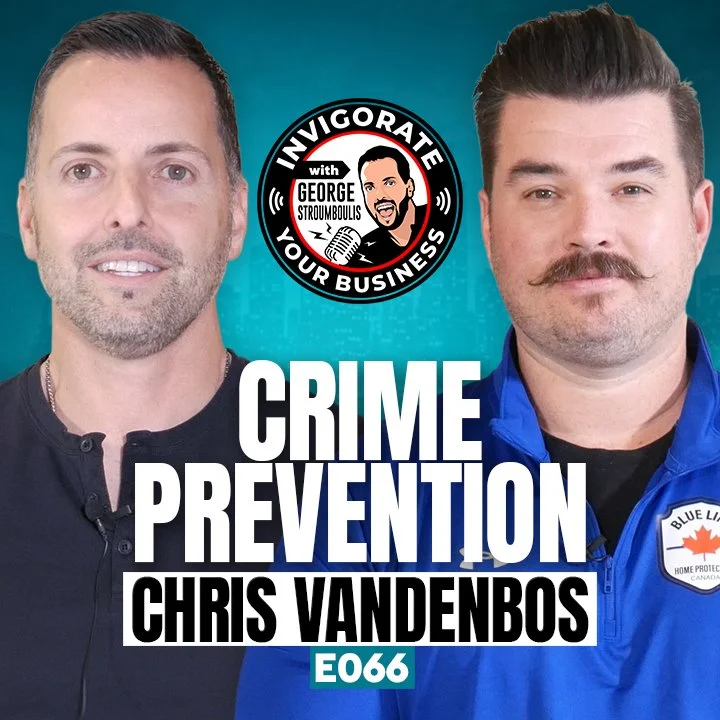
George Stroumboulis sits down with Chris VandenBos — former Canadian police officer and CPTED consultant. They dive into his path into policing, what he witnessed firsthand on the force, the deterioration of public safety in Canada, and why he shifted his focus from enforcement to prevention.
“Five to ten seconds is the average amount of time it takes somebody to get into your home… We’re breaking that trend.”
MEDIA RELATED TO THE EPISODE
George Stroumboulis sits down with Chris VandenBos — former Canadian police officer and CPTED consultant. They dive into his path into policing, what he witnessed firsthand on the force, the deterioration of public safety in Canada, and why he shifted his focus from enforcement to prevention.
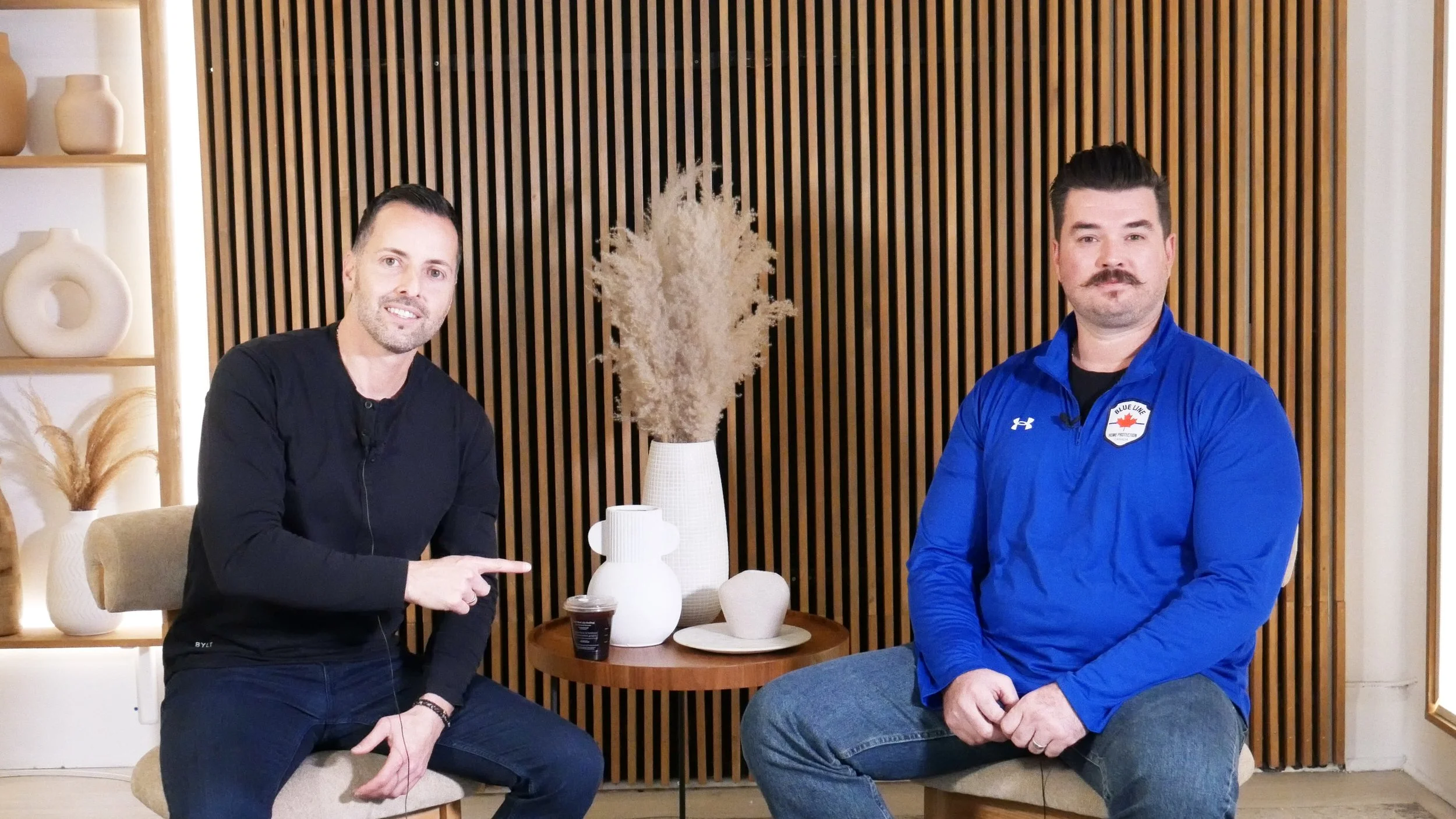
George Stroumboulis sits down with Chris VandenBos, former Canadian police officer, to discuss rising crime in Canada and why prevention—not enforcement—is the future of public safety.
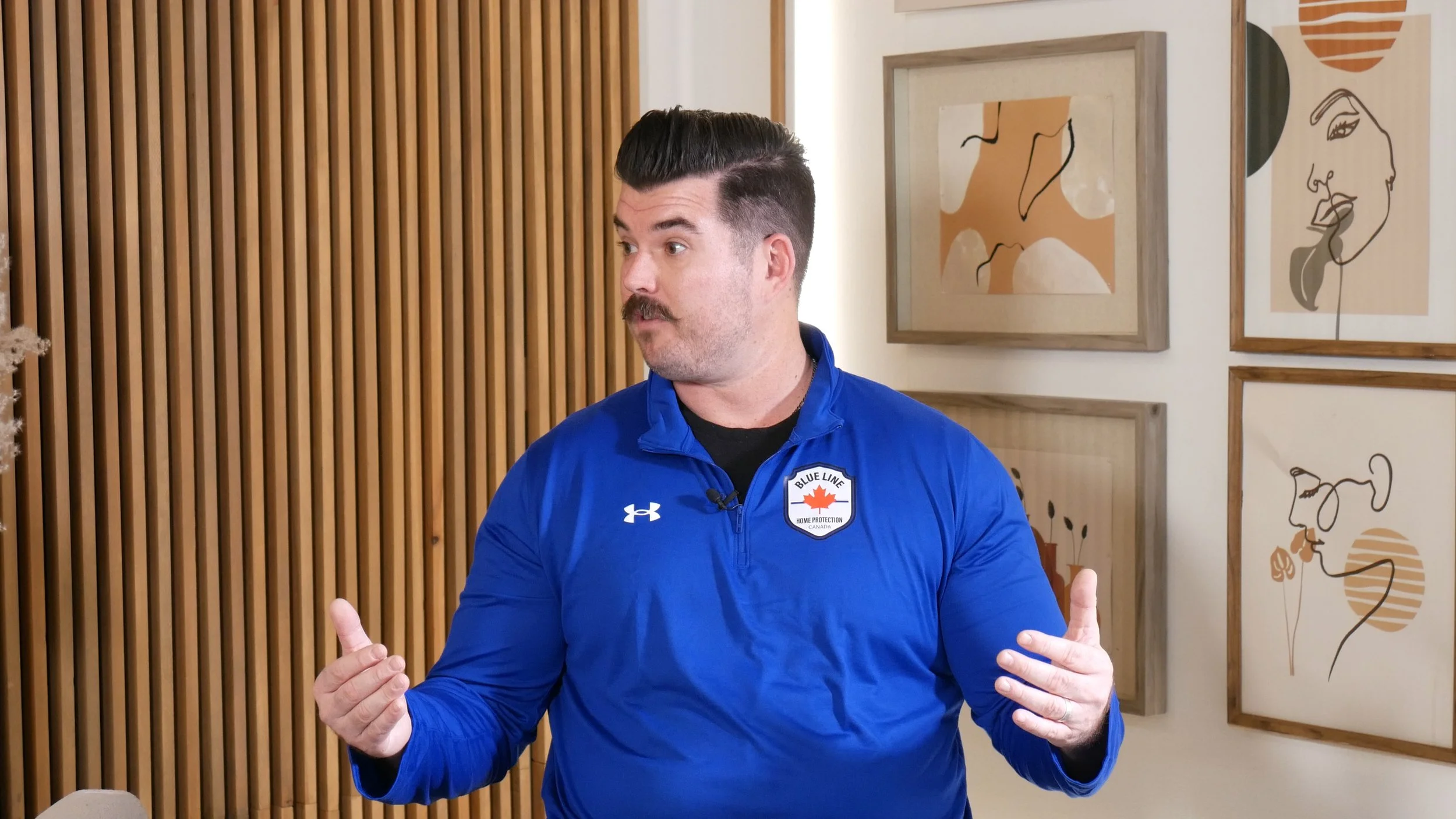
George Stroumboulis sits down with Chris VandenBos — former Canadian police officer and CPTED consultant. They dive into his path into policing, what he witnessed firsthand on the force, the deterioration of public safety in Canada, and why he shifted his focus from enforcement to prevention.
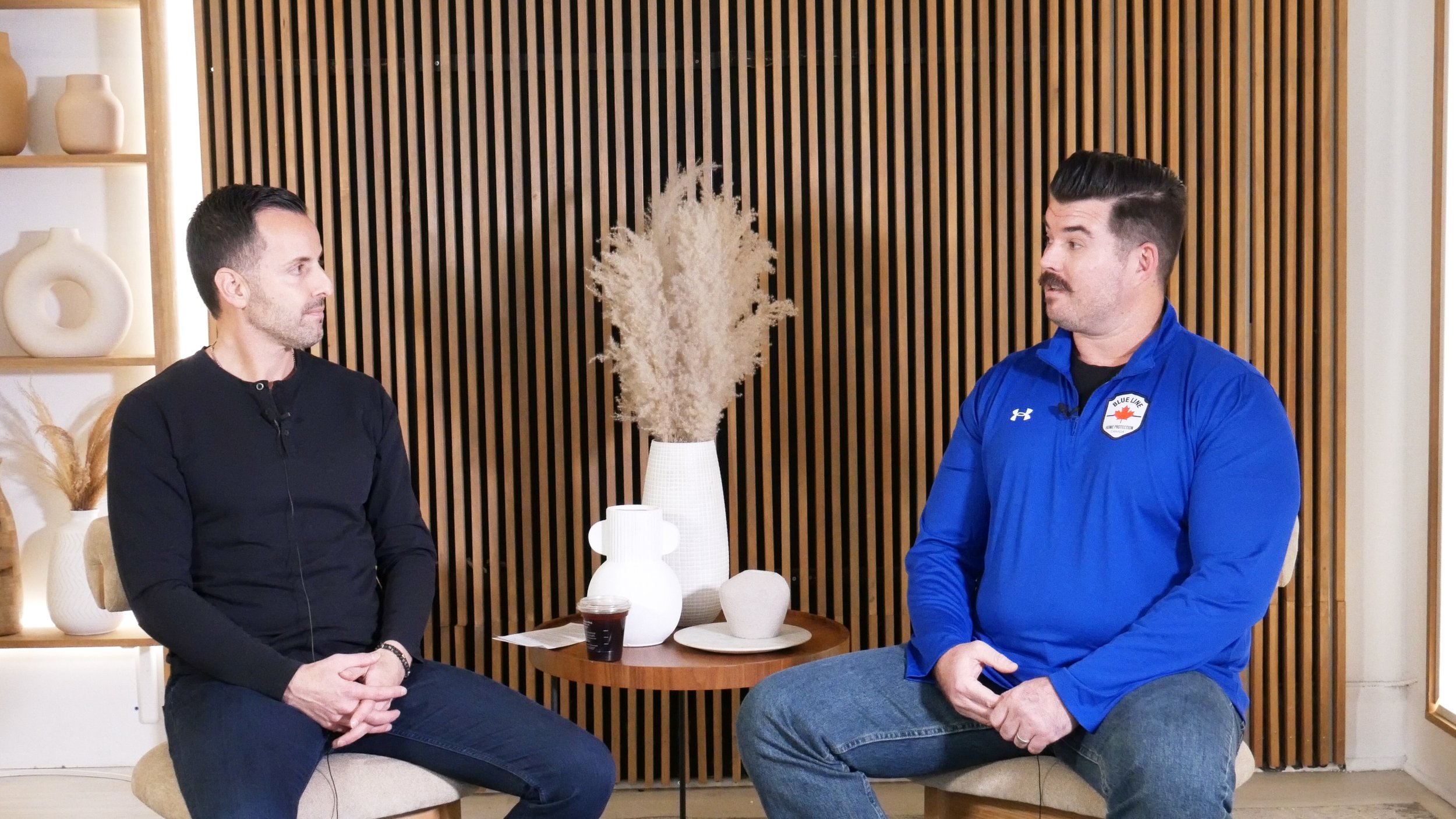
George Stroumboulis sits down with Chris VandenBos — former Canadian police officer and CPTED consultant. They dive into his path into policing, what he witnessed firsthand on the force, the deterioration of public safety in Canada, and why he shifted his focus from enforcement to prevention.
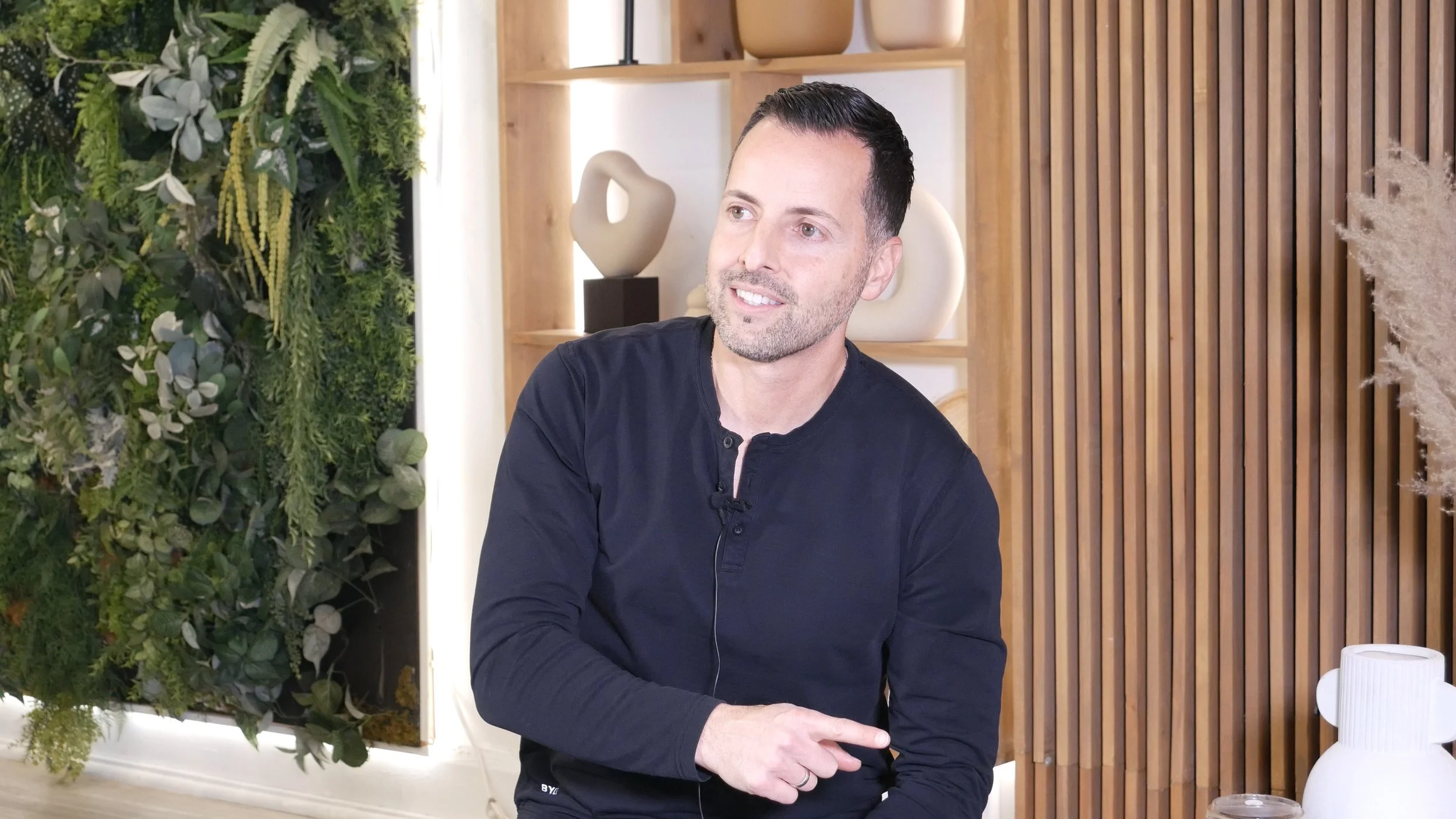
George Stroumboulis sits down with Chris VandenBos — former Canadian police officer and CPTED consultant. They dive into his path into policing, what he witnessed firsthand on the force, the deterioration of public safety in Canada, and why he shifted his focus from enforcement to prevention.
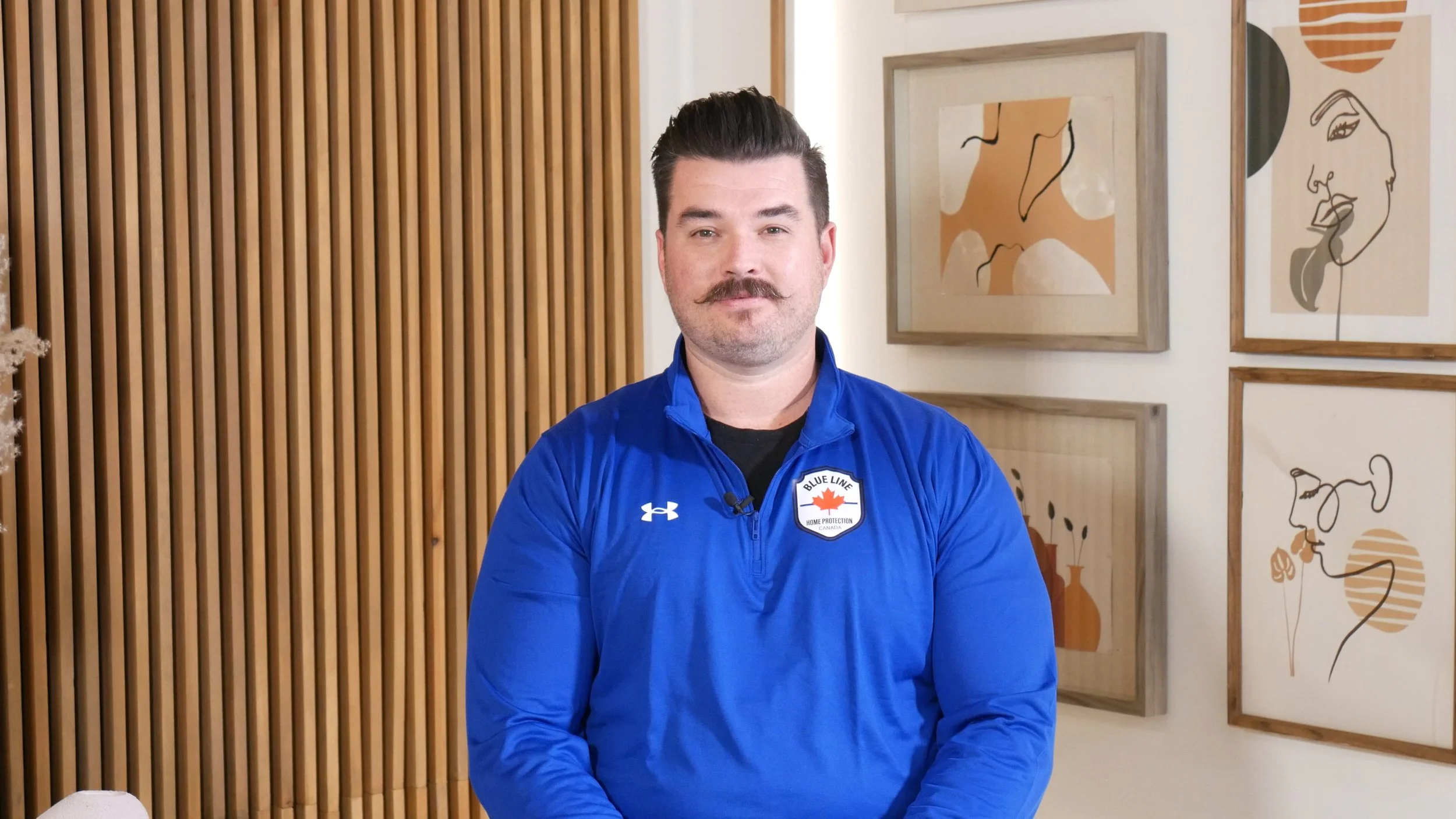
George Stroumboulis sits down with Chris VandenBos — former Canadian police officer and CPTED consultant. They dive into his path into policing, what he witnessed firsthand on the force, the deterioration of public safety in Canada, and why he shifted his focus from enforcement to prevention.
ABOUT THE “INVIGORATE YOUR BUSINESS” PODCAST
The Invigorate Your Business with George Stroumboulis podcast features casual conversations and personal interviews with business leaders in their respective fields of expertise. Crossing several industry types and personal backgrounds, George sits down with inspiring people to discuss their business, how they got into that business, their path to the top of their game and the trials and tribulations experienced along the way. We want you to get inspired, motivated, and then apply any advice to your personal and professional lives. If there is at least one piece of advice that resonates with you after listening, then this podcast is a success. New episodes weekly. Stream our show on Spotify, YouTube, Apple, Amazon and all other platforms.
ABOUT GEORGE STROUMBOULIS
George Stroumboulis is an entrepreneur to the core, having launched several ventures across multiple industries and international markets. He has held senior-level positions at progressive companies and government institutions, both domestically and internationally, building an extensive portfolio of business know-how over the years and driving profit-generating results. George’s ability to drive real change has landed him in several media outlets, including the front page of the Wall Street Journal. George was born in Toronto, Canada to his Greek immigrant parents. Family first. Flying over 300,000 miles a year around the world puts into perspective how important family is to George’s mental and emotional development. With all this travel to global destinations, the longest he stays even in the most far-out destination is 3 days or less - a personal rule he lives by to make sure he is present and involved in family life with his wife and three daughters. To read about George’s global travels, stay connected with his blog section.
STAY CONNECTED WITH GEORGE STROUMBOULIS
STREAM & LISTEN TO THE PODCAST:
SPOTIFY: https://open.spotify.com/show/1rW2CmxQoiJNEPOZupJlvd
YOUTUBE: https://www.youtube.com/user/Stroumboulis
APPLE iTUNES: https://podcasts.apple.com/us/podcast/invigorate-your-business-with-george-stroumboulis/id1607693240
AMAZON MUSIC: https://music.amazon.com/podcasts/8fc03929-71b3-483a-a64e-153e30b3d462/invigorate-your-business-with-george-stroumboulis
STROUMBOULIS SITE: https://www.stroumboulis.com/podcast
PODCAST SITE: http://www.invigorateyourbusiness.com
FOLLOW GEORGE STROUMBOULIS:
INSTAGRAM: https://www.instagram.com/georgestroumboulis/
YOUTUBE: https://www.youtube.com/user/Stroumboulis
LINKEDIN: https://www.linkedin.com/in/Stroumboulis/
TWITTER: https://twitter.com/Stroumboulis
FACEBOOK: https://www.facebook.com/georgestroumboulis
TIKTOK: https://www.tiktok.com/@georgestroumboulis
CONTACT GEORGE DIRECTLY: https://www.stroumboulis.com/connect
FULL SHOW TRANSCRIPT
00:00:00 Meet Chris VandenBos
00:03:40 Values, Family, And Becoming An Officer
00:10:20 Early Policing And Rising Crime
00:15:45 The Alarming Numbers Behind Break-Ins
00:20:50 Why Blue Line Home Protection Exists
00:26:30 Police Response Times And Real Stakes
00:33:00 Reinforcing Doors, Windows, And Delays
00:38:30 What CPTED Means In Practice
00:44:30 Homeowner Rights And Use Of Force
00:51:10 Costs, Financing, And Warranties
CONTENTS OF THIS VIDEO
George Stroumboulis: 0:00
Today, I sit down with Chris VandenBos. Chris is a former police officer of nearly 20 years, and he is an absolute force when it comes to law enforcement, standing up for civil liberties, and protecting yourself from increasing crime. He was one of the world's first police officers to go against government measures during lockdown and is an absolute advocate for what is right. In his new role, Chris co-founded a company in Canada that helps Canadians protect their homes and businesses against criminals. We're going to talk about growing crime rates in Canada, what we can do to protect ourselves, our families, and our businesses, and so many other things that are going to be covered. So enjoy this episode starting now. My name is George Stroumboulis, and I'm extremely passionate about traveling the world, meeting new people, and learning about new businesses. Join me as I sit down with other entrepreneurs to learn about their journeys. This episode of Invigorate Your Business Starts Now. Awesome. We're ready to roll. We're going. Let's do it. Today we are sitting in beautiful, snowy, cold Toronto. I'm excited for this one for many reasons. I'm sitting with law enforcement, former law enforcement, an expert in the space, someone who's spoken against the system, the man, put everything on the line, and now just built a new company to protect people. Right. So I'm excited. I'm going to read an intro to give people an idea of who Chris Vandenbos is. So today's guest doesn't just talk about public safety. He's lived it. Chris Vandenbos is a former Canadian police officer, CPTED consultant specializing in crime prevention through environmental design, and the co-founder of Blue Line Home Protection, a company focused on helping families fortify their homes against rising crime and home invasions across Canada, which has become a big issue, right? He's also the founder of Police on Guard and became widely known for his direct online commentary during the lockdown period, with content reaching billions of views, right, around the world and sparking global conversation around civil liberties and accountability. This is going to be a real conversation about crime prevention, leadership under pressure, and what it means to stand your grab. Chris, welcome to the show.
Chris VandenBos: 2:21
Thanks, man. I appreciate you having me. This is awesome, and I'm humbled by that introduction. It means a lot.
George Stroumboulis: 2:25
Awesome, man. So excited about this. So where where do we start? Like just talk about your background going up into police enforcement, right? Like how did you even want to go down that path?
Chris VandenBos: 2:36
Yeah, you know, it's it's it's an interesting story. My parents came from the Netherlands way back when, post-World War II. My dad came here with nothing but a hammer on his hip. And his intention was to come here, contribute to the Canadian society, and to come to this great country and to start a family and to do it the right way. You know, no handouts, work hard, you know, sweat equity invested and raise a family the right way. Teach us values, morals, and ethics. And all the way along my childhood journey, we were always taught that you do the right thing even when no one's looking. And the big takeaway that I always got from my childhood with my dad is that you're supposed to be the guy that no matter what happens, you stand in the way when something wrong is happening. You speak up, you stand up. You don't just sit idly by and watch it. You get involved. And it's no wonder that each one of the three boys became police officers after that. Come on. Yeah, all three, all three brothers. Yeah. Well, was your father in that profession? No, he was a carpenter. He built homes. And and but, you know, the way that it worked out was because of that upbringing, it was just a natural thing for us. Like we're we're not small guys, so we never were necessarily intimidated by somebody else. But because of our upbringing, because of those, you know, those values that were instilled in us, becoming an officer was just a natural transition because we're put in a position now to go out there day and night putting on the blues and keeping people safe at night and during the day. And again, like it's not an easy thing to do. You suffer some consequences of being an officer. It's hard seeing the things that officers see. But you know what? I have no regrets, especially the way that things ended, because it got to go out on a high note, too.
George Stroumboulis: 4:03
Yeah, absolutely. And we're gonna dive into that. But like you touch upon something so important. Do something good when nobody's looking.
Chris VandenBos: 4:09
Yeah.
George Stroumboulis: 4:10
Right? Like, just the we're not doing that enough. Uh, was your father leading by example or with words?
Chris VandenBos: 4:15
Yeah, 100%. He might have just been a carpenter, but he was the type of guy that would step into somebody's lane to stop them from doing something wrong. And we saw that as kids, and he would speak up and he was not timid or cowardly. So that was the example that was set. So for us, it's like, I'm gonna be like dad. I'm gonna do it, except I'm gonna do it with some authority behind this, but we're not gonna abuse that authority. We're gonna use it for the community's benefit.
George Stroumboulis: 4:36
Absolutely. So then you go through there, you're a teenager. Like, when do you decide I want to join a police force?
Chris VandenBos: 4:42
For me, it was interesting because I was a low grade student high school. Uh, I think it was because I was just not interested. There was not a lot of enthusiasm to get grades because I wasn't being pushed. So my grades weren't there. But then I decided afterwards, you know, I'm gonna be pushing myself to do something else and got a trade. It became a welder, actually. Oh, yeah. Certified welder, an all position, all different types. Did that for a very short period of time before I realized, you know what, I'm not getting the fulfillment out of it that I want. I would rather serve and protect. My other brother had already gotten on the job, so I went after it at the age of 18. I did all my tests, I worked hard, I worked three jobs, volunteered with Big Brothers Canada. Uh, I picked up a second language, American Sign Language, because that was the most underrepresented language amongst the demographic of applicants. Come on. So I knew if I had that, well, I might be the only one. It's gonna increase my odds. And sure enough, it worked. I got hired at the age of 21.
George Stroumboulis: 5:30
So you you're fluent in sign language?
Chris VandenBos: 5:32
Not anymore. It's one of those things if you don't use it, you'll lose it. But throughout my career, I did use it quite a bit. But over the last 10 years, I really haven't used it. So I'd probably do uh I'd be well served to take a refresher that way.
George Stroumboulis: 5:42
Dude, that's incredible. So at 18, you decided. So where in Toronto? Where were you based?
Chris VandenBos: 5:47
I applied to every police service in Ontario, as well as as far out as Edmonton, Calgary. Oh, wow. And I ended up getting an offer to work for Anishnebek Police up in Northern Ontario. And I turned them down because I got an offer for just an interview, wasn't guaranteed, with York Regional Police. So I turned down Anishineabek and I went for my interview with York, and then I got the second interview. And when in short order, I was offered a job. And in 2004, I got the job offer and I was off to the police college.
George Stroumboulis: 6:13
In 2004, so is York the largest, is it precinct or region uh from in Ontario?
Chris VandenBos: 6:19
No, the Toronto's bigger. So we're the city, they call Vaughn, the city north of the city. And then I was actually stationed in the two district Richmond Hill, which is about now it's well over 200,000. When I started, it was about 155, 160,000, small little slice of geography that had a lot of people in it. Yeah, that was my patrol area, and it went all the way down to Steeles Avenue, and then it was Bathurst on the west side, all the way to the 404 on the east side, and I was in the south end of that corridor. Policing taking, you know, 15 to 20 calls a day. It was busy, but it helped me sharpen my teeth and you know, and really get to know all the different types of people I was dealing with, and I got exposure really, really quickly.
George Stroumboulis: 6:54
Well, people, culture, there's a lot of culture in the Richmond Hill area too. Different people, huge, yeah. So, what does it look like? You you officially join the force. Are you happy? Are you looking back at welding like I miss it? Like, are you fulfilled at this point?
Chris VandenBos: 7:06
I did not miss welding. I did not miss welding. I mean, sitting up 120 feet in the air in a greasy I-beam cutting down asbestos-covered piping with sometimes not even a harness on wasn't exactly my idea of a good time. I thought, if I'm gonna die doing something, it better be doing something noble. So I went for policing and yeah, it was it was just a natural transition, and it was such a cool experience because for my grandfather, who's actually a World War II vet, who was part of building the underground against the Nazi occupation and the Netherlands. Come on. He was always big on you know, service as well. And he was so proud when we all got on the job. It was such a big moment of pride for him to see his three grandsons join the force. Is he still alive? No, he passed away some years ago, but it was uh it was a pretty amazing thing to you know to get to have him respond to the fact that three of his grandsons were police officers and he would always talk about it.
George Stroumboulis: 7:55
He was so proud of it. That's a bit and he lived back there, or he migrated.
Chris VandenBos: 7:58
No, he lived in Vineland. He actually, once he told the story of what he did in World War II, we heard it because he never talked about the war. And then when he finally told us, we're like, holy crap, like, really? Yeah. So then my my brother called the Dutch consulate and told them the story, and they're like, Yeah, if your grandfather is in fact Edward Anchorsmith, like we want to come see him. And they came to his house while he was at 92 and pinned the Medal of Honor on his chest in his on his lazy boy. He was sitting his lazy boy. Come on, were you guys there to experience? We're all there, yeah. That's a big deal. He's such a humble guy. He didn't even want to take any credit. He's just like, you know, no, no, it was all the people I worked with and all the people that stood with me, that fought with me. And and that was another big influence in my life about doing the right thing. You put his life in literal peril every day to stop horrible things from happening to good people. And that was the example we were raised with, right?
George Stroumboulis: 8:46
Oh, so it's embedded, it's DNA. 100%. Okay, so now you're on the force, right? This region here, like what have you seen?
Chris VandenBos: 8:53
Like just oh man, I mean, it it's home invasions, breaking enters, armed robbery, sex assaults, human trafficking, drugs. You know, like it's it's it's busy. It's a busy demographic area. And what it is now compared to where it was even when I was on the early, like the early days of being on the road, it's gotten way busier. And that's not a good thing. That means crime has increased, right? We're seeing such a surge that I'm looking at what's going on now. I'm going, is this even the same country police then? Like it's from 2004 to like what you're seeing now. Yeah, yeah, it's insane. Like home invasions on the rise. Like, here's a statistic that people might not know of. Yeah. So since June 16th of this year to now, there's been between 20 and 25,000 break-in enters in Ontario alone. Ontario alone. Just Ontario. And here's the crazy part the metrics actually say and that only 29% of people actually call police in these instances. So, what does that mean the real numbers are? I don't know. I don't have those stats, but seeing what the stats actually say, it's alarming. And then, I mean, we're sitting here right now, we hear sirens outside the window, like, and it's nonstop. Uh, it's and again, it's not to fear monger, but it's just to make people aware aware of the current state of where we're at and why, again, you mentioned with the companies that I built, why it's important that we're doing what we're doing, because we can actually make people safer in the face of the rise of this crime trend.
George Stroumboulis: 10:14
Yeah, and it's a lot of reactions, right? Break-ins are happening, yeah. People are there, they're already gone, they've already violated their safe space. Where what you're building now, and we got so many areas to cover, but you're trying to prevent it. Yeah, right. You're you're trying to make fortify homes and businesses before someone actually gets there to what to deter them? Like what's the strategy of your company blue line?
Chris VandenBos: 10:36
Well, the strategy of our company blue line is to make it so that they can actually get into your home. So, one of the things that I think is important to talk about is actual response times. And if I can, I'd like to just pull up some stats because I think it's important for the viewers to hear this. Absolutely. So here's the statistics on police response times by jurisdiction. So you call 911, it's a priority one call. You've got a you know, uh, a home invasion attempt in progress, or any 911 call that's priority one. And priority ones, I'll talk about what they are afterwards in detail. But so in Toronto, the average response time in 2025 is 12.6 minutes for an officer to show up at your door when you're needing them in your worst situation. For priority one. For a prior, it's prior, this is priority one response.
George Stroumboulis: 11:19
So, what's an example of a priority one?
Chris VandenBos: 11:21
So here's some a list of priority one uh calls: assault in progress, shooting or gunfire reported, stabbing or violent attack in progress, home invasion with occupants present, domestic violence in progress with danger, kidnapping, abduction, hostage situation, sexual assault in progress, suicide attempt with where someone is at like actually at risk of losing their life, and an officer needs assistance or an officer down. That's a priority one. Officer down is on that as well.
George Stroumboulis: 11:48
Yeah, that's a priority one. So one of your fellow partners down.
Chris VandenBos: 11:52
Now I'll add some context. For priority one, I could tell you that when we would get what's called a 1033 call, officer needs assistance, it was drop everything and go because if somebody's actually using that call code to say 1033 officer needs assistance, it's all hands on deck, everybody get there. It's not going to be 12 and a half minutes. It's gonna be less than that. But the reality is we get nonstop calls to 911 and we're seeing less and less officers maybe available for calls because of inundation of call volume. So in Toronto, 12 and a half minutes, 12.6 minutes. In London, it's nine minutes and 36 seconds average in early 2025. Windsor is 10 minutes and 23 seconds. In York region, where I worked, okay, giving them a little bit of uh praise, I guess you'd say it. Seven minutes on average, they're one of the lower ones in terms of response. Yeah. Uh and then you go to uh Peel Regional, and Peel Regional's average response time is 10.2 minutes. Now, that being said, we saw a home invasion in Vaughn not too long ago, where the response time, some say seven minutes, some say 13 minutes. I haven't drilled down what it is yet. But in this event, somebody came into this person's home, a group of three males actually, with a firearm, held the daughter hostage. The father came down to try to stop this from happening and harm coming to his daughter. The father got shot in the head and killed.
George Stroumboulis: 13:09
Oh, come on.
Chris VandenBos: 13:10
Right? And then the officer showed up after the fact that the bad guys were gone. So you ask, what is blue line home protection doing? Our job now, because we're no longer serving and protecting, wearing our uniform and our duty belts, is we want to make sure these guys can't get in. You hear banging on your front door or a smash attempt on your window. We're insulating your windows with window security film that's reinforced to your window frames. They're not able to get past that, at least not quickly. We're talking like 10 plus minutes in most instances, depending on the thickness of the film. And then we're rinse, we're reinforcing your doors using state-of-the-art door locks. So when they're smashing, it takes up to 3,000 pounds for them to get through. We're making so they can't get in so that that response time for the police is they're gonna get there before the bad guys get in, or they're gonna get tired and leave. And we've seen videos where they actually get tired and leave because they're like, what's the point? We're not getting in.
George Stroumboulis: 13:56
We're not getting in, or now we've drawn attention to the area, maybe. Yeah.
Chris VandenBos: 13:58
And again, the other part, we've mentioned SEPTED, Crime Prevention through environmental design. Oh, what does that mean? So that's that's a good segue, actually, to talk about this. So we take it so seriously, we actually brought on a former RCMP officer, his name's Chad, who is one of the most highly trained in crime prevention through environmental design. That's his bag. That's what he handles with our company. And what it is is we come to the homeowner's house, we do a full set TED, Crime Prevention through environmental design analysis. We look at your house, we take a look to see what's your lighting, is there shrubs blocking, you know, visual sightlines for your neighbors? Is it is the canopies of the trees too low, creating dark spots, black spots, hiding places? We'll give you a full comprehensive analysis on things you can do for free that we we're not gonna do it for you, if unless you want us to. But the main thing is it's a free takeaway for you for you to look at your home and go, I didn't realize these were vulnerabilities. Let's eliminate these vulnerabilities to make it unappealing for the criminal to even target our house. Then, should dummy criminal still proceed, they're gonna be met with reinforced doors, they're gonna be met with reinforced windows, they're gonna be met with security cameras, ballards to keep your vehicles in your garages or on your driveways. They're gonna go, what's the point? This is too much work. Right. We're gonna go somewhere where there's not as much of a deterrent, there's not as much protections in place, and that homeowner that hired us is now gonna be safe at sound, safe and sound. And it's actually way less money than what people think it costs to do this. Like we do the septe for free. Really? Call us, we'll come and do it for free. We'll tell you some services we could do to add on to it. Yes. But we'll do the septead for you for free.
George Stroumboulis: 15:28
And typically, is it uh former or existing law enforcement that will come and do that?
Chris VandenBos: 15:32
Yep, former law enforcement, that's what we've teamed up with. Our tech installers, our tradespeople because we want the best in the business doing the installation. Sure, sure. But the the septead full home analysis, like taking a full home analysis, whole home assessment, is going to be a former police officer or somebody that has been working so long with us in this particular realm that they are just as trained and experienced in that. So they have that same experience.
George Stroumboulis: 15:55
That's incredible. That's incredible. So think about it. You're you're coming on site, you're looking, reviewing the home from the eyes of a potential intruder, robber, right? So you're given that for free and be able to do that. Quickly go back. We have a lot of listeners from Europe and the United States. So RCMP, just explain what's that equivalent to like American law enforcement or so RCMP stands for Royal Canadian Mounted Police.
Chris VandenBos: 16:17
Everybody knows the Mounties, the guy's dressed in red, riding the horses, drinking maple syrup. That's that's typically the Canadian stereotype of the Mounties, right? So they are our federal police. And then here in Ontario, we have the provincial police, which is the OPP, the Ontario Provincial Police. And then they typically handle highways or jurisdictional communities that are, you know, outlier areas. And then you have your municipal police like Toronto, York, Peel, Windsor, London, et cetera, that handle the bigger urban centers. Right.
George Stroumboulis: 16:44
So to be clear, these response times, you're not attacking the lady uh men and women who work for law enforcement. It's just a matter of the system. Can't, is it just fewer people working in law enforcement? Is it just an influx of crime? Like what is it? It's a perfect what was it? Sorry, when you were on the force, was it less than five minutes? Like what where was a typical response time to now?
Chris VandenBos: 17:07
I couldn't imagine back in my day taking more than five minutes to get to a priority one response call. Wow. I mean, we're talking three minutes maximum because we have our our areas, like you would be an uh you would be designated a little block inside the district, and every officer would be designated to those specific blocks. So you always had somebody there within minutes, like at maximum minutes. Yeah. So that there's always somebody there. Turn on the lights and the sirens, and then the bad guys hear you coming and they take off. So this is a big departure from what I'm used to and what I'm seeing. And it's not an attack on the officers. The reality is, is we have politicians that are advocating for this catch and release nonsense where the bad guys are getting out before the police are even done the paperwork. No, where is the public safety emphasis? Is my question. I don't understand it. It was my biggest gripe back then, and it's only gotten worse. So people really need to get engaged civilly. Oh, yeah. And civically, I mean, and start like bombarding their MPs and their politicians to say, what the heck are you doing? You're constantly on a break from parliament. Why are you not in the House and coming up with strategies to make this problem better? Because it's only getting worse and it doesn't seem to be a priority for them. It's a problem.
George Stroumboulis: 18:19
Well, what's the viral clip from I I think it was the chief of York Regional Police where it basically, hey, just leave your keys at the door, don't cause a problem. It went viral down there.
Chris VandenBos: 18:28
Well, I'll point a correction. It was a Toronto police officer that said, leave it, you leave your key fobs at the door. Yeah. It was my former chief that said, if they come in, just comply. Now, I I'm not shy to say it. I don't care. I think the executive command team, which is the tip, the name for the brass of policing, it's become more of a political position than it has a service position of like a policing position. It's almost like common sense, in my view, has left that rank and file. Because why the heck are you telling bad guys or homeowners to comply with bad guys? Why are you not taking a hardline approach against the bad guys and saying, we're standing behind the homeowners? Here's what the criminal code of Canada says that you can use as much force as necessary in protecting yourself. And if you put the homeowner in a position of peril, we're standing behind the homeowner and we're making you the priority focus to come after you. But the message was just comply. To me, that was so counterintuitive and short-sighted. And a lot of people got pissed off for good reason because it was a very short-sighted thing to say.
George Stroumboulis: 19:28
So, what does a people always, even in the states, will make fun of me, like, oh, in Canada, you guys just let them come in and like it's gotten a bad image. But what does the criminal code actually state here? Any force necessary to protect yourself?
Chris VandenBos: 19:40
As much force as necessary. Now that's subjective, obviously. Sure. Because the officer's going to come in if they find that you've squashed his coconut all over your floor and he came in with a screwdriver and used a baseball bat. Like, where is the measure? Where's the line? Right. But in the instance of Lindsay, where the home the homeowner was met by a guy coming into the house with a crossbow and he defended himself. Now, I don't have the police report, haven't read that yet. But the guy got charged for defending his family against an intruder with a crossbow. Now, why was that homeowner charged? I don't know. That doesn't make sense to me. Right. And it to it to me, as much force as necessary means I don't know what you're in my home for. For me, this is my house. My family's here. You've now invaded my place of refuge and fortitude, and you've put me and my family in potential danger. I don't know why you're there. You're not stating the reason why you're there. And I'm supposed to guess as to your intentions. I'm going to make sure my family's safe. I'm going to listen to that criminal code and use as much force as necessary to make sure my family's not in danger anymore. Yeah, absolutely. That sounds like common sense, though, doesn't it, George?
George Stroumboulis: 20:38
Yeah, absolutely. So when you were on the force and you would get a call like that, are you going there assuming the worst case? Like when you're going to a site and there's been someone breaking in or doing something, clearly they're going there to cause harm. You're breaking that person's personal space. 100%. Like, how do you not protect that?
Chris VandenBos: 20:55
Well, the thing is a break and enter is typically to smash, grab, get in, grab what you can get and get out. If you're staying in the residence and now you're applying force or threats of force, that's no longer a break and enter. That's a home invasion. You're now using violence or implied force to get more out of that exchange, that criminal exchange. So as a police officer, if I'm showing up to that, I'm going to lay the book on the guy that's responsible for the criminal act of breaking into the residence. The fact that the homeowners are getting charged now, I mean, Doug Ford is right. I'm I'm a political orphan. I don't take political sides. I never did as a cop. And I think a common sense approach to what we do with blue line, what we did as police officers is the best approach. Right. So I don't go, oh, I like that party or this party. But what Doug Ford said in that instance, I agree with. We should probably have castle law to make sure that the homeowners are protected so that these guys know if they come in they will be met with some resistance and that the law stands behind the homeowner. And Ford said that.
George Stroumboulis: 21:54
So you you said leadership in politics causes part of this. What else is causing such a rise in crime in Toronto? And it's not just, again, we've been chatting, uh, friends and family here, people are always about their cars, cars stolen out of driveways. What's causing that? Is it strictly immigration? Is it people don't fear? People aren't calling anymore. Because if something's happening, the last thing I'm going to do is call 911. If in my mind is 12 minutes before someone drops. So what is that combination that's created the shitstorm we're in?
Chris VandenBos: 22:25
Honestly, I have some guesses as to it. I have some also insights based on my experience that I know. And what I could say is I don't. You look at the instance in Niagara on the Lake, it was a white dude, 33, that just recently last week broke into somebody's house and sexually assaulted a 14-year-old girl. Jesus. We're seeing it's not just specific to any demographic of the population. Now, are we seeing increases in migrant crime? Yeah, the stats are reflecting that. But it always comes down to there is got to be recourse for this action. If you are going to commit a crime, our court should be throwing the book at you. Why is it falling onto the homeowners to be put in this position? And here's the other kicker, George. And I gotta be honest, I'm passionate about it. It pisses me off. You get charged for defending your house. Now you have to hire a lawyer. And how much is that lawyer going to cost? $100,000, $200,000 for you to go through this process of lawfare for you just to get off a charge because somebody came into your dwelling to put you and your family at risk. Right. That is absolute BS. And that should not be happening, in my view. And that again, that's why we created Blue Line Home Protection. So we can eliminate that as even a possibility. Let's make it so these monsters are not getting into your house. Absolutely. Let's not put you in the position. Let's not give a broken law system the opportunity to penalize you with lawfare for doing what you had to do to make sure you're safe.
George Stroumboulis: 23:43
Absolutely. And in your position, you can't change the law. But what you can change is, hey, let's create a business that helps fortify homes. Let's help get people in there. Like, was that the driving force for starting it?
Chris VandenBos: 23:55
100%. Because I always think of my parents, okay, elderly people. What are they going to do if three guys break into their house with baseball bats or knives or guns or whatever in the middle of the night? They're not going to be able to defend themselves. Right. They're elderly. So what would I want them to have? Well, I would want them to have it so that nobody can get into their house. Let's make it so they can't get in. They call 911, whether it's six minutes, 12 minutes, 13 minutes, who knows? But let's make it so that throughout the duration of that period of time, we're creating as many barriers and obstacles for those guys to get into my parents' house or anybody's house. That's why we created it because number one is making sure that public safety is taken care of. And if the politicians aren't going to do it, we will.
George Stroumboulis: 24:33
Yeah. And you, it's important. So the acronym you said was CEPTED. So C P T E D, Crime Prevention Through Environmental Design. Is part of that you want to deter people before they even think your house is a target? Yep. So do most home invaders scope the area before they go in there?
Chris VandenBos: 24:49
Yeah. I mean, this the statistics show that they're con they're they're going to canvas, they're going to intel gather. They want to know maybe some ideas of are you recently buying jewelry at the jewelry store? Or, you know, you have precious metals where you're going to the PMX and picking up a bunch of gold and silver now with a spike in prices, that's going to be even more valuable. Have they gotten information from a kid at school that was bragging to his friends that my dad's got a cash box with a crap ton of cash? These sorts of things can lead to firearms, things like that. So they're going to typically, you know, intelligence gather, then scope out the residence, and then they're going to plan the attack. They're going to plan their approach, whether it's a break and end or a home invasion. So is it not ideal for the homeowner to say, well, you know what? Uh yeah, they made an attempt. They tried to kick in the window, but it didn't break. And then they tried the door and they couldn't get past the door. They call us and they go, Oh, yeah, thanks, guys. Your services worked. And then we say, guess what? They made an attempt on your house. We're coming back. Once your window is installed, the new one and the new door, we're going to put the new locks and window film on for free as a part of our free warranty package because we want to make sure you stay safe. That's included in the price.
George Stroumboulis: 25:53
Wow. Okay. So you're creating a community. It's not one order out the door.
Chris VandenBos: 25:57
No, we don't want one-time customers. We want to make sure that we build that relationship with the customer. Because, like anything in business, the best way to grow your business is word of mouth. And if they know that they called Blue Line and we came and did our job and we kept them safe after the fact, they're going to be singing our praises to the next person and the next person and the next person. And the ideal scenario, and this is our dream, and it's going to happen, is when those canvassings are happening from the criminals, they're going to see septead's been done. We got the blue line sticker on the window. What's the point? Move on to one that doesn't have that.
George Stroumboulis: 26:28
Yes. And I think I can speak to my parents' house and even my sisters. It's like, uh, just throw a little camera or a ring doorbell and I'm protected, right? Like that's one of many things you should be doing. Right.
Chris VandenBos: 26:39
A camera is now more of an evidence-gathering modality than it is a crime deterrent because these guys are wearing gloves, they're wearing masks. They're not worried about having their identities captured by the cameras. Now, it does give you a little bit of insight too when you do have the camera system with their other suite of offerings, like the window security film and the door locks, because you can then, with real-time monitoring with our cameras, go, okay, they're out on the west side of the house, give the update to police. Okay, they ran through the backyard. You're able to be that live line of information to dispatch to keep the officers informed on what's going on. Right. So they can converge on the bad guy, get the bad guy, get him off the street, in jail where he should be. And let's hope the politicians actually start doing their jobs to make sure our system keeps them where they should be. And that's off the street.
George Stroumboulis: 27:18
Right. So you're a big guy, you're 6'5, right? You're slamming in a window with this technology, this film, the way it's attached to the frame. Like realistically, it can stop someone.
Chris VandenBos: 27:29
Yeah. I got I got tired. I gave up. You gave up. I go to the gym every day. I mean, that's not a brag. But just to add context, I am a big man that has a lot of strength behind me, a lot of size momentum. And I'm telling you, I got tired because the film with the structural sealant to the frame is so well reinforced that it was so laborous to continue to try. I'm like, what is the point? What is the actual point? And then the door kicks, doing door kick after door kick after door kick. And I'm not budging it because we reinforce your whole frame and we reinforce the hinges. We reinforce the entirety of your door and then put on these locking mechanisms.
George Stroumboulis: 28:07
You're not getting through. Right. And I know pricing is very hard to say depending on the house and what you're looking for, but can someone fortify their home with an average home for a couple thousand dollars? Is that yeah?
Chris VandenBos: 28:18
I mean, here's the other nice thing about what we offer. It's the average middle class home, let's say 130, 140 square feet of window plus door locks. You're looking at, I don't know, maybe $4,000 or less. But then we also have no interest, no payments for six months that we work with one of our carriers that we work with. Huge. So that you can have like payments that you schedule over the next six months. You can put the remainder on your credit card when it comes to that point, whatever you want to do to make sure that we're we're putting you in a position that you're not breaking the bank right off the hop. Like let's get you safe first. We can work with you to maybe offer some discounts as well. We have a friends and family discount and 911 and first responders discount, as well as a military discount. We want to work with our community. It's not about, you know, bringing in bank for us. It's this is a service, and the more jobs we do, we know we're gonna do well to be able to employ people too in this tough economy and to you know be an economic driver. But the main goal here is to keep the community safe.
George Stroumboulis: 29:16
Okay. So for people to really understand, because I want to understand this, what does it mean? Hey, free consultation, we come to your home or business, we do this checklist, like just talk to the details. What does that look like? And then from the booking to them coming on site, how long does that process take? What does it look like?
Chris VandenBos: 29:34
Honestly, it's not a long process. We are very proficient and good at what we do in the sense of when we show up, we're gonna do an exterior, we're gonna take you with us and we're gonna walk through the exterior of your home, the interior of your home. We're gonna talk about all the different things using our checklist that we have in place on ways that you can insulate your home and ways that you can make it so that your home is stepped head protected, crime prevention through environmental design. Then we're also gonna build your quote in real time, take measurements for your windows if you're wanting to move forward with the window security film and the door locks. We're talking 30 minutes from start to finish, and you're gonna have a quote right then and there, and we can actually get everything set up to book you in for the tech install in real time. We're talking within you know a couple of weeks, we can get things rolling for you. So it's really not a long process, and it's but it's very, it's very extensive to put it that way. Like when we leave, you're gonna go, my goodness, I can't believe everything that they covered. But at the same time, you're gonna feel empowered knowing that the next steps are already in place for you to move forward.
George Stroumboulis: 30:30
Yeah. Yeah. And typically when there's a break-in or something, I'm assuming you want it right away. You want to be fortified right away, right? That's incredible. And then I know we talked about the homes, but from a business standpoint, you see it down in the States, you know, the smash and grab in the stores and all this stuff. Like, how important is this just from a business standpoint and robberies and all this stuff, you know?
Chris VandenBos: 30:51
It's massive. And it's not just businesses, George, it's also places of worship. Like, so we're talking businesses and places of worship that we actually do as well. And that's a big part of our business. We will come to your business or place of worship and we will do what's called a business septed report and we'll also a place of worship. It's it's all the same principles that are in place, but then we can also make it like we talk about places of worship. The reason I bring that up, we're seeing a massive rise in hate crimes. We can make it so that your place of worship has the same, you know, reinforcements as a residence, and we're giving you that same protection. And for businesses, protecting your goods and services. Imagine you have a dealership. Somebody smashes the window, they know where the key key fob is because they've gathered intel. Next thing you know, they're removing cars with a team, and then you're having this massive insurance claim. Let's make it so they can't get in your business either. We can do that and do it so that you have that protection. You've put it in your security code to let you know if there's an attempt. Now you know that the windows are reinforced, the doors are reinforced, cameras are in place. We can make it so that you're actually securing your goods, or in the case of a place of worship, we're securing your parishioners, man. Let's make sure everybody is safe. Let's make sure your goods are safe. Let's make sure that we're stopping these guys from doing what they're doing.
George Stroumboulis: 31:58
Yeah, full circle, right?
Chris VandenBos: 32:00
Yeah, man.
George Stroumboulis: 32:00
That's incredible. What's your background? So law enforcement, but what's your background from a business standpoint? You are business savvy. This is a business geared podcast. Like, you know, talk about just your team and, you know, building, you know, in general, like how is it building a company from scratch to tackle this issue?
Chris VandenBos: 32:15
It's a lot of work, but you got to surround yourself with really smart, really good people and people that everyone has a skill set. You know, my skill set, I'm a good communicator. I really do enjoy right. I enjoy it. It's it's kind of what I've been gifted with. So teaming up with people that have, you know, maybe financial background knowledge as well as business, business building and and you know, search engine optimization, all these different things to kind of compile together to grow a business quickly and scale it up quickly. But the main thing for our business was finding the right people. I don't want a former officer that was a ticket writer that sat in his cruiser, looking to pad his stats to look good to the bosses at the end of the month. I want the guy that was first on scene to every 9-11 call, going hard to make sure he's keeping the public safe, who was good with the people, made them feel confident that that officer was there and didn't care about his stats. He wanted to do the job because he knew the right thing to do. That's who we are.
George Stroumboulis: 33:07
That's a big deal. That's a big deal. So when you're looking at this right now and finding that, is that the plan to bring on more former law enforcement, first responders, and just build this community? 100%. Okay.
Chris VandenBos: 33:18
And I said he, I meant he and she, because we actually have females that are amazing former officers that are teaming up with us as well. Uh, we do a pretty comprehensive interview process to make sure we know exactly what type of officer you were. Because here's the thing when you have a break and enter in your home, and this is a this is a massive topic, when you have somebody that invades your privacy, that feeling of security is absolutely gone. You feel gutted. You feel like your sanctuary's been removed, whether it's a break and enter or a home invasion. Home invasion, even more traumatic. We want somebody that when they come, whether you've already experienced this and now you're calling us to make sure you're safe or you're trying to prevent it, we want somebody that's not only knowledgeable, but is actually listening to your concerns and your worries and making sure that we're allaying them by giving you the best possible service so that you and your family can sleep safe and sound at night. That's our driver.
George Stroumboulis: 34:08
That that's simple.
Chris VandenBos: 34:09
That's simple.
George Stroumboulis: 34:10
What when you would go to a call and there's been a home invasion, right, or a break-in, uh, what is your full responsibility as law enforcement? Like, is it just take a report? Like, does do things really happen after the fact, or is it, hey, we logged it? You're not really finding the person that broke in. Like, what typically happens in Toronto?
Chris VandenBos: 34:28
Well, that brings me back to what I just said a second ago of the type of officer we're looking for. I know how I was and the other officers that were that we've brought on with us, the former officers. I was a type of officer where I'm gonna sit down with a family and have a conversation and first try to calm their nerves because they're at like adrenaline pumping 100%. Let's bring them down to a place of calm. We're here now, you're safe. There's nobody that's gonna hurt you in this moment. Let's work through next steps on how to protect yourself going forward. I'd call in the scenes of crime officers that would come and do fingerprints and do a full, you know, so it was called soccer breakdown of the scene. And then I would give them my business card and I would say, listen, reach out to me if you have any questions about where things are at in this process. I can't guarantee we're gonna find the guy because it's now gonna go to the Criminal Investigations Bureau. But I can guarantee that if you reach out to me, I'm gonna get back to you and I'm gonna give you the answers that I have. I'm gonna make sure that you don't feel like you've just been abandoned in your most vulnerable state. If you're the type of officer that shows up and says, yeah, call Sako, all right, do the prints, all right, see you later. We're never gonna find him. We don't want you. Right. You're not blue lion home protection material. You know, find another job. It's not with us. Right.
George Stroumboulis: 35:32
That's huge. Like I look at my home, I live in California, and I I've seen like uh security camera companies, I've seen uh different security, like for your doors, but like I personally haven't seen septed. I'm not familiar with that. But like I, for my own home in California, like I need this, right? Every time I travel for work, I always think of the wife and the kids, and it's literally just break a window, unlock, and you're in, right? So, like what like what's advice when we are looking to truly fortify the home and not just do the bare minimum?
Chris VandenBos: 36:03
We'll start off with this first. Five to 10 seconds is the average amount of time it takes somebody to get into your home to commit a break and enter a home invasion. We're breaking that trend. It's making it so that's not even an option, it's not a possibility. But the other thing is through SEPTED, crime prevention through environmental design. Statistics show that when bad guys were in prison that had killed an officer, they interviewed the bad guy and they asked, Why did you choose that officer? Why did you kill that officer? And every single time they found a trend, the guy would say, Well, the guy looked unkept, he looked like he was unprepared, his shoelaces were barely tied, his uniform was untucked, he had a mustard stain on his shirt. He looked like he would be so easy to take out. So I did. But when I saw the guy that the boots were clean, the uniform was tight, his hair was done, his mustache was perfect, whatever the case might be, that guy looked like he could handle himself. I'm moving on, I'm not trying that. Wow. That's the premise and the principles of Septed. You want it to be that when they look at your house, they look at there's all these beautiful, well put together strategies like your shrubs are well kept, your lighting is perfect, there's no dark spots, you got what you got cameras in place that are strategically set, so they're positioned in all the right areas. That home looks like that tidy officer that's well prepared, organized, and they're probably not the house we want to hit. Whereas the house that's disheveled maybe doesn't take as much time, broken windows theory, in a sense, doesn't take as much time and care in making sure that their house looks the part. You hear intel that they might have some stuff that's valuable, they're gonna be much more of a target than the house that's had septed done on their home and looks tidy, like that officer that's ready to take on the world.
George Stroumboulis: 37:39
Ah, that's a great uh great way of putting it. What about even the driveway? Say your house is looking good. Like, how are you protecting cars or people coming in? Like, how do you do that if you're not in a gated community or have a gate on your home?
Chris VandenBos: 37:50
Well, that I mentioned the ballards. So we can actually install bollards that's coming this spring where we can actually put the bollards in the ground. You pull up behind your vehicle in the driveway or at the mouth of your garage. Wow. And it's locked and they're they're solid steel. You can't actually move the vehicle when they're in place, massive deterrent there. Another thing is what's called territorial reinforcement. So when optically the bad guy's looking, he sees all these different perceived obstacles that aren't necessarily physical obstacles, but they're just territorial obstacles that visually look at it and go, that'll be a pain in the butt to get to, or that'll be difficult for me to get around, or there's no black spots, or the camera's pointing right on me, and there's exceptional lighting, and there's all these different things in place. Let's go to that one down the street where they've got a high-end car in the driveway. There's no ballards, it's dark, there's no cameras, there's all kinds of tree covers, the neighbors can't see what we're doing. Let's hit that one instead. That's the premise. Let's make it so it's unappealing.
George Stroumboulis: 38:44
Yeah, in and out, right? Like let's go out for them. Yeah. That's incredible. Um, so from a septe standpoint, you have to be certified to do that.
Chris VandenBos: 38:52
Yep.
George Stroumboulis: 38:52
Okay, so it's a program, you learn how to do that at totally separate of law enforcement.
Chris VandenBos: 38:56
And well, actually, no, George. So here's the cool thing: most police services offer this. Okay. But in order for you to engage that part of the offering from law enforcement, the wait list is extensive. Like it takes forever. Businesses are now actually being asked to get this SEPTED for their business to qualify for lesser insurance rates. So they call the police officers. The police officers do their SEPTED, they're trained, we were trained, and so on. But what we did as former officers is we took the initiative of going well beyond the standard that the police even ask of you to get the highest level of septe analysis training. Oh, wow. So that we're exceeding what the police even do. So now we're bringing our expertise from policing as well as the highest level of training. As I mentioned, that RCMP officer, Chad, unbelievable expert. Like this guy is probably the most brilliant when it comes to septe I've ever seen. And he's now, you know, further instructing our highly trained septe guys on how to take it to the next level. So we're we're literally one of a kind. There's nobody else in Canada, if not the United States, that does what we do. That's incredible.
George Stroumboulis: 39:56
So, where's Blue Line going in the next few years? You guys have launched successful out of the gate. Like, where are you guys growing and expanding? Like, what are the plans?
Chris VandenBos: 40:05
All across Canada and into the United States. Oh, wow. We're not limiting ourselves. We're going to go where the demand is. And knowing that we are the only service-based industry that does this with our expertise and our background and our knowledge and our acumen as well as our bedside manner, so to say, we know that based on what we've already seen with the demand, that demand is just going to keep increasing. And we're not going to limit it to a geographical area. We're going to grow into the areas where the demand is. We're going to go to the customer. We don't mind even driving. If, let's say, you know, where we're based here in Southern Ontario, there's somebody that's a bit of a distance away, three, four hours. If it's something that is a grave concern to you, I will personally send our installers to go out of their way to come to you to do that install so that you're not feeling vulnerable. We'll come and do it for you. And we're not going to cause or you know, expense massive travel expenses to do it. We're going to keep everything really tight and fair because, like I said earlier, the main objective for us is we want to keep the community safe. This is a crazy time. Crazy things are happening. Let's make sure people are not living in fear.
George Stroumboulis: 41:05
That's huge. Grandpa Vandenboss is looking down like, right? Let me ask you, you're you're you're a force, right? You're a leader, your background, right, leading police force during COVID. Could we touch upon that a bit?
Chris VandenBos: 41:18
Absolutely.
George Stroumboulis: 41:18
So during COVID, you went against a system here here in Canada, which uh uh how deep we want to go, let's discuss. But there were a lot of restrictions, a lot of things that were happening from the government, from law enforcement, enacting it, where you said this isn't right. Right. And you were one of the first, if not the first, to say, guys, this has got to stop. This isn't okay. You put your career, everything on the line to be outspoken against that. Uh, interviews with people, all this stuff, billions of views because you were passionate about getting the word out there, right? Like, just talk about that. Just go into detail on what that means.
Chris VandenBos: 41:59
Well, first off, it came down to as an officer, I got exposed to some really, really bad scenes. Like had a kid die in my arms. I saw a guy get run over by a dump truck. I was first on scene. Kids are getting off the bus. I'm trying to stop the kids from seeing it, like all kinds of horrible tragedies. One of my four uh, one of my coworkers was killed in line of duty. Like there was a lot of stuff that all kind of seemed to happen at the same time. So I ended up getting crushed with PTSD pretty badly. How do you not? Right. It was very difficult. But the way that I looked at it was is I'm not gonna stop that uh and take that diagnosis as like an end for me. I'm gonna work to get my life back because I got kids that count on me and I'm their hero. And I got a family, my wife, she stood by me through everything. I'm gonna get back to being the best version of myself I can be. And then COVID hits. And I'm looking at this situation, I'm going, I gave everything for that job. I'm not gonna allow what these politicians and these weak chiefs of police are now doing to taint what it was that I did for the last 17 years. I took an oath, and that oath was to stand up for the rights and freedoms of Canadians. The first part of our oath in Ontario is obviously allegiance to the queen, the king, whatever. But the second part, but the main part of the first part is that you swear to uphold the charter of rights and freedoms of all Canadians. Full stop. That's number one. And then it's keep the peace, prevent offenses, and blah, blah, blah, blah, blah. But the first part is the rights. And now they wanted to stop. Oh, you got nine kids at the birthday party, there's an eight-person limit. Let's go and arrest some people. Oh, you didn't follow the floor marker signs for, oh, we're gonna arrest some people, reopening Ontario Act, not wearing a mask. At what point was somebody gonna stand up and say, guys, we have to protect the rights of Canadians? And that's not for a politician to all of a sudden say they don't apply, because the whole point of our oath is no matter who's in power, the charter remains first and foremost. So I stood up publicly. I was joined by another officer here from Toronto who stood up with me. I was obviously much more vocal. He was more in the background. Sorry, what year did you stand up?
George Stroumboulis: 43:54
So it was like 2020. Oh, geez, right in the year. December 2020. Oh my God. Okay.
Chris VandenBos: 43:58
Right in like the first year. I stood up publicly. And then next thing you know, there's articles being put out there about me, vilifying me. Of course. And that's fine because I was bucking the trend and going against the narrative. But I wasn't calling into question anything that was, you know, you know, in my view, common sense. It was this is the charter, this is what should be always upheld, and it wasn't being upheld. So I got vocal about it. And I was part of founding an organization called Police on Guard, where a bunch of officers, actually numbering up to 10,000 across North America from down in the States as well as Canada. During that time. During that period, that were former police, military, ambulance, fire, all joined on with us saying, We're with you. We're with you. And we actually were instrumental in being in the parade rooms, which is the briefing rooms when you're starting your shift. Okay. These guys were guys and gals were starting these conversations with their colleagues and with their bosses and calling into question these unlawful orders because they were unlawful, saying, Should we really be doing this? The charter should be upheld and we're breaking it, guys and gals. Should we be doing this? And it actually spread across North America in a powerful way. And eventually, common sense prevailed and they they scaled everything back.
George Stroumboulis: 45:06
But you say eventually it was after a few years.
Chris VandenBos: 45:09
Took a couple years of work. Canada was actually one of the worst. Here's an interesting stat. Do you know that more Christian pastors were arrested in Canada during COVID than in China, where it's illegal to be a Christian? Are you kidding me? Yeah, incarcerated. Arrested and incarcerated. Because they went against the measures? Because they went against the measures. And it actually says in the criminal code that you cannot interrupt a service, any religious service, but they were interrupting services and doing this. Like it was seemed like mayhem. And I just couldn't understand why there wasn't more guys and gals standing up. But we saw it build and build, and more and more were standing up. Once they heard the message that, hey, that's that guy standing up, that organization is standing up. I should too. And more work. And again, it wasn't about, you know, throwing caution in the wind and making people unsafe. It was about being measured and making sure that the way that we're applying our duties was in adherence to the oath, because we are not a political pawn that is to be sent out there to go and arrest people because a politician says so based on a science that may or may not be real or accurate. It's all about making sure that the charter is upheld. And I can look at myself in the Mayor, George, because at the end of the day, after my service for 17 years, I can say I upheld my oath.
George Stroumboulis: 46:22
Dude, you and you did it when it was hard to do it. Now everyone could say, Oh, I disagree with it. Now it's easy. We're entering 2026. But like to put it on the line and to be vocal about it in Canada, which was what, probably top three strictest areas in the world at the time.
Chris VandenBos: 46:39
Yeah, Canada and Australia was really, really bad. Uh, China was bad. They were locking people in their apartments too. But I mean, here, the other thing is COVID hotels. You come back from a vacation or you're visiting a dying loved one in the US or wherever, they'd lock you in a hotel for multiple days. And there was reports, we were getting reports. People were calling us, police on guard, to tell us that I'm locked in my hotel. They're not even giving me food. I've been stuck here for three days. Like, where are we? Where's the charter? Where is the charter? Where are the rights that are just completely being egregiously violated? So again, I took my stand. I can look at myself in the mirror. I did what I thought was right in the moment, and I have no regrets because at the end of the day, the oath should be the number one thing that every officer upholds, full stop bar none.
George Stroumboulis: 47:20
Yeah. Well, are there any officers during that time that didn't support, were quiet, that now come back and say, hey man, like you had bigger balls than I did. Like, do you do you have any of those people now? You do. Yeah. But but it doesn't, does it mean anything to you now?
Chris VandenBos: 47:33
Or well, I'll put it this way. I don't hold any grudges because when you hold a grudge, that only impacts you. Exactly. It doesn't help anybody, especially not you. So move on, let it go. So I just simply say, hey, thanks. I appreciate that. I'm glad you, you know, you came to your senses now, and it means a lot that you did. Um, I would I want to go out and have a beer with them after the fact, probably not. But at the end of the day, I'm not gonna disparage them and slag them publicly or anything like that. But I could tell you the ones that did stand up and took the mantle and said, I'm not doing this, I'm gonna do what my oath says. Those are the people that are lifelong friends for me, and I know I could trust with my wallet, my wife, or with the keys to my house.
George Stroumboulis: 48:11
Absolutely. That's huge, man. I remember trying to come back and visit in Canada during that time, and whether you had the COVID vaccine or not, and all that bullshit. There was this Jamaican guy at the Pearson Airport, won't call out his name, but we were going through and they had to send us to get tested with my two daughters. Only they could travel in because they were Canadian. And we were going up the line. He's like, wait, man, he goes, These girls have to get there or whatever. Like, well, yeah, he goes, man, fuck that. Just go. And the way he said it, I was like, awesome. Right. So there were people that were, you know, advocating for I think what was right.
Chris VandenBos: 48:43
Well, and there's another factor that's really involved in the COVID stuff that kind of like put a microscope on it, that there are really, really amazing officers. And they actually make up a large majority of the working force of police. But then you have a small demographic that got onto the job to become something they're not, right? They were bullied in high school. They have, you know, they're a beta personality, but they want to LARP as an alpha. They want to pretend that they're this big guy and they're, you know, jamming up Joe Lunchpale and Susie's soccer mom with tickets all day and talking tough. But then a real bad guy comes along, and how tough are they really? No, they hide behind the real officers. And those seemingly were the ones that were popping up in the media because I knew some of them and I saw some of the videos. I'm like, yeah, that doesn't surprise me. Really? Oh, yeah. But again, they have to look at themselves in the mirror. The dust has settled. It's been all this time now since. They could look at themselves in the mirror and say, I did that. I violated my oath. Can my kids really look up to me and what I did during that time? I know mine can.
George Stroumboulis: 49:40
Yeah, exactly. Can theirs? That's a big deal. You could influence more change now as blue line versus 17 years on the force. Like, can you? 100%. Where you're at now, yeah. 100%.
Chris VandenBos: 49:51
Because I'm now in the driver's seat. I'm not being held down by any sort of political narratives or by the brass telling me I can't say this, can't do that. I'm doing what I know is right now, and I'm doing what I'm passionate about. And what I'm passionate about is getting out there and making sure that people take the power back. They are powerful when they hold their fortress of solitude, their home in their hands, and they say no one's getting in. And if somebody tries, my kids can sleep soundly. I'm calling 911. They're gonna come, they're not gonna get it. The bad guys aren't gonna get in before the police get there. That's what drives me. That's why we're doing this. And I love it because we're actually able to fulfill that. And the feedback we're getting is unbelievable.
George Stroumboulis: 50:30
That's incredible, man. Um, as a community, you're building a community now, right? With Blue Line, you know, people, whether they take your services or not, whether they get the free consultation or not, you're creating a community, right? So, you know, will people be able to go to Blue Line, whatever the platform is, and share ideas? And here's a photo of my house and just kind of create that for them.
Chris VandenBos: 50:50
100%. Yeah, we're gonna be building that as well, whether it be Reddit or different communication pages where people can come on and actually have that community talking with each other. We're gonna be engaging and interacting with them as well. We wanna actually come in Canvas and talk to your neighbors. We wanna see if they're interested in our services and we want to show them some ways that we can make them feel safer. Ideally, what would be nice, and we think we're gonna get there actually rather quickly, is that when the the bad guys are cruising down the street looking for a house to target, they're gonna see, oh, blue line sticker with septead, blue line sticker with septead. Forget it and find another neighborhood. We want it to be that we're insulating and reinforcing entire neighborhoods so that the bad guys feel like there's no point in trying in this neighborhood and they move on. Yeah. Right? I mean, what a better crime to turn than that.
George Stroumboulis: 51:34
Yeah, and that sticker will be more powerful than ADT or ring camera, right? Like it's a full all-encompassing right. So when when people want to reach out now, like you're a busy guy, you're building this empire, right, on home security. Are there consultants? Like if they call in, like are people booking it and sending people out? Yep. Right? Like Ontario is a big place, right? So what's the expected turnaround time to actually get people out there to look at homes?
Chris VandenBos: 51:58
Well, right now, I mean, we're gonna continue to scale up based on demand. So right now, we can get somebody out to you inside of a week. Okay. And when you call us, we're gonna have one of our consultants take down all of your information, do a full talk through of what it is you're looking to do, what sort of concerns do you have? Because we want to make sure that when our former officer or consultant comes to show up at your house, they've got the information to know exactly what you're needing. And they're gonna start doing what they do with the SEPTED before they even show up to your door, they're gonna have recommendations for you. Gotcha. And then they're gonna start walking you through next steps. And that, like we said, the SEPTED's free. We're gonna leave you a checklist that's gonna give you all the different things that you can do for your house on your own, free of charge. And then we're gonna give you our suite of offering options for you to choose from on what you want to do.
George Stroumboulis: 52:39
Amazing. I'm gonna try it on my mom's home and my sister's home, right? And we're gonna see, and then we'll come down to the states.
Chris VandenBos: 52:44
Yeah, 100%. Let's do it. Let's get it done.
George Stroumboulis: 52:47
Uh, best ways, we're gonna put the links up. Best ways to get in contact with Blue Line and yourself. So you're so talk to me. Uh, you had told me before, you're launching your own podcast. Yep. All right, talk to me about that. What's it called?
Chris VandenBos: 52:57
It's gonna be called Behind the Blue, and we're gonna be bringing on people. The big thing that I like to do is bring on people that aren't in my silo. I mean, sure, we're gonna bring on people that agree with me on different subjects, but I want to bring on people that are from all different walks of life, political backgrounds, ideologies, opinions, and have real dialogue because right now in Canada, we're seeing that there isn't that real dialogue happening. And I think communication is really important for us to actually fix and address problems. You can't just, you know, keep your mouth shut and expect things to get better. Let's talk. So, behind the blue is gonna be focusing on that. And then the best way to get in contact with us with Blue Line Home Protection is to go to blue lineprotects.com. You can call 1888-399-Blue. You can reach out at info at Blue Lineprotects.com as well. And we'll get back to you right away. We'll get the ball rolling.
George Stroumboulis: 53:39
Yeah, and very active on social media, great content, great information. Um, yeah, I'm excited for you, man. Continued success. Stay protected. And hopefully, while you're protecting all these homes, legislation and everything changes it, and Canada becomes a more safer place, right?
Chris VandenBos: 53:54
Well, that's part of the community thing, right? We want to also increase activism in a positive, democratic way to get more and more people to become less apathetic and less engaged to drive engagement, to reach out to their MPs and their MPPs and push for change. Because guess what? The squeaky wheel gets the grease, and if everybody's quiet, nothing's gonna get done. But if you get engaged in a way that's meaningful, in a way that is lawful, we can actually impact some positive change. So that's gonna be one of the things that we're also gonna be doing to actually hopefully drive up that change in Canada.
George Stroumboulis: 54:22
Amazing. Can people get the service with uh home insurance? Like, is there an insurance play on this or no? This is a standard.
Chris VandenBos: 54:29
We're working on that. We're working on to find out from Canadian insurance companies what sort of rebates or what sort of discounts they might offer. I've heard that that is happening in other parts of the world that offer a piece of what we offer, but we're the only ones that offer the full whole home reinforcement package. So I think it'd actually be a benefit to the insurance companies to say, hey, let's give insurance or let's give a reduced insurance because we're not gonna be having to pay a uh payout for a uh a completed home invasion or break and enter. They weren't able to get in. We just have to pay for the window, and that's gonna be less than deductible. So the homeowner is gonna pay that typically. And then we're gonna come back as blue line and reinforce your window and door, and you're back to business. That's awesome, man.
George Stroumboulis: 55:09
I wish you continued success. Appreciate you sitting down.
Chris VandenBos: 55:12
Thanks, brother. Appreciate you having me, man.
George Stroumboulis: 55:14
This was awesome. This was awesome, yeah. Thank you. Thanks for listening to this episode of Invigorate Your Business with George Stroumboulis. Please hit the subscribe and like button and follow me on all the main podcast streaming channels. Also, please share your comments when you can. I appreciate your help in expanding this network to a worldwide audience. Until next time, stay invigorated.
OUTLINE CRIME IN CANADA AND THE DRIVING FACTORS
🧠 1. Crime Patterns in Canada (Context)
Canada’s crime picture is mixed and complex, not uniform:
Nationally, the overall Crime Severity Index (CSI) increased for several years and then declined slightly in 2024, showing a turnaround after prior rises. Some categories rose while others fell.
Growth in crime rates over the past decade has been noted, especially in certain violent and property crime categories compared with long-term historic lows.
So while broad national crime is not exploding, certain types and local areas have seen noticeable increases.
📍 2. What’s Happening in Toronto
📈 Increased Violent Crime and Youth Offences
Recent data shows violent crimes in Toronto have increased, while property crime has seen modest decreases recently.
Youth-involved offences have also risen slightly, which contributes to the perception of more street-level crime.
🔫 Gun Incidents and Violence Trends
While homicides in Toronto (murders per capita) have decreased from peaks, there have been periods of higher violent crime overall, including gun-related incidents and major assaults.
📌 3. Contributing Factors to Rising Crime Rates
🏙 Larger Urban Dynamics
Bigger cities like Toronto naturally tend to have more crime due to population size, density, and commuting patterns — studies show crime scales with these urban dynamics and commuter flows.
🧑🔧 Post-Pandemic Shifts
Crime statistics in Toronto and elsewhere showed increases after the pandemic, which many analysts attribute to social disruptions, policing changes, and economic conditions rather than one single cause.
🧠 Organized Groups and Gangs
Toronto and the GTA have organized and youth gang activity, which can contribute to violent and property crime patterns in certain neighbourhoods.
📊 4. Crime Is Evolving, Not Exploding
📊 Property vs. Violent Crime
In some years, violent crime indicators rose while other types (like breaking and entering) have fluctuated or even declined recently.
📉 National Perspective
National CSI figures and police-reported crime show some decreases in 2024 in several provinces, including Ontario.
This means crime increases are specific to certain offences and areas, not wholesale spirals everywhere.
🧠 5. High Visibility, Public Sensitivity
People experience or hear about crime differently than how it is captured statistically:
Public perception often focuses on shootings and high-impact events, which gain intense media attention even if overall rates may be stable or modestly rising in certain categories.
Police reporting changes and increased reporting in areas like cybercrime, fraud, and robbery can affect statistics without necessarily meaning more total crime.
📌 6. Key Takeaways You Can Use
Toronto & Ontario
Violent crime has trended upward recently, especially certain assaults and youth-linked offences.
Homicides have not uniformly jumped — some years show declines or shifts between types of violence.
Canada
Long-term data show a rise in several crime categories over the past decade, but also recent signs of stabilization or decline in some measures.
Crime is not rising equally everywhere and is influenced by social, economic, and policing factors.
EXPLAIN CRIME PREVENTION THROUGH ENVIRONMENTAL DESIGN
What CPTED Is (Plain English)
Criminals choose targets based on opportunity, risk, and effort.
CPTED reduces opportunity, increases perceived risk, and raises effort — often without people even realizing it.
It applies to:
Homes
Apartment buildings
Retail
Parking garages
Streets and neighborhoods
The 5 Core Principles of CPTED
1. Natural Surveillance
Make it easy to see — and be seen.
Good lighting
Clear sightlines
Windows facing streets and entrances
Eliminating blind spots
Why it matters: Criminals avoid places where they can be seen.
2. Access Control
Control how people enter and move through a space.
Clearly defined entrances
Secure doors and windows
Fencing, gates, controlled pathways
Why it matters: Fewer access points = fewer opportunities.
3. Territorial Reinforcement
Make it obvious what’s public vs private.
Lighting cues
Landscaping boundaries
Signage
Well-defined property edges
Why it matters: Criminals prefer areas where ownership feels weak or unclear.
4. Maintenance & Management
Well-kept spaces signal attention and control.
Trimmed landscaping
Clean properties
Working lights
Repaired doors/windows
Why it matters: Neglected spaces attract crime (“broken windows” effect).
5. Target Hardening
Increase effort required to commit a crime.
Reinforced doors
Security window film
Proper locks
Strong frames and hinges
Why it matters: Criminals want quick, easy wins.
Why CPTED Is So Important Today
🚨 Police Arrive After the Fact
Even the best response times mean damage is already done. CPTED works before police are needed.
🏡 Homes Are Primary Targets
Most break-ins are crimes of opportunity, not planning. CPTED removes opportunity.
💰 It’s Cost-Effective
Many CPTED improvements are low-cost or no-cost compared to alarms, guards, or recovery after a crime.
🧠 It Reduces Fear Without Creating It
CPTED doesn’t make places feel like fortresses. Done right, spaces feel safer, calmer, and more livable.
CPTED vs Cameras & Alarms
Cameras record crime
Alarms notify after entry
CPTED discourages the crime from happening at all
The best security uses all three, but CPTED is the foundation.
Bottom Line
CPTED matters because:
It prevents crime instead of reacting
It changes criminal behavior
It protects families without fear
It works 24/7, even when no one’s watching
What Is Blue Line Home Protection
Blue Line Home Protection is a Canadian security consulting and home fortification company co-founded by Chris VandenBos, a former police officer and CPTED specialist.
They help families proactively reduce the risk of crime — especially home invasions, break-ins, and opportunistic theft — by using proven design-forward security strategies grounded in real policing experience.
Blue Line doesn’t sell fear — they offer smart, practical protection that makes homes harder targets for criminals before anything bad happens.
What They Do — Simple Breakdown
✅ CPTED Consulting (Crime Prevention Through Environmental Design)
This is the science of designing or modifying spaces so they discourage crime naturally — without guards or alarms.
Examples:
Improving sightlines so hiding spots are eliminated
Optimizing lighting around entrances and pathways
Adjusting landscaping to remove blind spots
Strengthening how people see and move through space
✅ Home Fortification
They offer tangible upgrades that make it physically harder to break in:
Reinforced doors and frames
Security window film
Heavy-duty locks and hardware
Threshold and jamb reinforcement
Safe exits and access control
BLOG POST
Hard Truths About Home Safety
From Beat Cop To Builder Of Safer Homes
How To Fortify Your Home Before Crime Finds You
Leave Your Keys At The Door? Not If Chris Has A Say
When Response Times Lag, Prevention Must Lead
Crime doesn’t make appointments, and lately it’s been showing up everywhere. We brought on former police officer Chris Vandenbos to talk plainly about rising break-ins, stretched response times, and how to flip the script with prevention that actually works. Chris spent nearly two decades on the job and co-founded Blue Line Home Protection to help families and businesses fortify doors, windows, and sightlines so intruders give up before they get in.
We unpack the mindset behind Crime Prevention Through Environmental Design (CPTED): clean sightlines, layered lighting, smart camera placement, and removing hiding spots so your home looks alert and guarded from the curb. Then we go deep on the physical layers that matter—structural window security film bonded to the frame, reinforced door systems that resist thousands of pounds of force, and bollards that keep vehicles from disappearing overnight. The goal is time: turn a five-second breach into a ten-minute failure that forces criminals to leave while you direct police with real-time updates.
Chris shares eye-opening stats on break-ins across Ontario, why fewer victims call, and how “catch and release” policies push risk back onto homeowners. We talk costs, financing, and warranties designed for real life, plus how the same methods protect retailers and places of worship from smash-and-grabs and hate-driven vandalism. Most important, you’ll hear a step-by-step approach you can start today—free fixes first, then targeted upgrades that create a visible, consistent deterrent across your whole block.
If you’ve felt that uneasy pause before bed or when traveling, this conversation gives you a plan: assess like a pro, harden what matters, and take your peace of mind back. Subscribe, share this with a neighbor, and leave a review to help more people find practical tools that keep families safe.
BLOG POST
Rising crime is no longer a distant headline; it’s a daily reality shaping how families and businesses think about safety. Former Canadian police officer Chris Vandenbos brings two decades of frontline experience to a practical truth: prevention beats reaction. He explains how average police response times for priority calls can stretch past the moment you need help most, and why the smartest strategy is to harden your home so intruders give up before they get in. This isn’t fear. It’s readiness built on data, experience, and clear options that any homeowner can understand, budget for, and act on quickly.
The foundation of effective prevention is CPTED, Crime Prevention Through Environmental Design. Chris describes CPTED as visual discipline with purpose: clean sightlines, trimmed shrubs, layered lighting, strategic cameras, and removing hiding spots to make your property look prepared and vigilant. Criminals pre-scout. They choose soft targets that look inattentive. By tightening your home’s “presentation,” you signal risk to offenders before they even touch a lock. Add territorial cues that say “watched and maintained,” and your address drops down the list. It’s the same psychology officers use: the squared-away professional gets skipped, the sloppy one gets tested. Homes work exactly the same way.
Beyond optics, real barriers are essential. Chris details window security film bonded into the frame with structural sealant and reinforced door systems that distribute force across the jamb, hinges, and strike points. The goal is simple: turn a 5–10 second breach into 10+ punishing minutes. That window of pain drives most intruders to retreat, buys time for 911 to respond, and protects the people inside from fast violence. Cameras still matter, but as evidence and awareness tools. They’re strongest when paired with physical delays, so you can tell dispatch exactly where suspects are while your doors and windows refuse to fail.
Cost and execution matter. Vague advice doesn’t help at 2 a.m. Chris’s approach is fast and structured: a free CPTED assessment by trained former officers, a clear checklist of no-cost fixes, and an on-the-spot quote for upgrades like security film, door reinforcement, cameras, and even vehicle-protecting bollards. For typical middle-class homes, full coverage can be in the low thousands with financing that avoids upfront strain. Warranties that reapply film and locks after an attempted break keep protection continuous. This model turns customers into a safety network, where visible decals and consistent CPTED cues push criminals out of entire streets, not just one driveway.
Rights and responsibility underpin the message. While debates around prosecution, bail, and political leadership continue, families need practical steps now. Chris emphasizes lawful defense and clear boundaries, but he keeps the spotlight on avoiding confrontation in the first place. A hardened home preserves safety and dignity without relying on wishful thinking. For businesses and places of worship, the same method protects inventory, staff, and congregants against smash-and-grabs and hate crimes, with insurers increasingly recognizing the value of documented CPTED. When prevention is visible and consistent, crime moves on.
The broader takeaway is empowering: stop treating security as a gadget and start treating it as a system. Assess your property like a professional. Fix the free items today—lighting, landscaping, lines of sight—then add proven barriers that buy time and force bad actors to quit. Coordinate with neighbors and standardize deterrents so your block reads “high risk” from the curb. With response times under strain, the most dependable protection is the one you install before trouble arrives. The peace of mind that follows isn’t hype; it’s the quiet confidence of a plan that works.
MORE EPISODES
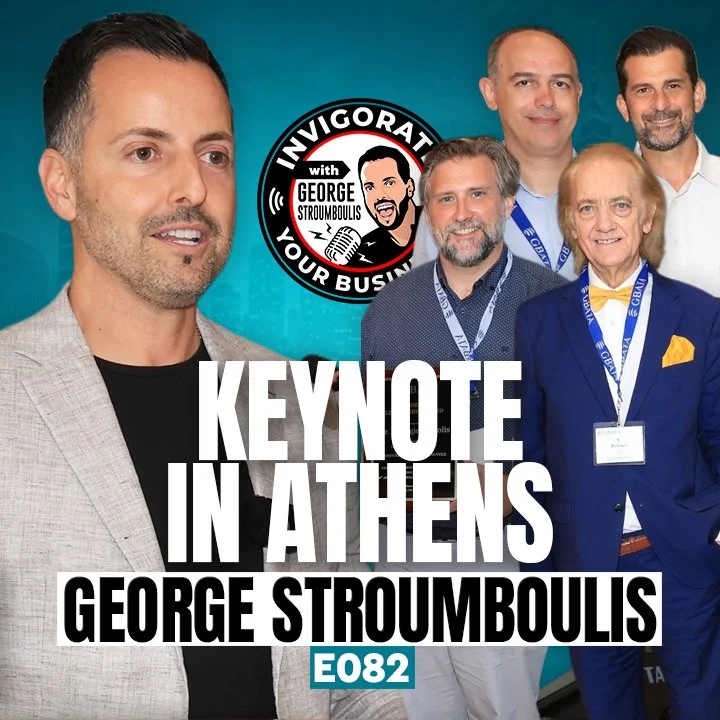




George Stroumboulis sits down with Matt Gates, business development executive and sales leader. Filmed in Newport Beach, California, they discuss the principles of high-performance sales, building lasting client relationships, and the mindset required to achieve long-term success in business.