
VENTURE CAPITAL WITH THALEIA MISAILIDOU & RAPHAEL KONTOS | E081
LISTEN TO THIS EPISODE




ABOUT THE GUEST
Raphael Kontos is the Founder and President of The Hellenic Tech Investor Club (THETI Club), Greece's first tech investor club. Through THETI Club, he has built a thriving community of more than 150 angel investors, family offices, and corporate investors committed to supporting the next generation of entrepreneurs. His work has played an important role in strengthening Greece's startup ecosystem by connecting founders with the capital, mentorship, and strategic relationships needed to scale innovative companies.
Thaleia Misailidou is the Co-Founder and General Partner of Skybound Venture Capital, an early-stage venture capital firm focused on backing ambitious deep technology startups with global potential. With extensive experience investing in high-growth companies, she has established herself as one of Greece's leading venture capital investors, partnering closely with founders to help transform breakthrough ideas into scalable businesses.
Together, Raphael and Thaleia bring complementary perspectives from across the investment landscape, combining expertise in angel investing, venture capital, startup growth, and innovation. Their work continues to shape the future of entrepreneurship in Greece and across Europe by empowering founders, fostering investment communities, and supporting companies building the technologies of tomorrow.
Thaleia’s Website: https://skybound.vc/
Thaleia’s LinkedIn: https://gr.linkedin.com/in/thaleiamisailidou
Raphael’s Website: https://theticlub.gr/
Raphael’s LinkedIn: https://gr.linkedin.com/in/raphael-kontos-847a32b6
George Stroumboulis sits down with Raphael Kontos and Thaleia Misailidou. Filmed in Athens, Greece, they discuss the growth of Greece's startup ecosystem, venture capital, innovation, and what it takes to build globally competitive companies.
“It’s easy to believe when everyone else believes. We’re here to believe before anyone else does.”
MEDIA RELATED TO THE EPISODE
George Stroumboulis sits down with Raphael Kontos, Founder and President of The Hellenic Tech Investor Club (THETI Club), and Thaleia Misailidou, Co-Founder and General Partner at Skybound Venture Capital. Filmed in Athens, Greece, they explore the rapid growth of Greece's startup ecosystem, the evolving venture capital landscape, and what it takes to build globally competitive companies through innovation, investment, and entrepreneurial leadership.
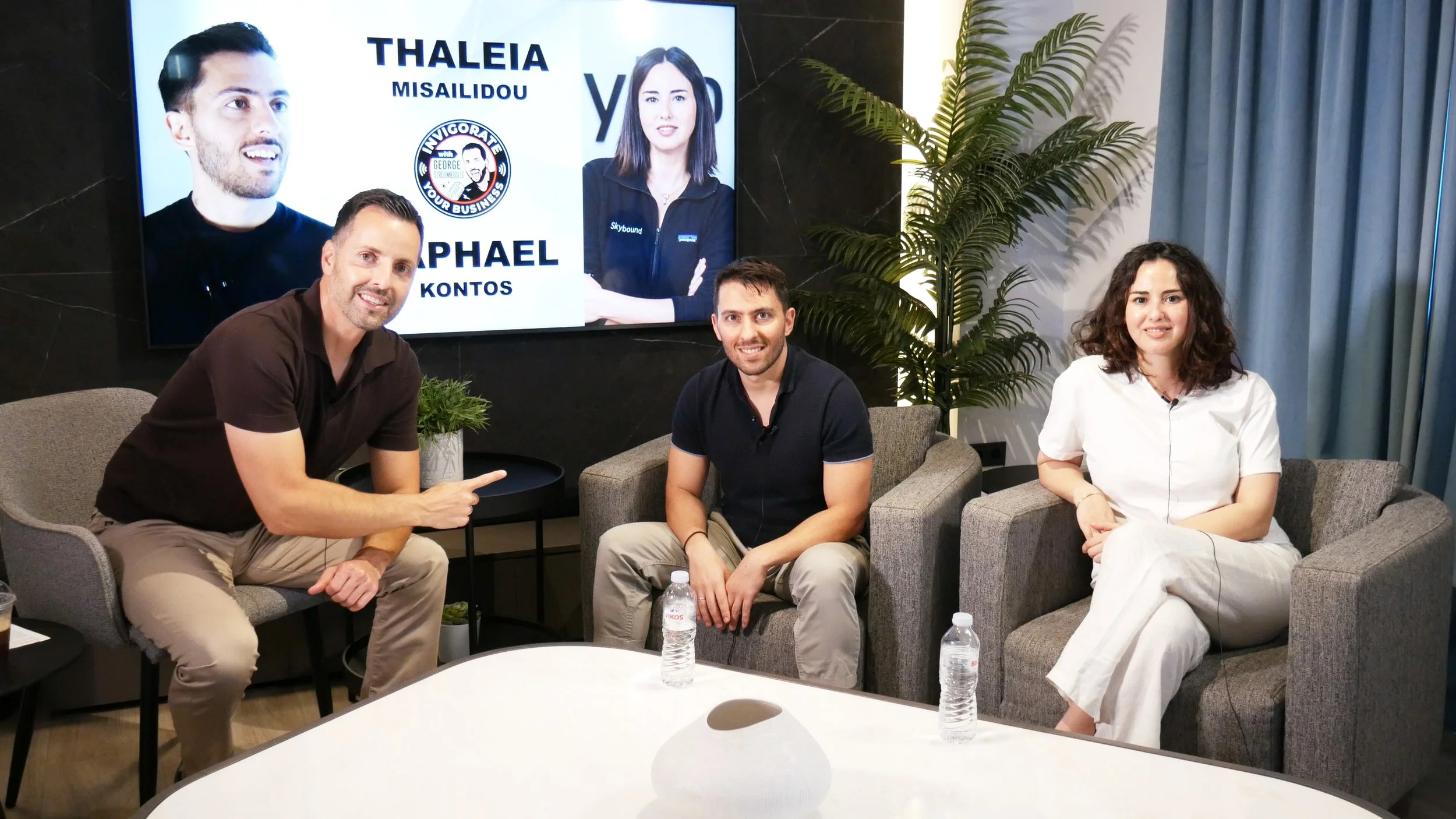
George Stroumboulis sits down with Raphael Kontos, Founder and President of The Hellenic Tech Investor Club (THETI Club), and Thaleia Misailidou, Co-Founder and General Partner at Skybound Venture Capital. Filmed in Athens, Greece, they discuss the evolution of Greece's startup ecosystem, venture capital, and the entrepreneurs shaping the future of innovation.
Filmed in Athens, Greece, George Stroumboulis welcomes Raphael Kontos of THETI Club and Thaleia Misailidou of Skybound Venture Capital for a conversation on startups, early-stage investing, and Greece's emergence as a growing innovation hub.
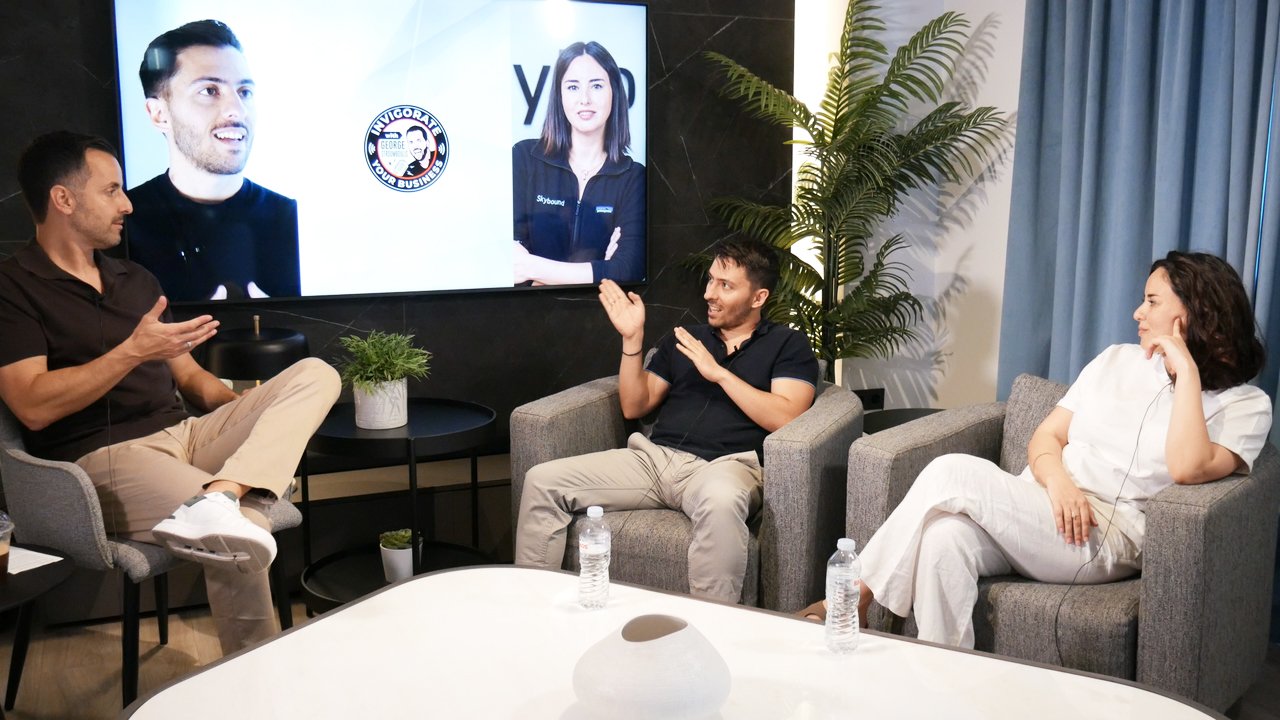
George Stroumboulis sits down in Athens, Greece, with Raphael Kontos and Thaleia Misailidou to explore venture capital, angel investing, and the founders building the next generation of globally competitive companies.
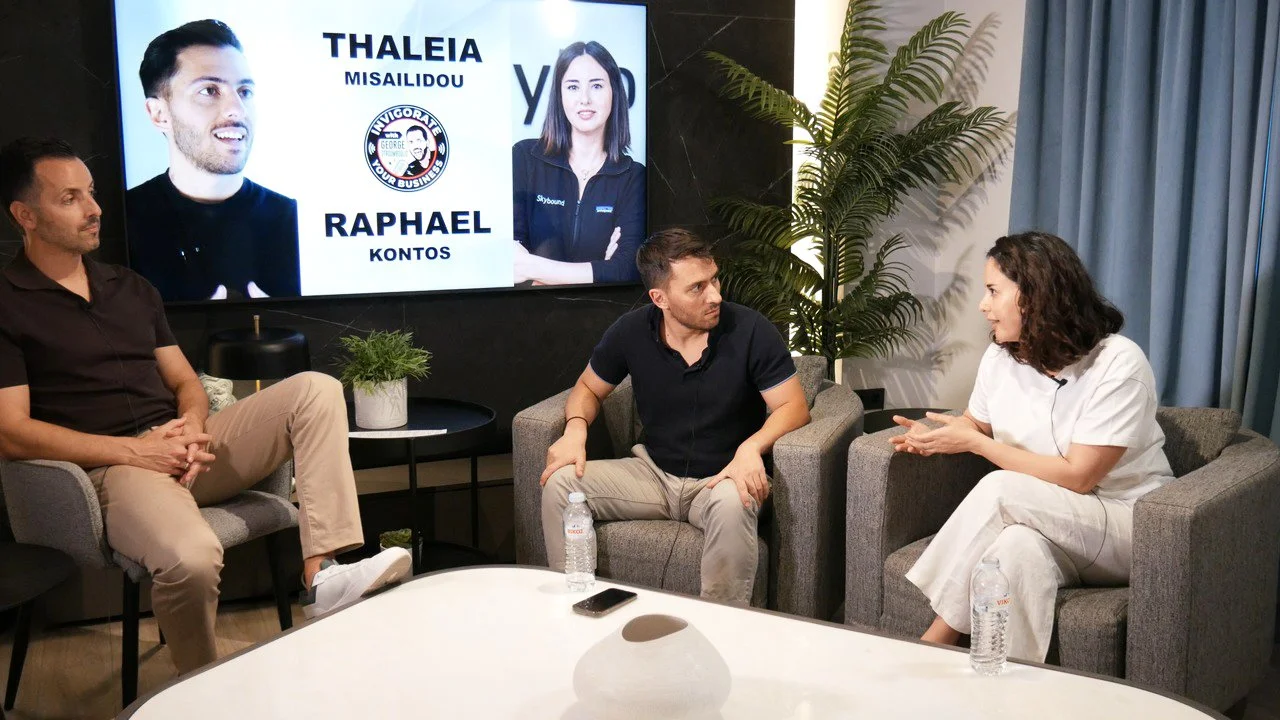
Recorded in Athens, Greece, George Stroumboulis speaks with Raphael Kontos, Founder and President of THETI Club, and Thaleia Misailidou, Co-Founder and General Partner at Skybound Venture Capital, about entrepreneurship, innovation, and the future of investing across Greece and Europe.
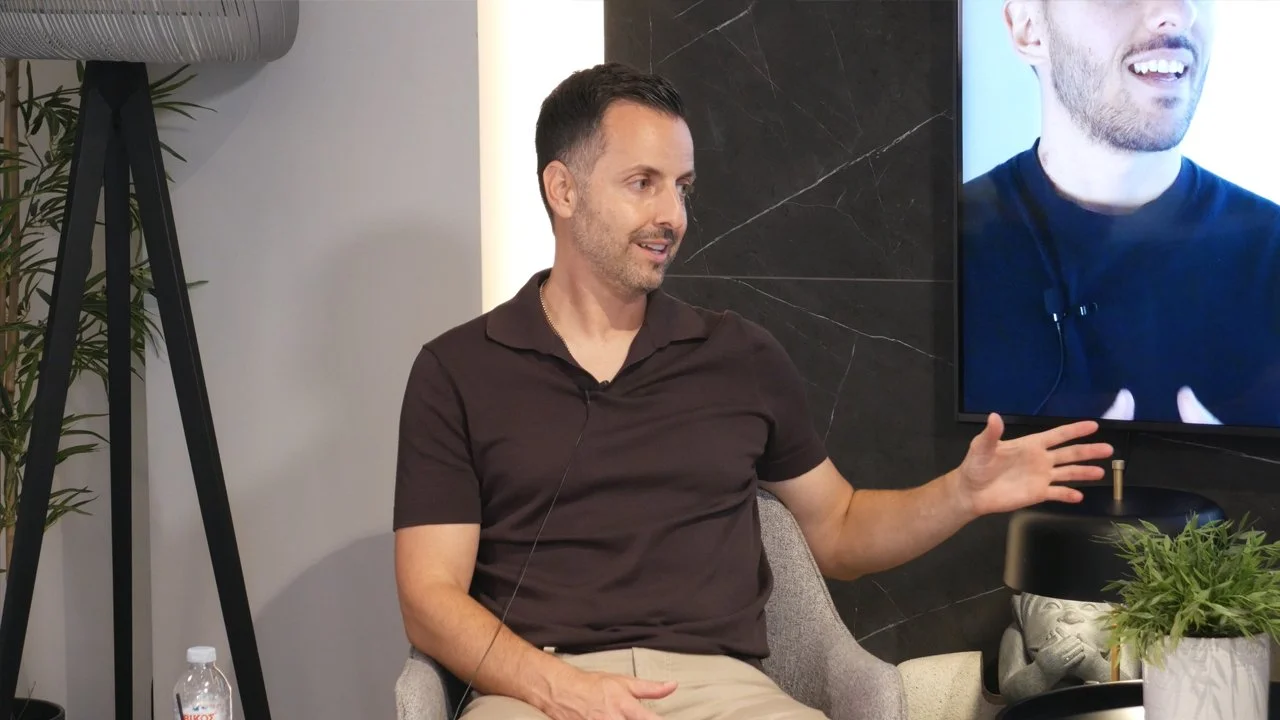
George Stroumboulis sits down with Raphael Kontos and Thaleia Misailidou in Athens, Greece, for an insightful discussion on venture capital, startup growth, and the people driving innovation across Greece and the European technology ecosystem.
ABOUT THE “INVIGORATE YOUR BUSINESS” PODCAST
The Invigorate Your Business with George Stroumboulis podcast features casual conversations and personal interviews with business leaders in their respective fields of expertise. Crossing several industry types and personal backgrounds, George sits down with inspiring people to discuss their business, how they got into that business, their path to the top of their game and the trials and tribulations experienced along the way. We want you to get inspired, motivated, and then apply any advice to your personal and professional lives. If there is at least one piece of advice that resonates with you after listening, then this podcast is a success. New episodes weekly. Stream our show on Spotify, YouTube, Apple, Amazon and all other platforms.
ABOUT GEORGE STROUMBOULIS
George Stroumboulis is an entrepreneur to the core, having launched several ventures across multiple industries and international markets. He has held senior-level positions at progressive companies and government institutions, both domestically and internationally, building an extensive portfolio of business know-how over the years and driving profit-generating results. George’s ability to drive real change has landed him in several media outlets, including the front page of the Wall Street Journal. George was born in Toronto, Canada to his Greek immigrant parents. Family first. Flying over 300,000 miles a year around the world puts into perspective how important family is to George’s mental and emotional development. With all this travel to global destinations, the longest he stays even in the most far-out destination is 3 days or less - a personal rule he lives by to make sure he is present and involved in family life with his wife and three daughters. To read about George’s global travels, stay connected with his blog section.
STAY CONNECTED WITH GEORGE STROUMBOULIS
STREAM & LISTEN TO THE PODCAST:
SPOTIFY: https://open.spotify.com/show/1rW2CmxQoiJNEPOZupJlvd
YOUTUBE: https://www.youtube.com/user/Stroumboulis
APPLE iTUNES: https://podcasts.apple.com/us/podcast/invigorate-your-business-with-george-stroumboulis/id1607693240
AMAZON MUSIC: https://music.amazon.com/podcasts/8fc03929-71b3-483a-a64e-153e30b3d462/invigorate-your-business-with-george-stroumboulis
STROUMBOULIS SITE: https://www.stroumboulis.com/podcast
PODCAST SITE: http://www.invigorateyourbusiness.com
FOLLOW GEORGE STROUMBOULIS:
INSTAGRAM: https://www.instagram.com/georgestroumboulis/
YOUTUBE: https://www.youtube.com/user/Stroumboulis
LINKEDIN: https://www.linkedin.com/in/Stroumboulis/
TWITTER: https://twitter.com/Stroumboulis
FACEBOOK: https://www.facebook.com/georgestroumboulis
TIKTOK: https://www.tiktok.com/@georgestroumboulis
CONTACT GEORGE DIRECTLY: https://www.stroumboulis.com/connect
FULL SHOW CONTENTS
00:00:00 – Welcome And Why Greece Now
00:06:20 – Building Greece’s Angel Investor Club
00:10:05 – Growing Deal Flow And Staying Alone
00:15:57 – Skybound’s Deep Tech Investment Thesis
00:22:28 – Pitching Investors And Curating Members
00:28:52 – How Funds Filter Founders Early
00:35:45 – Bridging Greece With The US
00:37:16 – Neurosoft And Bioelectronics Explained
00:45:43 – Returns, DPI And Partial Exits
00:52:35 – Mission Mindset And Family Support
01:03:42 – Women In Investing And Credibility
01:09:06 – Greek Strengths, Negativity And Vision
01:17:27 – AI Hype Versus Real Deep Tech
01:22:16 – Fundraising Mechanics And How To Reach Us
01:29:39 – Final Thoughts And Listener Ask
FULL SHOW TRANSCRIPT
Welcome And Why Greece Now
George Stroumboulis 0:00
Welcome to another episode of Invigorate Your Business with George Stroumboulis. Today's episode comes from Athens, Greece, and I get to sit down with two people who are at the heart of venture capital in this country. Raphael Kontos runs an investors club, and Thaleia Misailidou runs a venture capital fund. We're going to learn so much today on what's happening here in Greece, companies that they're investing in that are going global. We're going to hear some of the ups, the downs related to this industry and how things are changing here. Things are turning in such a positive direction. You're going to want to listen to this episode starting now. My name is George Stroumboulis, and I'm extremely passionate about traveling the world, meeting new people, and learning about new businesses. Join me as I sit down with other entrepreneurs to learn about their journeys. This episode of Invigorate Your Business Starts Now. So let's start it, yeah? Yeah. Okay, perfect. So I'm going to start off by reading an intro. Let's see if we capture your bio. All right, so the listeners know who we are. Three years later, this is the second time we're getting together. A lot has changed in three years. All right. And you brought a good friend, business partner that we're going to talk with today, okay? So today I'm joined by two people who are helping shape the future of startups, innovation, venture capital in Greece and across Europe. My first guest is Raphael Kontos, founder and president of the Hellenic Tech Investor Club, better known as Theti Club. Rafael launched Greece's first tech investor club, bringing together more than 150 angel investors, family offices, and corporate investors to help fund and support the next generation of entrepreneurs. Through his work, he has played a significant role in strengthening Greece's startup ecosystem and creating new opportunities for founders and investors alike. Joining him is Thaleia Misailidou.
Thaleia Misailidou 1:55
Yes, that's right.
George Stroumboulis 1:56
Let's go. Co-founder and general partner at Skybound Venture Capital, one of Greece's newest venture capital firms focused on backing ambitious deep technology founders from the earliest stages. Before launching Skybound, Thalia spent years investing in high-growth startups and has built a reputation as one of the country's leading venture capital investors. Today she works closely with founders, building companies that have the potential to compete on a global scale, out of Greece. Together, these two guests bring unique perspectives from both sides of the investment table, from building investor communities to funding the next generation of world-changing companies. Welcome to the show. Thank you, for the invitation.
Raphael Kontos 2:34
Thanks a lot for inviting us.
George Stroumboulis 2:36
Appreciate it. So we have two sides to the table, right? We have the investor club and we have the actual venture capital investors. True. Right? So let's start off. How did you two even meet and come to start working together?
Raphael Kontos 2:49
I remember the day, actually, it was three years ago. It was the same period we had the last podcast. Yeah. We were just the beginning of the club. And uh Thalia was working then at uh three years. Uh the exit of Augmenta was 2023, and we met before that. So it must have been like early 2023 or late 2022.
George Stroumboulis 3:14
Thalia, really quick. Sorry, where's your microphone? Uh yeah, yeah. Sorry. No, no, it's okay. And uh we need to start over. No, no, no, no, they're gonna add it. This is perfect, just a little mic check.
Raphael Kontos 3:25
Exactly. So we met, I think early 2023, something like that. And I remember back then. Yeah, I got a call uh by Raphael, uh who was then sitting like in his house back then. Uh I got a call with this guy, and he's like, I want to create an angel network for Greece. And I'm like, Yes, okay. Um, and uh, I don't I I have like he had less than 10 members back then. I have seven members, but I want to make it into something big and I want to gather uh and then he started uh declaring his vision. And then at the end of the call, I was like, okay, I like what I hear. I really don't know how you're gonna pull it, pull through this, but I'll I'll help you. So I was like, yeah, I'm around, give me a call if you have any questions, like how you want to structure it and stuff. But quite honestly, I did not uh expect that he would actually pull it through to the extent, or at least to the extent that he has uh today.
George Stroumboulis 4:21
You were like, Okay, I'll I'll help this guy out. Like that's ambitious though, to sit there, and that's not your background, to say, I'm gonna build a network like this, and then call by call.
Raphael Kontos 4:30
Exactly. Back then, I believed that I could make it. Now that I've already made it, I can't believe that if I return back, I will do it again. Like it was so hard. 100 times harder than expected.
Thaleia Misailidou 4:41
Don't you think like ignorance is the founder's best uh advocate, right? Absolutely.
George Stroumboulis 4:46
And sometimes when you do too much research before you dive in, you'll get too freaked out versus just going out.
Raphael Kontos 4:51
Exactly. There is like a diagram I can show you one time. There's when you have a new idea, you think like, oh, I'm going to make it and make money and be successful, and you see all the positives. Then you go in and you start working, and then you're starting realizing, oh my, this is the hard part of the job because everything has some hard things. And uh what most people do is they they quit. I had for three years the same thought to quit at some point. Of course. Sometimes a lot, sometimes not. But I was like, no, stick to the plan.
George Stroumboulis 5:26
Why stick with the plan though?
Raphael Kontos 5:27
And I will tell you, but I could tell you this. And more people, what did they do? They changed. Oh, one or two years here, or they changed something else. And they never make it. So you have to to make it, you have to create momentum and break, you know, like the wall.
George Stroumboulis 5:44
Yeah, but there's more downs than ups, right? In the last three years. Like, like when I look at my company 10 years, 11 years, there's way more downs than ups, but it's those ups that feed you to the next up for in my experience. How how was it for you?
Raphael Kontos 5:56
Indeed, and it's a good call to work harder. I think now I have a different motto. If things go bad, work really hard. But if things go well, work harder. Right. Man, work harder. The next bad day is coming, the next bad month or bad year is coming, and it's the only way. Consistent, work, work, work.
George Stroumboulis 6:18
Yeah.
Building Greece’s Angel Investor Club
George Stroumboulis 6:20
So tell me three years ago to today. Where were we three years ago, and where where has it grown to today?
Raphael Kontos 6:25
Three years ago, we just starting with a few people, a few investors, uh, very poor deal flow. Um, the investors didn't, well they weren't so much committed because they were just the beginning and everything was new. Today we are the largest tech investors' network in Southeast Europe. Southeast Europe? We have more than 160 investors in total, if you include family offices, corporate investors, etc. And we have some very big companies as well, like Lamba Development, who is developing a Linico project and some other big companies in the club. And um the most important is the quality, the deals that we do now, because are much better than what we did in the beginning. And it's growing exponentially, all this.
George Stroumboulis 7:07
That's amazing.
Raphael Kontos 7:08
Important.
George Stroumboulis 7:08
Yeah, that's huge. So, what was your motivation? Like, you're by yourself, you you're you're the CEO president of Theti Club, right? It's very hard when you're the only person on your mountain, right? Like I have a business partner, and when there's bad times, I pick him up, he picks me up, and you bounce ideas, and it's like, no, no, this is why we're doing it. Who's your person?
Raphael Kontos 7:27
That is a question, a philosophic, a philosophical business question that I had for the last year. Okay. I had, and I had the feeling to, oh, I need someone, I need someone. And if you have a partner, it's your psychologist. So you have you can share your pain, you can uh, you know, I think this is BS. It's really important for the majority of the entrepreneurs out there, but you know, I admire people. It's it has many positives, and always good to have two eyes or three eyes, a pair of eyes to look at things. But at the end of the day, the CEO for me must feel alone. If you don't feel alone, nobody's in charge. And you feel alone because you are in charge, and the end of the day, you have to you know sacrifice your sleep and do what it takes to make it. It's all on you, yeah. Everything in SBS. Like for me, it's this. You have to do it. And I admire like big generals who like they fought, they were on the front, uh leading. They weren't two guys leading the army, there was one guy in the army. Yes. So I don't need a partner in this way. I don't need a psychologist, so I don't need a partner in this way. I mean the partner, you know, if he has some skills, if he has you know some great ideas, but not for therapy.
George Stroumboulis 8:51
Not for therapy, hey, that's good.
Raphael Kontos 8:52
I mean, I mean it's also I think it's also hard to find uh a partner while you go along. It's so much easier when from the beginning you know uh who you want to work with and you go through it together. For for Rafael now, he's gone already from zero to one. I'm sure he still has a long way to go, but he's done already um enough, so it's hard to find, I think, a co-founder now. You're already there.
George Stroumboulis 9:15
Well, that's a great point because I also found in businesses if someone does the work and someone's just putting in the money, it's never aligned. My partner and I, we started it together. I had a new baby, he had a new baby, he had a new mortgage, I had a new mortgage, we were dependent on the outcome. It's when you're aligned like that, great. If I went into this business and someone poured in some investment and had equal say, but I'm only one work, eventually there's gonna be animosity. Like, why am I doing this? He just wrote a check. So, like, yeah, I I agree with what you're saying, but like also if you're super aligned with a partner or partners and skill set where I'm good, he's not, where he's good, I'm not. So you compliment each other. But that that's exciting. Let's go and talk about sure, you know, where do you how did you even get into the space and what do you guys
Growing Deal Flow And Staying Alone
George Stroumboulis 10:05
do?
Raphael Kontos 10:05
Yeah, so um basically Skybound uh uh invests in in deep tech founders around the world, so we don't have a very strict geographic mandate. Okay um obviously we will invest in Greeks because both me and my co-founder are Greeks, so we will invest in Greeks first and Greek diaspora. Uh but beyond that, we will invest uh we believe deep tech founders are our tribe, not just Greeks. Um, my co-founder and I go a long way back. Skybound is a founder-led fund in that uh it's been created by myself and George Varvarelis. George Varvarelis is the founder of Augmenta. Maybe you've heard of it. Uh, it was acquired by CH Industrial a few years back.
George Stroumboulis 10:45
Wow.
Raphael Kontos 10:46
And I was uh I invested in Augmenta as the first investor from the fund that I used to work for, which was Marathon VC. Uh so me and George go way back. From 2018, we've known each other, we've always been complimentary. Um, when he was the CEO of Augmenta and I was his investor, we were working very closely together in bringing Augmenta to its exit as well.
George Stroumboulis 11:10
Okay.
Raphael Kontos 11:10
So naturally, sort of after that exit, we decided we want to basically copy paste that relationship uh and create Skybound to replicate that many, many times. Yeah. And and what's that sort of um relationship? What does it look like? Um, it's a very open relationship where we support founders. We are their first call not only in good times, but also especially in bad times. And we work extremely closely with the Deep Tech founders, which are usually their engineers or their researchers or their postdocs. Um so we work very closely with them to sort of introduce them to the business world, to the commercial side of things. Uh, and that's what our mission is. We want to find uh underdogs on a mission, we call them. We want to find the people that uh have devoted their lives uh solving a very difficult problem. And we want to bring that solution to the world and make our world a better place, and in that we believe, and that's the premise for Skybound, that that's where the best returns lie as well.
George Stroumboulis 12:12
Wow.
Raphael Kontos 12:12
Naturally, the best multiples are gonna come from the uh products that solve the biggest problems. And we don't believe that this is gonna be the next B2B SaaS model or the next developer tools. Uh, we think this will be the intersection of the physical world and AI and the digital world, and that's where we invest. So we invest in hardware and software that bridges the boring industries, be it ag tech or I don't know, automation or uh shipping or anything that's actually, you know, um overlooked uh in the previous decade, that bridges this with the digital world. That's where Skybound stands.
George Stroumboulis 12:50
And Skybound has been around for how long?
Raphael Kontos 12:52
Just a few months. So our first investment is actually a co-investment with TED.
George Stroumboulis 12:57
Um, what what is that like to someone who's not in the investment world, what does that even mean? Like a co-investment, like you're investing in the fund and then they actively go and no, uh, it's different.
Raphael Kontos 13:09
We invested in the same round. Skybound only leads rounds, so we take a uh a leading position, we take considerable ownership in the company, around 15%.
George Stroumboulis 13:18
1.5, 15, yes.
Raphael Kontos 13:20
Uh so we're a typical VC, early stage VC investor that expects to take enough ownership to be able to return the fund, but at the same time to be able to help the founders very actively.
George Stroumboulis 13:29
Okay.
Raphael Kontos 13:30
That uh that's our model. So we led the round of Neurosoft, it was uh a six, seven million uh with the conversion of the safe six million round, let's say. We led the round with uh 3.5 million, uh, and uh 30 also uh invested in the same round as a separate entity.
George Stroumboulis 13:47
Okay, and then your round comes in with multi, like angel investors, 150 plus. Yours is your firm is investing in okay.
Raphael Kontos 13:56
Yeah, so we gather, we have already gathered the funds. We are 33 today. We have uh actually we have uh close to 34 million euros that we're managing, so around 38 uh million dollars that we're managing. Uh, the majority of that comes from our Anchor Investor, which is the European Investment Fund, an entity that is the biggest LP, the biggest investor in European funds in general. So this is our Anchor investor, then we have a variety of private investors that are mostly operators. I guess we gather them because of SkyBund being a founder-led fund as well. So we have a lot of operators from different industries, from shipping all the way to food, all the way to construction, um, a pharma, uh you name it. Um and um and yeah, and we've gathered this amount of money with the mandate to invest in 15-20 startups in the next four years.
George Stroumboulis 14:51
Wow.
Raphael Kontos 14:51
So we're gonna do 15-20 startups. It's gonna be mostly Greek founders and Greeks abroad, Greek diaspora, but also um internationals uh in the next four years. Yes, we've got that.
George Stroumboulis 15:02
That's incredible. So are you competing funds eventually as well? Like if you're developing 30, like if I threw a million dollars into the fund. Good question. And I throw a million dollars in your fund, you guys are seeking the same type of people, or you partner up? Am I causing problems right now?
Raphael Kontos 15:18
No, not at all. We are seeking the same sort of uh we could be looking at the same investments, or also not, like we are very strictly deep tech and hardware and stuff. Um, but uh I would not say that we are competing uh because our minimum ticket is uh around uh 500k, but usually our rounds are like uh 1 million, 2 million, even 3 million. So so we are usually complementary.
George Stroumboulis 15:42
Awesome.
Raphael Kontos 15:43
Yeah, and then sharing resources and or or thetty will come in before us uh with a smaller ticket, and then we will come in in the next round, or we can co-invest in uh in a later round, but I wouldn't say that we compete, at least not today.
Skybound’s Deep Tech Investment Thesis
George Stroumboulis 15:57
Not today. Do you ever get you know the term imposter syndrome when you were first starting it up?
Raphael Kontos 16:02
Indeed, right? Like I know, I know about the syndrome.
George Stroumboulis 16:05
Yeah, but do you did you ever have it in the beginning when you're talking with like this guy and you're like, hold on, and this guy, and they're talking to you about bringing money, and you're like, Hold, like, did you have that in the beginning? No, no, she never had.
Raphael Kontos 16:17
I was gonna answer for you. I was like, what am I gonna make? No, Rafael didn't have that. No, that's why I was on the call, and I was like, is this guy crazy? Like I questioned myself, I questioned my sanity. Like, I had I had it I had it later, I had it like after the two and a half years. Like, man, what I what you did, man?
Thaleia Misailidou 16:36
How are you so sure?
Raphael Kontos 16:37
Are you so sure that you will like gather these people and they will pay attention, they will come to the meetings and they put money out of their pocket and invest. And uh, who are you to bring you know to them deals? Like, I had it at after two and a half years, like which is crazy.
George Stroumboulis 16:53
In the beginning is when you think you'd be like nervous, intimidated. Yeah.
Raphael Kontos 16:57
I was like, let's do it. The first guy, we were yesterday in the summer in the summer party for the Teddy Club, and he was there. The first guy who joined the club, not I I speak to, but the first guy who joined told me, you don't have money, you don't have network, and you don't have knowledge experience. I will join. And he's three years after together with us. Uh the first guy I pitched, not the first guy that joined, the first guy I pitched, I pitched 255 people the first year. I didn't know anybody from these guys. The first guy, of course he didn't join, I pitched. And he called me two and a half years later, and he called me on the phone to join. And he was top executive, one of the largest companies in Greece, like very, very big. And uh because he saw what was going on. Exactly. That's crazy. Now you have another problem, like you don't cannot handle the the interest for the members to join.
George Stroumboulis 17:59
Like you have to exclusive, you gotta create exclusive.
Raphael Kontos 18:02
To make it as exclusive as possible, as you said.
George Stroumboulis 18:04
Yeah. So when you pitched 250 plus in the first year, what was your pitch? In person, on the phone, Zoom? Like what was the most effective pitch? And what were you saying?
Raphael Kontos 18:13
Like what I like I do Zoom because it takes a lot of time to move around in Athens. And uh of course, like they invite me in their offices, it's perfect, but rarely people invite you now in your offices because everybody everything is online. But still you have to pitch constantly. Like there is the misconception, I had it, that you do something and then it goes automatically. You have to push every day. So you know, still I'm talking to a lot of guys every day, potential investors. Still to this day, you're still trying to get the numbers up, uh not really the numbers up, but we want to create not just the largest in South East Europe, but we want to create the best tech investors community in the whole Europe, which is very ambitious, and I know now that it's very ambitious, um, mainly because you know the deal flow is very poor in Greece. Of course, we have opened up to the Greek diaspora and abroad. Uh, three years ago when we were discussing, we were focusing only in Greece, which was very limited, limiting. And uh so we have opened up and you know, we're trying to do it.
George Stroumboulis 19:27
So if I if I come in with uh $100,000 and I'm like, can I come in? Right, just as an outsider, whatever the minimum is, like what are you guaranteeing? Nothing, death and taxes are the only guarantees, but what are you telling someone who's coming into the fund? Typically after X amount of years.
Raphael Kontos 19:43
They don't commit front capital, they they they invest by deal. So they see a deal and they say, I want to invest in this deal. So it's like it's a tech investor network.
George Stroumboulis 19:52
Okay.
Raphael Kontos 19:52
Um we don't try, we try to educate the market because increase is very like a baby market in terms of maturity. But what I say to everybody, and what we want to create, although we are focused on investing in technology because I think that humanity's progress is based on this, on technological progress, and we have to invest. Um I tell them the truth that we try to create an entrepreneurial community. We want to bring together builders, people that build things. Uh entrepreneurs who have made it, they have sold the companies and they invest back to the ecosystem. Entrepreneurs who run big businesses and you know they are very active. Uh new entrepreneurs who are growing fast, founders, startup founders, uh give them knowledge, give them money, but at the same time create like outside investment to create a value, just bringing all of these guys together. Right. Like bring the elite, I call them elite investors in Greece, uh, the guys that really can move things, can write checks, which is rare for the Greek uh to write a check? It's rare, no, like it's not the US.
George Stroumboulis 21:08
It's limited, right? Just by research, yeah. But but do you have people on there now three years that are just kind of just sitting there and not investing? And how do you get rid of them?
Raphael Kontos 21:16
I think no, like every network has like them. It depends. I had guys, uh a very well-known uh guy in Greece, and he's in television as well. He was on the Dragon Show Dragons Then Show. I don't say the name, but he's a he's a he's a member three years. For the first two years, he never chose that. He came after three years because I asked him to talk on an event, and after this, you know, he's he's coming back two, three times. Uh so you know, like it always depends. Different personal personalities.
George Stroumboulis 21:55
So I know we're not gonna say the name, but didn't he start his own fun now or something? Uh venture he's doing something with uh startup investing.
Raphael Kontos 22:03
He's investing in startups, but can he call all of the dragons?
George Stroumboulis 22:07
Yeah, separate. We could talk offline. Yeah, if anyone knows, they know who we're talking about, but it's okay. Um, so then I want to talk about filtering through applications because like it's a big deal. There's there's aspiring entrepreneurs, there's people with ideas. Like you're not trying to hear everything, but just talk to me about that whole process.
Pitching Investors And Curating Members
George Stroumboulis 22:28
What is it? Yeah, yeah. Like what's advice? What's all this stuff? But like talk to me, like, how does it look like in your end?
Raphael Kontos 22:34
Yeah, um, I mean, in our end, we try to make it very clear that we don't do everything. We're not really, you know, agnostic. One may say we are sector agnostic, it's about frontier technologies more for us. Okay. So it's about the deep tech aspect of it, um, and the impact that uh the technology would have to actually changing uh industries overnight, basically. So um that's our our focus. So we try to make our focus very clear so as to not waste our time or the founder's time.
George Stroumboulis 23:02
Yep.
Raphael Kontos 23:02
Um, so that's the first thing uh that I believe all VC funds and Angel Network should do, like make it clear to the founder what they're after or what stage they invest in as well. Uh so we invest in the pre-seed, we don't require any sort of like traction. We make it our job to build conviction on the founder's personality, on their ambition, their hunger, and then on the on the market as well and where it's going.
George Stroumboulis 23:24
So zero sales.
Raphael Kontos 23:26
Zero sales, yes, we can do zero sales, yes. Uh we can also do seed uh stage, so with some conviction, but it's very important for us to be able to build conviction and back the founders uh right when they start, because that's the toughest uh point in the life of a truly deep tech startup. The most ambitious technologies and the you know biggest exits and the most impactful for our world, you will find struggle the most in the very, very early stages.
George Stroumboulis 23:53
Right.
Raphael Kontos 23:53
Because yeah, then it's easy to believe, right? Uh if everyone believes, it's very easy to believe.
George Stroumboulis 23:57
It's easy, yes.
Raphael Kontos 23:58
So we're here to take the risk. Skybound is here to take the risk and to and to believe before anyone else believes. To comment on this, I have a lot of angel investors many abroad, and they say, I have invested in XY, very big comments, like Facebook, let's say, for example, very big commands. Yes, but what 10 billion valuations? I have 100 billion valuation, like they invest, you know, like everybody can see then. Like, can you invest when there is nothing? There is just a vision. Can you take this risk? This is a venture.
George Stroumboulis 24:27
Three and a half million in a new company, new concept, is everything, yeah.
Raphael Kontos 24:31
Yeah, like they don't make any revenue. Well, that said, they've been in 10 people's heads so far, so like in the actual mind.
George Stroumboulis 24:37
Uh which is a huge risk, too.
Raphael Kontos 24:39
Exactly. So, so this this uh the this one, and this is why we went for a bigger ticket, by the way, as well. Uh, they have uh proven already the technology um much more than others. Okay. So we are here to invest in a spin-out before it spins out, basically, that uh spinning up. To comment on this, on the what we're looking for, the startups, I would say two things. Like the thing the one thing is to know before you even see something, like to be prepared, to have this the so-called prepared mind, which is really hard. It's like relationships, like you have to understand before you get married what the ideal woman would like. It is not easy, it's really hard. It's like marriage. Like it takes time, you change after years, uh, you get feedback, the feedback is very long.
Thaleia Misailidou 25:25
You develop red flags.
Raphael Kontos 25:27
You develop red flags. When I met my wife, I didn't have a coban. Now I have, so I had the red flag. Yes.
George Stroumboulis 25:33
That's the only red flag.
Raphael Kontos 25:36
Are you a founder? Then no? The other thing that I want uh Thalia's idea as well is that I'm thinking lately that I see some ideas. And Thalia spoke about the founders that uh and uh you said the underdogs who said on a mission. It's it's really hard bet if you are in Greece and you are an angel or if you are a VC. If you are in the US and you are Sakoya or you are the Y combinator, they are kingmakers. What I see, like I saw companies that they were good, they were in Greece, they couldn't raise capital and they went in the US, they were accepted to the uh YC, there is capital. The idea was okay, you know, if we were doing it, zero chance of success. But if you are so big platform in the US and have all the resources, you are a king maker. And that is a problem for me because I see companies that we see different, like we may say D, and I'm like Freddy Club in Greece, okay, the largest, blah, blah, blah, but you are in Greece, and you are in the US, you have all the resources, and uh you can invest in the same company, and if I invest alone, I have zero chances. But if you invest, you have a lot of chances. You know, and it has to do with geography, with size, and the ecosystem in general. Like, if even if you are the best player, if you are alone in the ecosystem, and that is a good thing that we have new VCs, we have venture, NGL Capital, like you have to put all the parts of the puzzle together if you're going to really create big companies.
George Stroumboulis 27:12
It's a great point.
Raphael Kontos 27:14
I would say that we have a pricing advantage still, where we're, you know, not so much, and I I will actually take it even broader than Greece. Uh because uh we want to prove a point for Europe, not just for Greece, right? Uh you know, Deep Tech founders are a tribe, so they are easily overlooked, no matter where they come from. Similarly to how Greek founders, as you said, are oftentimes while they're here still overlooked. So we take that sort of overlooked tribe and we go there, we go there early, we believe in them, uh, and then we can get some sort of pricing advantage in that way. Uh, and then Rafael is right, we will send them where everything happens. Like we want to send them there, we want to send everyone there. The first company we invest together. It's already in the US. Yeah, like uh yeah, for example, the first investment uh which was incorporated, it was a university spin-off. Okay, and it was incorporated in Europe, uh European ground, but then one of the two co-founders, the CEO, immediately next day moved to the US. In George George Varai, partner of Falia moved to the US immediately. He got funding. One week moved the company there once invested. Actually, I think he didn't move the company there. Uh eventually they had a Delaware entity, but I don't remember at which point. He moved himself there. So he made it his job to find the uh proper um accelerator, incubator, some sort of excuse, uh, just so he could make the jump and move there. And I think that played a huge role in in the outcome.
George Stroumboulis 28:49
So let me ask you though, this is a big conversation.
How Funds Filter Founders Early
George Stroumboulis 28:52
Really quick, we're we're gonna talk about them leaving from here.
Raphael Kontos 28:55
And by the way, that's why it's so important that we bridge Greece with the US.
George Stroumboulis 29:00
Absolutely.
Raphael Kontos 29:01
And find those bridges and find those people that we travel a lot to the US. My co-founder, as we speak, is actually in New York.
George Stroumboulis 29:07
Yeah.
Raphael Kontos 29:07
Uh he took a big trip from MSF to New York and spent uh a month there. Yes. Because we want to find, and he's booking like calls every day, all day, with the Greeks that are working for the big tech companies that are entrepreneurs there, not just founders, because we need to find those bridges. It's very important to build those bridges between uh the deep tech founders in Europe or the Greek founders and the people that can support them there.
George Stroumboulis 29:32
Yeah, I so I was born and raised in Canada, but I've been living in the States 20 plus years, American citizen now. This quick little story. So three months ago I was in Thessaloniki, a friend of a friend introduced me to a videographer because we needed to do some stuff up there for work. Talking with him, 25-year-old guy, sweetheart. How's work here? Good, you know, I get my job here, I get my job there, it's fine, I pay my bills. I was with him yesterday here in Athens doing some stuff. He flew down. He was in uh the States for the World Cup, doing some work. A company hired him, come here a two-week contract. Talking to him now within three months, and I want to open up a studio here because I want to do this and I this and I go, like ex gini americano, like my and that's not insulting people there, but like he goes, No, but like things happen fast, and and this is not tech, but just being in that environment for two weeks and seeing in three months the mindset. And I told him, I go, dude, that's it's so exciting. And it's like there's so many smart people in this country, right? They study, Greeks are resilient, all the all the stuff, but the system, it's a tough system, right? Like it's I know it's changing and with the Theti Club.
Raphael Kontos 30:43
And again, I think it's Europe. I don't think it's Greece.
George Stroumboulis 30:46
Absolutely, yeah. Specifically, here we're talking Greece, but you're absolutely right. But it's great to see that. But then just really quick, the other thing is okay, great minds, great ideas, you're gonna invest, and then you ship them off to the states. It's like, well, we're losing development jobs here, we're losing this. Like we're we're we're financing them to brain drain, right? Isn't that what we're doing? Yeah, yeah.
Raphael Kontos 31:06
Uh yes and no. Uh, example, real life example, Augmenta, right? Uh that has gone full circle. So we can use it. So Augmenta was doing um it was putting hardware on top of tractors. It was a hardware-enabled software business back when it wasn't cool, uh back in 2018. Uh, so they were putting those uh systems on top of tractors, scanning the field and applying the exact amount of pesticide or herbicide or fertilizer needed as the tractor moved.
George Stroumboulis 31:36
Okay.
Raphael Kontos 31:37
Uh, so as I said, my co-founder George left, like I I put uh we invested in the company, uh half a million, so not a big uh check, by the way. And then one week later, he uh went to the US and he spent pretty much the rest of uh his tenure there. Um but the team here uh was doing the development because we do have very it's not about the low salary so much, it's more about the retention. We have a much better employee retention uh here in Greece. So the whole uh the RD center was in Greece.
George Stroumboulis 32:12
In Athens or in Athens.
Raphael Kontos 32:14
Well, actually, they started off in Volos, um, in the periphery of uh of uh of Greece, but then they ended up uh uh creating a big uh uh subsidiary, let's say, but it was still in terms of human uh employees, it was still like the the largest uh employee base of Augmenta was here in Athens.
George Stroumboulis 32:34
Yeah, that's amazing to hear.
Raphael Kontos 32:35
So there was like 60 at the end, there were like 60 engineers here in Athens. Where those jobs would have done where exactly, and some salespeople uh in the US, because that's the main market, right? And George was in the US as well.
George Stroumboulis 32:47
That's a big deal. What did uh what did the firm make on the half million dollar investment? Can you share that?
Raphael Kontos 32:52
Oh uh, I don't uh I can I can say that it was a fund returner. Uh so pretty much it was a 30 million dollar around 30 no 30 million euro fund. Uh and uh we made uh the whole fund just from augmentum, more or less.
George Stroumboulis 33:07
Wow. Yeah, congratulations.
Raphael Kontos 33:09
It was an amazing investment. We did double down, so in the in the next round.
George Stroumboulis 33:13
Yeah.
Raphael Kontos 33:14
You were gonna say something just on that. I was trying to comment on something that you said before about the the speed of execution, which is the number one thing. It's the speed is the friend of the entrepreneur and the friend of a general in a world. So entrepreneur is a general in the world, it costs the world, so you have to be very fast. And but it's about mentality, like you cannot understand how slow you are when you see how the the other people run. And the US they run real fast. Europe much lower. I can like I'm thinking I'm thinking about this thing, this, this, this thought all the time. Like, can you imagine like a billiard table where there are balls and there is no friction? Let's say you are in space, there's no friction. You have the balls moving around, and you have one ball real fast, you you throw a ball real fast, and then you have some balls in the middle and some balls very slow. At the end of the day, uh there's no friction, duct friction, but when they collide, they affect one another, and you are uh going faster, and everybody goes low, when you collide, they slow you down. And then you end up with the same pretty much uh speed. Right. Um so my wife is physics, she may she may you know comment on this and say what you said was wrong. You forgot the X-Y said love. You're always wrong, by the way, when you're married, okay? But at the end of the day, you have you know, you are getting affected by this, which is really hard to put a wall in you if you live somewhere. Right.
George Stroumboulis 34:49
So we didn't say that are we fixing that?
Raphael Kontos 34:53
He's very he's right. That that's why I think it's so important to have a uh that's why I value the fact that Skybound is founder-led, and that's why I think it's important for those deep tech founders, which are usually engineers or researchers, that you have some sort of partner like that on your board that can, you know, transmit that sort of speed uh to the founders as well. We cannot, I mean, founders are the ones that are driving the ship always.
George Stroumboulis 35:18
Yep.
Raphael Kontos 35:19
And you cannot affect that, but it, you know, this sort of like outside thoughts or outside things uh that that uh an investor can do, or in other countries like the US, maybe you just go for coffee and it happens naturally at the coffee place, you meet someone. Uh this sort of serendipity, yeah, that's always nicer. Yeah, but it's also good to have someone tell you, man, just go there. Yeah, uh, just go there faster. Let's go together, you
Bridging Greece With The US
Raphael Kontos 35:45
know.
George Stroumboulis 35:45
Or do you have partnerships within the states, like in Silicon Valley? Like, do you have any partnerships like or channels? Yeah, you know what I mean?
Raphael Kontos 35:52
Like as you're building this, and any Greeks over there or that that's a good thing about the Greeks, I think, because we form like sort of informal uh channels and networks.
George Stroumboulis 36:02
Uh and I asked, because there's a I won't say his name, but he's brought this up after he saw the episode three years ago. And he's like, man, there should be a channel where what's happening here, because he's in Silicon Valley, owns a lot of property. He's like, we should set up a channel, and it just fizzled, right? I'm busy, everyone's busy. But like having a network like that where it's like, hey, we're still supporting Greeks outside by Greeks, and it's not just Greeks, but it's it's worth talking.
Raphael Kontos 36:30
We started creating from these strips uh that uh we take like uh meetings, as I said, beyond founders, yeah, beyond investors, because we were also fundraising for SkyBound. But we take meetings beyond that, beyond those purposes, just you know, interesting employees in uh big tech or or researchers that are not currently doing a startup. So all these people we started creating this sort of WhatsApp groups, okay, which is something very simple and very natural, and there's you know zero effort and zero uh thought behind it, it's just about connecting people.
George Stroumboulis 37:02
Yeah, which is great.
Raphael Kontos 37:03
Uh yeah, and we find it works quite well.
George Stroumboulis 37:05
Yeah. This company here in Greece that you invested in, your first one with this fund, right? Yeah, can you share? Like, yeah, I know you said the name, but like what do they do? Why did you invest?
Raphael Kontos 37:15
Of course we can
Neurosoft And Bioelectronics Explained
Raphael Kontos 37:16
say, yeah. Uh the company's Neurosoft.
George Stroumboulis 37:18
Neurosoft, okay.
Raphael Kontos 37:19
Neurosoft is because of bioelectronics, right? The the um uh it's a spin-off of EPFL, Lausanne uh University, uh, which is full of excellent researchers. Um they've focused the both co-founders, Nico Um and Ludo, have focused their life solving this problem. Uh and this technology um is uh truly competitive on a on a global scale. They've built a soft uh uh uh chip that uh is in on a large surface, and that's the competitive advantage compared to imagine Neuralink that puts like tiny chips that are very hard, like really inside the brain, dip deep inside the brain, and it can perfectly control one function, whatever it is, like the cursor. Uh we we can move it. Uh whereas Neurosoft is soft and largest, and you don't need to like actually do a brain surgery, you do just a bear hole, and in the which is like a tiny uh hole on uh on the skull, and then you you you put this in and it expands and it uh has a larger, larger surface area that it covers across the skull. Exactly. And what can you control with this? What's different? You control more complex functions such as movement or speech, um, is what you can control with this sort of uh of uh brain implant, let's call it. Uh so the data that Neurosoft gathers uh is like really immense. There's literally no one else that uh can gather a data set like that. It's already uh been implanted in a dozen or so humans.
George Stroumboulis 38:56
No way trials, like doing trials now?
Raphael Kontos 38:58
Yeah, yeah, yeah, yeah. And it's about to get approvals as well to stay in human brains longer. Um so, yes, there's so many applications from obviously the obvious, like curing, uh not curing diseases, but giving these people back their um independence.
George Stroumboulis 39:14
Like like what like what can that fix? Is it is it eyesight, is it paralysis?
Raphael Kontos 39:19
Like what can it's paralysis, it's movement and speech mostly. So these sort of more complex functions uh that the brain uses many parts to perform, not just one tiny part.
George Stroumboulis 39:29
So the main competitor here is Elon Musk's neural.
Raphael Kontos 39:32
The main competitor, yes, would be uh Neuralink, but the space is really new and everyone's like you know taking it from a different angle. So in reality, when we end up like being able to control the full mind at some point uh and do a complete interfacing, you need I think you need both. Like you need the um large surface and on top of the brain, but you also need the very deep um control that uh other companies uh focus on. You mentioned Elon Musk and Neuralink. I don't know if we want to share this, but one of the main I don't know if we can share this. Can't share the name, but one of the Neuralink uh You did it, so it's fine. The legal issues on him now. One of the ex-partners of Elon Musk at Neuralink. Yeah. Uh which it was in the same round with us. Yeah, he's an angel in the company. Yes, which is really important. Like if you're a big investor, we get access in these kind of deals. And uh don't say the names, but yeah, that is true.
George Stroumboulis 40:31
Wow. So on this investment, like what do you expect a return where you're like, okay, this was worth it? Like this could be uh could be insane. Like it could be insane, right? Like most probably it can be zero because it's a venture.
Raphael Kontos 40:45
But let's be let's be let's be realistic. Yeah, let's take the the realistic uh route here, and that's the beauty of having a small fund, by the way, or being an angel investor uh in uh Rafael's position. Yeah, what will happen here? Likely it will go on to raise a bigger round and a much, much bigger round, and it's the same with all deep tech companies, and then eventually, obviously, you'll need to raise a lot of money and dilute a lot to be able to create a proper DECACORM or even larger. So, in that course, if you're fortunate enough to be an angel investor or to have entered very early or to be a very early stage as a deep tech fund, you get a lot of opportunities for partial exits. So then you need to think DPI, which is something extremely important as well. Um, you need to think about DPI, about making money for your investors because that's what you're being paid for. Yeah. And you're obligated, I think, as soon as you are able to return the fund, so 40 million uh dollars or 35 million euros for us. Uh so at that point, which is very uh not so far in the future, uh, you do a partial exit, is what you do. Even if you do believe the company is gonna grow uh very big, um, I at least my take is you do a partial exit, you give people their money back, a good return, and then you also keep a small portion that you can maybe maintain for the long run.
George Stroumboulis 42:02
Uh okay, so you said a term a few times, return the fund. So simple math, if your fund is $40 million, you invested three in this one. You're saying, like, hey, in this example, once we can make $40 million off this three million, exactly, then returning the fund is, hey, we made back the fund, now we look for other ones. Is that is that how it goes?
Raphael Kontos 42:22
We don't look for other, so it's a closed vehicle. So we accept investments only for like another three to six months. We're accepting investments, and that's it. Then it closes and it hits the 35 million, let's say, euros or 40 million dollar mark. And then you say, That's it. This is the money I've gathered. Now I'm gonna take 15 beds in the next four years. One of them is Murosoft, for example. We're gonna take another 14 bets, bit uh AI infrastructure, optical switches, bit uh, I don't know, space, yeah. Um, solar panels on satellites, whatever. Um, so so you you take these 15 bets in DeepTech, then you follow up again in the next round, but then you make it your job to exit those within like six or seven years, ideally.
George Stroumboulis 43:05
Six or seven from the time you have.
Raphael Kontos 43:06
At least partially, yes. At least partially, at least partial exit. So the minute one of those companies reaches the return, your stake in those companies reaches a fund returner size, yeah, then I think it's your fiduciary duty to your LPs, to your investors, to uh give back some returns uh and uh and then maybe maintain a tiny portion. Okay. To go back to the investment on Uurosoft by electronics, my favor my favorite comment came from uh Falch's partner, George, who said that I have seen many, many companies, hundreds of thousands. I have invested in XYZ companies, but it's the first company that I see no ceiling. And this is the most important thing: like to how big can become the company, and how you know, like when it comes to the returns or venture returns. And that is, you know, like it's really hard to find these very, very few companies that can become really big. This is another topic for. Discussion because there are great companies who cannot fund because they cannot become really big and really fast scale, but they're great companies, and you know, like this is the model.
George Stroumboulis 44:11
Yeah. So when you invest in 15 companies, you just need one to hit. Like, do you expect, hey, out of 15, 10 are gonna fail?
Raphael Kontos 44:19
Although that's a typical VC model, it's not our model. Uh we don't expect all our companies to fail. We work very closely with all of them, and that's why the portfolio is so concentrated. Uh, we we use my investor/slash banker uh background and we combine that with George's operator uh background, and uh and uh we try to actively help these companies and sort of de-risk that.
George Stroumboulis 44:43
Okay.
Raphael Kontos 44:43
So we de-risk every step you take from the pre-seed to the seed to the series A to B, C, we de-risk that. So we help them actively raise their next round, and then maybe the round after that. So we sort of de-risk their path, and by series B or C, we can already receive meaningful DPI. That's why we kept the fund size low. That's very important in our model. And we can return uh DPI to our LPs.
George Stroumboulis 45:08
I mean, coming out in a new fund, investing in that, like everything else is gotta be like this is a game changer.
Raphael Kontos 45:14
Yeah.
George Stroumboulis 45:15
Right? Like being in there. But the Neuralink, even Neurolink, it's had a lot of bad press, right? Any anything new. Like, I don't they're gonna control, they're gonna do this. Are you getting any feedback like that now?
Raphael Kontos 45:26
Or um not so far, I think, because our guys also started from curing diseases, right? So so they are they started from epilepsy. Uh so evidently, like naturally, no, we haven't received any sort of feedback like that.
George Stroumboulis 45:42
Okay.
Returns DPI And Partial Exits
Raphael Kontos 45:43
In three years, what what what's the biggest lesson you've learned when listening to pitches, filtering the bullshit, knowing like the biggest uh thing is that we're looking for entrepreneurs and not after the DS is second, second thing, like you're looking for entrepreneurs who are a rare animal, and unfortunately, the startup ecosystem, although it has done a lot of good, has uh you know created this misconception that oh, let's go, it's a trend, let's start a business. Like it's it's war, it's it's not fun. I don't like fun, like you know, like I I said to my to my team, I don't like to have fun, like I want to do the business. Yeah, and if you don't, if you're gliding, you know, like you have to fight every day, it's not fun. Like, man, you have to put all your energy there. It can be fun, okay? Sometimes you enjoy it.
George Stroumboulis 46:33
You can enjoy it, but it's not fun.
Raphael Kontos 46:35
It's a hobby, okay. It's a hobby, okay. Buy a hotel in Mykonos, put a manager, go there, have a cocktail, and that's fun. That's that's fun, yeah. That's fun. But you need a few million to buy it, and you know, yeah. You're right. Yeah, you need to be somehow wrongly, I think, uh wired in a special way. Uh that you can't stop grinding. Like it's not an option, right?
George Stroumboulis 46:59
I I wake up every day and it's like, what shitstorm am I gonna eat today? Like it's literally every day.
Raphael Kontos 47:05
I have an entrepreneur in the club who started from zero, from his house. Um, he's now 65, from zero to 1,000 employees, has bought companies in the US, he goes to they call him in the US to buy in the in his industry every company. China, uh, you know, Africa, everywhere. Like has 10 factories like very big from Greece, like man. And he two things I liked. Like the first thing that is right about this like he wakes up at 5 p.m. every day. 5 p.m. 5 a.m. Excuse me. 5 a.m. No, he doesn't, he's probably not aware. He's five pm 5 a.m. the guy without an alarm clock, just for passion, you know, like to do the next thing. And um the second thing which shocked me, um, but you have to know his story, I will be very brief. He had like after 20 years, he had a factory, everything was burned down by a fire, he lost almost everything. And he worked so hard to to rebuild everything, so hard. And after this very big shock, because like man, you start from zero, you had a factory, and you you you you so you you lost it. He said that this like as an entrepreneur, he woke up after this event, and he became so successful because he has this event. Although this guy had 20 years, like past a small factory, like a small factory wasn't something big, like in 2001 was a fire, so it wasn't like a big factory. And uh to go from this stage to the next stage, which is a really big, you know, like uh it's really hard, and this is you know the good things about the bad things. It happens, but you wake up.
George Stroumboulis 49:02
It's the best thing for you if you could come out alive, like to go through that type of stuff.
Raphael Kontos 49:07
And this is the mentality of the no, like after uh two, three years I had like the mentality, like I wake up. I don't believe in great days or bad days. Like I I don't feel that I have bad bad days. Rarely I have a really bad day. Okay, rarely. Once a year, a really bad day. Um like okay, man, you lost this deal, I don't lose any the deal uh uh almost never, but let's say you lost in an imaginary environment whenever we are. Let's say you don't you lost a sale, man. You lost a sale. If you are active, you have another 100 customers, potential customers, but five of them you lo you close this day. Right. So if you you have to punch uh uh you know, to punch life faster than life punch you. Yeah, absolutely. Go back to the you know the speed. Like and you know, a bad thing is coming, you said, okay, my this is my life. I think it's also I don't know. I think it's also important, which is easy with frontier technologies because to develop something that is deep tech, you naturally have to spend many, many years of your life uh doing this. Yeah, it's not something that you can just uh create with AI in a night.
George Stroumboulis 50:23
Um which we'll talk about, by the way.
Raphael Kontos 50:25
Yeah, but I I think it's also important that founders, uh be it uh Angel Club founders, VC founders, whomever, are actually on a mission. They're doing this for a reason. That's why we say underdogs on a mission. Uh people that uh have some sort of relationship with the problem that they're solving.
George Stroumboulis 50:43
Right.
Raphael Kontos 50:44
Uh I think it's very important uh that we look for founders like that. Because these these people will not give up easily.
George Stroumboulis 50:51
Because it's a life mission.
Raphael Kontos 50:52
Because it's a mission for them. It's not about making money, it's not about the lifestyle. Uh it's about the impact they can have on the world, right? Which is huge. Yeah. Ah, I have like a very recent thought about this, about the vision, the mission. Like I'm I live my life with a mission because building a business, a really big business, it's like you dedicate the whole life. And uh for me it's really hard to even understand it. Like I understand it as Raphael, after three years, that man, if you're gonna become big, this is your life. This is every day. And it's easier to see people that are in the poly politics or in the military, other areas to have the vision and dedication. In business, we don't really uh have it, at least in Greece, this kind of mentality that he this guy dedicated his life to build a business. It's uh it's like you dedicate your life. Like after you become 60, 70 years of age and you look back, and that is what defined you. Nothing else. You cannot say that something is defined. Because it's so you need so much time to really big uh build a big business. Of course, you can have other things in life, and I would suggest to have other things in life, not you know, like start a family, do you you know, uh exercise, you know, like have some fun with your friends, but this is going to be your core thing in your life, and it's gonna becomes, yeah, the identity. Then everybody comes, oh, start a business.
George Stroumboulis 52:21
No, don't start a business, like becoming an employee. Or she was lucky, or he was lucky. It was like really lucky they dedicated their life. You didn't see the last 20 years or 30 years or 10 years, or but I always struggle when people are like, oh, you know, you gotta have work-life balance.
Mission Mindset And Family Support
George Stroumboulis 52:35
Like when you when you're an entrepreneur, right? Grew up in the family restaurant business. Work and life was one thing, right? Even now I have three young daughters. I'm very dedicated, I'm very driven, but I'm also present. But my girls are part of the business, and the business is part of my family.
Raphael Kontos 52:50
It's like it's for me, it's not a what you said is what you said is very like spot on. Uh, my family, I also have uh kids, I have a husband. Okay, but my work is a big part of my family life as well, right?
George Stroumboulis 53:03
So, how how in your world? Like, how do you balance it?
Raphael Kontos 53:05
I'm a woman as well, right? So let's call it what it is. So it's very hard.
George Stroumboulis 53:08
Yep.
Raphael Kontos 53:09
The only way uh uh that I could do it, and the only advice that I would have to give to females out there that want to uh you know build something of their own, there's for me, there would have been no other way to do it other than my husband being extremely supportive of this. So this is your business has to become the family's business as well. If you can, if you want to create something truly begin, if you want to grind like a startup founder, you need to have support, you know, behind you. So that's the only way to do it. Okay, so when So you don't just devote your life to something, you actually devote your family's life to something.
George Stroumboulis 53:44
So do you engage? Have you had uh hard times yet in the business, like stressful times? Of course I have. Okay, yeah. So what do you do like at the dinner table when you're talking with your husband and your kids? Or there like do you share certain things? Do you not?
Raphael Kontos 53:56
I think my kids uh naturally hear things. How because they're in the room, like the oldest one is five.
George Stroumboulis 54:02
Okay.
Raphael Kontos 54:03
Uh now, so he hears things. Yep. Uh sometimes he asks uh like weird questions as well. He's like, uh, oh mom, uh uh like uh sometimes, mom, why are you going to work uh like in the evening? Like are you going to a party? He's like, you know, is this work or is this a party? So he's confused as well by certain things. But yeah, he does listen to things, but he's still young, so um, that's fine. Um, but yeah, my husband is really you know an advisor uh for me, and much more than that, he's like a partner. That's a big deal. He's uh yeah, uh silent business partner uh in the business, but there's no other way to do it, for me at least. It's a mentality, like to have the work with your life, it's your life. But it's not exactly the work, like it's not work, it's it's what it's your life. It's your life, it's what you do. You wake up, you send messages, uh you eat, you work.
Thaleia Misailidou 54:51
You send messages.
Raphael Kontos 54:51
Let's say you send messages, you you talk with business partners, then you uh speak with your life partner, you know. And that's why you have to be on a mission to be able to do that, like to be able to do it on holidays, to do it on weekends, to become this. That's why it's so important that you're not working for a business, you're working for a mission. Um and when you have founders that are so devoted and they ping me at 12 a.m. on a Saturday uh with uh big news about uh their company, I am you know more than happy to you know dive into this because they're on a mission and I'm on a mission with them. And that's what's missing as well. Um I think for a lot from from the investor side to be able to to follow the pace of the founders.
George Stroumboulis 55:38
Because they said so the last startup I was a part of, right? I was one of the four owners, it was VC backed, a fund out of uh Boston. And I hated that experience. I I hated it because it was uh lots of pressure, um, did not care about us, my experience, right? But then there was the main guy, the president, who dealt directly with them. And uh when tough times are like, okay, we'll give more, but we're taking more ownership. And it was so when I started this company now with my business partner, I was like, no VCs. We will do anything, we will remortgage the home. And for 10 years, like because the experience at that time was so bad and it was so, but we had a successful exit, and it went public. But me personally, where I was in my experience at that time, I'm like, fuck no, we're not.
Raphael Kontos 56:24
You don't you didn't have the right. Absolutely.
George Stroumboulis 56:27
Not good left a taste in my mouth where I was like, we don't, we don't want that. And again, back to the life mission. These guys, this company you invested in, these people, they're literally changing the world, right? If you open a Suwlaki stand downstairs or a coffee shop, you're not changing the world, you're making a living, right? So it's you got to be passionate, but there's only so many things. Like, is my lighting company changing the real world? Absolutely not. But we're the most trustworthy lighting company in the world, that I believe. Anybody could supply lighting. You know what I mean? So it's like, but I am I passionate and everything, yeah.
Raphael Kontos 57:01
It's not about the lighting, it's about what you are building around this. Like the structure, the philosophy, the small detail it takes the kids to become an expert in something and really make it a masterpiece. It's also the example you're setting. Because we were talking like before offline about how you brought business here in Greece in the US, how you're combining that, how you're expanding beyond. It's also about setting an example. And that also has to do a lot with Greece and with the bridges coming back again to the bridges to the US. Yes. It's important to set these examples, to set these routes, like these paths, uh, and then other people can follow. That's also can I go back to the you know hustle and all these things and how you balance? There is like a lot of trends in the business world, mainly US, like about hustling. Everything's about hustling. And I'm a hustler, I've got the economic hustler, and I think I'm a hustler. But I believe there is a superior category, a far superior category. Of course, you you have to be a hustler in your life, and there are moments that you know you have to save the business or business just starting out and you have to like go, go, go. But there is a long-term momentum, like a marathon, but it's about the momentum. Like you have to create a so strong momentum about your habits, about your work ethic, about the time you dedicate to rest. Like rest. Absolutely, like take a take a few days. But for me, the most important is not I was worrying in the past, like, oh, I lost this day work. Like, I don't care about the day. I care about the momentum. Yeah, yeah, yeah. At the moment, and of course, how efficient I am now, how you know, like how I have structure, everything. But like the momentum, that's the most important thing for me that I see in entrepreneurs. Like, do we are not robots? Like, there's because there is this in Indonesian, you know, like hust, hust, hust, hust. Too much though.
George Stroumboulis 58:57
So talk to me in the States, like the Gary Vayner chuck, you gotta f this and hush. You need to be motivated, right? But I I also don't think you're defined by who you are. Like when you're on your deathbed, God willing, and your kids are there, and it's like, dad or mom, the company you built and the the lifestyle you gave me is like, I don't think that's gonna be the case, right? Like Jack Welch was one of the biggest CEOs in the world, but he was still a dad. Like, do you still talk about him? I think we also get stuck in our whole world that we think, right? The guy downstairs who has a coffee shop, he's hustling. Shit, I'm out of ice. I gotta go get ice.
Raphael Kontos 59:30
I got right, like again, though, your kids, you mostly teach by example. Bingo, yes, and not by words or so so it's not so much for me about you know what I say to my son, uh, that uh, you know, or or the if I spend with him, I don't know, um, other people might maybe he will judge, I will not judge, he will judge when he grows up. But maybe it's not about uh me spending, you know, seven days next to him uh looking at my mobile phone. Maybe it's him seeing me work a lot for a company that then he can understand does this uh and did this for the world.
George Stroumboulis 1:00:09
Yes, yes, yes.
Raphael Kontos 1:00:10
Maybe maybe that's also a bit of parenting and not just uh making dinner at the table.
George Stroumboulis 1:00:15
Absolutely. And it's through your actions, right?
Raphael Kontos 1:00:18
Yeah.
George Stroumboulis 1:00:19
You still don't have a family yet, right?
Raphael Kontos 1:00:21
You're I have a wife, but not uh I have a family, but I don't have kids.
George Stroumboulis 1:00:26
So how is it managing like being newly married, right? And then running this, it's it's a lot, right? There's calls all the time. Like how how does she handle this with you?
Raphael Kontos 1:00:34
First of all, I I would say that we are on Instagram friends. So I I see your example and I admire you. He has three daughters, amazing, very beautiful. Thank you very much. Very beautiful wife. Yep, and I see you like spending time with your daughters to go to soccer. Have to.
George Stroumboulis 1:00:52
I have how you do it. Like you said it earlier about momentum, though. Momentum. If the company's there and you got the people and you know, like, hey, you know what? I can leave at 3 p.m. to go to the soccer tournament.
Thaleia Misailidou 1:01:02
That's true, yeah. Yeah, that's important. Yeah.
George Stroumboulis 1:01:05
Before, especially with a business partner, it's like, wait, he's gone for three days, but I'm here for three days. It gets very petty in the beginning. And my dad, for example, who's off the boat Greeker, he's like, hey, you guys are good in your own field. Don't count the minutes. What's your goal? And that changed everything for us, like as a partnership. But balancing is very hard. And I'll tell you the last startup with the VC backed, the guy that was running that one had a heart attack, mild heart attack in his late 30s. Six days a week, not seeing the kids. I'm like, I don't, that's not life either, right? So I've seen those motivation examples where it's like, hey, pump the brakes. It's important to balance.
Raphael Kontos 1:01:45
So I play the game daisy mode because you are with three kids, I have just a wife. Uh, but it's not easy because in Greece we have you know different mentality, mentality about how things work. Like we are stuck on the 80s and 20s, uh, 2000s, like you know, like it's a global economy. You have to become global, you have to not separate work life, like you live. You live, you that what we said before, like it's it's not easy, it's about mentality again.
George Stroumboulis 1:02:17
Yes.
Raphael Kontos 1:02:17
This is my you know biggest uh butt, and it's not but with my wife, it's about inner inside me, like to understand all this. Yeah, and it's also about structure. I mean, to put it plainly, maybe a bit of a women woman touch here, it's also about structure. You can say, like this, uh from this time to this time, I'm grinding. Uh, and then from usually, and that's where it's important to have a nice partner that can uh be there when you can't because there's an urgent call or a cool startup that you or a trip that you need to take. Yeah, but you can say, like, for this half hour, from this time to this time, mobile phone is left uh at the door. That's very important, I think.
George Stroumboulis 1:02:56
Very important.
Raphael Kontos 1:02:57
Uh, and then I just spend time with, I just play with my kids. This half hour is very important. It's uh and it's often enough. And often kids don't get that, even if you don't work uh crazy hours like me and Raphael or you do.
George Stroumboulis 1:03:09
Yeah, yeah.
Raphael Kontos 1:03:09
Um it's about structure as well. Like this half hour is for you, and then you go back to work to your phone, there's a hundred uh pings, but then you're so much you're rejuvenated as well, right? And you can get to it a lot faster.
George Stroumboulis 1:03:22
And what you said, imagine 30 minutes of like truly dedicated time versus two hours of like, yeah, yeah, yeah, yeah. Yeah, like exactly.
Raphael Kontos 1:03:28
So we set we we set rules, me and my husband, we set try to set rules like that. Um, and then everything sort of you know um marches.
George Stroumboulis 1:03:38
So let's talk about men and women, like in this arena.
Women In Investing And Credibility
George Stroumboulis 1:03:42
This is a male-dominated industry that you're in. For sure, yeah.
Raphael Kontos 1:03:45
But it's the the least male-dominated industry that I've been in.
George Stroumboulis 1:03:50
So okay, so explain that.
Raphael Kontos 1:03:52
Because I'm a mechanical engineer. So back when I was studying like in the Polytechnio uh here in Athens, uh, it was very few girls in the classroom. Then after that, I went into investment banking and I was in the MA Industrials team of Bank of America Merrill Lynch in London.
George Stroumboulis 1:04:08
Wow.
Raphael Kontos 1:04:09
There was like 36 of us doing EMEA industrials, 36 of us, two women, and then I was the only one left. She she quit.
George Stroumboulis 1:04:17
Wow.
Raphael Kontos 1:04:18
Uh the other one quit. So so I can say the balance is better now than what it used to be.
George Stroumboulis 1:04:24
So you're you're a unicorn in the space, right?
Raphael Kontos 1:04:26
Like you're I guess so, yeah. I don't know why.
George Stroumboulis 1:04:29
So when you're vetting, um, do you see like entrepreneurs giving you the same treatment as they would to your male counterpart, your partner?
Raphael Kontos 1:04:38
You earn, I mean, that's not a nice answer, but it's a true answer. You earn that sort of. Um, and having been in male-dominated environments uh for so long, I think it uh very quickly becomes um uh you know evident that we are on the same uh on the same page. Um I don't like to lie about these uh you know female male uh subjects. I like to be very blunt. Yeah, we should. So yeah, you don't you have to earn it. Unfortunately, it's not yet a given.
George Stroumboulis 1:05:07
Yes.
Raphael Kontos 1:05:07
So there is an year or in general? In general, no, in general. I've been I've worked with people, uh, I mean, in Bangladesh, I was working with Americans uh sitting next to me, even in London. Yes. Uh international everywhere.
George Stroumboulis 1:05:19
Yeah. More so in Greece, would you say?
Raphael Kontos 1:05:21
No, I would not actually.
George Stroumboulis 1:05:23
Okay.
Raphael Kontos 1:05:23
No, I would say it's the same everywhere.
George Stroumboulis 1:05:25
How many women in Greece are doing what you're doing right now on that level, like with that experience?
Raphael Kontos 1:05:30
You know, more women in Greece are doing what I'm doing in this level compared to the women in the industrial team, which is like very heavy tech in my lynch and London.
George Stroumboulis 1:05:39
Wow.
Raphael Kontos 1:05:39
And also you'll find with women as well in this sort of professions that, and I think that also played the role in my life, you have to prove so much more. So often you're even more aggressive than male counterparts, and then you need to start your own uh firm uh to set the rules, you know, on your own, rather than have have. Their male counterparts set the terms for you and uh pick what you're good at. So oftentimes, because you have to take this step to prove yourself even more, you end up being more aggressive than the male counterpart.
George Stroumboulis 1:06:12
Which is impressive too, because and again, I this is not meant to be sexist, I have three daughters and a wife, but motivated, driven, very well educated, and family is not very common. A lot of the times it's like if you choose a certain career and you're all in, well, guess what? By the time you're 45, you look back, you're like, I didn't have kids.
Raphael Kontos 1:06:31
For me, this is very different. I actually started, I was always aggressive with career and uh I was always career focused, but I started being aggressive about building my own thing and doing it my own way and feeling this confidence, which is the only thing that I lacked before.
George Stroumboulis 1:06:46
Okay.
Raphael Kontos 1:06:47
Exactly at the point of time where I met my husband and we started building a family, that's where I felt empowered. Empowered. Exactly.
George Stroumboulis 1:06:54
Because do you mind what age were you at this point where like you finished your education, you wanted to start?
Raphael Kontos 1:06:59
I wasn't I wasn't young, I was like uh 33. Okay, 35. Uh and it was him that empowered me to um actually do this because I felt that I had the support we talked about before.
George Stroumboulis 1:07:11
That's huge. That's huge.
Raphael Kontos 1:07:13
It is, yeah.
George Stroumboulis 1:07:15
Anything to add on that? Not of all the investors in your fund, any females? Yes. Yes. Yes, okay.
Raphael Kontos 1:07:22
We have, but very few.
George Stroumboulis 1:07:24
Very few. What's their background? Like um, like they make their own empire?
Raphael Kontos 1:07:29
Uh look, most of the of them they have like C-level uh jobs abroad, they came back in Greece. Like, but we have very few, unfortunately. Actually, uh I was looking at the stats like from the inbound interest who had more than 200 in the last 23 years, like interested to join Feti Club, but not all of them are qualified, of course, but uh there was only two women that ask us to talk a little more. So it was uh 1%. Wow which is really bad. But uh I think like even in North uh Europe, which is much more sophisticated and you know, like I have a lot of more women in the business, still the number is very low. So we're not surprised. Right. But we try to, you know, to make it more women-friendly, let's say, the the club. And uh you have a new hire now on the way, right? We're having a new hire, and uh she's going to be female. That is what I think that you will find that uh sort of you may find that naturally this will change the mix.
George Stroumboulis 1:08:34
Oh, for sure. Um working for SATI Club.
Raphael Kontos 1:08:36
Yes, okay. The thing is with us is that a lot of members of the club bring their friends, and because they are mainly males, they bring male friends. So, you know, like it's a it's a it's a psych.
George Stroumboulis 1:08:47
Yeah, no, listen, the facts are the facts, right? You can if that's what it is right now, but it it would be nice to see that change as well. Like women kick ass in general, like it's like you want women involved, like it only elevates stuff. Um, I wasn't saying this before I had daughters. No. A few more
Greek Strengths Negativity And Vision
George Stroumboulis 1:09:06
questions, right? So we're talking about Greece here. What are the things, and we'll each of you, what are the positives of Greeks in general, like labor force, when you're thinking of Greeks, the mindset, what are the positives? And then where are areas that they lack or are negative compared to the outside world?
Raphael Kontos 1:09:24
Like Greeks are typically this, Greece, like it's let's put let's put more biases in the conversation after hitting the male female.
Thaleia Misailidou 1:09:33
Let's do that.
Raphael Kontos 1:09:34
Yeah, and then we're gonna talk about other no, we're I actually like that because you know everyone has biases, so it's much better if you just be you know upfront and say I have this bias. Yeah, absolutely.
George Stroumboulis 1:09:43
And that's okay, you can't like someone has it, but like what's so positive about the Greek labor force. Do you want to go first? The Greeks that are pitching your fund. Like, what do you love about the Greeks?
Raphael Kontos 1:09:54
I think what I like. The first is what Salaya said before, like they are more loyal as an employees, which is has to do you know with many things with mentality, with the pace of change, how fast they, you know. Uh the other thing with um with Greeks is that uh like I'm very resourceful and um they have you know, like the most of most of us don't we're not politically correct. So you can say things straight on their face, right? And that is fine, you know, like you can be very direct. And the for me this is the most important thing because um I want to be very clear when I believe something I say it. I don't want to, you know, like try to make it look like something else. Exactly.
George Stroumboulis 1:10:40
Okay.
Raphael Kontos 1:10:41
Positive stuff about uh yeah, um I guess one thing that we have that us Greeks uh you know have forged through hardship. Uh we've uh developed first of all this great diaspora network and that one cut and tap on, which is amazing. Like similarly, uh, you know, when I get, I don't know, like a thousand emails in my uh messages in my LinkedIn, I'm I'm naturally gonna look at the Greek names first, right? Uh so that's uh for sure one thing. Uh the resourcefulness that Raphael mentioned as well. So the I think we have this sort of networking ability as well, not just amongst Greeks and Diaspora, but also we are networkers, right? We are travelers.
George Stroumboulis 1:11:22
Yep.
Raphael Kontos 1:11:22
Um, so so we have that going for us uh in the on the good stuff, and also with especially my generation, our generation has been through hardship um uh for the second time. So so we are also very um we're not big spenders, which is good and bad. So we're not just gonna spend to spend for sure. Uh we even need to be pushed towards spending more um as founders, uh, but um uh and as builders, but uh we have this sort of frugality uh developed, uh which is also uh oftentimes an asset. So I guess this is the positive side.
George Stroumboulis 1:12:01
The positive side.
Raphael Kontos 1:12:02
And on the negative side, um we need to be more inspired, and I think this is a European thing. We have learned to be very um uh I don't know, timid. Like we we don't like to speak a lot about ourselves, right? To but this is a it's an inhibitor to building a vision. Yeah, to be able to share your vision, you need to be able to say what brought you here, right? So so this is uh something we need to work on. Storytelling. Storytelling?
George Stroumboulis 1:12:31
Why do you think that is? Like the is is it timid? Is it the system?
Raphael Kontos 1:12:35
We've grown up, it's the system, it's a it's deeper rooted than the system, it's a family trait. Yes, we've grown up uh saying uh don't do that, that's bragging. Don't don't brag, right? Yeah, don't brag. Uh always say, you know, under promise over deliver, which obviously to an extent, but also, you know, uh you should be able to say, you know, this is what I'm good at, this is what I'm not so good at, not good at everything. I think that's the biggest problem. Us being and also like cutting ourselves, uh cutting the vision, so sort of um not believing in ourselves that we can actually, you know, make it big or uh change the world if we're talking about companies.
George Stroumboulis 1:13:18
That's also and I think it ties into negativity in general. The system here is like uh I'm gonna get a job, I'm gonna make 1200 euros a month, I can barely pay my bills. My friends, I told them I want to be this, this, and they shoot me down. Like it's I'm not saying Greece is negative, but it's it's more on the negative side than the positive, because I think because of the system. And I've seen it here with with like uh colleagues and employees. And to be honest, when I come to Greece, and people probably hate me for saying this, I try to come in and out for a few days when it's for work because I I just I like having the blinders on, and it's like, nope, we're gonna be here, we're gonna meet this client, we're gonna work and get out, because then it's like, no, man, it's not gonna happen. I I can't feed off that energy.
Raphael Kontos 1:14:05
But there is, I would comment on the opposite, I but I agree with all of this, but there is something in Greece that is much better. And I think in Europe, but mainly in Greece, they there's a trap in the US, like everything is about the money, how much money you make. Like in Greece, if if I say to my family I make a lot of money, they will not care. They will not care. They will care if I'm a good person, if I have a family, if I if I support my country, which are much higher goals, more much more important things. And this is really important to hustle and build things and build a business, but at the same time, see see the why. Like, what's the why? I I want to like I can like the dream, okay. Employee thousands of people in Greece, develop the industries. Like, I don't see the the money. Of course, uh you need money to live and be uh you know stress-free. But like sometimes the Greeks lack the vision on the business. But fortunately, sometimes they have the vision on other things, like to become good at other things. That is I like it. Um the US, they you know, like they're very business oriented. But you know, like until recently, it was really hard to start a business. Like if you had a limited Coban until recently, you had to you know to have uh capital, high capital, like it was really bad, really hard. Like everything is new, like the business environment. I can't believe it. Like things are changing, yeah. That's right. Things are changing. We're getting examples like Augmenta. Uh and if you have you haven't seen it, you cannot not dream of it.
George Stroumboulis 1:15:40
Exactly. That's exactly back back to the videographer I was telling you about. He went and saw something for two weeks, changes the mindset, right?
Raphael Kontos 1:15:48
So that's changing right now in Greece. What's changing it? That's changing right now, and that's why Skybound is here, that's why FETI is here, yeah. And that's why it's important to build communities, not just funds and not just investments. Uh, we're building those examples from the one to the next. Uh George from Augmenta is now uh uh an investor, uh, looking for the next generation of founders to support. So this is changing. Amazing. Uh people are learning what a startup is. Uh the Diaspora network is coming together, uh, building truly uh, you know, companies that are gonna shake what's here, like uh Neurosoft, not just another tool or another um another SaaS solution.
George Stroumboulis 1:16:28
Yeah, yeah.
Raphael Kontos 1:16:28
So so things are changing in Greece, and we have researchers all over the world in you in the best universities, you name it.
George Stroumboulis 1:16:34
Yeah.
Raphael Kontos 1:16:34
So that that's the people that we want to find and we want to invest in, and we want to make them the next example uh that actually builds a unicorn or a decacorn. Uh, and we inspire the the youth here in Greece to to go after the same.
George Stroumboulis 1:16:47
I mean, look at that message. That's inspiring.
Raphael Kontos 1:16:49
Yeah, right?
George Stroumboulis 1:16:50
That's inspiring.
Raphael Kontos 1:16:52
Another negative that is actually a positive. Now that I now that I started, because I just now started investing um just in the last years, investing in Europe as well. Compared to Germany or compared to France, uh, Greece is so tiny that our founders very, very soon go outside of Greece to find clients. Whereas, for example, a founder in Germany or a founder in France may think that the DAC region is enough, which is not the case. So, if anything, at least the Greek founders become international quite fast because they absolutely have to.
George Stroumboulis 1:17:24
They have to. That's a great point. A couple
AI Hype Versus Real Deep Tech
George Stroumboulis 1:17:27
more things. Talk to me about uh AI in general, like just how are you using it in your fund? Is it are you using it in any way? What are the the negatives with even ideas? Today, people throw something together, think they have something, and it's just clearly not a passion.
Raphael Kontos 1:17:44
First of all, I would say that it had made our work much harder because we see thousands of businesses, everything is AI, and 99% you know, like it's just noise. So it has created a lot of noise. Yes. For us, which is I think we have one of the lowest uh we we see AI and we want to bring AI companies, or you know, companies that use AI at least. But I think like 40% of our companies are you know really focused on AI. Like 6% are not. So we follow the trend, but at the same time, not uh we don't go lean on this trend. Like we see other things very sexy and very you know like uh interesting, interesting for us.
George Stroumboulis 1:18:25
Okay.
Raphael Kontos 1:18:26
Like there's so much noise, everybody's building something, everybody, you know, and uh the space has a lot of potential, but at the same time, you know, like has everything. It has a cycle. How to understand where you are in the cycle and to pick you know like the right players.
George Stroumboulis 1:18:42
Yeah. Well, what three years ago, four years ago was the metaverse, it was the NFTs. Do you remember that one crazy?
Raphael Kontos 1:18:48
Yeah, but I don't think it's a wave like that. I think AI is like truly transformative and it's here to stay. That said, uh in Skybound we don't invest at all in AI applications. Uh we don't invest in B2B, you know, SaaS tools enabled by AI. We just sit, and that's where we think the most, you know, the best multiples are going to be made. We sit in the intersection of the physical world and the digital world. Okay. So we want to bridge AI into everyday tasks, into be it computer vision, right? Um uh or robotic arms uh or the AI infrastructure of the world. So we definitely believe in AI. We're just investing in sort of the shovels behind the gold in the AI infra world, or in the intersection where where this where AI is brought into the boring industries. Yes. I second what Thalia said. That's exactly you know, like I think the next uh frontiers. And um I can you know like remind you like we were discussing about this yesterday, like the Silicon Valley, when it started, it became very successful on the hardware, investing on hardware, not software. Then it involved, and suddenly everybody, oh, this is hardware, don't touch it. Like for me, this is stupid. Uh the world we live is you know, like, you know, okay, we pass this phase, everything's digital, and okay, of course we're investing, you know, like in things like this. But you know, like I believe in hardware, I believe in companies that take more time to mature. I think that everything is fast and mainly, you know, like the venture industry, a fund has to show quick results. But then you know, you exclude like other companies, who everybody excludes them because it may take you know five years, but maybe it's four or five extra years. And you know, like the timelines are very short to bring, you know, like what the companies are successful, you know, to raise the next fund, to raise the next around. Uh so for me this is the most important and really good for angels, mainly investors, not to have this trap to how in two years, three years have to exit. Like, why? Why very, very it's it's also Neurosoft is a great example. Augmenta is another, by the way, it's about companies that have a data play, right? An AI play that's really uh, you know, about uh Neurosoft, for example, is about the data that they gather, like from the head.
George Stroumboulis 1:21:09
Yep.
Raphael Kontos 1:21:10
Uh that said though, it is there's an intersection between the data and the actual brain. And that's the chip that they've developed, and that's where the IP lies. And obviously the whole value is gonna lie on the data side, on the AI side, on the AI model side. But we believe in those types of like modes that that will get you to the AI play. And usually those are often hardware-driven, but it could be software-driven as well, but it's definitely gonna be something like truly deep. And uh whatever it is digital, like mainly with AI, like not there's advertising advertisements like create this product, you know, with a few prompts. Like everybody can do it. There's so much noise, not only you know, like from the side of the product, so many products, so many the competition, like you make it easy, you can lose it easy.
George Stroumboulis 1:21:58
Like of course.
Raphael Kontos 1:22:00
A lot of noise. There are guys on the space uh you know, like years of research, uh building something that you know, like this is what we're looking for.
George Stroumboulis 1:22:10
Like what it's changing. Really quick, um, and I know you guys have been awesome with the time.
Fundraising Mechanics And How To Reach Us
George Stroumboulis 1:22:16
In the last three years, have you guys with Seti Club had any successful exits or anything that's been like a great case study or in the process?
Raphael Kontos 1:22:24
Look, we had a few companies that raised the next round, and one that we haven't announced yet, but is going now to raise a really big, big uh round.
Thaleia Misailidou 1:22:36
I have to know which one it is afterwards.
Raphael Kontos 1:22:38
You know which one is I know okay, which uh which is going now to be one really important step for us.
George Stroumboulis 1:22:47
Amazing. And that just reinforces what you guys are doing. Okay. Amazing.
Raphael Kontos 1:22:51
And this is we just we just started off, right? Um we're still fundraising for another three months. Neurosoft is our first investment.
George Stroumboulis 1:22:58
What does fundraising mean?
Raphael Kontos 1:23:00
So you're looking for the fund is open still for for investors to to join us on the on the investor side.
George Stroumboulis 1:23:07
Yep.
Raphael Kontos 1:23:07
Um, we're also looking at startups already, uh, but we still have like some room to add uh another like two or three million, so very limited uh space for other investors to join us.
George Stroumboulis 1:23:19
Is there increments that you prefer, like a minimum ticket?
Raphael Kontos 1:23:22
There is a minimum ticket, yes. There is a minimum. Um I don't know if I should share what that is, but let me say, and that's for every any investor in any VC fund, um, because VC is risky as a type of investment, it shouldn't be your only type of investment, especially if you're financially driven. Uh, you should have like a wide range of investments, and this should be like a, I don't know, like a 5% or a 10% of your of your wealth, let's say, unless you're a very educated investor and you're very well aligned, you're a founder or an operator, uh, like the guys we bring in, and you're very well aligned uh with uh with what we invest in with Deep Tech.
George Stroumboulis 1:23:57
That's a great uh statement, just to disclose it.
Raphael Kontos 1:24:00
Yeah, yeah, yeah. I I need to make this disclosure. Uh, but then yes, we're talking in the hundreds of thousands uh in terms of ticket. But that said, VC is very um the way you draw this money, and that's for any VC as well, is very different. So you commit for the life of the fund, but you draw whatever amount you commit, let's say you commit one million.
George Stroumboulis 1:24:22
Yeah.
Raphael Kontos 1:24:22
Uh so you will um, or you commit, I don't know, 100k, whatever the minimum ticket is of any fund, uh, you you um will disperse that money uh within like six years, let's say, and then um uh the increments that you call the money, you don't, you know, you don't just call the whole amount, are are much more manageable, uh let's say uh every year. Uh you call like two or three times every year for like six years.
George Stroumboulis 1:24:51
Um so there's an end goal with a fund.
Raphael Kontos 1:24:53
There's for sure an end goal. There's the uh the fund has a 10-year life, so we have three more months to fundraise, then we have four uh years to take our first bets.
George Stroumboulis 1:25:02
Yep.
Raphael Kontos 1:25:03
Um, and that's actually three and a half more because we've been around already for six months. Three and a half more years to take the first bet. Uh usually there's another like two or three years where we take the second bet, but already in that time you need to be providing DPI, so you need to be returning funds to your investors, hopefully with a good return profile. Uh, and then um around the 10 years is when you should have divested everything and brought back your fund. The target is to create some sort of multiple that uh the investor couldn't have achieved otherwise. So you invest like uh let's say one million, and you should have like five to ten million back in in the next two years.
George Stroumboulis 1:25:40
Thank you for breaking that down on how it works. Yeah, yeah.
Raphael Kontos 1:25:42
The simple math.
George Stroumboulis 1:25:43
Absolutely. Um, anything else we should talk about before like the best way to get in contact with you as well? LinkedIn's obviously the big one. We'll share all the links. Same with you.
Raphael Kontos 1:25:53
LinkedIn is uh yeah, I try I try to stay on top.
George Stroumboulis 1:25:56
What's the craziest stuff you get requested on your inbox?
Raphael Kontos 1:25:58
Uh on LinkedIn. Yeah. Don't say other apps.
George Stroumboulis 1:26:02
We'll leave the Snapchats in the professionally, what are they asking for?
Raphael Kontos 1:26:08
Yeah, nothing like too crazy, I think. Um sometimes investors also ping us on LinkedIn. Uh, usually it's founders. Um, and oftentimes a lot of people ask for just feedback, which I try to give, you know, as honestly as possible. And as you know, the inbox gets clogged, of course. I I really try to stay on top. And I try to jump on the call, you know, and and give the feedback as much as possible. But it's really hard because you don't have the time. And uh a lot of people ask for coffee, you know, in Greece. Like coffee, you're right, by the way, yeah. For coffee. Like, man, I have to pay the bills at the end of the day, and I have to, you know, like one coffee could take 30% of your day, right?
George Stroumboulis 1:26:50
Like working time, right?
Raphael Kontos 1:26:51
Yeah, yeah. Like, not just for coffee. Man, unfortunately, let's life, like, you know, it's a pace.
George Stroumboulis 1:26:58
No, no, it's a pace. I come to Athens, I'm two days here. So like everything's clockwork. Just in and out. I don't want to be here for five days. Not I love it, but you just be efficient with your time. So don't ask for coffee with Raphael.
Raphael Kontos 1:27:11
Yeah, don't don't say the word coffee. Just I should get my own coffee. I have a question for you, George. We discussed before about work-life balance and if works is life, and if life is work. We'll have the discussion. Let's say it's supposedly easy work. But is it actually? This right now? It was a very good discussion. So it was amazing. I I didn't even know. Yeah, that's right. You you end up having your friends. That's true, by the way. You end up having your friends at work. Like my as I grow up, you know, the the more the the older I get, the more my friends are my work pals, basically. Absolutely.
George Stroumboulis 1:27:44
So the work life balance, it's a great point. Absolutely. Yeah, it's a good point. So, how do you do it? Like the work life, you gotta love what you do. Even before you said you're not having fun, you are having fun. You're talking with the biggest investor, the ship guy, the this, that's fun. And and what's a bad day for you? Are you losing your uh limb? Are you dying? No, right? Like everything's manageable. Like anytime shit hits the fan with me, and it happens literally every day. There's a recall on this product, or this one wants to, it's literally scales, right? Because we're in 30 countries. It's like, okay, in one month will this bother me?
Thaleia Misailidou 1:28:21
Yeah, I need to put it in the version.
George Stroumboulis 1:28:23
I'm like, yeah, it'll still bother me. Okay, let's go six months. Maybe not as much.
Raphael Kontos 1:28:26
Actually, in 50 years, nothing will bother us. No, because I'm thinking 100%.
George Stroumboulis 1:28:32
And we're not that important. I always tell myself, you're not that important.
Raphael Kontos 1:28:35
Wait, we're investing in longevity. We we we will increase the lifespan. So in 50 years, maybe it bothers us. In a hundred years, okay, no.
George Stroumboulis 1:28:42
Maybe not. I still have in my office on the window it says you're gonna die really big. It's like, we're gonna die. You're not that important. Make every day count, as cheesy as it sounds, and keep going. But this has been awesome. I'm glad, I'm glad we connected as well. Yeah, you're the killer, and I think it's great what you're doing.
Raphael Kontos 1:29:02
Yeah, thanks a lot. Uh, it was amazing. Uh, this conversation was a real uh blast for me.
George Stroumboulis 1:29:07
That's awesome. That's why when you ask, like, hey, what's the flow? It's this. Excellent. Wherever it takes us.
Thaleia Misailidou 1:29:11
Yeah, really cool.
George Stroumboulis 1:29:12
So, not in three years again, sooner to see where the development's going. We're gonna have another chat. We'll have an appointment. Every three years appointment. Yes.
Raphael Kontos 1:29:21
Actually, that's a very good timing for SkyBand as well. Our investment period uh now you met uh with one portfolio company. By then we have a full portfolio.
George Stroumboulis 1:29:28
That would be great, but no, not over coffee. No coffee then.
Raphael Kontos 1:29:32
No coffee.
George Stroumboulis 1:29:34
Awesome, man. Thank you so much. Thank you, Thalia. Thank you. Great meeting. Thank you, dude. Appreciate it.
Final Thoughts And Listener Ask
George Stroumboulis 1:29:39
Thanks for listening to this episode of Invigorate Your Business with George Strombolas. Please hit the subscribe and like buttons and follow me on all the main podcast streaming channels. Also, please share your comments when you can. I appreciate your help in expanding this network to a worldwide audience. Until next time, stay invigorated.
WHAT IS A VENTURE CAPITALIST AND WHAT IS THEIR FUNCTION
Behind nearly every successful startup is more than just a great idea—there is often a network of investors, mentors, and strategic partners who help transform vision into reality. Venture capital has become one of the most important drivers of innovation, providing entrepreneurs with the resources they need to build, scale, and compete globally. As startup ecosystems continue to mature across Greece and Europe, founders have more opportunities than ever before to access funding, expertise, and international markets.
What Is a Venture Capitalist and What Is Their Function?
A venture capitalist (VC) is an investor who provides capital to early-stage and high-growth companies with the expectation of generating significant long-term returns. Unlike traditional lenders, venture capital firms do not provide loans that must be repaid. Instead, they invest in exchange for equity, becoming partners in the business and sharing in both its risks and potential rewards.
However, funding is only one part of a venture capitalist's role. The best investors become strategic partners who help founders navigate the many challenges of building a company. They provide guidance on hiring leadership teams, refining business strategies, expanding into new markets, securing future investment rounds, and introducing founders to valuable networks of customers, advisors, and industry experts. Their goal is not simply to invest money but to increase the likelihood that a company can achieve sustainable growth and eventually become a market leader.
Successful venture capital firms often specialize in particular industries, such as artificial intelligence, biotechnology, fintech, enterprise software, sustainability, or deep technology. By focusing on specific sectors, they can offer founders both financial support and specialized expertise that accelerates growth.
What Does the Investment Ecosystem Look Like in Greece and Europe?
Over the past decade, Greece has undergone a remarkable transformation. Once viewed as an emerging startup market, the country has developed a vibrant entrepreneurial ecosystem supported by universities, incubators, accelerators, angel investors, venture capital funds, and government-backed innovation initiatives. Greek founders are increasingly building companies that compete internationally while attracting investment from across Europe and beyond.
Organizations such as angel investor networks and startup communities have helped bridge the gap between entrepreneurs and early-stage capital. Venture capital firms have also become more active, investing in promising founders earlier in their journey and helping prepare them for larger institutional funding rounds. This collaborative environment has created stronger support systems for entrepreneurs who previously had limited access to investment.
Across Europe, the ecosystem is even broader. Venture capital firms actively invest across borders, allowing founders to raise capital from investors in multiple countries while expanding into international markets. Major innovation hubs such as London, Berlin, Paris, Amsterdam, Stockholm, and Athens are increasingly connected, creating opportunities for collaboration between startups, universities, corporations, and investment funds. Today, geography is becoming less of a limitation, as investors look for exceptional founders regardless of where they are based.
The European investment landscape has also matured considerably, with greater availability of seed funding, Series A financing, corporate venture funds, family offices, and specialized deep technology investors. While competition for capital remains high, founders with compelling products, strong leadership, and scalable business models have more pathways to funding than ever before.
If You Are an Entrepreneur Looking for Funding, What Advice Can Help You Secure Investment?
Securing venture capital begins long before an entrepreneur walks into a pitch meeting. Investors first look for founders who deeply understand the problem they are solving and can clearly articulate why their solution is different. A compelling vision is important, but it must be supported by evidence that customers genuinely need the product and are willing to pay for it.
Preparation is equally critical. Entrepreneurs should have a well-developed business plan, realistic financial projections, a clear understanding of their target market, and a thoughtful strategy for growth. Investors want to see that founders understand both the opportunities and the risks associated with their business. Transparency builds credibility, while unrealistic projections often undermine confidence.
Traction is another key factor. Even modest customer adoption, recurring revenue, strategic partnerships, or measurable user growth can demonstrate that a business is solving a real market problem. Investors frequently place greater value on execution than on ideas alone. Showing consistent progress over time often carries more weight than presenting an ambitious vision without supporting results.
Relationships also play a significant role in fundraising. Many successful investments begin months before a formal funding round, as founders build trust with investors through regular communication, updates, and networking within the startup community. Entrepreneurs should view fundraising as the process of building long-term partnerships rather than simply asking for capital.
Finally, resilience remains one of the defining characteristics investors seek in founders. Rejection is a normal part of the fundraising process, and even highly successful companies often hear "no" many times before securing investment. The entrepreneurs who continue learning, refining their approach, and executing on their vision are often the ones who ultimately attract the right investors.
Building the Future Through Partnership
Venture capital is about far more than financing. It is about identifying visionary entrepreneurs, supporting innovation, and helping ambitious companies grow into businesses that create jobs, transform industries, and generate lasting economic impact. As Greece continues to strengthen its startup ecosystem and Europe expands its position as a global innovation leader, collaboration between founders, investors, and entrepreneurial communities will remain essential to shaping the next generation of world-changing companies.
WHAT DOES THE INVESTMENT ECOSYSTEM LOOK LIKE IN GREECE AND EUROPE
Greece’s investment ecosystem has developed rapidly over the past decade, supported by a growing network of venture capital firms, angel investors, family offices, accelerators, universities, government programs, and corporate partners. Athens has become the country’s central startup hub, while founders are increasingly building technology companies with international ambitions from the earliest stages. The official Elevate Greece platform now serves as a central gateway connecting startups with investors, institutions, and support programs across the country.
The Greek ecosystem remains smaller than those of major European markets, but its size can also encourage closer relationships among founders, investors, and advisors. Local funds and investor communities are helping early-stage businesses secure capital, mentorship, industry introductions, and access to international networks. Greece continues to show strength in areas such as software, artificial intelligence, life sciences, maritime technology, energy, tourism, and deep technology, although access to larger growth-stage funding remains a challenge for some companies.
Across Europe, the investment landscape is significantly broader and increasingly interconnected. Founders can raise funding from investors located in different countries, and venture capital firms regularly invest across national borders. Established hubs such as London, Paris, Berlin, Stockholm, Amsterdam, and Munich are complemented by rapidly developing ecosystems in Southern and Eastern Europe. European investors are placing growing emphasis on artificial intelligence, robotics, cybersecurity, healthcare, climate technology, defense, semiconductors, and other strategically important industries.
Europe also benefits from public institutions and government-backed funds that frequently invest alongside private capital. This creates more pathways for startups to access grants, seed investment, venture funding, and expansion capital. However, the European market remains fragmented by different languages, regulations, tax systems, and business cultures. For ambitious Greek founders, the strongest strategy is often to use Greece as a foundation while building relationships, attracting investment, and pursuing customers throughout Europe and the broader global market.
IF YOU ARE AN ENTREPRENEUR LOOKING FOR FUNDING, WHAT ADVICE IS THERE TO SECURE FUNDING
Entrepreneurs looking for funding should begin by making sure they can clearly explain the problem they are solving, why it matters, and why their solution is different. Investors hear countless ideas, so founders need to communicate their value quickly and convincingly. A strong pitch should show a clear market need, a compelling business model, and a realistic path to growth.
Preparation is essential. Founders should understand their financials, target market, competition, customer acquisition strategy, and how the investment will be used. Investors want to see that the entrepreneur understands both the opportunity and the risks. Overly optimistic projections can weaken credibility, while thoughtful assumptions and transparent answers build trust.
Traction can significantly improve the chances of securing funding. Revenue, customer growth, repeat business, pilot programs, strategic partnerships, or strong user engagement can all demonstrate that the market is responding. Investors are often more interested in evidence of execution than in the idea alone.
The strength of the founding team also matters. Investors look for entrepreneurs who are resilient, adaptable, coachable, and capable of attracting talented people. A founder does not need to have every answer, but they should show that they can learn quickly, respond to challenges, and lead the company through uncertainty.
Relationships are another important part of fundraising. Many investments begin through trusted introductions, industry events, accelerator programs, angel networks, or ongoing conversations with investors. Founders should build these relationships before they urgently need capital and keep potential investors informed of their progress.
Finally, entrepreneurs should focus on finding the right investor, not simply any investor. The best funding partner brings more than capital. They should understand the industry, share the founder’s long-term vision, and provide strategic guidance, useful connections, and support during difficult periods. Securing funding is not just a financial transaction; it is the beginning of a long-term partnership.
BLOG POST
Greece’s Deep Tech Moment
Inside Greece’s Venture Capital Revival With Theti Club And Skybound VC
Greece Can Build Global Companies If The Ecosystem Learns Speed
No Coffee Meetings Just Big Bets
Are We Funding Brain Drain Or Building Bridges?
Greece is quietly turning into a real launchpad for global startups, and the most interesting part is not a single unicorn story. It’s the infrastructure behind the scenes: angel investors learning how to invest early, founder-led venture capital firms taking real risk, and a growing set of bridges to the Greek diaspora in the US and beyond. From Athens, I’m joined by Rafael Kondos of Theti Club and Thalia Misailido of Skybound Venture Capital to unpack what’s actually changing in the Greek startup ecosystem and the wider European venture capital landscape.
We get specific about how an investor club scales from a few members to more than 160, what it takes to keep deal flow high-quality, and why “momentum” matters more than hustle slogans. Thalia explains Skybound’s deep tech strategy, why they lead rounds, how they think about ownership and returning the fund, and why the biggest venture returns tend to come from hard technology that blends hardware, software, and AI infrastructure. We also dig into Neurosoft’s bioelectronics work and what it means to invest when there’s vision, research, and risk but not yet revenue.
Then we go straight at the big debates: brain drain versus bridge building, why founders often need a US presence for speed and capital, and how Greece can still keep high-retention R&D teams at home. We also talk honestly about work-life balance for founders and investors, the role of family support, and what it’s like to build credibility as a woman in a male-dominated industry. If you care about venture capital in Greece, deep tech investing, AI beyond the hype, and building companies that can compete globally, this conversation delivers a clear view from both sides of the table. Subscribe, share this with a founder or investor, and leave a review with your biggest takeaway.
Greece’s startup ecosystem is entering a new phase, and venture capital in Greece is no longer just a headline. Angel investors, family offices, and operators are organizing into communities that can consistently fund founders, improve deal flow, and raise the ambition level. A key driver is the rise of structured networks like Theti Club, which turns scattered interest into repeatable startup investing. The goal is bigger than writing checks: educate new investors, connect experienced builders with first-time founders, and create a credible path from idea to seed round to global scale. For entrepreneurs, that means clearer access to capital and sharper feedback earlier, when direction matters most.
Skybound Venture Capital shows how a founder-led VC can lean into deep tech investing rather than chase trends. The strategy centers on frontier technology where software and hardware meet the physical world, including AI infrastructure, automation, ag tech, shipping, and other “boring industries” that are overdue for transformation. Instead of waiting for traction, the fund backs pre-seed teams with zero sales and builds conviction around the founder’s mission, technical depth, and market timing. With the European Investment Fund as an anchor investor and a base of operator LPs, the fund model reflects a belief that the best venture returns come from solving hard problems, not from cloning the latest B2B SaaS playbook.
A recurring tension in European venture capital is geography: the US can act like a “kingmaker” because accelerators, customers, and capital are concentrated, while smaller ecosystems struggle to provide the same lift. That raises the brain drain question, but the more useful frame is bridge building. A company can sell and raise in the US while keeping R&D and engineering in Greece, where retention is strong and talent is deep. The Augmenta case illustrates this pattern: leadership and go-to-market shifted to the US, while a large engineering base remained in Greece, proving that global scaling does not have to mean local hollowing-out. The deeper lesson is speed of execution: founders move faster when they collide with faster environments.
Deep tech also forces a different conversation about expectations. VCs talk about returning the fund, DPI, ownership, follow-ons, and partial exits, because capital is locked in for a 10-year fund life and winners may take longer to mature. That reality clashes with the noise created by AI hype, where thousands of superficial pitches flood inboxes. The signal investors look for is not a clever prompt-driven demo, but years of research, defensible IP, unique data advantages, and founders who treat the work like a mission. Whether it is bioelectronics like Neurosoft or next-generation AI shovels, the common thread is endurance, focus, and a community that can support the long road from first check to global impact.
MORE EPISODES
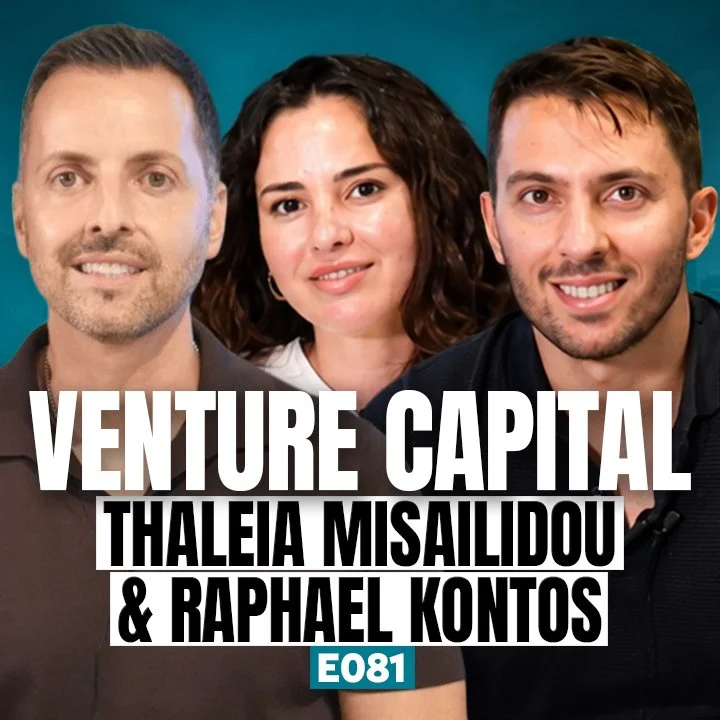

George Stroumboulis sits down with Dean Karnazes, world-renowned endurance athlete, bestselling author, and the legendary "Ultramarathon Man." Filmed in Newport Beach, California, they explore the mindset behind extraordinary resilience, pushing beyond perceived limits, and the life lessons endurance can teach entrepreneurs, leaders, and anyone striving for excellence.