
LUXURY FASHION DESIGNER WITH CHRISTOPHER BATES | E080
LISTEN TO THIS EPISODE




ABOUT THE GUEST
Christopher Bates is the Founder and Creative Director of the Christopher Bates label, an internationally recognized menswear brand known for blending Italian craftsmanship with modern sophistication. After studying fashion design in Milan, he launched his namesake brand and quickly earned a reputation for creating timeless pieces defined by elegance, innovation, and meticulous attention to detail.
His designs have been worn by celebrities, athletes, and business leaders around the world, and in 2019, he was honored as Canadian Menswear Designer of the Year. Beyond his achievements in fashion, Christopher has successfully navigated the challenges of entrepreneurship, international manufacturing, and scaling a luxury brand in one of the world's most competitive industries.
Today, he continues to shape the future of menswear while demonstrating how creativity, vision, and business acumen can come together to build a globally respected brand.
Instagram: https://www.instagram.com/christopher.bates.official/
LinkedIn: https://www.linkedin.com/in/christopher-bates-3a244010/
Website: https://christopherbates.com/
George Stroumboulis sits down with Christopher Bates, founder of the internationally recognized Christopher Bates brand. Filmed in Newport Beach, California, they explore Christopher's journey from studying fashion design in Milan to building a globally respected lifestyle brand known for its sophistication, innovation, and commitment to quality.
“You don’t need all four tanks of gas to start the journey. Start with one and earn the rest along the way.”
MEDIA RELATED TO THE EPISODE
George Stroumboulis sits down with Christopher Bates, founder of the internationally recognized Christopher Bates brand. Filmed in Newport Beach, California, they explore Christopher's journey from studying fashion design in Milan to building a globally respected lifestyle brand known for its sophistication, innovation, and commitment to quality. Breaking down the creativity, resilience, and entrepreneurial mindset required to navigate the world of design, international manufacturing, and brand building in one of the most competitive industries in the world.
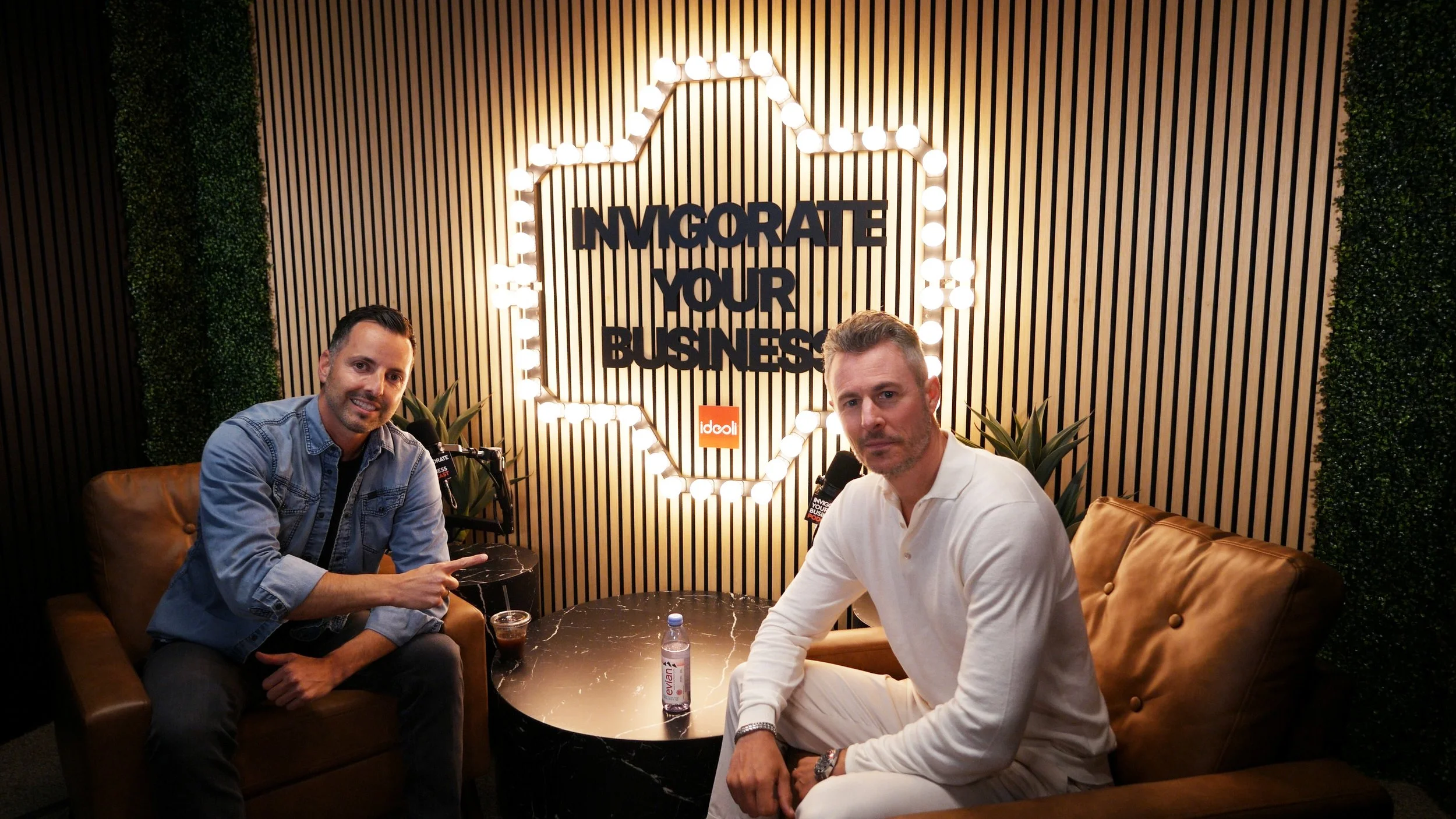
George Stroumboulis sits down with Christopher Bates, founder of the Christopher Bates brand. Filmed in Newport Beach, California, they explore his journey from Milan to building an internationally recognized fashion business, breaking down the creativity and entrepreneurship behind a global brand.
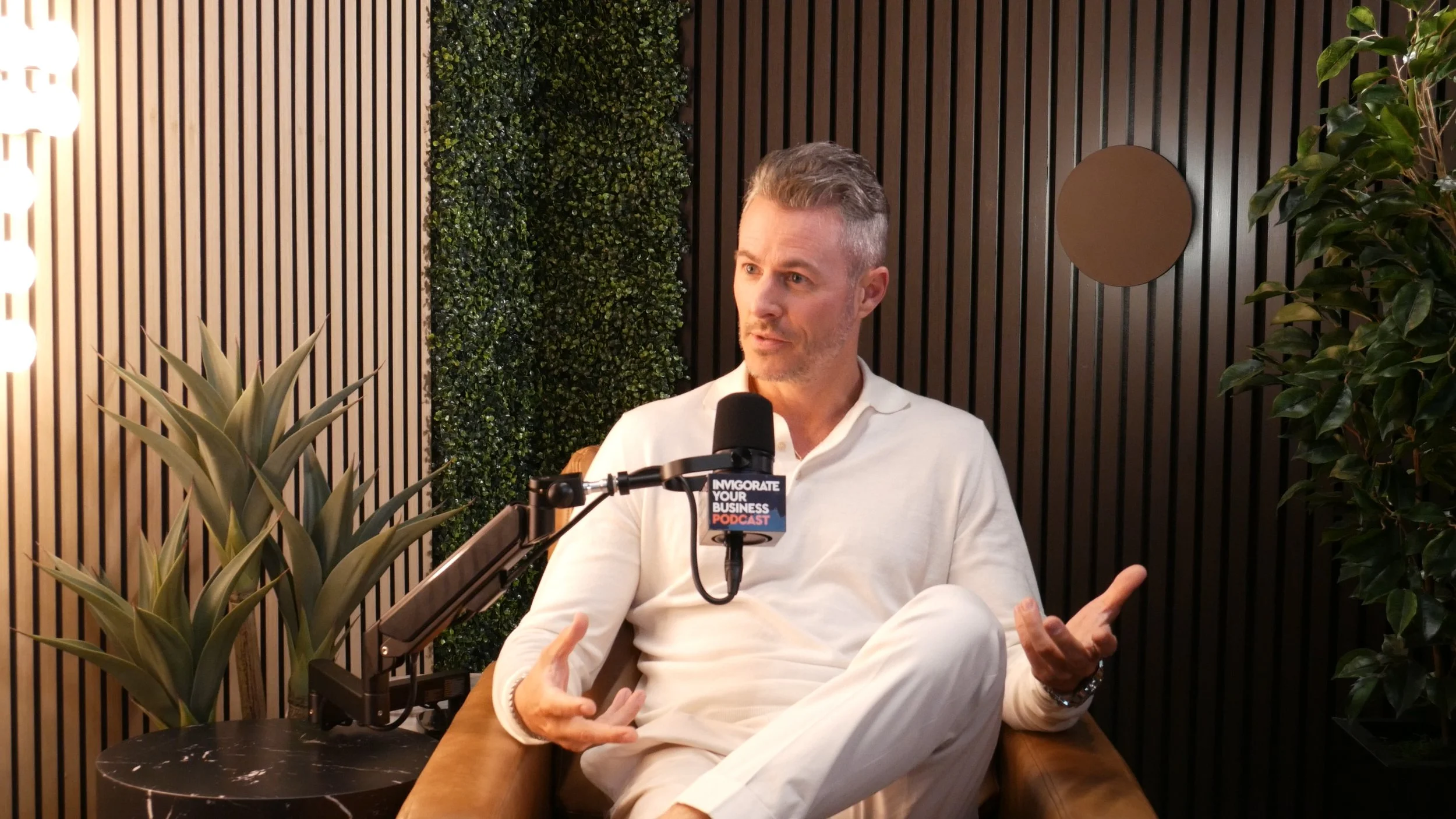
George Stroumboulis sits down with Christopher Bates, an award-winning designer and entrepreneur. Filmed in Newport Beach, California, they discuss the realities of building a premium fashion brand and what it takes to succeed in one of the world's most competitive industries.
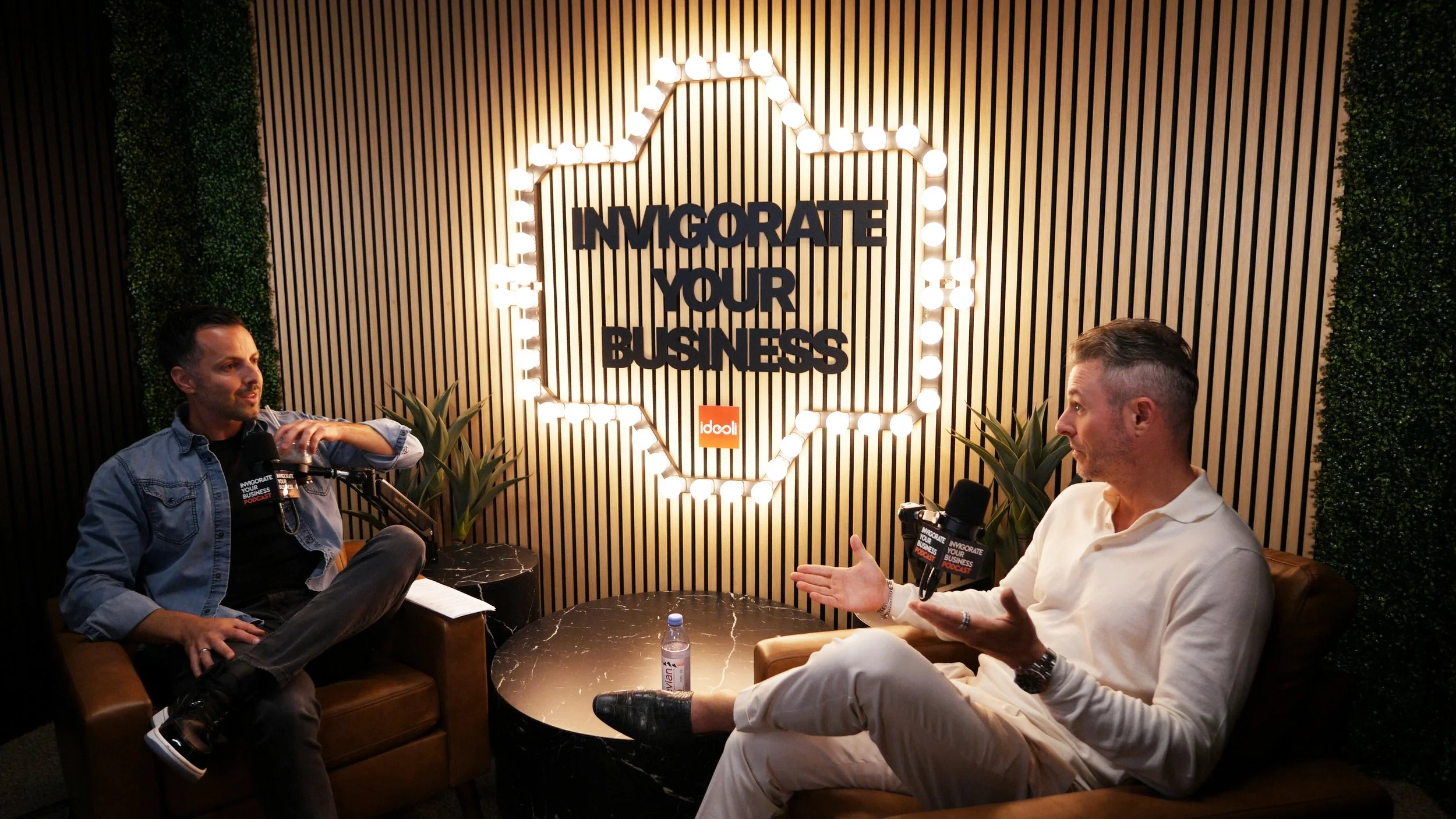
George Stroumboulis sits down with Christopher Bates, founder of the Christopher Bates label. Filmed in Newport Beach, California, they unpack the mindset, resilience, and business acumen required to transform creativity into a thriving global brand.
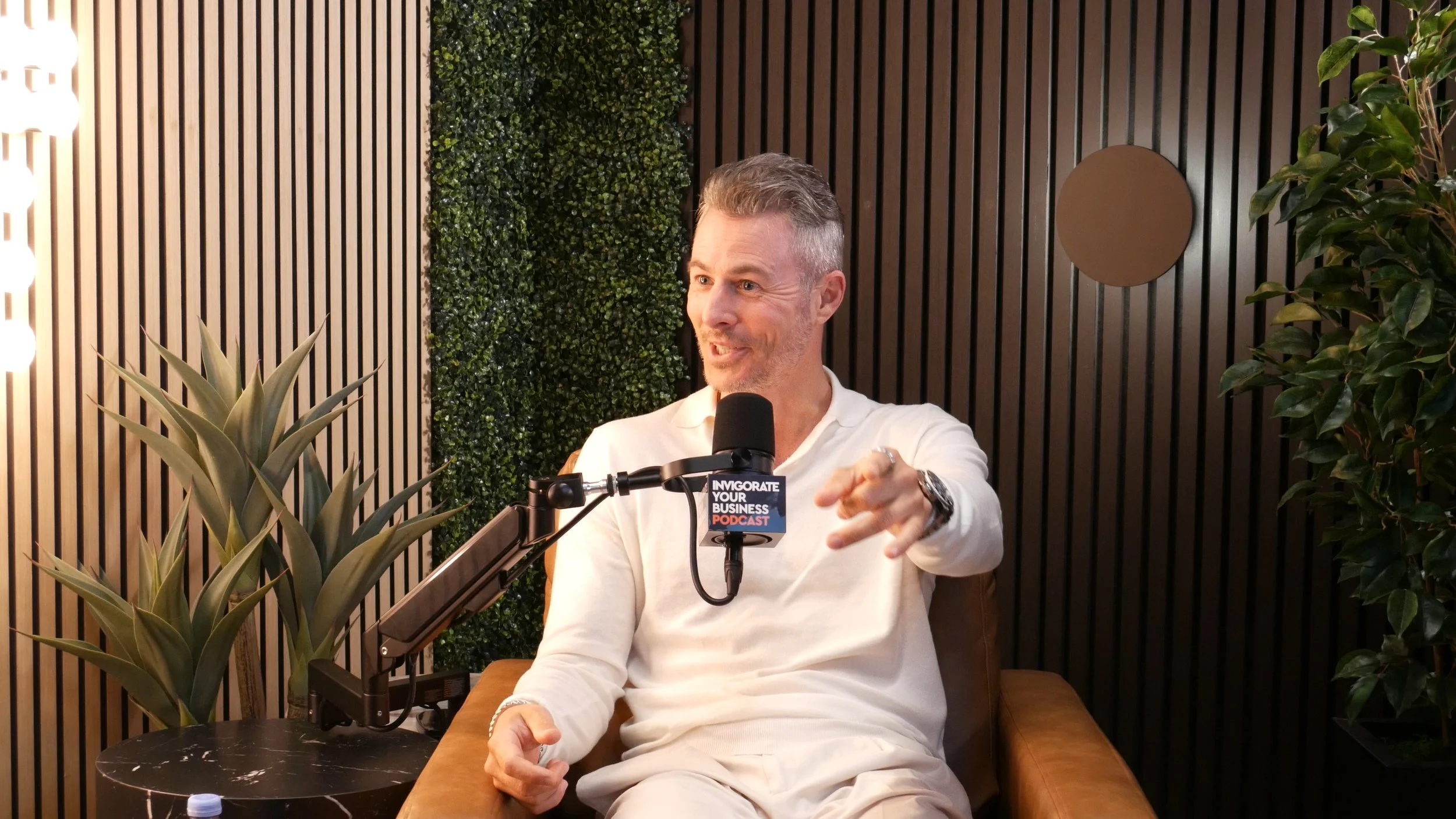
George Stroumboulis sits down with Christopher Bates, an award-winning designer and entrepreneur. Filmed in Newport Beach, California, they discuss the realities of building a premium fashion brand and what it takes to succeed in one of the world's most competitive industries.
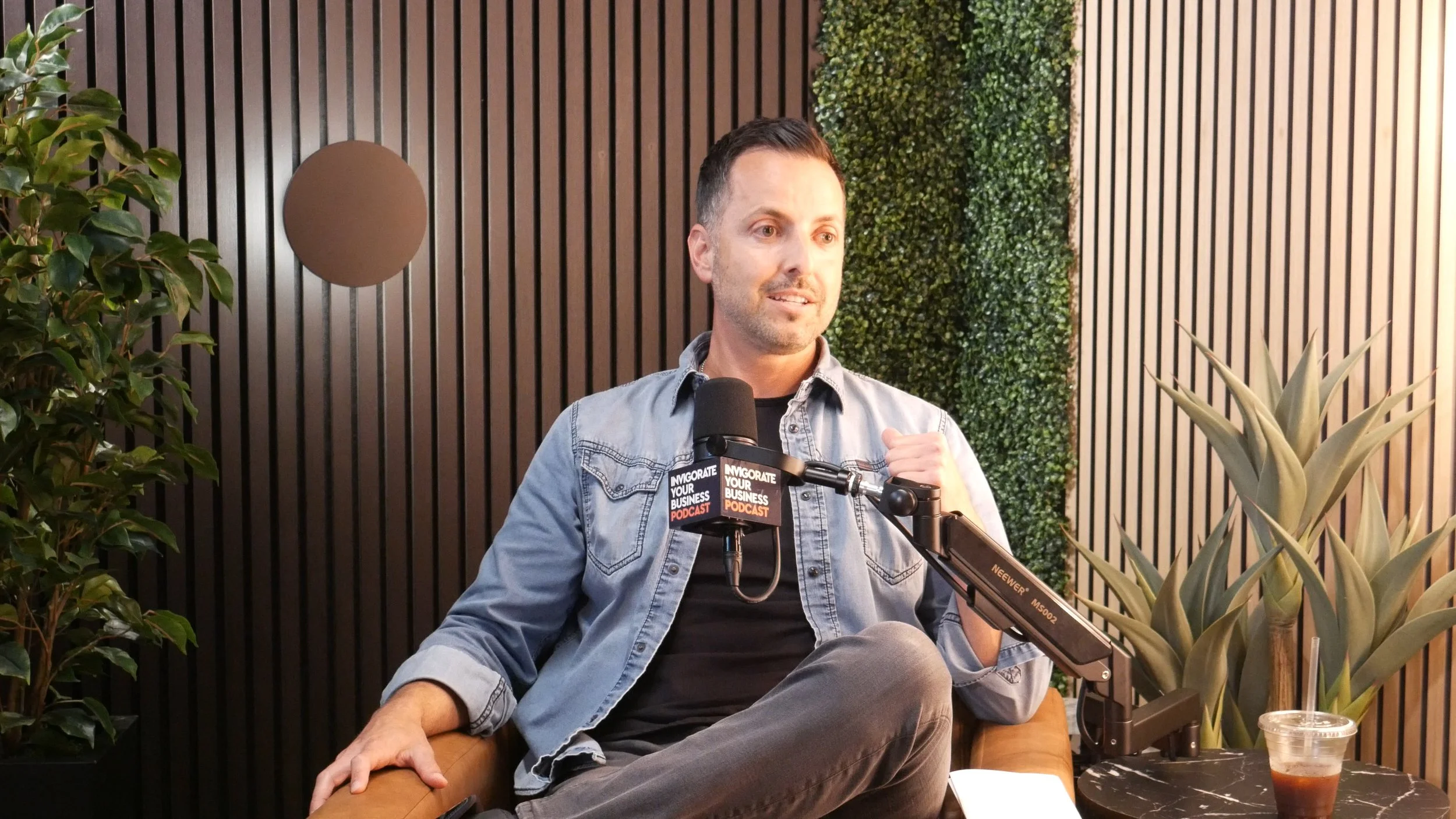
George Stroumboulis sits down with Christopher Bates, founder of the Christopher Bates brand. Filmed in Newport Beach, California, they explore his journey from Milan to building an internationally recognized fashion business, breaking down the creativity and entrepreneurship behind a global brand.
ABOUT THE “INVIGORATE YOUR BUSINESS” PODCAST
The Invigorate Your Business with George Stroumboulis podcast features casual conversations and personal interviews with business leaders in their respective fields of expertise. Crossing several industry types and personal backgrounds, George sits down with inspiring people to discuss their business, how they got into that business, their path to the top of their game and the trials and tribulations experienced along the way. We want you to get inspired, motivated, and then apply any advice to your personal and professional lives. If there is at least one piece of advice that resonates with you after listening, then this podcast is a success. New episodes weekly. Stream our show on Spotify, YouTube, Apple, Amazon and all other platforms.
ABOUT GEORGE STROUMBOULIS
George Stroumboulis is an entrepreneur to the core, having launched several ventures across multiple industries and international markets. He has held senior-level positions at progressive companies and government institutions, both domestically and internationally, building an extensive portfolio of business know-how over the years and driving profit-generating results. George’s ability to drive real change has landed him in several media outlets, including the front page of the Wall Street Journal. George was born in Toronto, Canada to his Greek immigrant parents. Family first. Flying over 300,000 miles a year around the world puts into perspective how important family is to George’s mental and emotional development. With all this travel to global destinations, the longest he stays even in the most far-out destination is 3 days or less - a personal rule he lives by to make sure he is present and involved in family life with his wife and three daughters. To read about George’s global travels, stay connected with his blog section.
STAY CONNECTED WITH GEORGE STROUMBOULIS
STREAM & LISTEN TO THE PODCAST:
SPOTIFY: https://open.spotify.com/show/1rW2CmxQoiJNEPOZupJlvd
YOUTUBE: https://www.youtube.com/user/Stroumboulis
APPLE iTUNES: https://podcasts.apple.com/us/podcast/invigorate-your-business-with-george-stroumboulis/id1607693240
AMAZON MUSIC: https://music.amazon.com/podcasts/8fc03929-71b3-483a-a64e-153e30b3d462/invigorate-your-business-with-george-stroumboulis
STROUMBOULIS SITE: https://www.stroumboulis.com/podcast
PODCAST SITE: http://www.invigorateyourbusiness.com
FOLLOW GEORGE STROUMBOULIS:
INSTAGRAM: https://www.instagram.com/georgestroumboulis/
YOUTUBE: https://www.youtube.com/user/Stroumboulis
LINKEDIN: https://www.linkedin.com/in/Stroumboulis/
TWITTER: https://twitter.com/Stroumboulis
FACEBOOK: https://www.facebook.com/georgestroumboulis
TIKTOK: https://www.tiktok.com/@georgestroumboulis
CONTACT GEORGE DIRECTLY: https://www.stroumboulis.com/connect
FULL SHOW CONTENTS
00:00:00 Welcome And Guest Setup
00:03:07 Childhood Creativity And Early Influences
00:08:37 How AI Helps Design Today
00:08:41 Marketing Career That Built Business Skills
00:11:23 The Mentors Question That Changed Everything
00:15:10 Milan Fashion School And Learning Fast
00:20:42 Funding Reality And The First Collection
00:32:47 The Store Shuts Down And Survival Mode
00:37:27 Toronto Growth And Fashion Week Breakthrough
00:43:20 Moving Production To Italy
00:46:33 Sustainability Through Timeless Quality
00:48:44 The Iconic KISS Shirt Story
00:52:21 Rebuilding After The Pandemic Shift
00:53:41 Shipping Strategy Tariffs And Trade Advantages
00:55:22 Christopher Bates 2.0 Store And Fragrance
00:58:18 Big Vision And The Right Partner
01:02:02 Celebrities, Air Canada And Getting Styled
01:04:33 Rapid Fire Style Rules
01:08:33 Where To Follow And Final Thanks
FULL SHOW TRANSCRIPT
George Stroumboulis 0:00
Welcome to another episode of Invigorate Your Business with George Stroumboulis. Today's episode comes from Newport Beach, California. I get to sit down with international fashion designer Christopher Bates. Christopher is a proud Canadian who has grown his label internationally. His clothing has won numerous awards and is worn by some of the biggest celebrities and business people around. We're going to talk about what it takes to build an international fashion brand, the business behind it, the ins and outs, what you need to survive, what you need to thrive in one of the most competitive industries in the world. You're going to enjoy this episode with Christopher Bates starting now. My name is George Stroumboulis, and I'm extremely passionate about traveling the world, meeting new people, and learning about new businesses. Join me as I sit down with other entrepreneurs to learn about their journeys. This episode of Invigorate Your Business Starts Now. Has built an incredible brand. I was introduced to you through social media, started diving deeper and just seeing like the stuff you've developed over the years, the entrepreneurial spirit, like the incredible design, clothing, everything. And I'm like, wow, this is cool. And then the fact that you're a proud Canadian doing it in probably one of the hardest markets in the world, Milan, Italy.
Christopher Bates 1:45
Thank you for having me.
George Stroumboulis 1:46
Absolutely. So look, Christopher, I'm going to start off reading an intro here, and uh, we're going to see how well we capture your story. But let's jump into this. So today's guest is one of Canada's most accomplished fashion entrepreneurs, a designer who transformed a passion for style into an internationally recognized luxury brand. Christopher Bates is the founder and creative director of the Christopher Bates Label, an award-winning menswear brand known for combining Italian craftsmanship with modern sophistication. After studying fashion design in Milan, Christopher launched his namesake brand and quickly earned a reputation for creating timeless pieces that blend elegance, innovation, and attention to detail. His work has been featured on celebrities, athletes, and business leaders around the world. And in 2019, he was recognized as Canadian menswear designer of the year. Congrats, that's huge. Beyond building a successful fashion house, Christopher has navigated the challenges of entrepreneurship, brand building, international manufacturing, and scaling a premium business in one of the world's most competitive industries. Today we'll discuss the business behind fashion, the realities of building a luxury brand, lessons from the global stage, and what it takes to turn creativity into a thriving enterprise. Christopher, thank you for joining me today.
Christopher Bates 3:06
Thank you for having me.
Childhood Creativity And Early Influences
George Stroumboulis 3:07
All right. So how how does someone who's born and raised in Vancouver, right? Maybe not the most fashion-forward part of the world, end up having a globally recognized brand in Milan, Italy? Like where where does that even start as a kid?
Christopher Bates 3:22
Well, I was passionate about clothing when I was a kid. So that's like the power of clothing, right? And I'm creative in nature. So I naturally started sketching my own ideas for clothing and logos, things that I thought were cool, looking through magazines, and I had a sketchbook full of clothes uh designs and logos by the time I was 13. Come on. So it's in it was in my DNA. But you're right about growing up in Vancouver, um, it was good for like skateboard sort of style, you know, West Coast. Like a lot of things that happen in California sort of percolate all the way up the West Coast. And so we had a sort of California vibe growing up, and and skateboard gear was cool. So that's what I was into at first. Um but I didn't think of fashion as a career or an industry in which to pursue. Um, it wasn't until I started traveling to Europe in my late teens and early twenties that I really became aware of the industry and became inspired.
George Stroumboulis 4:36
Really? So w downtown Vancouver is there, there's a business district, obviously, right? Was that the closest you would see the fashion, right, aside from the skateboarder, like before you started going to Europe?
Christopher Bates 4:47
Aaron Ross Powell Not really, to be honest. Like I I didn't find, I would say, inspiration in Vancouver or or much fashion. In the magazines, I would, but it's not that you wouldn't see very much of that, you know, out and about. Right. It's just it's not Vancouver. There's nothing wrong with that. It's just a different environment. Yeah. A different vibe.
George Stroumboulis 5:07
And it's more outdoorsy. It's more, it's got that vibe.
Christopher Bates 5:09
Yeah. Exactly.
George Stroumboulis 5:10
Like what were the main brands, like influence from California?
Christopher Bates 5:13
Was it So there was I don't they weren't all California brands. Actually, um one of them was Canadian, which is Chip and Pepper. Okay, yes. So I loved you know the neon and the tie-dye and just the whole energy around that brand. Yeah. Very cool. Uh there was T and C Surf Design, Stoozy. Stoozy.
George Stroumboulis 5:30
Yeah, they're coming back, by the way.
Christopher Bates 5:32
Sure. They've always been around. Like, you know, they're that's a it's a very relevant brand. Yeah. So they've kind of maintained this cool cachet over the years.
George Stroumboulis 5:41
Yeah, very interesting. So I was in Hawaii last month with the kids, and there was this lineup wrapped around at the mall. Just lineup, and I'm like, oh, it must be an ice cream shot something. And they were waiting for Snoosy. It was like this boutique thing that just launched again. But, anyways, um, okay, so in Vancouver, you're creative, right? You start sketching, you start doing this. Yeah. Where where do you take that creativity? You don't you don't just jump into a fashion brand? Like what what avenue did you start going down?
Christopher Bates 6:07
Yeah, ex exactly. Like I knew I wanted to do something creative, but at that point I didn't center on fashion. So I was in uh university, I went to UBC, I did a Bachelor of Arts, you know, just a general education sort of beginning, which was great. And I was interested in business. Um, and in particular advertising, marketing, because that was a creative aspect of business.
George Stroumboulis 6:32
Yeah, of course.
Christopher Bates 6:33
So I went to BCIT, I studied marketing communications, and I really enjoyed it. Um and then in particular, I was interested in graphic design. So after I graduated, I managed to get a job with a boutique marketing firm in Yale Town, um, Vancouver. And I was really drawn to the graphic design part. Um I became quite good with computers, and it was a way for me to express myself creative creatively and artistically. Um but my boss, um Diane Faber, um she taught me more about the business side of things. Okay. And she said, You should be an account manager where you can work with teams of creatives and oversee that process. Have that influence still, right? Yeah, so you're involved, but you know, you've got to think bigger, like a step up. So I still did as much graphic design as I could, but I did become an account manager and I bec started to you know work with other graphic designers. And that was really a great process, and it taught me about you know how to think bigger and how to operate a small business, essentially. So those skills became invaluable uh later. Of course. So what what type of accounts in Vancouver are you working on? We had a diverse uh portfolio. It was everything from banks to restaurants, hospitals, it was you know, different types of marketing, market research, branding, PR. Yep. Um yeah, so real estate agents, uh personal branding, you know, when that was becoming a thing back then. So yeah, it was really a good broad um base experience wise.
George Stroumboulis 8:12
But but no clothing at this time, like no clothing brands or retailers.
Christopher Bates 8:16
There was some exposure. Um we did what's called uh corporate logo apparel. So let's say one of these accounts has an event coming up and they need merchandise. So it was basic stuff most of the time, you know, t-shirts with the company logo and things like that. So there was some exposure, but it wouldn't be considered fashion.
George Stroumboulis 8:36
Right.
How AI Helps Design Today
George Stroumboulis 8:37
Yep. So I I want to stay on this course, but really quick on AI, right?
Marketing Career That Built Business Skills
George Stroumboulis 8:41
So think about it, even five years ago, if you were a graphic designer versus today, like that that's totally changed the game. Hasn't replaced, like, there's there's still really good graphic designers that but luckily your former employer like kind of put you on that path. Maybe you would want to still be a graphic designer after all these years, right? That's right. That's that's pretty cool. So how is AI affecting the way you design today, too?
Christopher Bates 9:03
Yeah, at first I was a little bit skeptical of AI um because I'm someone, you know, I value the artistic ability of an individual and their expression.
George Stroumboulis 9:13
Yep.
Christopher Bates 9:14
Um and I didn't think the initial AI stuff looked very good. I could tell it was AI immediately, probably because I am a designer.
George Stroumboulis 9:22
Yep.
Christopher Bates 9:22
Um and then I started to work with it um more and more, and now I find it to be a very helpful tool. Um, but I don't find it to be, you know, a be all and end all by any means. Absolutely. Um I think when you have someone who is a graphic designer and who is a creative using AI, it's like a one plus one equals three sort of situation, right? Because I can take the ideas from AI, but I can add to them and I can make them make sense because AI still does a lot of things that don't make s sense, especially with apparel.
George Stroumboulis 9:53
Uh-huh.
Christopher Bates 9:54
You know, when you when you think about a pair of pants or a shirt, it's actually made from a flat piece of fabric, which is really interesting because it becomes a three-dimensional object. So that's pattern making. And I don't I'm not sure that AI fully understands, you know, where to place a dart or a seam. Um so I think it makes um mistakes. It it will probably get there.
George Stroumboulis 10:16
Yep.
Christopher Bates 10:17
But the great thing is is I can take the ideas from AI because it could pump out, you know, two hundred things, but I only need like one or two that are good. Yes. So I can take, you know, different pieces from this concept, different pieces from this concept, and blend them.
George Stroumboulis 10:30
Yes.
Christopher Bates 10:30
And then I can quickly add in other things that I need. Plus, I'm able to talk to the manufacturers about you know how it should be made, because I have experience, you know, turning a design into reality. Again, that's something that AI would struggle to do.
George Stroumboulis 10:46
Absolutely.
Christopher Bates 10:47
Um, in addition to the material knowledge, again, what type of materials are you using? What does the inside look like? Do you need lining? So there's still so many considerations where AI is an amazing tool. It can help you save time, it can help you generate ideas, do research, but you I think you still need to work with experts in these other areas to turn you know something on a screen into reality.
George Stroumboulis 11:12
Yeah, and I think that's the takeaway. Like use it to make your role better. But when people are just replacing, like, I don't need a designer, I'll just run it through this. It looks exactly like what you expect. Yes. Yeah.
The Mentors Question That Changed Everything
George Stroumboulis 11:23
Back to Vancouver. So you're going, you're an account manager, you you get into advertising, you're exercising your creativity. Where's the leap now going into fashion?
Christopher Bates 11:32
Aaron Powell Yeah, I I was I was happy, I was successful, I was young, I owned a beautiful apartment, and you know, my career was off to a great start. But I didn't feel satisfied or fulfilled. What age are we now? Twenty five, twenty six, early twenties. And my boss was actually retiring and she was grooming me to I could take over the accounts, essentially start my own agency. And I was I was young and it was a little bit daunting. Um I felt like I was ready, but I started to ask myself um I was lucky to have mentors growing up, and they they posed a question to me if you could do anything and not fail, what would it be?
George Stroumboulis 12:14
If you could do anything and not fail.
Christopher Bates 12:17
Yes. It's the it's it's the framework that's important. Yes. It's not just if you could do anything, because it pushes you to think a little bit further.
George Stroumboulis 12:25
Yeah. Who asked that? What was that per mentor's background? Who asked that question?
Christopher Bates 12:29
Um it it was our neighbors, uh Josh, Joff and Patricia Groney, and he's a suc Joff is a successful businessman, and you know, he had studied the philosophy of Gotha, Goth.
George Stroumboulis 12:42
Yeah.
Christopher Bates 12:42
And you know, he imparted they imparted some of that knowledge to me. So they challenged me, you know, growing up. I was very lucky. I highly recommend, you know, for people to be mentors or to be mentored at any opportunity, especially when they're young. Um so that question was important to me, and I thought about it seriously. And you know, the first thing I asked, is this marketing what I want to do with my life? And the answer was no. I knew I knew immediately. It was just not it wasn't enough. I don't want to say it wasn't challenging enough, but that's part of it. I just wanted more. And then I I started to think, if you could do anything and not fail, what would it be? And for me, um, it hit me like a lightning bolt. It's like if I'm being honest with myself, you know, you're literally having a conversation with yourself.
George Stroumboulis 13:27
Yep.
Christopher Bates 13:28
And it's like I've always wanted to be a designer. And I knew in my in my heart and my soul. And I also knew that it would be very difficult.
George Stroumboulis 13:37
You knew that then, too.
Christopher Bates 13:39
Absolutely. I almost like saw into the future, and I saw like a long, hard road, but ultimately success. And and I I said, yeah, let's let's do this, you know?
George Stroumboulis 13:52
Aaron Ross Powell So that okay, pause right there. A 25-year-old Christopher. Twenty six at this time.
Christopher Bates 13:57
Yeah, twenty six.
George Stroumboulis 13:58
What what were you wearing back then? So like before you even said, hey, I want to start designing, what was your go-to? Like, how would you present yourself in meetings? Like, was there a brand or a type of store you would always visit?
Christopher Bates 14:09
Aaron Powell I can't say I remember that many specific brands. Like I would occasionally go to Harry Rosen or or Holt Renfrew if I, you know, had the budget or I got I was lucky to get a gift certificate for my birthday. And um, you know, so I would wear a Hugo Boss, I'd wear Canali. Like it was um, you know, because my job is corp somewhat corporate, so I would wear suits um occasionally. Um, I was into I was into fashion and style. I had some you know pretty cool like silver shoes I remember that looking back now are pretty goofy and I'll have to find some pictures later. They seem cool. I wanted to be different. Yeah. And I think that's part of the reason I wanted to be as a designer is because I had a style in my head that I had a hard time finding. Gotcha. Right. So you're sort of you know solving a problem there, and I like to do that. So yeah, that was part of my motivation, I would say.
George Stroumboulis 15:02
Gotcha. Okay, so that now you tell yourself, your neighbor says this, you tell yourself, hey, I want to be a designer. Do you quit your job?
Christopher Bates 15:09
Do you start with it? More or
Milan Fashion School And Learning Fast
Christopher Bates 15:10
less. I mean, it there was already sort of a transition because my boss is retiring, right? So yeah, I guess I I did. I hate to say I quit because I don't like to quit anything, but in a way I yes, I left. I decided a transition was in order. So I started to research the best design schools in the world, and I found Istituto Maringoni, which had campuses in London, Milan, and Paris, and I immediately gravitated towards Milan because for me that's always been the world's fashion capital.
George Stroumboulis 15:37
Right. Have you been there prior to a research?
Christopher Bates 15:40
I hadn't been there. I had been to Italy, but I hadn't been to Milan. But I started talking to the school, I was really impressed. Um it's not an easy school to get into, and I didn't have a background in fashion per se. So my application and my portfolio relied more on my background in graphic design. Okay. And I had completed, you know, two other academic programs, you know, in my Bachelor of Arts and the Marketing Communications. So I think what they want to know is, you know, are you a serious student? And I was able to, you know, show them that I was. And I was 26 at the time, which is a little bit older than the other students going. Uh most of the students do maybe a three-year program somewhere else, and then they go there, so they're you know early twenties or even late teens. So I managed to get in and I didn't really fully understand what I signed up for.
George Stroumboulis 16:33
Really?
Christopher Bates 16:34
It was extremely difficult. At twenty-six, I thought that I was like old, which is so funny.
George Stroumboulis 16:41
Because there's twenty-year-olds there, yeah.
Christopher Bates 16:42
Yeah, and you're going back to school, which is something you didn't imagine. So I signed up for the one year intensive program, which sort of skips the beginner stuff and you go right into, you know, illustration and sewing and making patterns. And I didn't know how to sew. I didn't know how to make patterns, and actually I was quite a poor uh illustrator by hand. Okay. Because I had been relying mostly on uh computers for my my work, but all of a sudden now we're drawing by hand.
George Stroumboulis 17:11
So you're just doing stick people and it's not it's embarrassingly bad.
Christopher Bates 17:15
Okay. Really. Like um, but I remember I was in the gym in Vancouver working out with a buddy, and I told him about you know my hopes and dreams. I want to be a designer, but I don't know how to draw. You know? And he's like, he's like, Did you know that you can learn how to draw? And I said no.
George Stroumboulis 17:32
I didn't I didn't.
Christopher Bates 17:33
I actually thought that was a skill that people were born with or not.
George Stroumboulis 17:37
Same with music, right?
Christopher Bates 17:38
Or the same with because some people are born with the ability to draw. But he said, No, you can learn. And he said there's this book called Drawing from the Right Side of the Brain. I think it was called. So I bought the book and I did some of the exercises. I I didn't it didn't teach me how to draw. All I needed was the knowledge that you could learn how to do it. Gotcha. That was enough for me. Then I said, okay, I'm I'm actually I'm gonna do this. But it was very painful. The first three months of school, I I I did all-nighters practicing drawing, and after you know, a certain number of of hours and days and and months, I could draw. I learned how to draw.
George Stroumboulis 18:14
But but so when when you're saying you had to draw, you had a vision of, hey, this is how this blazer should look. You just didn't know how to communicate that on paper?
Christopher Bates 18:22
Yeah, and like it's pa it's one of the ways that designers have to communicate their ideas, right? It's like you know, you have to illustrate it somehow. So that's really the leap that I needed to do. I knew I had good ideas, but I didn't know how to turn them into reality. Gotcha. So illustration is one of the best ways to do so. And I had a really good teacher there, and she was patient with me and challenged me. And um, yeah, I learned how to draw, I learned how to sew, I learned how to make patterns, and by the end of the year I I did uh you know very well at all three of those things. And I was able to use this program? A one year it was a one year.
George Stroumboulis 18:59
So you go there and then what do you graduate with?
Christopher Bates 19:02
Like you're um it's a it's like a diploma, like fashion design diploma of sorts.
George Stroumboulis 19:08
Okay. Yeah.
Christopher Bates 19:09
And you're you're stronger coming out a year now where you're yeah, I had I had originally planned to do the one-year intensive and then a one-year master's, you know, versus like a three or four-year program. I'm like, okay, let's go intense and do two years. But after the first year, um my teachers thought that I was ready to go out into the world. And I I concur, I also felt like I was ready. Yeah. Um I had learned how to put together collections to communicate my ideas about colors, materials. It's an incredible program. And I was ready. Um my objective was always to start my own brand, and that's what I proceeded to do after school.
George Stroumboulis 19:46
So before even going to school, you're like, hey, it's gonna be my brand. I'm la I I don't want to work for a Gucci or a Prada or whatever. So you you had that vision.
Christopher Bates 19:54
Aaron Powell I did, I did. And you know, there there were a couple opportunities that came up after school, and I did, you know, a little bit of work here and there for a couple of companies, but um no, I was really set on starting my own brand. So after graduated, after graduating, I moved back to Vancouver. I wrote my business plan. It was like 105 pages, like really in-depth.
George Stroumboulis 20:15
Pre-plan AI, like we're talking actual business plans.
Christopher Bates 20:18
Yes, exactly, like writing it yourself.
George Stroumboulis 20:20
So hold on really quick. When you wrote that plan to where you are today, loosely are you on a path where you thought you would be today?
Christopher Bates 20:28
Well, in some ways, yes, but in other ways no. I mean, I'm ambitious in in nature, and and that was you know, 18 years ago when I started the company. So, you know, you'd like to be you'd always like to be further
Funding Reality And The First Collection
Christopher Bates 20:42
along. Absolutely. And I don't want to use the pandemic as an excuse, but yes, pre-pandemic I was on the path. It takes time. Like they say for most designers, it takes at least 10 years to really break out. And around 2019, um, that had been just around the 10 year mark, and I was really breaking out. You know, it was it was happening. And then uh the pandemic, of course, was a big setback.
George Stroumboulis 21:06
Of course. Who who's going and buying high fashion when we're in sweats for two years, right?
Christopher Bates 21:10
Is that it's the that's literally, you know, the style that I my style is is for going out. You know, sure, maybe going to work, but it's really for going out. Evenings, weekends, special events, you know, red carpets, uh you know, that kind of stuff. So um all of a sudden that went to like zero. Jeez. And you know, I was dealing with Harry Rosen, I was dealing with Nordstrom, you know, big accounts, and to lose, you know, that business uh all of a sudden, yeah, is a major setback for a small business and you know an entrepreneur.
George Stroumboulis 21:40
Are you kidding me? Yeah, especially and I want to talk about that. So the the go go back to launching the Christopher Bates brand. So like you write your plan, yeah. Is there funding needed? Did you have money saved up?
Christopher Bates 21:52
Did you see investors? So that's a good question. Um when I started, I I actually sold my apartment in Vancouver. I had a beautiful Apartment in the Arthur Erickson Waterfall building. It was a dream. So I sold I had to sell it to pay for my school. So I paid for it 100% on my own. Wow. And it's expensive because you're also living in Milan and going to an elite school. And then I used the rest to start the business. But yeah, I had a financing goal in mind with the plan. And I funded part of it and I raised some through family and friends. And I was pitching, you know, literally everybody I could, VC people, you know, private investors, angel investors, anyone. I must have done hundreds of pitches. And I it was the same questions over and over again. Okay, we like you. We like your plan. We like your illustrations and so on. But can you make it? Can you get it in magazines? Can you get it in celebrities? Can you get it into stores? Are people gonna buy it? They all had the same questions over and over again. And it's like a chicken before the egg scenario. It's like, well, I yes, but I can't prove that to you until I start, and I don't have enough money to start.
George Stroumboulis 23:06
Yeah.
Christopher Bates 23:07
So the same mentors who who had challenged me earlier said, okay, let's here's a scenario. You right now have one quarter of towards your financing goal. I think I have had even less than that. Okay. Pretty sad. And he said, let's say you have to drive uh the coast of Australia and you need four tanks of gas. You've got one. Do you start driving and hope or assume that you'll be able to get enough gas to get to your destination.
George Stroumboulis 23:40
That's a great way of framing it.
Christopher Bates 23:41
It was. And and I just said, like, Joff, I don't feel like I have a choice anymore. Let me start the journey and you know, do my best, and I just I'll have to figure it out.
George Stroumboulis 23:55
Jeez.
Christopher Bates 23:55
And that's an entrepreneurial mindset that you have to have. Um you know, which is really what starting a business is all about.
George Stroumboulis 24:05
And it's not for everyone.
Christopher Bates 24:07
No. And you've mentioned entrepreneurial um entrepreneurship previously. Yep. And I think that's the most important thing that people need to understand is that, you know, when you're starting a new business, especially as a designer, um, what I want to do is design. But you're also an entrepreneur, you're a business owner. So you have all different types of responsibilities and hats, and you're learning new things, and you have to overcome challenges in areas that are not your strengths. They have to become strengths. It's really um yeah, it's really challenging, it's really demanding.
George Stroumboulis 24:42
But well, and and really quick on that, when you're a creative and then you have to worry about the financing and the payrolls and the this and the that, it takes away from your creativity. Yes. Like how how are you supposed to wake up and be fresh? And they say, you know, a lot of famous chefs make bad restaurant tours. Right. Right, right? Because they have to worry about the cash flow, and this person called in SIG. So I I couldn't imagine balancing both and still having to come up with great designs, take it to market. Yeah. That's crazy. So that first tank of gas, what did you do with your fourth investment? Like what what was the plan?
Christopher Bates 25:14
Well, I started because I just I I felt like I was not I wasn't going anywhere. You know, I I wanted to move forward and I thought, okay, so let's make my first collection, which I had enough money to do. I made the first collection. And can I ask you really quick there?
George Stroumboulis 25:29
What does even a first collection mean? So have designs to in a store, is that like the start and the finish? And what's in between?
Christopher Bates 25:36
I had to make a a set of prototypes. That's what I mean by collection. Like literally, um, you know, I did say ten looks, maybe twenty-five pieces. Um so you know, I had some I had pants, I had uh dress shirts, I had leather jackets, blazers. I that's like a collection. Okay. And it's a small collection, but when you're you know an independent designer with limited resources, it's also a huge investment. Sure. Because each piece you're making from scratch. You have to get the materials, you have to make the pattern, you know, you have to make all these different adjustments. You do an initial prototype like out of a muslin, and then you make a final prototype out of the fabric. You hope it's the final prototype, because each one of these steps costs a fortune. I'm not making them all myself. I'm working with small um factories and manufacturers in Vancouver, which is also very difficult. That's where I started. I had to work locally. I I didn't have the contacts or resources to go international, I didn't have the uh production minimums for factories, so you know you're just piecing it together.
George Stroumboulis 26:36
Yeah.
Christopher Bates 26:37
And you have to be extremely resourceful to do so. But I made a really uh cool, I made a great collection, and I managed to get the collection picked up by a few stores in uh Vancouver and in Toronto, and in Toronto in particular, we got quite a bit of traction.
George Stroumboulis 26:53
Aaron Powell Off that first collection.
Christopher Bates 26:55
Yeah, yeah. We got into GotStyle, which is one of the best uh menswear stores in uh in Canada. Absolutely. And um the owner, Melissa Austria, I met with her and I showed her my designs, and she said, Okay, if you can make this stuff, you know, come back and I'll place an order.
George Stroumboulis 27:12
How much did she like your style versus you? Like what combination was that?
Christopher Bates 27:16
It's a good you know, that's a good question as well, because we really did get on well. And she's told me later, she's like, you know, I liked you. I literally walked in there off the street, said, Hello, can I speak to the owner? And she said, Oh, that's me. And I said, you know, hello, I'm Christopher Bates. I'm you know starting a new fashion brand, and these are my designs. So this was before I had made the first collection. Yeah, you have to have um, you know, confidence and and so on. But anyway, I show I showed her my designs and my portfolio, and and she liked them. And she said, if you can make this all place in order. And yes, I think it was a combination of you know her liking me and my spirit and and the style of the collection as well. Because it sort of fit you know part of her uh store aesthetic. Yep. She was carrying some you know pretty cool brands at the time, and when I launched my brand had you know a bit of an edge. It was it was cool. So that actually gave me the impetus to start. I'm like, listen, like I've got to put this collection together now. Like she's gonna buy it. That's huge. So I did. I went back and I put the collection together and it took you know six months and then I showed it to her and six months.
George Stroumboulis 28:22
So from the design of six months. Okay. And then how does the purchasing actually work? Aaron Ross Powell, Jr.
Christopher Bates 28:26
So then you I what I did is I took the prototypes to show anybody I could get a meeting with. I I went to London, I met with a buyer from Liberty, um, I met with you know a number of boutiques in in Vancouver and Toronto, um, anybody that would see me, you know, reaching out to everyone, you know, just cold calling and you know networking. Anyway, so you take the prototypes, you meet with the buyer, and then they place an order for what they want, if you're lucky. If you're like and there's no minimums like there is production minimums, and that's the uh you know the other challenge is you know she might realistically order four of something or six of something. It's just you know, say for one boutique. So then you you know you have to secure more orders because your factory minimum could be fifty units. And what are you gonna do? You've got twelve. What are you gonna do with the other thirty-eight?
George Stroumboulis 29:20
That's the business hat now.
Christopher Bates 29:22
Yeah, so this is the challenge. So and the less pieces you make, the more it costs, both for the materials and for the labor.
George Stroumboulis 29:30
Absolutely. So you lose confidence from the manufacturer if they're only getting these smaller orders. That's not good business for them either. Aaron Powell Absolutely. It's the same in lighting, like in my world, right? It's a yeah you know. So hold on. That's a big deal though, to have the lady say, Hey, I got your back. Like, let's do this, let's do the first one.
Christopher Bates 29:45
Yes.
George Stroumboulis 29:45
So six months later, then where are we going now? So six months later, and you actually go back with the prototypes?
Christopher Bates 29:50
Aaron Powell Exactly. You have the prototypes all done, and you know, she reviews them and say, Okay, I'll take six of this, four of this, four of those, and you write up your first order. Okay, and I did the same thing with a couple stores in Vancouver, and you know, that was my start, you know, just a few boutiques. Um, and you know, we did a launch event in in Toronto at the Gott Style store. We did a launch event in Vancouver, I did a couple fashion shows, um, and I hired a publicist, and that was a very good investment.
George Stroumboulis 30:18
Okay.
Christopher Bates 30:19
I hired a wonderful pub publicist in Vancouver, Annabelle Hawksworth, and we did a three-month contract, she gave me a good rate, and she was able to get me into you know Flair and you know, I remember like Georgia Strait and Vancouver Sun and whatever. So a lot of local um press. And that's you know how you start building a brand. You know, my my marketing background was extremely beneficial, you know, because you're working with a publicist, you're doing press releases and things that I had had exposure to. Yeah.
George Stroumboulis 30:52
Even the sales side, right? Walking in and having that bravado to be able to say, hey, you know, the confidence.
Christopher Bates 30:57
That's what it takes. I mean, nobody else is gonna do it for you. So yeah, to start, you're really, you know, you're tackling all these different things, and they're all really difficult and and kind of scary.
George Stroumboulis 31:07
Yeah.
Christopher Bates 31:07
But you know, it goes back to being ambitious and motivated, and you know, you at that point in my life I'd already overcome so many challenges, and that's where confidence comes from.
George Stroumboulis 31:18
Right.
Christopher Bates 31:18
You know, is you've overcome challenges in the past. So each time you do that, you gain a little bit more power, and then you know, you're not as worried about the next challenge. You basically become invincible. Absolutely. And you say anything that comes my way, I will overcome somehow. Because you believe in yourself and and your ability to uh problem solve.
George Stroumboulis 31:39
Oh, absolutely. So hold on, your one tank of gas, right?
Christopher Bates 31:44
Ran out fast.
George Stroumboulis 31:45
But did that get you through to that store and delivering that? Like that one because what what's beautiful about that story, Christopher, is say it did, right? What if you were still waiting to get the other three tanks of gas?
Christopher Bates 31:58
Yeah, exactly. I don't know that, yeah, you you might never have really launched. I mean, I uh uh my resources would have run out because you're still you're living, you have to breathe and you know pay rent and you know you have the same responsibilities as everyone else. Um no, I I don't think it quite lasted. I mean, I ended up maxing my up out my credit cards, and then I was scrambling, you know, to raise more financing, and eventually I found one you know small investor who you know put in enough to you know finish the production order, and then you know, you you wait to get paid. You know, there's that gap. And actually, there became issues with the stores in Vancouver and they ended up closing and and I wasn't able to collect.
George Stroumboulis 32:41
Is that how it works though? You deliver what they want, they sell it and then pay you?
Christopher Bates 32:44
Like uh So that's like a consignment model.
The Store Shuts Down And Survival Mode
Christopher Bates 32:47
So that is what some stores offer. Um, and then you know you negotiate different terms with each account. So it can be a net thirty. So yeah, you you're already out six months because you bought the materials, you paid your factory, um, you deliver the goods, and then you wait 30, 60, 90 days. It depends on the terms. And you know, you negotiate. So in this case, um we had uh net thirty terms with the stores in Vancouver. And I had, like I said, I had maxed out my credit cards, and it was a dark and stormy, cold, rainy day in Vancouver. I owed my producers still some money, and I went to collect the check because I had been chasing the store owner for weeks. You know, he's now behind schedule, and if he doesn't pay me, I'm like finished.
George Stroumboulis 33:39
Oh yeah.
Christopher Bates 33:40
It's that bad. And I went, I remember I went to the store and it was shuttered and empty.
George Stroumboulis 33:45
Oh my God.
Christopher Bates 33:47
And I w I remember like I was despondent and I walked around um the corner because it was close to one of my producers, and I just walked in there and I told them what happened. I said, This is where I'm at. Um I don't have enough to pay you right now. I've pretty much lost everything, and I I don't have uh a plan B at the moment, but I will find it and I'll come back in here with a check as soon as I can. And you know, they were understanding again, you know, they get to know you over the time, and you know, they knew I was a honest and trustworthy person.
George Stroumboulis 34:20
Yeah.
Christopher Bates 34:20
So yeah, I know I just had to keep uh grinding and and raise a little bit more financing, and then I went back in and I settled up with them. And so no, I think um, you know, I I wouldn't be here if I didn't start, but also, you know, you go through these really tough times where you're stretched thin. I yeah. I went from being a successful young marketing account manager to a starving artist.
George Stroumboulis 34:43
Yeah.
Christopher Bates 34:44
My fridge was empty. Uh my friends, I I'm forever grateful for some of my you know friends. They literally took me to the grocery store. It was that bad.
George Stroumboulis 34:53
That bad who who was that for in that scenario where shutters, who was that first phone call you made? Like personally in your personal life? Was there like who's who's your rock at that time?
Christopher Bates 35:04
I I've always had a good, you know, support network. So I mean I would have spoken with some of my close friends uh about it. And um, you know, but this is like, you know, I think probably a lot of entrepreneurs can share these types of stories, and you know, you you just have to have the fortitude and the belief, you know, to keep going. Like when I started, um, you know, I said to myself, it's like success or death. Like I burned the ships, you know, like Troy. So, you know, when you have that mindset, it's it's doesn't make it easier, but you just get through the dark times and and know that if you do, eventually, you know, that you'll you'll persevere. It's there's a famous saying, Tough times don't last, tough people do.
George Stroumboulis 35:47
Exactly.
Christopher Bates 35:48
All of these types of sayings and mantras, you know, are really, I think, really important.
George Stroumboulis 35:53
Absolutely. And how much better of a business person owner today are you because of going through those scenarios?
Christopher Bates 36:00
Yeah.
George Stroumboulis 36:00
Like imagine if you got fully funded.
Christopher Bates 36:02
And it was easy.
George Stroumboulis 36:03
It was easy, it's always easy, and then you faced a hard time. It's like maybe you'd fold, maybe not.
Christopher Bates 36:07
Right. I I'm unfoldable. Yeah. You can't fold me. It's not a word. Yeah. But I just made it up. We're gonna put it in there. Yeah, right. I like it unfolding. No, it's it's the yes, you have to have this, you know, positive, you know, attitude. Yes. And you know, that's the kind of person that I would want to invest in, you know, is someone who just won't quit. Someone who's tough and and resourceful. And you're right, it taught me, you know, the value of a dollar more than anything. You know, people always, you know, there were people around me, you know, investors, and they said, you know, don't spend a dollar. And they were I know what that means now.
George Stroumboulis 36:41
Right.
Christopher Bates 36:42
You know, is that every little decision can have massive ramifications later.
George Stroumboulis 36:48
And it becomes habits too. Like if you think, ah, it's easy to spend that one dollar here, it becomes a habit, it becomes a habit. No. I could say this, so like my company here has been officially 10 years in business, and there's been more downs than ups. Like if you look at the last 10 years, yeah, way more downs than ups, but it's those ups that get you to that next and that next. Like it's not for everyone. And I have friends who are like, hey, I'm thinking of doing this, this, and this. It's like I'm not trying to, you know, shit on your parade, but like this is why you shouldn't do it. But if you truly believe this is why you should, yes. It's not for everyone.
Christopher Bates 37:21
Exactly.
George Stroumboulis 37:21
Yeah. Okay, so you go through this collection.
Christopher Bates 37:24
Yeah.
George Stroumboulis 37:24
How do you go from Vancouver now? So what happens Vancouver,
Toronto Growth And Fashion Week Breakthrough
George Stroumboulis 37:27
and you're like, you know what, I'm gonna start working in Italy.
Christopher Bates 37:30
Yeah, so there well, there's a bit of a gap there. So I mentioned before that I got more traction in Toronto. You know, it just it's a bigger market, there's more people into fashion there, there's you know, style is is a more important consideration, the type of style that I do. Because I'm not like an I wasn't an athletic or athleisure brand. I'm like what you wear to go out sort of brand. So a bigger city, it's natural that you'd have more clients there. So I got more traction in Toronto and I moved out there. So I moved to Toronto in 2010.
George Stroumboulis 38:00
Okay.
Christopher Bates 38:01
Uh it was a great move. Um, you know, I got more traction with the brand and you know, started to grow the business a bit. And um there was a really interesting program called the Mercedes-Benz Startup Program.
George Stroumboulis 38:12
Okay.
Christopher Bates 38:12
And they were connected with Toronto Fashion Week um to help um, you know, launch and support uh independent designers. And I entered into the program and I ended up uh winning uh my division, a co I was a co-winner in my division, which got me a sponsored show at Toronto Fashion Week. Wow. And mentorship from you know industry leading professionals um uh across Canada.
George Stroumboulis 38:38
So all expense paid fashion show?
Christopher Bates 38:40
Yeah, exactly. What does that mean? Yes, yeah, all expenses paid. I mean you have to produce your collection, but they provide the models, they provide the runway, there's media there, it's you know, it's a you know to put on an event like that must cost you know over a million dollars. So it's a huge opportunity. And I put together a really strong collection because you have to make new new looks, you know, for the uh for the big show. And I had my section, and you know, I'm really proud. I still look back on the looks today, and and most of them I think are really strong. And um that got me on the radar.
George Stroumboulis 39:15
That that event specifically.
Christopher Bates 39:17
It did, it it helped get me, you know, you're you're taking steps, right? And that was a big step forward for me. I was now you know networking with you know really important people in the industry, and I had a lot of exposure, and it you're building momentum.
George Stroumboulis 39:32
Yep.
Christopher Bates 39:33
So that built a lot of momentum. After that, I was able to get into Holt Renfrew.
George Stroumboulis 39:37
Aaron Ross Powell, which is the Mecca when it comes to right?
Christopher Bates 39:40
The best you can do uh in Canada and as a you know young independent designer, it's a massive breakthrough.
George Stroumboulis 39:45
It's huge, yes.
Christopher Bates 39:46
So at that point I knew I needed to you know ramp things up because I was still you know piecing things together, I was doing some modeling and acting commercial stuff on the side to pay the bills, I was doing graphic design, I went back in as a graphic designer to pay the bills, whatever it takes. You know, I've it was really tough times. But getting into Holtz, I knew okay, now we have to ramp things up because now they're placing a big order. I need maybe 50,000 to make their order, right? Which I I don't have. So I put together uh a new business plan and I went out to uh networking again, going to networking events, you know, pitching people, and eventually I found um someone who became an investor, um like an angel investor for um you know to help complete that stage of my business plan and who's been you know supportive over the years since. What did you have to give up to have someone like this investment, yeah, equity, equity, um, you know, it's like a mix of equity and debt sort of uh financing structure. Um but that gave me the resources I needed to you know fulfill the the Holtz business and to grow the brand you know over the next you know many years. So that helped me get from kind of stage one to let's say stage two, right?
George Stroumboulis 41:02
Huge.
Christopher Bates 41:03
So I was in Toronto for five years, it was wonderful, I loved Toronto, it was the ultimate sort of incubation period for you know learning what works, learning what doesn't work, you know, strengthening the brand, gaining momentum, all of these things. And during this period, um I was also networking, you know, with people who were in Italy. And I met someone there who was an industry veteran and he said, you know, why aren't you producing your brand in Italy? And to that at that point, I had only done some knit sweaters in Italy that were wonderful. But I thought, you know, wouldn't that be great if I could produce everything in Italy?
George Stroumboulis 41:38
Trevor Burrus, Jr. Where were you producing in that Toronto period?
Christopher Bates 41:41
I was producing in Canada and I had done some stuff even in Peru, because they do interesting knits down um in Peru.
George Stroumboulis 41:50
Okay.
Christopher Bates 41:51
Um and then this also some sweaters in Italy. So no, I was mostly in Canada at that point, which which is cool and I'm I'm proud of it. But you know, in Canada we don't really have the infrastructure to produce, you know, full collections, right? Like all the different types of products that you need, at least and and to the specs that I want. It's tricky. You know, it's a very small industry in Canada, right? Aaron Ross Powell, Jr.
George Stroumboulis 42:16
Canada in general, right? When you compare it to here. But um so everyone's building in China, Vietnam, Bangladesh. When you're in Canada and you're thinking Italy, obviously higher price points, like quality.
Christopher Bates 42:29
That's really important to me.
George Stroumboulis 42:31
Of course. Were you considering Southeast Asia at all? Yeah. For certain lines, or no, no.
Christopher Bates 42:36
Um and nothing there's nothing wrong with that. I've I have done different projects in China and the quality there has increased dramatically.
George Stroumboulis 42:45
Right.
Christopher Bates 42:45
Um they can produce really high quality stuff in uh China now. And Vietnam, I mean, I have some great thing pieces not from my brand, from other brands made in Vietnam that are great. But for me, the you know, artisanal craftsmanship and you know traditional knowledge and expertise, you know, in Italy and the textiles as well, the actual fabrics are absolutely superior. Yes. And something that I believe in and cherish and appreciate, something that it inspires me. So I moved back
Moving Production To Italy
Christopher Bates 43:20
to Milan. I moved back to Milan in 2014 and I transitioned all of my production there. And it w was very difficult because you know, finding a factory that, you know, you work well together, it's like a relationship, you know, and and they have to do things in a certain way and you know, on time and blah blah blah. There's so many considerations price points, minimum order quantities. Um so it became, you know, I I ended up working with a lot of different factories, let's just say, over the years.
George Stroumboulis 43:51
Um mindset, like the Italian mindset, they are a G7 country, they make the best of the best cars and all this, but they have the Mediterranean. Mindset as well in their culture, right?
Christopher Bates 44:03
It's different than North America, you know. I mean they close for most of August, right? But I need stuff in early September. So you finish late July, you know, you have to like account for all of these different idiosyncrasies. Yes. Which which is very difficult to do. Um but ultimately, you know, I I have some factories there now I've been working with for more than ten years. And you're incredible. Produce for some of the best brands in the world. Um we have a great relationship and you know, m mutually supportive. Um you know, and they add a lot to what I do. I mean, I I have the design, I'll find the fabric, and I have my concepts, but it's it's you work together as well. It's kind of like a team, you know, working with the pattern makers at these factories, like, hey, what if we did this? What if we tried this? I'm like, here's my design. Can we make it even better?
George Stroumboulis 44:54
Which is great to have that feedback loop, right? Yes, yeah.
Christopher Bates 44:56
And you're there. I mean, I'm spending time at the factories, and these are you know, small to medium size, family-owned factories, you know, it it's really important, you know, for my product and also for my brand. Right. You know, it was it was great for me to transition from Christopher Bates to Christopher Bates, made in Italy. It's literally it's part of my brand. It's huge. It's part of my it's something that I believe in.
George Stroumboulis 45:20
Yeah.
Christopher Bates 45:20
You know, is that old world, slow, traditional, high quality materials and production made by real people.
George Stroumboulis 45:27
Yep.
Christopher Bates 45:28
You know, for people who appreciate the good the good things in life.
George Stroumboulis 45:32
So imagine if it was made in Bang Bangladesh, and this isn't a racial or like it doesn't have that same like Italy is handcrafted. They know the industry.
Christopher Bates 45:42
There's a cachet there that they've earned and they've built up. Now, we've talked about artisanal craftsmanship and tradition, but a lot of these factories as well are have cutting edge technology. They've invested a lot in very modern equipment and techniques. Laser cutting, uh the fabrics are cutting edge, and also the environmental standards are absolutely top.
George Stroumboulis 46:07
Really?
Christopher Bates 46:07
I there's so many environmental um standards in the materials that I work with and the factories, it's too much to list. There's like a book, there's like a catalog, you know, for each they're saving water here, they're using you know less dye here, and this is now 10% recycled fabric, or all of these, you know, wonderful things. So that's something that uh from my brand I actually have to communicate more, but it's just it's a lot of extra information.
Sustainability Through Timeless Quality
George Stroumboulis 46:33
Well, you know, you know, I was listening to an interview you had a few years ago, and you were talking about a leather jacket that you owned for 14 years. And I didn't even think of sustainability just from not needing to buy a jacket every couple years, right? Like just that side of it from the quality. I thought that was a very important point.
Christopher Bates 46:50
Yes, that's actually um it's almost the main, the main point. Because if you buy something from a hundred percent recycled fiber and wear it for a week and throw it out, that's not sustainability.
George Stroumboulis 47:02
Right.
Christopher Bates 47:03
More sustainability more is investing in high quality, well-made pieces that last, not just in terms of durability, but in terms of style. And I think that's really my strength is designing, you know, timeless, high-quality pieces that become, you know, highlights in your wardrobe for a decade. I mean, that's an investment. It's a good investment. And you know, if it's if it is well designed and styled and made, um you're still keen to wear it.
George Stroumboulis 47:32
Absolutely.
Christopher Bates 47:32
Now, how however many years ago that interview was, I still wear the same jacket, and it's actually from my very first collection. It was made in Vancouver. Come on. High quality leather, great um great production, and I still wear it in my rotation regularly. Aaron Powell And that's approaching two decades now. Exactly.
George Stroumboulis 47:50
Wow. So 20 years ago, what would a jacket like that retail for?
Christopher Bates 47:54
That one was it was uh about two thousand.
George Stroumboulis 47:57
Yeah. Yeah.
Christopher Bates 47:57
It was about two thousand.
George Stroumboulis 47:58
More than pays for its uh you know what I mean?
Christopher Bates 48:00
I haven't even had to change the lining, which is incredible because in a lot of jackets, uh lining or buttons or zippers, you know, those things tend to break or wear and tear. Everything's mint condition. Come on. Not one thread.
George Stroumboulis 48:13
Aaron Powell Is Christopher Bates clothing today 100% made in Italy?
Christopher Bates 48:16
Is that that so you get that uh uh official stamp that it's made in Italy or it's on the label and it's start to finish made in Italy with Italian materials. I work with some French materials as well. There's one product that I still proudly make in Canada, and that's my KISS dress shirt. That's my famous shirt.
George Stroumboulis 48:35
Okay.
Christopher Bates 48:36
White dress shirt, red KISS on the collar.
George Stroumboulis 48:38
Yes.
Christopher Bates 48:38
100% made in Canada with Italian materials. Come on. Yeah. Where did that come from?
The Iconic KISS Shirt Story
Christopher Bates 48:44
So this is what I'm best known for. Yes. And and it's just, you know, I remember, I think the concept came to me when I was in school, and there's a famous story of, you know, a guy coming home with lipstick on his collar and getting in trouble with his partner.
George Stroumboulis 48:58
Right.
Christopher Bates 48:58
And I thought, why hadn't anyone commercialized that before? So I the idea was, you know, in my head for a while, and then I managed to, you know, make a prototype and I sent it down the runway at Toronto Fashion Week. Um was it my f it was one of my first shows. Okay. Maybe not the first, but it was one of the early shows that I did. And it became a bit of a phenomenon. People really I mean, most people really liked it. Some people maybe it offended, but it's not meant to be like that. It's not about cheating. It's actually meant to be, you know, romantic, funny, humorous, and and a little bit sexy. Yeah. Right?
George Stroumboulis 49:34
Don't buy it if it offends you. Like keep a mood.
Christopher Bates 49:36
It's okay. And the I the funny thing is actually I sell more to women than men.
George Stroumboulis 49:41
Really?
Christopher Bates 49:41
Yes. So a lot of women like the boxier boyfriend cut. So they buy the men's shirt.
George Stroumboulis 49:46
Yeah.
Christopher Bates 49:46
But I do make it for women as well, like a you know, a much more tailored fitted version.
George Stroumboulis 49:50
Yes.
Christopher Bates 49:51
But that's my best-selling shirt. And the process of making it is actually quite complicated. So that's one of the reasons I've stayed with the same factory in uh Toronto, uh just outside of Toronto, the GTA, um for I don't know how many years now, 17 years, 16 years. It's crazy.
George Stroumboulis 50:09
What is the actual press on it?
Christopher Bates 50:11
Like how Yeah, so that's the the production technique is tricky because if it's a finished shirt or a finished collar, you can't do the uh screen print on it. There's not the right surface area and it's just impossible. So what you have to do is they actually take a square piece of fabric and indicate with uh this invisible ink where the kiss should go. But remember it has to be positioned right on the print so that later they cut out the collar piece and then they sew it, they sew the collar together, and the kiss has to end up in the exact spot. It's very complicated. And a couple times we've had the kiss come out upside down. Oh, jeez. And then it's you know you have a sh a shirt that retails for you know $340 and it's it's not finished properly. Trevor Burrus, Jr.
George Stroumboulis 50:56
That ends up at Marshall's for $30, right?
Christopher Bates 50:59
You know what's funny is I have I have so many great clients, and I remember one client and I had this in my showroom because it had been delivered and it's in my showroom, and he's like, No, I want that one. He's like, I want that one because it's special edition.
George Stroumboulis 51:12
You know, it's and I would have you sign it.
Christopher Bates 51:14
It's one of one, it's funny. Yeah, I have signed some pieces. Yeah. And I just thought that was so cool, and I was so uh, you know, I had a good laugh, and and you know, it's just amazes me, you know, the kind of people that are out there and the good the cool mindset that they have.
George Stroumboulis 51:26
Aaron Ross Powell, yeah. I I want to go back to Italy, but have you from your first collection in Vancouver till today, have you ever felt like imposter syndrome? Like, man, are people really buying the stuff that I'm coming? Have you ever felt like you'd you don't belong?
Christopher Bates 51:41
Not really. I mean I'm I like I like what I do and I wear the clothes myself, so I I know that they're good.
George Stroumboulis 51:49
Right.
Christopher Bates 51:50
But it doesn't there's hard times, yes, where I'm like, I n I'm not on the easiest path, easiest path, even now. You know, I've had a I had a big setback for the pandemic, like we talked about, and I I talk about that with some people and they're like, yeah, but that was so many years ago, you should be fine by now. Like, what's your problem or something? And I'm like, well, you don't I guess you just don't understand my industry because it takes a long time to build up momentum. You know, and I sort of lost that had taken me 10 years and then I lost it. So now I'm actually I'm rebuilding.
Rebuilding After The Pandemic Shift
Christopher Bates 52:21
I'm in a rebuilding phase, and it's almost like Christopher Bates 2.0. So that's the phase I'm in now. And it's it's it's a soft relaunch, it's a soft rebrand that I'm working towards. Um times have changed, the world has changed, you know, a lot of the things I've been doing are now outdated. You know, the whole fashion industry model has changed.
George Stroumboulis 52:43
In the 20 plus years you've been in it? 100%. Like what? G give some examples.
Christopher Bates 52:48
So you know, the traditional model was you know, get into department stores and you've made it. Right? Um and I did that. Okay. And then I lost that. And now it's it's more about you know, direct to consumer, you know, building up your community, you know, and they'll come to you. If they like what you have, they'll come to you because e-commerce is a big thing, right? Um so it's it's yeah, it's changed a lot, you know, how you communicate with people, you know, the values that they have. Um for a lot of a lot of people are struggling, you know, they don't have the disposable income that they did, so value becomes you know really important. You have to make sure that you have good value and the price point has to fit, but if you're doing a high quality product, you know, you have to have some margin. So there's so many different considerations now. It's it's complicated, and I'm navigating it. But it's not uh it's not getting any easier.
Shipping Strategy Tariffs And Trade Advantages
George Stroumboulis 53:41
Is is so the main retail site is ChristopherBates.com. Yes. Where is the distribution center? So if someone in the States is ordering, are you shipping from Italy?
Christopher Bates 53:51
No. So I have a distribution uh set up in Toronto. Okay. So that's a good you know strategic location. I mean, most of my business is in Canada and the US. Yep. Um I have some inventory in Milan and I'm starting to build that up. So for you know, European or international, I can ship from Milan.
George Stroumboulis 54:08
Okay, great.
Christopher Bates 54:09
You know, shipping has has that's one good aspect of my business, I would say, is that it's become so efficient and the cost has gone down.
George Stroumboulis 54:18
Right.
Christopher Bates 54:18
For shipping. Like, you know, if I'm shipping one shirt to uh the US from Canada, it's not that expensive. And I absorb that, you know. So I anyone who buys directly from me or on the site, it's it's free shipping.
George Stroumboulis 54:30
That's a big deal.
Christopher Bates 54:31
Yeah.
George Stroumboulis 54:31
But even with tariffs, it's getting complicated. Yes. Right? Non-political, but like it's just putting 30% on here and there, and then this president the other day announced again on Canada and it's like it's very complicated.
Christopher Bates 54:45
It is, and you know that that's um a business challenge that you know I would share with so many other uh businesses, right? Like your business, I'm sure, as well. But the good thing is is that Canada has uh the CETA agreement with the European Union. So CETA, what's the acronym? Uh it's the Canada European Trade Agreement. Okay. Canada Europe Trade Agreement. So uh it's duty free. There's free shipping between Canada and the U.S. You pay you know a tax you know on uh whatever it is. But there's not duty. So you know that's a big advantage for me because most of my business is kind of exporting from Italy
Christopher Bates 2.0 Store And Fragrance
Christopher Bates 55:22
to Canada. So that's an advantage for me.
George Stroumboulis 55:25
Aaron Powell How lean is your business? Is it you and a couple support staff and then factories? Like how does it work?
Christopher Bates 55:31
Yeah, I mean I have a few people uh you know that work with me um and then I have other people as sub who are like subcontractors and yeah, it's a very lean operation at this point. Um I'm currently working on uh now it's time for a new financing to grow the business and do the Christopher Pates 2.0 and expand. I'm opening a store in Milan. That's a big step.
George Stroumboulis 55:53
Wow.
Christopher Bates 55:53
Yep, ramping up e-commerce. I'm just uh I've just launched our first men's and women's fragrances.
George Stroumboulis 55:59
Okay.
Christopher Bates 55:59
That's a big step. Uh that's a big deal.
George Stroumboulis 56:01
But um what was the name?
Christopher Bates 56:03
I saw it uh Poseidon is the men's and Aphrodite is the women's.
George Stroumboulis 56:07
Amazing. So you're homage to the Greeks now? We're gonna move over to Greece a bit or what?
Christopher Bates 56:11
You know, I have to say, like, you know, the Greek uh mythology and history and culture has been a huge inspiration on my life. You know, if if I was if I could have a life purely as like an academic, I would have studied you know Greek mythology like in depth because it's fascinating.
George Stroumboulis 56:27
Aaron Powell It's fascinating. I'm ashamed that I don't know enough about it, but we'll claim it.
Christopher Bates 56:31
Yeah.
George Stroumboulis 56:31
When's the retail store for uh Milan opening?
Christopher Bates 56:34
Uh I will I'd like to say this year. So the plan is this year. Okay. You know, uh as we talked about before, you know, things in Italy move a little bit slow.
George Stroumboulis 56:42
Yep.
Christopher Bates 56:42
Um I've put in an offer on a space with a partner in uh Milan that we really like near the Duomo. It's quite central. Yeah. So it's it's it's small, but it's workable. Um so that's a big you know step for the brand. And um yeah, we'd like to open this year. That's the goal.
George Stroumboulis 57:00
I'm doing your lighting and I got you covered. No, no, we do incredible high definition, high color rendering index on the clothing, so you see that I got you. Nice. I'm covering that.
Christopher Bates 57:10
And I like I like w I tend towards warm lighting for the space, and I think um it's a little bit more natural.
George Stroumboulis 57:16
Yes, so let's do that. Versus the institutional cold lighting, yes. Yeah. Not your thing. That's incredible. Okay, so ri really quick, have the Italians adopted you like when you first went over there, oh, he's Canadian. Did they let you into the community when it comes to manufacturing and everything, or was it you had to prove yourself?
Christopher Bates 57:34
Uh yeah, i there is a bit of that. I mean, you know, some not all manufacturers, you know, open their arms and you know, especially when you're a smaller brand, right? Because I'm placing smaller orders. So it's kind of like an investment on their behalf as well, even though you're paying them.
George Stroumboulis 57:49
Yes.
Christopher Bates 57:50
But factories don't really make that much money unless you're doing you know big orders consistently. So they have to believe in you and like you, and yeah, and you you have dinners and and you get to know each other, and it's it's a relationship that forms. Um, but it's mutually beneficial in the long term. And that's my mindset, and it's a mindset that I share with um, yeah, some of these people in Italy that um you know operate these amazing factories as well.
George Stroumboulis 58:17
Yeah, absolutely.
Big Vision And The Right Partner
George Stroumboulis 58:18
I got a few more things. I know you got a busy schedule, but I want to I want to ask you like you're at Christopher Bates 2.0 right now, right? So you're building globally, you have clients in different markets. Like, what is the end goal of this? It it this is your namesake company, right? You're expanding. Where do you want to take? I don't want to be cheesy and ask like in 10 years where you be, but where is this company going?
Christopher Bates 58:43
Well, I'd I'd like to be an internationally, you know, respected um brand, you know, uh along the lights of uh a Tom Ford, for example. You know, and I know that's really ambitious, but that's how I've always felt and and operated and where I want to be. So um, you know, that's part of it. But you know, beyond fashion, you know, I'm interested in other things that are related to fashion and the lifestyle, for example, uh boutique hotels or resorts, uh, nightclubs, restaurants. So m really it's an international lifestyle empire that I I I'm building.
George Stroumboulis 59:19
Like being able to go and design a boutique hotel, partner up, yeah, yeah.
Christopher Bates 59:23
Yes, yes, having a you know a fashion component, a fashion angle, you know, a designer aesthetic.
George Stroumboulis 59:28
Yes.
Christopher Bates 59:29
Um and you're starting to see this more. I mean, you know, there's uh Armani and a lot of these big brands are also into other types of ventures. Boutique hotels and and homewares and even you know residential developments and all of that that really interests me. You know, I'm I'm interested in architecture and interior design and and textiles, you know, homewares. When I was I had a s beautiful studio in Toronto for um several years before I moved back to Milan. And I remember I I worked with DK Studio Architects, which is an incredible uh firm, and that process was really uh so much fun for me. You know, to work with other, you know, creative professionals and we designed an incredible space, we won three international awards. Um and that was on a budget.
George Stroumboulis 1:00:21
On a budget, yeah.
Christopher Bates 1:00:22
Yeah. So there's not a day that goes by where I don't imagine, I don't dream about what I could do if I ever had a budget. Because I've never really had a budget. I do everything I can with the resources I have and I put 100% into the product. No corners are cut in terms of materials or production.
George Stroumboulis 1:00:40
Right. So so who are you looking for for that next strategic partner to help take you there financially? Like why it's not just anyone, because you need someone to believe your vision, right? Kind of stay in their lane and you go do what you need to do.
Christopher Bates 1:00:53
Aaron Ross Powell Yeah, I mean, strategic is the right word. I mean, either you have somebody just with money and that butts out, and then you hire people to help with you know the strategy and the management and the executive level stuff. But in a perfect world, it's somebody with experience and connections in the industry, knowledge of retail, knowledge of fashion, knowledge of brand building um, and then yeah, connections. So and somebody with you know passion and interest. I would like somebody to be involved.
George Stroumboulis 1:01:22
Right.
Christopher Bates 1:01:22
You know, who cares and who's you know encouraging and uh you know that that's that's the dream.
George Stroumboulis 1:01:29
Yeah. And it's lonely being on the top of your own mountain.
Christopher Bates 1:01:32
It's tough. I mean, I do have, like I said, a supportive people who are close to me. You know, I have a a business partner, sort of a silent partner who helped throughout phase two. Yep. But now it's time for phase three. You know, we have to think bigger, we have to we have to grow um, you know, to to see the brand reach its full potential, which, you know, is is global.
George Stroumboulis 1:01:55
Yeah, absolutely. Before we're gonna do some rapid fire. Cool. You're gonna give me whatever comes to mind first and why. Okay. But really quick,
Celebrities Air Canada And Getting Styled
George Stroumboulis 1:02:02
celebrities. And then I want to talk about Air Canada and redesigning their their outfits, which is pretty cool. But what celebrities have worn your brand that you're proud of over the years?
Christopher Bates 1:02:11
Well, I was fortunate to dress a number of Formula One drivers for a charity event uh uh support uh in support of race against dementia.
George Stroumboulis 1:02:20
Wow.
Christopher Bates 1:02:21
Which is a really uh important charity. Um so I dressed Charles Leclerc and George Russell, Antonio Giovanazzi, and a number of uh Formula One drivers. And you know, Formula One is like one of the coolest, you know, hottest sports in the world. Absolutely. So it was really cool to spend time with those guys and do the fashion show and you know have them wear the the brand. Um so that was great. I've dressed uh Don Cheadle wore some of my outfits for a shoot for Sharp magazine in Toronto through stylist Mark Andrew Smith. So um, you know, that's an important part of my industry, is actually how how do you get to these celebrities? I don't know them personally, right usually. It's through a stylist, you know, or through a publicist or PR. And then the Air Canada, what what was your inspiration when you came up with that design? Okay, so the Air Canada project was um really cool. Uh it's such an iconic uh Canadian brand. Really is. It's one of the biggest airlines in the world, you know, as a proud Canadian person, it was such an honor to be involved. We actually launched the uniforms uh almost ten years ago now. So they've been in use for a long time, and that's a normal life cycle for uh an airline uniform. It's around ten years.
George Stroumboulis 1:03:48
Have you ever been approached to design like the Olympic team Canada uniforms or anything?
Christopher Bates 1:03:54
I haven't spoken to anyone about uh the Olympics, but that is a dream. Because I'm I'm an athlete my whole life. I've played sports, I watched sports, it's World Cup right now. Yes. I I love the Olympics, and I have really good ideas for um yeah, Canada's Olympic team. So that's a dream. And a lot of people have asked me about it. Like, why don't you do it? You know?
George Stroumboulis 1:04:13
You you need to. The only one that I could remember over the last 30 years was the one year where it was roots.
Christopher Bates 1:04:19
Okay.
George Stroumboulis 1:04:19
I remember something just stood out. But other than that, it's kind of like seems like an after. Not not to poo-poo anyone's designs out there, but they need to be speaking with you. Yeah. That would be a huge honor.
Christopher Bates 1:04:30
It would.
George Stroumboulis 1:04:30
Okay, Rapid Fire, you ready?
Rapid Fire Style Rules
George Stroumboulis 1:04:33
Okay. The best dressed man ever.
Christopher Bates 1:04:36
Sean Connery's James Bond. You didn't even flinch on that one. Rapid Fire. Yeah, I love it. What uh inspiring? Like what Yeah, I grew up watching those movies with my dad, and I know that he loved them, and I love them, and it just left a massive you know imprint on me and and inspiration. Um it was just the way that he wore the clothes with confidence, charisma, it was nonchalant, it was comfort, but he was immaculately dressed, and that's what I wanted to be like.
George Stroumboulis 1:05:08
Amazing. Most stylish entrepreneur.
Christopher Bates 1:05:14
That's a tough one. I can't I don't really follow any of the the entrepreneurs. Like I might have to pass on that one.
George Stroumboulis 1:05:23
We're we're gonna pass. Okay. Maybe we'll come back. Okay. Uh most stylish athlete.
Christopher Bates 1:05:31
I there's not one that's jumping out.
George Stroumboulis 1:05:34
Yeah. PK Souban.
Christopher Bates 1:05:35
Have you been following his commentary clothes that he's wearing? He's cool. He's cool. Yeah, I like his style. He I like it when he wears the hat. Yeah. He's like, you know, kind of a cowboy hat. So yeah, he's good.
George Stroumboulis 1:05:44
Okay, awesome. Uh Milan or New York?
Christopher Bates 1:05:47
Milan.
George Stroumboulis 1:05:48
Milan. Any uh desire while you were going through, you know, developing your company to go to New York?
Christopher Bates 1:05:54
Yeah, I've I mean I've done some business there. I love to visit New York. Um and You know, potentially um I would open a store there. I would say it's in my top five locations to open a store. What would the top five be? Um so Milan, which we're talking about, Toronto, London, New York, Tokyo. Tokyo. That's literally my business plan right now. Those five in that order. Jeez, okay. Yeah. Top markets. Yeah, top international markets where you can reach you know a strong local clientele, but also you have international people coming through. That's like you know the pulse of you know the fashion world.
George Stroumboulis 1:06:32
Yeah, absolutely. And if you had the funding, how soon would you want to be in those five markets?
Christopher Bates 1:06:36
Aaron Powell Five years. I'd like to have all five stores open.
George Stroumboulis 1:06:39
And then just one more. Um in retail areas, in airports, like what what's the strategy?
Christopher Bates 1:06:45
No, um more like where you know boutiques are, um, you know, other types of boutiques, you know, walking streets, not necessarily like the main high, busy street, more of like, you know, a nice, sneaky destination. It can even be semi-private. It could be on, say, the first floor of a building versus the ground floor. Um you know, my clients are you know very discerning and and somewhat private, so um it can be by appointment only, even it's a different model, but it's interesting.
George Stroumboulis 1:07:15
Okay. Exciting.
Christopher Bates 1:07:16
Yeah.
George Stroumboulis 1:07:16
Uh black or navy?
Christopher Bates 1:07:18
Black. Always bet on black.
George Stroumboulis 1:07:20
Always bet on black. Okay. Sneakers or dress shoes?
Christopher Bates 1:07:23
Dress shoes.
George Stroumboulis 1:07:24
Dress shoes. Yep. Uh one wardrobe essential.
Christopher Bates 1:07:34
Coat, coat. It's gotta be uh a a winter coat.
George Stroumboulis 1:07:38
Yeah.
Christopher Bates 1:07:38
Like but a dress-year coat, not a puffy jacket.
George Stroumboulis 1:07:41
Yes.
Christopher Bates 1:07:41
You know, like uh three-quarters or a trench or a coat. I just I just something you can wear from September. I mean, depending where you live in the world, but you know, you can you can wear a coat like that for a lot of a lot of months.
George Stroumboulis 1:07:54
I miss my 15 years in New York City with the layers. I just the the weather you got to explore more. Uh okay, most overrated fashion trend.
Christopher Bates 1:08:04
Um I'm not big on the baggy pants right now. Um you know, women are wearing them and and and men too, and I just think it looks really sloppy and disheveled. You know, I think pants they don't have to be tight, but they should at least be tailored.
George Stroumboulis 1:08:17
Right.
Christopher Bates 1:08:18
You know, I like uh you know, a slimmer silhouette generally, and I like a tapered leg.
George Stroumboulis 1:08:24
Okay. The last one. Define great style in one word. Confidence. Confidence. Back to the confidence. That's incredible.
Where To Follow And Final Thanks
George Stroumboulis 1:08:33
Um, what's the best way people to get in contact? You're active on social media?
Christopher Bates 1:08:37
Yeah, I think uh visit first visit the site ChristopherBates.com, um, Instagram fairly active. It's Christopher.baits.official.
George Stroumboulis 1:08:47
Yep. Incredible, man. I really enjoyed this. We were supposed to connect in Milan, the Olympics. I know just really quick last thing on the Olympics, like how amazing was that experience, Canada, US. To end off, just tell me like being Canadian, like you're in Italy. How how important is it being Canadian and and just expressing that, you know?
Christopher Bates 1:09:05
I I felt really privileged to be there. I was in Vancouver in 2010 during the Olympics, and that was magical.
George Stroumboulis 1:09:11
Magical.
Christopher Bates 1:09:11
And the same uh last year in Milan, Cortina, it was really amazing to be there, and there were so many Canadians there, and they were all wearing the Canadian outfits, and it was just a really good uh environment.
George Stroumboulis 1:09:24
Yeah, magical, man. Thank you so much for coming and joining. Thank you. Awesome. Thanks for listening to this episode of Invigorate Your Business with George Strombolas. Please hit the subscribe and like buttons and follow me on all the main podcast streaming channels. Also, please share your comments when you can. I appreciate your help in expanding this network to a worldwide audience. Until next time, stay invigorated.
WHAT DOES THE GLOBAL LANDSCAPE FOR HIGH-END FASHION LOOK LIKE
The global high-end fashion industry is one of the most dynamic and competitive markets in the world. Valued in the hundreds of billions of dollars, luxury fashion continues to evolve as consumer preferences shift, technology advances, and new markets emerge. While heritage brands remain dominant, a new generation of designers and entrepreneurs is redefining what luxury means in the modern era.
Traditionally, cities such as Paris, Milan, London, and New York have served as the epicenters of high fashion. These global capitals are home to iconic fashion houses that have spent decades building reputations based on craftsmanship, exclusivity, and timeless design. Fashion weeks held in these cities continue to influence trends, shape consumer demand, and establish the creative direction of the industry.
At the same time, the business of luxury has become increasingly global. Consumers in regions such as the Middle East and Asia, particularly China, have become major drivers of growth for premium brands. As wealth expands across emerging markets, luxury companies are investing heavily in international expansion, localized experiences, and digital engagement strategies to strengthen relationships with new customers.
Consumer behavior within the high-end market is also changing. Today's luxury buyers are seeking more than status symbols; they are looking for authenticity, purpose, and personal connection. Storytelling, craftsmanship, sustainability, and brand values are becoming just as important as the product itself. Brands that successfully communicate their heritage while remaining relevant to modern consumers are often the ones that thrive.
Technology has further transformed the fashion landscape. E-commerce, social media, and digital marketing have provided smaller brands with opportunities that were once reserved for established fashion houses. Designers can now reach global audiences directly, cultivate loyal communities online, and build meaningful businesses without relying exclusively on traditional retail channels.
Despite these opportunities, the luxury fashion industry remains highly competitive. Building a premium brand requires significant investment in design, sourcing, manufacturing, marketing, and customer experience. Long lead times, changing consumer preferences, economic uncertainty, and supply chain complexities create ongoing challenges for both emerging and established players.
Manufacturing also plays a critical role in the success of high-end brands. Countries such as Italy continue to be recognized for exceptional craftsmanship, particularly in tailoring, leather goods, and footwear. However, globalization has led many brands to diversify their production strategies across multiple regions to balance quality, scalability, and cost considerations.
Sustainability has become another defining issue within the industry. Consumers are increasingly demanding transparency around sourcing, labor practices, and environmental impact. As a result, many luxury companies are reevaluating their operations and investing in more responsible approaches to production. Those that embrace innovation while preserving quality may be best positioned to succeed in the years ahead.
Ultimately, the global landscape for high-end fashion is being shaped by a balance between tradition and transformation. Heritage, craftsmanship, and exclusivity remain fundamental pillars of luxury, but adaptability, digital sophistication, and purpose-driven leadership are becoming equally important.
For entrepreneurs and designers entering this space, the opportunity lies not in replicating what has already been done, but in identifying how they can bring something unique to the market. Whether through innovation, sustainability, storytelling, or exceptional customer experiences, the future of luxury fashion will belong to brands that understand how to evolve while remaining true to their identity.
HOW HAS CHRISTOPHER BATES DIFFERENTIATED HIMSELF AS A BRAND
In an industry defined by constant change and intense competition, Christopher Bates has distinguished himself by creating a brand that seamlessly blends Italian craftsmanship, modern sophistication, and entrepreneurial vision. Rather than chasing short-lived trends, he has focused on building a timeless identity rooted in quality, attention to detail, and refined design.
One of Christopher's greatest differentiators is his international perspective. After studying fashion design in Milan, he brought European influences and tailoring techniques into the North American market, creating collections that embody both elegance and contemporary style. This fusion of classic craftsmanship and modern sensibility has become a signature of the Christopher Bates brand.
Christopher has also succeeded by positioning himself at the intersection of creativity and business. While many designers focus exclusively on the artistic side of fashion, he has embraced the realities of entrepreneurship, navigating manufacturing, sourcing, brand development, and global expansion. This balanced approach has enabled him to build not only a respected label, but a sustainable business capable of evolving with the industry.
Another defining characteristic of the brand is its commitment to authenticity. Rather than attempting to appeal to everyone, Christopher has remained focused on serving consumers who value sophistication, quality, and confidence in the way they present themselves. By maintaining a clear point of view, the brand has cultivated a loyal following among professionals, celebrities, athletes, and individuals seeking elevated style.
Recognition from within the industry has further reinforced Christopher's position in the marketplace. Being named Canadian Menswear Designer of the Year highlighted both his creative talent and the impact of his contributions to fashion. However, awards alone do not build lasting brands. Christopher's continued relevance stems from his ability to innovate while remaining true to the principles that first defined his success.
In today's fashion landscape, consumers are increasingly drawn to brands with a compelling story and a distinct identity. Christopher Bates has differentiated himself by offering more than clothing; he has built a brand that represents aspiration, craftsmanship, and modern elegance. His journey demonstrates that long-term success in fashion requires far more than creative ability. It demands resilience, strategic thinking, and a relentless commitment to excellence.
Ultimately, Christopher Bates has carved out a unique place within the global fashion industry by staying authentic to his vision while continuously adapting to the demands of an ever-changing marketplace. His story serves as a powerful example of how creativity, when paired with entrepreneurial discipline, can transform a personal passion into an internationally recognized brand.
WHAT IT TAKES TO START YOUR OWN CLOTHING LINE
Starting your own clothing line is about much more than creating great designs. It requires a combination of creativity, business acumen, strategic planning, and persistence. While fashion is often viewed through a glamorous lens, building a successful brand involves countless decisions related to product development, manufacturing, marketing, and operations.
The first step is defining your brand identity. Before creating a single product, aspiring entrepreneurs should understand who they are designing for and what problem they are solving. Whether the focus is luxury fashion, streetwear, sustainable apparel, or performance wear, successful brands have a clear point of view that resonates with a specific audience.
Once the brand vision is established, product development becomes the priority. This includes sketching concepts, selecting fabrics, sourcing trims, creating patterns, and producing samples. Rarely does the first version become the final product. Multiple rounds of revisions and testing are often necessary to ensure the collection meets expectations for quality, fit, and functionality.
Finding the right manufacturing partners is one of the most important decisions a founder will make. Factors such as minimum order quantities, production timelines, quality standards, communication, and pricing all play a role in selecting the appropriate supplier. Building strong relationships with manufacturers can significantly impact a brand's ability to scale successfully.
Equally important is understanding the financial side of the business. Entrepreneurs must account for design costs, sampling expenses, production deposits, shipping, inventory, marketing, and ongoing operating expenses. Many fashion businesses underestimate the amount of working capital required to launch and sustain growth, making proper financial planning essential.
Marketing and storytelling are also critical components of building a clothing line. Consumers increasingly purchase brands that reflect their values and aspirations. Developing a compelling brand narrative, creating engaging content, leveraging social media, and building a loyal community can be just as important as the products themselves.
Many successful clothing brands begin with a direct-to-consumer approach, allowing founders to gather feedback, retain stronger margins, and build relationships with their customers. As the business grows, opportunities may emerge through wholesale partnerships, retailers, pop-up experiences, and international distribution channels.
Entrepreneurs entering the fashion industry should also prepare for setbacks. Delayed shipments, production challenges, changing consumer preferences, and economic fluctuations are common realities of the business. Resilience, adaptability, and a willingness to learn often determine whether a brand survives its early years.
Ultimately, starting a clothing line requires balancing creativity with execution. Great ideas are important, but consistent action, disciplined decision-making, and a long-term commitment to the brand are what transform concepts into thriving businesses.
For those willing to embrace both the artistic and entrepreneurial aspects of the journey, building a clothing line can be an incredibly rewarding experience. The opportunity extends far beyond selling apparel—it lies in creating a brand that tells a story, inspires a community, and leaves a lasting impact on the people who wear it.
BLOG POST
Christopher Bates’ path to building an international fashion brand starts far from the traditional fashion capitals. Growing up in Vancouver, he sketches logos and clothing ideas as a kid, but he does not yet see fashion as a realistic career. Travel in Europe flips the switch, and his earlier obsession with style becomes a serious ambition. This origin story matters for any fashion entrepreneur because it shows how a luxury brand often begins as a personal point of view, not a trend forecast. If you are searching for how to start a fashion brand, his early habit of studying magazines, practicing taste, and building creative confidence is a practical blueprint that does not require industry access on day one.
Before launching menswear, Christopher builds business muscle in marketing communications, branding, and graphic design. That detour becomes an advantage when he has to sell, pitch, and promote his work with limited resources. He learns account management, client communication, and how small businesses actually operate, which later helps with publicists, press releases, lookbooks, and buyer meetings. He also shares a grounded take on AI in design: used by a trained creative, it speeds up research and ideation, but it cannot replace pattern making, fabric knowledge, or manufacturer collaboration. For anyone exploring AI fashion design tools, the lesson is to treat AI as a multiplier, then rely on real-world expertise to turn a digital concept into a wearable product.
The leap into Milan fashion school is intense: he enters without sewing or pattern skills, struggles with hand illustration, and then brute-forces progress through practice and all-nighters. That experience reframes talent as something you can build, which is crucial in the luxury menswear world where execution is everything. After graduating, he writes a detailed business plan and funds the start by selling his apartment, then raises money through family, friends, and relentless pitching. He describes the classic chicken-and-egg problem of fashion startup funding: investors want proof of demand, but demand requires inventory, production, and distribution. His “one tank of gas” mindset becomes the operating system for entrepreneurship in fashion: start with what you have, ship the first collection, then solve the next constraint fast.
Building the brand means prototypes, small boutique orders, factory minimums, and long cash-flow gaps between paying production and getting paid by retailers. He shares a painful moment when a store that owes him money closes without paying, forcing him to negotiate with producers and keep moving. Growth follows when Toronto provides a larger market, a sponsored Toronto Fashion Week opportunity, and entry into premium retail like Holt Renfrew. Eventually, he moves production to Italy to access artisanal craftsmanship, superior textiles, modern manufacturing technology, and strong environmental standards. He connects sustainability to durability and timeless design, arguing that a jacket worn for a decade is often more sustainable than a “recycled” item worn once. With the industry shifting from department stores to direct-to-consumer e-commerce, he is now rebuilding “Christopher Bates 2.0” with lean operations, a Milan store plan, and new fragrances, while navigating shipping, tariffs, and trade agreements that affect global fashion brands.
MORE EPISODES


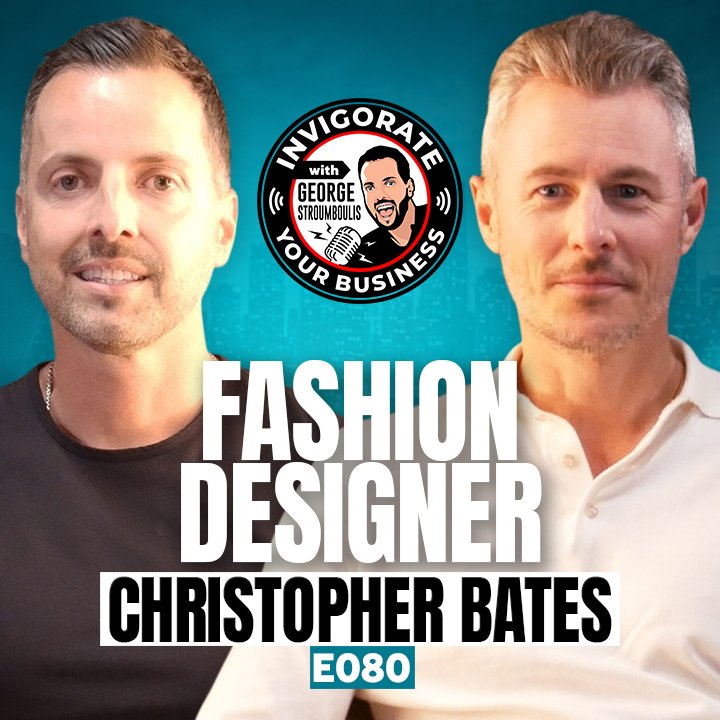
George Stroumboulis sits down with Garrett Patten, entrepreneur, filmmaker, producer, and fourth-generation business leader. They discuss his journey from the Caterpillar boardroom to Hollywood films, the realities of building a multigenerational business, the economics behind filmmaking, and what it takes to reinvent yourself and succeed in an entirely new industry.