
ULTRAMARATHON LEGEND WITH DEAN KARNAZES | E084
LISTEN TO THIS EPISODE




ABOUT THE GUEST
Dean Karnazes is one of the world's most accomplished endurance athletes, bestselling authors, and motivational speakers. Known globally as the "Ultramarathon Man," he has spent decades redefining the limits of human endurance while inspiring millions to embrace resilience, discipline, and a mindset of limitless possibility.
Named one of TIME Magazine's "100 Most Influential People in the World," Dean has achieved some of the most extraordinary feats in endurance sports history. His accomplishments include running 50 marathons in 50 states in 50 consecutive days, winning the legendary Badwater Ultramarathon across Death Valley, completing a 350-mile nonstop run with virtually no sleep, racing on all seven continents, and conquering some of the most demanding environments on Earth—from scorching deserts to the South Pole. He is also a recipient of an ESPY Award, a three-time Endurance Athlete of the Year, and has twice carried the Olympic Torch.
Beyond competition, Dean is the New York Times bestselling author of Ultramarathon Man, 50/50, Run!, The Road to Sparta, and A Runner's High. His books have inspired readers around the world by exploring the intersection of endurance, purpose, leadership, and personal growth. His work has been featured by Runner's World, Outside, TIME, The New York Times, The Wall Street Journal, ESPN, CNN, BBC, 60 Minutes, The Today Show, and many more.
The son of Greek immigrants, Dean maintains a deep connection to his heritage and frequently draws inspiration from the history of ancient Greece and the origins of the marathon. Whether speaking to Fortune 500 companies, elite athletes, or aspiring entrepreneurs, his message remains consistent: true success comes from embracing discomfort, cultivating discipline, and believing that our greatest limits are often self-imposed.
Dean’s Website: www.UltramarathonMan.com
Dean’s Instagram: https://www.instagram.com/ultramarathon/
Dean’s Facebook: https://www.facebook.com/DeanKarnazes/
Dean’s YouTube: https://www.youtube.com/dkarnazes
Dean’s LinkedIn: https://www.linkedin.com/in/dean-karnazes-50688b9a?utm_source=chatgpt.com
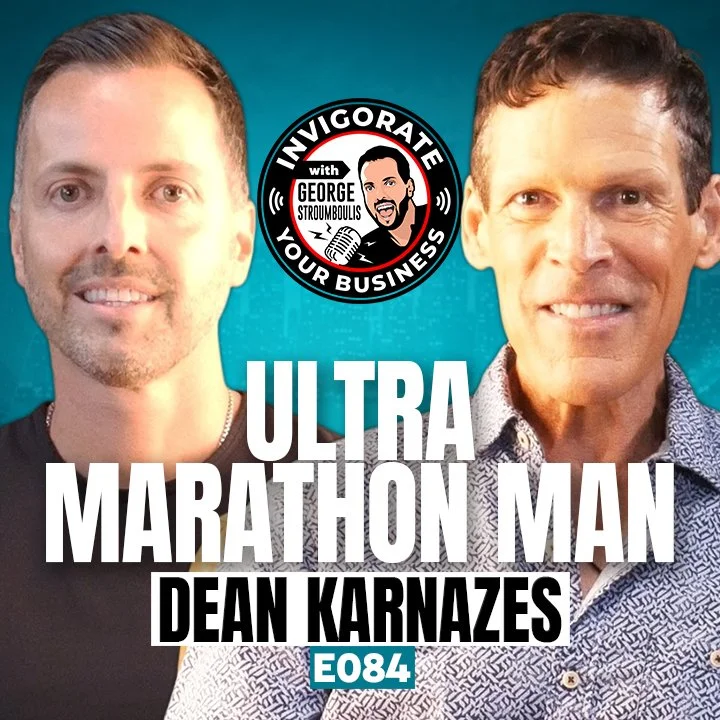
George Stroumboulis sits down with Dean Karnazes, world-renowned endurance athlete, bestselling author, and the legendary "Ultramarathon Man." Filmed in Newport Beach, California, they explore the mindset behind extraordinary resilience, pushing beyond perceived limits, and the life lessons endurance can teach entrepreneurs, leaders, and anyone striving for excellence.
“Don’t think about the finish line. Just think about taking your next footstep to the best of your ability.”
MEDIA RELATED TO THE EPISODE
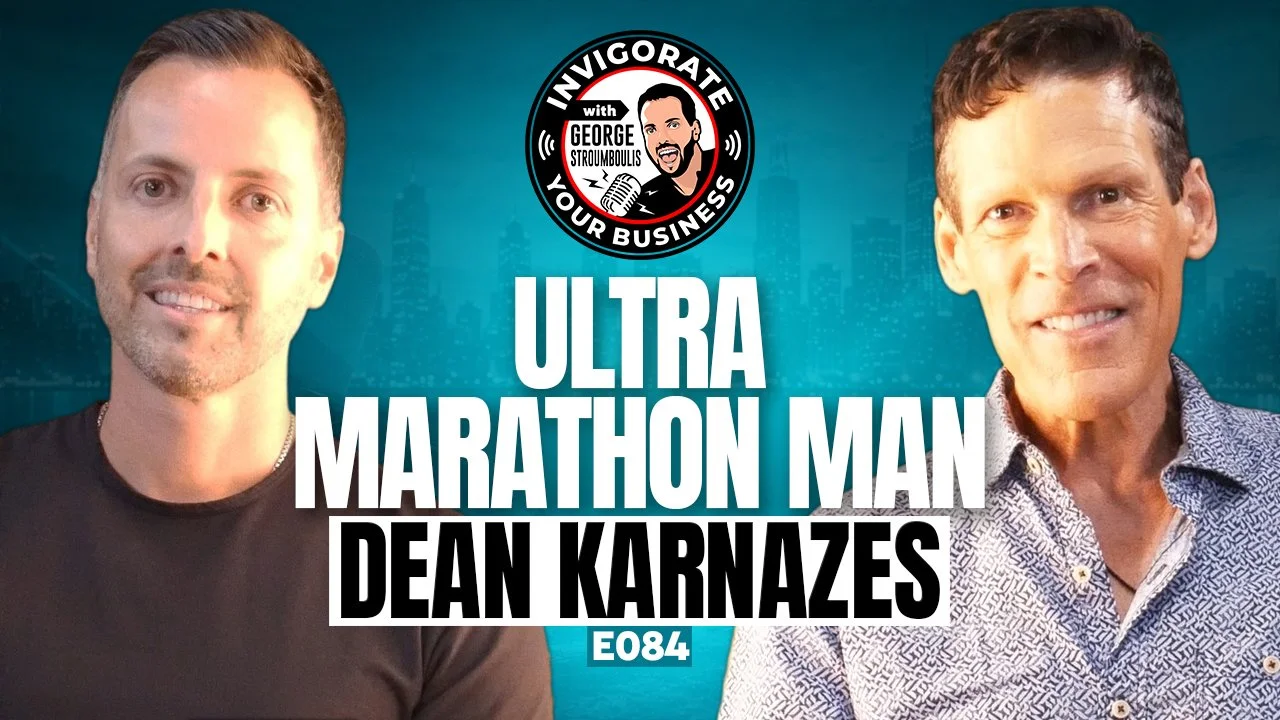
George Stroumboulis sits down with Dean Karnazes, one of the world's greatest endurance athletes. Filmed in Newport Beach, California, they discuss resilience, discipline, mental toughness, and how embracing discomfort can unlock extraordinary performance in business and in life.

George Stroumboulis sits down with Dean Karnazes, the legendary "Ultramarathon Man." Filmed in Newport Beach, California, they explore the power of perseverance, purpose, and the mindset that has enabled Dean to accomplish some of the greatest feats of endurance in history.
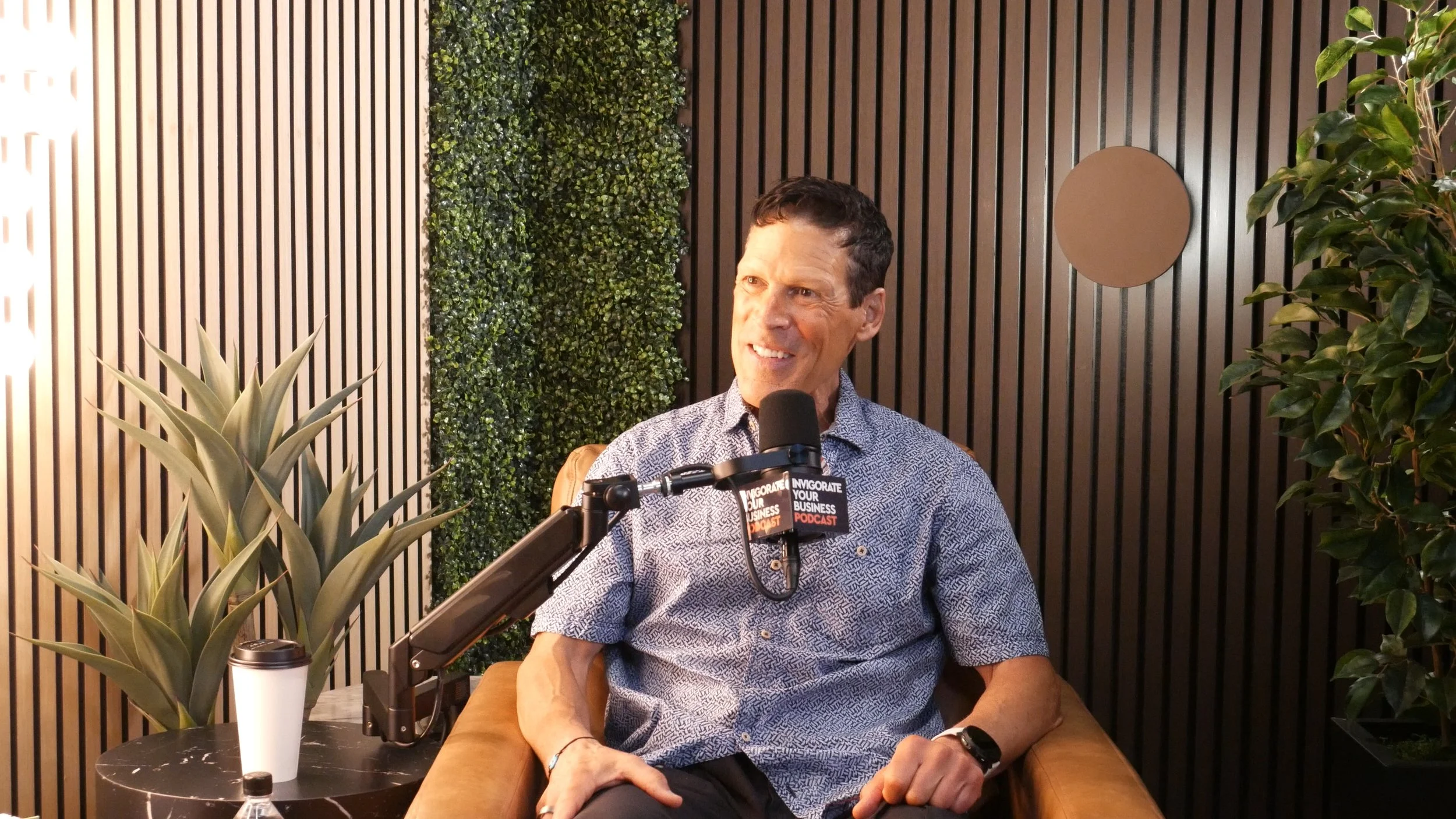
George Stroumboulis sits down with Dean Karnazes, bestselling author and one of the world's most accomplished endurance athletes. Filmed in Newport Beach, California, they discuss resilience, peak performance, leadership, and the relentless pursuit of becoming the best version of yourself.

George Stroumboulis sits down with Dean Karnazes, one of the world's greatest endurance athletes. Filmed in Newport Beach, California, they discuss resilience, discipline, mental toughness, and how embracing discomfort can unlock extraordinary performance in business and in life.
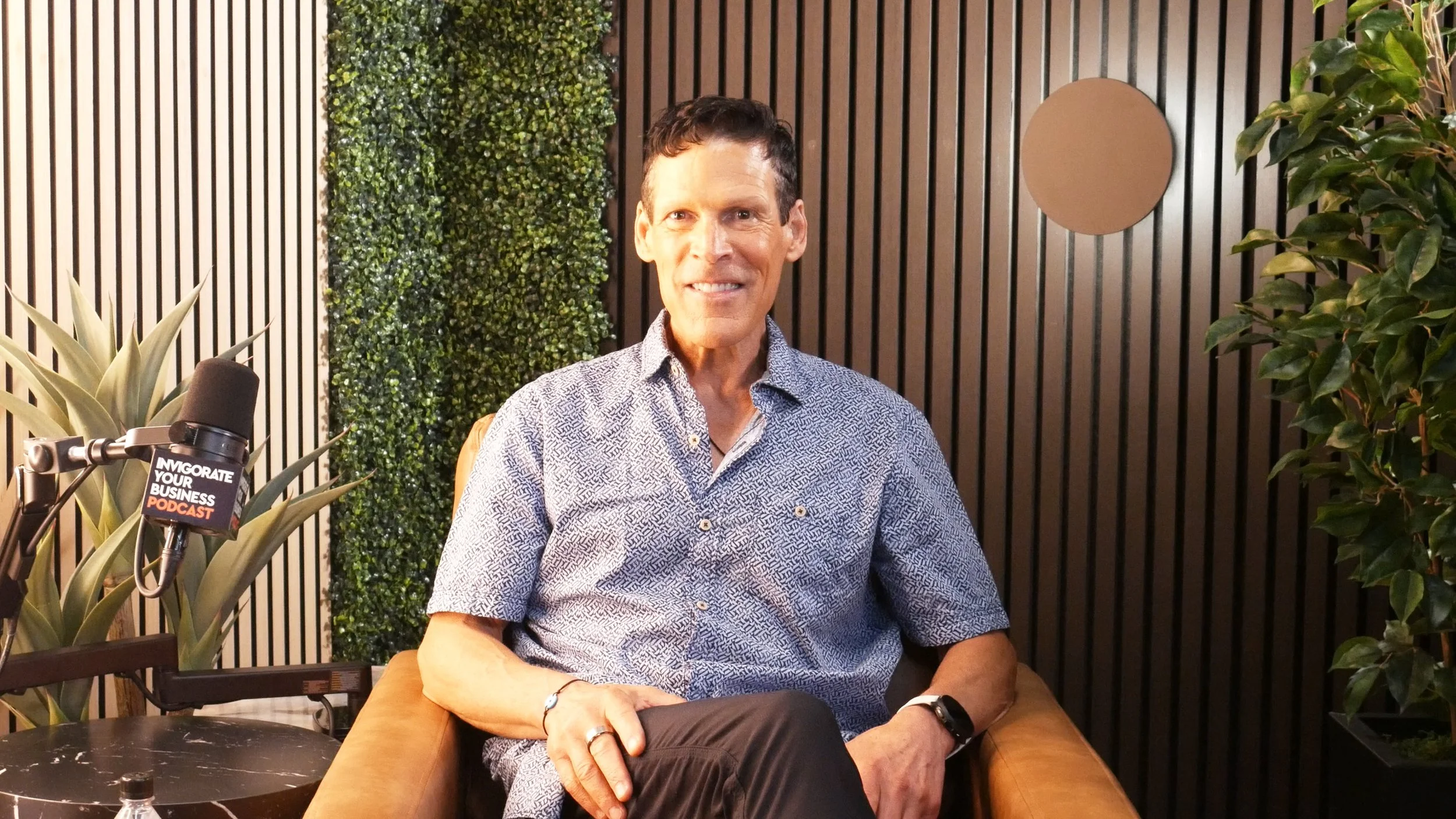
George Stroumboulis sits down with Dean Karnazes, world-renowned endurance athlete, bestselling author, and the legendary "Ultramarathon Man." Filmed in Newport Beach, California, they explore the mindset behind extraordinary resilience, pushing beyond perceived limits, and the life lessons endurance can teach entrepreneurs, leaders, and anyone striving for excellence.
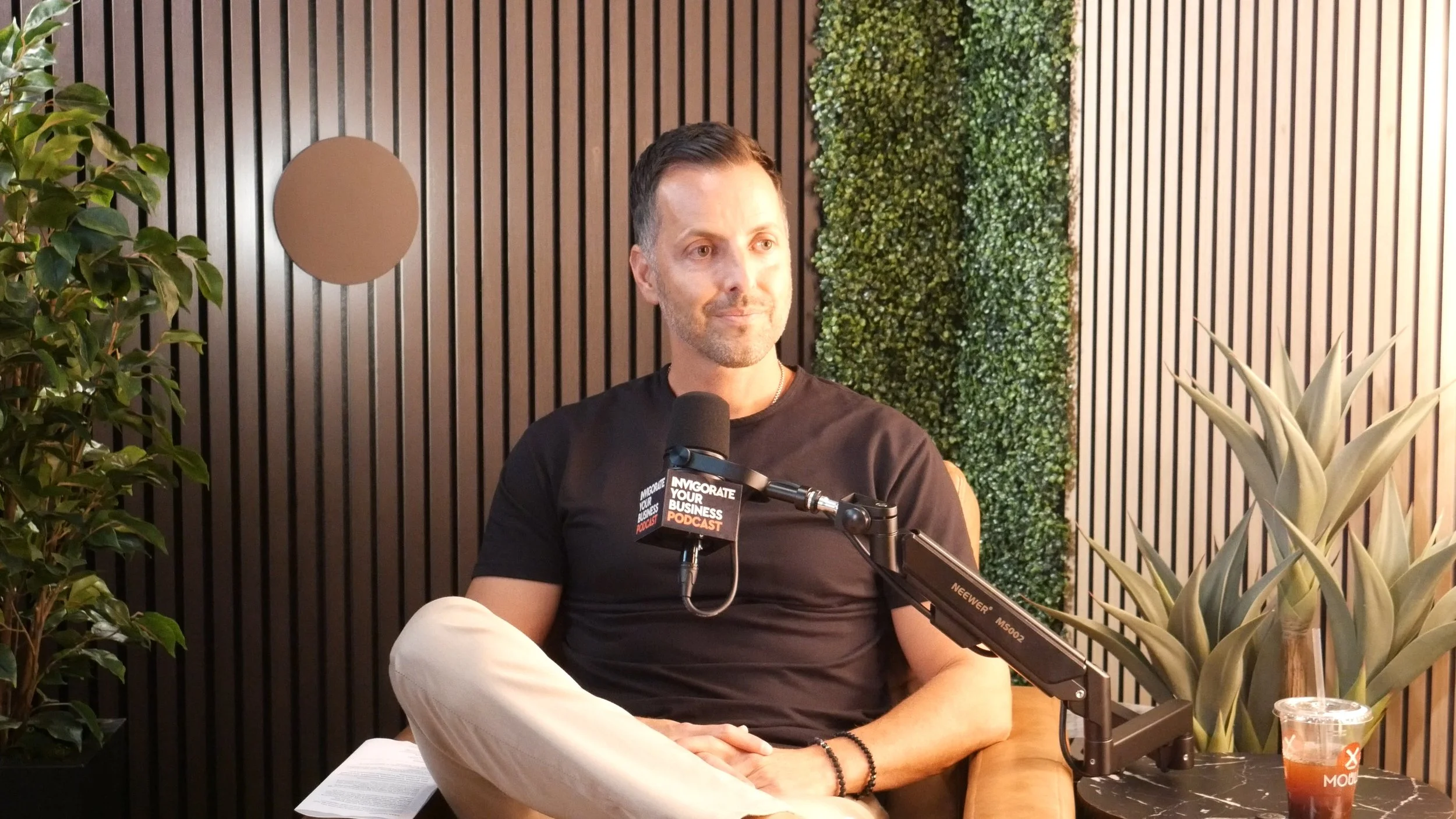
George Stroumboulis sits down with Dean Karnazes, world-renowned endurance athlete, bestselling author, and the legendary "Ultramarathon Man." Filmed in Newport Beach, California, they explore the mindset behind extraordinary resilience, pushing beyond perceived limits, and the life lessons endurance can teach entrepreneurs, leaders, and anyone striving for excellence.
ABOUT THE “INVIGORATE YOUR BUSINESS” PODCAST
The Invigorate Your Business with George Stroumboulis podcast features casual conversations and personal interviews with business leaders in their respective fields of expertise. Crossing several industry types and personal backgrounds, George sits down with inspiring people to discuss their business, how they got into that business, their path to the top of their game and the trials and tribulations experienced along the way. We want you to get inspired, motivated, and then apply any advice to your personal and professional lives. If there is at least one piece of advice that resonates with you after listening, then this podcast is a success. New episodes weekly. Stream our show on Spotify, YouTube, Apple, Amazon and all other platforms.
ABOUT GEORGE STROUMBOULIS
George Stroumboulis is an entrepreneur to the core, having launched several ventures across multiple industries and international markets. He has held senior-level positions at progressive companies and government institutions, both domestically and internationally, building an extensive portfolio of business know-how over the years and driving profit-generating results. George’s ability to drive real change has landed him in several media outlets, including the front page of the Wall Street Journal. George was born in Toronto, Canada to his Greek immigrant parents. Family first. Flying over 300,000 miles a year around the world puts into perspective how important family is to George’s mental and emotional development. With all this travel to global destinations, the longest he stays even in the most far-out destination is 3 days or less - a personal rule he lives by to make sure he is present and involved in family life with his wife and three daughters. To read about George’s global travels, stay connected with his blog section.
STAY CONNECTED WITH GEORGE STROUMBOULIS
STREAM & LISTEN TO THE PODCAST:
SPOTIFY: https://open.spotify.com/show/1rW2CmxQoiJNEPOZupJlvd
YOUTUBE: https://www.youtube.com/user/Stroumboulis
APPLE iTUNES: https://podcasts.apple.com/us/podcast/invigorate-your-business-with-george-stroumboulis/id1607693240
AMAZON MUSIC: https://music.amazon.com/podcasts/8fc03929-71b3-483a-a64e-153e30b3d462/invigorate-your-business-with-george-stroumboulis
STROUMBOULIS SITE: https://www.stroumboulis.com/podcast
PODCAST SITE: http://www.invigorateyourbusiness.com
FOLLOW GEORGE STROUMBOULIS:
INSTAGRAM: https://www.instagram.com/georgestroumboulis/
YOUTUBE: https://www.youtube.com/user/Stroumboulis
LINKEDIN: https://www.linkedin.com/in/Stroumboulis/
TWITTER: https://twitter.com/Stroumboulis
FACEBOOK: https://www.facebook.com/georgestroumboulis
TIKTOK: https://www.tiktok.com/@georgestroumboulis
CONTACT GEORGE DIRECTLY: https://www.stroumboulis.com/connect
FULL SHOW CONTENTS
00:00:00 Welcome And Why Dean Karnazes Matters
00:01:28 From Corporate Success To 30 Miles
00:04:49 Learning Through Motion And Greek Roots
00:12:17 Nature As The Real Classroom
00:13:49 The Marathon Origin Story Explained
00:21:14 Longevity Habits And Promoting Greece
00:26:12 How He Learns Storytelling And Writes
00:28:32 Biomechanics And The Psychology Of Racing
00:30:32 Sponsorships Investing And Making It Work
00:33:04 How To Train For A 5K
00:37:01 The 50 Marathons In 50 Days Plan
00:40:48 Lowest Point To Everest Dream Challenge
00:43:13 Family Loss And Keeping Culture Alive
00:45:06 Choosing Shoes And Building Running Community
00:51:17 Final Thanks And Listener Call To Act
FULL SHOW TRANSCRIPT
Welcome And Why Dean Matters
George Stroumboulis 0:00
Welcome to another episode of Invigorate Your Business with George Stroumboulis. Today I get to sit down with one of Time magazine's 100 most influential people in the world. His name is Dean Karnaes, and you may know him as the ultra marathon man. Dean is one of the most resilient human beings you will ever meet. I get to sit down with him today and talk about all things mindset, racing, pushing your body and your mind to the limits, keynote speaking, influencing people, what he's been doing over the last several decades. Now he's in his 60s and the guy looks phenomenal. He's at tip top shape. He is truly inspiring. We're going to talk about a lot of things today, including his Greek heritage, what it means to be Greek in this space. We're going to talk about the toughest battles he's ever had against himself, against these races. He's done incredible things. He's even done 50 marathons in 50 states in 50 days. Absolutely incredible. So enjoy this episode starting now. My name is George Stroumboulis, and I'm extremely passionate about traveling the world, meeting new people, and learning about new businesses. Join me as I sit down with other entrepreneurs to learn about their journeys. This episode of Invigorate Your Business Starts Now.
From Corporate Success To 30 Miles
George Stroumboulis 1:28
So we're gonna we're gonna jump into this. This is uh I'm fresh off a flight from Athens, Greece, and I was thinking about this the last while on the trip. Like I'm actually very excited to be sitting with you. Uh I'm not a runner, I'm not a marathon guy. I haven't had the bug yet. But seeing like a human, doesn't matter if you're Greek or not, but a human who's changed a career in their early 30s and just dominated it on a global scale is so inspiring to me. Right. So uh I'm very excited to be sitting with you. I'm gonna start off with an intro for the listeners so they get an idea on who you are, and then we're gonna jump into this. Today, I'm honored to welcome a man who has inspired millions around the world to challenge their limits and discover what they're truly capable of. Dean Karnazes is one of the world's greatest endurance athletes, known globally as the Ultra Marathon Man, a New York Times bestselling author, internationally renowned keynote speaker, and one of Time magazine's 100 most influential people. Dean has dedicated his life to proving that the human spirit is capable of far more than we imagine. His accomplishments are extraordinary. He's run 50 marathons in 50 states in 50 consecutive days, won the legendary 135-mile Badwater ultra marathon across Death Valley, completed a 350-mile nonstop run with virtually no sleep, and raced across every continent from the scorching desert to the frozen South Pole two times, I believe. But Dean's story isn't just about running. It's about resilience, discipline, purpose, and pushing beyond perceived limits. His philosophy has inspired elite athletes, entrepreneurs, executives, and people from all walks of life to embrace discomfort and pursue excellence. As a son of Greek immigrants, Dean also carries a deep appreciation for his heritage and the birthplace of the marathon. Dean, it's an absolute honor to have you here today.
Dean Karnazes 3:21
I um I told you to embellish freely on the inter on the introduction, so thank you. You took me up on it.
George Stroumboulis 3:27
Oh, yeah, yeah, absolutely. No, that that was uh the easiest intro to pull together. Like there's there's so much information out there, um, countless books, New York Times bestsellers. Uh and it's crazy to think like this this journey where you're at today started in your early 30s, right? Like truly as a profession.
Dean Karnazes 3:46
Yea and building a career around running, right? I mean, running what what is it? It's just r putting one foot in front of the other at an accelerated pace. So to to make a living, to build a career, to be doing it for you know over three and a half decades, it's kind of interesting. Yeah. It's a different path through life, yeah. Trevor Burrus, Jr.
George Stroumboulis 4:04
But like the the like Time magazine, for people that don't know, I I don't think they're you know, you they must be very young if they don't know Time magazine, but to be listed even as uh one of the hundred most influential people for running, like what what that represents. It's just it's crazy to me. Aaron Powell And I was one ahead of Oprah.
Dean Karnazes 4:21
That's one George Clooney and one ahead of Oprah. So how that got in there, I I have no idea, but all through running.
George Stroumboulis 4:31
So so go back. You're a proud Greek American, born and raised here in the United States in California, correct?
Dean Karnazes 4:38
I was born in LA. Yep. Spent most of my childhood in um California. I I was an exchange student, so I moved to Australia for a year when I was uh a sophomore in high school, but pretty much from California.
Learning Through Motion And Greek Roots
George Stroumboulis 4:49
Wow. Okay. So where where did that determination from a young age start?
Dean Karnazes 4:53
I remember running home from kindergarten when I was a young boy. I mean, those are my first childhood recollections or sitting in class and trying to be a good boy. So trying to sit still uh and waiting for the the bell to ring. And once the bell rang, I'm like, I'm free, and I would run home. It was in LA back when it was safe to run home from from school. I ran, it was probably about a mile that I'd run home from school. And I remember relating to the world through running. You know, talking to people, feeling the you know, the the air on my skin, watching the leaves change and the seasons, everything as I was moving seemed to be absorbed a lot better than sitting in a classroom and having someone kind of teach me about it.
George Stroumboulis 5:32
Okay, so you wanted to kind of escape the classroom, right? But you have excelled degrees, university, right? So it wasn't like you were a bad student trying to find an out, right, for this?
Dean Karnazes 5:42
Uh no, but I just thought education, I mean, y I'll you know, r uh revert back to our our ancestors, you know, um uh Aristotle, his classes were called the Peripatetics, the Wanderers, because he thought that uh you could absorb information a lot better when you're moving. Uh motion stirs emotion. So he used to teach his classes while he was moving. So I no, I was very I was very curious intellectually, but I just didn't like I wasn't a good book learner, if you will. Yeah.
George Stroumboulis 6:12
Gotcha. So were your parents athletes, runners?
Dean Karnazes 6:15
Like they both were. And in fact, um my dad ran the inaugural LA Marathon in 1985, and I remember he said uh to my mom and I, um, when I get to mile twenty, I'm gonna hit the wall. The marathon's twenty-six point two miles, and he said to us, Um, I'm gonna be really tired and I'm gonna want to stop. So when I come running in, tell me I look good and to keep going. And he came running in, and my mom said, God, you look horrible. Why don't you quit? And then we found him at the finish in the medical tent, you know, in it wrapped in one of those Milo blankets, you know, he had an Ivy in his arm. She was just destroyed. And I looked at him, I said, I am never gonna do this. I'm never gonna run a marathon. That's something I will never do. And now, you know, 40 years later, I've run hundreds of marathons on all seven continents. So you were in your twenties when you saw your dad run that's when I saw him do that, and I thought, why would anyone do this to themselves? That's yeah. It's insane.
George Stroumboulis 7:13
Was your dad off the boat, Greeker?
Dean Karnazes 7:15
No, he was second generation. Second generation. So it was my um my Papu and my Yaya. My my um father's family is from the Peloponneso, so near Trupoli. Yep. And um Yayamu is from Icaria. Longest living uh longevity island, yeah.
George Stroumboulis 7:30
Yeah, that's a blue zone.
Dean Karnazes 7:31
Blue zone.
George Stroumboulis 7:32
Okay, so DNA uh is creeping up here, right?
Dean Karnazes 7:35
I hope so, yeah. I like to think so.
George Stroumboulis 7:37
That's incredible. So your dad runs that, you're in your 20s, and you're like, hey, that's not for me. You're going through university, your story, and and again, I've heard this on multiple interviews and that, but uh it's kind of remarkable. Like you you enter corporate America, you're doing extremely well financially, you're in San Francisco, right? You're doing well, and then one day you're at the bar and you're like, you know what? I'm gonna pursue running? Like what what what was the buildup to that?
Dean Karnazes 8:02
Yeah, I mean, I did what I thought would bring me happiness, which is going to a you know a a good uh college. Uh I got an MBA as well, so I got a business degree, and I thought, okay, make a lot of money, acquire a lot of shit, mm, you'll be happy. It was it the formula didn't work for me. I was miserable. I hated being a business guy. Like I didn't put I didn't like putting on a suit, I didn't like going to meetings, I didn't like making presentations. I it felt very contrived to me and I I just didn't I wanted something more primordial, like I wanted something physical. And I remember running as uh uh like an escapism almost where I really felt my heart beating and uh y you know, i I just felt more alive and so I walked out of a bar on my thirtieth birthday, doing what you know, a lot of guys doing in their thirtieth. I was getting drunk with my buddies and uh at midnight I said, No more tequila, I'm gonna run thirty miles to celebrate instead and they looked at me and they said, But but you're not a runner, you're drunk and I said, Yeah, I am, but I'm still gonna do it. So I I literally walked out of this bar in San Francisco on my thirtieth birthday, drunk, and I didn't own running gear at the time, but I had on these like silk underwear, like silk boxer shorts, and I I'll never forget, I took off my pants and I threw them down the alleyway, and I just started stumbling south into the night, knowing there's a town called Half Moon Bay, that's 30 miles away. So just run to Half Moon Bay, and about ten miles down the road I sobered up and I thought, What the hell are you doing? Come on, it's a really bad idea. But something like God spoke to me that night. I remember looking up and seeing the stars and I remember seeing the lights of SFO in the you know, way in the background below me, because I was up on a mountain now. And I just it felt right. It just it it's like you're a runner, be a runner, be who you are. You know, know thyself and be thyself is what the Oracle of Delphi said. So I said, I'm gonna quit my job and I'm gonna become a runner. How I'm gonna pay the bills, I had no idea. But I thought do what you love and it'll all work out.
George Stroumboulis 9:57
And and you had saved up to that point to make that decision, or it was a spur of the moment type thing?
Dean Karnazes 10:01
It was a little compulsive. Yeah. It was a little compulsive. It there was not a lot of planning, there was no you know, executive plan on uh you know how to execute this. I just thought you love it, you'll figure it out. Yeah.
George Stroumboulis 10:12
So And then from from that night, which is incredible, what was the name of the bar?
Dean Karnazes 10:16
It was called the Paragon.
George Stroumboulis 10:17
Paragon, okay.
Dean Karnazes 10:18
And that was downtown San Fran? It was in called the Marina District in San Francisco, up by the Golden Gate Bridge. Yeah.
George Stroumboulis 10:24
And you finished the 30K that night? Yeah, 30 miles.
Dean Karnazes 10:26
Thir 30 miles, right? Yeah. Yeah, if I'd been in Greece, it'd be shorter, 30k. Less ease. Yeah. That's incredible. Yeah, I I made it that night. I mean, I say I ran, but I, you know, I hobbled, I you know, shuffled, I d yeah. And I couldn't walk for two weeks after that. Could not walk. I I mean I remember trying to step down just the curb and almost falling. Jeez. My legs were so weak after that. Yeah. No, it was like cold turkey, 30 miles, drunk, you know, straight through the night.
George Stroumboulis 10:55
But if that doesn't show the listener like your determination, even that night, drunk, like I'm gonna do this, and you did it.
Dean Karnazes 11:02
Right?
George Stroumboulis 11:02
Like that's that's just incredible.
Dean Karnazes 11:04
I think it was determination, it was uh fascination, it was curiosity, it was um exploration is what it was. It was really exploration, like what is my leg gonna fall off? You know, what's gonna happen to me when I do this? Uh and curiosity, um and and as well as being in nature. I mean, uh even now I have a very intimate relationship with nature, and this is where we come from. I mean, this is who we are as a species, but we are so cut off from nature, so cut off. Yes. Uh most people never spend a full cycle of a day outside. I mean, you know, when I do an ultramarathon, I get up before sunrise, I start running, I watch the sunrise, I watch the cycle of the sun through the day, I watch the sunset. I'm still running, I'm outdoors, I'm in the wilderness, I watch the moonrise, you know, I watch the the moonset, and then I watch the sunrise the next morning. And there's just something elemental to being human to experiencing this. And most people, I don't think once in their lifetime they'll be outside all day. Right. They I mean they we n we go from our air conditioned houses to our air conditioned cars to our air conditioned offices. We're indoors all the time. And to me, being with nature, like communing with nature, is it's it's such a rebirth. It's it's hard to describe it, yeah.
George Stroumboulis 12:14
Unless you have that connection.
Dean Karnazes 12:16
Unless you have that connection,
Nature As The Real Classroom
Dean Karnazes 12:17
yeah.
George Stroumboulis 12:17
So you've ran everywhere. You've been out outside everywhere. Is there a place where you just feel more connected outdoors?
Dean Karnazes 12:25
Of course, Greece. I mean that's sincere. I mean, um, you know, I've been uh living in Athens now for a couple of years, okay. Pretty much full time, but uh spending summers in California. Certainly the Sierra Nevada of California, you know, Mount Whitney, that whole area, um Mammoth Mountain up the Tahoe, I feel very connected um with that region. And it's it's one of the few Mediterranean climates outside of Greece, so there are a lot of similarities. But you know, running in Greece, running up to the top of um like Mount Polithia and seeing literally the Bay of Marathon on one side and seeing Athens on the other, you know, and knowing that twenty five hundred years ago this was this historic battle here and this this man, you know, Phoidi Pedis ran from this spot to and being able to see it all uh to me is that's the greatest place on earth, Greece. I mean it really is. It's and the funny thing with Greece is uh you don't see a lot of runners there. I mean running is becoming more of a thing, but I remember getting into a taxi in Greece and the guy was driving me to the hotel and I said, Is there anywhere to run around here? And he's like, Oh, you gotta be careful. Running is very new in Greece. And I'm like, dude, running kind of started here. It's what I was it's not you know, maybe in modern Greece it's new, but yeah, but um you you just don't see as many people in Greece when you go out running on these trails.
George Stroumboulis 13:46
It's true, and then the marathon, which I want to talk to you about.
The Marathon Origin Story Explained
George Stroumboulis 13:49
You you've studied this, right? You you live it, you've achieved those heights that our ancestors have done. Um, but the significance of the actual marathon versus like the Athens marathon, the New York marathon, the the marathon is just the marathon, right? Like there's a whole branding thing on Athens should not be the Athens marathon, it should just be called the Marathon, right? So like just talk to me about the the history of it and and the importance of the marathon in Athens.
Dean Karnazes 14:15
I I can't overstate that you know every marathon should literally be paying a licensing fee of royalties to Greece. Right. I mean, like with Greek yogurt. The the marathon is a Greek brand. I mean, whatever you want to call it, but every marathon owes homage to Athens, and a lot of them don't even realize it is the problem. So I mean, even the Boston Marathon, which started the year after the first modern Olympics, which was in 1896. So the Boston Marathon, there's some Greek Americans that saw this marathon and the finish in the stadium in Colemarmora, where there's sixty thousand people and this Greek this Greek man finishing, and they said, We've got to bring this to Boston. Now Boston says we're the we're the first marathon, we're the original marathon. And a lot of these like even now the people running the Boston Marathon don't even know the the history of it all. So yeah, I'm I'm trying to promote Greece as the birthplace of the marathon, and also trying to get more marathons to celebrate the roots of what they're doing. I mean, every every this whole thing started uh in Greece and it started from a battlefield.
George Stroumboulis 15:19
So it's a very Can you explain the story? Because it it's very important to know. I didn't even know it until hearing you speak about it. I only knew the end portion of where the marathon came from. But I didn't know the Sparta connection and back and forth.
Dean Karnazes 15:32
Okay, so in four hundred BC, uh the Persians invaded Greece at the Bay of Marathon. The Athenians were not fighters. I mean they were philosophers, mathematicians, thinkers. Who were the like the most badass fighting force in ancient Greece? The Spartans, right? This is Sparta. So they told um this messenger in Athens, hey, you gotta run to Sparta to recruit the the Spartans into battle with us, because we're gonna get slaughtered unless we have some real fighters here. So this runner, Phoedipides, he ran from Athens to Sparta, which is 153 miles. And Herodotus, who recorded this, he's like the the father of history, said that Phoedopides arrived the day after setting out, which can be interpreted as thirty-six hours, which is insane because this man didn't have a GPS, he didn't have you know, plated shoes, hoca shoes. I mean he's running barefoot.
George Stroumboulis 16:26
Probably barefoot, okay.
Dean Karnazes 16:28
He didn't have reliable food, you know, he's forage he must have been uh trained how to forage, no reliable water sources. And this was in uh August, which is very hot in Greece. But he arrived the day after setting off out, which is incredible. And he made his plea to the Spartans, Spartans, please help us. King Leonidas said okay, we'll come. But we can't leave until the moon is full because our religion forbades us for leaving for battle until there's a full moon. And that's not gonna be for six days. So Phodipides is in a pickle now, right? He's in a bind, like, ah, the Spartans are coming, but not for six days.
George Stroumboulis 17:03
We could be slaughtered by that, yes.
Dean Karnazes 17:04
So he's like, I'm gonna get up and run back to to Athens the next morning. So he ran back to Athens the next day. Which is i insane. So this is over three hundred miles, and this is four hundred BC. He gets to Athens and they say, Oh, General Meltides and the rest of the Athenians have deployed to the battlefield of Marathon, and they're up in the Pentele Hills looking over, you know, the the Persian encampment. So he runs to Marathon, he tells the Athenians, hey, the Spartans are coming, but not for six days. The Athenians um say we can't wait for that long, like every day the the Persians are fortifying their position. So they attack the next day. And a historic uh uh upset, somehow ten thousand Greeks uh Athenians defeated a hundred thousand uh supposedly a hundred thousand Persians. And they lost a hundred and ninety-two soldiers, the Greeks, and the Persians apparently lost six thousand four hundred soldiers. This is what Herodotus writes. I mean it could be a little bit embellished, but anyways, the Greeks somehow won. And so they had to send someone from the battlefield back to Athens to give word, hey, we won. So this is where the record gets a little uh fuzzy. But they sent a runner from the battlefield back to Athens. He came to Athens, he proclaimed Nikki Nikki or Victory Victory, we are victorious, and then he died, as the legend has it. And that's the full story. Who was the runner? It wasn't we th we don't know. I mean it I like to think it's Fidipides, and in my books I always say it is, but I said that the record's a little more loose when it comes to who this final runner was, and if there even was a final runner, because uh i I don't want to get too much into the weeds, but it was um the Persians when the Greeks beat them on the land battle, they started rowing their boats around uh Cape Sunion to come to Padaeus to attack Athens that way, because they thought, Oh, all the soldiers are here in Marathon. Well, we've still got people left, we'll go so the the soldiers in Marathon did this forced march up the coastline to head them off. And they got to Padaeus by the time the Persians arrived, and the Persians saw these Greeks, these same fighters lining the cliffs and said, No way, they already beat us once, and they turned around. So maybe it was that forced march that inspired the Marathon. Most historians think it was that forced march, but I'm sticking with my story. I I love your story. I mean, if anyone and you've studied this over the years. Like you you've studied Studied it um every record that exists on it. From uh yeah, there's there's all sorts of sources. Herodotus was writing fifty years after the battle, and then more sources come five, six hundred years, and then there are Roman sources about the marathon, uh, who did this. So the story gets a little convoluted and diluted over time, as a lot of history does. Yeah, absolutely.
George Stroumboulis 19:52
Yeah, the Bible, uh everything, yeah. So, okay, 400 BC, he was running this from Sparta? 490. Were there dedicated people who were trained to do this? Like, are you the equivalent of would it have been Cardenasis back in the day doing this? Like, were they training to run this?
Dean Karnazes 20:08
That's a really good question. You know, like why? Yeah, and why and why didn't they use horses, right?
George Stroumboulis 20:12
Absolutely. And could horses get there within 36 hours, 48 hours?
Dean Karnazes 20:16
Uh that's uh a a trained runner can uh beat a horse in a long distance run. Like I've done a hundred mile uh foot race against horses and I've won. Jeez. So the Greeks knew that in the in the rocky and uh mountainous terrain of southern Greece, a man could outrun a horse. And so they had this class of citizen called Hemodhromie. Hemodhromie, which means day-long or all day runner. And this is what these guys did. They were messengers, couriers, heralds.
George Stroumboulis 20:44
Yes.
Dean Karnazes 20:44
So they disseminated information, they collected military intelligence, political intelligence. Remember, Greece was um uh uh a number of city states. I mean, there was Corinth, the you know, there was uh obviously Sparta. So they were communicating between these city states with runners, these heralds. And Phoedopedius was one of these heralds. And this is their vocation. This is how they train, this is what they were employed to do. They were employees of the state, essentially.
George Stroumboulis 21:12
Jeez, that's incredible.
Longevity Habits And Promoting Greece
George Stroumboulis 21:14
So now your connection to Greece, and then I want to talk about some of your major like races that you've done, right? The 50-50-50, which still blows my mind. But your connection to Greece culturally, you live there pretty much now. Um you're doing work for the government essentially, like just helping promote it, just being that ambassador. Uh you're a global icon. Like if you Google your name, uh the books you've written, what what's driving you now to keep pushing that? Aside from staying young, like still blows my mind that you're in your sixties and you look like you're in your forties, right? And is that DNA? Is that does running have those benefits to do that? A lot of questions coming at you, but yeah.
Dean Karnazes 21:54
Well, I mean, I'll I'll tackle the the last question first. I think running prolongs your life. Um Maybe I'm a study of one, but uh it's not just the running. I mean it's everything I do. I look at my life through being the best animal that I can be. So obviously it's running, but it's also cross-training, it's also diet and nutrition, it's also sleep, uh, it's also your interpersonal relationships. So I try to optimize all of those to be the best animal that I can be, the best athlete that I can be. Uh you know, when I look at myself compared to my peers, I look probably more healthy. I have m you know, lower body fat, more lean muscle tissue, probably lower um osteoarthritis. And so I don't think running damages your body long term. I mean, I think it's actually a good thing. How long can I keep doing this? I like to say my finish line is a pine box. So I I'm gonna keep pushing and pushing and pushing as long as I can. I'm still I mean, this year I've probably done twenty races, uh, you know, between marathons and ultra marathons, gonna do the Athens marathon, of course. So I still love it. I really love it, and I'm still finding new races and new adventures. So I'm gonna keep going as long as I can keep going. As far as you know, m my work, what I'm trying to do is use my notoriety to promote Greece as the birthplace of the marathon and establish that firmly uh globally. That this is where it began. Come to Greece, celebrate it. When you run a marathon, uh pay homage to Greece. I mean, literally, even if it's just a a quick thank you, Greece, you know, it's it it all started in Greece and it's gotten marathoning has become a big business and I think we've forgotten our roots. So I think um me trying to promote you know that Greece is as the place where it began and celebrate that a little bit, even if it's you know, the the Boston Marathon, New York City Marathon, the London Marathon, whatever, it all started with this one runner in ancient Greece. And I think that's a beautiful thing.
George Stroumboulis 23:49
It's a beautiful thing. And Greece is very lucky as a country with all its problems, you know, ups and downs. They're very lucky to have someone who succeeded on the the highest level globally that wants to promote Greece and do that. Like they're they're very lucky. You know, it's not like they're begging you to do this. You on your own have kicked ass on the highest level here in the United States, have been featured in every magazine, uh TV station, interview, like you name it, you've done it. So, like, hats off to you for just crushing it in the hardest country in the world to do that, and then to be able to go now and say, hey, you know what? My energy now, I'm gonna be focusing there. It's incredible. And two little side stories. So I'm only sitting here today because uh Themis Polalis introduced us together, um, and my brother-in-law is related to him, and he's a sweetheart, and you know, he found running and competitive ultra uh events because uh he was going through some mental stuff and he found his escape, right? And when he refers to you, it's like his God in this space, right? It's it's amazing to see that. Um, and then there's a funny story, George Mulos, who I had on the podcast last year, and he, you know, he walked across Greece, and I think it's 900 miles, um, and he's like, I did it in 27 days, and then I was fortunate enough to meet Dean Karnazis, and this guy's run you know all these crazy things, and he showed up to meet you, you guys were meeting, and he showed up like he was ready to go to a club and you were ready to run, and he was like, tell me the story, and he's like, So we fucking ran. He goes, We started running. So it's just cool to see like the influence you have on people as well.
Dean Karnazes 25:22
Well, he's a he's a a a uh a mentor of mine as well. I mean, I love what he's doing. You know, he's very much into promoting Greece. Yes. No one's paying him to do this. He's doing it on for his love of country. Absolutely. Uh for something larger than himself, and I think that's what's motivating me as well. And you know, I get a lot of love from the Greeks, believe it or not, but it's it's not the politicians, it's it's some of the business leaders, but it's people on the streets. Yes. A lot of people come up to me and they said, My God, uh thank you for everything you're doing for Greece. Like, hey, it's great to meet you, thank you for everything you're doing for Greece. And that makes me so proud. You know, I mean, I can't I don't have that sort of impact in the US. Yeah, it it's it's it's it's great. It's I mean I'm I'm the recipient of a lot of um positivity and I hope I'm um you know doing a good job of of carrying the torch, if you will.
George Stroumboulis 26:11
Absolutely.
How He Learns Storytelling And Writes
George Stroumboulis 26:12
Have you always been like a great speaker, great communicator? I know you do keynotes and you talk to like world-class people and all this stuff, but like have you always had that ability? Because the way you tell a story, it it's captivating.
Dean Karnazes 26:22
I think I've developed it. I mean, um my mom was a literature teacher, you know, and she used to tell me the the the best writers are the best readers. So I discovered the classics, you know. I got into the Odyssey when I was a teenager, and that's kind of a a one-way ride. Yep. Uh, you know, that when once you read the Iliad and the Odyssey, there's there's nothing comparable. I mean, Homer told a story like no one else can tell in in so many different ways. There's so many techniques he used that he didn't realize he was using, but um a lot of it was lyrical, so he was um a lyric poet. There was no there was no way to to write anything back then. So a lot of times he was just reciting it lyrically, and when you read it, it's like a a good song. It's like music that you're reading on a page. So I've taken a lot of um the the learnings from reading the classics and tried to apply them to my modern telling of stories.
George Stroumboulis 27:15
Aaron Ross Powell And that helps writing you know New York Times bestselling books? Absolutely. Yeah, absolutely. Just that approach. Uh Dean, talk to me just back to the age, like all these races, like if you had to put miles, right? Like how many miles do you think you've run in your life in your 60 plus years on the planet?
Dean Karnazes 27:34
Too many.
George Stroumboulis 27:34
Right. And the follow-up question is any major ij injuries, touch wood, not to knock on wood. Knock on wood, yeah. But like joints, nothing like this.
Dean Karnazes 27:44
Never. Never had a running-related injury. Yeah. Never.
George Stroumboulis 27:49
That can't be normal.
Dean Karnazes 27:50
Well, I've got very good biomechanics. So, you know, my when I run, my um alignment is very good for a runner, and I kind of run as you're supposed to run. Like it's becoming vogue now, like to analyze someone's stride, and you know, you should like strike midfoot, tilt your upper body forward slightly, accentuate your arm swing. I've always done that naturally, so it's nothing that you know now they train people how to do this. But you know, having good um biomechanics, I think, is very helpful. And you these are hereditary. You you know, you inherit these things.
George Stroumboulis 28:21
Okay.
Dean Karnazes 28:22
They say the best thing you can do as a long-distance runner is um to choose your parents well. So thanks, mom and dad.
George Stroumboulis 28:28
Yeah, and your kids, thanks, thanking you and your your spouse, right?
Biomechanics And The Psychology Of Racing
George Stroumboulis 28:32
Um how do you go about picking what races you're gonna do? Is it still a dopamine hit for you? Like will you ever do uh a 5K, a 10K just for shits and giggles? Or is it marathon as the bare minimum?
Dean Karnazes 28:44
No, I do all kinds of races. Really? Yeah. I mean I did the Santa 5K, no, Santa, I think it was a 3K in Athens. Yeah. There's a great race in downtown Athens where they give you a Santa suit and we all run through Athens dressed in Santa suits. Sober or no? Because I used to do the one in New York City. Yeah, that was a yeah, that was a different thing. I think it's in the morning, so I think half of us were sober. Okay, good. But I get so many invitations for these races in exotic places, Patagonia, the Australian Outback. I mean, I can go on and on and on, and I'm not very good at saying no. So I've I you know that's how in you know the past thirty-five years I've been on all seven continents twice. I've run thousands of races in every imaginable condition. Uh I just love it. I just love it, and when I get these invitations, why not?
George Stroumboulis 29:31
Why not? But but do you like is it is it a dopamine hit? Like when you're doing that, is that your like do you get a high off running? Like what what is it that keeps you going back?
Dean Karnazes 29:40
Yeah, I mean, running is it's like um an epic drama of life in in one twenty-four hour race. I mean, you know, w I like to say what it takes a a monk, two months of quiet meditation, takes an ultramarathon or one race. I mean, you go to places that you just don't go to in normal in normal life. I mean you you you get removed from all of the minutia that's on our shoulders throughout the day. I mean there's there's gotta be something that that transcends just day-to-day living, otherwise it's drudgery.
George Stroumboulis 30:11
Yeah, absolutely.
Dean Karnazes 30:12
And you know streaming the Kardashians doesn't do it for me, you know, video games doesn't do it for me. I'm for me to go run in the mountains for twenty-four hours, it's like a cleansing. It's like going to church and uh it's it's hard to describe, but I mean you you you f you cross the finish line and you are destroyed, but you are also renewed.
George Stroumboulis 30:31
That's incredible.
Sponsorships Investing And Making It Work
George Stroumboulis 30:32
So how do you finance this? Like over the years, clearly you've been successful, you have investments. Um I don't know if we could talk about shoe deals and all this stuff, but like how have you financed this? If someone's asking to go to Antarctica, like you're flipping that build, you get sponsorship, you obviously books. Like how how have you created this into a business vehicle for you to keep going?
Dean Karnazes 30:54
I'm like you, I hustle my ass off. I mean, I'm constantly working with sponsors, and sponsors, you don't have lifelong sponsors as an athlete. I'll tell you that. I mean, you have sponsors that it's transient. You're like in their playbook for the next year's marketing plan, then you're not.
George Stroumboulis 31:08
Right.
Dean Karnazes 31:09
So I'm constantly prospecting for sponsors to work with. Uh yes, I'm doing some investing. I have so much stuff sent to me from people. Most of it is just crap.
George Stroumboulis 31:18
Yep.
Dean Karnazes 31:18
Once in a while I get something interesting. I think, hmm, let's, you know, and typically I'll do like an equity share where I'll put it, you know, put some skin in the game and I'll get some equity in return uh and I'll do some promotion if I really believe in the product. If it helps me and I think it can help others, I don't mind unabashedly promoting it. I especially if it's can help a runner, because um nothing is worse to a runner than not being able to run. So keeping a runner uh hydrated, you know, fueled, uh injury free, I invest in these sort of products that are interesting and um some of them have paid off, others haven't. Uh I get book royalties, which helps, you know, writing a couple best-selling books is has been helpful. Yeah.
George Stroumboulis 32:01
It's kind of a big deal, the right, to be able to do that. Yes. So um wait, like what's the filter process to get to Dean Carnazsies? Is is there uh a business manager that kind of pre-filters? Are you are you the guy? Because you're business savvy, so it's not like you don't know how to filter and look through stuff. I'm just curious how that world works for you.
Dean Karnazes 32:20
I'm pretty much the filter. You're the filter, okay. Yeah, no, I've worked with these big agencies, these talent agencies like CAA.
George Stroumboulis 32:27
Yeah.
Dean Karnazes 32:28
They don't know they don't know an uh an alternative athlete like me, like an endurance sports athlete. They don't know what to do with me. You know, they they can take a a basketball player, a baseball player, you know, a musician, and there's very clear channels of how to get them promoted and so forth. With me, they just I know better than they do. And I'm um and I'm bringing them all the business and I'm telling them the business plan. I'm thinking, why am I paying them 15% commission when I'm giving all this stuff to them? So I just now I just do it all on my own.
George Stroumboulis 32:56
Yeah, that's incredible. Um I know we're tight on time. You you got stuff, but uh just a few more things. I I could talk to you for hours. Like it's it's
How To Train For A 5K
George Stroumboulis 33:04
incredible. Um so uh I'm gonna run a 5K. I'm not a runner, right? But like sports, like doing extreme stuff. I've done the skydiving, all this type of stuff. Uh but I'm gonna run with my 11-year-old a 5K, right? What's the best way to train for something small? Because I would love to do a marathon in the next two years. And so side note to that, I used to live in New York City, Columbus Circle. Uh-huh. So this stretch where the New York Marathon and every year I would show up there, hung over just to see it. And I remember the one year I saw Jared the subway guy. Remember that guy?
Dean Karnazes 33:36
Big guy, yeah.
George Stroumboulis 33:37
Yeah, big guy. He was finishing the marathon. I'm like, okay, next year I'm gonna do it. Never did it, right? Uh so I would like to do that while I'm still in my 40s. But like, what's the best way to kind of get into it? Finish a 5K, go to a 10K, do the marathon? Like, what advice would you have?
Dean Karnazes 33:53
Well, I think if you're Greek, it's a rite of passage to run a marathon. I mean, uh you have to do this. And um it it will teach you more about yourself than you thought you ever knew. I mean, you'll cross the finish line with as a different person. Like you know yourself very well. I mean, you're a very accomplished individual, but through running, you will learn new things about yourself. And these things will be empowering in everything you do, but you have to finish a marathon. And when they put that medal around your neck, it'll be the proudest moment of your life. I mean, your knees will buckle, you're Greek. It's it's something you have to do.
George Stroumboulis 34:26
Give me chills, dude. That's crazy. Now that not the hard part. How do you do it, right? Yeah, do I actually have to do it now?
Dean Karnazes 34:34
So I would say um I say start from the ground up. So invest in a good pair of shoes. Running footwear has progressed so much in the past decade. I mean, the the new shoes are so comfortable to run in, you'll be less prone to injury, they'll feel more comfortable to run in. And also you're gonna kick down $200 to $300, so you're gonna be very guilty if you're not putting them to use. True, true. And then um look look inside and say, well, I'm I'm kind of uh an extrovert and I I need uh accountability or I won't do it. So go to a local running store in your community, like a Fleet Feed or like just running specialty store, and they'll have programs for running a marathon, and you'll join a team. And you know, Wednesday and uh you'll have a run, and then Sunday you might have your long run. You know that at 8 a.m. on these days you've got to be here for this uh this training session, and it gives you accountability. Uh if you're an introvert like me and you prefer to train on your own, there's so many free training programs online. Just follow a training program and do it for charity. Do it for something you are feel very strongly about. So do it for charity and tell all your f your buddies and your family you're doing it for charity, more accountability, and get them to pledge. Now you're really on the hook. Like they've these people put down hard money for me to finish this thing. So it kind of lights a fire under your colos. Yeah, under your colos.
George Stroumboulis 35:56
That's incredible. Out of all the races you've done, and I know you've been asked this a million times, but like what was the one where like right now, when you run a marathon, you're gonna run the Athens one, is there ever a doubt in your mind like I won't finish this? Because when I hear you, I'm like, oh, this guy runs marathons like I'm running a hundred meters. Like it's easy, I'll do it. Do you get cocky like that or no?
Dean Karnazes 36:17
I never take it for granted. I never take a race for granted. And that's that's the beauty of the marathon. I mean, it's it's there's no certainty that you're gonna finish. Oh, really? Oh, there's really no certainty for you as well, even for me. I have so much doubts and I have so much anxiety in the morning of a marathon, and you get niggles along the way, you know, you might feel a little something in your quadricep, your calf might cease up, and you think, is this gonna stop me? So it's it's kind of a challenge in that way. Um and you know, I I've thankfully in the thousands of races I've done, I've only dropped out of a handful, and that's when I thought I was gonna permanently do some damage to my body. But mostly I just run through the pain.
George Stroumboulis 36:56
Wow.
Dean Karnazes 36:56
Yeah.
George Stroumboulis 36:57
Wow. So can you talk to us about the 50-50-50, 50 marathons,
The 50 Marathons In 50 Days Plan
George Stroumboulis 37:01
50 days in 50 states? I was thinking about this, I'm like, even just traveling, if I just had to travel and get a coffee in every state over 50 days logistically with flights and everything, just that alone is is uh an accomplishment. Like how how do you do that logistically?
Dean Karnazes 37:18
Well, I don't want to take credit for the logistics because I I knew like this is beyond me. So I work with the agency that coordinates the Olympic torch run across the country and I said, hey, this is what I want to do, and can we do it? And anyone who's listening to this who's a marathoner, you're probably thinking, well, how on like a random Tuesday in Iowa did you run a marathon? I mean, there's no organized race there. Well, we eight of the marathons were actually the live marathon that took place in that state on that day. Like I ran the Chicago Marathon in Chicago with 35,000 other runners. I ran the New York City Marathon with, you know, 42 of the marathons. This agency contacted the race director for the most prominent marathon in that state and said, Hey, when we're, you know, in Dallas on this Wednesday, will you set up your official starting line? Let us follow your sanctioned and certified course and finish at your official finish line on that day. So we have a record of actually finishing a legitimate marathon. And forty two of the race directors said, This is incredible. Yes, yeah, we'll we'll do this for sure.
George Stroumboulis 38:18
They didn't shut down the roads. You still had to stop in traffic and whatever.
Dean Karnazes 38:21
We did. We we got permits for up to fifty runners to join me, which is great. It wasn't just me doing it by myself. So we'd have like fifty runners at the start, and we'd have a like um a motorcade, like police escort, and they wouldn't hold the whole course closed like they do, like LA, you know, they closed down the city for eight hours on that day. We'd they just closed down the intersections as we passed through, and that's how we did it. So we had to kind of stay together as a group, but it was it was great.
George Stroumboulis 38:45
Yeah, that's incredible. And then you would run a marathon, travel to that city the night after the marathon.
Dean Karnazes 38:51
Yeah, hop in a bus and and road trip. Yeah.
George Stroumboulis 38:54
And out of all these fifty marathons, you never wanted to stop? Like that that's insane to be able to do that.
Dean Karnazes 39:01
Oh, there was the r I mean, there were some really low moments. I mean, I remember um flying from uh Alaska where it was snowing to Maui, where it was hot and humid, and thinking my body was just completely out of whack, and then flying to Arizona where it was over a hundred and it was this really dry heat and I thought I I don't I don't know if I'm gonna finish this marathon. It was marathon nineteen and I thought, I don't know if I can finish this marathon, and I gotta do this thirty-one days in a row. So there were some very crushing moments and I just thought don't think about the finish line. Don't think about anything, just think about taking your next footstep to your best ability. Don't even think about getting to the end of this marathon. Just take your next damn footstep. Be in the moment, be present uh in the here and now, which we're rarely ever in the here and now. Even now, as we're doing this interview, I mean you you've got a we both have a million things going through our head. Am I gonna make the lunch appointment? Did I feed the dog this morning? You know, who's picking up the kids?
George Stroumboulis 40:01
Yeah.
Dean Karnazes 40:01
And just to quiet your mind f and just say, All I all I want to do right now is take my next footstep to the best of my ability. And my next footstep. And don't let thoughts come into your mind and don't engage with them. Just let them pass through your mind like clouds. So I got very good at just being in the moment, the here and now, and just executing my next footstep. And that's all it was footstep not thinking of the next 30 races. Yep. It's it's too crushing to think about everything ahead, yeah.
George Stroumboulis 40:27
That's incredible. Would you be able to do that 50-50-50 now if you put yourself to that? How many years ago was that?
Dean Karnazes 40:35
It was in 2006. So it's 20 years ago. I think I would. I think I'd like to do it. I'd I'm gonna be slower. Well, maybe we start in Canada and we do the province one province, right?
George Stroumboulis 40:45
There's fewer. But what is
Lowest Point To Everest Dream Challenge
George Stroumboulis 40:48
the next big challenge? And just two more questions. I know you've got to get out of here. But what is where you are right now and what you've accomplished? Like crazy what you've accomplished. Is there something left where you're like, hey, I I want to try this? Aaron Powell Yeah.
Dean Karnazes 40:59
Well, there's this race called the Badwater Ultramarathon, which you talked about. It's um across Death Valley in the middle of summer and starts in a place called Badwater, which is the lowest point in the Western Hemisphere. It's here in California. It's 282 feet below sea level, and then 135 miles away is the highest point in the contiguous U.S., which is Mount Whitney. So the idea is to run from the lowest point to the highest point. I'd like to do that on a global scale. So run from the lowest point on Earth to the highest point on Earth. So you probably know the highest point on Earth, right?
George Stroumboulis 41:27
Mount Everest.
Dean Karnazes 41:28
Mount Everest. Do you know the lowest point on Earth? I do not. It's uh the Dead Sea in Jordan.
George Stroumboulis 41:33
Dead Sea, yes. So run from there to Mount Everest?
Dean Karnazes 41:36
Yes.
George Stroumboulis 41:36
Is that even possible geographically?
Dean Karnazes 41:38
It's it's complicated. So there's a friend of mine, Charlie Engels, another ultramarathoner. It's done all these crazy lowest to highest on other continents, and we've been talking about doing it together. Wow. And the problem is the most direct route goes through Iraq and Iran. And right now the State Department is like, no, we're not letting two Americans run through Iraq right now. Sorry, guys. Jeez. And to do the northern route, you've got to go through the the stand, so like Uzbekistan, Kyrgyzstan, and Kazakhstan. And that makes that adds about two thousand miles to the journey.
George Stroumboulis 42:09
But politically safer?
Dean Karnazes 42:10
Safer, yeah. Politically safer, yeah, more stable. Yes. But you know, Charlie's like, why don't we just paddle across the Indian Ocean so we don't have to go to Iraq and Iran?
George Stroumboulis 42:20
Oh my God.
Dean Karnazes 42:21
You're crazy. Like one, it's supposed to be a run, but two, I'm not going to get in a boat with you and paddle for two weeks. Jeez. That changes the competition, right? Well, it it ch yeah. Not to mention that we'd probably be dead, but would you ever run across Greece? I'd love to do what George did, or even something something similar. Yeah. Yeah. You know, there's um there's a lot of trail networks that are open in Greece, kind of similar to here. Like we have the Pacific Crest Trail that starts um at the border of Canada and Washington and finishes at the border of I don't know if you know about this trailer. I do not know. It finished at the border of Mexico and California. Wow. So it's the Pacific Crest Trail. It goes all down the the spine of the Sierra Nevada. And it's a bunch of interlinked trails networks. And they're starting to do that in Greece as well. There's there's great trail trails in Greece for hiking and running, really great trails. And it doesn't get a lot of use.
Family Loss And Keeping Culture Alive
George Stroumboulis 43:13
Wow. And you and you're leaving for Greece this weekend?
Dean Karnazes 43:15
Saturday. Saturday, okay. And then you stay there through a few months? Probably through um November until Thanksgiving. Come back to California to be with my my family. Okay. My dad down in San Clemente. My dad's from San Clemene. My mom, unfortunately, passed away earlier this year.
George Stroumboulis 43:30
Sorry to hear that.
Dean Karnazes 43:31
Yeah, I was kind of yeah, so I'm gonna probably come back in uh in November and be down in San Clemente.
George Stroumboulis 43:36
Does your dad get over to Greece?
Dean Karnazes 43:37
Is he uh you know he's ninety and we were hoping to get them one last trip. They've been to Greece so many times, and we've done so many great trips. My mom and my dad, just the three of us all around Greece. We've been uh countless islands all over the Peloponneso. Uh so we've we traveled a lot through Greece. We gave Greece a lot of love, and and they the the two Of them, my my parents just spent a lot of time in Greece. Okay. And I mean they're they're kind of I guess hippies from that generation, the sixties. They'd fly to Greece with with no itinerary. They'd just fly to Greece. Amazing. And I'm like, how long are you going for? Oh, I don't know. Maybe two months is time. Like, Mom, you don't like where are you going to go? She's like, I don't know. It always works out. Isn't that beautiful? It's incredible.
George Stroumboulis 44:24
It's incredible. And you used to go as a kid, right? Like I I say this to my wife all the time. It's like we take the kids back in the summer. There's cheaper places to go on vacation. There's closer places. There's logistically better places. But like to hold on to the culture, it's like every moment matters. Like it's a non-negotiable, like I have to take my kids back regardless of the cost and all this stuff. You remember those memories, right? As as an adult now.
Dean Karnazes 44:49
Absolutely. The best memories of your life. And your kids will think the same thing. So I'm really proud that you're doing this. It's really important. I and I hope more um more Greeks from the diaspora, either the Canadian or US, will take their families back to Greece and celebrate it. That's incredible.
Choosing Shoes And Building Running Community
Dean Karnazes 45:06
Yeah.
George Stroumboulis 45:06
Dean, I'm gonna ask uh in October, I'm gonna send you the the race my cousin's hosting in Evia to see if it's on your schedule, right? It's it's not a full ultra marathon or anything, but it's worth looking at. Like it would be cool. I'm gonna run it with my 11-year-old. Um I want to ask you about shoes. You had mentioned good shoes. Where do I go? Do I go to Dicks? Like what what brand am I looking for? What what do I do as a rookie now trying to find shoes?
Dean Karnazes 45:32
Well, the the right shoe is the right shoe for you. So there's no right shoe. Um there's a lot of different um uh types of footwear now. So there's pl uh shoes that have carbon plates in there. Uh there are shoes that um uh the materials have just everything has changed. There's lightweight shoes, there's um depending on if you have a wide forefoot. So I would say Dix is okay, but if there's a running specialty store, like they just handle running, they don't do like ball and stick sports as well. Yep. Uh so like a fleet feet, there's roadrunner sports, they're running experts. So they'll uh fit you in a pair of shoes. They'll have you run, like do some wear testing in the shoes right there, like around the block.
George Stroumboulis 46:14
Okay.
Dean Karnazes 46:14
And they'll look, they'll analyze your gate and they'll help you um get the right shoe for you.
George Stroumboulis 46:19
Amazing.
Dean Karnazes 46:19
Yeah.
George Stroumboulis 46:20
Are you involved at all designing shoes after all these years? Like you you know what works for you, what doesn't.
Dean Karnazes 46:24
Like Yeah, well, I actually, you know, we spoke about this a bit. I'm working with this uh new Greek running shoe startup called Anna Athletics. Anna, like number one.
George Stroumboulis 46:33
E-N-A, Anna.
Dean Karnazes 46:34
Okay, yes. And only in distribution in Greece right now. We're gonna be going uh into broader distribution in Europe, um, hopefully in the beginning of 2027, hopefully to the US in 2028.
George Stroumboulis 46:46
Amazing.
Dean Karnazes 46:47
But a great shoe. And um I yeah, I help very much with the the design from the 2D uh to the 3D to the wear testing. So they send me the prototypes, I run in them for a set number of kilometers, I give them feedback, they modify the shoe. So I'm very, very steeped in running footwear design and um iteration.
George Stroumboulis 47:07
That's exciting. Designed in Greece?
Dean Karnazes 47:09
Designed in Greece. Well, Milan and Greece. Yeah, Athens and Milan, yeah.
George Stroumboulis 47:13
That's exciting. Especially like putting your seal on it, like testing it, making sure uh that's gonna be exciting when it launches.
Dean Karnazes 47:20
No, it's commercially available, actually. Oh, it is commercially available. If you went to Enna.com, yeah, annaathletics.com right now. You can you can buy the shoes in Greece.
George Stroumboulis 47:28
Amazing. So we've got to get the link up there.
Dean Karnazes 47:30
Yeah, you uh get the link up. They have a store in Golden Hall.
George Stroumboulis 47:34
Yep.
Dean Karnazes 47:34
Um Great shopping center. Great shopping center.
George Stroumboulis 47:36
Used to be the communication hub for the Olympics, 2004 Olympics. You know this.
Dean Karnazes 47:40
That was the broadcast center, yeah. The Hellenic Olympic Committee is right across the street. Exactly.
George Stroumboulis 47:45
Yeah, that's a great, great part of I did a launch event for a property website I had 15 years ago uh at the Golden Hall.
Dean Karnazes 47:53
Um I'm excited to see you uh in Evia in October. I think it says this like the 11th of October.
George Stroumboulis 48:01
11th of October. Uh my cousin hosted it. Last year they had a 94-year-old man finish a 10K, uh, 700 runners. And like I just love the purity of why do you want to do this? Asking my cousin. He's like, you know what? He goes, everyone gets out there from the the little kids to 94-year-olds, um, and he's not a runner, but he's the one that's organizing this. I'm like, that's awesome. I could get behind that.
Dean Karnazes 48:23
Running brings a community together in a really special way. Even if you're not a runner, if you're just a volunteer, it brings people together. There's so many things in this world that divide us, you know, that whether it's the color of our skin, you know, the God we worship, our socioeconomic level. But when we run, we're united because it's a commonality that we all share. We just running is something that we do no matter you know where we are on the on the socioeconomic ladder, you know, what what our religious beliefs are, whatever. It just all goes away and we run together. So it's it's a great community builder.
George Stroumboulis 48:57
It's beautiful. The the running community is lucky to have you as an ambassador, Greeks are lucky to have you as a global ambassador. Um, thank you for spending the time. I know you're a busy guy, um, but I really do appreciate it. I think this was a great conversation uh and more to come.
Dean Karnazes 49:11
Well, I look forward to um seeing you at the finish of the Athens Marathon.
George Stroumboulis 49:15
Let's go. Once this is live, now I have to be held accountable. Awesome, Dean. Thank you very much. Thanks for having me run by. That's awesome. Appreciate that. Oh, I I just want to ask you too about books. Any new books coming out? Like, are you working on anything?
Dean Karnazes 49:31
I am, but it won't be out until 2027. Okay. It's probably the end of 2027. Yeah. It's like a compilation of running stories. Okay. So it's like the greatest running stories. Like your personal story. Oh, some will be my personal, but others will be stories like I'm gonna tell the story of the original marathoner. Okay, great. Uh I'm gonna tell the story about them. There was actually a woman that tried to run the original Athens Marathon in in uh 1896 and they wouldn't let her run, so she ran it the next day. And no one knows about this woman, so she was a woman.
George Stroumboulis 50:01
They wouldn't have a lot of fun. She's a woman.
Dean Karnazes 50:02
They wouldn't let her run because she yep, yeah. So I'm gonna write it's stories like that. It's like uh unknown, kind of unknown but interesting running stories.
George Stroumboulis 50:09
How exciting. Yeah. Thank you. This was great. And and just any plugs or anything, like website will put that up, anything?
Dean Karnazes 50:17
No, just this is a website's fine. Yeah. Okay. I mean, I'm not uh people say like, how do I find you? Someone said if you type in Dean in the search engine, I'm the first dean that comes to you.
George Stroumboulis 50:26
Oh yeah. Costadinos, Dean, right? Yeah, yeah, exactly.
Dean Karnazes 50:31
All right. Well, um, thank you. Best of luck to you, keep it up. Keep uh keep being a strong Greek, keep your business interest up, uh, keep making us proud.
George Stroumboulis 50:40
I appreciate that. Yeah, it's uh it's about bringing just awareness to a global audience. Greeks are everywhere, um motivated people are everywhere, right? There's the Greek aspect, there's just the the business mindset aspect, whether it's sports, athletics, um, business. Uh I'm I'm excited to just be able to sit down with people like you. It really helps me, like you said, for running, stepping out of your comfort zone. That's what this is about for me. Like I just learned a few things today sitting down with you. It's exciting.
Dean Karnazes 51:10
I you have a curious mind, and I think that's the best asset anyone can have. Yeah.
George Stroumboulis 51:14
Yeah, absolutely. Awesome, man. Thank
Final Thanks And Listener Call To Act
George Stroumboulis 51:17
you. Thanks for listening to this episode of Invigorate Your Business with George Strombolis. Please hit the subscribe and like buttons and follow me on all the main podcast streaming channels. Also, please share your comments when you can. I appreciate your help in expanding this network to a worldwide audience. Until next time, stay invigorated.
WHAT IS AN ULTRAMARATHON AND HOW HARD IS IT
For many runners, completing a marathon—42.195 kilometers (26.2 miles)—is considered one of life's greatest athletic achievements. But for ultramarathon runners, the marathon is often just the starting point. Ultramarathons push the boundaries of human endurance, testing not only physical strength but also mental resilience, preparation, and determination in ways few other sports can match.
What Is an Ultramarathon?
An ultramarathon is any foot race that exceeds the traditional marathon distance of 42.195 kilometers (26.2 miles). While the marathon has become a globally recognized benchmark of endurance, ultramarathons take athletes far beyond that threshold.
Common ultramarathon distances include:
50K (31 miles) – Often considered the entry point into ultra-distance racing.
50 miles (80 km) – A significant step up in both distance and physical demands.
100K (62 miles) – A race requiring exceptional endurance and race management.
100 miles (161 km) – One of the sport's most iconic and respected distances.
Timed events – Competitors race for 6, 12, 24, or even 48 hours, covering as much distance as possible.
Multi-day ultramarathons – Some events span several days or weeks, with athletes running hundreds of miles across deserts, mountains, or remote wilderness.
Unlike road marathons, many ultramarathons take place on rugged trails featuring steep climbs, technical descents, river crossings, rocky terrain, and constantly changing weather conditions. Every course presents a unique challenge that extends far beyond simply covering the distance.
Why Are Ultramarathons So Difficult?
Distance is only one part of what makes an ultramarathon so demanding. These races challenge nearly every aspect of human performance, forcing athletes to manage fatigue, nutrition, hydration, weather, terrain, sleep deprivation, and mental focus over many hours—or even days.
The body begins to experience cumulative fatigue as muscles repeatedly absorb impact over tens of thousands of strides. Joint stress increases, blisters develop, muscles cramp, and even simple movements become increasingly difficult as energy reserves are depleted.
Nutrition becomes a race in itself. Unlike shorter events where runners rely primarily on stored glycogen, ultramarathon athletes must continually consume carbohydrates, fluids, electrolytes, and calories while running. Falling behind on nutrition can quickly lead to exhaustion, dehydration, cramping, or the dreaded "bonk," where the body's energy supply becomes critically low.
Environmental conditions add another layer of complexity. An athlete may begin a race in cool morning temperatures, face intense afternoon heat, encounter heavy rain or strong winds, and finish in freezing nighttime conditions. Every change requires adjustments in pacing, clothing, hydration, and energy management.
The Mental Challenge
Many experienced ultrarunners believe the greatest challenge is psychological rather than physical.
Hours of continuous running create moments of discomfort, doubt, loneliness, and fatigue. Successful runners learn to remain calm when things go wrong, whether it's an upset stomach, sore muscles, blisters, or unexpected setbacks on the course.
Mental resilience becomes one of the greatest competitive advantages. Rather than focusing on the entire distance, ultramarathon runners often break races into small milestones, concentrating only on reaching the next aid station, the next climb, or the next hour.
Patience is equally important. Unlike shorter races where speed is the primary objective, ultramarathons reward discipline. Starting too fast almost always leads to problems later in the race. Experienced athletes understand that managing effort is often more important than maximizing speed.
Training for an Ultramarathon
Preparing for an ultramarathon typically requires months of structured training that gradually increases both weekly mileage and long-run distance.
Training often includes:
Long back-to-back runs on consecutive days
Trail running to simulate race conditions
Hill training to build climbing strength
Strength and mobility exercises
Recovery sessions
Nutrition practice during long runs
Mental preparation for extended periods of discomfort
Many runners also train in conditions similar to their target race, whether that means heat, cold, altitude, or technical mountain terrain.
Recovery Is Part of the Race
Crossing the finish line is only the beginning of recovery.
Depending on the distance and intensity, recovery can take several weeks. Muscles require time to repair, energy stores must be replenished, inflammation gradually subsides, and the nervous system recovers from prolonged stress. Sleep, nutrition, hydration, and active recovery become essential components of returning to normal training.
Elite runners often spend nearly as much time planning recovery as they do preparing for the race itself.
Why Do People Run Ultramarathons?
To many people, running farther than a marathon seems unimaginable. Yet ultramarathon runners are often motivated by goals that go beyond competition.
Some seek personal growth by testing their physical and mental limits. Others enjoy the challenge of nature, the camaraderie within the ultrarunning community, or the satisfaction of accomplishing something once believed impossible.
The sport also teaches lessons that extend beyond running. Discipline, patience, adaptability, resilience, and perseverance developed during ultramarathons often translate directly into business, leadership, and everyday life.
More Than a Race
An ultramarathon is far more than an endurance event. It is a test of preparation, strategy, resilience, and mindset. Success depends not only on physical fitness but also on the ability to remain calm under pressure, make smart decisions when exhausted, and continue moving forward when every instinct suggests stopping.
For those who complete one, the finish line represents more than miles covered—it represents months of preparation, countless small decisions, and the realization that the human body and mind are capable of far more than most people ever imagine.
WHAT ARE THE HARDEST RUNNING RACES IN THE WORLD TO COMPETE IN
There is no single official ranking of the world’s hardest running races. Difficulty can come from extreme distance, elevation, altitude, heat, cold, technical terrain, navigation, sleep deprivation, self-sufficiency, or strict time limits. Some races combine nearly all of these challenges, creating events that even accomplished ultramarathon runners may spend years preparing to attempt.
The Barkley Marathons
Held in Frozen Head State Park in Tennessee, the Barkley Marathons is frequently described as one of the most difficult and unusual endurance races ever created. Competitors attempt five roughly 20-mile loops within a 60-hour limit, although the actual distance is widely believed to be considerably longer. The largely unmarked course crosses steep, rugged, and often off-trail terrain, with runners relying on a map and compass rather than GPS navigation.
Instead of conventional checkpoints, participants must locate books hidden throughout the wilderness and remove the page corresponding to their race number as proof that they completed the route. The course includes enormous elevation change, unpredictable weather, darkness, sleep deprivation, and extremely difficult navigation. Historically, only a small number of runners have completed all five loops within the time limit, and some years end without a single finisher.
Badwater 135
The Badwater 135 is a 135-mile road ultramarathon through California’s Death Valley, one of the hottest environments on Earth. The route begins near Badwater Basin, below sea level, and finishes at Whitney Portal after crossing multiple mountain ranges.
Runners face intense summer temperatures, exposed roads, major elevation changes, dehydration risk, and prolonged physical stress. During the 2025 event, temperatures reportedly reached approximately 117 degrees Fahrenheit, while participants had up to 48 hours to complete the course. The combination of heat, distance, climbing, and limited recovery makes Badwater a severe test of endurance and heat management.
Hardrock Hundred Mile Endurance Run
The Hardrock 100 takes place in Colorado’s San Juan Mountains and is considered one of the most demanding mountain ultramarathons in North America. Its course is approximately 102 miles long and includes more than 33,000 feet of climbing and an equal amount of descent.
The race takes place at an average elevation of roughly 11,000 feet, reaches a high point of 14,048 feet on Handies Peak, and sends runners above 12,000 feet repeatedly. Athletes must navigate steep mountain trails, loose rock, river crossings, nighttime conditions, rapid weather changes, and the reduced oxygen associated with high altitude.
Marathon des Sables
The Marathon des Sables Legendary is a multistage ultramarathon held in the Moroccan Sahara. Participants cover approximately 250 kilometers, or 155 miles, over six competitive stages.
Competitors must carry much of their own food and required equipment while crossing sand dunes, rocky desert terrain, and exposed landscapes. They must recover overnight before beginning another demanding stage the following day. The combination of desert heat, cumulative fatigue, heavy packs, limited comfort, and the need to remain largely self-sufficient makes the race as much a logistical and psychological challenge as a physical one.
The Self-Transcendence 3,100 Mile Race
The Self-Transcendence 3,100 Mile Race is one of the longest certified foot races in the world. Rather than crossing mountains or deserts, runners repeatedly complete laps around a city block in Queens, New York, covering close to 60 miles per day for several weeks.
Its difficulty comes from relentless repetition, extreme overall mileage, limited recovery, and the mental challenge of running the same short loop thousands of times. Athletes must carefully manage injuries, nutrition, sleep, motivation, and emotional fatigue while maintaining an extraordinary daily workload.
The Tor des Géants
The Tor des Géants is a mountain endurance race through Italy’s Aosta Valley. The route covers approximately 330 kilometers, or more than 200 miles, and includes an enormous amount of climbing and descending through the Alps.
Participants face steep technical trails, high mountain passes, unpredictable weather, cold nights, sleep deprivation, and several days of nearly continuous movement. Success requires more than speed. Runners must manage their feet, food, clothing, rest, navigation, and energy over an extended period in an unforgiving alpine environment.
The Spine Race
The Montane Winter Spine Race follows the Pennine Way across England during winter. Competitors travel approximately 268 miles through isolated moorlands, mountains, snow, mud, wind, rain, and darkness.
Unlike many organized races with frequent aid stations and marked courses, participants must carry mandatory survival equipment and navigate through difficult conditions while dealing with limited sleep. British winter weather can change quickly, making hypothermia prevention, navigation, equipment management, and decision-making essential.
The Jungle Ultra
The Jungle Ultra takes runners through the Amazon rainforest, where high humidity, heat, river crossings, mud, steep trails, insects, and remote terrain create a very different type of endurance challenge.
Competitors may be required to carry food, equipment, and sleeping supplies throughout the multistage event. Constant moisture can damage feet and equipment, while the environment makes hydration, body-temperature regulation, and infection prevention especially important.
Western States 100
The Western States Endurance Run is one of the oldest and most prestigious 100-mile trail races in the world. The course travels from Olympic Valley to Auburn, California, crossing the Sierra Nevada and descending through remote canyons.
Runners contend with significant climbing and descending, snow at higher elevations in some years, intense heat in the canyons, river crossings, and a strict 30-hour cutoff. Although the course is generally more runnable than races such as Barkley or Hardrock, the combination of pace requirements, heat, distance, and competitive entry standards makes Western States exceptionally challenging.
Ultra-Trail du Mont-Blanc
The Ultra-Trail du Mont-Blanc, commonly known as UTMB, circles Mont Blanc through France, Italy, and Switzerland. The flagship race covers roughly 100 miles and includes approximately 10,000 meters of elevation gain.
Runners cross numerous Alpine mountain passes while experiencing steep climbs, technical descents, changing temperatures, nighttime running, and unpredictable mountain weather. UTMB also attracts many of the world’s strongest trail runners, making it difficult both to qualify for and to compete at the highest level.
What Makes a Running Race Truly Difficult?
Distance alone does not determine how hard a race will be. A flat 100-mile event can be easier for some athletes than a mountainous 50-mile race with severe climbing, altitude, technical terrain, and difficult weather.
The hardest races typically combine several major challenges. These include extreme distance, steep elevation gain, high altitude, severe heat or cold, technical terrain, navigation, limited aid, sleep deprivation, self-sufficiency, and aggressive time cutoffs.
Entry can also be part of the challenge. Some races require previous ultramarathon finishes, qualifying points, lotteries, documented experience, or direct invitations. An athlete may be physically capable of finishing but still wait years for an opportunity to enter.
How Do Athletes Prepare for These Events?
Preparing for an extreme race often requires years of progressive training rather than a single training cycle. Runners must build endurance gradually while developing strength, climbing ability, technical trail skills, and experience in the specific environment they will face.
They must also practice eating, drinking, changing equipment, treating foot problems, navigating at night, and making decisions while exhausted. For multiday races, athletes may need to learn how to function on very little sleep without allowing fatigue to compromise their safety.
Training should closely reflect the target event. A runner preparing for Badwater must learn to manage heat. A Hardrock competitor needs altitude and mountain experience. Someone attempting the Barkley must be comfortable navigating steep, unmarked wilderness without relying on electronic assistance.
More Than Physical Endurance
The world’s hardest running races test much more than cardiovascular fitness. They challenge patience, judgment, emotional control, adaptability, and the ability to keep moving when the original race plan has fallen apart.
At some point, nearly every participant will experience pain, exhaustion, doubt, or an unexpected problem. The successful runners are not always those who feel the strongest. They are often the athletes who manage problems calmly, adjust their expectations, care for their bodies, and continue progressing one small section at a time.
These events are considered legendary because simply reaching the starting line may require years of commitment. Finishing represents not only exceptional physical ability, but also preparation, discipline, courage, and extraordinary mental resilience.
WHO ARE THE TOP ULTRAMARATHON RUNNERS IN THE WORLD
Identifying the world’s best ultramarathon runners is not as simple as ranking marathon times. Ultramarathoning includes mountain trails, flat road races, 100-mile events, timed competitions, desert stages, and multiday challenges. An athlete who dominates technical mountain races may not specialize in running around a track for 24 hours, while a world-record road runner may rarely compete on alpine terrain.
As of 2026, the athletes below are among the most accomplished, influential, and competitive names in the sport.
Kilian Jornet
Kilian Jornet of Spain is widely regarded as one of the greatest mountain endurance athletes in history. His career combines elite ultrarunning, ski mountaineering, climbing, and high-altitude expeditions.
Jornet has won the Ultra-Trail du Mont-Blanc four times and has also claimed major victories at races including Western States, Hardrock 100, and Grand Raid Réunion. His ability to move efficiently across steep, technical, and high-altitude terrain has helped redefine what is possible in mountain running.
Beyond competition, Jornet is known for ambitious personal projects in the Alps, Himalayas, and other major mountain ranges. His longevity, versatility, technical ability, and record across multiple eras place him in any serious discussion about the greatest ultrarunner of all time.
Courtney Dauwalter
Courtney Dauwalter of the United States is one of the most dominant ultramarathon runners of the modern era. She has won many of the sport’s most prestigious 100-mile races, including UTMB, Western States, Hardrock 100, and Grand Raid Réunion.
In 2023, Dauwalter completed an extraordinary stretch by winning Western States, Hardrock, and UTMB in the same summer. She also set the women’s Western States course record of 15:29:33 that year, a performance that ranked remarkably high against the entire field.
Dauwalter is especially respected for her mental endurance, patient pacing, and ability to remain competitive deep into races lasting 20 hours or more. Her consistent success across different climates, elevations, and course types has made her one of the defining athletes in ultrarunning.
Jim Walmsley
Jim Walmsley of the United States is one of the fastest and most accomplished trail ultrarunners in the world. He combines marathon-level speed with the endurance required to compete over 100 miles.
Walmsley has won Western States multiple times and set its longstanding men’s course record of 14:09:28 in 2019. In 2023, he became the first American man to win UTMB, completing the course in a record-setting 19:37:43.
His aggressive racing style, speed on runnable terrain, and willingness to pursue difficult goals have made him one of the sport’s most recognizable competitors. The International Trail Running Association currently lists him among the highest-ranked male trail runners in the world.
Katie Schide
Katie Schide of the United States has become one of the leading women in international mountain ultrarunning. She won UTMB in both 2022 and 2024 and has consistently performed at the highest level across major European and North American races.
Schide combines climbing strength, technical mountain ability, speed, and disciplined race management. She has also demonstrated versatility across distances, from shorter mountain events to full 100-mile races.
Her recent results and strong performance index place her among the world’s highest-rated female trail runners.
Ruth Croft
Ruth Croft of New Zealand is one of the most versatile endurance runners competing today. After achieving major success at shorter trail distances, she moved into ultramarathons and quickly became a leading force at 100-kilometer and 100-mile events.
Croft has won Western States and captured the 2025 UTMB title after finishing second the previous year. That victory made her the first woman to complete the UTMB series of victories across OCC, CCC, and the flagship UTMB race.
Her combination of road speed, mountain-running experience, tactical intelligence, and consistency makes her one of the strongest all-around ultrarunners in the world.
Vincent Bouillard
Vincent Bouillard of France emerged as one of ultrarunning’s biggest new stars after winning UTMB in 2024. He reinforced his position among the elite by winning the 2026 Western States 100 in a course-record time of 13:46:15.
Winning both UTMB and Western States is especially significant because the races reward different abilities. UTMB involves extensive Alpine climbing and technical terrain, while Western States is generally faster, hotter, and more runnable.
Bouillard’s ability to succeed at both events suggests that he may become one of the defining ultrarunners of the next generation.
Tom Evans
Tom Evans of Great Britain has established himself as one of the world’s strongest 100-mile runners. He won Western States in 2023 and UTMB in 2025, joining a very small group of athletes who have captured both prestigious events.
Evans brings considerable speed to ultradistance racing, having transitioned from a military and road-running background into elite trail competition. He performs especially well on courses that reward both sustained running speed and mountain endurance.
Aleksandr Sorokin
Aleksandr Sorokin of Lithuania is arguably the dominant figure in road and timed ultrarunning. Unlike trail specialists who compete through mountains, Sorokin has built his reputation by maintaining extraordinary speeds on flat courses for periods lasting six, 12, and 24 hours.
He holds recognized world records at multiple distances and durations, including 100 kilometers in 6:05:35 and 100 miles in 10:51:39. He has also exceeded 300 kilometers during a 24-hour event, a barrier no other athlete has officially surpassed.
Sorokin’s performances are difficult to comprehend: his 100-mile world-record pace is faster than many recreational runners maintain for a single 10-kilometer race. His record collection makes him one of the greatest pure ultradistance runners ever.
Sarah Webster
Sarah Webster of Great Britain is among the leading athletes in timed ultrarunning. At the 2025 IAU 24-Hour World Championships, she won the women’s title by covering 278.622 kilometers and established a new women’s world record.
Timed events require athletes to continue running for a fixed period rather than racing toward a traditional finish line. Success depends on precise pacing, nutrition, injury management, and the psychological ability to keep circling the same course through an entire day and night.
Webster’s record-setting performance placed her at the forefront of women’s international ultrarunning.
Tove Alexandersson
Tove Alexandersson of Sweden is internationally known for her dominance in orienteering and mountain sports, but her trail-running performances have also placed her among the highest-rated female runners in the world.
Her exceptional navigation, climbing ability, speed, and technical movement allow her to excel across demanding off-road terrain. ITRA’s current general ranking lists Alexandersson first among women, ahead of Courtney Dauwalter and Katie Schide.
Although her career spans disciplines beyond traditional ultramarathons, her performance level makes her one of the most formidable endurance athletes competing on trails.
Other Elite Names to Know
The depth of modern ultrarunning extends well beyond a small group of champions. Leading competitors include François D’Haene, Zach Miller, Rémi Bonnet, Elhousine Elazzaoui, Ludovic Pommeret, Jasmin Paris, Miao Yao, Marianne Hogan, and many others.
Historical figures are also essential to understanding the sport. Yiannis Kouros established ultradistance records once considered nearly impossible. Ann Trason helped transform women’s ultrarunning through repeated victories against elite fields. Scott Jurek dominated many of America’s most important races, while Dean Karnazes helped introduce ultramarathoning to a much broader mainstream audience.
These athletes may represent different generations and specialties, but each has helped expand the limits, visibility, and culture of ultrarunning.
How Are the World’s Best Ultrarunners Ranked?
There is no universal ranking system that covers every form of ultrarunning. ITRA rankings primarily measure trail-running performance, while the International Association of Ultrarunners maintains records and championships for standardized road and timed events.
Rankings can also be influenced by race distance. A runner may be internationally dominant at 50 kilometers but less proven over 100 miles. Others specialize in highly technical mountains, flat roads, desert stages, or 24-hour events.
Current ITRA general rankings list Jim Walmsley among the leading men and Tove Alexandersson, Courtney Dauwalter, and Katie Schide among the leading women. However, rankings measure recent performance and should not be treated as a complete judgment of an athlete’s career or historical impact.
What Separates the Best From Everyone Else?
Elite ultrarunners possess exceptional cardiovascular fitness, but physical talent alone is not enough. The greatest athletes manage energy, hydration, nutrition, equipment, weather, discomfort, and changing race conditions with extraordinary discipline.
They also understand when to slow down. Ultramarathons punish impatience, and the athlete who appears strongest early in the race is not always the one who finishes first. Champions know how to conserve energy, respond to problems, and continue making intelligent decisions after many hours of physical and mental fatigue.
The world’s best ultramarathon runners are ultimately distinguished by consistency. One extraordinary race can establish a name, but repeated success across seasons, distances, courses, and conditions is what creates a lasting legacy.
BLOG POST
Ultra Marathon Mindset
How Dean Karnazes Builds Resilience Through Extreme Endurance
A Drunken 30 Mile Run Became A Life Redesign
Choosing Your Parents Well Is The Best Training Plan
What If Your Finish Line Is A Pine Box
He ran 30 miles drunk on his 30th birthday, then woke up to a truth he could not ignore: the “successful” life he built in corporate America was making him miserable. That moment became the spark behind Dean Karnazes, the Ultra Marathon Man, a Time 100 honoree and one of the most recognizable endurance athletes on the planet. We sit down to talk about what it really takes to redesign your life when the safe plan stops working.
We go deep on endurance mindset, resilience, and the mental skill Dean relies on when things get dark: narrowing your world down to one thing you can control, the next footstep. Along the way we talk longevity and performance habits that keep him racing into his 60s, why he believes running can be healthy long term, and how biomechanics, sleep, nutrition, and relationships all matter if you want to stay strong. If you are training for a 5K, a 10K, or your first marathon, you will get practical guidance on shoes, training plans, and building accountability through a team or a charity goal.
We also explore Greek heritage and the origin of the marathon, including the fuller story of Pheidippides, Athens, Sparta, and the battle that shaped the most famous distance in sports. We close with the behind the scenes reality of funding an endurance career through sponsorships, books, and investing, plus the wild logistics of 50 marathons in 50 states in 50 days and his next dream challenge from the Dead Sea to Mount Everest. Subscribe, share this with a friend who needs a push, and leave a review with the bold goal you are committing to next.
Dean Karnazes, known worldwide as the Ultra Marathon Man, sits down with host George Strombolis to unpack what endurance sports really teach us about mindset, resilience, and purpose. The conversation starts with a career pivot that feels almost mythical: a successful corporate path, an MBA, and then a sudden realization that money and status do not automatically create happiness. Dean describes craving something more physical and honest, and how running became a direct route back to feeling alive. For anyone searching for motivation, this story reframes “discipline” as a byproduct of identity: when you finally choose what fits, you stop negotiating with yourself.
A major thread is Dean’s connection to nature and why ultramarathon running is more than fitness. He talks about spending full day night cycles outside, watching sunrise and sunset while still moving, and how modern life cuts us off from that elemental experience. For listeners interested in mental health and performance, the takeaway is practical: long efforts strip away noise and force presence. Dean compares an ultramarathon to compressed meditation, where anxiety, doubt, and discomfort surface and then pass if you keep moving. That skill transfers to business, leadership, and everyday stress management.
The episode also delivers a rich, detailed marathon history lesson rooted in Greek heritage. Dean explains the story behind Pheidippides, the Athens to Sparta run, and the famed message of victory from Marathon back to Athens. He highlights how the marathon is a Greek brand in every meaningful sense, and argues that modern races often forget their origins. The discussion is packed with SEO friendly topics runners search for: “origin of the marathon,” “Pheidippides story,” “Athens Marathon,” and how ancient messengers trained as professional day long runners. It is a reminder that the event is not just a distance, but a cultural inheritance.
From there, Dean shares what keeps him healthy into his 60s, pushing back on the fear that running ruins your body. He credits a full lifestyle system: smart training, cross training, diet, sleep, and strong relationships, plus biomechanics that reduce injury risk. He also explains why he never takes a marathon for granted, even after thousands of races: uncertainty is the point, and doubt is normal. For beginners, the advice is refreshingly concrete: get properly fitted at a running specialty store, follow a training plan, build accountability through a group or charity fundraising, and focus on consistency rather than hero workouts.
Finally, the episode gets honest about the business side of being an endurance athlete. Dean talks about sponsorships that come and go, book royalties, investing in products he believes can help runners, and why he ultimately chose to filter opportunities himself instead of relying on talent agencies. The conversation closes with iconic feats like 50 marathons in 50 states in 50 days, the mindset of focusing only on the next footstep, and even a future dream of going from the Dead Sea to Mount Everest. Whether you are chasing a first 5K or building a career, the episode lands on the same idea: identity, community, and a clear purpose can carry you farther than motivation alone.
MORE EPISODES






George Stroumboulis sits down with Dean Karnazes, world-renowned endurance athlete, bestselling author, and the legendary "Ultramarathon Man." Filmed in Newport Beach, California, they explore the mindset behind extraordinary resilience, pushing beyond perceived limits, and the life lessons endurance can teach entrepreneurs, leaders, and anyone striving for excellence.