
CATERPILLAR BOARDROOM TO HOLLYWOOD FILMS WITH GARRETT PATTEN | E086
LISTEN TO THIS EPISODE




ABOUT THE GUEST
Garrett Patten is an entrepreneur, investor, filmmaker, producer, director, and founder of TBK Productions whose career bridges the worlds of multigenerational business and Hollywood.
Before transitioning into entertainment, Garrett built his career inside his family's fourth-generation business, serving as President of Patten Industries from 2003 to 2016. A graduate of the University of Southern California, he also built extensive experience in private equity and investing before pursuing his longtime passion for filmmaking.
Garrett founded TBK Productions in 2016 and has since been involved in more than a dozen films as an executive producer, producer, director, and actor. His credits include The Birthday Cake, starring Ewan McGregor and Val Kilmer; Bandit, starring Josh Duhamel and Mel Gibson; In the Hand of Dante, featuring Oscar Isaac, Jason Momoa, and Gerard Butler; Self Custody, starring Adrian Grenier; and Start Without Me.
In 2026, Garrett expanded further into directing with Self Custody and his feature directorial debut, The Iron Door. His work reflects the same entrepreneurial mindset that shaped his business career, combining creativity with an understanding of financing, investment, production, distribution, and what it takes to bring an idea from concept to the screen.
Garrett’s IMDb: https://www.imdb.com/name/nm11350364/
Garrett’s Website: https://tbk-productions.com/
Garrett’s Instagram: https://www.instagram.com/garrettpattenfilm/
Garrett’s LinkedIn: https://www.linkedin.com/in/garrett-patten-913321159/
George Stroumboulis sits down with Garrett Patten, entrepreneur, filmmaker, producer, and fourth-generation business leader. Filmed in Newport Beach, California, they discuss his journey from a multigenerational family business to Hollywood, the business behind filmmaking, and the courage required to reinvent yourself.
“Once you’re gone, the ones that are gonna think about you the most are your kids and their perspective of their father and who the man he was. That’s a legacy.”
MEDIA RELATED TO THE EPISODE
George Stroumboulis sits down with Garrett Patten, entrepreneur, filmmaker, producer, and fourth-generation business leader. Filmed in Newport Beach, California, they discuss his journey from a multigenerational family business to Hollywood, the business behind filmmaking, and the courage required to reinvent yourself.
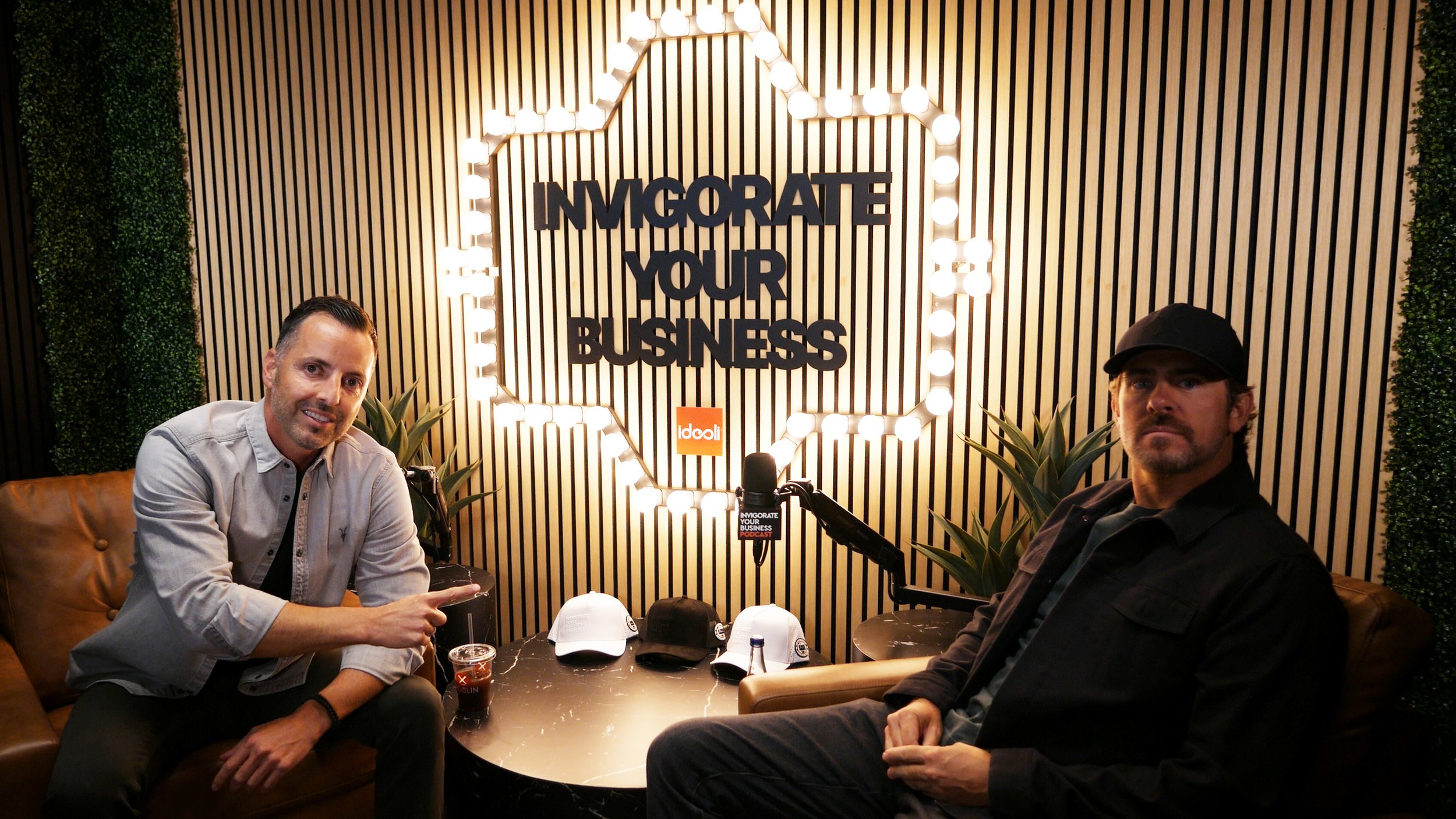
George Stroumboulis sits down with Garrett Patten, fourth-generation entrepreneur turned Hollywood filmmaker and producer. Filmed in Newport Beach, California, they explore family business, leadership, reinvention, film financing, and what it really takes to make movies in Hollywood.
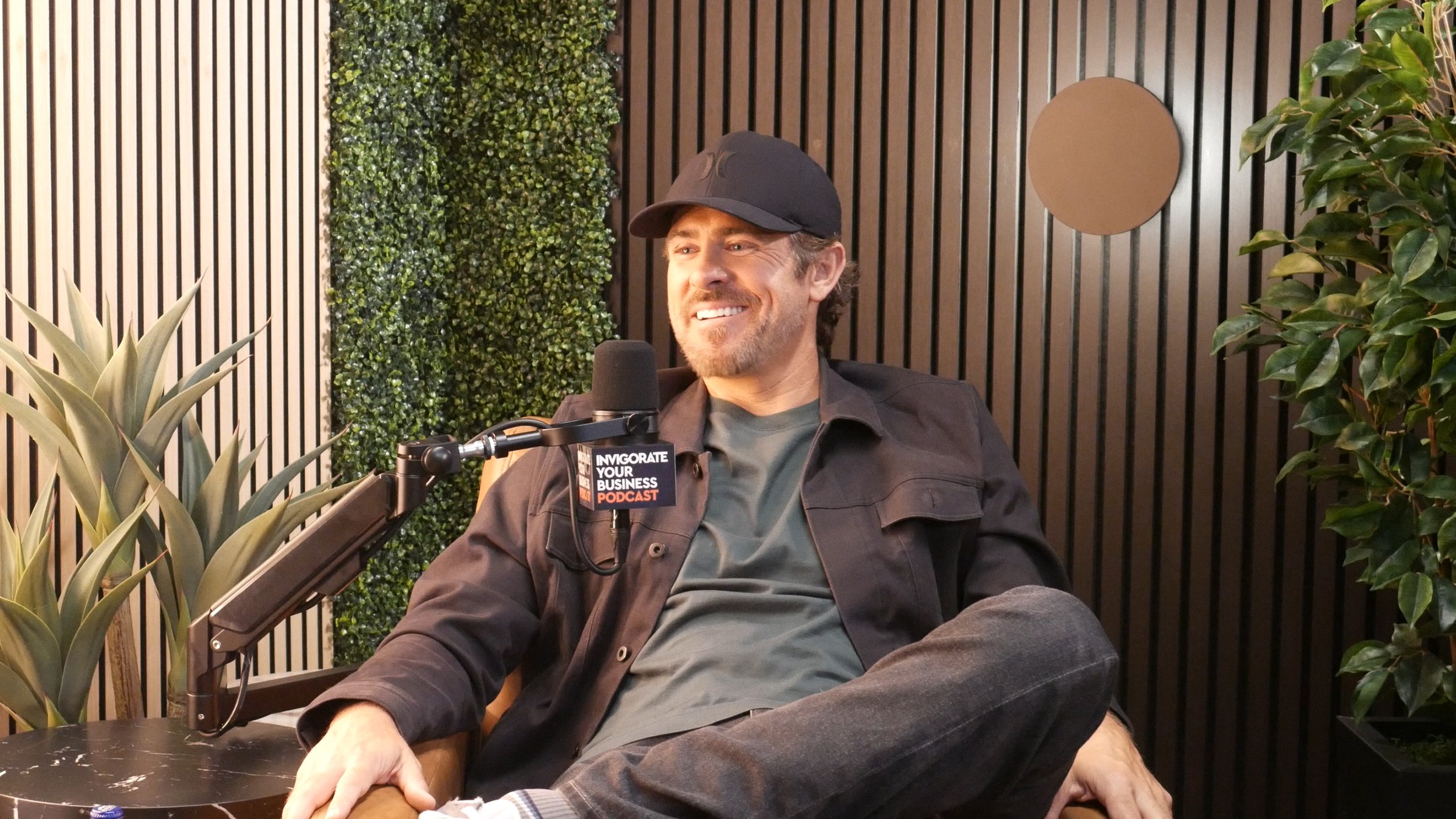
George Stroumboulis sits down with Garrett Patten, entrepreneur, investor, producer, and filmmaker. Filmed in Newport Beach, California, they discuss his transition from the Caterpillar boardroom to Hollywood films, building generational businesses, taking calculated risks, and understanding the economics behind the movie industry.
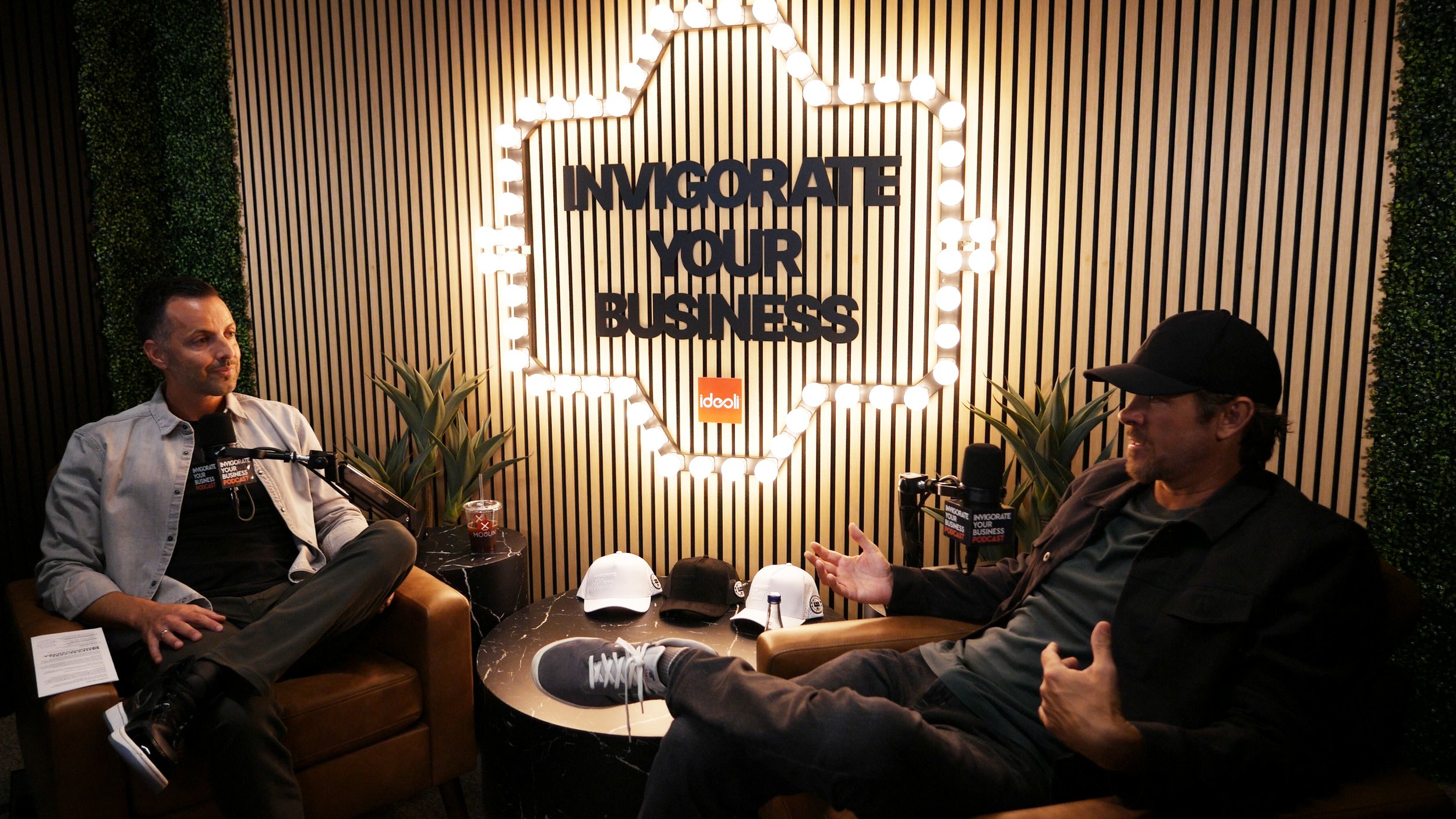
George Stroumboulis sits down with Garrett Patten, a fourth-generation business leader who traded the corporate boardroom for Hollywood. Filmed in Newport Beach, California, they discuss legacy, entrepreneurship, reinvention, financing films, and the business realities behind bringing movies to life.
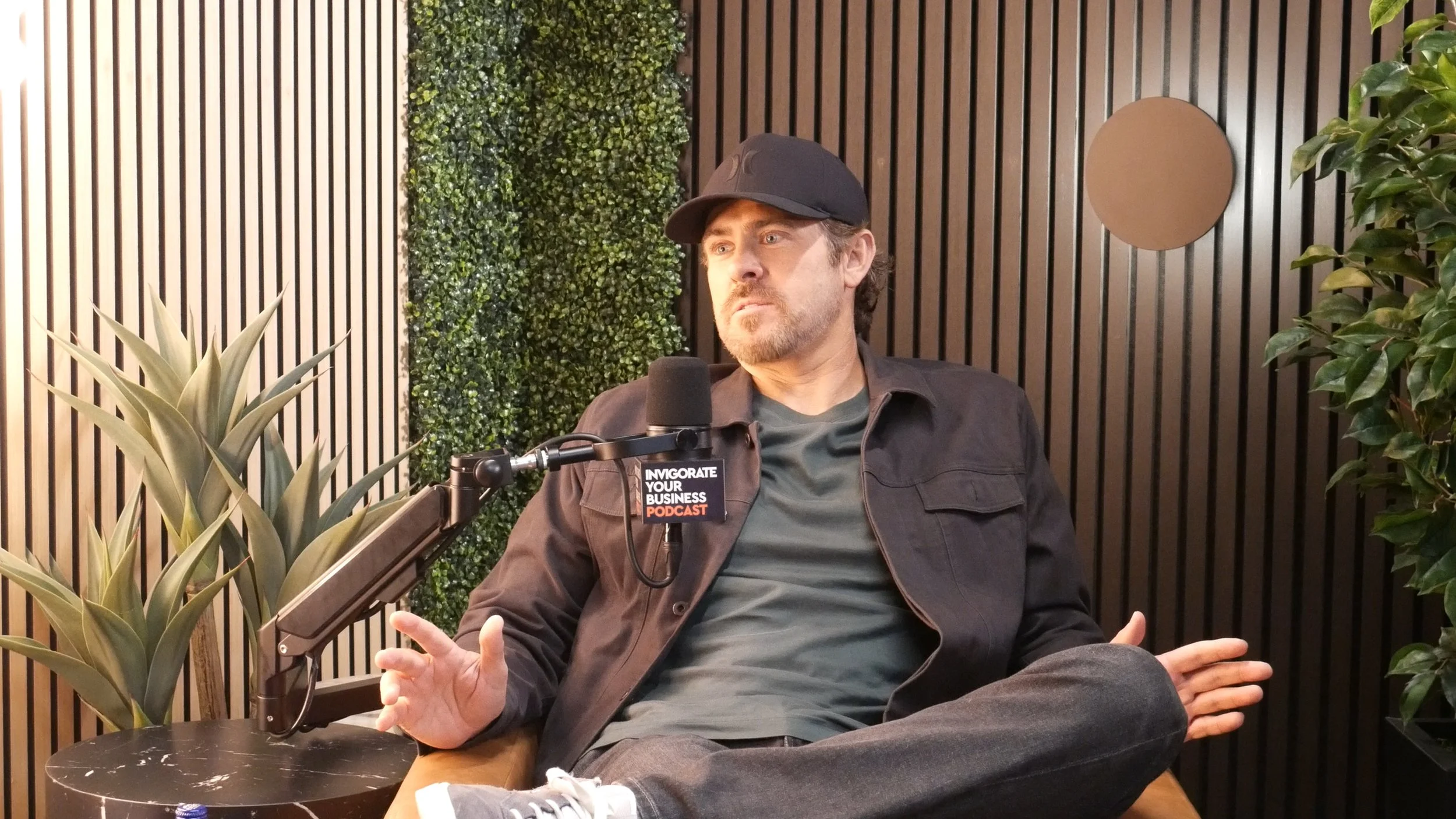
George Stroumboulis sits down with Garrett Patten, entrepreneur, filmmaker, and producer whose career spans multigenerational business and Hollywood. Filmed in Newport Beach, California, they discuss lessons from the family business, making bold career moves, financing films, and turning creative ideas into successful productions.
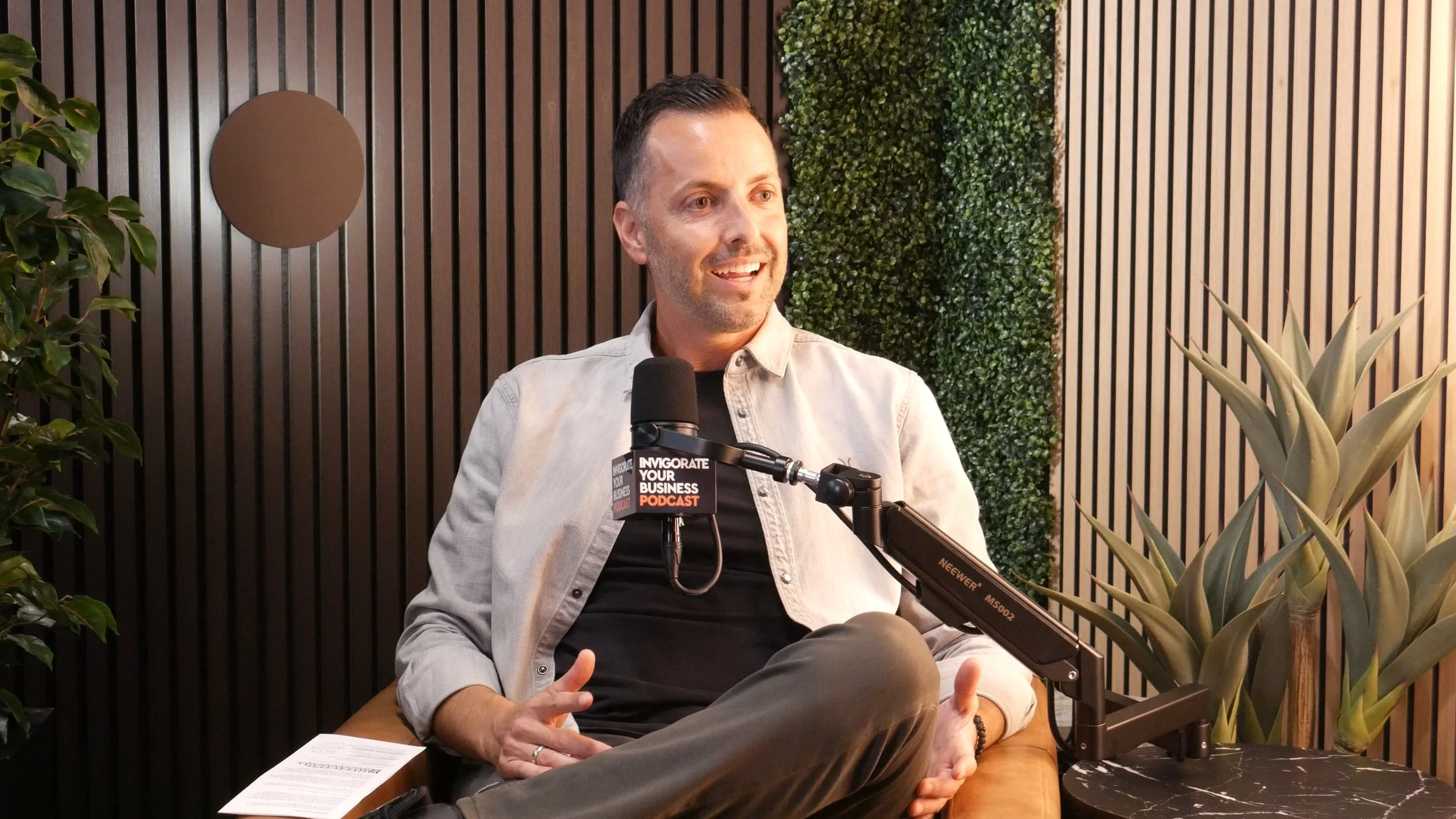
George Stroumboulis sits down with Garrett Patten, fourth-generation entrepreneur turned Hollywood filmmaker and producer. Filmed in Newport Beach, California, they explore family business, leadership, reinvention, film financing, and what it really takes to make movies in Hollywood.
ABOUT THE “INVIGORATE YOUR BUSINESS” PODCAST
The Invigorate Your Business with George Stroumboulis podcast features casual conversations and personal interviews with business leaders in their respective fields of expertise. Crossing several industry types and personal backgrounds, George sits down with inspiring people to discuss their business, how they got into that business, their path to the top of their game and the trials and tribulations experienced along the way. We want you to get inspired, motivated, and then apply any advice to your personal and professional lives. If there is at least one piece of advice that resonates with you after listening, then this podcast is a success. New episodes weekly. Stream our show on Spotify, YouTube, Apple, Amazon and all other platforms.
ABOUT GEORGE STROUMBOULIS
George Stroumboulis is an entrepreneur to the core, having launched several ventures across multiple industries and international markets. He has held senior-level positions at progressive companies and government institutions, both domestically and internationally, building an extensive portfolio of business know-how over the years and driving profit-generating results. George’s ability to drive real change has landed him in several media outlets, including the front page of the Wall Street Journal. George was born in Toronto, Canada to his Greek immigrant parents. Family first. Flying over 300,000 miles a year around the world puts into perspective how important family is to George’s mental and emotional development. With all this travel to global destinations, the longest he stays even in the most far-out destination is 3 days or less - a personal rule he lives by to make sure he is present and involved in family life with his wife and three daughters. To read about George’s global travels, stay connected with his blog section.
STAY CONNECTED WITH GEORGE STROUMBOULIS
STREAM & LISTEN TO THE PODCAST:
SPOTIFY: https://open.spotify.com/show/1rW2CmxQoiJNEPOZupJlvd
YOUTUBE: https://www.youtube.com/user/Stroumboulis
APPLE iTUNES: https://podcasts.apple.com/us/podcast/invigorate-your-business-with-george-stroumboulis/id1607693240
AMAZON MUSIC: https://music.amazon.com/podcasts/8fc03929-71b3-483a-a64e-153e30b3d462/invigorate-your-business-with-george-stroumboulis
STROUMBOULIS SITE: https://www.stroumboulis.com/podcast
PODCAST SITE: http://www.invigorateyourbusiness.com
FOLLOW GEORGE STROUMBOULIS:
INSTAGRAM: https://www.instagram.com/georgestroumboulis/
YOUTUBE: https://www.youtube.com/user/Stroumboulis
LINKEDIN: https://www.linkedin.com/in/Stroumboulis/
TWITTER: https://twitter.com/Stroumboulis
FACEBOOK: https://www.facebook.com/georgestroumboulis
TIKTOK: https://www.tiktok.com/@georgestroumboulis
CONTACT GEORGE DIRECTLY: https://www.stroumboulis.com/connect
FULL SHOW CONTENTS
00:00:00 Introduction: From Newport Beach, California
00:01:17 Garrett Patten's Early Life and Filmmaking Beginnings
00:05:23 DIY Filmmaking, Film School and USC Summers
00:07:49 Choosing Caterpillar Over a Career at NBC
00:09:09 Becoming a Caterpillar Dealer Principal
00:12:26 Growing Harley-Davidson and Managing Brand Expectations
00:17:32 Selling the Business and Navigating Life After an Exit
00:23:17 Managing Wealth, Liquidity and Family Offices
00:26:15 Pursuing a Passion for Film Production
00:30:54 How Film Production Operates Like a Startup
00:35:01 Working With Hollywood Stars and Celebrities
00:37:07 Vertical Video, Social Media and Changing Attention Spans
00:40:36 Film Distribution and Why Movies Take Years to Release
00:42:35 Film Financing, Investor Returns and Profit Waterfalls
00:45:53 Investing in True Stories and Intellectual Property
00:50:55 How Artificial Intelligence Is Transforming Filmmaking
00:59:25 Cannes Film Festival Success and Lessons From Failure
01:03:20 Bitcoin, Self-Custody and Developing a Film Series
01:08:00 Rapid Fire: Entrepreneurship, Success and Filmmaking
01:27:58 Advice for Aspiring Filmmakers and Film Producers
01:31:06 Final Thoughts, Subscribe and Share
FULL SHOW TRANSCRIPT
GEORGE STROUMBOULIS 0:00
Welcome to another episode of Invigorate Your Business with George Stroumboulis. Today's episode comes from Newport Beach, California. And I get to sit down with film industry expert Garrett Patten. Garrett has a tremendous background in business. As a fourth generation owner of one of America's largest caterpillar dealerships, Garrett had a successful exit in that space. After entering the film industry, Garrett has been a writer, a producer, a director, an actor for some very successful projects. He works with some of the biggest names in Hollywood. He has tremendous experience in this space. We're going to dissect the business of film production, what it takes to make it in this industry. We're going to talk about the awards that he's won and some of the exciting projects that he has coming up. So enjoy this episode starting now. My name is George Stroumboulis, and I'm extremely passionate about traveling the world, meeting new people, and learning about new businesses. Join me as I sit down with other entrepreneurs to learn about their journeys. This episode of Invigorate Your Business Starts Now.
Garrett’s Roots And First Sets
GEORGE STROUMBOULIS 1:17
So we're going to read a little intro first, give the listener uh a little background on who you are, what you've done over your career so far, the stuff that you're doing. But we're going to cover business, we're going to cover your previous life, we're going to cover now the filmmaking industry. We're going to cover a lot of stuff today. Cool. So yeah, man. Today I'm joined by someone whose career is a fascinating story of legacy, entrepreneurship, reinvention, and taking risks. Garrett Patten grew up in a fourth generation family business dating back to 1933. He worked his way through the organization, eventually taking on senior leadership and learning firsthand what it takes to operate, grow, and protect a multi-generational business. But Garrett's story didn't stop there. He took that business experience into investing and ultimately into an entirely different world, film and entertainment. Today, Garrett is a producer, director, actor, filmmaker, and the founder of TBK Productions. He's worked across numerous films, navigating everything from financing and investors to talent, production, and distribution, and has now expanded into directing. His journey is ultimately about having the courage to evolve. It's about respecting where you come from while being willing to step outside of what you know, take a risk, and build an entirely new chapter. Garrett, welcome to the show.
GARRETT PATTEN 2:32
Thank you for having me.
GEORGE STROUMBOULIS 2:33
Awesome, man. Exciting. So where where do we where do we start with this? Today you're you're a successful staple in in filmmaking, movies, you've won awards, you're directing and working with Oscar uh winners, right? Like just a big, big deal. We're gonna get into that side of it. But like when you look back, like where did you grow up? Like where did your career and business start?
GARRETT PATTEN 2:54
Yeah, well, I was born out here, Hogue Hospital, Newport Beach. Okay, yep. Uh family history at USC, Southern Cal. I I wanna say it's like 13 family members in total went to SC. Oh, geez, okay. So long history with with Southern California. But my childhood, I spent a big portion of it out here in Southern California, and then a larger portion back in Chicago because we you know, my great-grandfather was a diesel mechanic that eventually had the rights to the sh Chicago distribution for Caterpillar. And um so as a kid, you know, I I know uh uh my uncles were involved, other family members were involved, so we we it was one of those things where we moved back and forth a couple different times depending on what was going on with the business. Right. And back the back before um my father's generation, you know, Caterpillar would actually allow absentee owners to be part of the business.
GEORGE STROUMBOULIS 3:50
Okay.
GARRETT PATTEN 3:51
And y you know, as as things got harder and harder in the business, uh that that was no longer allowed. In fact, the requirements to be become a cat dealer became pretty, pretty difficult. Uh we'll we'll get into that. Yeah. But yeah, so I mean it was one of those things that as as a a child, I I grew up a lot around the the heavy equipment business. But then on the other side of the coin, I had family members in Southern California. Like, for instance, my my grandmother, she's still alive, she's 95 years old. God bless. And she spent her whole whole career as a studio teacher on big films. And so she was always bringing me to movie sets and and things like that as a as a little kid. I mean, I I remember uh I remember being on uh Kindergarten Cop, the Arnold Schwarzenegger movie, as a I think I had to be like eight or nine, and I still remember to this day. We're on set, I'm there for a few days, my grandmother's the the studio teacher, and Arnold Schwarzenegger comes around the corner and he picks me up as a little kid. Yeah, I was like the biggest Arnold fan, and he picks me up in there and shakes me, and I'm you know, I just started to you know grow this uh love for the film business.
GEORGE STROUMBOULIS 4:53
Yeah. Hold on. That was that with Danny DeVito that being?
GARRETT PATTEN 4:55
Yeah, that was one of my No, that was twins.
GEORGE STROUMBOULIS 4:58
That was twins, yeah.
GARRETT PATTEN 4:58
So kindergarten cop was the one where um he was an undercover cop. Yes, yeah, yeah, yeah. There was a a killer at the school.
GEORGE STROUMBOULIS 5:05
Yeah, that was one of my favor. I love that. Yeah, yeah. Get out of here. So you had access to that early on, like to to Hollywood. Is that where you were like, hey, I want to do this when I'm older?
GARRETT PATTEN 5:14
No, uh, you know, my my grandmother exposed me to it and some other family members, but it it was more just in the neighborhood, I was always making films.
DIY Filmmaking And USC Summers
GARRETT PATTEN 5:23
I I remember I was like one of the first kids in the neighborhood to have what was an Adobe editing board. Okay. Which back then you you know, when you would build your PC, that these boards were that big. Yeah. And you slot it in there, and you could you could edit like two minutes of footage at a time, and then you had to move it to a different hard drive or whatever you had to do just to put it all together. But we were obsessed with it. We made a lot of childhood films that you know modeled off of like Commando and Predator and all those things. We created our own adventures, and uh, I would do all the editing, I would do all the filming, the directing, acting them. Come on.
GEORGE STROUMBOULIS 5:56
I was always doing it. Who who was we, like cousins, friends? Like who was part of that?
GARRETT PATTEN 5:59
Yeah, so a lot of them I remember was the neighbors in Chicago were big into film too. Okay. Did a lot with them, my brother. Um, yeah, just friends and friends and family.
GEORGE STROUMBOULIS 6:11
Yeah, so so at this point you knew, hey, I want to be in films in the future?
GARRETT PATTEN 6:14
Well, yeah, I mean, so much that when I was in high school, I you know, I did some high school out here in California, and then a a lot in Chicago. I came out for a couple summers to USC as a high school student and did they they had summer film programs. Okay. And I I I would stay in the dorms at USC as a uh sophomore in high school for a couple months and do a film program.
GEORGE STROUMBOULIS 6:36
And then back to Chicago like.
GARRETT PATTEN 6:38
Back to Chicago, or I, you know, I did a little I went to C DM for a little bit here. Yeah.
GEORGE STROUMBOULIS 6:42
And then so when you're in Chicago now, you came back to study at USC?
GARRETT PATTEN 6:45
I did.
GEORGE STROUMBOULIS 6:46
Okay.
GARRETT PATTEN 6:46
Yeah, so yeah, I I graduated from high school in Chicago, get was accepted to USC, came back, wanted to get into the film school.
GEORGE STROUMBOULIS 6:55
Yep.
GARRETT PATTEN 6:55
You know, uh obviously USC is like a top three film program. You know, you have alumni like Spielberg and Semecas and George Lucas, and you know all the all the buildings are named after the biggest in the industry because they all went there. And I I believe at the time the stat was like three or four thousand applicants for the film production program. There's critical studies and film production. For the film production, they'd have three thousand applicants and they were gonna take like thirty.
GEORGE STROUMBOULIS 7:18
That's incre that's just crazy.
GARRETT PATTEN 7:20
Very difficult odds. So I did not get into the film program, and but yeah, obviously now full circle coming back, went on a little business detour for quite some time and that now back into film.
GEORGE STROUMBOULIS 7:32
Yeah, and and let's talk about the detour, because you say detour, but we're talking like major company, you know, major success, successful exit, right? And then kind of this next chapter in life. But talk to us like what you were doing in Chicago, because you stepped into the family business like in your twenties.
GARRETT PATTEN 7:49
Uh yeah, right right out of USC. So it was like the it was like a fork in the road. My grandfather, who was a USC grad, um uh played in a Rose Bowl, um was drafted by the Packers, but ended up becoming a doctor. Come on. Patten, last name? Uh no, there's it was on the other on the other side of the family. My grandmother remarried, so it was Bradford. Okay. Um but he um had actually lined up a job for me right out of school at NBC. And I remember at the same time the company was potentially the caterpillar distributor as being sold. And so I had a decision to make. Do I do I go back and you know put my best foot into the dealership and see if if I could acquire the shares and and run the organization, or do I go down the path of NBC? I ch I I knew that I'd always regret it if I didn't go back to the business. And obviously, once I got back to the caterpillar distributor, first off, when you it when you say family business, yes, it's a private private organization, they all are, but you're really kind of an extension of Caterpillar. The the process to become a caterpillar dealer is all run through Caterpillar Corporate.
GEORGE STROUMBOULIS 8:53
Which is corporate.
GARRETT PATTEN 8:54
So if you are a candidate to be what they call our dealer principal, I mean I remember right when I got out of school, they gave me a list of like two hundred different items that you had to you had to go through and accomplish and check marks and benchmarks in order just to be considered
Becoming A Caterpillar Dealer Principal
GARRETT PATTEN 9:09
a candidate.
GEORGE STROUMBOULIS 9:09
So like what were some of those things on the list?
GARRETT PATTEN 9:11
Oh, I I mean like big like PL responsibility, department head responsibility, you know, product support, sales, uh, you know, all these different positions that you you would have to show knowledge and be able to work with the different departments at Caterpillar and get blessings you know from Caterpillar. And then at the end of the day, uh Caterpillar does hold the the final cards. It's not something that I would say more candidates get rejected to be a dealer principal than ever get accepted.
GEORGE STROUMBOULIS 9:40
Jeez.
GARRETT PATTEN 9:41
Because you know, I mean, first off, there's a lot of families that you know have three sons that all want to do it. Well, Caterpillar's only gonna allow one. And secondly, if they don't like the direction that the dealership's headed, then they won't approve a future candidate.
GEORGE STROUMBOULIS 9:56
Gotcha.
GARRETT PATTEN 9:57
And so when I when I started, there were 72 Caterpillar dealerships in the United States, and now I think it's under 40. Under forty and they just consolidate Yeah, they're buying each other. And I I think that is the right move because of economies of scale and you know, uh competitive market pressures, it's it makes sense to have the economy is a scale, you know, one accounting department handling multiple states and you know things like that.
GEORGE STROUMBOULIS 10:16
Real really quick, while we go down this path, uh is Caterpillar still as successful as it was twenty years ago, like with all the competition and other Is it what it was?
GARRETT PATTEN 10:24
You know, it's interesting. When when I was there okay, so back in the 80s, Caterpillar's market share was in the eighties. Yep, right. I mean, it was huge. When I was there, certain product lines still maintained that, but the competitors were chipping away at all the other product lines, so then Caterpillar had to get into those markets too to keep the competitors back. So, like for instance, Caterpillar was not always in the skid steer business, which is uh you call it like the Bobcats, but they chose to do that because John Deere and Bobcat and all these other guys were getting into mini excavators and they were starting to come after Caterpillar. I mean Caterpillar was always the dominant player by far, the best made product, it lasted the longest. But now, uh years after I'm I've been out of the business, they're having huge success, just huge success, and it's all AI driven, primarily because uh Caterpillar has um a power systems division, which is probably one of my more successful divisions. And so for data centers and power generation and electric power, it you I mean some of these dealers' revenue have 10x in the last three years for AI infrastructure.
GEORGE STROUMBOULIS 11:30
Wow. What with machines building AI infrastructure?
GARRETT PATTEN 11:33
Is that well I I I think it's more for the the power generation. Like for instance, I know the Virginia Caterpillar dealer, all the data centers that are being put up in uh DC and around the area, you know, they're going in and they're putting all the generator power systems, the the switch gear, all the things that go into backing up a data center.
GEORGE STROUMBOULIS 11:52
Right. And all the secret service based in that part of the country, right? All those agencies, right? I'm sure it's a hotbed for Exactly.
GARRETT PATTEN 11:59
But the the AI development, the AI infrastructure has been insane for Caterpillar.
GEORGE STROUMBOULIS 12:05
So so even though you're out of the business now, like there's a part of you where you want to see them succeed. That's a part of you and your family's Oh, absolutely.
GARRETT PATTEN 12:12
I mean, still some of my my closest friends, um, like the former CEO of Caterpillar is a dear friend in his family, former CFO I I talked to all the time. I mean, yeah, it's it's it's in your blood. Yeah.
GEORGE STROUMBOULIS 12:25
Yeah,
Harley Growth And Brand Pressure
GEORGE STROUMBOULIS 12:26
yeah.
GARRETT PATTEN 12:26
And then while I was back in Chicago with the Caterpillar dealers, when we started acquiring Harley Davidson dealerships too, which was a whole nother chapter.
GEORGE STROUMBOULIS 12:36
So as a separate entity or like a group entity.
GARRETT PATTEN 12:53
The way they're operated. You have your rental fleet, your used fleet. I mean, obviously the Harley or the caterpillar business is a lot more complicated. But um so we together grew that from a couple locations to at one point it was like 19 locations with 12 different dealer license.
GEORGE STROUMBOULIS 13:09
Wow.
GARRETT PATTEN 13:09
Yeah.
GEORGE STROUMBOULIS 13:10
Just of Harley dealerships. Yeah. Get out of here. Harley's synonymous with America, right? It's a Harley. Harley and cat, man. Right? Absolutely. And cat. How has Harley been as a brand? Because I've seen stuff over the years like Roller Coaster. Are are they struggling, surviving? What are they doing?
GARRETT PATTEN 13:25
Yeah, you know, it's it's interesting because it's like I uh my business background was with two of the the the bigger American brands ever. Ever. Harley and Caterpillar.
GEORGE STROUMBOULIS 13:35
Throw Coca-Cola in there. I think you got the big three. Yeah. Yeah.
GARRETT PATTEN 13:38
And yeah, when it I'm out of the Harley business as of a year ago. Okay. So all all the business all the dealerships have been sold. Yeah, they they were experiencing some significant pressure from uh mostly smaller CC bikes, but uh yeah, so Harley started to get a dip, but I think the other manufacturers were too. You know, like one of the stats that I saw as I was exiting the business is just you know, not to go down a whole different path here, but when you look at the the large portion of the American citizens, and let's say 80% of them, and what they have for disposable income to actually go buy something that I consider more of a luxury item like a Harley Davidson, right, has just decreased a lot. You know, we had we had some couple really good years in COVID, and then coming out of COVID, the amount of motorcycles being bought in the United States was cut in half.
GEORGE STROUMBOULIS 14:33
Well, why during COVID?
GARRETT PATTEN 14:34
Well, I think it's CO COVID everything, everything that was outdoors. Right. You know, people were buying surfboards and government checks, and you know, people people were were doing a lot of things, but I I so at first I thought, okay, this is just a COVID hangover, you know, it's gonna it's gonna last a year.
GEORGE STROUMBOULIS 14:49
Exactly.
GARRETT PATTEN 14:50
And then it's still going on. So four years later, the decline has still happened.
GEORGE STROUMBOULIS 14:56
Right.
GARRETT PATTEN 14:56
And it's more of a a capacity, you know, how much disposable income people have.
GEORGE STROUMBOULIS 15:01
Absolutely. Yeah. So back to caterpillar, you exit, right? You're exiting, you're now in your late 20s, early 30s, you're building this business. We're talking at one point a thousand plus employees, right? We're talking this is a huge, huge business, right? Right. Like, where where was your head at? You're starting a family, like, where are you thinking 10, 20, 30 years from now? Was it I'm gonna be a cat dealer? Yeah.
GARRETT PATTEN 15:24
Well, so the the first because I was involved, I I was out of school with the dealership for 17 years. The first 15 of those years, my 100% goal was to get the current dealerships in the best performance possible. Okay, and then acquire other territories. Oh wow. So you wanted this was absolutely and I had I had multiple opportunities to do that that for one reason or another fell apart, and I went after them aggressively and uh spent a lot of time because I I knew that as as for Chicago, you're what they call a metropolitan dealer. Yeah, metropolitan dealers in the caterpillar world are pretty much tied to smaller products, smaller parts, but you have a high cost of labor. Where in the mining dealers, like the big Canadian dealers or even you know, some of the like Texas, Arizona, you know, some of these big mining dealers, they're selling bigger, bigger product, bigger parts at a lower cost of labor. So their ability to acquire Metropolitan dealers is it's it's a much easier, smoother transition.
GEORGE STROUMBOULIS 16:29
Right.
GARRETT PATTEN 16:30
Um, but I I still went against went after the challenge and I tried to acquire some of the bigger dealers and knew that that would be the the key to success for my footprint, but obviously it wasn't at the time it wasn't in the cards.
GEORGE STROUMBOULIS 16:41
It wasn't in the cards, yeah. And then those last two years, so now you're mid-30s, right? Were you still dabbling in film over the years while you were there? Was that passion still there?
GARRETT PATTEN 16:52
Very small. I I, you know, obviously with my USC background, I had several good buddies that were heavy in the film. Keeping in touch with them, I would executive produce a handful of projects, which is really, you know, if you're an executive producer in film, it's different than TV. But for film, you're you either brought significant resource, talent, or finances to a production. And so I would I'd kind of keep my feet wet from that, but I didn't have time. Right. I was 24-7 with the Caterpillar distributor. All in. And and Harley, I mean.
GEORGE STROUMBOULIS 17:24
And Harley, yeah. Which is a busy so those last two years, like what was it that made you decide, hey, this chapter, it's a good opportunity,
The Exit Decision And Emotional Reset
GEORGE STROUMBOULIS 17:32
I'm gonna close it.
GARRETT PATTEN 17:32
Look, Caterpillar does a great job of making sure that dealerships continue to accelerate and that people that people don't take their foot off the gas. And so I think it was 2015 they came out with what their plan was what was called Across the Table. And they they launched it globally, and they said this is the the the new requirements to to be a caterpillar dealer. And for us, the significant challenge was we had older facilities and Caterpillar wanted all those updated. And it was a it was a huge price tag, you know, over a hundred million dollars, which it was would all be taken on in mostly debt. Just to bring it up to their new standards. To bring it up to their new standards. And at so at that time, obviously that was something I was committed to, but I I couldn't do it within the timeline. I I could have done it, but I didn't see it as financially responsible to do it in the timeline that Caterpillar would have liked me to do it. And so at that that's when the former CEO of Caterpillar and I, who I I've had a great family relationship forever, he's still one of my closest friends, um started discussing what what an offer would look like to exit the business.
GEORGE STROUMBOULIS 18:42
Wow.
GARRETT PATTEN 18:42
And you know, it was a tough decision. I knew that having three daughters at at that time I had two, but very soon a third was on the way. I knew that having three daughters, not not that daughters aren't running caterpillar dealerships, because they are, there's several examples. I just figured that it was probably the right time to even even though if you were to ask me six months before that, I would have thought I would I'd be in that business until I was 70.
GEORGE STROUMBOULIS 19:06
Even up till six months.
GARRETT PATTEN 19:07
Never had a a thought of doing anything else. Get out of here until I started looking at those facility plans.
GEORGE STROUMBOULIS 19:13
Yeah.
GARRETT PATTEN 19:14
Now, if I was a mining dealer and I had the higher margin product and the lower cost of labor, I probably would have said, Yeah, I can handle this kind of debt.
GEORGE STROUMBOULIS 19:21
Yeah.
GARRETT PATTEN 19:21
But metropolitan dealers, their net profit is half of what a a mining dealer and their revenue is half.
GEORGE STROUMBOULIS 19:27
And it's half so so then you you decide to move out of there. Now, looking back, we'll get into the film. Do you have any regrets that you exited at that time? Like, do you wish you held on?
GARRETT PATTEN 19:37
No. Um, I you look, I it would have been pretty cool to see this this AI run because Caterpillar is obviously at the the center of that. So that would have been great. But look, looking back, you know, it took a couple years to adjust. The day that I closed the there's a big wire that goes into the bank account. You you make your announcement to all of your employees who most of them did not see it coming.
GEORGE STROUMBOULIS 20:04
Right.
GARRETT PATTEN 20:05
And you get in your car and you you you drive off and you're like, Well, I'm probably never coming back to this facility and this business again.
GEORGE STROUMBOULIS 20:12
Jeez.
GARRETT PATTEN 20:12
It was it was a pretty heavy emotional toll because I I mean, literally, it was my whole life. I I I would I was at the dealership at 5 a.m. and I'd leave most nights always having dinners and things like that with entertaining customers or whatever, whatever was going on. My schedule was booked two months in advance. I was so used to just going and going and going and going, and then all of a sudden there's nothing.
GEORGE STROUMBOULIS 20:32
Yeah. And it's freaky, it's kind of freaky at the same time.
GARRETT PATTEN 20:36
At the same time, it was like I I felt like I was almost 18 again.
GEORGE STROUMBOULIS 20:40
Yeah.
GARRETT PATTEN 20:40
You know, a ton of weights were lifted off my chest. You could kind of breathe again. And then after a year, two years, it started it started to become wow, I am glad that I didn't wake up one day and I was 70, and this was my legacy.
GEORGE STROUMBOULIS 20:59
Right.
GARRETT PATTEN 20:59
Yeah. And we could argue about how important a legacy is or what what that word actually means, but for my life looking back, you know, look, I it would have I would have liked to see have my kids see me in that position too, because I think it is is great for children to see that, which they won't, but I also think my my kids' lives now, I I could be more part of every every part of it. I would you know that it was a high-demanding job that would have required it was a lot of travel, and I would have been uh away from them a lot too.
GEORGE STROUMBOULIS 21:27
Yeah. Well, you have a crazy schedule now, but I've known you for several years, like the kids. I didn't even know what you did the first couple of years, right? It was just like, hey, how are you, chit-chat? But you're always present, you're always at the events, you're you're traveling like, hey, I was in France for two days, I'm back, I'm at soccer. Like you make an effort. If you were still in that corporate world, it's much harder, right? Like, imagine like you would be missing so many key moments of where now you're still busy, but you're able to adjust and do what you need to do, right?
GARRETT PATTEN 21:55
Yeah. You know, when when I actually go to film, it's tough because then I am. gone for a significant amount of time, but the the rest of it, I mean a lot of stuff too now with film, like when you're working with editors and you're working with color correction and sound mixing, you could do remote.
GEORGE STROUMBOULIS 22:09
Right.
GARRETT PATTEN 22:09
So I could do a lot of that from my my home office now too, um, which is great. And you know, a lot of the a lot of the projects, yeah, you do get to set the timing. With in in the the caterpillar world before that, there were always like I said, my schedule was two months out. I remember going to my administrative assistant asking her for times that I could go take this customer to lunch or and a lot of times she'd be like well you got something nine weeks from now on this. It was it was that intense and you a lot of travel like I said a lot you know a lot of you know you're on a lot of different committees, a lot of annual things that you always have you're going to be at this one, you're gonna be at this one and every month there were multiple of those and you know you know you had all the banking relationships, all the customer relationships, all the caterpillar relationships, then let alone I celebrating like employee anniversaries and then all the board meetings and all the you know all the department head meetings. Yeah. It was it was a full lot.
GEORGE STROUMBOULIS 23:05
It was a full take me to the day the wire clears you know like this is my last day I'm going to deliver a speech to everyone and then I'm driving out like when that wire clears what's that what's that feeling and then what did you
Handling Liquidity With A Family Office
GEORGE STROUMBOULIS 23:17
do immediately? Was there did you have good financial advisors? Did you have a plan in place? Like what how did how did you approach that new freedom?
GARRETT PATTEN 23:24
Yeah so obviously the the the two months before that that I even though it was still chaos with the actual closing I mean we had 10,000 documents in a in a data room for the for this transaction. But the two months before that when I was confident that the deal was going to go through is when I started thinking well what do you do with this kind of liquidity? And you know I looked at all the traditional places you know the Goldman Sachs and things like that but I I had a couple dear friends in Chicago that had had liquidity events or other types of events and they had started a private equity group called called uh Promus Capital guy named Andy Code and Brian Musso. Code was a big huge private equity guy back in the 90s with Code Hennessy.
GEORGE STROUMBOULIS 24:07
Okay.
GARRETT PATTEN 24:08
And going and and promis to me it was like a true family office. It was at that time it was like 20 families that had gotten together to pool their money and start acquiring private companies. Yep. And then via economies of scale start to grow those companies and then we don't we don't always look for an exit. You know if anything we just like good cash flow businesses. Yep in in particular industries or is it just try to keep it diversified. Yeah yeah yeah as much as you can I I I've never fully I I get that people get an expertise in a certain industry but then all of a sudden as a private equity group but then all of a sudden you get a disruptive force like look at AI. Like if if you were in an a a group that was disrupted by AI right now and that's where all your focus was you're you had a lot of problems. Oh yeah um so I I like having as much diversity as possible.
GEORGE STROUMBOULIS 24:59
Yep.
GARRETT PATTEN 24:59
You know other things like the impact of tariffs or whatever whatever you know you you can have huge impacts on your businesses. So we you know but I think right now we run 17 direct companies that's interesting in all different spaces banking to insurance companies to we own we own a company that does all the procurement of product for gift shops of museums across the country just we own a company that's affiliated with NASCAR just all sorts of different industries. Yeah.
GEORGE STROUMBOULIS 25:26
Are you hands-on like if they need consulting or anything like how do you approach that?
GARRETT PATTEN 25:30
I'm on one of the boards right now. So when I got out of the caterpillar business I was actually on four boards now I'm on I'm on two left because I really have transitioned more into film. But yeah I you know like I was just I was in Chicago last week for two full days of meetings with uh with promising I I stay actively involved but to you know to the level that is needed. Yeah it's incredible so you had a good launch pad right before getting into film like hey we're gonna park money here it's gonna grow and I can go pursue this yeah yeah exactly and with guys that I I trust and I feel comfortable with yes you know and that's all it comes down to.
GEORGE STROUMBOULIS 26:07
So now filmmaking we're gonna transition is this something that is a creative outlet or is this something that can generate money for
Film As Passion With Real Craft
GEORGE STROUMBOULIS 26:15
you? Like when you jumped into this was it I'm gonna make money and 10x my money or is it hey now it's my chapter to go do what I really Yeah I mean look you you you can't get into film.
GARRETT PATTEN 26:28
As a business guy you would never look at film and say well I'm gonna get in that because I'm gonna make a lot of money.
GEORGE STROUMBOULIS 26:32
Right.
GARRETT PATTEN 26:33
That is not the reason to get into film. You got to get into film for passion and then I think once good things start to happen you will make money. But it's it's very difficult from like an outside just saying look I'm gonna go pick random films to invest in that's that's a very very very difficult thing to do.
GEORGE STROUMBOULIS 26:51
Yep.
GARRETT PATTEN 26:52
I mean most of the good projects that you'd want to be part of you're not gonna they're not gonna have capacity to bring in so the ones that do have capacity well there's a reason why um so um but yeah I think I've positioned myself now because I've I've you know I've directed three projects I've produced I I think I'm on 13 or 14 credits now. Oh wow so I have I have enough you know I I I feel very confident on any film set to commanding the presence to delivering the final product I love every second of it I love from store from doing the initial beats sheet with the writer to completing the script to then doing all the um storyboarding to the pre-production to the actual filmings like you're drinking out of a fire hose every day to then post production I editing's when it all starts to come to life and you see these scenes that you're like you spent so much nine months thinking about I love making films. I love Ellie every element of it I have my confidence level is through the roof on what I think I could do now. Awesome you know what if you were to ask me five years ago if I thought I could go direct a $30 million movie there's no chance. Right now I a hundred percent can and what's changed in those five years is it just the confidence or you your skill set as well experience experience diving in headfirst learning learning from good people surrounding yourself with good people and then doing it.
GEORGE STROUMBOULIS 28:15
Yeah dude I saw a clip the other day at the premiere of Iron Door right in Hollywood and like you're in front of like the whole theater all these actors and everything and the way like you're just you're talking about it the passion the command it's crazy because again when I first met you it was at our daughters go to school together and it was always like hey man how's Lis? How's that? And then oh you were gone like you traveling yeah you know I was uh in Arizona like the most humble guy right cool what's going on out there oh you know I'm doing the same with Michael Phelps oh yeah where were you last week? I was with Matt Damon three days in the cabin and it was like it wasn't bragging it was just like answering a question. I'm like what the heck are you doing? Like it's it's incredible you're surrounded by A list top tier people in this space and you're growing and you haven't been doing this the last 30 plus years. It's crazy.
GARRETT PATTEN 29:01
Yeah well you know it's it's a lot like business you know like how you build your executive team for your company like I I always felt like with Caterpillar I was always in the the talent business.
GEORGE STROUMBOULIS 29:12
Okay.
GARRETT PATTEN 29:12
You know you you always are looking for good talent. You're just always and if you're not then you're you're probably headed in the wrong direction. Film's the same way like look every project that I I've been a part of you maybe if if half the people share the same passion I guess is a good way to put it and the other half don't well I kind of tend to gravitate towards the people that were problem solvers that were really talented and shared the passion that bring with to the next set.
GEORGE STROUMBOULIS 29:44
Right.
GARRETT PATTEN 29:44
And you kind of gather the these group and that's why you see people like I I did this project with uh Kevin Costner. He's had his same team around him for 20 plus years.
GEORGE STROUMBOULIS 29:53
Right.
GARRETT PATTEN 29:54
He know they all know the way they think it's the same thing in business. The difference with film in business you build your executive team and you you get these runs with them and you you know yeah maybe somebody leaves or you gotta let somebody go and then you're looking you're bringing new talent in and you you obviously you're always looking for talent. But in film each project kind of becomes its own monster its own business. Right. And so let's say you're going to film in New York and you've never filmed in New York which I just did in in August you're hiring a lot of local because that's how you get the tax incentives and that's that's how you get everything. You don't know a lot of the people that you're hiring and you're you're you could be hiring 50 people locally that you have a few weeks to get to know and then you you're gonna go spend millions of dollars together and and and and make this project. So it'd be like if you said tomorrow I got I I have five million dollars of seed funding and I have to start this business and have it launched and then done within three months and hire all these people and have them be good people.
GARRETT PATTEN 30:54
So sounds impossible when you put it that way right and logistically it's a nightmare and it's it's it's a lot but but I so one way or another I was able to like you know you know like Mike Tyson you know I've spent a lot of time of my life with Mike Tyson how did that even start? Yeah a friend of mine in the business world was involved with Mike's company called Tyson Ranch and he asked me to come see Tyson Ranch one day. Was that the mushroom uh the no what was that I mean it was it was cannabis cannabis packaging but also like land development and some other things. And it was an El Segundo and so I went to take a look at it obviously and I was I was never like a big boxing fan I remember I remember as a kid watching the Tyson fights but I was I just wasn't I was a golfer you know I mean I'm not not a boxer but I showed up at Tyson ranch and um was talking to Mike and saw the potential I mean he's he's got this great brand and he's he's just such an amazing person with a great soul. He truly is you know with what he dealt with as a kid to where he is now I mean how insightful he is I mean it's just it's inspiring.
GEORGE STROUMBOULIS 32:03
He gets more intelligent with age it seems like when he talks you're like is this guy a philosopher?
GARRETT PATTEN 32:08
It's unreal right like I I have sat in so many spots in this world with in deep conversations with Mike for hours. Come on and the education's just unreal and but from that point forward I mean there was a couple years where we were we were doing different things with Tyson Ranch became Tyson 2.0 and and different film projects and different businesses you know it was four or five days a week I was doing things with Mike.
GEORGE STROUMBOULIS 32:33
What what is it about you that he let you into that circle because everyone his whole career everyone's trying to eat off Mike.
GARRETT PATTEN 32:38
You know not to like say that my style's different but I I think in the celebrity branding business you get a lot of you just get a lot of sharks. Yep and obviously I I came in and I I I just wanted to help I think if anything I I I don't know and then Mike and I have just become friends and you know his a great father I mean you you look at his children his children are just absolutely amazing all of them really all that they've accomplished and what they're doing. Yeah and I I I just think it was it was really unexpected. You know I would have thought with Mike like oh this is a a boxer I'm not gonna you're not gonna feel connected to the and it was just you know he's he's just a guy that has a lot of charisma you want to you want to be around but he's had some bad luck with some bad people and I think you know it's I I I honestly believe that there's no reason why right now Mike shouldn't have a billion dollar brand.
GEORGE STROUMBOULIS 33:31
Right.
GARRETT PATTEN 33:32
Have you called out bullshit along the way that you've seen now now that you guys are friends and it's not like bullshit around him people and I you know and Mike's very insightful on that stuff too like I I it would take I have a bunch of stories where we'd be going into a business meeting and his gut instinct was so spot on and I didn't catch it and I'm sitting there and I look over and I'm like how did he know that? About the person like the people we were going to to meet with or and I have some specific examples I just won't go into but um I I I was actually just kind of blown away.
GEORGE STROUMBOULIS 34:08
Really?
GARRETT PATTEN 34:09
Yeah you you're watching Mike Tyson you know just use his gut and it's all of his experiences to say you know we we should walk away from this because of that and then it ended up becoming true and you're like wow that's crazy.
GEORGE STROUMBOULIS 34:22
You don't expect that from someone who's had their head hit you know all these years and yeah he's incredible. The more podcasts I've seen of him I'm just it's it's impressive.
GARRETT PATTEN 34:31
Yeah and I always think a a really good um judge of character too is people's children and Kiki his his wife is amazing. I mean she is a rock but Mike as well I mean that they they have some of the best children like you know his one daughter's like a a top junior tennis player and then his son graduated from USC film school and he's just one of the most brilliant film minds like you're gonna run into and come on I mean just yeah so you know it's it shows a lot of character in that as
Working With Stars Without The Hype
GARRETT PATTEN 35:01
well. Yeah so in Hollywood you you mentioned Kevin Costner like there's a lot of people like who are some other people that you become close with that are just good people people that we see like the Matt Damons of the world this like so so like Matt seems like your ultimate it's like Matt Damon Mark Wahlberg just guys you want to be cool with Matt is a guy that you would do you would own businesses with you would put him as the you know the trustee on your your your family trust you know like he's that guy he he's just such a good man he's a brilliant film mind and he's he's funny he's awesome you know that that one of the first movies that I I got involved with that still hasn't been released for a couple different reasons called Start Without Me. Matt was a producer on it with me and um it's such an amazing film. I can't wait for everybody to see it but we actually started conceptually with the film I want to say nine or ten years ago. Come on yeah it's filmed now it's it's done with post production and we're we're talking to distribution. Is that how long the cycle we'll come back to Matt but they're all different okay like some some you take a concept and nine months later you're filming and a year later people are watching it.
GEORGE STROUMBOULIS 36:11
Right.
GARRETT PATTEN 36:12
Others like like you take Dallas Byrus Club. Yep that I I believe that was like a 10 12 year process from concept to distribution.
GEORGE STROUMBOULIS 36:21
Really?
GARRETT PATTEN 36:21
You know so every film's just Kevin Costner with Horizon the project that I was involved with he had been kind of toying around with I believe for 20 years. It was that a flop did that one flop or what was the one you know it's it's funny because I I I think that if Horizon so Horizon 1's out he's filmed Horizon 2 it's not out yet I think if Horizon 1 was released 10 15 years ago it c I mean I I loved it.
GEORGE STROUMBOULIS 36:46
Okay.
GARRETT PATTEN 36:47
I think it would have been the biggest movie of the year.
GEORGE STROUMBOULIS 36:49
Really?
GARRETT PATTEN 36:50
But I think in in this current film market where things are just a just different you know he he shoots things beautiful and they take time the shots build and you know the it's just that the you know the newer audience doesn't relate as much with that.
Vertical Video And Short Attention Spans
GEORGE STROUMBOULIS 37:07
Gotcha.
GARRETT PATTEN 37:08
You know like you know someone was telling me a lot of the streamers and I've seen this firsthand you know if you don't hook an audience within the first three minutes you know the stats are there. You could you see the stats. Yeah you know your film's just not gonna get a lot of legs.
GEORGE STROUMBOULIS 37:22
Which now the more we're scrolling our kids are scrolling all this stuff it's like our attention span is look at like Instagram reels.
GARRETT PATTEN 37:29
You you could go into the insights and you could see the retention rate. Oh my God. And you could Instagram will promote a reel if after the first three seconds it keeps like a 70% retention. But if your retention drops down to 20% after three seconds your reel is probably not going to get promoted.
GEORGE STROUMBOULIS 37:44
Well I always get a kick out of seeing my nephews who are teenagers and I like if I'm seeing them and they're just literally just doing this I'm like what what is it that makes them stop? Versus again I'm older so like it's I feel like it's different but that constant it's it's crazy.
GARRETT PATTEN 37:59
I I mean it is it's absolutely wild and you know then to think of like traditional filmmaking style what does that mean? You know I like obviously the new hot trend is verticals. Yep. Um I actually went out and shot a vertical just to define that for us. It's it's like a six minute mini show like what's a vertical length feature like a you know 90 minute vertical okay but you're you're if you're gonna release them on social media you're gonna do it in 90 second segments. So you have like part one part two part three. The one I did I I think I ended up with part nine so I did nine parts each one was ninety seconds. Oh wow okay it's called the rental um but you're you're filming it vertical so you're not horizontal.
GEORGE STROUMBOULIS 38:44
Yep uh made for social media that's crazy yeah it's a big trend in China I read like that's where it really started on these vertical series.
GARRETT PATTEN 38:53
Yeah and a lot a lot of the big streamers and studios are are starting vertical divisions. I I I think there is a big market for it. You know I don't know like how cinematic it feels like the one I shot I you know a lot of them are what I call like lower the ones that are out or lower grade dramas like almost like soap operas used to be. Sure. So they're not that enticing to me but I film mine more like a a small thriller horror film.
GEORGE STROUMBOULIS 39:16
Okay.
GARRETT PATTEN 39:16
So and I tried to film it cinematically I I think there's there could be a cool market for the future for verticals like if you take uh let's say like a B level sports star that's never going to get a biopick.
GEORGE STROUMBOULIS 39:28
Right.
GARRETT PATTEN 39:28
But you could do a cool little um 20 minute vertical about their life and hire an actor to play them and go recreate those scenes of their life I think people would would love to it would the absolute so who would you consider a B level can you name drop get you in trouble? Is that a Johnny Manzil is that uh Chato Cosinco actually we're gonna do something with Johnny um okay well I think you could do a level too so but but like like take take like Ron Artest who was oh yeah yeah yeah you know he's got a crazy story he's awesome spent some time with him super talented you know championship yep you know I think his story things like that Antoine Walker and I want to call I mean he's a level like you know absolutely our test is a level I think you could take some of those stories that they're probably not gonna ever maybe have a real full biopic and you could go out and do this.
GEORGE STROUMBOULIS 40:14
Yes. Go back to the Matt Damon nine years ago you guys make this you film this movie you guys create a friendship we're gonna get into you're also an actor which I didn't even know that until I saw self custody which was just so cool to see you do that. Nine years ago what what is it that's missing after all these years why why hasn't it gone faster? Like what what what's the business side of it in that
Why Movies Wait For Distribution
GEORGE STROUMBOULIS 40:36
example?
GARRETT PATTEN 40:36
Yeah well first off the the pre-production side of it took longer than it should have it took several years. And sometimes that that happens but then after we filmed it's a drama dramas kind of had this lull where nobody was buying dramas. And you'd you'd go to particularly independent film dramas and so you'd you'd go to like the major festivals you'd go to Sundance and if 20 films were sold one was a drama. Oh yeah so dramas just didn't have a market and these things go through swings and I think that it is it is coming back now. I had a couple offers a year and a half ago that I could have had it out there. Some of it is also finding the right home okay for a project you know every distributor handles things differently like who's gonna who's gonna take care of your your baby because you you're you're basically signing the the rights of your baby over to them and you you just want it shown appropriately like if if I think that this film should have a theatrical release it shouldn't just go straight to streaming and there's certain marketing campaigns that should be done around it to really help grow the the audience so there's there's just a lot of variables that that go into it a lot of times producers because of financials they they they got to get it out and we got to get revenue coming back. Fortunately the one of the bigger financiers involved with the project isn't in a rush so we could kind of take our time and pick the right home.
GEORGE STROUMBOULIS 42:02
Gotcha.
GARRETT PATTEN 42:02
That's really it I mean we would if if it was another financier this thing would have been out two and a half years ago.
GEORGE STROUMBOULIS 42:08
Okay because they want that return they want to Yeah and they probably wouldn't have got their money back.
GARRETT PATTEN 42:13
They would have got a portion of it and it wouldn't the movie wouldn't have got shown the way that it should be shown.
GEORGE STROUMBOULIS 42:19
So what's a promise for someone who's financing this there's no promises in this right it could flop or it could be successful but if someone puts in a million dollars to do something nine years ago what's the expectation if this is released in two years is it at least cover your original investment and that's a success?
Film Financing Waterfalls And Fair Deals
GARRETT PATTEN 42:35
Well all right expectation is a is an interesting word because um yeah look first off three out of ten films do not get their money back. Three out of ten three out of ten get their money back get their money back seven out of ten do not get their money back. Okay now I think when you you put yourself with the right teams on the right because there's a lot of films when you put yourself with the right teams and the right people your odds go up dramatically to probably like a six you know maybe a seven out of ten that are financially successful. But there's so many details that go into that so like let's say you're gonna become part of a five million dollar film. Well if you're putting a million dollars in there there's four million other dollars you know maybe two million of it is a tax credit so maybe it's three million of equity coming in you know each each one set up differently. Yep but the way those contracts are set up is very important. You know like when I when I first started EP and projects you know you you get exposed to the film Waterfall and you know who's in front of who and where's this and all that I don't like playing any of those games so like for the for the films that I put together and I package everybody's the same.
GEORGE STROUMBOULIS 43:45
Okay.
GARRETT PATTEN 43:45
Even if you put you know sometimes you will take the guy that if you put the seed money in in the beginning and you're gonna give him some special terms. Like so if it's a five million dollar movie and someone put five hundred thousand up front, you know I think he should have the right to get a big chunk of that out before you before it's even filmed. So the other money comes in, he gets a chunk of that out. He was there for two years. He believed in the project when other people didn't. But take the rest of the money. A lot, there's a lot of games. You know, a lot of films get in financial uh struggle, and so they get into post-production and they don't have enough money to edit, they don't have enough money for color correction. And so then they get these financiers that come in and they bring money into support. They get the same credit, same executive producer credit as the guy that was in there for two years. Jeez. But because they're coming in at the end and the film's struggling and the current people don't want to put more money in, now they jump to the front of the waterfall. So like all my films have provisions in there that that can't be done without the all the EPs agreeing to it.
GEORGE STROUMBOULIS 44:44
Okay.
GARRETT PATTEN 44:44
They have the first right of refusal. They have like things like that, and they have to say yes. If they say no, maybe the maybe they can choose that the film's gonna sit and it's not gonna get released. But I I try to make them fair so you can't just have these sharks that come in at the very end of the process, get the same credit as everybody else, get their money out first, leverage your tax incentive.
GEORGE STROUMBOULIS 45:03
So now that they dude, that's so complicated for every movie. Everything that you're doing, it's its own entity, it's its own business that you're setting up. Right. That's just so complicated.
GARRETT PATTEN 45:13
And you you just have to you have to learn these things or just get with a group that you you truly do trust.
GEORGE STROUMBOULIS 45:18
Yeah. So is your what's your superpower in this industry right now? Director, actor, producer, financier, because you invest money in some of these projects as well?
GARRETT PATTEN 45:28
No, not really anymore. Not really.
GEORGE STROUMBOULIS 45:29
Because you you don't need to now. Now you have your network.
GARRETT PATTEN 45:32
Yeah. I I I invested money in a few in the beginning, really having sense. Not that I won't.
GEORGE STROUMBOULIS 45:38
Not knowing in the beginning?
GARRETT PATTEN 45:39
Like when you invested Well okay, well let me change that. I don't invest in random films right now.
GEORGE STROUMBOULIS 45:44
Okay.
GARRETT PATTEN 45:44
If it's a film that I'm directing or I'm producing, I or it's IP that I truly, truly believe
Betting On True Stories And IP
GARRETT PATTEN 45:53
in. A hundred percent. I'm gonna bet on myself or I'm gonna bet on the IP. Like right now I have I'm I'm part of uh a Grateful Dead project. Okay, which is called Growing Up Dead.
GEORGE STROUMBOULIS 46:02
With the kids I I saw the summer. Okay.
GARRETT PATTEN 46:04
So it's the story of the Grateful Dead through the eyes of the children that grew up on the road. You know, they didn't grow up in traditional school systems and houses that you know, they a lot of them grew up on the road traveling around with the Grateful Dead, and these stories are just unbelievable. And I think it's the the best script that we've put together, the best IP out there.
GEORGE STROUMBOULIS 46:24
Come on.
GARRETT PATTEN 46:25
I believe in this thing to the full extent. I we have some really big talent that's kind of circling it right now. So that obviously I will take a I want to. It's not I want to take a financial we're not out there searching for money. I mean, money is coming to us, but I want to be part of that actually. Because I if you get the right IP, I I do fully believe in it. But it going out and investing in just like some random action flick that's coming out, you know.
GEORGE STROUMBOULIS 46:50
High risk.
GARRETT PATTEN 46:50
It's high risk.
GEORGE STROUMBOULIS 46:51
High risk. Yeah, but like The Grateful Dead, just imagine like the premieres of those, the fans that will come out, like that. That's a movement.
GARRETT PATTEN 46:57
You gotta think worldwide. Yeah, absolutely. You know, certain films that that you're a part of maybe have a big domestic presence, but they're not gonna have any international, and international is a big way to get your money back.
GEORGE STROUMBOULIS 47:08
I read somewhere you were talking about IP, and if it's attached to someone, like that's good IP, right? Can you just talk about like the thought process?
GARRETT PATTEN 47:16
Like you mean the the the story or the talent?
GEORGE STROUMBOULIS 47:19
Like in general, uh they had asked you uh about IP in general. If someone comes with a story, like the story in general, like to then want to take it and make a movie out of it, you know, you typically like to get behind stories like a Grateful Dead where there's a story attached to it.
GARRETT PATTEN 47:33
Well, I like I like real stories. Real stories, yes. Yeah. I mean, I I think that look, I a c a bunch of projects I've done have been just truly fictional projects, and I I think those are fun too. But I think things that really get me passionate are true stories. Yeah. And I I look at the Grateful Dead IP, very, very similar. Like the you some of these stories you just oh god, I I can't wait for the world to see it because you just can't write this stuff. Like you couldn't you couldn't come up with it in your your head to have it have it work. And then I think for audiences to relate to things, when I watch a film, if I know that it's based on some reality, I relate to it a lot more because you're like, wow, that actually could happen. That actually did happen. You know, absolutely it's a lot different than a bank chase that never happened.
GEORGE STROUMBOULIS 48:16
Even though it's fun, it's a fun ride. My my reading material on planes is like you come out with a book, let me read about it. That's a real person who has a real story, the same like that just attracts to me as well. Yeah, for me too.
GARRETT PATTEN 48:29
It's like I I'd rather read a how-to book how to do something or how someone to accomplish something than absolutely yeah.
GEORGE STROUMBOULIS 48:35
And you're always gonna learn something from someone. What what's a dream project that you're not associated with now, but what what's a story down the road that you would love to bring out?
GARRETT PATTEN 48:44
Yeah. Um, well, I've been toying with another project that I call 48 hours. Um and it it takes place and so this is mostly fiction, but it takes place in a society that's uh ten years in the future where AI has caused a major displacement.
GEORGE STROUMBOULIS 49:06
Oh jeez.
GARRETT PATTEN 49:07
And the government had to do some contingencies to prepare for that of how to manage now a national debt that's over a hundred trillion and a workforce of a hundred million people that are unemployed, and the contingencies that they did years and years before to help uh not to help, but to fix that issue. And it's a survival story, it's a pandemic story, it's um of what you know I think a lot of people think could be a some future ten years from now.
GEORGE STROUMBOULIS 49:40
Oh my god, I would I would be glued to that.
GARRETT PATTEN 49:42
But it's got traces of like an I am legend as well, post that contagion, I am legend, but big conspiracy side of it too. Yeah, deep state, like what things that happened back in 2019 that were preventive measures when you know when the when the Chinese Beijing first released their AI plan, which was 2017, there were times that our our government sat and looked at and said, Well, we got to keep up with them, but we also know that this could cause major disruption to society, so we should put guardrails on it. But it's a debate where for security reasons, if you don't keep up with Beijing, that could cause a major threat. But if you don't put guardrails on it, well, now you could have a society that has a massive unemployment and a debt that's you know, once you have like a universal high income, you know, so it it dabbles in that whole world of what the government would do, and I don't want to give all that away, but what the government would do in those scenarios.
GEORGE STROUMBOULIS 50:35
Oh my gosh. Okay, so as Garrett, the last two years we've really seen AI, right? Like we've talked before about like legal documents and the stuff that we can do on just day-to-day. In ten years, where do you think it'll be from a film production standpoint, personal life? Where are we telling our daughters to go and study what to study? Like what where do you think this
AI Changes Education And Filmmaking
GEORGE STROUMBOULIS 50:55
is going? Because in two years we've seen so much change.
GARRETT PATTEN 50:57
Yeah. I mean, first off, like, yeah, it it it definitely scares me, but you have to we have to embrace it. Um yeah, I like you you said education. I think the education system in the country and the world is a complete overhaul. That's my personal belief. I I I think it's a complete overhaul. I mean the stats on children learning where AI modifies to their specific type of thinking patterns and where their weaknesses are and how to bring them up to speed, and some of the initial stats coming out on that are pretty impressive. And let alone if if a child's in a a public school system where there's thirty students to one teacher, it's it's that's a difficult system.
GEORGE STROUMBOULIS 51:46
Of course.
GARRETT PATTEN 51:47
So I think on the education we're gonna have a major overhaul. I think from uh unemployment, you know, I'm I'm not one of those that thinks it's gonna displace 50% of the workforce, but I I I definitely think if right I don't know if unemployment at five percent right now, I definitely think that I could see something in the mid-teens. Of course. I I believe that. But then from film, that's probably where it it scares me the most because well, they all scare me. But because I really like making film. Right. I love it. Like I said before, I love every process of it. But every part of that process, besides maybe the emotional performance side, every part of that process right now I think is changing. So you don't you don't want to say that it could be done through AI, like color correction, sound, like all these steps could I well right now, I think for the next couple years, it's enhancing all that dramatically.
GEORGE STROUMBOULIS 52:47
Yep.
GARRETT PATTEN 52:48
I think the emotional performance of the actors is probably the last thing that AI, I I like I still don't think it's gonna I don't believe it's gonna get there, but then I see something sometimes I'm like wow. But I think when you look at um the other parts of the process, like for instance, this project I'm I'm working on right now. Typically when you when you edit, you edit first, and then you have all these VFX shots, visual effects.
GEORGE STROUMBOULIS 53:12
Yep.
GARRETT PATTEN 53:13
And so when you're watching your cut, it's kind of hard to watch because you're you're like, well, we gotta wait. Now that we we have it locked, and you want to lock your edit first because you don't want to go spend money on VFX, plug it into your edit, and then it does, and then you change, yeah, change your edit. So you wait till you have something that you think is pretty close to what the story is gonna be, but you have every scene you have 10 shots that that need to be fixed. So like let's let's say it's like a FaceTime call. Well, maybe it's just a blank screen in the this current edit. You don't actually have the FaceTime plugged onto the screen if you didn't film it practically.
GEORGE STROUMBOULIS 53:44
Yep.
GARRETT PATTEN 53:45
And so you're waiting for all that stuff. And and uh a year ago, you would send a hundred shots out to the VFX group, and they'd start to over the next month, every week, send you five here, five here, five here, and they're very expensive shots. Now I we're plugging all those in as we go. Not to say that the the the bulk of them still need to go to VFX, but you're you're giving VFX a blueprint. And and it's a very good blueprint, like the shots look incredible. Maybe they're not 4K or that they don't match what you need yet. But you before I I would send a shot to VFX, and like this is kind of what I'm looking for. And then you'd send me an example, and it'd be like, no, that's not it. Let's do it. And then two weeks later, the next one comes. No, that's not it yet. And you just you keep doing it until you got it right. With AI, while I'm editing, I'm doing that.
GEORGE STROUMBOULIS 54:38
Just the prompt exactly editing it.
GARRETT PATTEN 54:40
Yeah. So now when you go to your investors and you show them what it's called, what's like a past director's cut, the director's cut is actually watchable because you have a lot of these things in there that you you wouldn't have had a year ago.
GEORGE STROUMBOULIS 54:51
Where it could have been a placeholder or something.
GARRETT PATTEN 54:53
And I just think it's it's another year before those are fully 80% of them will be used in the cut. Jeez. They'll be used, and you'll still that year you'll still need to get 20% of them by a specialist because it's it it the prompting and everything is still somewhat complicated. Yep. And then five years from now, I mean it it's unbelievable.
GEORGE STROUMBOULIS 55:16
Yeah, and then like right now, today, how much percent of the production budget are you saving by being able to do that? Like if you had to estimate, is it because it that's only going to increase over time, right?
GARRETT PATTEN 55:26
Well, that's a good question. Um, I I mean you'd have to look at every stage of filmmaking for that. Like, for instance, um storyboarding. In the past, you probably would have hired a ten thousand dollar storyboard artist to to create you a storyboard.
GEORGE STROUMBOULIS 55:44
Like a physical board.
GARRETT PATTEN 55:45
Yeah, a physical board or sheets that you could look at so you could kind of visually see the film. But you know, you you give it to the art department, you give it to you know, set design, you're giving it to all these different groups that are going to be part of your production so they they can help see what the director's vision is. I like for this last project I just did in New York, I had enhanced storyboards, which are the uh beyond what you could have ever done a year ago, and I was actually creating little clips. So I had I had like a mini trailer that I put together to visualize. So I would actually take pictures from the set that we go out location scout, you take all your pictures, you throw it into AI, so your set looks perfect in these videos. You take pictures of your cast, you could put it in there, and you could actually show them moving throughout the set, and so you could create real visualizations before you shot anything that you're giving. So the storyboarding has completely changed, so you're you're saving money there. You're buying tokens for the AI. Now keep in mind, you know, they're not that expensive. Sure. And then you go to the next process, even like the rewrites on set, like a lot of times something happens, and then you your script's changing as you're you're you're going. And before you're you're constantly calling the writer. Now, I don't think AI gives you anywhere close to the quality of what a writer can do yet. But when you're looking for unique ideas of like, well, this happened, it rained, so we couldn't go out here and we got to do this now differently. Everybody's using it now. So you're saying, well, it rains, so we can't do this shot outside, but we got to do something else to still get this message across.
GEORGE STROUMBOULIS 57:11
Right.
GARRETT PATTEN 57:12
What other options do we have? And it comes up with some crazy ideas. It can help write some of the dialogue while you're in the fire on set.
GEORGE STROUMBOULIS 57:18
So don't you think though, like I have two good friends, I think we've chatted about them, uh successful writers in Hollywood. They've had great success, right, on some big movies. Like, and I hate even saying this, don't you think that's like the next natural replacement? Like how good AI is getting on actual replacing writers? And I I hope I'm wrong, right? Because I know you could say back to the emotion and the actor, but like I think it's gonna become like like attorneys.
GARRETT PATTEN 57:45
You know, I think it's you're you're still going to you're gonna run a lot of it through AI, but you're still gonna want the expert to do a really good polish on it all.
GEORGE STROUMBOULIS 57:55
Right.
GARRETT PATTEN 57:56
You know, because uh there there's still parts like, and I've played around a lot with it, there's still a lot of parts where AI could just be super generic or it could be it's not getting quite the story arc that you need, or you know, it's it's and it you you still want somebody that's had experience with very emotionally driven films that have worked, right? Looking at it. It's like i I I'm not at the point where if I'm gonna uh build a legal contract that's an important legal contract, then I'm just gonna send out an AI and I'm gonna send it out and say, sign it. Sign it, exactly. I still want my attorney to review it. Did I did I save myself two hours with the attorney? Yeah.
GEORGE STROUMBOULIS 58:34
Yeah.
GARRETT PATTEN 58:34
But did I still spend an hour with attorney? Yeah.
GEORGE STROUMBOULIS 58:36
Yeah.
GARRETT PATTEN 58:37
You know, and I I think writing's kind of at that point right now. And you know, there's a whole creative side to it, you know, like that I I when I play with AI, it could give you some ideas, but the human brain is still the still and maybe in five, ten years that's a good thing.
GEORGE STROUMBOULIS 58:52
No, I hope I I I hope you're right, right? Because we we need the human brain to always be the winner. Use AI to our advantage for whatever we need. People will lose jobs, but as long as like even if you're a plumber, even if you're in a trade, if you know how to use it and you maximize the other stuff, it's gonna replace bad writers pretty quick.
GARRETT PATTEN 59:09
Yes. But some of the talented writers that I've worked with blow you away, and it's almost like an emotional performance. Like you you watch Matt Damon do a scene and he brings the emotion. Like I I I haven't seen AI be able to be close to that yet.
GEORGE STROUMBOULIS 59:23
Right. So you've been at this ten years,
GEORGE STROUMBOULIS 59:25
a lot of success. What's what's been the highest point in this industry for you? What's been the lowest point?
GARRETT PATTEN 59:29
Oh god. Never been asked that. Um Okay. Uh I'd say the highest point, start with that, is really what's been happening this this these last nine months. You know, for instance, I w I won uh at Cannes, I won a Best Director Award.
GEORGE STROUMBOULIS 59:48
Come on, man. That's huge. For for which which movie?
GARRETT PATTEN 59:51
For Iron Door. So it's the it was like the Indie Division for Cannes Film Festival. Um and yeah, I mean there I I think they said there was 3,000 submissions. Globally. Globally. Yeah.
GEORGE STROUMBOULIS 1:00:03
It's huge, man.
GARRETT PATTEN 1:00:04
And so for Iron Door, cause you know, I mean, it's a low budget indie film that we we we put together and it so I'm pretty very proud of that. I'm proud of that the IP that I've been able to put together that I'm getting ready to go out and film. Yep. You know, I think people in this industry would spend years and years and years to get to like the Grateful Dead IP. And I I I can't I think of anything I'm more excited of a story to tell. Not only am I a huge Grateful Dead fan, Deadhead. Um I I just think it's an awesome story. So I I think like I think right now, right now, is uh I'm I'm I'm I've never been more excited. I've I'm coming off my third project I directed, uh I've gotten a couple awards, collecting some of the best IP that I can't wait to go tell. Um what I am afraid of is AI coming too fast. I really am. Yeah, low point, I would just say in the in the beginning. Just in the beginning, you know, it's like when you're just kind of uh an EP sitting in the tent on set, I took those opportunities as I am gonna watch and learn from what everything that's going on. Other EPs, you know, they come in and you're I'm sitting next to these guys and they're just kind of sitting there, you know, on their phone and kind of looking up at the monitor, oh cool, and then when a one of the cast members walked by, hey photo, you know, whatever. Yeah, that's what they're there for. But I but I was so eager to just get out and go create my own that I I guess my impatience was kind of but yes, I don't know. And then and then I had you know I had one film that I was part of that ended as an EP that ended up in litigation, so we're never gonna see a a dollar back on it. I mean you call that a low point. But I I also say that's a learning experience. Like I've been a part of a few bad ones that I've learned what I don't want to do in this industry, and I I've learned what these contracts look like, and I learned who you want to do business with to the point that I you know I'm still gonna make mistakes, but I don't think I'll make the same ones.
GEORGE STROUMBOULIS 1:02:09
Well, and you your benefit here is you're coming from a huge corporate background, a lot of employees, corporate meetings, book two months out. Like this is second nature. So, right, you had said you got obsessive about that business and growing it. So if you're applying that here, like you're winning awards at Ken. Yeah. However you pronounce it.
GARRETT PATTEN 1:02:27
Yeah, and you you know what, like so on indie films, a director is doing a lot of things. On a studio film, the director is really there to kind of get performances out of actors and and make sure that you he sees the whole film coming together as as the way he envisioned it. So when he gets into the edit, he's got all the footage and he's got the performances, and you know, you have time to think, and you're maybe filming two pages, three pages a day. The films that I've been a part of, because they are on the indie side of things, you know, we're doing anything between five and eight pages a day. And in between takes, not only am I working with the talent, but I'm also sometimes moving set pieces or you know, whatever it takes.
GEORGE STROUMBOULIS 1:03:06
Keep it moving, yeah.
GARRETT PATTEN 1:03:07
Yeah, yeah. So I I do, you know, I I think I'm ready for I know I'm ready for a $30 million type budget film, and you know, it's it's gonna be a a different level and a different uh experience.
GEORGE STROUMBOULIS 1:03:19
That's amazing.
Bitcoin Self-Custody And A Series
GEORGE STROUMBOULIS 1:03:20
Talk to me quick about uh the Bitcoin self-security, right? Can you share with the audience like the next step for that one? Like the streaming, the Yeah, no, no, absolutely.
GARRETT PATTEN 1:03:29
So you know, I I directed, produced, did the beat sheet for uh based off of a few true stories, uh film called Self-Custody, which it's on Amazon. But it in the Bitcoin world, 20% of Bitcoin is lost or stolen beyond recovery.
GEORGE STROUMBOULIS 1:03:47
20%. 20%. So people don't know that billions of dollars.
GARRETT PATTEN 1:03:50
Yeah, yeah, yeah. And there's certain guys, like there's this guy in the UK that lost access to 700 million. Jeez. I mean, he he was on the news, the whole thing. But um, so if you lose your your seed phrases and your pin code, so you have the passcode that gets you into your wallet, but let's say something happened to your wallet, then you have seed phrases, and most people keep their seed phrases like engraved on a metal plate, like in a safe somewhere. But if you lose those, the money's gone. And so when I I had heard of a couple real stories of this happening to people that actually a couple that I knew that you know they they weren't losing 700 million, but maybe they lost a big amount of money. Like the one in particular from the movie was a $13 million loss. That's a lot of money. A lot of money. And um, and so when I heard that, and then the journey that these that individuals go on to try to get it back, and these agencies out there that claim that they're gonna help you, but they end up taking other money from you, like it's it's a whole whole deal. You know, it's it's it's very intriguing to me. But it's also when I look at the Bitcoin world and you sit there and you think, okay, well, our government right now has 40 trillion in debt, we can't service our own interest on the debt. You know, you look at the Bitcoin asset class and you're like, okay, maybe this, maybe there is something to this, you know, kind of like gold and you know other things of the past. But um, yeah, so what we're working on is a show that an eight-episode show with Adrian Grenier, uh Gary Goldman, who was one of the the guys behind Entourage, and Adrian was obviously Vinny Chase and He was the guy on Entourage, right? Yeah, and some other big names that are involved in this project of a show that is kind of if I were going to describe it off of other shows, I would say House of Cards meets billions. My two favorite shows. Yeah, honestly. So you you take the Bitcoin world and you you have it challenged the financial institutions of the last hundred years, and what goes on behind the scenes. Like, you know, like I even sit there and I think like right now that the new chairman of the Federal Reserve is a pro Bitcoin guy. Well, what were all the politics that went on to get him into those seats? Like that's where like the the house of cards comes into it. But then you got the billions side of it where you got the you know, a lot of these Bitcoin guys are fast. Movers and you know th they're high risk, you know, taking risk and they're making money. And so all those type of stories. And you take these real stories and you put them all together and you create this w this world. Jeez. And that's that we're we're pretty far along in the process of that as well.
GEORGE STROUMBOULIS 1:06:15
So that and then do you know where it's gonna is it gonna stream? Is it gonna be a bigger thing?
GARRETT PATTEN 1:06:19
Well, yeah, I mean we got some some ideas of who would want to buy it.
GEORGE STROUMBOULIS 1:06:23
Yeah.
GARRETT PATTEN 1:06:24
But we're we've raised the money, we got about half of it right now. We've raised the money ourselves, so we're gonna film it. And you know, obviously Gary Goldman and those guys have a lot of longtime relationships at some big networks and things like that.
GEORGE STROUMBOULIS 1:06:37
And you've been speaking at Bitcoin conferences, you know, you've been there with Adrian, like you're you're talking about.
GARRETT PATTEN 1:06:42
Yeah, I mean it I it's like I was not I I was not that educated in the Bitcoin world a couple years ago, but then when I heard that story, and then obviously making this film self-cust Adrian's a huge Bitcoin guy.
GEORGE STROUMBOULIS 1:06:54
Oh, he is, okay.
GARRETT PATTEN 1:06:55
Huge Bitcoin guy. I mean, he gets he he thinks big he believes, and I I tend to believe him, that Bitcoin is is the way of the future. Yeah. You know, there's there's several countries right now that are doing huge transactions in Bitcoin.
GEORGE STROUMBOULIS 1:07:06
El Salvador was the first country to go Bitcoin, right, as their official currency. I have a friend who invested with uh a guy at Bitcoin Beach, and they built we're thinking of opening the one of the scenes of the show at Bitcoin Beach.
GARRETT PATTEN 1:07:19
Oh, really?
GEORGE STROUMBOULIS 1:07:20
I I'm sure you know the guy, but uh I I got the guy Peter. He he's been on the podcast too, who's Oh, cool. He's part of that down there. Um and he goes back and forth between California.
GARRETT PATTEN 1:07:28
But it's oh we should I should talk to it. Yeah, this is the show is gonna take that whole world and show you know what what's going on. I mean, I I just sit there and I I think there's there's no way that we could continue with 40 trillion of debt, not servicing our own debt, and what I think potentially is gonna happen with AI and not take things like Bitcoin real serious.
GEORGE STROUMBOULIS 1:07:50
Absolutely. Are you gonna star in this one, right?
GARRETT PATTEN 1:07:52
Like this could be Yeah, so there'll there'll be mu it'll be a TV show, so there's gonna be multiple plot lines. I'd be one of the plot lines.
GEORGE STROUMBOULIS 1:07:58
Yeah, that's incredible. You did awesome
Rapid Fire On Success And Craft
GEORGE STROUMBOULIS 1:08:00
in there. Listen, I'm gonna ask you rapid fire, okay? This or that, you're gonna tell me your answer and why. Okay. Okay. So we're gonna go. So business or creativity? Now creativity. Creativity, now makes sense. Boardroom or movie set? Oh, now movie set all day. All day. Okay. Uh investor or operator? Operator. Operator. Okay. Favorite movie of all time.
GARRETT PATTEN 1:08:24
Oh gosh. I mean, I I when I've had that asked to me before, I go back to when I was eight years old, I believe it was, and it was what got me into the film business was Predator.
GEORGE STROUMBOULIS 1:08:34
Predator, okay.
GARRETT PATTEN 1:08:35
That that that's what made me fall in love with movies.
GEORGE STROUMBOULIS 1:08:37
Yeah, that's nostalgic right there, right?
GARRETT PATTEN 1:08:39
That's your now nowadays. I have a whole different list, but back, but back then it was when I was a little kid and I watched Predator, I'm like, that's what I want to do.
GEORGE STROUMBOULIS 1:08:46
That's what you want to do. That is cool.
GARRETT PATTEN 1:08:48
Yeah.
GEORGE STROUMBOULIS 1:08:48
Uh favorite director of all time.
GARRETT PATTEN 1:08:51
Oh man. I mean, I w when I was younger, it was I I loved David Lynch and I loved his work. I mean, now I mean Christopher Nolan. I I I'd have to say Christopher Nolan. Fuqua, you know, I th uh God, I love Training Day and I love I love Michael. Yeah. But yeah, I'd I'd say probably Nolan. Okay. Yeah.
GEORGE STROUMBOULIS 1:09:10
Right now. Right now, Nolan. Uh I still haven't seen The Odyssey. Still haven't seen that.
GARRETT PATTEN 1:09:15
Uh it's a great it's it's a collection of some of the coolest movie scenes you're ever gonna watch. Yeah, yeah, yeah, yeah.
GEORGE STROUMBOULIS 1:09:20
And I'm sure you talked to Matt about that offline. Yeah, yeah. They say it was physically the hardest movie they've ever done.
GARRETT PATTEN 1:09:25
Is that that's what he said, and he uh you know he also thinks that movies won't be made like that in the future. So it's like you just gotta go see it because it's it's the the it's to me, it's the way a movie should be made. Yeah. Yeah.
GEORGE STROUMBOULIS 1:09:36
Fun fact about that the one of the scenes they did in Greece off of uh Peloponiso, this area, uh they filmed it off the uh my cousin's beach bar. So if you go to my cousin's beach bar now, they have a couple of the smaller boats that were burned in the scene. Oh, that's it. And it's like their claim to fame down there.
GARRETT PATTEN 1:09:51
All real stuff. I mean that's uh that's how cool that is.
GEORGE STROUMBOULIS 1:09:53
Yeah, yeah, it was all there. Um interesting. Okay, so your favorite actor of all time and your favorite actor that you would like to work with who you haven't worked with.
GARRETT PATTEN 1:10:02
I mean, obviously you got you gotta go with the most successful. I uh it's obviously man. I love Billy Bob. I just think he's so so talented. Um, but then you get you know, you still gotta go back to like Cruz and his performance record, like he's just unreal.
GEORGE STROUMBOULIS 1:10:18
Yeah.
GARRETT PATTEN 1:10:19
And then I think as a friend in the talent level, Damon. Top. I mean, Matt's talent level, and I when I watch him perform and it just how natural he is at the craft, and it's such a hard craft. Like people that sit there and say, I could go out and act. I mean, first off, for me to do that role, I did I did a six-month class with an instructor, mostly one-on-ones, just to prepare, and I'm not even scratching the surface of of how in deep you could get with acting. So yeah, yeah. So, Matt, huge appreciation for Billy Bob is just kind of like the style I just love.
GEORGE STROUMBOULIS 1:10:52
That guy.
GARRETT PATTEN 1:10:53
Yeah.
GEORGE STROUMBOULIS 1:10:53
Let me ask you, when you go back and look at uh like self-custody or any other uh roles you've been in, do you sit there and nitpick yourself? Do you ever cringe? Do you ever like yeah?
GARRETT PATTEN 1:11:03
Yeah. Now when I look at uh some of the scenes from self-custody, I I just have like a hundred ideas of emotions of how I would do them differently.
GEORGE STROUMBOULIS 1:11:10
Okay.
GARRETT PATTEN 1:11:11
You know, a lot of acting is just getting yourself to these places where you're like I was I use a lot of what they call lead-ins. It's like if we're having this conversation, but the the line is here. I do all these pre-lines to get myself like into the emotion. So by the time I actually say the line of what I need to say, maybe that's just happening in my head. Sure. By the time I get to the line that's for the script, it's coming off natural, like I'm I'm actually in the conversation.
GEORGE STROUMBOULIS 1:11:38
So the lead-ins don't make it to the final cut, it's it's this part that makes it.
GARRETT PATTEN 1:11:41
So okay, yeah, it's what's going on in your brain to get you there. But then you have to be able to do it so naturally, because when the camera's that close to your face, it could tell what you're thinking and what what you're doing.
GEORGE STROUMBOULIS 1:11:54
Right.
GARRETT PATTEN 1:11:54
So you have to you have to do it so many times that it's like any muscle that you're just now it's naturally happening for that scene. You've practiced those lead-ins so much that you go to that spot.
GEORGE STROUMBOULIS 1:12:04
So you go there.
GARRETT PATTEN 1:12:05
It's like juggling three things at once. Yeah, yeah. Yeah.
GEORGE STROUMBOULIS 1:12:07
Do you do you ever get nervous? Uh you're doing your lines and then there's a bunch of people behind the camera. Do you ever get nervous with Yeah?
GARRETT PATTEN 1:12:14
So the first scene I did with self-custody was the the mental hospital scene at the end. And so I walk, I walk in, obviously I'm directing as well, but I walk in and that scene, I think we had like 50 extras, because it's a mental hospital, and you know, another 60 or so crew. And you're your your first scene is sit down in a chair and you gotta act crazy. And the camera's right here, yeah, you know, two inches from your face, and you you could just feel all the eyes and everything on you, and it and then it's go time. And so you just you have to be able to just let go. Yeah. But but like Brad Pitt said that once. Biggest thing is you've got to be able to let go, and it's so true, and it's hard. Most people you just can't do it, right? You're so self-conscious that you you just gotta like go to this place. I was lucky with self-custody that I was directing, and we were under such a time crunch because it's an indie film, that I was almost just such in this mindset of just that I was already there. Yeah. That I think if I just showed up at set to act and I was gonna do six hours a day, and I had all this time to really think about how I'm gonna go in and do it, and you probably trip yourself up with it. Of course. Well, I I just I was already kind of in that crazy mindset.
GEORGE STROUMBOULIS 1:13:26
Yeah, but w when you're the director and the actor, so you do that scene, do you have someone who's not a yes man or yes woman who's actually saying, Hey man, I I would try this differently or this? You do, okay.
GARRETT PATTEN 1:13:35
So I the co-director on it was Fernando, who and Damiano Tucci, who I've made a lot of films with, and Damiano is just a stud filmmaker. Anything they anything they said. And actually the guy that plays the financial planner in it is my acting coach.
GEORGE STROUMBOULIS 1:13:50
Oh, really?
GARRETT PATTEN 1:13:51
So he was on set too.
GEORGE STROUMBOULIS 1:13:52
Which was filmed in the corporate setting, right? There was like the office yeah, yeah, yeah.
GARRETT PATTEN 1:13:54
Yeah, yeah. Yeah, that was great, man. So no, I had enough opinions on set that I was I was getting the the right stuff, and I and I had rehearsed countless hours.
GEORGE STROUMBOULIS 1:14:02
Yeah. Uh that's awesome. Uh three more here. Your best investment lesson.
GARRETT PATTEN 1:14:08
Oh my gosh. In the in the film world or business world?
GEORGE STROUMBOULIS 1:14:11
Life. Just life.
GARRETT PATTEN 1:14:13
From now until invest your time into your kids. Yeah. That's great. Yeah.
GEORGE STROUMBOULIS 1:14:19
Period. Yeah.
GARRETT PATTEN 1:14:19
Yeah, yeah. That is great.
GEORGE STROUMBOULIS 1:14:21
Most underrated business skill. What's what's your most underrated business skill?
GARRETT PATTEN 1:14:25
My me personally? Yeah. I I would just say my I think if I'm gonna talk about myself, I would my ability to get lots of things done at the same time.
GEORGE STROUMBOULIS 1:14:37
That's a superpower. Like to truly do it. Yeah, yeah.
GARRETT PATTEN 1:14:40
Yeah, because I I I I feel like in a lot of situations in business or even on movie sets, I just find myself in these situations where it's like 15 things are coming at me and being able to prioritize and tackle them and go after it and work under a time crunch where yeah, yeah, I would say that.
GEORGE STROUMBOULIS 1:14:57
Yeah, yeah. The last one, like how would you define just success today? Like success when you were selling your company at that time would have been different, but today overall, like how would you define when they say Garrett's a successful person? Like, how do you define that? And obviously, like the kids is an obvious answer, but take the kids aside.
GARRETT PATTEN 1:15:16
I mean, that that's a hundred percent it. That's it. Kids and family, yeah, nothing nothing, nothing else. But how would I define success like in the in the film business?
GEORGE STROUMBOULIS 1:15:25
Yeah.
GARRETT PATTEN 1:15:25
Getting the content and the IP that I believe are stories that need to be told out for the world to see.
GEORGE STROUMBOULIS 1:15:34
Yeah.
GARRETT PATTEN 1:15:34
You know, if I it's a hard thing. Every one of these projects is so difficult to get done. So difficult, and they take years and years of prep and planning, and it's uh so many barriers and so many times that people just want to give up, and you just can't, you can't like if you if you don't have passion, they they'll never get made.
GEORGE STROUMBOULIS 1:15:51
Do you ever get frustrated when you're at a premiere and someone's watching and they're not giving the full attention? Oh god, yeah. But like as an artist too, like that's gotta be the most frustrating thing because the passion that you poured in seven years and someone's there, like, yeah, yeah, right? Like, that's gotta be frustrating.
GARRETT PATTEN 1:16:07
You know, I know the challenges like in a certain scene that went into getting it done. And like I can just tell you stories, they're so insane. Like, you're like that scene should have never happened. We had so many problems, and now it's up on screen, and we somehow made it fit together and it's working, and then the guy's over there just like swiping on his phone. Exactly.
GEORGE STROUMBOULIS 1:16:26
No, but that's the audience. That's how it is, right? With anything.
GARRETT PATTEN 1:16:28
That's the audience, and that's why that like everything's changing, and that's why the swiping generation. You know, when I grew up, you you went Friday night to the there were three movies being released. You went to the movie theater and you you watched it, you got emotional, you went home, you were inspired. Now, half the time you go to the movie theater, people are yeah, they're kind of checking in, but they're yeah, they're still swiping on their phone, and it's it's just a new generation of content.
GEORGE STROUMBOULIS 1:16:52
Yeah, and I've never walked out of a movie growing up. Like it was a big deal to go to a movie to watch it, whether I liked it or not, like you're glued, you paid, you're watching. Right now, I I'll go to some movies with my kids. They're like, ah, this is boring, let's go. I'm like, We have done that in kids' movies. It drives me nuts.
GARRETT PATTEN 1:17:07
It's like just watch the hour and a half, eat your popcorn. It's almost like halfway through a movie, my older daughter now will sit there and say, Dad, I just want to I want to leave. Yeah.
GEORGE STROUMBOULIS 1:17:17
I'm like, whoa. But by the way, the theaters we're sitting in, like the lot, uh, you got your steak, you got your birds.
GARRETT PATTEN 1:17:23
It's the ultimate experience, and they're I I think it's the swiping generation. It's like they're you know, they're not committed to watching a feature film. Absolutely. And that's why these vertical shorts and all that you know, the that's why these studios are investing heavily in it. You know, I know they have they have a big problem with the under 32 audience.
GEORGE STROUMBOULIS 1:17:43
Yeah.
GARRETT PATTEN 1:17:43
Is that what it is? It's like 32 and under looking for i ways of content to grab that audience.
GEORGE STROUMBOULIS 1:17:50
Jeez, that's all it is, trying to get eyeballs at the end of the day. Um, you've been amazing with the time. Before we get to any final plugs or links, we'll share all that. You're you're you're big about your family, right? Like it's all about your daughters, right? It's it's it's awesome to see, right? I feel the same way about my kids, obviously. Yeah, I coach our teams and it's fun. But like what's what's your legacy? Because when you were talking about the business before, you're like, hey, if I stayed with Caterpillar and I did this till I was 70, like what would my legacy be? Like what what is your legacy? Like, what are you hoping for your daughters for the family?
GARRETT PATTEN 1:18:21
You know, we talked about that in the beginning a little bit, and after spending time with Mike Tyson, like who arguably, if you take the traditional definition of legacy, as the big one of the biggest legacies. And but he goes, But what what is that what does that really mean? Because he's like, when I'm gone and it's 30 years from now, people aren't going to be talking that much about Mike Tyson and how much of a great fighter he was. Right. Legacies fade, you know. So I I am starting to believe that, like, yeah, do I want to leave artwork on the planet for people to watch? And hopefully they will watch, like, but how many films from the the 1930s or 20s uh 50s or whatever are you people still really engaged in watching today? And I think that's all gonna change and the way we view content is gonna change. But I want to leave artwork out there. I want to leave my version of Wolf of Wall Street out there, you know, for the for the world to see. But but I it's more again going back to the family, it's like once you're gone, the the ones that are gonna think about you the most are your kids and their perspective of their father and who the man he was. That's that's a legacy, you know. Absolutely. That's a legacy. And then as multiple generations go on, it it fades.
GEORGE STROUMBOULIS 1:19:36
It's kind of gone. It's gone. No, absolutely.
GARRETT PATTEN 1:19:38
That's what Mike always tells me. Well, legacy is a it's a horrible thing. Like w what that word.
GEORGE STROUMBOULIS 1:19:42
Yeah.
GARRETT PATTEN 1:19:42
Well Take care of your family and yeah.
GEORGE STROUMBOULIS 1:19:45
And that's it. Like uh what's that one meme that always gets me? It's like two. One that sticks with me is like there's a small window in life where your parents are still healthy enough and your kids are small enough in your home where they're enjoying each other, right? Because like that always just hits me. Like it's a snapshot in time with like the kids at this age, and your parents are still there. And then the other one is where they always talk about you know, a hundred years from now, someone else is gonna be living in your home, your kids, you, you'll be moved on, no one's really gonna remember you. And you're like, make that impact today. Not to be morbid, but it's like make that impact with the people that matter today. Any of your daughters, three beautiful daughters, any of them like you think want to go down the creative path? Like, do they have a lot of people?
GARRETT PATTEN 1:20:23
Brooklyn's all Brooklyn's my middle daughter is always filming. She is, okay. Um, my older daughter is a great singer. I mean, she's been singing at the she at the junior guard, she did the national anthem, she's done a bunch of big things lately. So I think you know, I think she should probably always have singing. Brooklyn, Brooklyn I is more business focused, but she loves filming. And then Kinsley, I think it's just cherry's still out.
GEORGE STROUMBOULIS 1:20:48
Yeah, it's it's young enough, you know, they gotta figure it out.
GARRETT PATTEN 1:20:51
I I if if any of them that I could see getting into the film business would be Brooklyn, but when I tell her that, she's like, no, I'm gonna be a vet.
GEORGE STROUMBOULIS 1:20:56
You're gonna be a vet, yeah. A vet. That's amazing. Yeah. Uh but w which one of the three would have been a good successor for the the corporate side, Caterpillar. Not to get you in trouble, but like what you've seen so far, like Huh.
GARRETT PATTEN 1:21:10
I mean, I I I tend to think that Brooklyn would have gravitated towards Caterpillar more than the other two.
GEORGE STROUMBOULIS 1:21:18
Yeah.
GARRETT PATTEN 1:21:18
But it's still yeah. I she just she's kind of she kind of has the same type of thinking thought process that I have.
GEORGE STROUMBOULIS 1:21:26
Yeah. Yeah. That's incredible. Talk to us. Any plugs, any like anything else coming up right now? The iron door I know is out now streaming.
GARRETT PATTEN 1:21:33
Yeah, iron door is on Amazon. Um I mean, if if people go to my IMDB page, you can see all the films that I have out there. I think it's like 13 or 14. Self-custody is on Amazon. I'm in post-production on a project called Alone, which we have Troy Kosner, who won the Oscar for Coda. He's in it. I got the opportunity to direct him, which was just an amazing process. So that will be coming out relatively soon.
GEORGE STROUMBOULIS 1:21:57
And you were the director on that. Yeah, as a director. So you directed Oscar Winner.
GARRETT PATTEN 1:22:01
Yep.
GEORGE STROUMBOULIS 1:22:02
Right? Huge press this week as well.
GARRETT PATTEN 1:22:04
Yeah, we we just had the big article come out on deadline. Come on. Talk about the cast. Um Millie uh Simons is in it, the the girl from Quiet Place. Okay. She was awesome. I mean, we were filming like 15-hour days, and she never complained once. Come on. She was incredible, and I can't wait for everyone to see her performance because she crushes it. And uh yeah, and then after that, it's going really kind of knee deep into the Grateful Dead project.
GEORGE STROUMBOULIS 1:22:29
That's gonna be huge.
GARRETT PATTEN 1:22:30
And you know, the other one that I spoke to about four to eight hours will be underway here really soon, too.
GEORGE STROUMBOULIS 1:22:36
I mean, you got a lot. It's definitely uh busy guy. Let me ask you really quick, last question, I promise. Uh energy is on set, right? Like just energy in general of people, you got someone who's super famous, has a good attitude, the same person, bad attitude, the grip, someone junior, like how important is that? And then how do you reel it in when when it's not when you feel like it's not in your control?
GARRETT PATTEN 1:22:58
I mean, I love I love that question because energy applies to my old businesses, it applies to a set. I think that if someone brings negative energy, it could suck the life out of the room.
GEORGE STROUMBOULIS 1:23:11
Yeah.
GARRETT PATTEN 1:23:12
And so I used to say it it's like some disease that you gotta cut off, you gotta cut out. Um energy is everything. And they I like it with Caterpillar, I used to look at the leaders that I'd hire, and I'd say I'd look at their experience, and if the experience like if you had three people that their experiences were all similar, I was going a hundred percent off of energy.
GEORGE STROUMBOULIS 1:23:33
Yeah.
GARRETT PATTEN 1:23:34
What kind of energy did they bring to the room? Are they gonna inspire? Are they gonna do they have charisma? And that's it's the same with a movie set. I mean, you you get I've had multiple, multiple, multiple examples of bad energy on a movie set and it brings the whole thing down.
GEORGE STROUMBOULIS 1:23:50
But how do you so in a corporate environment, you don't like this person, you can let them go. In a movie set, if you're committed with a specific actor and it's a it's a three-month, that's gotta be much more intense to deal with. You gotta do your homework. Oh, okay. So you're pregnant, like if you start, then you gotta finish the project.
GARRETT PATTEN 1:24:07
I mean, that that's a tough one because if you if yeah, once you start filming with somebody, you're you're gonna you're gonna finish. Jeez. Now, if it's if it's a different position on the set, you can make changes. But um, yeah, like I I've had a lot where I thought someone would be the perfect person for the role, and then I talked to another producer friend that's worked with that individual and like don't do it.
GEORGE STROUMBOULIS 1:24:29
Really? Yeah.
GARRETT PATTEN 1:24:30
And you you have this like some decent sized names.
GEORGE STROUMBOULIS 1:24:33
Really, and I know you can't name them, yeah. But but you have this like ability factor, like if there's someone behind the scenes, right, that is just not doing it, or they say, Hey, Garrett's a nice guy, I'm gonna take advantage. Like, how do you deal with those situations? Those are easier to replace as you go. You mean with crew?
GARRETT PATTEN 1:24:48
With crew, yeah. Look, I I when I get out on a set, and I mean, first off, I I I try to make it an environment where everybody wants to be there and everyone's got the same passion for the project. Yeah, but if someone isn't pulling their weight, I think what always goes in the back of my head is I'm gonna be in the edit in three weeks. I'm gonna be sitting there with my editor, and I'm gonna be like, maybe it was somebody like in production design, and they didn't we didn't have the the set set up correctly, and it just looks gimmicky, or there wasn't the right prop, or using that as an example. Yeah, and I know when I get in the edit and I see that prop or I see whatever it is and it doesn't look right, I'm gonna be pissed. Yeah. Because either A, now you're gonna AI something different, or you're gonna have to VFX it or or it's just not gonna work and you don't get the right shot. I think I I tend to think of everything of what do I need to capture, especially if it's someone else's money. You know, if you have a financier that's putting money in this and you're not doing everything you can to capture the the best stuff for the edit, and you have weak links that are preventing you from doing that, you just can't have it.
GEORGE STROUMBOULIS 1:25:49
Can't have it. Can't have it. Well, you said about the money too. When I first started this company, uh, and we were like my money, some family members, it was more stressful when you had family members' money early on versus the banks or yours, right? Is that similar in this one?
GARRETT PATTEN 1:26:04
Yeah, it's like I'm um I'm about to deliver the the current project alone to to the financier, a director's cut. And a director's cut is obviously there's no real VFX, there's no color correction, there's no sound editing, there's no composed music. It's a director's cut. You she needs the financier needs to approve it before we go on to do all spend the money on all these other things. It is so much more nerve-wracking because it's a piece of art, it's subjective. Yes. So you're delivering this very, very expensive, more expensive than any piece of art someone would go buy in a gallery for the most part. Of course. You're delivering this piece of art to somebody that put up a lot of money for it, and that's a very nerve-wracking process.
GEORGE STROUMBOULIS 1:26:45
Yeah, what's their attitude that day? Were they in a bad mood, right? It's all Yeah, and if they don't like it, then what? Jeez. Yeah. And then and then what when you get to that point, is if it's a ten million dollar film before you go to post, typically what's the budget? Is it you spend half of the budget to get to that point?
GARRETT PATTEN 1:27:02
And then post is usually the other, like Yeah, I'd say like take a ten million dollar budget, these are rough numbers, but like you would you'd want like five hundred thousand in development. You know, you're you're you're putting budgets together, you're you're okay, and then um maybe it's uh a couple million in cast, and then you're probably gonna want and then the rest is is production and then a million left-ish for uh post-production.
GEORGE STROUMBOULIS 1:27:28
Gotcha.
GARRETT PATTEN 1:27:28
Like on a ten million dollar movie, you could easily spend a few hundred thousand in licensing music. Um editor you're gonna have a a few weeks with, you know, at eight hundred thousand dollars a day, ish, you know, and then color correction, another these rough, rough numbers. You know, you could be anywhere from ten thousand to forty thousand, you know, like fifty, sixty, you know. The effects you could spend a few hundred thousand.
GEORGE STROUMBOULIS 1:27:51
That's crazy. Yeah. Yeah, yeah. It's uh it's a high risk. On a ten million dollar movie. On a ten million, yeah. And then it just gets up. Um last,
GEORGE STROUMBOULIS 1:27:58
last one. If I'm a young film director. I'm studying out of school. I want to get into it. What advice, like this is not an easy industry to get into and succeed in, right? Verticals. Verticals. Okay.
GARRETT PATTEN 1:28:09
If I was graduating from USC right now, I would start making I would get my friends together that all graduated from if you're USC film school. You know a guy that has access to a decent camera. You probably know guys that are good editors. You you have your little click. Everyone's got to do it for free. Like you're not no one's getting paid. Right. And you're going to go out and you're going to create a bunch of really cool content. You're going to edit it together. You're going to put in the crazy hours and you're going to start pumping it out there.
GEORGE STROUMBOULIS 1:28:36
And that costs nothing other than your time and then some equipment if you Right.
GARRETT PATTEN 1:28:40
Yeah. And if if you could get a family member to sponsor if you need to pay a talent something, or you need to do some certain things. Yeah, great. And then maybe some social media advertisements or whi whatever whatever.
GEORGE STROUMBOULIS 1:28:50
Yeah.
GARRETT PATTEN 1:28:51
But I would just but you could do these things for for $10,000.
GEORGE STROUMBOULIS 1:28:55
Yep.
GARRETT PATTEN 1:28:56
As opposed to trying to get like a uh independent feature done, which is going to cost you $500,000.
GEORGE STROUMBOULIS 1:29:01
Right.
GARRETT PATTEN 1:29:01
You know.
GEORGE STROUMBOULIS 1:29:01
And no one's writing those checks to a nobody.
GARRETT PATTEN 1:29:03
Yeah. Right. Yeah. So I would just go I would start making shorts and verticals and I would get them into the film festivals. And you know, you could take your verticals and try to sell them to Drama Box and whoever, you know, you could still you could still try to make money off these. Yes. Yeah. Like I I know that the group of kids had graduated from USC and then they they created a Doritos commercial, submitted it to the Super Bowl contest, and they were their second runner up. It's an awesome commercial you can watch on YouTube. And they did it with all their own resources, and it got national television time.
GEORGE STROUMBOULIS 1:29:32
Did I I think I did I introduce you to Alexi Papalexopoulos, USC grad? He's making his business right now, doing a lot of social media content and verticals. And I don't know if he was part of that or he knew the guys, but he graduated, I don't know, within the last several years. Yeah. And verticals is something they focused on.
GARRETT PATTEN 1:29:51
Yeah, the reason I I just think you could do them, you could you could film them on your iPhone. Right. You like if if you get the Black Magic app that's connected to the Black Magic camera, and you launch the same settings on your iPhone, yeah. You you could technically film the whole thing on there, edit it, and do all that for cheap. Now, if you could get a real camera, that that's much better, but sure. Um you could start making content. Well, you couldn't you couldn't necessarily do that and you didn't have a platform to show that content ten years ago.
GEORGE STROUMBOULIS 1:30:20
Just 10 years ago, that's crazy.
GARRETT PATTEN 1:30:21
Yeah, but right now you as a filmmaker, you could do that, and all of a sudden one of those gets some traction, and next thing you know, you have people talking about it, and you you're and each one of them, if you get into film festivals, you're gonna be in a film festival and you're gonna you do a short and get in the film festival, you're gonna meet a lot of really cool people.
GEORGE STROUMBOULIS 1:30:38
Yep.
GARRETT PATTEN 1:30:39
Now that wouldn't be a vertical, I'm sure there's vertical film festivals, but if you get into a different film festival with a short that you make, you're gonna meet a lot of really good people. And if they like your short, you're gonna get asked to come do other things.
GEORGE STROUMBOULIS 1:30:52
That's it. Put yourself out there. Yeah, it's great advice, man. This was awesome, Garrett. I appreciate you sitting down. Yeah, it's fun. This is um I think listeners are gonna get a lot out of this. Yeah, it's cool. Yeah, let's go, baby. Appreciate that, man.
GEORGE STROUMBOULIS 1:31:06
Cool. Thanks for listening to this episode of Invigorate Your Business with George Stroumboulis. Please hit the subscribe and like buttons and follow me on all the main podcast streaming channels. Also, please share your comments when you can. I appreciate your help in expanding this network to a worldwide audience. Until next time, stay invigorated.
What is business forensics and how can it help
Business forensics is the process of taking a deeper look inside a company to understand what is really happening beneath the surface. Much like forensic analysis in other fields, it involves examining the evidence, identifying patterns, finding inconsistencies, and connecting information to develop a clearer picture of the health and performance of a business.
Revenue alone does not tell the whole story. A company can be growing rapidly while losing money, generating profits while struggling with cash flow, or showing strong sales while carrying significant financial or operational risk. Business forensics looks beyond the headline numbers to understand how a company actually operates and what is driving its results.
Looking Beyond the Financial Statements
Financial statements are an important starting point, but business forensics goes deeper. The objective is to understand the story behind the numbers.
This can mean examining revenue trends, gross margins, operating expenses, accounts receivable, accounts payable, inventory, debt, customer concentration, recurring revenue, working capital, and cash flow. It can also involve looking at contracts, customers, employees, processes, suppliers, leadership, and other operational factors.
A number on a financial statement becomes much more meaningful when you understand why it exists and whether it represents a temporary issue, a recurring problem, or an opportunity.
Identifying Red Flags Before They Become Bigger Problems
One of the greatest benefits of business forensics is the ability to identify warning signs early.
Declining margins, aging receivables, excessive inventory, growing debt, customer concentration, inconsistent financial reporting, unusually high expenses, or dependence on one key employee can all represent potential risks.
Individually, these issues may not necessarily indicate that a business is unhealthy. The important question is how they relate to one another.
For example, a company may report record revenue while simultaneously experiencing declining margins and worsening cash flow. Without looking deeper, growth may appear positive. A forensic approach asks whether that growth is actually creating value.
Understanding What a Business Is Really Worth
Business forensics can also be extremely valuable when evaluating the value of a company.
Two businesses generating the same revenue can have dramatically different values. One might have strong margins, recurring customers, low debt, a diversified customer base, documented processes, and a management team capable of operating without the founder. The other might depend heavily on one customer, one salesperson, or the owner.
Understanding these differences is critical when buying, selling, investing in, or financing a company.
The goal is not simply to determine how much money the business makes today. It is to understand the quality, sustainability, and risk associated with those earnings.
Helping Business Owners Make Better Decisions
You do not need to be preparing to sell a company to benefit from business forensics.
For entrepreneurs and business owners, examining a company objectively can expose areas that need attention before they become serious problems. It can reveal where cash is being trapped, which customers are truly profitable, where expenses are growing too quickly, or which parts of the organization are overly dependent on specific individuals.
It can also uncover opportunities. A product line may be more profitable than management realizes. Certain customers may generate significantly higher margins. An overlooked asset, intellectual property, distribution relationship, or recurring revenue stream may have considerable value.
The process gives leadership better information from which to make decisions.
Business Forensics in Acquisitions and Investments
Business forensics becomes especially important when someone is considering buying or investing in a company.
A business can look attractive in a presentation or financial summary, but investors and buyers need to understand what they are actually purchasing. That means examining the sustainability of revenue, profitability, customer relationships, liabilities, contracts, operations, and future growth potential.
The objective is not necessarily to find reasons to walk away from a transaction. It is to understand the risks before determining how those risks should affect valuation, deal structure, or negotiations.
The deeper the understanding of the business, the better equipped both sides are to make informed decisions.
The Human Side of Business Forensics
Not everything important appears on a balance sheet.
People, culture, leadership, customer relationships, and institutional knowledge can represent enormous value or significant risk. If the founder disappeared tomorrow, could the company continue operating? Are customer relationships connected to the company or primarily to one salesperson? Does the organization have documented processes? Can the leadership team execute without constant involvement from ownership?
These questions help determine whether a business is simply producing results today or has been built to continue producing results in the future.
Turning Information Into Action
Ultimately, business forensics is about understanding a company well enough to make smarter decisions.
For an entrepreneur, it can identify weaknesses that need to be fixed. For an investor, it can help uncover risk and opportunity. For a buyer, it can provide greater confidence before an acquisition. For an owner preparing to sell, it can highlight areas that should be strengthened before going to market.
Every business has a story behind its numbers. Business forensics is about uncovering that story, understanding what is creating value, identifying what could destroy it, and using that information to build a stronger business.
What are the best ways and tools to truly evaluate a business purchase, whether it's a small mom-and-pop, a franchise, or similar
Buying an existing business can provide an immediate path to revenue, customers, employees, infrastructure, and cash flow. Whether you are evaluating a small family-owned business, a franchise, or a larger established company, however, the most important rule is simple: do not buy the story without verifying the business behind it.
A company may look successful from the outside while carrying weak margins, customer concentration, aging equipment, hidden liabilities, or excessive dependence on its current owner. A thorough evaluation combines financial analysis, operational due diligence, market research, legal review, and direct investigation into how the company actually functions.
Start With the Financials
The financial statements are one of the first places to begin. Ideally, a buyer should review at least three years of financial information, along with the most recent year-to-date results.
Review the income statement, balance sheet, cash flow, tax returns, bank statements, accounts receivable, accounts payable, inventory, debt, payroll, and major capital expenditures.
The objective is not simply to determine how much revenue the company generates. You want to understand how much sustainable cash flow the business produces and how much of that cash flow will remain after you purchase it.
Pay particular attention to revenue trends, gross margins, operating expenses, profitability, debt obligations, working capital requirements, and cash conversion.
Verify the Numbers
Never rely exclusively on financial statements prepared for the sale.
Compare reported revenue against tax returns, bank deposits, merchant processing statements, invoices, and other supporting documentation. If a seller claims significant cash income that cannot be documented, a buyer should be extremely cautious about assigning value to it.
Look closely at any adjustments the seller makes to earnings. Small businesses are frequently valued using Seller's Discretionary Earnings, or SDE, while larger businesses may be discussed using EBITDA.
Owners commonly add back expenses such as personal vehicles, travel, family members on payroll, one-time professional fees, or other costs they claim will disappear after the sale. Some adjustments may be legitimate. Others may make the company appear considerably more profitable than it actually is.
Every significant add-back should be understood and supported.
Understand Why the Owner Is Selling
One of the simplest questions can also be one of the most revealing:
Why are you selling?
Retirement, health, relocation, or pursuing another opportunity may all be reasonable explanations. But buyers should investigate whether something else is changing.
Is a major customer leaving? Is the lease expiring? Has a new competitor entered the market? Are margins deteriorating? Is an important employee planning to leave? Does the business require a major investment the seller does not want to make?
The answer should make sense when compared with everything else you discover.
Determine How Dependent the Business Is on the Owner
A profitable business is not necessarily a transferable business.
Ask what happens if the existing owner disappears tomorrow.
Who manages employees? Who maintains customer relationships? Who generates new sales? Who approves pricing? Who handles purchasing? Who knows the passwords, processes, suppliers, and operational details?
If the owner is responsible for nearly everything, you may not be purchasing a functioning company. You may be purchasing a job that depends heavily on replacing the seller's personal relationships and knowledge.
Businesses with documented processes, experienced managers, diversified relationships, and repeatable systems are generally easier to transition.
Analyze the Customers
Understanding where revenue comes from is critical.
Look at the company's largest customers and calculate what percentage of total revenue each represents. Determine how long those relationships have existed, whether contracts are in place, how frequently customers purchase, and whether relationships belong to the company or personally to the seller.
A company generating $2 million annually from hundreds of repeat customers presents a different risk profile than a $2 million business where one customer generates $1 million.
Also investigate customer retention, repeat purchasing, reviews, complaints, returns, and historical customer losses.
Evaluate the Competition and Market
A good company can still be a poor investment if its market is deteriorating.
Research competitors, pricing, industry growth, technological disruption, regulatory changes, demographic trends, and barriers to entry.
Visit competitors. Call businesses in the market. Speak with suppliers. Read customer reviews. Search online. Understand why customers choose this company and whether that advantage can realistically continue after ownership changes.
The goal is to determine whether you are purchasing yesterday's success or a business positioned for tomorrow.
Understand the Real Cash Requirements
Purchase price is only part of the investment.
You may also need working capital, inventory, equipment upgrades, renovations, additional employees, marketing investment, technology, insurance, deposits, professional fees, and debt-service reserves.
Build a realistic cash-flow model showing what happens after closing.
Then stress-test it.
What happens if revenue falls 10%? What if margins decline? What if the largest customer leaves? What if payroll increases? What if interest rates or rent rise?
A business that only works financially under perfect assumptions may be carrying considerably more risk than the purchase price suggests.
For a Franchise, Investigate the Franchise System
Buying a franchise requires an additional layer of due diligence because you are evaluating both the individual location and the franchisor.
Review the Franchise Disclosure Document carefully, including initial fees, royalties, advertising contributions, required suppliers, territory restrictions, renewal provisions, transfer requirements, litigation history, and termination conditions.
Perhaps most importantly, speak directly with existing franchisees.
Ask them what they wish they had known before buying, whether their economics matched expectations, how effective corporate support has been, how long it took to become profitable, and whether they would make the same investment again.
Also speak with former franchisees when possible. Their experiences can reveal issues that successful operators may not encounter.
Review the Legal and Operational Risks
A qualified attorney should review contracts and potential liabilities before closing.
This can include leases, employment agreements, customer contracts, supplier agreements, intellectual property, licenses, permits, litigation, warranties, franchise agreements, insurance, tax exposure, and regulatory compliance.
The lease deserves particular attention for physical businesses. A fantastic restaurant, retail store, gym, or service business can become a terrible investment if the location cannot be transferred or the rent increases dramatically.
Equipment should also be inspected. Determine what is owned, leased, financed, outdated, or approaching replacement.
Use Technology and Professional Advisors
Several tools can make business due diligence significantly more effective.
Accounting platforms such as QuickBooks or Xero can provide detailed transaction histories. Spreadsheet models can normalize earnings and test different acquisition scenarios. CRM systems can reveal customer concentration and sales trends. Payroll records can help validate staffing expenses. POS systems can provide transaction-level sales information for restaurants and retail businesses.
Public databases can also help investigate corporate registrations, liens, lawsuits, licenses, trademarks, property records, and other information.
Technology is useful, but it should complement professional judgment rather than replace it. Depending on the size and complexity of the acquisition, buyers may benefit from working with a CPA, transaction attorney, lender, industry specialist, insurance advisor, and experienced business broker or M&A advisor.
Build a Due Diligence Checklist
Before making a final decision, organize the investigation into several major categories:
Financial performance and quality of earnings
Customers and revenue concentration
Employees and management
Operations and systems
Market and competition
Contracts and legal liabilities
Tax exposure
Inventory and equipment
Real estate and leases
Debt and working capital
Intellectual property
Franchise obligations, if applicable
Owner dependence
Growth opportunities
Risks after ownership transition
The objective is not simply to find problems. Every company has problems. The objective is to understand which problems are fixable, which should affect the purchase price or deal structure, and which could fundamentally change the investment thesis.
Look at the Business Like an Investigator
One of the most valuable approaches is to think like a business forensic expert.
If revenue increased dramatically, determine why. If margins declined, find the cause. If receivables are growing faster than sales, investigate collection quality. If one location dramatically outperforms another, understand the difference. If the seller says an expense will disappear, verify it.
Keep asking why until the numbers and the story agree.
Ultimately, you are not purchasing historical financial statements. You are purchasing the company's ability to generate future cash flow.
The best acquisition decisions come from understanding exactly what produces that cash flow, how durable it is, what could threaten it, and whether the business can continue producing it after the current owner walks away.
What should I know when preparing to sell my business
Selling a business is rarely something that should begin when you are ready to sell. The strongest exits are often the result of months or even years of preparation, with owners deliberately improving their financials, operations, leadership structure, and growth story before approaching potential buyers.
The objective is not simply to make the company look attractive. It is to build a business whose performance can be clearly demonstrated, independently verified, and transferred to a new owner.
Get Your Financials in Order
One of the first things a serious buyer will examine is the quality of your financial information. Clean, accurate, and consistent financial statements can have a significant impact on buyer confidence and the overall transaction.
Review your income statement, balance sheet, cash flow, accounts receivable, accounts payable, inventory, debt, tax returns, and historical financial performance. Personal expenses running through the company, old receivables, unusual accounting entries, inconsistent revenue recognition, and unexplained adjustments should be addressed before entering a sale process.
The easier your numbers are to understand and verify, the easier it becomes for a buyer to evaluate the business.
Understand What Your Business Is Actually Worth
Revenue does not equal valuation.
Buyers typically focus on profitability and sustainable future cash flow. Depending on the size and type of business, valuation may be based on Seller's Discretionary Earnings, EBITDA, recurring revenue, assets, comparable transactions, or a combination of methodologies.
Two businesses with identical revenue can command very different valuations. A company with strong margins, recurring customers, predictable cash flow, low customer concentration, documented systems, and an experienced management team will present differently from one heavily dependent on its owner or a handful of customers.
Before selling, understand not only what your business may be worth, but why a buyer would assign it that value.
Reduce Dependence on the Owner
One of the most important questions a buyer may ask is:
What happens to this business when the owner leaves?
If you personally manage the largest customers, approve every decision, generate most new business, control vendor relationships, and possess critical knowledge that exists nowhere else, the company may be more dependent on you than you realize.
Start transferring responsibilities to your leadership team. Document processes. Strengthen customer relationships across multiple employees. Build systems that allow the organization to function without constant owner involvement.
The more transferable the business is, the more attractive it can become to potential buyers.
Address Problems Before Buyers Find Them
Every business has weaknesses. The mistake is assuming buyers will not discover them.
Potential issues could include aging accounts receivable, obsolete inventory, declining margins, unresolved litigation, customer concentration, undocumented agreements, expiring leases, tax exposure, employee disputes, inconsistent contracts, or dependence on a critical supplier.
Identify these issues before entering due diligence.
Some can be fixed. Others can be explained. Still others may affect valuation or deal structure. What you want to avoid is surprising a buyer halfway through the transaction.
Unexpected problems can damage trust and give buyers additional leverage to renegotiate.
Strengthen Your Revenue Quality
Buyers do not look only at how much revenue you generate. They want to understand the quality and durability of that revenue.
Recurring and repeat revenue can be particularly attractive because it provides greater visibility into future performance. Customer diversification also matters. If one customer represents a substantial percentage of sales, losing that relationship could dramatically change the economics of the acquisition.
Before selling, understand customer concentration, retention, recurring business, backlog, contracts, pipeline, margins by customer, and historical purchasing patterns.
You should be able to clearly explain where future revenue is expected to come from.
Protect Your Key Employees
A buyer may be purchasing the organization as much as the financial performance.
Identify the employees who are essential to customer relationships, technical expertise, operations, sales, and leadership. Consider whether compensation, incentives, employment agreements, or retention arrangements need to be addressed before or during a transaction.
A strong management team that can remain after the sale can reduce transition risk and demonstrate that the business is capable of operating beyond its founders.
Document Your Processes
Institutional knowledge creates more value when it belongs to the company rather than existing solely inside someone's head.
Document important processes involving sales, estimating, purchasing, operations, customer service, finance, technology, inventory, vendor management, quality control, and other critical functions.
This does not mean creating hundreds of pages of unnecessary procedures. It means demonstrating that important activities are repeatable, understandable, and transferable.
Build a Strong Growth Story
Buyers are purchasing the future, not simply the past.
Be prepared to explain where the next stage of growth could come from. That might include geographic expansion, new products, additional locations, untapped customer segments, improved sales coverage, technology, acquisitions, new distribution channels, or operational efficiencies.
The strongest growth story is supported by evidence. A documented pipeline, successful pilot program, historical customer demand, signed backlog, or demonstrated expansion strategy is more credible than simply claiming the company could become much larger.
Prepare for Due Diligence
Once a serious buyer becomes involved, expect detailed questions.
You may be asked to provide several years of financial statements and tax returns, customer information, contracts, employee records, leases, intellectual property documentation, insurance policies, debt schedules, supplier agreements, corporate records, litigation history, inventory reports, and other information.
Preparing a secure and organized data room in advance can make the process significantly smoother.
It also signals that you understand your business and are prepared for a professional transaction.
Understand That Price Is Only One Part of the Deal
A $10 million offer is not necessarily worth $10 million at closing.
The structure of the transaction matters enormously. Buyers may propose cash at closing, seller financing, earnouts, rollover equity, working-capital adjustments, escrow or holdbacks, employment agreements, non-compete provisions, or payments tied to future performance.
You should understand exactly how much money you receive, when you receive it, what conditions are attached, and what risks remain after closing.
Tax structure also matters. An asset sale and an equity sale can produce very different outcomes for both buyer and seller.
This is where experienced legal, accounting, tax, and transaction advisors become particularly important.
Know What You Want After the Sale
Owners sometimes spend years preparing the company for sale without preparing themselves.
Do you want to leave immediately? Stay for six months? Continue operating the company? Retain equity? Become an advisor? Start another business? Retire?
Your answer can influence which buyers make sense and how the transaction should be structured.
A strategic buyer, private equity firm, individual entrepreneur, family office, competitor, or employee group may each have very different plans for the company and for you.
Don't Wait Until You Need to Sell
Perhaps the most important principle is to prepare while you still have options.
Selling because you are exhausted, experiencing financial pressure, facing health issues, or urgently need liquidity can reduce negotiating leverage. Preparing early gives you time to strengthen profitability, clean up financial reporting, develop management, diversify customers, and address weaknesses.
Even if you ultimately decide not to sell, these improvements generally create a stronger company.
The best preparation for selling a business is ultimately the same as the preparation for building a great one: clean financials, sustainable profitability, strong people, diversified customers, documented systems, predictable cash flow, and a compelling path for future growth.
Prepare for a stronger sale.
BLOG POST
From Dealerships To Film Sets
How A Caterpillar Heir Built A Hollywood Career
A Business Exit Becomes The Start Of A Film Career
He Left Heavy Equipment For Heavy Drama
What Happens After You Win The Exit
Description
You can spend 17 years building a powerhouse business, wire the proceeds from a life-changing exit, and still sit in your car afterward thinking, “Now what?” That’s where Garrett Patton’s story gets interesting. We’re talking with a fourth generation Caterpillar dealership leader who also scaled Harley-Davidson locations, then made a hard pivot into the film industry as a producer, director, and founder of TBK Productions.
We go deep on the business side of filmmaking: how film financing works, why “the waterfall” decides who gets paid and when, and the uncomfortable truth that most movies do not return the investment. Garrett explains why distribution can take years, why dramas went through a rough market cycle, and how protecting early believers matters when late money shows up with leverage. If you’ve ever been curious about independent film production, Hollywood deal structure, or what it takes to earn real credibility on set, you’ll get a clear view of the machine behind the art.
Then we zoom out to where media is headed. We talk vertical video, the three-minute hook problem, and how AI in filmmaking is already changing storyboarding, editing, and VFX workflows. Garrett also shares what scares him about AI’s pace, what it could mean for education and jobs, and why true story IP still cuts through, from a Grateful Dead project to a Bitcoin-driven world inspired by real custody losses.
If you enjoy entrepreneur stories, business exits, creative reinvention, and practical insights on film production, hit subscribe, share this with a friend, and leave a review so more people can find the show.
Blog Post
Reinvention sounds glamorous until you’re the one driving away after a major business exit. Garrett Patton’s story starts in a fourth generation Caterpillar dealership legacy, where “family business” still means proving yourself through corporate-level requirements, P&L responsibility, and years of operational pressure. We unpack what it really takes to run heavy equipment distribution at scale, why consolidation changed the dealer landscape, and how AI infrastructure and data centers are now fueling a new wave of Caterpillar growth. For entrepreneurs, it’s a masterclass in leadership, talent selection, and making decisions when the rules are set by a larger parent brand.
That same operator mindset shows up again when the conversation turns to Harley-Davidson dealerships and the hard truth of consumer demand. Garrett explains how luxury discretionary spending shrank after the COVID surge, why motorcycle sales dropped, and how brand strategy collides with everyday household economics. If you care about business cycles, retail pressure, and what happens when an iconic American brand hits a changing market, the lessons translate far beyond motorcycles. The throughline is simple: great operators watch leading indicators, protect cash flow, and never confuse a temporary spike with a permanent trend.
The heart of the episode is the leap from boardrooms to movie sets, and the business of film production is far more complex than most people think. Garrett breaks down why you do not enter filmmaking to “10x your money,” how distribution decisions can delay a finished movie for years, and why drama films fell out of favor in the independent film market. We dig into film financing, investor expectations, and the film waterfall structure that decides who gets paid first. Garrett also shares how he tries to keep deals fair, protect early believers, and avoid last-minute financiers jumping the line, which is essential knowledge for indie film investors and producers.
Finally, we explore where Hollywood is headed: vertical video, shrinking attention spans, and AI in filmmaking. Garrett describes how AI is already changing storyboarding, editing workflows, and pre-visualization, letting directors show investors a more “watchable” cut earlier while reducing VFX guesswork. We also discuss AI’s impact on education and employment, plus why true story IP still matters, from a Grateful Dead project to a Bitcoin-inspired thriller world built from real losses in crypto custody. The takeaway for creators and entrepreneurs is clear: craft still matters, teams still matter, and the winners will be the ones who adapt without losing the human edge.
MORE EPISODES

George Stroumboulis sits down with Garrett Patten, entrepreneur, filmmaker, producer, and fourth-generation business leader. They discuss his journey from the Caterpillar boardroom to Hollywood films, the realities of building a multigenerational business, the economics behind filmmaking, and what it takes to reinvent yourself and succeed in an entirely new industry.