
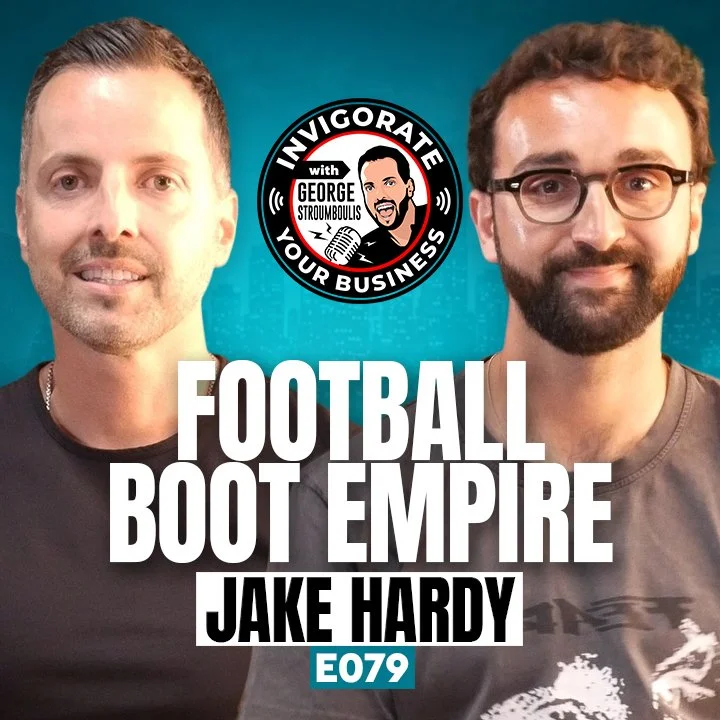
WORLD'S MOST SUSTAINABLE FOOTBALL BOOT WITH JAKE HARDY | E079
LISTEN TO THIS EPISODE




ABOUT THE GUEST
Jake Hardy is the Founder and CEO of Sokito, a football boot company redefining the future of sport through innovation, performance, and sustainability. Driven by a lifelong passion for football and a belief that businesses can be a force for good, Jake set out to create high-performance football boots using recycled and plant-based materials without compromising on quality or athlete expectations.
What began as a bold vision quickly evolved into years of research, product development, manufacturing challenges, and relentless perseverance. Through resilience and an unwavering commitment to his mission, Jake transformed Sokito from an idea into one of the most recognized sustainability-focused brands in football.
Today, Sokito products are worn by professional footballers around the world and celebrated for demonstrating that purpose and profitability can coexist. Under Jake's leadership, the company continues to challenge traditional industry norms while inspiring athletes and consumers to think differently about the products they choose.
Jake's entrepreneurial journey has earned international recognition, including being named to the Forbes 30 Under 30 list. His story is a testament to the power of vision, determination, and building a business that creates both commercial success and meaningful impact.
Jake’s Instagram: https://www.instagram.com/jake.sokito/
Jake’s LinkedIn: https://www.linkedin.com/in/jake-hardy-705103174/
Website: https://www.sokito.com/
George Stroumboulis sits down with Jake Hardy, founder of SOKITO, the company behind one of the world's most sustainable football boots. Filmed in Newport Beach, California, they explore Jake's journey from identifying a gap in the market to building a purpose-driven brand in one of the most competitive industries in sport.
“If something can be done with the same performance and less impact on the planet, why wouldn’t you do it?”
MEDIA RELATED TO THE EPISODE
George Stroumboulis sits down with Jake Hardy, founder of SOKITO, the company behind one of the world's most sustainable football boots. Filmed in Newport Beach, California, they explore Jake's journey from identifying a gap in the market to building a purpose-driven brand in one of the most competitive industries in sport. Breaking down the mindset, resilience, and innovation required to challenge industry giants while staying true to a mission of performance and sustainability.
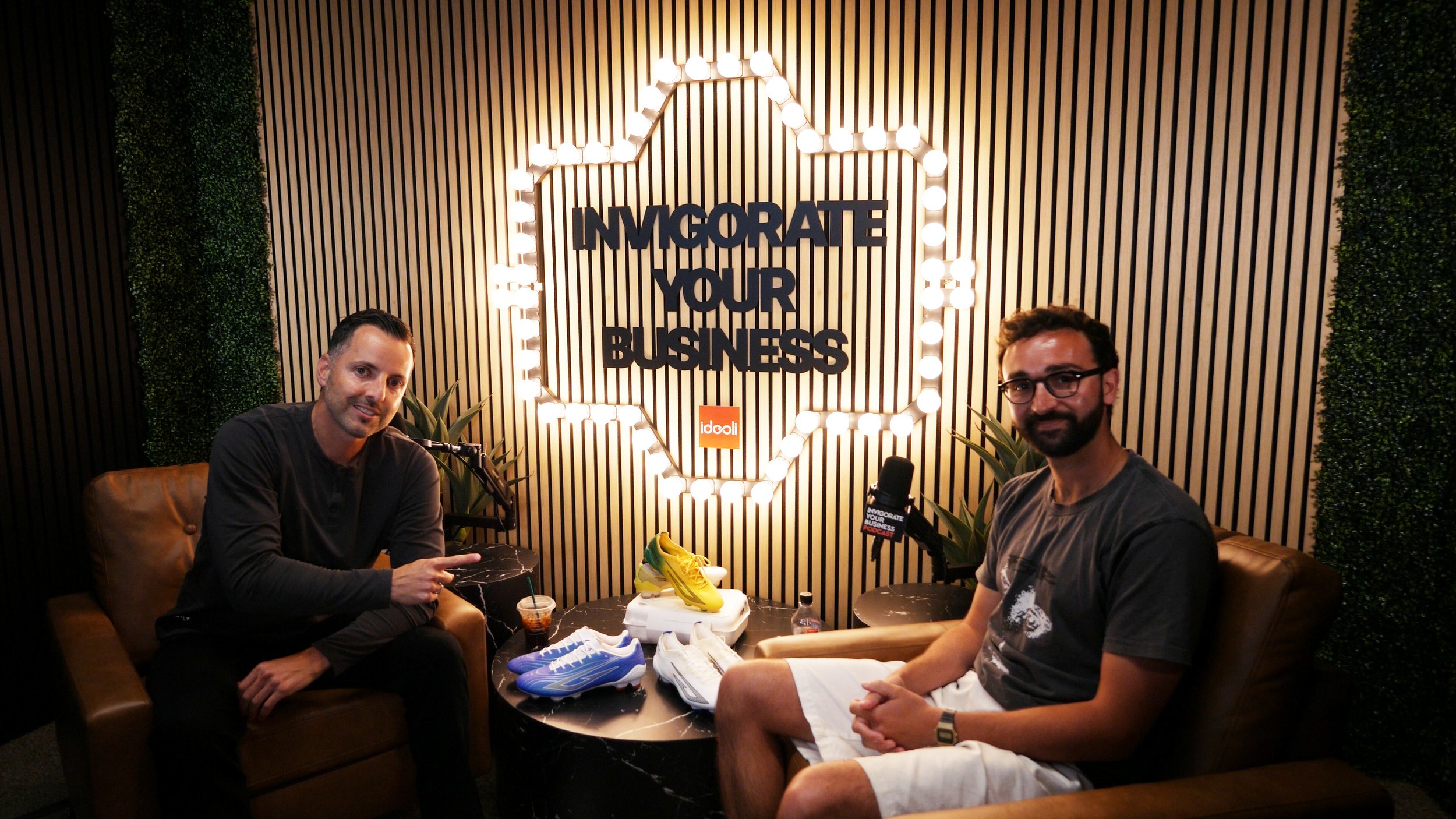
George Stroumboulis sits down with Jake Hardy, entrepreneur and founder of SOKITO, to discuss what it takes to build a challenger brand in the global football industry. Filmed in Newport Beach, California, they dive into Jake's mission to redefine football footwear through sustainability, the lessons learned along the way, and the determination required to compete against some of the biggest names in sport.
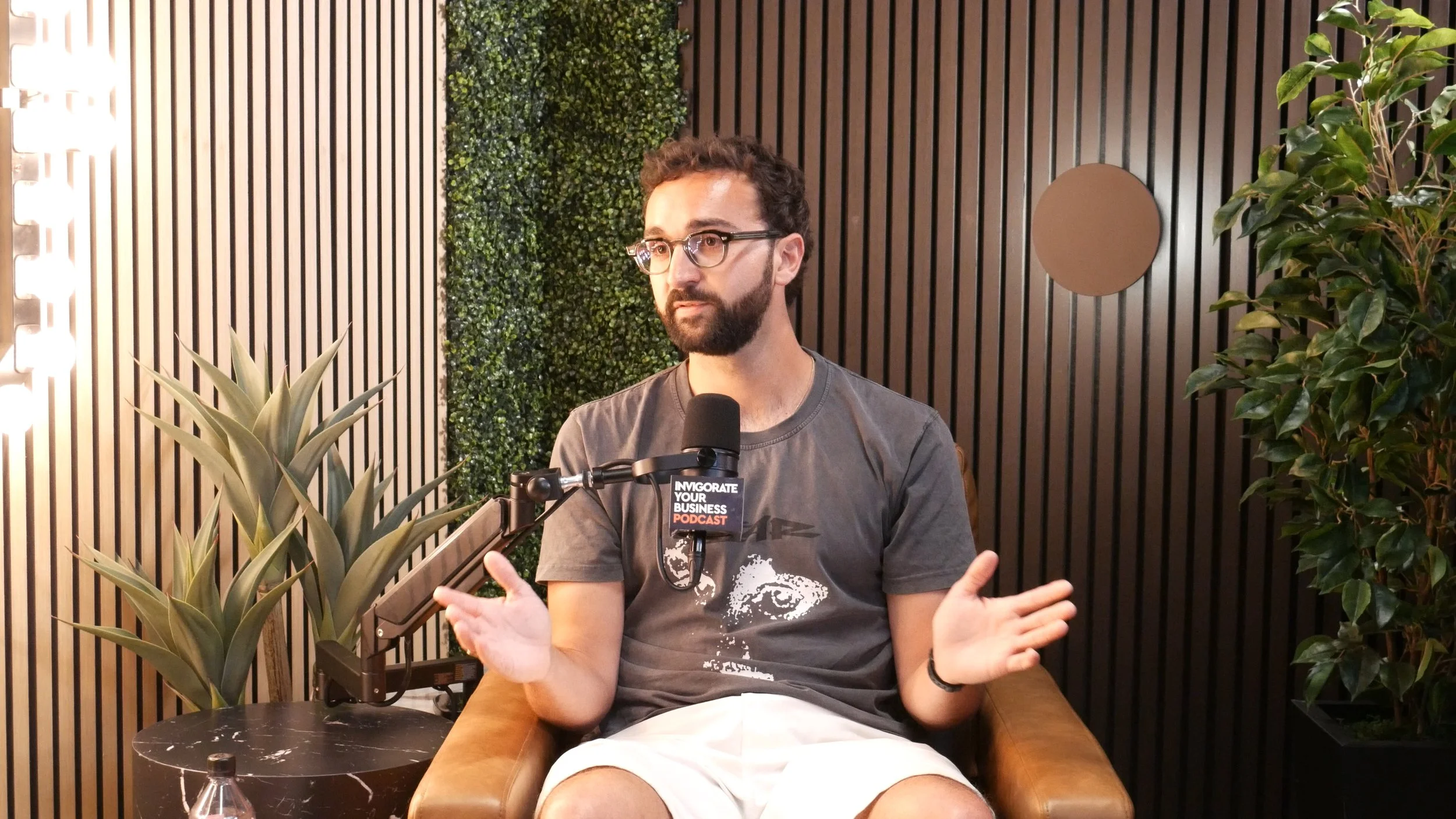
George Stroumboulis welcomes Jake Hardy, founder of SOKITO, for a conversation about entrepreneurship, purpose, and disrupting an established industry. Filmed in Newport Beach, California, they unpack Jake's journey from concept to company, sharing insights into product innovation, brand building, and the challenges of creating a business designed to make a positive impact both on and off the pitch.
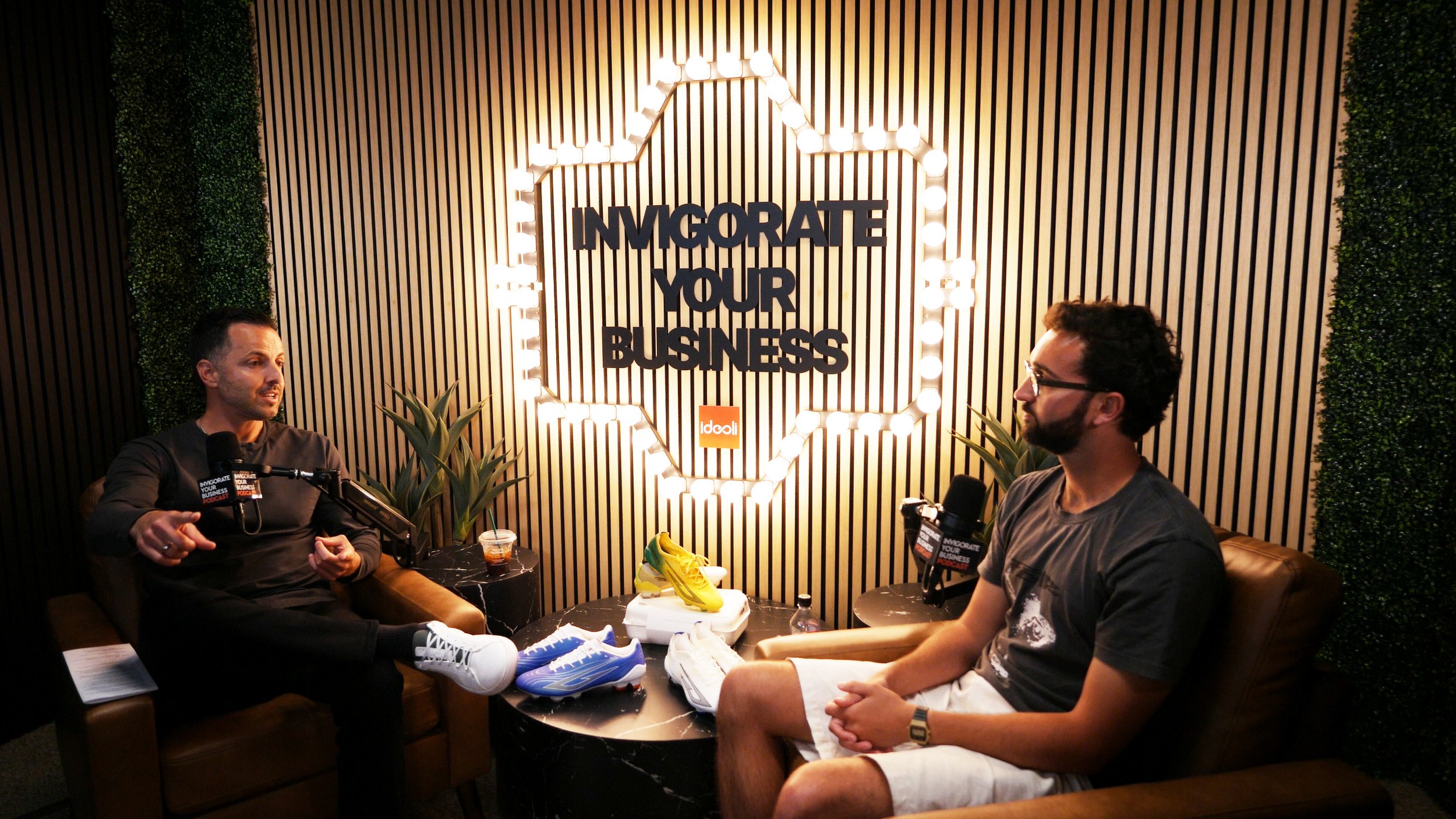
George Stroumboulis sits down with Jake Hardy, founder of SOKITO, the company behind one of the world's most sustainable football boots. Filmed in Newport Beach, California, they explore Jake's journey from identifying a gap in the market to building a purpose-driven brand in one of the most competitive industries in sport. Breaking down the mindset, resilience, and innovation required to challenge industry giants while staying true to a mission of performance and sustainability.
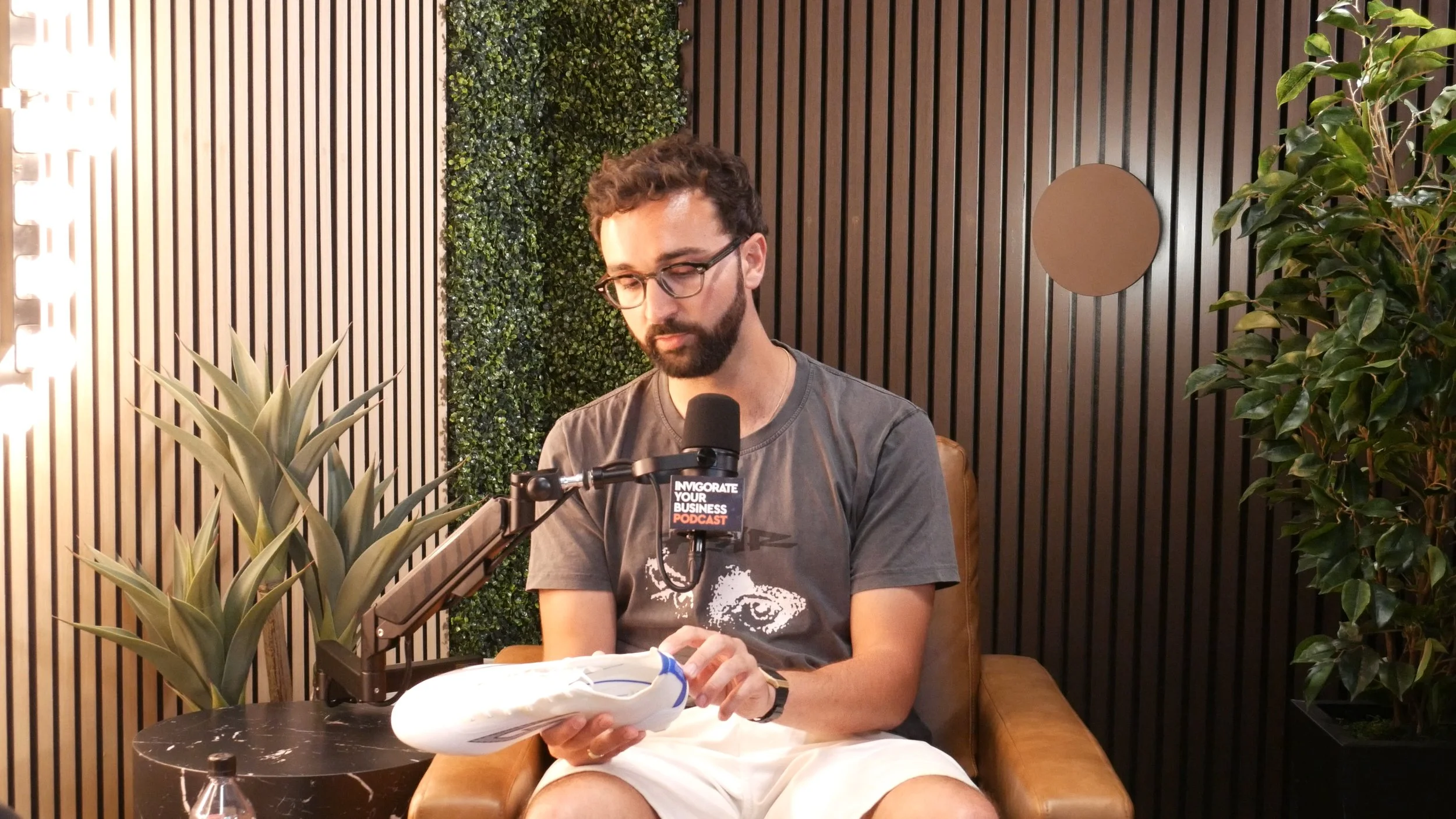
George Stroumboulis sits down with Jake Hardy, founder of SOKITO, the company behind one of the world's most sustainable football boots.
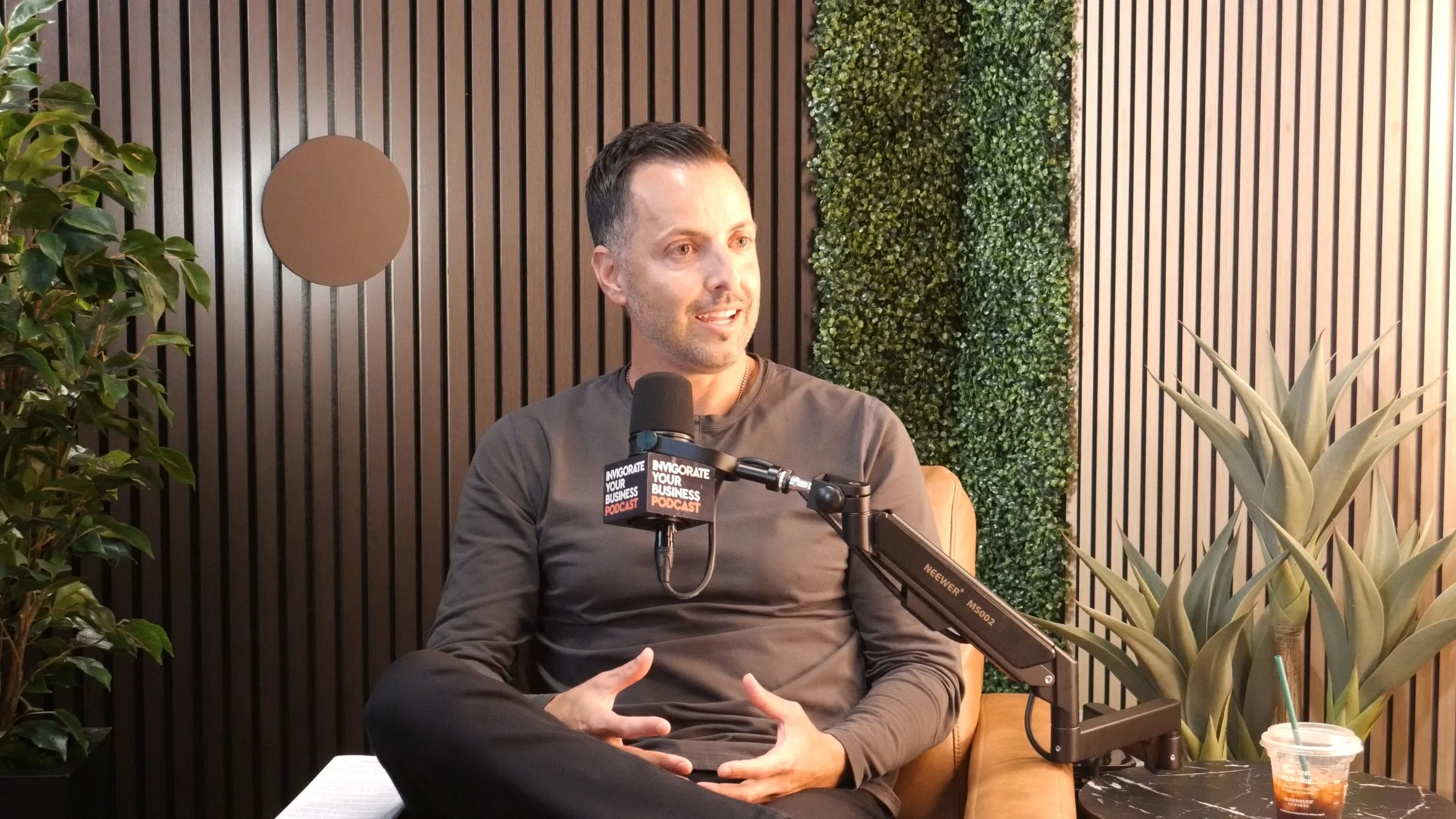
George Stroumboulis sits down with Jake Hardy, founder of SOKITO.
ABOUT THE “INVIGORATE YOUR BUSINESS” PODCAST
The Invigorate Your Business with George Stroumboulis podcast features casual conversations and personal interviews with business leaders in their respective fields of expertise. Crossing several industry types and personal backgrounds, George sits down with inspiring people to discuss their business, how they got into that business, their path to the top of their game and the trials and tribulations experienced along the way. We want you to get inspired, motivated, and then apply any advice to your personal and professional lives. If there is at least one piece of advice that resonates with you after listening, then this podcast is a success. New episodes weekly. Stream our show on Spotify, YouTube, Apple, Amazon and all other platforms.
ABOUT GEORGE STROUMBOULIS
George Stroumboulis is an entrepreneur to the core, having launched several ventures across multiple industries and international markets. He has held senior-level positions at progressive companies and government institutions, both domestically and internationally, building an extensive portfolio of business know-how over the years and driving profit-generating results. George’s ability to drive real change has landed him in several media outlets, including the front page of the Wall Street Journal. George was born in Toronto, Canada to his Greek immigrant parents. Family first. Flying over 300,000 miles a year around the world puts into perspective how important family is to George’s mental and emotional development. With all this travel to global destinations, the longest he stays even in the most far-out destination is 3 days or less - a personal rule he lives by to make sure he is present and involved in family life with his wife and three daughters. To read about George’s global travels, stay connected with his blog section.
STAY CONNECTED WITH GEORGE STROUMBOULIS
STREAM & LISTEN TO THE PODCAST:
SPOTIFY: https://open.spotify.com/show/1rW2CmxQoiJNEPOZupJlvd
YOUTUBE: https://www.youtube.com/user/Stroumboulis
APPLE iTUNES: https://podcasts.apple.com/us/podcast/invigorate-your-business-with-george-stroumboulis/id1607693240
AMAZON MUSIC: https://music.amazon.com/podcasts/8fc03929-71b3-483a-a64e-153e30b3d462/invigorate-your-business-with-george-stroumboulis
STROUMBOULIS SITE: https://www.stroumboulis.com/podcast
PODCAST SITE: http://www.invigorateyourbusiness.com
FOLLOW GEORGE STROUMBOULIS:
INSTAGRAM: https://www.instagram.com/georgestroumboulis/
YOUTUBE: https://www.youtube.com/user/Stroumboulis
LINKEDIN: https://www.linkedin.com/in/Stroumboulis/
TWITTER: https://twitter.com/Stroumboulis
FACEBOOK: https://www.facebook.com/georgestroumboulis
TIKTOK: https://www.tiktok.com/@georgestroumboulis
CONTACT GEORGE DIRECTLY: https://www.stroumboulis.com/connect
FULL SHOW CONTENTS
00:00:00 Welcome Jake Hardy And Why Sokito Matters
00:04:03 From Boot Obsession To Business
00:06:55 The Landfill Problem Sparks The Mission
00:10:30 Wear Testing And Tiny Design Decisions
00:13:14 What It Costs To Launch A Boot
00:16:30 Hiring, Mistakes, And Building A Team
00:19:14 Athlete Owners Instead Of Paid Endorsements
00:25:13 Factory Partners And Life Cycle Assessment
00:27:11 Pricing Strategy And Product Roadmap
00:29:22 Rapid Fire And A Legacy Of Unity
00:32:44 Closing And How To Support
FULL SHOW TRANSCRIPT
George Stroumboulis 0:00
Welcome to another episode of Invigorate Your Business with George Stroumboulis. Today's episode comes from Newport Beach, California, and I get to sit down with Jake Hardy, founder and CEO of Sokito Football Boots. Sokito is a brand that is truly sustainable. Jake has built the world's most sustainable soccer cleat, and it's worn by hundreds of professional players playing in the biggest leagues around the world. Jake is a recipient of Forbes 30 under 30. He is a true entrepreneur, and you're gonna get inspired after listening to his story and what he's doing. He is going up against the big dogs in this industry, like Nike, Adidas, and Puma. So enjoy this episode starting now. My name is George Stroumboulis, and I'm extremely passionate about traveling the world, meeting new people, and learning about new businesses. Join me as I sit down with other entrepreneurs to learn about their journeys. This episode of Invigorate Your Business starts now. So this is awesome, man. I'm so I'm so happy how this turned out. We're gonna start it right now. I'm sitting here with Mr. Jake Hardy, the CEO founder of Sokito. We're gonna get into all that. Uh met you this past weekend at a soccer tournament, my daughter's soccer tournament. Um my wife called me over, started talking about the shoes, and my daughter got new shoes, and then we started talking about it. And just really interesting story, bright entrepreneur, and like immediately just want to be connected and talking to people like you. So thank you for joining me, man.
Jake Hardy 1:35
Yeah, I mean, really, really appreciate you having us here. A chance meeting, like you said, this weekend. Yeah. And that's what football can do, right? It connects people. I'm gonna call it football rather than soccer. Okay, good. Naturally, that happens. But it it's such a connecting factor, right? Anywhere in the world you go, you meet people that share the love for this beautiful game. Absolutely. It's just amazing to be around.
George Stroumboulis 1:56
Absolutely. And to be clear, are we calling them cleats or boots?
Jake Hardy 1:59
So we've got used to soccer cleats and football boots, but there's just crossover and mistakes and even with sizing, right? So we met at an event where we were showing shoes, selling shoes, UK sizing, US sizing. It's a little bit confusing. Yeah. But we we call them football boots. Okay. Here, soccer cleats is also we got them. Interchangeable. Exactly.
George Stroumboulis 2:18
Yeah, I'm gonna read an intro because you know, we're not just schlepping uh soccer cleats or football boots here. Like you're you put everything on the line to build this, you had a vision, basically started it in the garage of your parents' home, right, and built it from there. Forbes 30 under 30. But let me read this intro. Let's see how how good we do with this one, okay? So today's guest is an entrepreneur who saw an opportunity to challenge the status quo in one of the world's most competitive industries. Jake Hardy is the founder and CEO of Toketo, a fast-growing football boot company built around innovation, performance, and sustainability. Driven by passion for the game and a vision for a better future, Jake set out to create high-performance football boots using recycled and plant-based materials, while proving that purpose and profitability can go hand in hand. What began as a bold idea evolved into years of product development, manufacturing challenges, and relentless perseverance. Today, Takito is worn by professional footballers all around the world, backed by elite athletes, and recognized as a leader in sustainable innovation within sport. Jake's entrepreneurial journey has earned him international recognition, including a place on the Forbes 30 under 30 list, and his story is a powerful lesson in resilience, vision, building a global brand from the ground up. Please join me in welcoming Jake.
Jake Hardy 3:35
Amazing. Amazing. Great, great introduction, and like I say, it's great to be here and talk to you about it a little bit more.
George Stroumboulis 3:41
Amazing, man. So so Jake, Forbes 30 under 30. You're 29 today?
Jake Hardy 3:47
29. Okay.
George Stroumboulis 3:48
29 today, and like just getting right to the point. You're going up against like the big dogs, Nike, Adidas, and disrupting the market, right? Disrupting working with soccer players. Where did you even think of the idea to be like, I'm gonna get into football boots?
From Boot Obsession To Business
Jake Hardy 4:03
It's a great question. So we started this journey when I was 19, actually. So I went to high school. I didn't didn't do any further education after that. I came sort of straight out of that. But whilst I was at school, I used to buy and sell football boots. I played a little bit, I made my sort of semi-professional debut when I was fifteen. And during that time, I just developed this what could only really be described as obsession with football boots. And I think from that time to now, I have personally tried every single Nike Adidas Puma boot that's been launched, every single one. And I started that when I was fifteen. And through doing that, I would buy a pair, I'd wear it, sometimes I'd cut it up and see how it was made, and then I'd sell it. And that essentially developed into a business. I then built connections with backroom staff at Barcelona, Atletica Madrid, PSG, Liverpool, and started trading match-worn boots and kits and memorabilia. Everything I made from that business was sort of saved. I knew that I wanted to launch what I would say is is a is a proper business rather than a side hustle at some point in my life. And I then sort of did that for a few years whilst I then had a full-time job in sales. I was on holiday then in in Vietnam when I was 19 years old, and there was all of these sort of overnight tailor shops where you could get a pair of brogues, a suit, a t-shirt, trainers, tailor made overnight. And I just thought it was fascinating. And so I tried to get a pair of boots made, purely for my own passion, and that I I really just wanted a pair that perfectly fit me, because I'd struggled with that in the past. And they couldn't do it. Then I went home and for about a year, purely because of my own interest, I was constantly trying to make these boots from Vietnam fit me perfectly. I went back and I found out that they were basically using all of the scrap material from the big Nike and Added as factories. It was damaged or it had defects, it was end of line, and they were intercepting this stuff from going to landfills basically. And that was a light bulb moment for me. So I started looking into the industry, I found out that there's twelve and a half million pairs of football boots that go to landfills every year.
George Stroumboulis 6:19
Twelve and a half million.
Jake Hardy 6:20
Twelve and a half million. It's a huge amount. And they take thousands of years to decompose. And I've always viewed football, we were just talking a little before about football and its power to connect, right? And it's the biggest connecting factor in the world. It connects more people than any religion, social group, nationality. It's amazing. And that's why we've met a couple of days ago. Anywhere you go in the world, you can talk to people about football, you can go and play football in the street. It's it's universal. And that sport is actually contributing to the detriment of the planet that we play on. And that was just wrong for me. So
The Landfill Problem Sparks The Mission
Jake Hardy 6:55
I then started trying to sort of uh develop a boot and a product which has less of an impact on the planet. Managed to do that over sort of four or five years up to the launch. It was very, very difficult to get to that point. But we launched with the most sustainable boot on the on the market at the time, the only football boot recycling program in the world, still the only people in the world that can do that. And we're constantly pushing the boundaries of performance product which has less of an impact on the planet. And that's that's our goal.
George Stroumboulis 7:22
Wow. So when was the official launch of the company?
Jake Hardy 7:25
It was at the end of 2022.
George Stroumboulis 7:27
Wow. So right in the middle of COVID.
Jake Hardy 7:29
Just after, yeah, just as we were coming out, yeah.
George Stroumboulis 7:32
Yeah. And you're just a little background, you're born and raised in the UK, London.
Jake Hardy 7:36
Correct, yes. Okay.
George Stroumboulis 7:37
And that's where your headquarters are now.
Jake Hardy 7:38
Yes.
George Stroumboulis 7:39
Yeah. So you don't get more passionate about football soccer than right there.
Jake Hardy 7:43
Exactly. Yes. Yeah, yeah. It's an amazing, it's an amazing place to be. It's like the hub of football, right? Yes. Um and so it's just it's it's within you, I think, when you're born in the UK.
George Stroumboulis 7:53
Absolutely. But hold on, before you even launch this company, you're creating a side hustle and having this backdoor access to these major football clubs to get their cleats. Like even doing that shows your entrepreneurial mindset, right?
Jake Hardy 8:06
Yeah, I've got uh I come from, I would say, a very entrepreneurial family. So every generation has been entrepreneurs. Okay. My my dad spent my entire life in China. He had a few businesses, he then worked with factories, supply chain. So I was around that. My work experience when I was 16, you know, all my friends were going to local coffee shops and things. I did it on a factory floor in China in a sample room. And so I've always been around that. I had this small business buying and selling football boots. I had a a vintage watch restoration and resale uh site, which was Omega's and Rolex's from the 70s and 80s. And I did some clothing import and and and retail also. So I'd always had things which which uh sort of kept me kept me interested, I suppose.
George Stroumboulis 8:52
That's incredible. So when you when you were cutting these boots open from Nike, Adidas, Puma, what were you seeing at that time? Obviously things have evolved, but w what gaps were you seeing? What were things where you're like, this doesn't make sense, this is what I would do? Like what were main things five, six years ago when you were coming up with this?
Jake Hardy 9:09
I think there was nothing sustainable, right? So everything at the time was virgin plastics, really bad for the planet. So that was something that is like, right, well we can do that, we can do that better. That's easy. Everything else then, there's a there's a level of of personal feeling in in shoes. But for me, the frustrating part of the industry, the football boot industry, is really there's three brands. There there is others, that's not completely accurate, but those three that control probably 85% of the market. Right. And they maybe have three or four models a year. There's just not enough options, I don't think. And there's a million colourways, every three weeks there's a new colour, and when they have the best version of a shoe, a year later it doesn't exist anymore because they have to change it for a marketing cycle. And those um kind of types of the the market are what we we kind of disagreed with and thought could be better. So our policies are we don't release any product until it's the best possible product for the price point. Really? So we had an artificial ground shoe which when it launched a couple of weeks ago won loads of awards, best AG boot on the market. We delayed that by six months because we moved one of the studs two millimeters, and that's the level of detail that we go into before we release a product. It has to be the best.
George Stroumboulis 10:24
And what is that in that example, moving it to millimeters?
Jake Hardy 10:27
Yeah.
George Stroumboulis 10:27
What what the pressure points, like what's the
Wear Testing And Tiny Design Decisions
George Stroumboulis 10:30
science behind that?
Jake Hardy 10:30
Pressure point, yeah. Okay. Yeah, so when we go through the development phase, usually start to finish, it's two, two and a half years to develop a new boot. Wow. We do three wear testing rounds. So you'll get your samples to a certain point, you'll do wear testing. For us, our company's owned by athletes, right? So we've not spoken about that. But how we've grown, how we've raised investment has mainly come from athletes, mainly soccer players, also now some NFL football players. So all of the testing is done with pro athletes. We then have a group of amateur athletes and testers, and I'm involved in that process also. You'll have wear testing, you'll do updates, you'll have a second round, and then you'll usually do a third round. And on the final round, I personally and a couple of the testers were getting a little bit of stud pressure from one of the studs on the medial side of the forefoot, and we we we moved the stud because of that, and and we messed up all of our launch calendars. Jeez. But it means the product is the best on the market.
George Stroumboulis 11:25
Yeah, that's a great example, just showing the detail where maybe other companies would be like, let's just launch, let's just get it out there. Yeah, exactly. That's huge. So my daughter bought these shoes on a Sunday, wore them for two games. I asked her when you guys weren't around, really, how do they feel? Right. Like, usually the mindset is you buy cleats, break them in during practice for a week or so, then you get out there. She put these on, she did her thing, she scored a couple, and she's like, Dad, they feel like I'm not wearing anything, they feel so good. Feedback from an 11-year-old. But like, what what has the feedback been? Because this has been grassroots, you have over a hundred professional athletes part of this. Yeah, like what's the feedback been as you're traveling the world and and being in front of these people?
Jake Hardy 12:09
It's amazing, it's amazing, to be honest. So we've won a lot of awards. So some of the big retail partners that we work with in Europe, in the US have have given the Skedetta, the Skedetta BioTouch, which is this new blue one, which is coming for the World Cup. They've won a lot of awards, right? But that's not just reviewers, retailers, it's amateur players, it's youth players like your daughter, and it's professional athletes. You know, we have owners in the Premier League that have played on you know every division, international, you know, huge major tournaments, and the feedback's really strong. For us now, the next step is right, we've got speed boots. That's what these are, super lightweight, but very aggressive. They're just not for everybody, right? Some defenders, goalkeepers don't want to wear speed boots because they want something more comfortable with more foam, more padding. That's now on the way.
George Stroumboulis 13:02
That is coming, okay.
Jake Hardy 13:03
An indoor shoe is on the way, a turf shoe, a kids range. You know, we're now building out the range. We've proven we can do it. Yeah, it's now scaling and growing the the product range that we have.
George Stroumboulis 13:13
Amazing.
What It Costs To Launch A Boot
George Stroumboulis 13:14
When when you're building a line, like you say two and a half years typical, yeah. What are costs associated with that? Like if you're sitting here today in June and you say, hey, we're gonna launch this new line, and that's two years out, what costs are involved?
Jake Hardy 13:27
Uh there's a there's huge product development costs. I think it's one of the main reasons why football has had no competitors. There's been no start-up brands that have really gone after the industry because it's it's very difficult to make football boots that perform at the highest level, that's one. And two, it's very expensive. Right. So, yeah, I mean it depends on the shoe, but you're probably talking a quarter of a million dollars at least to get a sample which is ready for launch.
George Stroumboulis 13:55
Like it's gone through everything, it's ready to go. That's that's crazy investment, right?
Jake Hardy 13:59
Yeah.
George Stroumboulis 14:00
Um now when you're comparing against like a Nike and Adidas, sustainability is a big deal. And actually, where where does your passion for sustainability come from? Like where where you built a company driven by that?
Jake Hardy 14:12
Yeah, to be honest, it's just something I've always been passionate about. So um I'm based in in London now, I think we spoke about it earlier, but I was raised in Nottingham, so in the Midland in the Midlands, and in the middle of nowhere, to be honest. So I was surrounded by amazing nature constantly growing up. You know, I live I've grew up in a a village where there was no buses, no shops, no nothing, and spent a lot of time in nature. Maybe that's why. Maybe for me also I see a sense of common sense. If something can be done in the exact same way, with the exact same performance, why why wouldn't you do it so that it has less impact on the planet? That to me just makes makes common sense. And I think a lot of the time sort of big corporate uh brands and corporations are are so driven by you know shareholder value and profits that they can't make these changes and it it requires a new brand, a new business, a startup to embed that in the culture of everything that we they they do, which is our intention.
George Stroumboulis 15:12
Yeah, which is amazing. So, like for someone, I pick up a shoe, I think it's mostly plastic. What are materials in your shoes that is there zero plastic or it's just reduced amounts?
Jake Hardy 15:23
It's still plastic. Yeah. But the plastic is recycled plastic, bio-based plastic. There's other polymers in the shoes too. There's some cellulose, that sort of material. But you can see on every single shoe that we have, there's ingredients. So on these ones which your daughter wears, they're literally listed in text. But here you have, you know, banana, corn, sugar cane, bamboo, recycled bottles. Everything is listed on the shoe. So the the traceability and transparency is is is very clear. But these shoes now, depending on the model, are between 40 and 52 percent sustainable. Okay. To maintain performance, you have to mix that with virgin plastics. That's still a requirement, and that's one thing that we're super, super passionate about, right? Is there's no point having a sustainable product if it doesn't perform at the highest level. Sure. Your daughter wore them, she loved them. If they were just sustainable, what's the point? No one's gonna wear the shoes, right? Yeah, absolutely. So we have to make sure that that doesn't change performance level, but with each shoe, it's getting more and more sustainable as we're developing, as we're testing various things, you know.
George Stroumboulis 16:29
Yeah.
Hiring, Mistakes, And Building A Team
George Stroumboulis 16:30
So when you're building a company, company like this, like what what what do you need every year? Aside from like funding, the obvious one, what is it? Like every year you expand this business, you're probably entering an area where you're not an expert in, right? And you're tapping into a team. How has it been team building to get to this point? And like where are you going to be in three years, five years, ten years?
Jake Hardy 16:51
Yes, it's it's really um surrounding yourself, I think, with people with experience and amazing people with experience. You you met Lawrence, our chairman at the weekend. Amazing guy, yeah. Yeah, yeah. And the wealth of knowledge in the people that we surround ourselves with from a board level, from an advisory level, you know, means that they've been through a lot of these challenges already, right? I think that you sort of learn throughout the process of building a business that you you mess up a lot. Of course. And if you can surround yourself with people that have messed up a lot and know potentially what the pitfalls of certain situations could be, that can help you avoid them. Now you're always going to do that. I think for me, probably one of the biggest skills, right, is not dwelling on mistakes, failing fast and moving on. I think there's this big thing sometimes in business where you'll have this amazing idea that you've been building for six months and it'll it'll go out and it flops, and some people can die on that sword. Right. I think get rid of that, move on, and just lose the ego a little bit and and and change.
George Stroumboulis 17:56
Yeah, absolutely.
Jake Hardy 17:57
And um for me that's the biggest thing. But yeah, surrounding yourself with really good people, we've had a lot of challenges, you know, but every single time you bring someone else in and it doesn't work, you you learn.
George Stroumboulis 18:06
Absolutely.
Jake Hardy 18:07
And that that's that's the biggest thing, I think.
George Stroumboulis 18:09
That's great advice. What what's your strong skill set? Like, is it is it the finances, is it the design? Like, do you have your hands in everything?
Jake Hardy 18:16
Yeah, so I I manage product, so for me that's that's always going to be really, really important, I think. Um my my background and experience is football boots, right? And products, and I've been doing that for 10-15 years. I'll always be involved in that. And uh I think sort of team management is a is a big skill of mine, um and market and and opportunities, to be honest. But at certain points I've been involved in everything. In the other room, we have our our head of creative where before that team was in place, that was myself. And then looking at that from from you know, you take a step back, which is what we try to do every month. We try to have a okay, right, we're stuck in the weeds of the day-to-day here. Let's step back, analyze where we are. And in this situation, there's people with much better skills on the creative side than myself, and so you bring people in that that can sort of take that to the next step.
Athlete Owners Instead Of Paid Endorsements
George Stroumboulis 19:14
Yeah. Well, talk about your booth in San Diego over the weekend. You had yourself, the founder, grassroots talking to soccer moms, educating them. Today you're going to meet with someone from the national soccer team, right? Like, talk about and the little I've seen, it's the same amount of passion. Like when you were explaining to my wife the technology, the this, the that, and you're talking to a guy who's at the elite level, like it just shows the passion, right? Everyone's a sale, everyone it it's incredible to see that. And then I met your crew at the booth. It was Lawrence, all your team, the design team. There was someone from Cincinnati who plays professionally as well, and just great energy. So, like, clearly you've built something special.
Jake Hardy 19:53
Yeah, it's really it's really important. So we had in in for the tournament, and we'd been with some clubs around uh around California, but we had the chairman, the head of design, the head of creative, and myself the founder. And you know, we we try and embed that everywhere, right? Every single person who wants to potentially wear a Sakito shoe or even learn about it, that conversation is always as important. Our athletes, Corey Baird was was the guy that you met, you know, he last season was playing at San Diego FC, spent a lot of time around various MLS clubs. And we've never paid an athlete. So because they've all invested, they want the business to grow. So anything they can do, they do. And so if that means turning up for six hours and talking to kids about the boots with their own personal lens on why they think they're actually really good, because they wouldn't have invested if they didn't like the shoes, right? Then then they'll do it, you know. And and that's that's amazing. And that's to be to be quite honest, why we don't pay athletes is because you know, we want people to feel passionate and believe what we're doing. And that is is what we found sort of gifts that I suppose.
George Stroumboulis 21:02
But but that's a completely different model, right? So like the the big dogs, right, or the industry leaders are they pay, they get an athlete, they pay, whether the shoe's good or not, they're paid, they have to go out there and represent it. You've gotten over a hundred plus athletes and growing, right? We're talking national team players, division one, athletes, La Liga, like every major league you have players in there, right?
Jake Hardy 21:23
Yeah.
George Stroumboulis 21:23
And they've invested what, like finance financially invested or time effort?
Jake Hardy 21:27
Financially. Financially, yeah.
George Stroumboulis 21:29
Because they believe in it.
Jake Hardy 21:30
Yeah. Okay. Exactly, yeah. So I mean the company, we've done sort of three funding rounds, we've raised about six million dollars, and I'd say 75% of that is from athletes.
George Stroumboulis 21:40
Amazing.
Jake Hardy 21:41
You know, they're they're the people that know the most about what we're doing. And we have a couple of different group chats on WhatsApp. One has got every single athlete, male, female, every division, and like you said, when we're talking to a starting centre back for the US national team or a soccer mum. Everyone's treated the same. So in that group, when we're designing a new colourway, for example, and this was in the design phase for quite a long time, there's a blue detail here. We would put in that group, okay, here's a blue option, a red option, and a green option. Whichever one gets the most votes, that's what is launched. So the brand is completely built by football players. That's incredible. You know, we just did a shoe with DeAndre Yedlin, big player for the US national team in in recent years. And he designed the shoe with us. He wrote the own his own script for the shoot. He created directed the shoot. He was even used his own shooters. And so start to start to finish, we like to on the athlete side, treat them as people, not just assets. Right. And luckily they reciprocate that and that's why the business is is where we are today, I think.
George Stroumboulis 22:54
Yeah, it's amazing. But when you're pitching an athlete, like a potential athlete to come on board and invest, what like what is the pitch? Like what can you share with with the listener today? Is it a a return on their investment? Is it part of a community? You're doing good for the environment? Like what is like if they're putting in a dollar, are they expecting a return?
Jake Hardy 23:12
Yeah. Okay. Yeah, yeah. I mean, there's there's a variety of reasons as to why they've invested. Sometimes a combination of all of these. One is they see it as a really good investment. You know, the business is growing about 500% year on year every year. Just look at our direct sales. This year, every month we're about 800% up year on year.
George Stroumboulis 23:34
Come on. What does that represent boots-wise?
Jake Hardy 23:37
Like how many boots are you actually So this year we'll probably do 40 to 50,000 pairs.
George Stroumboulis 23:41
Wow. Globally.
Jake Hardy 23:43
Yeah. Which in you know third full year is is strong.
George Stroumboulis 23:46
Yep. Sorry. And of that, like what percentage is male versus female? It's it's uh it's more male now.
Jake Hardy 23:52
Yep. So I'd say probably it's it's a little bit difficult to have the exact numbers because quite a lot of the time the parents are buying, so we don't know the exact end user, but we think it's probably 80-20 male, female. We're trying to balance that up a little bit to be honest, so we're making some hires, particularly here in in the States. But yeah, you know, the growth is is is is nice for us at the moment. That's amazing. And so that's one part, right? They invest because the company's growing. We have athletes that invested when the valuation of the business was two and a half million pounds, it's twenty-six million pounds now, and so they've already 10x on their investment, right? We have investors that love football boots, are really passionate about the planet. Usually it's one of those two plus a potential to uh make a return on investment in the business.
George Stroumboulis 24:38
Plus people believing in you and your vision and doing good.
Jake Hardy 24:41
Yeah, sure. That's huge. Sure, sure. And the team and the experience, and you know, quite a lot of the time, right? We've got a guy who was at LA Galaxy last season, Zanker. I knew Zanker for two years before he invested. And the reason he invested was two years ago when I spoke to him, we didn't have a single product, and I said we were gonna do this. We then did that, and then went back and spoke to him, and then he was like, Oh shit, you have actually made these shoes and won these awards and are selling. Yeah, I back it now. You know, so it takes time sometimes. Yeah, absolutely.
Factory Partners And Life Cycle Assessment
George Stroumboulis 25:13
How how is it developing the shoe, like finding the right partner? Obviously, you've designed it, you own the IP, it's your technology, all this, but then where do you go? How do you even look at the global landscape and say, hey, this is a good partner, this is the right factory, the right region. You know, I I manufacture my product in China, but we control our manufacturing process, right? So it's not ah, it's made in China, it's it's inferior. Like how did you go about that process?
Jake Hardy 25:38
A lot of time. A lot of time. I would say, yeah. So pre-launch we manufactured in Turkey, Bulgaria, Italy, Vietnam, China, uh, we've made in Indonesia, various different factories in each region, and um it's it's a lot of time at the factory, going through that process. It's a slow process, as you know, developing product. But you you find the the good ones essentially, and we've we've had a couple of you know issues with factories, as every every business has, you know, and we've moved factories midway through production runs of of existing products, and we've had to match the feeling of a shoe one factory to another, it's incredibly difficult to do. But we're now with a partner, our main partner that we think uh is is one of the best out there. Yep. We spend a lot of time there, we have a full-time employee there, they give us access to everything that we need. We have this thing called an LCA, which is really important to us. It's a life cycle assessment tool. What that basically does is every single process at the factory, so take the cutting or the lasting or the dyes in the material, it measures electricity, it measures the dyes that are used, the chemicals, the transport of every single process, and it gives you the carbon output of your products at the end. And they give us full access to the factory to make those calculations. And a lot of factories, because they're not earning money off that, don't give you access to that. So that's also something that we have to factor in.
George Stroumboulis 27:09
That's incredible, man.
Pricing Strategy And Product Roadmap
George Stroumboulis 27:11
What what a story. So retail wise, they're not on the cheaper end, the shoes, right? And they're not the most expensive, but like what's the pricing strategy when it when you look at this? Like, how do you approach the market and is every market unique, or do you tackle it globally? This is how we price it?
Jake Hardy 27:28
Quite similar, like globally. So the scadettas are usually $200. These ones are slightly more expensive because there's some some updates and some tweaks. That's pretty much similar worldwide. So wherever you go, they'll be around that same figure, dependent on the exchange rate. Yep. How we approached it is we wanted to make premium product first. We felt that was really important. We wanted to get pro players on board, wearing the shoes, build a premium brand. These are $200, this one's going to be $220, and you know, top end from our competitors are almost $400 now on some of them. Yep. So for that price point, you you can't get a better performance. See, and yeah. That was the sort of the pricing structure. Make premium, premium product for a price just below the premium of the other brands. Yep. We then have expansion of this range coming. So later on this year we have our first uh shoe at $120, similar, but just like a a sort of tweaked version. And we'll continue to do that as, like I say, the the various price points, a kids range, indoor turf. There's a lot of things on the way.
George Stroumboulis 28:35
Amazing. What what do you see like average life cycle of a shoe with someone whose foot's not growing? Right? Like what the wear and tear, like what is it like a month, two months? Like what do you see?
Jake Hardy 28:46
I think it depends on the player, right? It depends how often they're playing. But we were at a club, Monterey Bay, who play in the USL um earlier on this week, or last week, sorry, and uh one of our one of our investors, Sebastian Legette, he plays now for Monterey Bay. He played last season for FC Dallas, and he showed me his shoes that the studs were completely worn down, but structurally the shoe was still sound. Oh wow. He'd worn those for two years. He scored in MLS, he'd changed clubs, and he was still wearing that exact one pair of shoes. And we gave him some new ones.
George Stroumboulis 29:18
That should go in your museum. Exactly.
Jake Hardy 29:20
We got him to sign them and we have them
Rapid Fire And A Legacy Of Unity
Jake Hardy 29:22
with us actually.
George Stroumboulis 29:22
So that's a major listen, Jake. I'm not trying to rush you out of here, but I know you you got to go talk to some national team players. Really quick, rapid fire, because I could talk to you for hours, right? Give me your answer, first thing that comes to mind, okay? Seven quick ones. Uh, favorite boot of all time?
Jake Hardy 29:39
The added ass predator absolute for me. That's one of my first premium boots growing up as a kid. It came out in 2006, so I was 10. Okay. That was the first one where I'd gone into adult sizing so I could get that shoe. Stephen Gerard, as a Liverpool fan, wore that shoe, and for me, that is just nostalgia all over.
George Stroumboulis 30:00
Amazing. Okay. Your dream athlete ambassador.
Jake Hardy 30:04
I would say right now active player would probably be Jude Bellingham. Okay. From the UK, global appeal, incredibly cool, good guy, good personality, incredible football player. Um, and I think you know, we'll we'll have an amazing, amazing career.
George Stroumboulis 30:22
Amazing. Manifesting it right here. What's a company you admire just in general that you model yourself after?
Jake Hardy 30:29
I would say on. So you're actually wearing the shoes today. Yeah, yeah, yeah, absolutely. But how they've grown in an industry very similar to ours is they're honestly they're they're one of our biggest sort of role models, to be honest. They took on running and tennis, impossible, impossible feats, and uh are now one of the largest sportswear companies in the world. And that's what we want to try and do.
George Stroumboulis 30:52
Incredible. IPO or acquisition.
Jake Hardy 30:58
IPO, I would say. IPO. Yeah, I mean whether we want to do either of those things, honestly, is is up for debate. There's there's a whole we have this conversation internally every day, I think, and we just want to uh use football to make positive impact. And one of these IPO or acquisition could help us to do that, but also staying in control of the business could also be a better route. So who knows?
George Stroumboulis 31:24
I want to be at that party, either one. I want to be there, okay? Um last one legacy in one word, like what's your legacy gonna be, and then what's the legacy of Sakito?
Jake Hardy 31:34
In one word. Pride, I think. For me, I don't I don't see success as a big sale. I see success as making the most impact in in the world through football. And you know, we've just had our World Cup campaign go live today. That campaign was a partnership with a refugee football team in in London. Wow. It's the only competitive refugee-only team in the UK, and it is um complete of of players displaced by various uh countries that are war-torn and and have a lot of problems in those nations, and they are brought together by the love of football. And you know, the world right now, you don't have to look very far to see examples of um division, and I think football has the power to unite.
George Stroumboulis 32:27
That's incredible. I uh I know you got to get out of here. Uh, you've built something. Again, it's not just about football, it's bigger, right? And what you're doing. I want to make sure everyone's like following you, what your company's doing. Continued success, man. You're crushing it.
Jake Hardy 32:40
Thank you very much. Yeah, thanks a lot.
George Stroumboulis 32:42
Appreciate it, brother. Thank you.
Closing And How To Support
George Stroumboulis 32:44
Thanks for listening to this episode of Invigorate Your Business with George Strombolas. Please hit the subscribe and like buttons and follow me on all the main podcast streaming channels. Also, please share your comments when you can. I appreciate your help in expanding this network to a worldwide audience. Until next time, stay invigorated.
TOP FOOTBALL BOOT COMPANIES IN THE WORLD AND HOW SOKITO COMPARES
TOP FOOTBALL BOOT COMPANIES IN THE WORLD AND HOW SOKITO COMPARES
The football boot market has long been dominated by a handful of global giants. Companies such as Nike, Adidas, Puma, and New Balance have invested billions of dollars into athlete endorsements, product innovation, and global distribution networks. Their products are worn by the world's biggest football stars and sold in virtually every corner of the globe.
However, a new generation of challenger brands is beginning to reshape the industry. Among them is SOKITO, founded by entrepreneur Jake Hardy, with a mission to build the world's most sustainable football boot without compromising on performance.
The Global Leaders in Football Boots
Nike: Nike has been one of the most influential brands in football for decades. Models such as the Mercurial, Tiempo, and Phantom have become iconic, worn by some of the sport's most recognizable athletes. Nike's strength lies in its marketing power, extensive athlete roster, and relentless product development.
Adidas: Adidas has a rich football heritage dating back to the earliest days of the modern game. The Predator remains one of the most famous football boots ever created. Today, Adidas continues to be a market leader through its combination of innovation, tradition, and global reach.
Puma: Puma has experienced significant growth in recent years, particularly through partnerships with elite clubs and players. The company has strengthened its position in the football market by focusing on speed, comfort, and lifestyle integration.
New Balance: Although traditionally associated with running, New Balance has made meaningful investments in football. By signing elite players and clubs, the company has steadily expanded its presence and earned credibility within the sport.
Mizuno: Often regarded as a hidden gem among serious players, Mizuno is known for its craftsmanship and attention to detail. The Japanese brand appeals to footballers seeking premium quality and exceptional fit.
How SOKITO Is Different
While the industry's largest brands compete through scale and marketing budgets, SOKITO has chosen a different path.
Founded by Jake Hardy, SOKITO was built around a simple but ambitious idea: create high-performance football boots that are also environmentally responsible. In an industry where millions of synthetic products eventually end up in landfills, SOKITO is challenging the status quo.
The company focuses heavily on sustainable materials, responsible sourcing, and reducing environmental impact throughout the manufacturing process. Rather than asking athletes to sacrifice performance for sustainability, SOKITO aims to deliver both.
The Rise of Purpose-Driven Brands
Consumer expectations are changing. Today's athletes increasingly care not only about how products perform, but also about how they are made.
This shift has created opportunities for smaller, purpose-driven businesses to compete alongside established industry leaders. Brands that can combine innovation with authenticity are beginning to earn loyalty from consumers seeking alternatives to traditional corporate giants.
SOKITO represents this new wave of entrepreneurship. Its story is not simply about football boots. It is about identifying a problem, challenging an industry norm, and building a business around a mission larger than profit alone.
Can Challenger Brands Win?
History has shown that industries evolve when new entrants are willing to question existing assumptions. The largest companies often benefit from resources and scale, but smaller organizations can move faster, innovate differently, and connect more authentically with their communities.
SOKITO's journey demonstrates that success does not always require the biggest marketing budget. Sometimes it begins with a founder who sees an opportunity to improve an industry and is willing to pursue it despite the odds.
Whether SOKITO ultimately becomes one of the world's largest football brands remains to be seen. What is clear, however, is that the company has already started an important conversation about the future of sport, sustainability, and responsible innovation.
Final Thoughts
Nike, Adidas, Puma, and other established brands have earned their place through decades of excellence and investment. Yet the emergence of companies like SOKITO suggests that the next generation of industry leaders may be defined not only by performance, but also by purpose.
Jake Hardy's entrepreneurial journey serves as a reminder that meaningful businesses are often built by those willing to challenge convention. In football, as in business, sometimes the greatest victories come from those bold enough to change the game.
Listen to Jake Hardy on Invigorate Your Business with George Stroumboulis as he shares the story behind SOKITO, the challenges of building a purpose-driven brand, and what it takes to compete against some of the biggest names in the world of sport.
STEPS TO BUILD AN ATHLETIC SHOW COMPANY
# STEPS TO BUILD AN ATHLETIC SHOE COMPANY
Building an athletic shoe company requires far more than designing an attractive product. The most successful brands begin by identifying a genuine problem in the marketplace and creating a solution that resonates with a specific audience. Whether the opportunity lies in sustainability, performance enhancement, affordability, or product innovation, understanding what gap exists in the market is the foundation of every great footwear company.
Once the opportunity has been identified, entrepreneurs must establish a clear brand identity. Consumers do not simply buy shoes; they buy into a mission, a lifestyle, and a story. Defining what the company stands for, who it serves, and why it exists helps create differentiation in an increasingly competitive marketplace. The strongest brands develop an emotional connection with their customers that extends beyond the product itself.
Product development is the next critical step. This process includes determining the shoe's intended performance characteristics, selecting appropriate materials, designing its appearance, and ensuring the product delivers on comfort, fit, and durability. Rarely does the first version become the final product. Multiple rounds of prototyping and testing are typically required before a shoe is ready for market. Gathering feedback from athletes and end users throughout this stage is essential to refining the design and ensuring the product meets real-world demands.
Equally important is finding the right manufacturing partners. A footwear company is only as strong as its ability to consistently produce quality products. Evaluating factories based on quality standards, production capacity, ethical practices, lead times, and experience with athletic footwear can significantly impact the long-term success of the business. Establishing strong supplier relationships often becomes a competitive advantage as the company scales.
Beyond manufacturing, entrepreneurs must build an efficient supply chain. This includes sourcing materials, managing inventory, coordinating logistics, overseeing quality control, and developing warehousing solutions. Operational discipline becomes increasingly important as sales volumes grow, and companies that fail to build these systems early often struggle to sustain momentum.
Protecting the business through intellectual property is another important consideration. Registering trademarks for company names, logos, and product lines can help preserve brand equity and prevent future legal disputes. In some cases, patents may also be appropriate to protect proprietary technologies or innovations that provide a competitive edge.
With the product developed and operations in place, the focus shifts toward bringing the brand to market. Some companies choose a direct-to-consumer approach through e-commerce platforms, while others pursue retail partnerships, distributors, or team sales channels. The most effective strategy depends on the target customer and the overall business objectives.
Community building plays a vital role in the growth of athletic brands. Successful companies foster authentic relationships through storytelling, athlete partnerships, grassroots initiatives, and meaningful engagement with their audience. Consumers increasingly support brands that align with their personal values and identities, making community a powerful driver of long-term loyalty.
After launch, entrepreneurs must remain adaptable. Customer feedback should be embraced as a valuable source of insight for improving products, refining marketing strategies, and identifying new opportunities. The ability to learn quickly and evolve often separates successful brands from those that struggle to gain traction.
As the company grows, expanding the product offering may become a natural next step. Additional footwear models, apparel, accessories, and complementary products can help increase customer lifetime value while strengthening the overall brand ecosystem. However, expansion should be deliberate and remain consistent with the company's core mission and expertise.
Ultimately, building an athletic shoe company is a long-term journey that requires persistence, creativity, and strategic execution. While the industry's largest players possess significant advantages in scale and resources, emerging brands continue to prove that innovation, authenticity, and purpose can create meaningful disruption. The opportunity extends beyond selling footwear; it lies in building a brand that athletes trust, communities embrace, and consumers proudly choose to support.
WHY IS SOKITO DIFFERENT
In an industry dominated by multinational corporations with billion-dollar marketing budgets, SOKITO has chosen a different path. Rather than competing solely on celebrity endorsements or advertising spend, SOKITO was founded with a clear mission: to create high-performance football boots that are also better for the planet.
What makes SOKITO unique is its commitment to proving that athletes do not have to choose between performance and sustainability. Traditionally, football boots have been manufactured using materials and processes that prioritize speed to market and cost efficiency. SOKITO challenges that model by carefully considering the environmental impact of its products while maintaining the standards serious footballers expect from elite footwear.
At the heart of SOKITO's philosophy is the belief that businesses have a responsibility to leave the world better than they found it. This purpose-driven approach influences decisions throughout the company, from material selection and sourcing practices to product development and long-term growth strategies. Sustainability is not treated as a marketing campaign; it is embedded within the brand's identity.
SOKITO also represents a new generation of entrepreneurial thinking. Instead of asking how to build another football boot company, founder Jake Hardy asked how to build a better one. By identifying a gap in the market and challenging industry norms, he created a brand that resonates with athletes who value both performance and conscious consumption.
Another key differentiator is authenticity. As a founder-led organization, SOKITO has remained closely connected to the communities it serves. The company has been able to move quickly, adapt to customer feedback, and remain focused on its mission without the layers of bureaucracy often associated with larger organizations. This agility allows SOKITO to innovate in ways that established competitors may struggle to replicate.
Perhaps most importantly, SOKITO is helping redefine what success looks like in the sports industry. While growth and profitability remain important, the company demonstrates that commercial success and positive impact do not have to be mutually exclusive. Consumers are increasingly seeking brands that align with their values, and SOKITO is positioned at the intersection of performance, purpose, and sustainability.
In many ways, SOKITO's story is larger than football. It is a story about entrepreneurship, innovation, and the courage to challenge an established industry. It is proof that smaller brands can create meaningful change by staying true to a mission and focusing relentlessly on the needs of their customers.
SOKITO is different because it is not simply selling football boots. It is building a movement around the belief that the future of sport can be both high-performing and responsible. For athletes, entrepreneurs, and consumers alike, that is a vision worth paying attention to.
BLOG POST
Sustainable Football Boots That Perform
How Sokito Builds High-Performance Football Boots From Recycled Materials
Jake Hardy on Building a Sustainable Football Brand
Why Purpose and Profit Can Win Together in Sportswear
Moving One Stud Two Millimetres Delayed Launch by Six Months
If Football Connects the World, Why Should Its Boots Harm It?
Twelve and a half million football boots end up in landfill every year, with most made from materials that can take thousands of years to break down. That statistic became the foundation for Sokito, a company determined to prove that elite performance and sustainability can coexist.
In this episode, recorded in Newport Beach, California, I sit down with Jake Hardy, Founder & CEO of Sokito, to discuss how he's challenging industry giants like Nike, Adidas, and Puma by creating premium football boots made with recycled and plant-based materials.
Jake shares his entrepreneurial journey—from buying, selling, and even cutting apart football boots as a teenager to understand how they were built, to creating one of the world's fastest-growing sustainable football brands. We discuss the reality of product development, why moving one stud just two millimetres delayed a launch by six months, raising investment from professional athletes instead of paying endorsements, and building a company with purpose at its core.
Whether you're passionate about entrepreneurship, product design, sustainability, or football, this episode is packed with practical insights and inspiring lessons.
Can a football boot be both elite and sustainable?
Jake Hardy believes it can.
Founder and CEO of Sokito, Jake has built one of the fastest-growing football boot companies in the world by combining high-performance design with environmentally responsible materials. In this conversation, we discuss product innovation, manufacturing, fundraising, athlete investors, sustainability, and what it really takes to compete against brands like Nike, Adidas, and Puma.
If you're interested in entrepreneurship, sports business, product development, or building a global brand from scratch, you won't want to miss this episode.
Sustainable Football Boots That Perform: How Sokito Is Challenging the Industry
Football boots are built for speed, touch, and confidence, but the modern football footwear industry carries a hidden environmental cost. Every year, approximately 12.5 million pairs of football boots end up in landfill, where many conventional materials can take thousands of years to decompose.
That problem inspired Jake Hardy, Founder and CEO of Sokito, to build a different kind of football boot—one that delivers elite-level performance while significantly reducing its environmental impact.
Jake's journey began long before launching Sokito. As a teenager, he became obsessed with football boots, buying, selling, collecting, and even cutting apart Nike, Adidas, and Puma models to understand how they were engineered. That curiosity eventually evolved into a mission: build a football boot that players genuinely want to wear while using recycled and plant-based materials wherever possible.
Rather than choosing between performance and sustainability, Sokito has made both priorities equally important. Depending on the model, its boots incorporate between 40% and 52% sustainable materials, including recycled plastics, bamboo, sugar cane, corn, banana fibres, and recycled bottles. Some virgin materials are still necessary to achieve the durability and responsiveness demanded by professional players, and Jake is refreshingly honest about those trade-offs.
The company's development process reflects the same philosophy. Each new boot typically requires two to two-and-a-half years of research, design, prototyping, and professional wear testing before reaching the market. In one example, Sokito delayed an entire product launch by six months simply to move a single stud two millimetres, eliminating a pressure point identified during testing. For Jake, those details matter.
Building a challenger brand in one of the world's most competitive sporting goods markets requires more than great products. Sokito has also developed a unique athlete ownership model. Instead of paying players to wear its boots, many professional footballers invest directly in the company, provide product feedback, help shape future designs, and actively promote the brand because they share in its long-term success.
On the manufacturing side, Sokito partners with factories that provide complete transparency through Life Cycle Assessment (LCA) reporting, allowing the company to measure electricity use, chemicals, dyes, transportation, and carbon emissions throughout production. That level of visibility is uncommon within the footwear industry but essential to ensuring sustainability claims are backed by measurable data.
Today, Sokito continues expanding its product line while remaining committed to its original mission: proving that football boots can deliver world-class performance without compromising the future of the planet.
For entrepreneurs, athletes, product designers, and anyone interested in building purpose-driven businesses, Jake Hardy's story is a powerful reminder that innovation often begins by questioning the way things have always been done.
📍 Στο επεισόδιο, ο Γιώργος Στρουμπούλης φιλοξενεί τον Τζέικ Χάρντι, ιδρυτή και CEO της Sokito, της εταιρείας που δημιούργησε ένα από τα πιο βιώσιμα ποδοσφαιρικά παπούτσια στον κόσμο. Γυρισμένο στο Newport Beach της Καλιφόρνια, συζητούν το ταξίδι του από την εμμονή του με τα ποδοσφαιρικά παπούτσια μέχρι τη δημιουργία μιας παγκόσμιας μάρκας που αμφισβητεί κολοσσούς όπως η Nike, η Adidas και η Puma. Αναλύουν την επιχειρηματική του πορεία, τη βιωσιμότητα, την καινοτομία στον σχεδιασμό προϊόντων, τη χρηματοδότηση από επαγγελματίες αθλητές και το όραμά του να χρησιμοποιήσει το ποδόσφαιρο ως δύναμη που ενώνει ανθρώπους και δημιουργεί θετικό αντίκτυπο στον κόσμο.
MORE EPISODES


George Stroumboulis sits down with Dean Karnazes, world-renowned endurance athlete, bestselling author, and the legendary "Ultramarathon Man." Filmed in Newport Beach, California, they explore the mindset behind extraordinary resilience, pushing beyond perceived limits, and the life lessons endurance can teach entrepreneurs, leaders, and anyone striving for excellence.