
MUSIC VIDEOS TO FEATURE FILMS WITH ALEXI PAPALEXOPOULOS | E074 PODCAST
LISTEN TO THIS EPISODE




ABOUT THE GUEST
Alexi Papalexopoulos is a Greek-American filmmaker and multidisciplinary creative working at the intersection of storytelling, music, and visual culture. Born in San Francisco and based in Los Angeles, he is a graduate of the prestigious USC School of Cinematic Arts, where he developed a distinctive voice rooted in cinematic storytelling and emotional depth.
Alexi first made his mark directing music videos for globally recognized artists including OutKast, Ludacris, Wiz Khalifa, Too $hort, and G-Eazy. His ability to merge rhythm, narrative, and visual composition quickly set him apart, establishing him as a director who understands both the technical and emotional language of music-driven storytelling.
Building on that foundation, he expanded into narrative filmmaking, creating work that has been showcased at international film festivals across Tokyo, Paris, Berlin, New York, and San Francisco. His short film COMO, TI AMO earned him a nomination for Best U.S. Short Film Director at the Seattle Film Festival, while his debut feature film JAUNT premiered at the Los Angeles Greek Film Festival, where it won the Audience Award—further solidifying his place as a rising voice in contemporary cinema.
Beyond film, Alexi is also an accomplished photographer and music producer, releasing original music under the name Papaki. His work across mediums reflects a consistent philosophy: to translate emotion into visuals and sound—capturing moments in a way that feels both cinematic and deeply human.
What defines Alexi’s work is his ability to take an idea, a feeling, or a story and transform it into something immersive, intentional, and real. Whether behind the camera, in the edit, or in the studio, he brings a multidimensional approach to creation—blending art, culture, and narrative into a unified vision.
Website: https://www.apdirector.com/
Instagram: https://www.instagram.com/alexipapalexopoulos/
IMDB: https://www.imdb.com/name/nm4171055/
LinkedIn: https://www.linkedin.com/in/alexi-papalexopoulos-36034534/
George Stroumboulis sits down with Alexi Papalexopoulos, a Los Angeles–based filmmaker and creative director who built his career directing music videos for major artists before transitioning into narrative filmmaking and global storytelling. Filmed in Newport Beach, they explore his journey through music, film, creative evolution, and the mindset behind building a career in visual storytelling.
“It’s not because I’m special or gifted. It’s because I didn’t take no.”
MEDIA RELATED TO THE EPISODE
George Stroumboulis sits down with Alexi Papalexopoulos, a Los Angeles–based filmmaker and creative director who built his career directing music videos for major artists before transitioning into narrative filmmaking and global storytelling. Filmed in Newport Beach, they explore his journey through music, film, creative evolution, and the mindset behind building a career in visual storytelling.
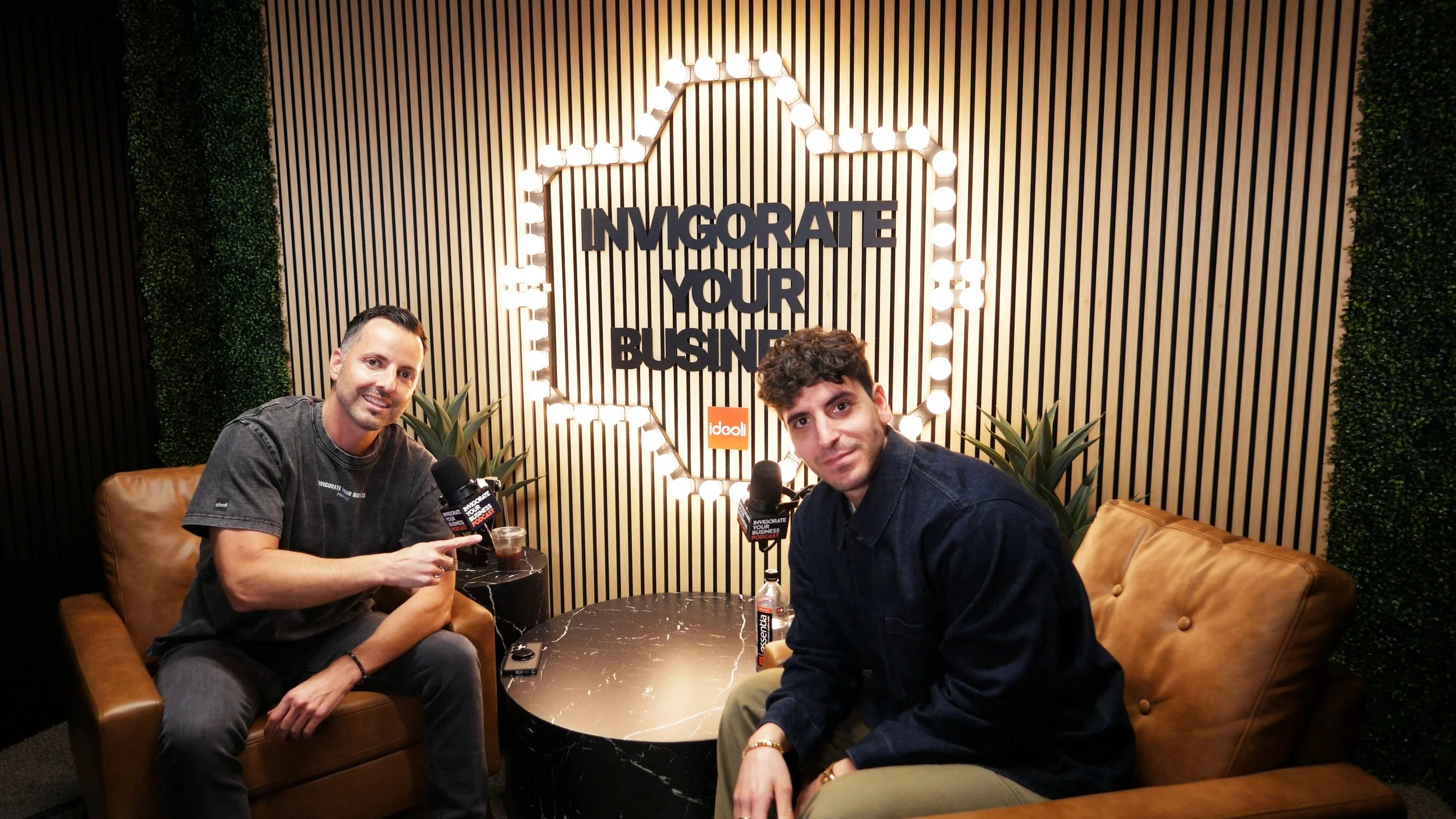
George Stroumboulis sits down with Alexi Papalexopoulos, a Los Angeles–based filmmaker and creative director who began his career directing music videos for major artists before evolving into narrative film and global storytelling. Filmed in Newport Beach, they explore his journey through creativity, film, and the mindset behind building a lasting career in the arts.
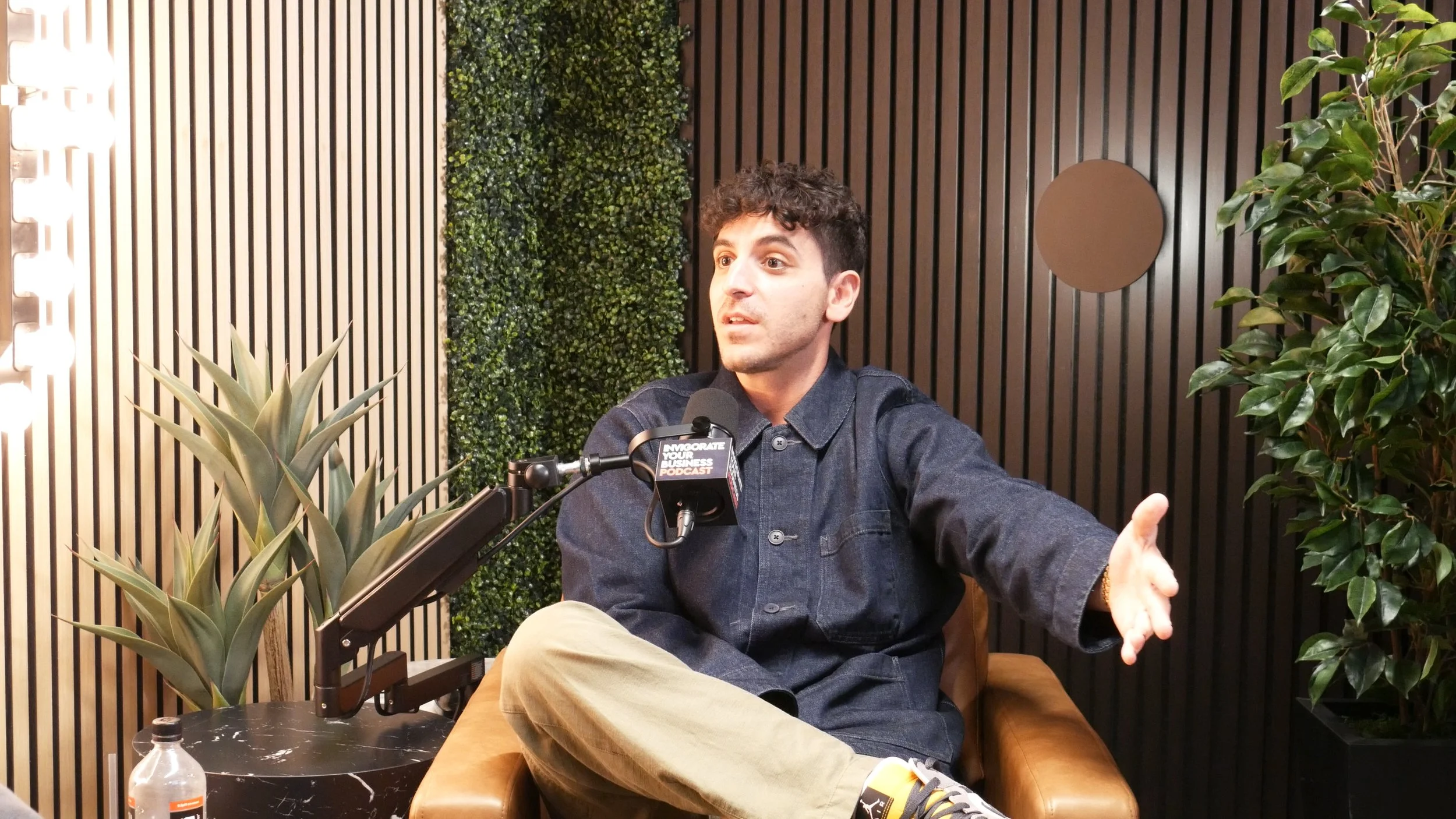
George Stroumboulis sits down with Alexi Papalexopoulos, a filmmaker and visual storyteller who transitioned from directing music videos for top artists into creating narrative films seen around the world. Filmed in Newport Beach, they dive into his creative journey, artistic vision, and the evolution of storytelling through film.
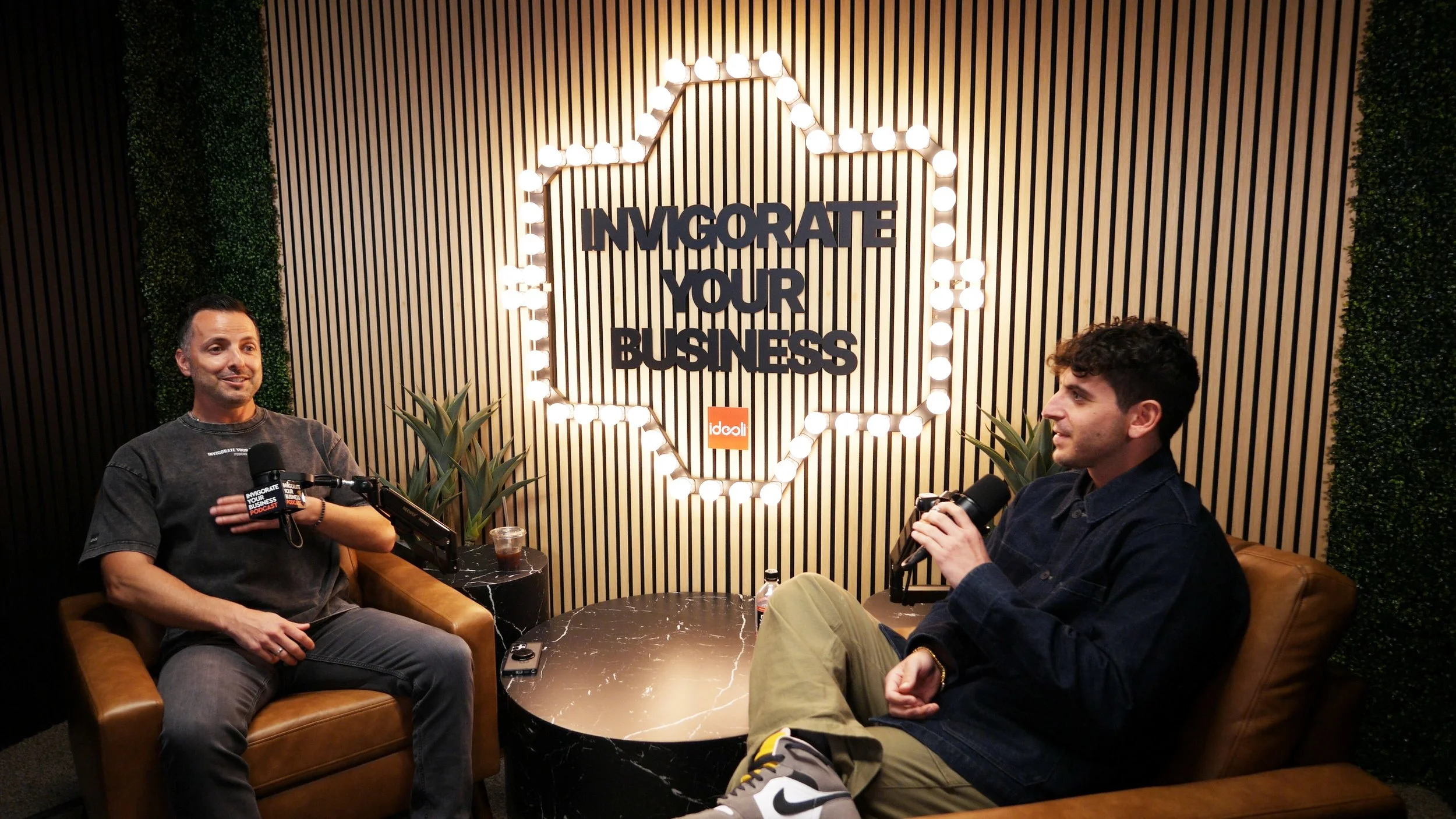
George Stroumboulis sits down with Alexi Papalexopoulos, a filmmaker and creative entrepreneur who built his career in music videos before expanding into film and global content creation. Filmed in Newport Beach, they break down his path, creative discipline, and what it takes to build a career in a competitive industry.
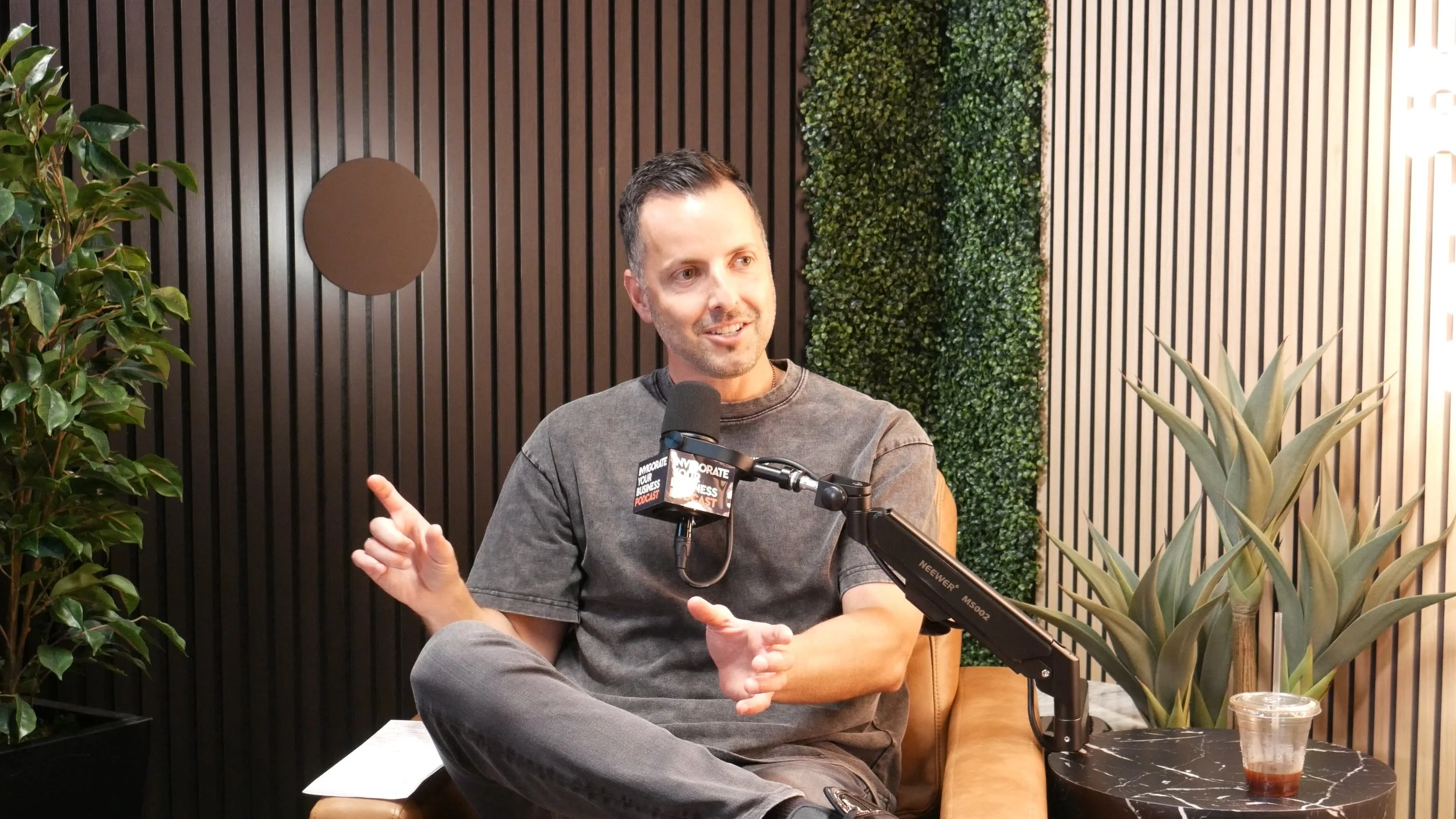
George Stroumboulis sits down with Alexi Papalexopoulos, a filmmaker who turned music videos into a global storytelling career. Filmed in Newport Beach, they explore creativity, growth, and the mindset behind building in the film industry.
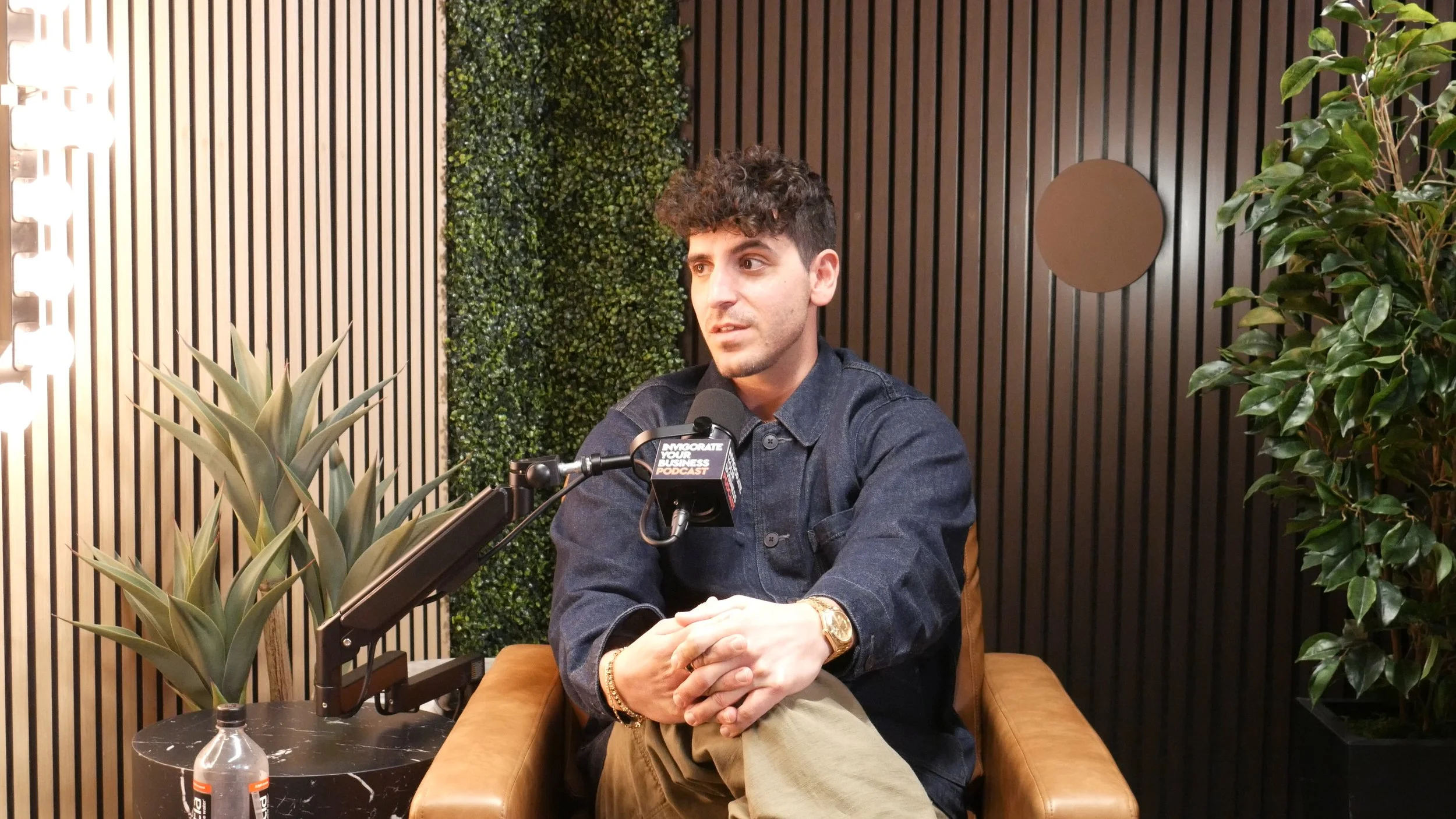
George Stroumboulis sits down with Alexi Papalexopoulos, a Los Angeles–based filmmaker and creative director who built his foundation in music videos before expanding into narrative film and global storytelling. Filmed in Newport Beach, they discuss his journey, creative mindset, and what it takes to bring vision to life at a high level.
ABOUT THE “INVIGORATE YOUR BUSINESS” PODCAST
The Invigorate Your Business with George Stroumboulis podcast features casual conversations and personal interviews with business leaders in their respective fields of expertise. Crossing several industry types and personal backgrounds, George sits down with inspiring people to discuss their business, how they got into that business, their path to the top of their game and the trials and tribulations experienced along the way. We want you to get inspired, motivated, and then apply any advice to your personal and professional lives. If there is at least one piece of advice that resonates with you after listening, then this podcast is a success. New episodes weekly. Stream our show on Spotify, YouTube, Apple, Amazon and all other platforms.
ABOUT GEORGE STROUMBOULIS
George Stroumboulis is an entrepreneur to the core, having launched several ventures across multiple industries and international markets. He has held senior-level positions at progressive companies and government institutions, both domestically and internationally, building an extensive portfolio of business know-how over the years and driving profit-generating results. George’s ability to drive real change has landed him in several media outlets, including the front page of the Wall Street Journal. George was born in Toronto, Canada to his Greek immigrant parents. Family first. Flying over 300,000 miles a year around the world puts into perspective how important family is to George’s mental and emotional development. With all this travel to global destinations, the longest he stays even in the most far-out destination is 3 days or less - a personal rule he lives by to make sure he is present and involved in family life with his wife and three daughters. To read about George’s global travels, stay connected with his blog section.
STAY CONNECTED WITH GEORGE STROUMBOULIS
STREAM & LISTEN TO THE PODCAST:
SPOTIFY: https://open.spotify.com/show/1rW2CmxQoiJNEPOZupJlvd
YOUTUBE: https://www.youtube.com/user/Stroumboulis
APPLE iTUNES: https://podcasts.apple.com/us/podcast/invigorate-your-business-with-george-stroumboulis/id1607693240
AMAZON MUSIC: https://music.amazon.com/podcasts/8fc03929-71b3-483a-a64e-153e30b3d462/invigorate-your-business-with-george-stroumboulis
STROUMBOULIS SITE: https://www.stroumboulis.com/podcast
PODCAST SITE: http://www.invigorateyourbusiness.com
FOLLOW GEORGE STROUMBOULIS:
INSTAGRAM: https://www.instagram.com/georgestroumboulis/
YOUTUBE: https://www.youtube.com/user/Stroumboulis
LINKEDIN: https://www.linkedin.com/in/Stroumboulis/
TWITTER: https://twitter.com/Stroumboulis
FACEBOOK: https://www.facebook.com/georgestroumboulis
TIKTOK: https://www.tiktok.com/@georgestroumboulis
CONTACT GEORGE DIRECTLY: https://www.stroumboulis.com/connect
FULL SHOW CONTENTS
00:00:00 Intro & Filmmaking Journey
00:02:13 Finding A Creative Identity
00:03:51 Childhood & Performance Mindset
00:10:58 Immigrant Roots & Work Ethic
00:14:10 Rejection & Getting Into USC
00:26:20 Mentors & The Music Video Era
00:36:03 Pitching Treatments & Winning Jobs
00:44:48 Film Set Pressure & Problem Solving
00:53:24 Starting A Production Company
00:59:53 Social Media vs Big Ad Budgets
01:01:56 AI In Filmmaking: Risks & Opportunities
01:06:45 COVID, Greek TikToks & Business Growth
01:14:35 Making “Jaunt” From Script To Screen
01:26:48 Film Festivals, Distribution & Streaming
01:39:45 Directing Actors & Production Logistics
01:50:16 Mentorship, Legacy & Final Advice
02:00:44 Where To Follow & Closing Thoughts
FULL SHOW TRANSCRIPT
GEORGE STROUMBOULIS 0:00
On today's episode of Invigorate Your Business with George Stroumboulis, I sit down with Alexis Papalexopoulos. Alexi is an extremely creative individual who has graduated from one of the world's top filmmaking schools. Alexi is going to tell us all about the filmmaking industry. We're going to talk about his new projects he has coming up. We're going to talk about his background, being a very successful music producer for some of the biggest rappers around the world. We're going to talk about what it takes to succeed in this industry and how to keep pushing and become the top at your game. I'm excited for this episode starting now. My name is George Stroumboulis, and I'm extremely passionate about traveling the world, meeting new people, and learning about new businesses. Join me as I sit down with other entrepreneurs to learn about their journeys. This episode of Invigorate Your Business Starts Now. Okay, so we're live there. We're there, we're there, we're there. Okay. Uh this is gonna be a good one.
ALEXI PAPALEXOPOULOS 1:07
It's gonna be fun.
GEORGE STROUMBOULIS 1:08
It's gonna be fun. We got our coffees, we got our water, and uh I got an intro I'd like to kick off. Okay. Tell me how close we are with this one. Okay. But so today's guest is a filmmaker and creative director working at the intersection of storytelling, music, and cultural and visual culture. Born in San Francisco and based in Los Angeles, Alexe Papalexopoulos is a USC School of Cinematic Arts graduate who first made his mark directing music videos for major artists like Outcast, Ludacris, Wiz Khalifa, and G Easy, which is incredible. He since expanded into narrative filmmaking with his film Jaunt earning the Audience Award at the LA Greek Film Festival, along with work showcased internationally. Beyond film, he's also a photographer and music producer, bringing a unique, multidimensional approach to everything he creates. Alexi, welcome to the show. Thank you so much for having me. Appreciate you being here. I'm I know we missed a lot. I don't think you did. But but you're also a musician.
ALEXI PAPALEXOPOULOS 2:09
Yeah.
Choosing A Creative Identity
GEORGE STROUMBOULIS 2:09
Right? Like there's a lot. You're you're a creative ball of energy.
ALEXI PAPALEXOPOULOS 2:13
Yeah.
GEORGE STROUMBOULIS 2:13
But like start, what what do you I this is gonna sound weird, but what do you identify as? Are you a filmmaker?
ALEXI PAPALEXOPOULOS 2:19
Yeah, I mean it's multiple things, but it it's tough. I think about it sometimes. I mean it's weird because like it depends who you're sort of talking to. Like some people they only know some people they've only met me through when I used to do music videos. And some people they've only met me from you know, from music I've made. Some people they've only met me, or haven't even met me, but they know me as like a guy who does funny Greek, you know, comedy skits online with my sister. Right. I guess today you you you would classify it as just like you're creative, you're a content, you're a content creator. It sounds kind of cringe to some people, but yeah, is a filmmaker amongst is is sort of the the number one thing and and title that rings most true to me is uh the foundation of it, the core of it really is filmmaking, you know, because there's so many different facets to it and so many different mediums within the umbrella of filmmaking.
GEORGE STROUMBOULIS 3:09
Absolutely. Well, I first came in to know of you through your movie Jaunt, right? And uh I saw social media and the post and like LA Greek Film Festival, and my first impression of you is like, oh, serious film guy. Right. This is before I really saw a lot of the skits and everything. And then through, you know, your sister and then the channels and everything, I'm like, oh, he's hilarious too. Like I always thought you were just serious. Um so you you cover all facets. So tell me where creativity starts. Because it's very I wouldn't say odd, but it's not to have two siblings who are equally hilarious and creative, you know, typically one does one, one does the other. Like, where does that stem from?
ALEXI PAPALEXOPOULOS 3:51
How do we impact that? I mean, a lot a lot of it's childhood, you know. It's what are you what are you into when you're a kid, you know, and how can you I just remember the the early days of discovering creativity um was always with like something to do with cameras and music and something to do with like performing and like just putting it all together. Theatrics you can call it, right? It's like my sister and I we went to a school in San Francisco that really fostered um it wasn't an art school by any means, but but there was a yearly like speech contest, so it fostered this sort of uh this this creativity and and and way that you can use your mind to not only learn material but present it in front of people. Okay, so it really fostered like oratorial skills, you know, which a lot of which I'm very grateful for a lot of places, and I and I met a lot of people, and that's like their biggest fear is like getting up and speaking in front of people. The school we went to, we were in first grade. It's like it's mandatory that every kid picks a monologue from some literature and recites it to the class.
GEORGE STROUMBOULIS 4:52
Jeez.
ALEXI PAPALEXOPOULOS 4:53
And then they select a few from that, and then you then you go to compete on stage and like all in front of the whole entire school. Every grade gets chooses their you know, their their Kobe's and their LeBrons to go up and represent, and you go. And your screen called.
GEORGE STROUMBOULIS 5:08
Steph. Yeah, yeah.
ALEXI PAPALEXOPOULOS 5:10
I'll take I'll take I'll take any of them. No, but it was um I was Alan Iverson, he was my fan of the biggest one at the time. Alan Iverson was but but the point is is it is it uh forced you, whether you wanted to or not, to confront this fear, which is like speaking. So I don't want to go too deep into that, but that basically was sort of revving up the engines and getting the oil going for like being theatrical and acting a bit, you know, and commanding a stage and finding the confidence in yourself. And it was so layered that speech contest, right? So I owe a lot of it to that, and then um that helps you break out of your shell and you learn to like confront a fear, and then when you have an idea to do it in front of hundreds of people, you're like and you hear people clapping, you're like, Oh damn, like I might be good at this, like I have something. And then the next thing you get into is like skateboarding and and filming, right? That's that's how film came about with me. Was and and for a lot of people, you know, that are that are filmmakers, skateboarding and photography and film are just like they're just tied, you know, because you want to document, you know, document like you in action or something like that. It's like your friends, you, and at the same time, you're filming shit that's not even skateboarding. So it's on the way to the corner store, getting a bag of chips. At the time, it's like the soby drinks we were drinking. It's like filming your friends goofing off. It was like jackass before jackass. Right. You know? So now you're like looking through the lens of like a real storyteller now, like a documentarian. And you tie that in with the skateboarding, and then you're filming tricks, you're telling your friends to do it this way, you know, then you're putting it in editing systems and you're putting music to it, and then now you're like low-key, whether you know it or not, you're cutting a music video. Right? So then that's the next layer to it. So it's just kind of like this this onion that uh keeps peeling back different layers, and you're discovering your strengths, and at the same time, you're sharpening your storytelling skills and your skills of being a creative behind the camera, in front of the camera, whatever, and you're building multi-um, you know, dimensionality to yourself as a as a human. So that was and an artist, and I think that was sort of the uh the nebulous, like the impetus of it all. It spawned from that.
GEORGE STROUMBOULIS 7:14
But do you do you think like were your parents encouraging that? Because a lot of times in an immigrant household, it's like, no, no, no, you're coming to the restaurant, you're not filming a skateboard.
ALEXI PAPALEXOPOULOS 7:22
Yeah.
GEORGE STROUMBOULIS 7:23
Right? Like was there support?
ALEXI PAPALEXOPOULOS 7:25
I would say yeah, I would say I would it was uh yes, yes and no. There was a little friction, I think, from from my dad, because it's so foreign to him, right? Like being artistic and creative. My dad is so he's he's uh the side of the brain that's you know more type A. He's a scientist, he's uh academic, he's you know, a PhD, which I have, you know, utmost respect for. It's a very difficult thing to reach, you know, one one twentieth of the accolades he's reached in in his field in sciences, but we're just so different. Like that, but I think the the one thing we're different in our mediums, but maybe my sister and I think what we do share the commonality is the approach and the obsession to like trying to keep cracking the code. In my dad's world, it would be cracking the formula or equation, right? As a computer scientist and electrical engineer. And for us, it would be, well, how do we one up ourselves? What's the next, you know, can we have a better button for this script, or what's the next idea we can keep pushing ourselves in? It's being obsessive about and be being obsessive about what you find uh is in is in your heart and your flow state, you know. So that's what we did inherit. Now the medium in which we did it in, he was confused by. Right. And he's like, what are these, you know, especially later on, I think like seeing when we're getting into, you know, when we're in high school and you know, uh, we're gonna go to college, what are you gonna major in? What's this, how's this gonna be a career, stuff like that? Um, you know, it was it's different for him, but ended up obviously supporting it and getting behind it because and who doesn't want to see their kids like do something that they love as a parent, you know, as a father, myself, you're a father, you want your kids to like it's the biggest blessing to see them fired up about I was also really grateful because on my mom's side, her side's very, very artistic. Like my mom is a phenomenal, phenomenal eye, phenomenal visionary, like insane vision, attention to detail, ability to articulate things, um, you know, intentional with what she does. Started as a as an amazing artist and drawer, and then she got that from her mother. And, you know, can't sing high praises enough about you know my grandmother from my mom's side. She taught me piano when I was like four. So she was a fan one of the even her I say, I I have all of my old cards, Christmas cards, birthday cards, you know, you don't really keep a lot of those from random people, but I kiss saved almost all my grandmother's because her penmanship. Her penmanship was like museum worthy. Her handwriting is like framable. It's like and I saved something like, oh my god, it it looks like it's out of like you know the the 17th century. It's like it's so incredible and and elegant and gorgeous the way she wrote. People don't have that anymore, people don't write anymore. Nope. You know, they don't have that penmanship and that that artistry. Her her letters were like art, you know. And but she was a phenomenal pianist and had a a next level ear, could play shit by just by hearing it a few times and go. So I was fascinated and drawn to that. So I was taking lessons young in kindergarten and first grade. I was in piano classes, you know, after school. And I'm like, I would find the most flow state in that. Finding a piece, okay. You learn a little Beethoven, get lost in that. Oh, I always mess about this part. I gotta go again and go again, go again, and then hours pass. It was the first thing I could really find in my life where hours could pass, I could be in complete flow and not even think about stopping.
Immigrant Roots And Hard Perspective
GEORGE STROUMBOULIS 10:48
Jeez, that's when you know you love something. Yeah, right? That's incredible. So that that was growing up with your parents. So indirectly, they're supporting, right? You have the creativity. Your dad a PhD, was your dad an immigrant? Was he first generation?
ALEXI PAPALEXOPOULOS 11:02
My dad's first generation or I'm my dad, I guess I would be first generation because he's off the boat. He was born there. Yes. He came, yeah, he he was born in Calavrita and then um did a lot of growing up there in Calavrita, which is in the Peloponisos. I don't know if you've been, and then moved to Athens, did university there, and then went to Atlanta, Georgia to get his PhD in in double E at Georgia Tech. So yeah.
GEORGE STROUMBOULIS 11:25
That which by the way, not to interrupt, but like about your dad, really quick. Like to be an immigrant from Greece at that time, to be able to come here to pursue an academic career and not open up a restaurant or your typical that's a big deal.
ALEXI PAPALEXOPOULOS 11:38
Yeah, it is a big deal, and he's had he's had a crazy journey, you know, and and I o I tell it it's crazy to think about, but that generation, you know, you have to think about so they were born post-war, right? And a lot of people don't know this. I mean, you know this and you're Greek, but there was a massive German Nazi occupation uh in the nineteen early nineteen forties throughout different parts of the Paloponisos and and throughout Greece in general, and one of the biggest ones took place in in our Horyo, uh which is Calavita, and it had one of the the single the single day largest massacre in all of nineteen uh and sorry, in all of uh World War II in Greece happened in our village. Yes. Which is the massacre of you know Calavita in nineteen forty three.
GEORGE STROUMBOULIS 12:20
Absolutely.
ALEXI PAPALEXOPOULOS 12:20
Which is uh, you know, very historical and iconic, and you and you it's haunting I think the generations and and village to this day. You you feel remnants of it, you walk around, you see it, you can't escape it. So I bring that up because it's it just makes his story even more incredible because his father was in it. Jeez. His father survived it. We and then there's also family members that were lost. Yeah. You know, and then there were cousins who were playing in minefields that didn't know about it, and they were playing soccer, you know, in the mid-sixties, and a mine goes off and they die. Right? So it's such a different world. So different world, yeah. Yeah, it's like, you know, you look at the things that we complain about, and you put into perspective when you hear stories like that, not to say that it doesn't happen in this part of the world and other parts, which it does, sadly, but you think about okay, all the odds are stacked against this person from ever hitting any sort of success, and look what they were able to overcome and do. And that's the beauty of like the American dream and and the immigrant story, which has been, you know, personified by so many immigrants from all over the world that came here with nothing, hit it really big, became entrepreneurs, you know, in multiple different industries. And and yeah, it's it's just that's incredible. Crazy respect, yeah.
GEORGE STROUMBOULIS 13:30
Really quick, just on the German occupation. So four months ago, I'm FaceTiming my grandmother, 94 years old, lives outside of Kalamata, okay, Peloponnesau. She moves stuff around, she trips, she breaks her nose on the flower pot, breaks her nose, black eyes. I'm FaceTiming her. I'm like this poor thing, right? She's this little 94-year-old. I go, Yeah, you okay? What's going on? She goes, Ah, this is fine. She goes, the Germans used to come through our village and ransack everything, a broken, right? And when she said that, I'm like, oh my God, the mindset. Where it's like here we break our nose, it'd be like a big deal. Her mindset at that time was like, Yeah, I've I've seen worse. We're good. Let's keep it moving. Just blew my mind, right?
ALEXI PAPALEXOPOULOS 14:08
Yeah. Yeah.
Rejections And Getting Into USC
GEORGE STROUMBOULIS 14:08
Uh but back to this. Okay, so filmmaking, you you keep going, you have this creative energy, right? Obviously, intelligent, good genes. You get into USC film school. Okay, talk talk to us about that, because that is known around the world, right? Like that is the film school. Yeah. So did you always want to get to that level or yeah, that was the one.
ALEXI PAPALEXOPOULOS 14:28
Okay. It was like that or NYU. You hear these big schools, and it's like, I gotta go to one, you know, one of these powerhouses to um, you know, further, further develop this, this love, this passion, and to to learn, explore, grow all that, network. Had to be one of those two. Didn't get into NYU and I didn't get into USC at first. This is a crazy story. So I didn't get into USC at first. I was a shit student, right? I was not a good, not a good student. I went to a you know, a di a very demanding, difficult college prep high school in San Francisco, which I'm very grateful for going. So my like lifelong friends I met there and uh such a strong community at St. Ignatius College Prep. And and it really, you know, it made college, it made college feel easier than than high school. Really? Yeah, college was easy compared to you know my high school experiences because of the demand at such a like a young age. So again, you're calloused in a way, we're like, I can take this shit because I was barely staying afloat when I was 15 years old in fucking history class. What why you just didn't interest you? Didn't interest me, but it was just like a tough, really, really tough, rigorous program. And I was always a kid struggling with like, you know, at the time, it's this is before the they were, you know, pushing, you know, riddle in on kids. It was right around that time. But I was like really bad ADHD as a kid. I was always just like running around having ideas, wanting to do things, and it's tough to like harness that as a child, and when uh academically it's hard for you to fit in and like grasp a lot of things that are moving at fast pace and stuff, and you've got to like, you know, I hear a car was by, I could like, you know, hear whatever, right?
GEORGE STROUMBOULIS 15:58
Is that a ADHD or is that just a boy being a boy? True. Right like I again, I'm not trying to be a medical professional, but it's like we're programmed like that growing up.
ALEXI PAPALEXOPOULOS 16:07
More so, more so, more so programmed. But uh, but I think once you get like a a feeling of like, you know, anxiety around things, that's when it's like, then you can't start. You can't it it gets it gets so deep and stuff, you know. But it ends up becoming, you know, my greatest superpower. Because when you can harness something like that, you know, if you're bad at academics, it you know, you could you could harness it and put it in a direction where like, well, now my mind thinks in these really interesting creative ways that uh more more neurotypical brains aren't thinking of. Right. I have a leg up now in certain things. I have a leg, uh I'm you know, we're one one part of the world is against you in something, but you find your own world where you fit in, and now you are like pedaled to the metal on it. And that's one thing that I discovered like later on. That was more like in high school, outside of high school, going into college, and I'm just like, oh, I got this shit. I know this shit's gonna work out. But back to the school thing, when I didn't get into these schools, I was bummed. Because when you're 18 and you get rejected from the places you want to go to, you feel like it's the end of the world. Oh, yeah. You feel like I don't know how I'm gonna pick up and move on from this, I don't know how my life is gonna hash out now. But I always knew it was gonna work out. So I went to San Francisco State for two years in San Francisco, and um, you know, which is also I met some great, amazing, lifelong friends from, and they also have a very decent film program.
GEORGE STROUMBOULIS 17:26
Um, so you studied film there with the goal of trying to get into USC or NYU?
ALEXI PAPALEXOPOULOS 17:32
Yeah, I studied film there and and minored in music, right? So I was still doing piano at the time um and studying that, but film was really what I wanted to like do the major in, and like, you know, I knew I wanted to do that as like you know, my vocation, and I knew it was gonna involve music and composing and that. Um but f being a film major at USC was always a thing.
GEORGE STROUMBOULIS 17:51
Really quick on that though. So you're 18, you're at this college, you want to get there. What was your goal at that point career-wise? You wanted to be a film producer?
ALEXI PAPALEXOPOULOS 18:00
So here's how it here's how here's what the vision was. I gotta get into USC, I gotta get good grades, I gotta get like, you know, as close to a 4.0 as I can, or whatever. I've never done that in my life. Like the word the the the numbers 4.0 are just not in my you know vocabulary. Right. Right. I never saw numbers like that. But I'm like, okay, I gotta like somehow make this work and do the best I can uh to get into USC, and so I apply again. I don't get in again. This is probably the craziest story of my life, what I'm about to get into. Okay. All right. I apply again, I don't get in. I am livid. I'm the most fired up, livid. I'm ready to get in a bulldozer and put the hard hat on and like drive through the fucking admissions office. Yep. Which is essentially what I did. Yeah, mina minus the caterpillar bulldozer and the hard hat, right? I did so so when I get this rejection, I'm at this like boiling point, and God love my mom for this. This is a coolest story, and probably the coolest, the greatest memory that my mom and I have had together and will ever have. She's like, let's get in the car and drive down to LA right now and bring bring your grades, burn a DVD of your portfolio, and let's go to the admissions office and like don't leave until you talk to someone and and they say we're denying you the spot.
GEORGE STROUMBOULIS 19:23
This is your mom telling you.
ALEXI PAPALEXOPOULOS 19:24
My mom was like, You gotta do this.
GEORGE STROUMBOULIS 19:26
Dude, that just gave me a chill just from uh, oh my god. Especially being a parent.
ALEXI PAPALEXOPOULOS 19:31
Yeah.
GEORGE STROUMBOULIS 19:31
Holy shit. Okay, go ahead.
ALEXI PAPALEXOPOULOS 19:32
This is this is the coolest story of my life. I I know I said it on So I'm like, that's kind of that's kind of crazy, but are you sure? And she's like, pack the bags. My sister at the time was at UCLA. So she's like, we're gonna go see Ariana, you know, we'll stay at a hotel, pack the bags for a weekend, and you're gonna like face this fear and you're gonna march in and you're gonna do this. And I was like, fuck it, let's go. Burn the DVD, my portfolio's on there. I already know that I had like, at the time, I already won a couple awards as a student filmmaker, and as of state, I got like best director for a short film that I did uh the regionally, um throughout like the West Coast and this and this, you know, I had short films on like Virgin Atlantic, on the airplanes and stuff. It's like shit was you know, you know, getting a little buzz from it. Like it was I was already getting the positive feedback from it that I, you know, I need to be keep keep pursuing this.
GEORGE STROUMBOULIS 20:20
All under 20 at this point. All under 20 at this point.
ALEXI PAPALEXOPOULOS 20:23
Um so I drive down with all this stuff, my grades. I think my grades came out to like a 376. Right? Best I ever got in my life. Yeah. Uh no one, they're like, it was a Friday. No one could talk to you, kid. Like, you know, there's like an assistant, a secretary, who's like a kid. They don't they're not gonna like let me in, you know, who's this random guy? And I'm like, fuck do we go? We're there for hours now, or a couple hours. I'm marching around one building to another building. Where's the dean? Can I find the dean? I go up, uh the dean's assist the the dean's secretary says she's out for the weekend. Okay, who else can I like talk to? And she drops a hint, she's like, You wanna find like this guy? You know, he you might catch him before he like heads out for Friday. Um I go back down to this other building, start barging through doors, talking to people that you know are not invested in my story. Right. Long story short, this guy comes out from the back office and he's like, I was hearing your story. I just couldn't, you know, help but to eavesdrop on it. Um he's like, I want to talk to you. So he like I'm like, shit, here I am. It's like 4 p.m. or so, 4 30 p.m. on a Friday. It's like people are heading out. He's on his way out, and he's like, Come um, you know, come come to the back office here. He's like, Let me see your grades. I get my DVD, he's like, Okay, let me watch this. Like, I can't believe this happened.
GEORGE STROUMBOULIS 21:44
Like, here's a guy's watching it while you're there.
ALEXI PAPALEXOPOULOS 21:46
He's why he sends me back to the front, puts in my my portfolio, right? My DVD reel. Like, it's like short films, some little things on it. Um, I'm there waiting for like 20 minutes in the front, like with my mom, heart pounding, palms like complet. I'm just like, fuck, this is. This is nuts, especially at that age. Like, this is everything to me. I need like this needs to happen.
GEORGE STROUMBOULIS 22:04
Are you talking to your mom in those 20 minutes? Or is it quiet?
ALEXI PAPALEXOPOULOS 22:06
I'm like, what do you think? Like, what's going on? What's going on? Guy comes out and he goes, We've made a big mistake. He goes, We actually never came across your application. And I go, What do you mean? He goes, you know, when you applied, we were moving buildings. And it must have gotten lost in like the mix of things. He's like, but we made a huge mistake. And I'm like, so you never even knew that I existed? He's like, no. And I was like speechless in that moment. I'm like, that's wild. Like you work so hard. You think there's a system that's like well oiled. Right. That's gonna, and I don't mean, you know, just I'm not throwing daggers at, you know, uh USC or like any.
GEORGE STROUMBOULIS 22:54
No, no, no, uh uh inst any institution. Yeah, yeah.
ALEXI PAPALEXOPOULOS 22:57
In the states. In the states and institutions, like you think it's all set up, you think you're gonna play by the rules and you're gonna be seen or you're gonna be given a shot. Jesus. You're not all the time. And this was just like living proof that if I didn't get in the car and drive down there and get to the bottom of it and bulldoze through it, the pers persistence of it, the perseverance of it, I would have never ended up at USC. And if I never would have ended up at USC, I would have never ended up getting my first jobs and internships and meeting people that are in my life really close now that I met in LA. What would my life be like? Wow. Well, where would I be now? All because and it's not if anyone should take away something from this, it's not because I'm special or great or because I'm gifted or talented, it's not because of that. It's because I didn't take no. It only comes in that. I didn't take fucking no. Hold on, really quick.
GEORGE STROUMBOULIS 23:50
That the if you didn't hear that guy, if that guy didn't overhear eavesdrop at 4 30 on a Friday afternoon, what once 5 o'clock hit and you went to your sisters after was that the end of this?
ALEXI PAPALEXOPOULOS 24:02
Or was that no, it wasn't the end of film. It was still gonna be like, okay, fuck, finish up college, you know, go back to San Francisco, finish that up, move back down to LA, you know, grind and turn or whatever, whatever it has to be.
GEORGE STROUMBOULIS 24:12
Right.
ALEXI PAPALEXOPOULOS 24:13
Um and and keep going. So it wasn't gonna be like I'm not you're not hanging them up, you know, you're not hanging up the hanging up the cleats, you know, because I heard the no. It was just gonna be a different trajec trajectory. Yeah, right. Um another layer of this to make it even more crazy and unbelievable is when the guy found out the high school I went to, he said, I lived in San Francisco for 11 years. I used to swim at your high school in the mornings when it was open, when it was public open at like 6 a.m. I'm like What are the fucking chances of that? Yeah, come on, man. It's just what are the chances of that? You know, not saying that that's the reason I I got in, but it's like it's pretty incredible. You never know who you're gonna meet. You never know like what synergy, what magic is there that's waiting to happen if you don't really like seek it out. Yeah and f and make it happen and find it.
GEORGE STROUMBOULIS 25:07
And you know what's beautiful about this? Like, you'll always hear success stories or stories of like, oh, I didn't have any support and I had to do this and that, and my parents were yelling at me, like, okay, but let's focus on the beautiful part on supportive parents, like your mother at that point. Like how beautiful is that?
ALEXI PAPALEXOPOULOS 25:22
Yeah, right?
GEORGE STROUMBOULIS 25:23
To be like, hey, you know what, honey, I see you're in pain. Yeah, let's go do this together. Whether she believed you deserve to be in there or not, she made you believe that, no?
ALEXI PAPALEXOPOULOS 25:32
Yeah, absolutely.
GEORGE STROUMBOULIS 25:32
That's a big deal.
ALEXI PAPALEXOPOULOS 25:33
Absolutely. So, shout out to my mom. My mom, you know, legitimately single-handedly changed the course of my life multiple times. But like in this specific one, it was her just being, yeah, because if if I didn't have a wonderful, loving mother like that to champion me to be the the engine of like, yo, you got this in you. I'm here with you. Let's not take a no. Let's not take no.
GEORGE STROUMBOULIS 25:53
That's huge.
Mentors And The Music Video Era
ALEXI PAPALEXOPOULOS 25:54
That's what it was. Imagine if I didn't have a imagine if I didn't have a mom. Imagine if I didn't have a mom like that. Absolutely, man. You know, it's incredible. So it's like I always think about this story a lot. It just really comes back to me. And then, like I like I said, through that I met a lot of amazing people that are so close to my life in my life now. Um, and to take it to sort of push the narrative along, the the next thing that happened with that was so I'm at USC. I had a fascination, obviously, for music and film. And at the time, music videos were still a thing. So this is gonna lead me to the next chapter. Yep. Uh music videos were still a thing in the world.
GEORGE STROUMBOULIS 26:31
You know 20, 2005?
ALEXI PAPALEXOPOULOS 26:33
No, this is this is like well, 2005, they were huge, obviously, right? Early 2000s. I was growing up watching these all the time, fascinated. Rap music videos, like Madonna videos, everything. I'm like, these are so cool. It's like I was always fascinated by by the uh the medium of music videos because you could tell a short film, you could tell a short story in three, four minutes. And you know, you can be very stylistic with it, you could be abstract with it, you know, you could be elegant with it, you could be raw and gritty with it. You know, you look at old Jay-Z videos, like they were raw and gritty, and then you look at some, you know, other you know, Michael Jackson and Madonna videos, and they were like very high production design and sleek and elegant, right? Right. The the dexterity you have in that medium is insane if you you know you can really, really grow in that medium. So I'm like, I want to do music videos because I know as much as everyone wants to be a Spielberg, you know, when you're when you're 20 years old, I knew you had to grow to something, and I knew I have to keep developing this. But music videos seems like a cool, fun thing. I love music, I love film, it's short form. I could be ADD with it, I could crank a bunch of them out and keep moving on to the next one. All these things. I'm like, this is what I want to do. So I started researching a bunch of music videos. And I don't know, a couple of them, so many of them were popping up. I was watching hundreds of them and hundreds of them. Any genre, any genre, everything. And there was an aesthetic that kept popping up, and there were there were two guys that I had to like that kept popping up in my in my periphery, you know, online. I'm like, I'm attracted, their style is attracting me. It's like there's something in their spirit and their energy. I want to learn under them. So one of those guys is Taj Stansbury, who's one of my dearest friends and one of the most gifted guys I know. And the other one is Anthony Manler, who is an unbelievable creative force and and dear friend as well. And I can't speak highly enough of these two guys who really, you know, helped put me on and get my my career started. And like, you know, I was shadowing the both of them. I ended up, you know, working under them as an intern, going on their sets, traveling the world with them, cutting your teeth, being an intern, going, you know, 20 hour days, um, but always, you know, being taken, kind of taken under the wing as like a younger brother, you know, a tough love sort of thing. And then you grow under that and you're like, oh my god, I'm seeing how they're doing these things now. I want to start. Okay, let me find a small artist and get together a small budget where I can be like a mini version of that.
GEORGE STROUMBOULIS 28:52
Hold on, really quick. You skipped over so important. You did your research and you found these two guys who at the time were leaders in the space. How did you even get in contact?
ALEXI PAPALEXOPOULOS 29:00
Oh my god, I skipped okay. So what happened was I is I find these two guys that keep popping up on YouTube, and I am searching the directors, and I'm like, I gotta get ahold of them. At the time, MySpace is the thing. It's like MySpace and Facebook, right? This is like 2008. I'm a freshman at San Francisco State, right? I'm like, I I knew that music videos were gonna sort of be the thing I want to sink my teeth into. It's the reasonable stepping stone between film school and doing movies. Okay. It's like music videos, short films, features. That was the you know, that's the pond you're looking at of stepping stones. So, okay, I gotta be tactile. I gotta gotta get a hold of these guys somehow. Go on MySpace, go on Facebook, start hitting these guys up. I'm hitting up other guys too, and like, you know, you get some people that respond, some people that don't. Um Taj is from Oakland, California, and I'm from San Francisco. So we have the commonality of being from the bay. So Taj responds like right away. And he and he and the message I sent him, I think about this too a lot, was uh I said something along the lines of like, I just want a shadow under you. Um I really want to learn how to perfect, I wanna I want to learn how to perfect filmmaking and perfect my art. And he responds like within minutes, and he goes, something something to the effect of like it's so you know so refreshing to hear from like you know a young guy who wants to get involved, and period, and then he goes, but I should tell you this is not an art form to be perfected. And that made me think like, okay, what does that mean? Well, it means that there's it's it's a continuum. It means that there's not there isn't an end zone. It's always you're always a student. You're never really gonna perfect it, you know. Okay. You always have to be chipping away at it and always be curious. That's when it hit me that, like, okay, I got a lot of work to do. You know, it's like you want to go in saying, I want to be the best, I want to be perfect, and whatever. And then you're hearing from someone that you look up to that no, that's not the goal here. The goal's not to be perfect, really. The goal is to you know, do you explore yourself, explore humanity, and like, you know, live out, you know, your your artistic expression. Yeah, that's what the the the ethos of it was. Gotcha. Right. So I met him finally um in 2009 when I went when I did a trip down to LA, and we just like hit it off right away. He's like ten years, nine, ten years older than me. You know, he was had a huge buzz as a music video director at the time. He did like Nas videos, all these hip-hop videos, Jennifer Lopez, like you know, massive, massive videos. He was also friends with Anthony Mandler, who I really wanted to meet as well. And I Anthony I was hitting up for a year straight and never heard back. MySpace. MySpace. Okay, yep. Who's this guy? He did Killer's music videos, Jay-Z, everyone. Oh, gee, you know, uh, every big artist, you you name it, right? Uh he was like the holy grail of one of the guys who's a holy grail of music video directors. Gotta meet this guy. Doesn't respond to me for a year. Taj is friends with him. And he goes, one day when I'm working for Taj, he goes, Anthony wants to meet you. I'm like, get the fuck out. He goes, Yeah, we're gonna have lunch with him in Beverly Hills. So I'm like, I get to meet. First I meet Taj, I'm rocking with him, and then now I'm meeting Anthony Manor.
GEORGE STROUMBOULIS 32:09
Did Taj know you were blowing him up on the side?
ALEXI PAPALEXOPOULOS 32:12
Oh yeah. Anthony was telling him, like, yo, this is his kid. This kid's annoying the shit out of me. He's thirsty. He's thirsty, he wants it. Um and I ended up, you know, finally meeting Anthony. That was a summer I interned for him in 2000, yeah, 09. He wrote me an unbelievable letter of recommendation to USC because he went to USC as well. That I still have to this day. Really touchings. And that was just again another part of the journey, right? And that was the the um summer I got in.
GEORGE STROUMBOULIS 32:42
Oh wow. Right.
ALEXI PAPALEXOPOULOS 32:43
So it's like again, it's it's kind of just putting yourself around people, you know, a humbling experience, learning, getting on set, just saying yes to everything, and um, you know, good things kind of come back, you know.
GEORGE STROUMBOULIS 32:54
That's incredible, man. Yeah, and that's so then you learn from these guys. So the USC, really quick on USC, and I want to get back into like the rap videos and everything, but so USC did it live up to the hype? Like when you came out of there, was it you know, ranked around the world, top filmmaking school? Like when you came out of there, were you better than going into there?
ALEXI PAPALEXOPOULOS 33:15
Yeah, definitely.
GEORGE STROUMBOULIS 33:17
Okay.
ALEXI PAPALEXOPOULOS 33:17
Definitely. You know, there there's uh it's always a debate on like whether art school or film school is uh a necessary thing or a needed thing. You know, I graduated in 2000, 2012, you know, the world's a lot different now. Tech, pop culture has shaped so much, and we're always constantly evolving. AI. AI, everything, you know, which you can get into later. But it's like I think at the time it was an it was an interesting time to go to film school because it was like post-film, post-celluloid. We weren't shooting on film, and we didn't have digital cameras that were great. So it was this weird, bastardized time of like we're shooting on like tape stuff and like kind of digital, but the digital cameras aren't very good. And film and celluloid is a thing that's kind of like not being used and it's expensive, and you know, only big studios are whatever, right? It's like if you're a kid, what are you shooting on? It's like these kind of like there were no, we didn't have the tools, there's no Sony FX3 back then. You know, it was like DVX100s and HVXs, right? Like 720p was a big deal.
GEORGE STROUMBOULIS 34:14
Okay.
Treatments Pitching And Winning Jobs
ALEXI PAPALEXOPOULOS 34:14
Just to put it into into context. But the reason I bring the reason I bring that up is because you could see uh to get to get a scope of like what tech was like at the time. You had a final cut, but you didn't have like great cameras and a lot of access like you do now. Regardless, I still was like cutting my teeth and making a bunch of stuff on like you know, whatever handy cams I can get a hold of. And the cool thing about the school is there were so many cool facilities that you had access to. So it's like I'd go into sound stages when I wasn't even supposed to be there, and I'd be like, you know, bringing friends in, let's shoot a little scene in the sound stage, and I'd get kicked out, whatever. I'd go take gear from you know, no, no, this class isn't using that. Let me just I have to befriend someone who's working there and be like, yeah, let me just borrow this first. Right. I'll bring it back. Like be a little hustler about it versus going strictly through the rules. I was you'd be a little bit of a renegade because if you know how to use it right, there was there. But the people you meet, it was it was definitely worth it all. And the professors um met some great professors that I kept in touch with, you know, even after graduation. So, all in all, that was like definitely a worthwhile experience, you know. You you definitely come out on the other end, I think, re shaped a bit, you know. Right. And what you do with that's on to you, it's up to you. It's not like you're gonna walk out of any film school and get you know a movie. It's now it's on up to you, but you have the foundation and like a network um to always keep in touch with and and bounce back to, you know, which is great. Um but at that time I was you know still heavily interning and going on big sets, hustling my own small projects, specifically short films and music videos, and the music video started picking up, and that's where you know I got introduced through Trutage to a music video rep, a music video agency, and I was getting small projects. So it was like, you know, because you had different levels of this was at the time in music videos where you had levels of like, you know, you had bigger budgets, middle budgets, small budgets. Yeah. Now there's I don't even know what it's like now.
GEORGE STROUMBOULIS 36:12
And then Greek music videos down here, right? Greek production. Greek videos down here, right?
ALEXI PAPALEXOPOULOS 36:15
Right. So I'm like, let me just get whatever whatever I can get my hands on. So at that point, I got into the process of like pitching, writing treatments. You know, you have a rep now. It's like we're sending your work in, we're sending your work to different record labels. Like you're getting, okay, now I'm writing on projects, and you know, you lose a lot of them, and then you know, you get you know, you get your wins. I think the first big win, um, you know, after doing a bunch of no-name music videos, just rap music videos, just running gun around the street. I think the first big one I got was like with Big Boy from Outcast. I really went in on the treatment, and that was like the first time I like sent in a treatment, and then like I get a call back, and they're just like, yo, you got the job. Come on. I'm like 20 years old. And outcast was huge. Huge, huge. I'm like, fuck, I'm 20 years old, like I'm flying to Atlanta now. Oh, jeez. Like legitimately directing a video. I think it was like, you know, still, still a a smaller budget, but it was it was the first real thing where like there's PAs, there's assistants, there's EPs, there's like catering.
GEORGE STROUMBOULIS 37:08
There's like all under your direction. All under my direction. Was there like imposter syndrome there? You're going to Atlanta? Like no culture, like even like culturally, you're a white boy, you're going to Atlanta. I didn't give a fuck. Really? Nah, I got that. Because you knew you were good. Yeah. Really? You had that at that age?
ALEXI PAPALEXOPOULOS 37:23
I'm this this sounds funny. I've never had imposter syndrome. Really? Yeah. Yeah. I'm like, put me in, coach. So what do you okay what I'm so confident in my abilities because I was going at it for I wanted it so bad, I was going at it for so long.
GEORGE STROUMBOULIS 37:35
Yeah.
ALEXI PAPALEXOPOULOS 37:36
Put me in.
GEORGE STROUMBOULIS 37:36
This was your moment, like your Yeah, put me in.
ALEXI PAPALEXOPOULOS 37:38
I wrote a killer treatment. Let me execute it.
GEORGE STROUMBOULIS 37:40
What's a treatment?
ALEXI PAPALEXOPOULOS 37:41
That's like a treatment's like your visual outline. It's your, you know, your your your three-act structure, your script, if you will, of the vision you're going to deliver, or the video you're going to deliver.
GEORGE STROUMBOULIS 37:50
But what do you okay? So I I just want to dissect this. You write the treatment, but what are they giving you to be able to have that treatment? Are they telling you, hey, this is the song, here are the lyrics? Like what's that clear. They're giving you that before, right?
ALEXI PAPALEXOPOULOS 38:02
So it's like how it works is you're you're at an agency or you're you're at a rep, um, they have a bunch of different directors. They think, oh, we think like these three, four, or five guys might be good for this tone of song, right? It's for this artist, he kind of has this look. These directors kind of have that aesthetic, that style. Let's put them in the mix. All you guys go right and get us, get us your treatment, your ideas by tomorrow at 3 p.m. Okay, uh 24 hours, everyone's scrambling to get their treatment in, their pitch in. By the way, you're not getting paid for this yet. This is like you're blindly going, you're writing these treatments, hopefully, hoping you get it. You don't get paid for your treatment process. So you're killing yourself all day to like get this in, make it as great as you can. Am I personifying what's in my mind? Am I am I am I getting it? Am I getting all of it out while you're racing the clock, whatever? It's very riveting, though. Like I love that process. Oh, yeah, I love that.
GEORGE STROUMBOULIS 38:49
You're giving your free idea.
ALEXI PAPALEXOPOULOS 38:50
They could just take it and run with it or tech. I mean, that's it's it's uh arguably it's happened, you know, to many different people. Yep. And uh you're you're hoping that it's kind of like may the best man win. So when you end up getting it, it is sort of a big deal because it's like they sifted through 15, 20 different ideas from 15, 20 different directors from around different production companies, some guys you've never heard of, maybe some guys you have heard of.
GEORGE STROUMBOULIS 39:18
Tajes are Tajes in the mix on this one?
ALEXI PAPALEXOPOULOS 39:20
Tajes are in the Tajes at another level, though. Oh, right. So it's like they it's the same process but different level. You're competing with a different echelon of guys. Gotcha. For me, I'm competing with, you know, much smaller because the budgets are much smaller. Okay. That's a great question, though. Um, and and it could give some insight, you know, to what that process was like. Um so you end up sending it in and it gets accepted, and it's like, oh my God, this is a massive accomplishment to be able to say my idea was chosen, and I get to go advance to the next level.
GEORGE STROUMBOULIS 39:45
Jeez.
ALEXI PAPALEXOPOULOS 39:46
So that sort of spawned the uh the career of of music videos for me. And then you start rinsing and repeating that. You do it for, you know, sometimes you go to the same artists, they sometimes they go directly to you, like, yo, you did a great job on the last one, like just do this one. Write a treatment to this one. The budget's, you know, three, four times bigger now. You know, so it's relations goes back to relationships, which are really important, obviously. People have built whole careers just off of like good relationships, you know, with artists in the music world, right?
GEORGE STROUMBOULIS 40:15
What what's the most proud you are of a video you've done? Like what what video is it where it's like, yep. And it's never perfect, like you said in the beginning, right? It's always a evolving art.
ALEXI PAPALEXOPOULOS 40:25
I'm really I'm really proud of uh a video that uh uh one of the early videos that I did for Vince Staples, the rapper. And it's a video called Nate, and it was just a different tone that I wanted to try. It's like all slow motion, it's all narrative, there's no rapping, there's no performances, there's no like like you know, rapping performances. The artist is only in it for like a shot. I wanted to do, I wanted to like kind of flip it upside down and do like an anti-music video, right? Do something cinematic, if you will. Yeah. And just go straight storytelling. Can you tell a story in three and a half minutes with no talking? It's the crux of the foundation of storytelling, right? If you can do that, you could tell a story. So I was like, okay, this is I know what people are gonna like kind of write to this guy. So everyone's gonna go this way, let me go this way. That was my approach of that. And I think to this day, I think that might still be one of the music videos I'm I'm still I still really look at now and I'm like, I like that.
GEORGE STROUMBOULIS 41:21
Really?
ALEXI PAPALEXOPOULOS 41:21
Okay, I gotta watch that. Yeah, that was like 2015, 20, 2014, 15. Um, and and you know, I was I was I had a small team at the time, you know. It's like I was making these videos with like the same guys I always rocked with, you know, like one of my closest friends, Mark Sandoff, he's a phenomenal DP, phenomenal cinematographer. He was alongside me during this this part of my life and and journey. So we were doing these videos together, you know, traveling around, getting into, you know, mischief amongst on set, you know, getting into all these interesting situations and you know, popping off these videos, quick turnarounds, all that.
GEORGE STROUMBOULIS 41:56
It was just like how how does it work? So you win uh the big boy, your first one, you get paid X thousand dollars. Does that full amount go to Alexi and then you go and hire the cameraman, the this, the that, or how did how does that business work?
ALEXI PAPALEXOPOULOS 42:07
So at the time, you know, how it works is you have a larger production company that you're working with, they take their fee and they produce out the whole video. Now you're you're a director assigned to them, so you're getting paid as you're getting paid as a director.
GEORGE STROUMBOULIS 42:19
So that's your fee. It's your focus.
ALEXI PAPALEXOPOULOS 42:21
That's your focus, you know, which is which is um financially not in the it's not the best business model for the director, but it is great creatively because you only have to focus on your vision. Gotcha. Now the guys who, you know, there were some some you know, outliers who went and said, you know what, fuck that system. I'm gonna start my own production company because I have enough relationships, and I'm gonna go, you know, I already know studio heads, I already know artists directly, I'm my own shop, no one's taken 30% from me. Right? Yes. That was at a time where um, you know, there were there were a lot of people, there were some people who made it out that were that were doing that, and they got wildly successful, and then you know, music videos kind of came and went, and because of technology or whatever, consumer psychology, people aren't watching music videos, they're watching TikTok. Artists aren't making music videos, they're making TikToks, they're making Instagram reels. Everything's very bite-sized. So it threw a wrench in that that whole business model of like budget, agent, production company, you take a cut, you take a cut, you take a cut, and it still happens, but it's just you know, not not uh it's a little bit it's harder to break in because of the volume of it and how cheaper you could do music videos now. Absolutely. Less of a sustainable business model. There are guys that are obviously crushing it, but it's um yeah, it's not the same.
GEORGE STROUMBOULIS 43:39
What's um dealing with the talent? And you you had a niche, right? It was more of the rappers, right? That culture. How was it dealing with the talent? Like good people to work with, the cutthroat, like what what was it?
ALEXI PAPALEXOPOULOS 43:51
Fun, wildly entertaining, right? Never know what you're gonna get.
GEORGE STROUMBOULIS 43:54
Yeah.
ALEXI PAPALEXOPOULOS 43:55
I mean, working with like big boy was was always so cool. I mean, he's out, he's he's like he's So brilliant. He's just like an amazing songwriter, an amazing rapper, great heart, as well. Very kind. Like knew I was young getting into this, like made it easy on me. You did, okay. Yeah. Didn't pressure me. Like was really cool. I had a good team around me, you know, obviously from the mentors to the producers I was working with to the artists like that. Then you work with some artists that are a little bit more diva. You work with some artists that just signed a record label deal and they're like, you know, a little bit more nose in the sky about it. They don't really want to talk to you as much. They're less malleable.
GEORGE STROUMBOULIS 44:30
Okay.
ALEXI PAPALEXOPOULOS 44:30
You know, which is funny because you work with some big guys, and every now and then you'll get a big dog and they're like, they've kind of already done it, and they're just like, I'm having fun. Like make it easy on you. You know? Um, so I've had good experiences and bad experiences. Can you name some of the bad ones?
GEORGE STROUMBOULIS 44:44
Like what what's the worst experience you've had and how did you deal with that?
ALEXI PAPALEXOPOULOS 44:48
I mean, I had a I had a crazy experience where um, you know, I was working, it was a it was a Wiz Khalifa video that I was doing, and something really bad happened on set where usually there's a DIT. I don't know if you know what that is, but it's a yeah, it's a digital imaging technician, and they're basically responsible for clearing cards and dumping cards and backing up footage on drives real time on set. So you're shooting all these crazy things, and like, you know, there's a team, your PA's taking the camera out, the card out of the camera, running it to the DIT station, he's dumping footage. So this is a tough day. It's like Whiz Khalifa shows up like four or five hours late. We're already eating through like the time of the day. It's like already like midnight, one, one a.m. at this point. I'm like, the original music video idea I had can't even be done now. So I'm like, I'm talking with my team. I had, you know, a great producer I was working with, and uh this is also an intimidating set because people from the label were there. There were like 20 people watching monitors and video village, and I'm like, I'm not able, I I I gotta I gotta wing this right now.
GEORGE STROUMBOULIS 45:51
Pulling an audible in real time.
ALEXI PAPALEXOPOULOS 45:52
I gotta pull it audible in real time and just like quarterback this shit and not make it look like I don't know what I'm doing right now. Jeez.
GEORGE STROUMBOULIS 46:01
All because he showed up five hours ago.
ALEXI PAPALEXOPOULOS 46:02
He showed up late, certain things he didn't want to do, you know, styles get you know lost, yeah, vision gets lost, and you just have to like run with it. And you can't show insecurity, you have to like, you know, keep the face on and be be a be a man be a big boy about it. You know, which is which is daunting to do when you're in like your early 20s.
GEORGE STROUMBOULIS 46:21
Of course.
ALEXI PAPALEXOPOULOS 46:22
Maybe at that time I was like 24, 25, or so yeah, 24, 25. But anyway, the really bad thing that happened on that set was half of the footage got deleted.
GEORGE STROUMBOULIS 46:31
Oh jeez. And that wasn't your staff, that was through the production.
ALEXI PAPALEXOPOULOS 46:36
That was someone on post, yeah. I was a DIT. And it was like late, you know, this is like in the midnight, one, two a.m. Half the shit we shot got deleted. Oh jeez. I'm like, fuck, this is such a bad look. And here's here's the shitty thing. It's like when you are in that position, it falls, it does fall on you. Of course. I'm not the one who physically dumped the card and erased that hard drive, but they're gonna look back and say, who's the director of that video? Oh, Lexi, got it. Associated with that mess. Yeah, it was a mess. Let's not work with him again.
GEORGE STROUMBOULIS 47:01
Yeah. It's all grouped together.
ALEXI PAPALEXOPOULOS 47:03
Yeah, it's never and I never worked with that record label again. You know, and and I I felt really strongly about like the original concept, but it just goes to show there's all these external factors that could come in and mess some blow it all up. Yeah, you know, and that was the first and last time I ever worked with, you know, that artist. That was the first and last time, you know, luckily a situation like that happened on a set, but it also propelled me and it taught me a lesson of like, mmm, okay, obviously shit happens, shit happens out of your control. Unfortunately, it falls back on you. And this happens to business owners, this happens to CEOs, right? You've kind of seen that at this time. Things are I'm starting to connect the dots of like when you have a responsibility, things fall on you, whether you like it or not, whether you did it or not. But you're like the fall guy, whether you want it, it comes back to you and it can affect you.
GEORGE STROUMBOULIS 47:52
You're creative, now you're being forced to deal with all these things. So, how do you handle pressure? Like, what's your are you anxiety driven? Like most people would buckle in that situation. Like, what's what's your escape?
ALEXI PAPALEXOPOULOS 48:03
Like, what's your So I want I mean one one more one more you know bit about that story was since the footage we basically had like one or two setups to cut a whole music video from. So, like, you know, we're gonna bring in this other editor, he's gonna like you know, chop the video up, you move on to something else, and then it's like, oh by the way, like now he's gonna be co-director of it. And I'm like, oh my god, like all this shit just starts getting like pulled from me. And it felt it feels very violating. Of course. Because you're like, you care so much about it. This is the biggest thing, you know, when you're when you're in your you know, mid-20s, early 20s, like this is my job now. Not only is it my job, but it's my art, it's my livelihood, it's everything. I'm like, it my vision's getting diluted, and now someone else who I've never even met is gonna have their name on this video. Like, this is bullshit, I'm pissed, you know. How do I deal with this adversity? You know, it's your your ego is definitely more involved in things. You're you're you know, because you're still a young man and you're not able to like zoom out and really the man in me now could say, Hey, it's just you know, it's one thing, it's unfortunate, but let's move on. It's not that deep. You know, you're gonna have bigger wins in life, there's bigger fish to frog. Right. Which is which is the I think the you know some of the maturity in me speaking is at least a perspective of like, oh, move on. Yeah, move on, drop it. It's not it's not that deep. There's you know, you're gonna get other wins.
GEORGE STROUMBOULIS 49:21
It's easier to say after the fact.
ALEXI PAPALEXOPOULOS 49:22
It's easier to say, it's easier to say like 10, 11, 12 years later, yeah, you know, with a lot more experience. But in the time, it's very difficult, and you and you feels like a big loss, and you you think like it's everything, you know. Um, and you know, you learn from it, and and but eventually you do move on. But again, it's a learning experience, creatively, business-wise. You see the way the system, a system works, and then you can kind of like you know, stay in the system or revolt against it or pivot in different directions, which is what I eventually ended up doing.
GEORGE STROUMBOULIS 49:55
Jeez. So you got out of that space completely. Great chapter, though, right? To be able to say you worked with these big names. Yeah, you know, a lot of videos you came out, so you come out of there. What was your plan or strategy now in your mid-20s? Like, where am I going? What are we doing?
ALEXI PAPALEXOPOULOS 50:08
Yeah, I think one of the last ones I did, I think, was a G Easy video in terms of like the last like record label video that I did. Where like I wrote on, I got the vision. That was a cool one because it was like G's from the bay, I'm from the Bay, I'm from San Francisco. There was a lot of things in that video that uh the video is called Calm Down, and I wanted to sort of make it an homage to like the E40 Tell Me When To Go video, okay, which is like all black and white. I was shot on film, it was shot um you know at these iconic you know locations in in the bay, and I wanted to like pay homage to it and get some of those locations and sort of revisit a bit of that tone um in this video, which is what we did, which was cool. So, and that was like you know, I think it was a three, four-day, three-day shoot. I did that one with another dear friend of mine, Luca Bazelli, who's you know, phenomenal, phenomenal mind, phenomenal eye um director of photography, who's I did my movie with, and he's he's done 10 feature films at you know the age of you know 32 years old. 33 years old. So I had to have that, you know, I had that great experience with him. Um but that I think it was the last one that I that I that I really did like in the system. There was a few I did as just for like friends, but at that point I was like, I'm not doing music videos, I don't want to do them through like the writing against other people. I don't want to go through like you know, pitching with other production companies and directors. Like, if you want to work with me, come to me. Or I however, however the deal gets lined up, but I'm no one's taking like I want to have full jurisdiction.
GEORGE STROUMBOULIS 51:34
Yeah.
ALEXI PAPALEXOPOULOS 51:35
So at that point, I started my own production company. You know, I started my I made an LLC. Yeah, it's called Line Divided LLC, and I'm like, boom, here's the stamp. I'm gonna go like hustle projects, I'm gonna go work my relationships, I'm gonna go uh meet with people, whatever I gotta do to just like get work coming in. So there were some music videos that I was that came sort of from that, but again, it was the direct connection. It was like, yo, I got uh some music friend or a manager, and we got this young, this young kid, whatever. Like, how much do we need to do a video? I'm like, here's the fee. So I was like scaling some of that, which was a different experience because now you're doing it not only as a director, but now you're producing, now you have a payroll, now you have insurance, now you have now it's real. Oh yeah.
GEORGE STROUMBOULIS 52:18
It's not just the creative aspect of it.
ALEXI PAPALEXOPOULOS 52:20
No, now I'm like, now I'm liable for if if the roof catches on fire. Now I'm liable if like we crash the fucking Lamboa rent. Right. Now I'm liable, right? So there's a lot more pressure in that regard, but again, it it's the it's the exposure to sort of now being a business owner, now being like a small entrepreneur, now running your own shop. Did you want that though? Did you have inspiration?
GEORGE STROUMBOULIS 52:41
Okay, uh, yeah.
ALEXI PAPALEXOPOULOS 52:41
I was like, this is I think this is cool. This is like the way to do it. The guys I looked up to, like, you know, the Anthony Manler, you know, that's what he did, and he hit astronomical heights. A lot of guys that I look that that's the sort of a route that they went. Um, not just from like an ego, it has not an ego maniac thing of I want to do it my way or the highway, but it's more so like I got more latitude this way. Right. I got I can t I could work better this way. I can actually like do my best work with this structure.
GEORGE STROUMBOULIS 53:08
And you're building your own empire, right?
ALEXI PAPALEXOPOULOS 53:10
Mini, yeah, you're building your own mini empire, right? And and it's uh you have more, you know, I could say no to things, I could say yes to things, you could audit certain things, you know, um um and really just take on what you want, what you think will propel you. So that was boom, now the next chapter. Okay. And then you know, the puck is starting to go in this direction of like social media. Vertic things are starting to be like vertical for the phone now. So now you're like, you know, late 2000 2010s. Now it's like, you know, 2017, 18, 19. Yep. A lot of stuff is being repurposed for social media. You start to see the decline of like certain tones and certain formats, right? The music video as a medium is sort of less popular because people aren't watching them on TV, on VH1 or MTV anymore. It's like non-existent. We're all tapped in the phone. Now it's all social media. This is a rise of influencers, this is a rise of you know, social media um, you know, marketing and campaigns. So I start doing some branded stuff, right? Now you do fashion labels and you work with startup companies that you know they need advertising. Now you're cutting your teeth doing uh social media content, right? Which are ads, short, you know, snippets for songs that would come out for the clients, right? Someone has a a startup fashion line or a startup, you know, cosmetic line, boom, you're doing that. So now you're expanding what the clientele is.
GEORGE STROUMBOULIS 54:29
Yes.
ALEXI PAPALEXOPOULOS 54:30
Uh, you know, your process is a bit the same, but the the clientele and the product is starting to expand now. And so you you develop new skills, you develop um, you know, you work with different palettes and things, and it's yet another stepping stone of how you grow. Um and and that was, I think, uh that I think was was around the time of COVID and then COVID hit.
GEORGE STROUMBOULIS 54:53
Okay, so the the late teens, like 2018 plus there, you're seeing the trend of like, hey, it's more social media, it's more the advertising, right? From before the films and then the videos.
ALEXI PAPALEXOPOULOS 55:04
Yeah.
GEORGE STROUMBOULIS 55:04
So you're going into COVID now.
ALEXI PAPALEXOPOULOS 55:06
Yeah.
GEORGE STROUMBOULIS 55:07
Which kind of disrupted a lot of industries, right, and the world. Yeah, like what happens when you go into there?
ALEXI PAPALEXOPOULOS 55:13
So going to COVID, and I'm like, well, the movie industry is like shutting down because of all these like COVID protocols in place. It's very hard to get a movie, a feature done. It really threw a wrench, obviously, into so many businesses. But specifically like movie making, the filmmaking industry got hit like insanely. Ads were still being made. You know, I found myself at the time I was working, I was still editing at the I wasn't shooting a lot at all, but I was doing a lot of editing for some clients, some brands. I was in-house at an ad tech company, like editing full-time, which in that I was able to really see where the puck is going. Because I'm like, oh, there's a bunch of brands I've never heard of that only exist online. Right. There's soap companies making a hundred million dollars a year. And how are they getting that that sort of success? They're doing it through social media. Right. Oh my God. There's just effective, quirky, funny ads, swipe here, they have a strong CTA, buy Dr. Squatch soap. Okay, interesting. You know, other cosmetic brands, they don't even have any brick and mortar. They're purely like drop shipping, you know, whatever their product costs.
GEORGE STROUMBOULIS 56:16
There's a famous razor company that made hundreds of millions of dollars.
ALEXI PAPALEXOPOULOS 56:19
Yeah, Dollars Shave Club. There you go. I remember I met, yeah, I met I met the uh the founder of that company. Did you really before it was launched right as he was launching it? He's like, Yeah, I'm working on a startup.
GEORGE STROUMBOULIS 56:27
Okay, so that video was like one of the first viral like his commercial.
ALEXI PAPALEXOPOULOS 56:30
Yeah, Michael Dubin is his name, yeah.
GEORGE STROUMBOULIS 56:32
Is it?
ALEXI PAPALEXOPOULOS 56:32
Yeah.
GEORGE STROUMBOULIS 56:33
So was that him behind that, or was that an agency or that I don't know.
ALEXI PAPALEXOPOULOS 56:36
I couldn't. Because it was brilliant. I can't speak on that, but it was just it was brilliant. It was just organic. It's like, you know, give me something this give me something the same but different, you know, as you always hear, right? And that was one of those things. And it just happened to catch the lightning in a bottle of like funny, super you know, entertaining. I've kind of never I've kind of seen this before, but I've kind of not seen it before, not in the context of like, you know, a startup company, let alone a frickin' razor company.
GEORGE STROUMBOULIS 57:04
It was just like filmed in one shot in one shot.
ALEXI PAPALEXOPOULOS 57:07
Yeah, it just yeah, of course it deserved every right to go viral and like take that company off. And a lot of people started referencing that. Yes. You know, you still get people that'll reference that video twelve years later. Exactly. You know what I mean? Just being like, oh, the dollar shift goes, it's like it's a it's essentially an iconic spot, right? Yep. And it was not like a high-budgeted thing. It's not like it looked like it was filmed in the warehouse. And that just goes to show you if you have heart, you have a cool idea, cool execution, it's it's gonna speak to someone and it and it's it could be effective.
GEORGE STROUMBOULIS 57:37
But is there a formula to that though? Because how there is a formula. Like right, you're you're on the creative side and you help with companies and you do advertising and you have all this stuff, but do you have to produce a hundred pieces of that and hope one goes viral? Or like how do you define success for a client like that that's hiring you and working with you?
ALEXI PAPALEXOPOULOS 57:58
It's hard to quantify sometimes because it's not we're we're now in the we're now in the space, you know, like I said, everything's always evolving. And it's not just did we have one, it's not about the standalone piece. You can go, you know, blow the uh blow break the bank on like one killer commercial, fine, but it's like if there's not a community tapped in, or who's gonna watch it, who's gonna buy it, who's championing you, you know, who do you who's who's on your shoulders saying we love this brand, we're gonna buy this. If you do one thing and you're not really engaging, and you know, you have one, you know, you pour it all into one thing, it's not effective, it's not gonna work. Whereas because what's working now is almost every company, almost every brand has to be like a creator. Right? Absolutely if I'm if I'm you know selling coffee, it's like I need to highlight the process, I need to highlight the people behind it, I wanna be funny, I want to be heartfelt, I want to tell the story. You you have to be st every brand's a storyteller now, whether they like it or not. Absolutely on social media. It's not just buy our coffee. We're on Venice, we're on Aberkini. Okay? What is that? How does that speak to me? Right? So every brand has to has to play by at least those rules, right? In today's day and age, which is like, who are we speaking to? Why do they care? Make me care. And then there's you know, that's the heart of it. And then there's a strategy. We've got to scale, we've got to post X amount of times, we're gonna be posting it. It's it's fast paced, it's content, good content, it's gotta be fast, it's gotta be frequent, right? It's gotta be all the above. Yeah, which is it's it makes it different.
GEORGE STROUMBOULIS 59:36
There's a strategy. A lot of people think I struggle even with my lighting company. We we struggle with that in general. It's like, all right, how do you get the eyeballs that you want? I don't need millions, yeah, but the ones that are actually buying for the spaces that like we struggle with that, and then the whole AI shift coming in, and yeah, you know, people are creating content using AI. Does the consumer want to see that? Do you resonate with that? Is it robots talking to robots right now? Like I I don't know. Anytime I see something that's AI generated, I just immediately go to the next one. Because it it it's just it's weird to me, but maybe two, three, five years from now, it'll be normal. I don't know.
ALEXI PAPALEXOPOULOS 1:00:13
I don't know either. Maybe, but I but I have the same consumer reaction, right? As yeah, okay, as someone scrolling, I get the same reaction. At first it was like novel, you get the sora videos. Oh my god, this is funny. Oh my god, okay, the the you know, the frog is driving the car and there's an ostrich in the past. That's funny. Or you know what I mean? You get these like absurd. Absolutely that video. I don't want to see that one. Like these absurd, like funny ones, and then it gets at time, I'm like, okay, this is getting redundant, and like I kind of I don't want to see it anymore. Now I'm like muting it, I'm like, I don't want to see this shit anymore. I don't want to see the AI slot. You know, it was funny in the beginning, there were some funny ones, and then now I'm just kind of annoyed by it, and it's like inundating so much, and and I'm not asking for it. I think a lot of us are not asking for it. That's a big deal. A lot of us are not asking for what is coming. Absolutely. Which is which is really interesting. You know, it's like a it's a market, it's a technology which has so many positives and so many good things about it, but there's this one side to it where it's so frothy, and Silicon Valley's just like, let's just pour trillions of dollars into this and just like, yeah, let's just go completely all all in on this, uh, and there's a market that's not even asking for it. Yes.
GEORGE STROUMBOULIS 1:01:20
And we're talking about it from a visual marketing. How many companies already have /20, 40% of their force replacing it with this?
ALEXI PAPALEXOPOULOS 1:01:28
Yeah.
GEORGE STROUMBOULIS 1:01:28
You know, it's going down that path. But I'll tell you right now, there's chat groups with buddies I grew up with who are just hockey players, could barely put a sentence together, and now it's like fucking paragraphs response in the text, and I'll call them up. I'm like, dude, just just text me. Like, I I don't need chat GBT to talk about this. Like, it really bothers me. Like, just even on that aspect. Like, there's there's a time and a place to use it, but it's just it's becoming too much. I don't know where it's gonna go. But back to this right now. So, AI right now, for what you're doing, do you see any benefits?
ALEXI PAPALEXOPOULOS 1:02:00
Yeah.
GEORGE STROUMBOULIS 1:02:01
You do, okay.
ALEXI PAPALEXOPOULOS 1:02:01
Yeah, big time.
GEORGE STROUMBOULIS 1:02:02
You do.
ALEXI PAPALEXOPOULOS 1:02:03
Yeah.
GEORGE STROUMBOULIS 1:02:03
So like even in production, what was I listening to the other day? Kevin O'Leary was talking about Marty Supreme, and he made a statement that he said, you know, they could have saved X percent on the budget if they just used AI for the extras. And he's a guy that was pushing for it. Like, do you see it from that standpoint? Kind of replacing people, ideas.
ALEXI PAPALEXOPOULOS 1:02:26
It's gonna replace people. It's gonna replace it's going to open up new jobs, it's going to demolish markets, it's gonna flourish other markets, right? It's gonna so but so did the dot-com boom. Sure. So you know, so did the uh you know, if you look at, you know, every every ten, every two decades of a disruption in the world or industry, it's like that's the nature of uh of civilization. Right. There's there's you you go through um you go through shifts in technology and culture and industry. So doors close and doors open. How that fits into entertainment, um, it's scary but positive, right? I think from a from a there will be there will be positions I think that can never be replaced. I think storytelling is always gonna be there. A good story is always gonna be there. You can use ChatGPT, and I've used it before, to help flush out some ideas. I'm like, I'm stuck in a rabbit hole on a short film script, or I'm writing for, you know, I'm writing scripts for for T-Mobile. I need to get this messaging across, but it's not really hitting. I'm like almost there. So Alexia, let me help you with like the here's five different ideas that might like be clearer messaging. Cool. I'm all about it from that standpoint.
GEORGE STROUMBOULIS 1:03:36
Sure, you know, to help get you over a hurdle.
ALEXI PAPALEXOPOULOS 1:03:38
To help get you over a hurdle, I think it's I think it's incredible. We need to like embrace that. Absolutely. Now, the fully where where I'm on the fence about it, and I don't know if I would ever like maybe I'm completely wrong, right? But I'm completely on the fence about like fully AI generated movies and being like, is that gonna be a thing? Is that gonna be a thing where it's like that we're all gonna as a culture, as a as like a human species, buy into? Are we gonna buy into that? Because like if we don't want it to happen, we don't buy into it. Right. Right? If we don't subscribe to it, then it won't happen. But if we subscribe to it, it will continue to be funded and we'll Absolutely. It's it's gonna it's gonna hit the market.
GEORGE STROUMBOULIS 1:04:14
And I'm sure we have mutual friends uh who are uh writers in Hollywood, right? I know a couple of Greek guys, amazing guys. It's like five years from now, will those positions be there, right? Great storytellers, all this stuff.
ALEXI PAPALEXOPOULOS 1:04:27
Yeah.
GEORGE STROUMBOULIS 1:04:27
Today, as a purist, right?
ALEXI PAPALEXOPOULOS 1:04:29
Yeah. Uh yeah, I think in terms of VFX and post, I think it could be really cool. And I've I've had some friends that do remarkable stuff with it. Like, you know, you could have a car driving through different terrain, and it's like all of a sudden in the snow, and then now it's in a desert, and then now it's in the Bahamas, but like it looks flawless the way it's changing the world. It's scary. You know the cost of that to do if you were to like CGI it to CGI that's a lot. Yep. It's a lot of hours, it's a lot of computing power, you need a lot of chips to do that, you need a post supervisor, you need a team of people to do it, you need a big budget. But the fact that you could do it all with like a couple of like third-party apps on your laptop now is unbelievable.
GEORGE STROUMBOULIS 1:05:19
It is unbelievable.
ALEXI PAPALEXOPOULOS 1:05:20
And if you could integrate that in a way that actually like pushes a story forward, I could be, I I I'm down for that. Okay. If it's something where like, you know, I want to do uh I don't want my next Greek sketch, I want to have like, you know, a goat next to me. I could go through the hoops of trying to like find like a goat handler. Right. But if there's a way I could like get that animal looking like really, really good in the same frame and I only cut to it for a few seconds and it it and it pushes a story forward and it that's the button and it like packs the punch. That just elevated my storytelling. Absolutely. So from that out from that approach, I'm I'm behind it. You know, because I'm integrating it into my process and it's helping me get better, it's helping me be more. More effective. Yeah, I think things, but I think things that are will be replaced would be more like administrative things. If people that you know, AI can take a lot of middle management jobs, right? There's already articles coming out about that. That huge it's already we're already seeing it. Yeah. Huge companies slash a lot of middle management, because it's like, okay, we're you know paying these salaries to dozens of thousands of people, and like we can kind of streamline this with like an AI agent.
GEORGE STROUMBOULIS 1:06:25
Absolutely.
ALEXI PAPALEXOPOULOS 1:06:26
If we're just talking like putting like analyzing numbers and like deploying it into an Excel sheet, do we need to pay someone like 180 for that? You know what I mean?
GEORGE STROUMBOULIS 1:06:36
Absolutely. Look, I I go through it with my business right now and certain areas, and you always want to do better. But okay, so I want to go back to COVID, right? So we were talking about the ads, COVID, you're in COVID right now, you're working on the social media, you're building your company doing this.
ALEXI PAPALEXOPOULOS 1:06:55
Yeah.
GEORGE STROUMBOULIS 1:06:56
So so walk me through like some things came out of that, right? This was a big turning point.
ALEXI PAPALEXOPOULOS 1:07:00
This was honestly like I think the next, you know, I I experienced my 20s. I turned 30 in COVID.
GEORGE STROUMBOULIS 1:07:06
Okay.
ALEXI PAPALEXOPOULOS 1:07:06
And you know, you're scared. Everyone turns 30, you're like, fuck man, what am I doing in my life? Like, especially when you're in the middle of a pandemic.
GEORGE STROUMBOULIS 1:07:11
Oh, yeah.
ALEXI PAPALEXOPOULOS 1:07:12
It's like life is looking different now. Life is looking different from just like a human level, and life is looking different as like now I'm now I'm a man. Like what certain things I was doing in my business is no longer around right now. And it's also not where the puck is going. Now I gotta pivot. Right. Right? So now I gotta put the thinking caps on, you know, and you can it's you can gotta sink or swim in moments like that, you know. Um but a a few amazing things came out of COVID for me. One of them was uh the launch of my sister's channel, which was Ariana's TikTok, her twin girl Peaks channel, it was called at the time. The spawn of this exploration of Greek heritage and culture. We started scaling that and seeing the fruits of the labor come come back. But like what how did that even come to be? It came about because we were stuck in COVID and it was like, well, how can we get creative? Like, what we can't go shoot a short film with all of our friends, and TikTok ended up being the biggest thing in the world. We're all stuck inside. People are making dancing TikToks, whatever. And I'm like, yeah, it's not us. Like, she made a couple like skits, and you know, she was I was sort of like championing her to like try things. I'm like, she's so phenomenally talented. Like, I want to see, you know, I think she could flourish on on these platforms. And like, you know, she tried a few things, it didn't hit. And I was like, we kind of put our minds together and we both agreed, like, let's play with some like Greek stuff. Like, let's just like we know this world really well. Super niche, super niche. Yeah, maybe people will relate to it. Let's do some like Greek comedia stuff. She was doing already comedy before with some friends for a long time. She's hilarious. She's hilarious, yeah. She's she's you know, she's so gifted and and the hardest worker I know. Um, and and was already cutting her teeth, like doing comedy skits. And then well, when we started the Greek stuff was when it went to another level because now the net just cast to it resonated. It resonated at a level where, like, oh my god, people are saying, This story is just like me. This is just like me. You're meeting people in Melbourne, in London. The the Greek diaspora is like tapping in. So it's like not only are you becoming a better storyteller and like getting the data and the results of like the positivity from that, but you're like bringing culture together. You're like a mouthpiece of a culture.
GEORGE STROUMBOULIS 1:09:22
Absolutely.
ALEXI PAPALEXOPOULOS 1:09:23
COVID really like spawned that, you know, because we're kind of stuck inside and it's like, well, how do we get creative? What do we tap into? Well, let's do this.
GEORGE STROUMBOULIS 1:09:30
And so that's and professionally done, by the way. Not to cut you off. It's not just there's a lot of meme pages out there, and it's like flirts with just cheesy stuff. Yeah. Right. But like the story, like the the one with the peripheral, and you're the guy there, and like and I notice these things, but it's like the the wide shot or whatever you guys call it. And then it goes in and it's like yeah, it's so well put together and it's hilarious. Yeah, right. There's integrity to it.
ALEXI PAPALEXOPOULOS 1:09:54
There's like there's like a there's a there's an artistic integrity that we try to maintain because it's like, you know, obviously her and I we're both filmmakers, we love filmmaking, and so we can't get away from some things we do are more lo-fi on the iPhone, whatever, and there's a certain pillar for that type of work, and it is effective. And then some things we want to shoot it, like, okay, let's bring the lights out. Let's like mic up, let's like you know, shoot it how we would a short film. Let's give it the love that like you know, it that that you feel on the screen, right? Uh and you see it and you see it and feel it. And I think that's one of the things that makes you know her her platform and you know what she does so so special and effective is like it's the care, it's not low brow, it's like it's elegant at the same time, you know. Absolutely. Uh that's a word you know that I would use to describe it. And you know, you could you feel it through the screen. That's that's a big differentiator for her. So that was one of the things that came out of COVID. To go back, TikTok blows up, we gotta be a part of it somehow. You know, also as you gotta think about contextually, it's like, well, actors are out of work, filmmaking is not happening. What is an actor to do? What is a performer to do? Well, so many people like said, F this, like, we're done. We don't know where we're gonna go, it's you know, doom and gloom. And then there were some people who were like, we got these platforms, let's take a crack at it. It's not what we were trained for, social media. It's kind of new to us. Yeah, TikTok is new to us. Watching shit that's 30 seconds on the phone is kind of new to us. But a lot of people took off from it and embrace it as literally, you know, their artistry stayed the same, but it was just a different outlet. You know, and for me it was a different outlet behind the camera too. So it was like, how does that influence your work? It's like, okay, now you have to think through the lens of if I'm scrolling, what's gonna make me stop the scroll? Okay. Now my story needs to be a little faster. I need to get to my point sooner and get out of it quicker, right?
GEORGE STROUMBOULIS 1:11:38
You know, you weren't teaching that when you were at USC, right? That wasn't that medium wasn't really.
ALEXI PAPALEXOPOULOS 1:11:42
No, not the medium.
GEORGE STROUMBOULIS 1:11:43
Yeah.
ALEXI PAPALEXOPOULOS 1:11:43
That that there was no such thing as like a vertical thing. Go back in time, we weren't sitting in a classroom and they said, okay, so you need to be able to uh I want everyone to come back with three 90-second reels for IG on Monday. By the way, this is your hook, this is your CTA, this is your I'm like, what? Yeah, what? That wasn't it. So we had to learn kind of street ball by doing it. Trevor Burrus, Jr.
GEORGE STROUMBOULIS 1:12:03
What were you learning then? So it was like commercials, like uh a minute or less. What's it what how do you define a short film?
ALEXI PAPALEXOPOULOS 1:12:09
I mean a short film technically is like anything under 40 minutes.
GEORGE STROUMBOULIS 1:12:12
Aaron Powell Okay, so forty or less is a short film. Okay. So that's where you guys were training. Yep.
ALEXI PAPALEXOPOULOS 1:12:18
Yeah, it's like, you know, can you tell a compelling story? Can you explore an interesting character? Can you explore an interesting backdrop or an event or a moment, right? That's the beautiful thing. You can take you can do it all at once, you can just go in and dissect one. I want to dissect a riveting moment. I want to dissect an interesting character. I want to play with time. I want to play with lighting. These are all things that you can you can really go in on and highlight in the short film medium and really like cut your teeth in doing, which obviously exists on the greater form of things, which is, you know, in a feature film that has all of it. But it's nice to start in short films because you can you can take time with it and you can take risks because there's not a studio behind you who you're gonna, you know, there's no gun to your head saying you have to, you know, do this, you have to cast this actor, you have to get this in by by this time, you have to check these boxes. That's a beautiful thing about like doing independent stuff, is you can really learn because there's not much to lose.
GEORGE STROUMBOULIS 1:13:12
Right. So then you learn all this with Ariana's page. Yeah. And and this is where you pivot and create a business around this?
ALEXI PAPALEXOPOULOS 1:13:20
Okay, so kind of by osmosis, you know, everyone's asking for this. So people the market is asking for this now, right? They're saying we need to do we need to do branded stuff. Uh we know you're good at photos, can you do our photo pro product photos? Can you do a couple short things that now we're not asking for a commercial, we're asking for like three shorter things that would live online, right? That was like the start of like getting into social media marketing, which now everyone is doing. You have to do it. There's no campaign that is made in the world that you see that does not have a social element to it, right? I was able to be a part of that, you know, kind of through learning, like you know, kind of get thrown in the fire. Oh, we gotta we gotta shoot cut this vertically. Yeah, I want to shoot at widescreen. I want I know you can shoot at widescreen, but like we have to center crop because we've gotta go vertical. Everything has to be vertical. You know, so you you you that's what it's shaped into. Yes, you know, so I learned a lot from doing that. Smaller projects, you know, clients that want things, and then clients only want things vertical. Right? Where's the puck going? Right. You know, you have to like you're gonna skate to it or skate away from it, right? So you gotta embrace that and evolve with it as well. Another huge thing that came out of COVID, just to move the you know the narrative along. Yeah. Another huge thing that came out of COVID was I kind of found a standstill moment of what how do I revisit like filmmaking? Like, I want to do a feature. Passion's still there. Passion's still there. I'm like, I've been doing a bunch of short form stuff. I've had cool clients, you know, make a full-time living doing this. But I really want to do a feature film. I've done short films, I've won an award for short films, awards for them. I've traveled around the world, highlighted them in you know, great film festivals, but I'm like, I'm not I have to do a feature. This I've been wanting to do a feature for so long. And I always told myself I I got need to do a feature film by the age of 30.
GEORGE STROUMBOULIS 1:15:11
Okay.
ALEXI PAPALEXOPOULOS 1:15:12
At this time, I did my feature film at you know 32. So I was a few years off.
GEORGE STROUMBOULIS 1:15:15
Greek time. Greek time. Greek is 30. Yeah.
ALEXI PAPALEXOPOULOS 1:15:18
Greek time. So I'm like, I gotta, I gotta do a feature film, and I found myself in COVID, and I'm like, we're in the middle of pandemic lockdown. I'm like, I got I had an idea, I was marinating on the idea. I brought it up to my sister. I brought it up to my best friends Luca, who I mentioned earlier, who was a DP and one of the producers of the film as well. And we had a bottle of wine on the balcony like late night in COVID. We met up, not supposed to. Yeah. And I'm like, dude, let's just put this together. Like, what do you say? Like, we're all like not like the whole world's kind of stopped right now. Let's just like find the money we need to do it. I I'm confident we could do it. But who's a great writer we know? He's like, Oh, I got a writer. So we bring in Josh. Another guy went to USC with us. I didn't know him at the time. Pitch him the idea. He's like, hey, I'm not really doing much right now. It's like the world stop. Like he bangs out a script in like three weeks. Featured-linked script. Jeez. And now it's like the wheels are going. Now it's like this is gonna be real. Like, let's actually go two feet in because we kind of it was a blessing in disguise of the world closing down and everyone just being stopped because you can kind of zoom out and be like, now's the time to do it. Now's the time to do it. Because it's like we're not being distracted by like our day jobs and all these other things. Noise. Yeah, yeah. Noise. We have write the script, put together a small team, scramble up the money to make it happen, and we make this. I finally made my first feature. Which is which is called Jaunt, which is coming out on streamers uh April 21st. That's incredible. Yeah.
GEORGE STROUMBOULIS 1:16:49
That's a great but you had it at the LA Greek Film Festival last year.
ALEXI PAPALEXOPOULOS 1:16:53
I had it at the LA Greek Film Festival 2024. Yes. Yeah. So feature filmmaking is a very long process. Yeah. Dive in.
GEORGE STROUMBOULIS 1:17:01
First of all, congratulations. This is going to be huge. But like so, you decide to come up with it, you make it, and then how does it go from there to the streaming? Like, oh my God.
ALEXI PAPALEXOPOULOS 1:17:12
It is a process that it's incomprehensibly difficult. I can't even articulate how difficult it is if you're doing it with such a small team or like mainly by yourself. It is such a feat. And anyone who's ever made a feature film, you can make the worst feature film, but if you get that shit from your mind to Amazon Prime, I'm like success. Success. Whether you like it or not. No, success. It could be it could be like shot with a potato. But if like it w if it went from the mind to me being able to be like play on a streaming platform, you're an outlier. You're an outlier. You need to catch lightning in a bottle to make a movie of any size.
GEORGE STROUMBOULIS 1:17:52
So what are the hurdles to get from mind to stream?
ALEXI PAPALEXOPOULOS 1:17:55
Okay. There's obviously you've got to have an idea that you're willing to die for, that you're willing to be very uncomfortable with. Because it's like making it, you're not gonna have you're never gonna have the money you want, you're never gonna have the time you want, you're never gonna have the resources you want. So all the all the um factors are against you. The wind is not to your back. It's very much, you know, plowing in your face and you're like still hurtling through it. So, you know, you have to find money, you have to find crew, you have to find people that are willing to work for less than really what they're worth, because you you know you don't have a plethora of money to go and like pay everyone. You need the right spirit in yourself and with the people around you, and then you need the logistics of schedule locations, right actors that would you know fit the role, and it's the process of that, right? The putting the team together and the logistics behind it. Where you know you have your line producers who are saying, okay, we have this location from this time to this time, and then we gotta go to this location from that time to that time, and then we gotta break for lunch at this time, and by the way, lunch is gonna be pizza, and it might be pizza like four days in a row because that's all we can afford. So you gotta like work in these conditions, and by the way, you gotta shoot the whole movie in 17 days without a day off.
GEORGE STROUMBOULIS 1:19:03
Because every day is buffing.
ALEXI PAPALEXOPOULOS 1:19:05
Every day we gotta get through pages, every day's money's burning. You know, and you're doing this with a small team of like young people, and you really form like a huge bond. And the people that we made that movie with like couldn't have made the movie without one person that was really there. Everyone was very instrumental. I'm very grateful to have you know the people that I did have involved. And the next step is post. Now you gotta edit the movie. Again, you don't have a team of editors when you're on a small budget, so it's really I edited the movie, you know, myself alongside Luca would pop into a lot of sessions, and when I would get in rabbit holes, like he would give great pointers. My sister would look at the cut and be like, try this, try that. So I had the people closest in my life championing me along the way while I'm cutting and even emotionally to get me through it.
GEORGE STROUMBOULIS 1:19:51
Yeah.
ALEXI PAPALEXOPOULOS 1:19:52
Um, the editing process is is very long. It's like, you know, it takes many, many months, and then you think you have it, and then you're like, I think it's ready, I think it's done, and you watch it, and then you watch it with other people in the room, and you're like, that's not landing with them. That didn't land with him. Maybe it's not right, maybe I need to rework it. So now you go up dive back in and you revisit it.
GEORGE STROUMBOULIS 1:20:10
But how do you define if it's landing or not? Are you asking them? I'm kind of seeing it.
ALEXI PAPALEXOPOULOS 1:20:14
I'm kind of watching, I'm in the room watching them watching my movie. So if there's no emotion on their face, you're yeah, I'm like, that's not landing. Maybe I'm too tied to it and I don't need to be. Maybe it worked in my mind, but it's not objectively working. Right. So you learn to you to do, you know, to, as they say, kill your darlings, right? I don't know if you've heard that term before, but you you really learn to kill your darlings. It's like, well, now I want to make a product that people are gonna like and consume and buy. So it's not only about me anymore. This is a difference between like doing an esoteric, cool short film, you know, in the streets of Europe where you have nothing to lose, and you be very free with it and be very, you know, do whatever you want, versus now I'm like, well, I asked some people for money that they put up, and I have to like make a good product, and beyond that, I want it to be something that people will buy online and stream and pay money for. So if something's not working, I gotta get rid of it. So you have to be objective about it, and you gotta take yourself, remove yourself from a lot of it, which is uh a humbling experience, and it's uh it takes a lot of like you know, m I think maturity and and self-awareness to be able and humili, you know, humility to do that, you know, to see what's not working. So going back to the edit, yeah, you start reworking it, and then you get to this next level where like, okay, maybe now it's done. And then you realize, well, the ending isn't the best ending, so I want to shoot some more stuff.
GEORGE STROUMBOULIS 1:21:36
Oh, okay, got it.
ALEXI PAPALEXOPOULOS 1:21:38
So we revisited the project a year later, after we filmed it, and after I thought I had it done, and I was like, it's not done. So I took another like six months, I reshot a few scenes that are now in the movie that didn't exist in the first, you know, the first installments of the movie. That I'm grateful that I did take the time to do it because if it wasn't in there, certain things wouldn't make sense.
GEORGE STROUMBOULIS 1:21:57
Gotcha.
ALEXI PAPALEXOPOULOS 1:21:57
You know, and I just needed that time to like be in it and then step away from it. There I didn't open the project for like four months. I'm like, I gotta I gotta not think about it for a bit. And then you revisit it with fresh eyes. And you're like, oh, okay, this idea is actually this is this might fix it. Though this fixes that. Okay, great. Let's and you get, you know, your some of your crew back together, you know, very splinter, very small, and you go reshoot these extra scenes and they make it in the final cut, and that patches up the holes that were there. Then you finish it, you know, you DC, you print it out on DCP, you master the final thing, you sound mix it, you color it, you know, which is uh uh tedious, but you know, really essential and amazing parts of the process.
GEORGE STROUMBOULIS 1:22:37
And what's that process?
ALEXI PAPALEXOPOULOS 1:22:39
You know, sound mixing. You know, you have your final movie, you go on a sound stage, you record some folie, or you, you know, you're looping some lines, some dialogue that wasn't sounding too good on the day. You bring your actors in, they record the lines clearer. This is when you get into the minutiae of things and you polish with a fine comb. Now it's like, you know, this is this is the fix-it in post part, right, for for a lot of things. You know, the coloring is a little, you know, you the what's amazing about color correction is you can really define the look. You can do a lot of it on set, um, but you can you can really put a sheen on it in the color. I want to pop this this certain you know hue of green in this, or I want to warm up this the scene to make it feel like this, or I want to cool off a scene to make it feel like this. Right. You know, you can this is the subtle things that a viewer will watch and not really n articulate or notice it, but they will emotionally register it. If you color a scene and it's more blue and it's overcast, I'm gonna feel a certain way. Yep. If it's if it's bright and you know the the highlights are very yellow and I see a lot of reds, I'm gonna associate that with another emotion. You know, they might not in the moment they're not gonna be like, oh, there's more yellows here, this should be feel lighter. But it's making it subconsciously. So this is like all the subconscious, you know, tricks of the trade that you do, and it's uh you go in with intention. You know, if you go in with the with the right team and everyone's on the same page, you can make these decisions that enhance it so much more. Like when you look at the cut and it's not colored and sound mixed, it's like you can't, it's unwatchable. When you look at it when it's finally sound mixed, the dialogue's cleaner, you put like birds in the background of certain scenes, it feels full. It feels, as I say, real. It feels like a real movie now, right? So again, that takes many months. You know, it's there's coloring, there's sound, and there's finalizing of like we need it on hard drives, it needs to be 4K, it needs to be 2K, it needs to be 1080, it needs to be shipped to this festival in 4K, shipped to that festival in 1080. This festival wants it. All these then it's the logistics of like, okay, well, I was so creative for so long, I was only thinking about like the art and the process, and now it's a logistics. Back to the logistics. Yeah.
GEORGE STROUMBOULIS 1:24:38
Because it's got to be the business after.
ALEXI PAPALEXOPOULOS 1:24:40
Now it's a business after. Now it's like, okay, this film festival needs it by this deadline. They need this sort of hard drive that you know is compatible with their system. They need it by this date. It costs this much, and now you need to do that times however many you want to do. Right. So this is like going to the festivals now.
GEORGE STROUMBOULIS 1:24:59
Okay, but when you were showing it in 2024, uh-huh. That's not the final version that's going to be streaming next month, the this month. It's the final version. It is. Okay, so this has been done. Like, what's the saying? Good is the enemy of great, or whatever. So when you're looking at it now, are you like, ah, I would change this, I would change that, but it's good enough?
ALEXI PAPALEXOPOULOS 1:25:19
Yeah. I would change so I maybe change certain things, but I also look at it now as like that was a time in my life where I went in wholeheartedly, full spirit, couldn't have done it without the people around me, my sister, you know, my friends that made the movie with me, the people that supported it. And I look at it as like kind of through rosy glasses, because like this is my first feature. You know, I did it, I shot it four years ago. I was in a different place four years ago, I was in a different mental state. I was I was a younger man four years ago than I am now. And I just see it as a stepping stone, I see it as part of the journey. Which is funny because it's kind of a double entendre because the film is called Jaunt, which is a journey, right? And the whole ethos of the film is like this exploration of like um spontaneity and journey. Though the film is a literal road trip movie. So it's like I'm look the way I look at it now is uh so parallel to what the themes are in the movie, which is kind of cool. That's amazing. Yeah, it it's it's kind of funny how that how that happens. But I fully embrace that. It's like, yeah, sure, there's things I I would do different now, but I'm gonna do it on the next one. Maybe I'll explore that on the next one. Or I've I've evolved from that. I can I can let go of it and kind of just get it out in the world. And that's anything that I can say to anyone who wants to create anything a film, song, an album, a painting, a bottle cap collection. It's like taking it to the end zone is is the greatest one.
GEORGE STROUMBOULIS 1:26:37
Absolutely. I and I want to talk about the story really quick, but just finish on the business side. So you finish it, you're done the editing.
ALEXI PAPALEXOPOULOS 1:26:44
Yeah. You screen it.
GEORGE STROUMBOULIS 1:26:46
Okay, screen it. Okay, you premiere it.
ALEXI PAPALEXOPOULOS 1:26:48
We premiere it at the LA Greek Film Festival 2024.
GEORGE STROUMBOULIS 1:26:51
First time it's ever been shown. First time it's outside of Never.
ALEXI PAPALEXOPOULOS 1:26:54
First time it's ever been shown. Right, like the at theatrically at a festival on a big screen. Incredible moment. So many people came out. We had 200 frickin' people. I cried during the QA because people asked me like amazing questions.
GEORGE STROUMBOULIS 1:27:07
I saw clips on that too, yeah.
ALEXI PAPALEXOPOULOS 1:27:08
I cried on during the QA. I got very emotional. Again, because I'm like thinking back about I think it all hit me. I'm like, God, I'm seeing all these people come supported. It started as just a little idea, like in the shower, and then, you know, with your best friend on the balcony drinking wine, and then you bring in somebody it blossoms from an idea to this finishing. And now there's 220 people in the crowd watching it and clapping and saying, Holy shit.
GEORGE STROUMBOULIS 1:27:27
Like you're driving from San Francisco to go knock on doors with your mom, right? Like think of that right there.
ALEXI PAPALEXOPOULOS 1:27:32
So it really comes full circle. It becomes more than just, well, it's a pro it's an art project or it's a movie. No, it's like this is like a life moment. Jeez. This is a big life. This was a long time coming. This was this was decades in the making, really. Yes. You know what I mean? And like not only the blood, sweat, and tears, but it's just like the love from the people around you who made it happen. If you didn't have that support, it's like you're growing crazy when you're making this thing. You're on an island, right? It's on an island, and it's it it's so hard, you know, for anyone to get one done, like I said, it's so hard. So we screen it. We end up winning the Audience Award. Um that's huge. Huge. I love that festival. Like Adi Scatapolis, like in Yuria is why there's there's amazing people who like have honestly been fostering my career, my creative career. You know, for a long time. I was I had my short films in the LA Greek Film Festival, like you know, for the past uh 12-13 years I've been submitting and being a part of it. And then, you know, they've seen me grow, they've helped champion me shorts and now do my first feature, and then we won the audience award. It's just a great moment. But the almost I think one of the most tedious, uh daunting hell parts of it all is when you're done screening, you're done doing fess film festivals, and it's well, how do we get it sold? The movie's done, we're already years in it, but we're not really done, we're not the job isn't done yet. Right. Because now the whole world, people want to see it, people want to buy it. When can I watch it? Where is it streaming on? I'm like, well, now I don't have an answer because I I need to figure this out.
GEORGE STROUMBOULIS 1:28:57
Really quick. So when you're at this crossroad, it's either I get it sold and it's going to be streaming or somewhere, or what's the default if it's not sold?
ALEXI PAPALEXOPOULOS 1:29:06
Well, is it like a YouTube, like what you could you there's YouTube, there's you could self-release it on like you know, Amazon Prime. If it passes certain QC, you could self-distribute whatever. Okay. You know, traditionally you want to work with a film distributor, a film distribution company who will acquire the rights to your movie, and they will get it in as many outlets and in many different regions around the world as possible. Um that's that's the goal, you know, and there's that ranges from large distributors like you know, A24 in Paramount, and then all the way to smaller independent distributors, which I ended up signing with Freestyle Digital Media to distribute our movie. And that process takes a while, which is why we're in 2026. It took me all of 2025 to get that squared away. Really? Yeah, because now it's contracts, it's legality, it's insurance and other other types of insurances that you didn't have during their production. Sure. Right? It's um you gotta bring lawyers in, you gotta go tap into your actors. Hey, you didn't sign this one contract. I need this, where's this waiver? Now I gotta tap into someone I haven't talked to in four years, gotta go back into Google Drive, all these things. Now you can you need to cross all the T's and dot the I's Which, if you're someone like me, is very it's kind of hard to do when I have a lot of shit going on and I'm just like, dude, this is like admin work. Yes. I wish I had an assistant doing this. And it was just like, again, my sister really championed me during that. God love her. She like, I had a lot of stuff going on creatively in my personal life, in my business life, and then having to do this other thing at the same time was so difficult.
GEORGE STROUMBOULIS 1:30:38
To get it over the finish line, right?
ALEXI PAPALEXOPOULOS 1:30:39
Getting the contracts, doing the calls, lining up, getting the posters made, right? It's like there's the posters that live on the streaming sites that need to, you know, have different certain qualifications. Now you gotta like hire a poster artist to do that. And there's so many, it's a whole other chapter and hellscape that can come with it, you know. But that I think was the hardest part. That that might be the hardest part.
GEORGE STROUMBOULIS 1:31:03
So that's the hardest part. But so this company picks it up.
ALEXI PAPALEXOPOULOS 1:31:06
Yeah.
GEORGE STROUMBOULIS 1:31:06
Right? You sign the contract, whatever it is. So what does that mean? They pay you a uh a fee, yeah, and then you cover all your costs essentially.
ALEXI PAPALEXOPOULOS 1:31:15
So there's something called a minimum guarantee, an MG, and your movie will, you know, once you sign on to a company, you get a minimum guarantee like a upfront. Yep. They're now gonna go distribute your movie different parts around the world, depends on the on the contract. Mine is a is a worldwide, worldwide distribution deal. Oh man. And it's gonna be in Europe, it's gonna be, you know, hopefully in Asia, it's gonna be Canada uh and and all in North America. Yep. And again, there's a strategy and a rollout to that. So it's Amazon Prime, Apple TV, you kind of start with that in certain regions. You let that go for like three to six months, and you know, then it goes to um, you know, there's a thing called AVOD, TVOD, and SVOD, all these different video on demand systems, right? Uh then when you go to like a subscription-based thing, which would be like a Hulu Netflix, that comes like six months down the line after you get some purchases like rentals from Amazon and Apple TV. Okay. So the first people are gonna watch it, they're gonna be paying either four bucks to rent it or like $9.99 to buy it, right? On Amazon and Apple TV. You get the data, you know, you get the community together, people to support it. Then you may go, then you will go and we'll take um the project, and now you go to like the Hulus of the world and say, Do you want a year exclusive rights? And then they may say yes, and they're saying no. And you shop it around. That's what a dis a sales rep, a distributor does. Yes. You could take it to Netflix, you take it to Hulu, you could take it to you know, Peacock, whatever like streaming platforms would uh buy the exclusive rights for it.
GEORGE STROUMBOULIS 1:32:43
So is it two tiers, like your first tier is uh Apple, Amazon, and then a next tier, does it mean it's a a better tier, like your ultimate goal is to get it on a Netflix?
ALEXI PAPALEXOPOULOS 1:32:53
Yeah, it would be would be an exclusive thing, and then it would sit on there for a certain amount of time, whatever the contract is, again for a fee. Yep. And then you get the rights back, right? Say it's a two-year thing or a year thing, a year contract, after the year's up, boom, we get the rights back.
GEORGE STROUMBOULIS 1:33:06
Okay.
ALEXI PAPALEXOPOULOS 1:33:06
Who do we shop to now? Oh, maybe there's a market in France, because my actress is, you know, speaks French and some of the movie has themes of that and and you know, is has some spoken language of that. Maybe it would appeal to that market. Let's knock on those doors. Uh and then there's like the final front. That would be like the greatest thing is getting another like uh, you know, Netflix or Hulu. Yep. It was very cool. It's almost like I think universal and optically looks really cool. Any, any, you know, you want to say, yeah, we're on like a big dog streamer. Um an unknown but a more I want to say unknown, but more of an overlooked um element, uh more of an overlooked aspect is like T-Vod, which is like um no, sorry, Avod, which would be like Mubi. Okay. Sorry, like Tubi, Roku.
GEORGE STROUMBOULIS 1:33:53
You know, Tubi's like free. I don't know. I always see it on my TVs when I turn it on, it's all these apps built in. Yeah. Okay.
ALEXI PAPALEXOPOULOS 1:33:59
So it's it's overlooked from a lot of people don't know that like smaller films can make a lot of money on uh on Avod. Okay. Right? Which is okay, it's free, but how does it make money? It's pay-per-click, it's ads, things can go viral on there, things can be watched throughout anywhere in the world. Now every country can watch your movie on Tubi, and you're getting paid like on ads. So if you have a smaller movie, you can actually recoup if you have a success on like a tubi. Yes. Or a Roku, which is awesome. Um, which is something I didn't know before I made the movie.
GEORGE STROUMBOULIS 1:34:31
I mean, I don't know any of this, and that that's cool. So is your ultimate goal obviously you want to make money off this too, right? It's your creativity, everything, it's a big deal. You want to at least recoup your costs.
ALEXI PAPALEXOPOULOS 1:34:42
Yeah.
GEORGE STROUMBOULIS 1:34:43
Right. And then have that live on, and then it becomes profitable. Like it like that's your ultimate goal. So I I'm just curious, when you go and it's four dollars to rent or ten to buy range, I'm not asking, but like how much of that actually goes back to you know, it goes to the distributor, it goes to the streamer, like what's a percentage or a range that actually goes back to the director or the owner of the film, which is you?
ALEXI PAPALEXOPOULOS 1:35:08
So it's complex. There's a 70-30 split. Okay, that's like typically what it is. Distributor is going to take 30%, production company, the you know, owners of the IP, which is my company, takes the other 70. Once we uh you know, once we break even and we get into the black, then royalties start getting paid out. Right. Because it's out out of the net profits. Now you're people that are contracted and um you know owed their money, yep, you know, uh via time or actual cash they put in the film, producers, cast, whoever has entitled to royalties, it gets paid out. Amazing.
GEORGE STROUMBOULIS 1:35:42
Yeah. Yeah, amazing. Man. So now talk to me about John. Like w you know, i in a few sentences, like how would you describe this movie?
ALEXI PAPALEXOPOULOS 1:35:49
Like what what's your trailer, like on how you would it's a road trip dramedy that explores love. Love, lust, loss. The I the idea of the idea of like letting go of things, moving towards things, running away from yourself, running to something. It's a bit of a discovery piece um between and it's really told through the scope of two characters, two strangers that meet each other and have nothing in common but have a lot in common, and they end up having a one-night stand and doing the spontaneous impromptu road trip up the coast of California. For what reason, we end up finding what the real reason is uh towards the end of the film. So there's a lot to unpack in that because on the surface, it's like it's a fun road trip. There's like, you know, a c a you know, a beautiful French woman who's like in LA and meets this like older down and out, you know, kind of washed up guy. That's a surface story. But really what's underneath it is like it's a study of the human condition. It's a study of like, you know, loss and and and love and family and all these themes that speak true to obviously me and all of us, right? They hit your core in many ways. So it's that uh that that dichotomy of like, you know, what's what's on the surface and what's being underneath, you know, what's overt and what's subtle, right? Which is uh uh I always love films like that. I always love films that you know romanticize certain things, but underneath there was something else being told, you know, and in the subtleties of things. So I try to really explore that in this, and one of the things I love about it too is is it's very picturesque and it's very photographic. And you know, I'm from San Francisco, love the city, I've lived in LA, I love California. It's one of the most beautiful states visually.
GEORGE STROUMBOULIS 1:37:38
Hands down.
ALEXI PAPALEXOPOULOS 1:37:39
So that was one of the MOs going into it. Was like, I want to highlight, I want to romanticize the shit of like what our state, what how beautiful this is, the different landscapes. We're in Southern California, then you're in middle, you know, central California, then we're in Northern California, like then we're in real northern California where we shot some, which is like Mendocino, right? That whole area, Emerald Triangle, you get redwood trees there, huge redwood trees that I've you've never seen before in your life.
GEORGE STROUMBOULIS 1:38:03
Right.
ALEXI PAPALEXOPOULOS 1:38:04
That's all in California. So we highlighted all of that visually, which was really special.
GEORGE STROUMBOULIS 1:38:10
That's incredible.
ALEXI PAPALEXOPOULOS 1:38:11
It was a literal journey, not only for the characters um fictionally, but for like us as filmmakers making it, it was a journey. We saw things we never saw before. It was really special and cool in that way.
GEORGE STROUMBOULIS 1:38:23
Especially California gets shit on a lot from San Francisco and this and politically and all that. Like it's good that you're featuring that. What was the hardest part of filming, not making? You you explain like bringing people together and fees and all that, but like actually being on site in those 17 days you said it took it.
ALEXI PAPALEXOPOULOS 1:38:42
17 days, yeah, plus like you know, a couple of just B-roll that were like, I just went out with Luca and and my sister, and sometimes, you know, one or two of the actors just be like, We need to get you driving. Could we just get you driving for an afternoon? Or I want to get B-roll of like, you know, a certain certain viewpoint or beach that just or the city of SF, right? That needs like I want to get a cable car. And you end up shooting that a year after you shoot the movie. But those are little pieces that actually end up making it feel full and bring the heart to it. You know, it's it's just things that aren't even written on page, but when you're cutting it, you're like, this needs that. This needs a little montage, right? Uh, in order to, again, you're kind of romanticizing when we get to the San Francisco portion, it's like we have a nice montage of entering the city. You know, we have a drone shot like sweeping in. It's like that's highlighting, you know, the Trans America building, and then we have the cable cars, and then we have Fisherman's Wharf, and then we have all the things I grew up around. Yeah, of course. That that are so visceral that I I need to highlight, you know, because I know it so well, and I grew up around it. I'm very passionate about seeing it and kind of like paying homage to it. Um so what was the question?
GEORGE STROUMBOULIS 1:39:45
Well, just in general, like the hardest part of going through those 17 days, like aside from the physical, like were people losing hope in the video, in the movie?
ALEXI PAPALEXOPOULOS 1:39:55
Like, what I was gonna say is steam. You uh for me it was really you can kind of lose steam. It is the physical because it's like you kind of forget what day it is, like what scene are we shooting today? Because like you're you're working, you know, you're you're trying to make your day of we need to get through uh five pages today, we need to get through this very intense fight scene, I need to go into this with a specific intention. I need to approach this very delicately. I need to talk to this actor this way, I need to talk to that actor that way. And I to get the best performance out of them. And they're two different people, and they I and you have to speak to them differently. Right. You have to respect the actors. There's a d there's a there's a there's a delicate, you know, uh tightrope that you need you know, you act that you need to walk to make them feel comfortable. So it was learning that it was the first time I did a feature, so it was learning how to communicate in that way, to be to respect uh your team and your actors, have them respect you, but also at the same time respectfully push boundaries, get them to see what their greatness is, foster that to come out of them. So it's like you're a bit of a coach, you're a bit of a mentor, but you're also like kind of a football coach who's just like, right? It's all these things at once that you know the synergy of it all needs to line up. And you need to all not lose your mind amidst all of that, because at the same time you have your assistant director, in my case it was Corbin McCarthy, love Corbin, saying, Yo, dude, we gotta get out of here in like an hour.
GEORGE STROUMBOULIS 1:41:15
I'm like, so there's all that going on. That's you know, yeah, there's so many elements of the thing.
ALEXI PAPALEXOPOULOS 1:41:21
So for me it was it was you know juggling all that at the same time and just the stamina of going like no days off, it it gets to you and you're like you know halfway through. It's like especially on this was not I don't recommend someone do a road trip film on a very small budget because it's difficult.
GEORGE STROUMBOULIS 1:41:40
I can imagine.
ALEXI PAPALEXOPOULOS 1:41:41
It's one thing when you're doing a movie like in one location. Do you have more luxury? It's like we have more time, we stage gear across the side, it's like crafties or just around the corner, we don't see it. We're doing the whole movie in this house. Still hard, but it's like there's a lot a lot more um comfortability you have in that, you know, like look from a logistical standpoint and for your actors, and just everything is just a little bit easier when it's more central. This was all over. We had you know scenes that we shot in LA, we had bars that we shot in LA that were supposed to take place in San Francisco, we had places in San Francisco that we had to steal and put that in LA sequences. It's a lot, it's a lot of puzzle pieces moving at the same time. And so it turns your it throws like uh your brain for a scramble. So that was, I think, one of the hardest things was just the logistics doing. We had like 17, 18 locations on on a small budget and in a small time frame to do it and with not much money to do it. So with all that going on.
GEORGE STROUMBOULIS 1:42:37
That's a lie, yeah.
ALEXI PAPALEXOPOULOS 1:42:38
And finding the uh maintaining the the hope and the faith that like this is gonna be something that this is worth doing.
GEORGE STROUMBOULIS 1:42:45
Because there are moments where you're like Did you lose moments like where you're like, ah, this isn't gonna be what I wanted?
ALEXI PAPALEXOPOULOS 1:42:50
Yeah.
GEORGE STROUMBOULIS 1:42:50
You did. Yeah. And you gotta, at that point, you gotta fake yourself because you have other people relying on you, right?
ALEXI PAPALEXOPOULOS 1:42:55
You have other people relying on you. There are moments, you know, you you butt heads with other people in the crew, you butt, you know, you're hungry, it's a 12th hour, it's like I'm I'm in a mood, this guy's in a mood, she's in a mood. We're not our best selves right now, but we need to like link, link arms, join forces, and like make it happen for the greater good of the project, which you know we ended up doing. Um, but yeah, there are moments you lose steam. There are moments when you're editing and you're like, dude, is this gonna work out? Dude, is this even worth finishing? Yeah, moments of that too, where it's like, should I just go on to the next one? Or like do it, you know. But then you remember people are counting on you, you your family counts on you, your friends that were supporting you to get it done. Like they everyone wants to see it. You gotta make it, you gotta, you gotta see it through the end zone. And then you hit moments where you make a great edit or you revisit a scene and you're like, that hits. Oh my god, that hits.
GEORGE STROUMBOULIS 1:43:44
And then you get that total meaner, but yeah, yeah.
ALEXI PAPALEXOPOULOS 1:43:46
It's like, okay, we're back, we're back on the horse. So it's like this roller coaster of I hate this, fuck this. I like I this is this is terrible, man. I don't want to put my name on this, and then to like, oh man, that scene hits. That's exactly what that's the emotion I was going for. You know, which is the beauty, and that's why we keep coming back to it. Yeah.
GEORGE STROUMBOULIS 1:44:02
You know, well, back to what you said before. It's like you applaud anything that makes it from your head onto a streaming service. Like that kind of summarizes everything, right?
ALEXI PAPALEXOPOULOS 1:44:09
It does.
GEORGE STROUMBOULIS 1:44:10
That's incredible. So it's gonna be on to come out. It's gonna be on Apple and Amazon.
ALEXI PAPALEXOPOULOS 1:44:14
It's gonna start on Apple TV, Amazon Prime for rent and for purchase. That's the um on April 21st, is when that drops on those two sites.
GEORGE STROUMBOULIS 1:44:23
We'll get the links up too to make sure. Guys, purchase it. Don't rent the shit, purchase it.
ALEXI PAPALEXOPOULOS 1:44:27
If you want to purchase it, you know, it'd be nice to purchase it. If you want to rent it, you're gonna rent it and you're gonna end up purchasing it. Exactly. You know what I mean? It's it's one of those things. But no, it's been a long time coming, and I'm excited to get that out finally out. Um and move on to the next ones because there are so many other ideas I want to do. Um again, I work very closely with my sister Ariana, and so so many good things have come out of us exploring our Greek heritage. Yeah, you know, creatively, um, business-wise. Like we, you know, we've basically built a business together, you know, doing branded content for, you know, companies now. You know, that's incredible. Through through this scope and tone of like these Greek characters and this Greek world that we explore online, it's like what a special thing and what a blessing. And to be able to do it with, you know, the person closest to me, my sister, is like insane. It's like we are creative, but we're like, you know, making money together. We're running a business together at the same time and we're growing together. You know, we've been on uh, you know, it took us all the way to Greek TV. I don't do you see we're on Saturday.
GEORGE STROUMBOULIS 1:45:30
Absolutely, yeah.
ALEXI PAPALEXOPOULOS 1:45:31
Yeah, so to yeah, to have that is uh that bond is very special, but we're I I kind of still think of it like we're still just getting started. It's like there's so much that we're gonna do. I mean, we want to do TV one day, we want to do movies one day, like to get like more movies.
GEORGE STROUMBOULIS 1:45:43
Sky's the limit.
ALEXI PAPALEXOPOULOS 1:45:44
Sky's the limit, and kind of like where we're, you know, again, kind of by by proxy, I'm now like a Greek character in some of her content. So it's like, you know, I kind of want to act in some stuff. You know, I act in some of the the you know, the TikToks and the and the sketches and stuff, but yeah, I think in a on a feature level, it'd be fun to like have some cameos and stuff on the on the on that level. So not just, you know, write and direct and produce, but again, it kind of takes me back to to your child self, to my child self, which is being fired up about just like grabbing the handicam, filming your friends, you get in front of the camera, you you have a funny bit, you put the music to it, you make the music to it. It's like I'm kind of doing what I did as a kid. But now I think I I saw like a like an interesting tweet that was basically like that. It was sort of like you know, the the true happiness, you know, is is really living out your adulthood with the things you loved as your child, as and as your child self.
GEORGE STROUMBOULIS 1:46:38
That's so true.
ALEXI PAPALEXOPOULOS 1:46:38
You know, I absolutely and and you look at it, it's like what did I love as a child? It was being a little mischievous, being being curious, being creative, creating things from scratch, building it together, piecing it together in an editing system, making music, and that's really what I did with John. It's like I conceptualized it and then I went and made it with this amazing team. I directed it, and then I edited it, and I co-scored the movie with you know with my friend Johnny, like we did the music for it together, you know. So it was like, oh shit. Man, I was doing that at I was doing that at 14 years old with like a lime wire cracked version of like Final Cut. Right. Right. Not much has changed. Right. Right.
GEORGE STROUMBOULIS 1:47:14
Except now it's just, hey, you just gotta pay the bills, keep growing, but to be creative and to do that. Yeah. I love I I appreciate this so much, man, because I'm so close with my sister. She's five years older. But the way you talk about your sister and the relationship you have and like the respect and pro it's it's beautiful to hear. Yeah. Like it really is. Thank you. They instill that. Yeah, right. They they instill that.
ALEXI PAPALEXOPOULOS 1:47:37
So it's true, it's true. And and you, you know, you get I think when you get older you realize like, you know, you can have your differences with your family, with your sibling, um, but I think it kind of goes back to this idea that you're stronger together than you are not, you know, and and that goes for a lot of things, you know, in business and life and family. And I think, you know, we are different people, her and I. We have different strengths and weaknesses. And I really respect that. You know, she pushes me in a way that sometimes I can't push myself, and vice versa. I do that with her. There's so many things that you've seen, you know, of mine, like that are in this movie, that are in our TikToks, I couldn't do without her. You know, and there's elements that she leans on me for that, like I'm an engine and a vessel for her to propel in. So yeah, you need each other, and when you when you can make it work, and and the it just helps the greater cause and the greater vision in the end, I think. But I'm very blessed to you know, obviously have parents that instilled that value in us, and then uh also be able to mature and see, find it within myself to be like, okay, let's get over this fight. We need each other.
GEORGE STROUMBOULIS 1:48:40
Yeah.
ALEXI PAPALEXOPOULOS 1:48:41
Yeah, yeah. That's a big thing. This is petty. This is small. What's the big vision? What's the what's the big fish? Exactly. You know, a lot of Greeks don't ever get past that.
GEORGE STROUMBOULIS 1:48:49
No.
ALEXI PAPALEXOPOULOS 1:48:50
A lot of Greeks like let's let some like petty shit destroy a relationship.
GEORGE STROUMBOULIS 1:48:54
There's uh the funniest meme I've seen, and and again, so basic, there's a a shitty shack in a village in Greece, like just bust it up, whatever, and it's like the caption was how many families have broken up over property like this? Right, right? Like just think of so much love, this and that, and then like the smallest thing, and it just shatters. I mean, every culture has it. Every culture has it.
ALEXI PAPALEXOPOULOS 1:49:14
But it's imagine if you would have worked it out. It could have been like a flourishing business where everyone was like, shit. There you go. Right now, just like it's just it's collecting, you know what I mean? Cobwebs. Absolutely. Absolutely. No, it's true. Every culture has it. But it's one of those things that, again, I'm very grateful for, and you know, we're gonna keep going. And um also, also, you know, it's opened up so many great introductions. Like I wouldn't have met you if it wasn't for this, and I'm very grateful to meet you. Like, you're giving you're giving me a platform right now, and like this this to think that this like wouldn't have started if we didn't just start throwing shit at the wall. 100% and exploring our exploring our little like funny ideas and our creativity in this way that spoke to people. Absolutely. You know, we wouldn't have done we wouldn't have done some a lot of the things that you know we've we've had happen in the past couple years came because of that. It was just At the end of the day, it was just her and I just like yoloing it and just like not being afraid.
GEORGE STROUMBOULIS 1:50:04
Uh you got to keep that going. And then I appreciate you sitting down with me, right? Like this is a small but it's a mighty platform. There's yeah, you know, people that watch this and will support and we'll get behind what you're doing. Really quick to close out. Uh in the beginning you talked about how you reached out to mentors, not at the time, but aspiring to be your mentors uh on MySpace and whatever. Are you giving back to people that are reaching out? Are you trying to mentor? Um, you know, give some advice on how to tap into your expertise and what you're doing because you're you're crushing it on so many levels and you're slow growing as well. So, like what who's that 18-year-old guy or girl that wants to do this? You know, like how should they be reaching out to you and give some advice, you know?
ALEXI PAPALEXOPOULOS 1:50:47
Yeah, I think Instagram, I communicate with a lot of people on Instagram. I think there's I get hit up, you know, every day from just young, aspiring creatives, you know, people that want to be directors, people that want, you know, to be composers and people that want to be edited, whatever, like just all across the medium that reach out to me. I can't I don't, you know, open every message, but like I like to foster and and I'm such a I'm a big believer in just like giving back, paying it forward, because people paid it forward to me. You know, like so many people, you know, that I'm very lucky for, you know, and there's you know, Taj, Anthony Manler, guys like that, like you know, they give you shot, they give you an ear, they give you their eye, you know, and I'm now doing that to some kids who are like 18, 19, 20 years old right now, like in film school. Uh but now it's at the point where it's like I'm just so like I'm obviously super busy in my life. And when but when there's people that are like in in LA on the ground and they're like some kids hit me up, they would I uh they had some advice on something, they were doing a short film, and I was like, and I just asked them like what camera are you shooting on? Like, do you have a gear or whatever? And they're like, Oh, we shooting on this, and I was just like, that's a piece of shit. Like, take my red camera. And I gave them my red camera for like two weeks. Jeez. I don't want anything back. Like, who like, what do you what do we how can we repay you? I'm like, and all I said was one day pay it forward to someone else.
GEORGE STROUMBOULIS 1:52:03
Ah, it's amazing.
ALEXI PAPALEXOPOULOS 1:52:04
Don't like don't go blow all your money renting the camera. Like, I have it sitting, you know, an extra one sitting in my in my closet. Like, take my red, make it look good, learn.
GEORGE STROUMBOULIS 1:52:11
Yeah, just don't fuck it up.
ALEXI PAPALEXOPOULOS 1:52:12
Yeah, don't don't don't fuck it up. You know, and I I let someone, you know, two kids take that. I let you know someone else, you know, borrow some other gear. So I kind of give back in that way. That's huge. Um, obviously, there's words of wisdom, there's advice, there's things I could do, but and I love doing that, but I think with a phone when I can like tactilely, physically give someone something, it feels really cool because it's like it's uh you're kind of moving the needle in their life and in their project because it's like if you were to rent some gear and it's a film student, they don't have much money or or any money at all. So if you could provide something, if you have, you know, some LUT packs, something like uh an extra copy of Da Vinci or Premiere, it's like give that shit away to someone who's gonna be so grateful and put it to use and it's gonna it's gonna like low-key change a part of their life because they're gonna have access now to something that they didn't have before because they couldn't afford a subscription to that software or whatever. And if you have an extra code, give it to them.
GEORGE STROUMBOULIS 1:53:00
Yes.
ALEXI PAPALEXOPOULOS 1:53:01
You know, if you have an extra camera laying around that, you know, to you is collecting dust, but to someone who's 21, they're like, Oh my god, I just want to run around and be creative. I just want to, you know, explore with this. You're changing you're you're moving the needle for them, you're changing their life. So I like giving back like that big time. And on the good for you, man. Thank you. And I think the uh from the you know, more more verbal advice, you know, so many people have obviously so many great advice. You can look it up from a lot a lot more known filmmakers than myself, but you know, I'm always I will always go back to um get your shit out, take it to the end zone, but despite any doubts, you have to finish it. You have to see it through. Finishing something is is whatever it is, is like uh one of the most powerful things that you can do. And getting your shit out in the world is really that's what matters. So then you can close that chapter and move on. That's the best way to grow. So I think like you can talk technicals of filmmaking, you can talk technical the technicality of whatever and all these logistics that come down to it. But it really all comes back to it's like uh study yourself, what's in your DNA, revisit your 13-year-old self, your seven-year-old self, your eight-year-old self. That's still in you, you know, without you even knowing or not. Revisit that, pour that into your work. It might be in a different, you know, variation or it might look a little different now. But the heart of it and the curiosity that you had when you were a kid and the things that you were into is very likely still into you, and and and you have to explore that and embrace it. Absolutely. People are gonna call it cringe, you might think it's cringe yourself, who's gonna like you know this weird hobby that I liked. But there's people who've made full careers online because they loved showing off their stamp collection, right? Absolutely. You you and I might think it's silly, but to millions of other people, they they also think they think that's fascinating.
GEORGE STROUMBOULIS 1:54:47
Yeah, there's always an audience for something. There's an audience for something.
ALEXI PAPALEXOPOULOS 1:54:50
So, yeah, I think from from the sort of advice I can give, you know, again, to reiterate, it's like really embrace yourself, really not give a shit because people aren't really watching you as closely as they think they are. You're your own worst critic, right? And it I noticed that when it was like, it was hard for me to like, you know, when I first started doing like uh Greek character stuff with my sister, I'm like, man, this isn't what I do. This is not like this, I don't do that, I don't really do comedy. I don't, you know, I'm not funny. Right. And I just said, you know, fuck it, let's have a little fun. Let's have fun. It's fun. So when you bring that, when you bring the element of of that in, and you're just you get in that flow state, you realize that all of us are multi-dimensional. We're all multifaceted, but we don't show those those sides of ourselves to everyone. And it's daunting to show it to the world. But that's one of the beauties of social media is if you can show it to the world that, like you said, there is an audience that's gonna listen to it, and then they will eventually champion you, and then you'll believe in yourself more and more. But the hardest thing is just getting over the hurdle and taking it to the end zone and finishing it and sharing it.
GEORGE STROUMBOULIS 1:55:53
Yes. That's great advice, man. And then just one last thing is you said uh Taj, right? When he first responded to your MySpace message, it wasn't even about, hey, come here and I'll help you or whatever. It's like, hey, there's there's he changed your mindset on the videos. It's never gonna be a hundred percent. You can never master it, right? You had said his response.
ALEXI PAPALEXOPOULOS 1:56:11
Yeah, this isn't this isn't a craft to be perfected, he said.
GEORGE STROUMBOULIS 1:56:14
There you go. But you were intelligent enough to to know how that resonated, and that already changed your mindset. So words matter.
ALEXI PAPALEXOPOULOS 1:56:21
Words matter. Words go a long way. And and one last funny bit, uh like a r another crazy full circle moment, and it kind of goes back to, you know, it goes back to everything, but it especially goes back to we're all multifaceted in in ways. Uh I did a short film over the summer that we ended up screening at the at the um Samuel Goldwyn Theater, which is the Academy.
GEORGE STROUMBOULIS 1:56:42
Okay, wow.
ALEXI PAPALEXOPOULOS 1:56:43
It was crazy. We screened it, there was um like multi hundreds of people in the crowd. Jeez. It was part of a short film con contest called um Collaboration Filmmaker Challenge. Yeah, basically two weeks to make a short film. You're given a prompt and you gotta imagine that prompt and execute it and turn it in 14 days later. Crazy, hard to do, short timeline, hundreds of people competing. I had this idea and I had these two twins in mind that I wanted to act in it because I wanted it to be about a guy and a clone that come face to face and they fight. And I'm like, well, logistically, it's it's hard to VFX that it's hard to do it. It's like there's you gotta do a lot of tricks to make that happen with one guy and double him up. So let me find some twins. I thought I had them, long story short. They fall through like two days before I'm filming, and I have everything lined up. I paid money for the location, I have my sound ready, I have everything ready, my guys ready, we're ready to go to war. Not biggest element falls through. What do I do? I call Taj because Taj is an amazing actor. It just he has these parts of him that are just so natural, and he's in jaunt, actually. He has a scene in jaunt.
GEORGE STROUMBOULIS 1:57:49
Oh, really? Okay.
ALEXI PAPALEXOPOULOS 1:57:49
Yeah, and he's just like, and it's also someone who has I've I've grown alongside him, and we have a comfortability with each other as friends, as uh as fathers, and as creatives, because we've we've gone through so many different life lessons with each other and grown a lot creatively together that like we know how to just make stuff, we know how to speak the same language. I call Taj and I go, I have something I need you to act in. And he just before I can even finish a sentence, he goes, Done, when put me in right away. And I'm like, oh a huge weight was lifted off my shoulders. And I'm like, Well, I'm grateful that I have Taj, but it's difficult that I'm gonna have to double him up now. So I had to get a body double and basically find someone who's the same proportion, go through all that, shoot it everything twice, right? Split the line in post, copy him up. But it's like it just goes to show it's like when you have an amazing friend, an amazing collaborator, and the will to be like the spirit of like we're gonna make this happen, it ends up happening, and it was the biggest blessing in disguise that the original cast fell through because Taj ended up winning best actor at the whole entire festival. No way. That's crazy. And he's not even he's not a trained actor, he's not a whatever, it's just like someone I really, really freaking believed in and I knew can have the has the chops to pull it through on screen, but that but the accountability to be like, I'm gonna show up in the ninth inning because I'm your boy and I love you, yeah, yeah. And not only make this happen, but put on such a stellar show that you win best actor in a drama short film.
GEORGE STROUMBOULIS 1:59:15
Just crush it for my friend. That's huge.
ALEXI PAPALEXOPOULOS 1:59:16
Crush it for my friend. And also Luca, the director of photography on it, he won best cinematography at the festival. So there were all these things where it almost didn't happen. And I almost had moments of like, maybe we'll pull the plug, maybe we just don't do it. Everyone's busy, like, let's get back to our lives, let's not partake in this festival, in this contest. But then I thought, like, I will regret down the line not doing it, right? Then doing it and falling short and maybe failing at it. So, like, then that was the spark that led it back up, like, all right, let's just like go really hard and just let's take yet another one to the end zone.
GEORGE STROUMBOULIS 1:59:48
That's incredible, man. That's a great story. Yeah. Man, this has been honestly, I enjoyed uh you know of people through social media, right? You have your own, but like meeting you, you're just a sweetheart, nice guy, dude, crushing it.
ALEXI PAPALEXOPOULOS 2:00:01
Thank you.
GEORGE STROUMBOULIS 2:00:02
We're gonna get your links up there. What's what's the best way if you want people to spam you, contact you? IG is still the still the best one.
ALEXI PAPALEXOPOULOS 2:00:08
I think it's I'm the most active on it. I'm um yeah, just at @Alexeipaplexopoulos. Yes. You know, the easiest name. The easiest.
GEORGE STROUMBOULIS 2:00:15
I thought Strumbolis was uh hard. Yeah. How many letters in your left? 14. 14. Okay, I'm at twelve. Yeah, you're 12. Yeah. I got you by two. Yeah, yeah, yeah. There's still time, I may add.
ALEXI PAPALEXOPOULOS 2:00:24
Yeah, there's still time. But yeah, that's the best way. IG and you know, all my work goes on there, all my um, you know, links are on there, and you just message me on there and I I you know get in touch with as many people as I can. I'm happy to.
GEORGE STROUMBOULIS 2:00:37
Amazing, dude. This has been awesome. Thank you.
ALEXI PAPALEXOPOULOS 2:00:39
Thank you, brother. That was awesome, dude. That's great.
GEORGE STROUMBOULIS 2:00:43
Let's go. Great.
ALEXI PAPALEXOPOULOS 2:00:43
No, thank you.
GEORGE STROUMBOULIS 2:00:44
That was uh I mean thanks for listening to this episode of Invigorate Your Business with George Strombolis. Please hit the subscribe and like buttons and follow me on all the main podcast streaming channels. Also, please share your comments when you can. I appreciate your help in expanding this network to a worldwide audience. Until next time, stay invigorated.
WHERE ARE THE BEST PLACES TO STUDY FILMMAKING IN THE USA
Top Schools, Cities, and What Actually Matters
If you’re serious about becoming a filmmaker, where you study can play an important role, but not always for the reasons people assume. The United States is home to some of the most respected film programs in the world, producing award-winning directors, cinematographers, and storytellers. However, beyond rankings and reputation, what truly matters is access to opportunity, the strength of your network, and your ability to consistently create.
Some schools stand out immediately. The University of Southern California, located in Los Angeles, is widely considered one of the top film schools globally. Its proximity to Hollywood gives students unmatched access to the industry, from internships to networking opportunities, while its alumni network remains one of the most powerful in entertainment. For those looking to be fully immersed in the business side of filmmaking, USC offers a direct path into the heart of the industry.
On the other side of the country, New York University provides a different experience. Through its Tisch School of the Arts, NYU emphasizes storytelling and creative expression, making it ideal for filmmakers who want to explore narrative, independent film, and artistic direction. Being based in New York City also opens doors to a vibrant and diverse creative scene that extends beyond traditional filmmaking.
For those seeking a more intensive and focused experience, the American Film Institute in Los Angeles offers a conservatory-style program. AFI is known for its hands-on approach, small class sizes, and direct mentorship from industry professionals. It is not a typical college experience. It is designed for individuals who are fully committed to mastering their craft at a high level.
UCLA provides a strong balance between theory and practical application, offering students both a deep understanding of film as an art form and the tools to execute at a professional level. Meanwhile, Columbia University in New York stands out for its emphasis on screenwriting and narrative structure, making it a top choice for those who want to focus on storytelling at its core.
While these schools are among the best, the city you choose to study in can be just as important. Los Angeles remains the center of the film industry, where opportunities are constant and proximity to studios, productions, and professionals is unmatched. New York offers a different energy, creative, fast-paced, and deeply rooted in independent film and media. Cities like Atlanta are rapidly growing as production hubs, while places like San Francisco offer unique opportunities at the intersection of technology and storytelling.
There is an important truth many overlook. The school itself is only part of the equation. What matters most is what you do while you are there. Are you getting on set. Are you collaborating with others. Are you building a portfolio that actually reflects your vision and ability. The most successful filmmakers are not defined by where they studied. They are defined by what they create.
Consistency is everything. The best filmmakers are constantly shooting, experimenting, failing, learning, and improving. They take advantage of every opportunity around them, whether that is working on student films, internships, or independent projects. Over time, it is this body of work, not the name of the school, that becomes their true calling card.
In the end, the best place to study filmmaking in the USA is not just about prestige. It is about environment, access, and mindset. Schools like USC, NYU, AFI, UCLA, and Columbia provide incredible platforms, but success comes down to how you use them.
If you are serious about filmmaking, start now. Use what you have, build your skills, and create as much as possible. Because at the end of the day, your work will always speak louder than your degree.
WHAT DOES IT TAKE TO BE A GREAT MUSIC VIDEO PRODUCER
Creativity, Execution, and the Ability to Bring Vision to Life
Music videos sit at the intersection of art, storytelling, and execution. They are short, impactful pieces of content that can define an artist’s image, elevate a song, and shape culture. Behind every great music video is not just a talented director or artist, but a producer who brings everything together.
Being a great music video producer is not about one skill. It is about the ability to balance creativity with logistics, vision with budget, and speed with precision. It is about making the impossible feel seamless.
At its core, a producer is responsible for turning an idea into reality. This starts with understanding the creative vision. A great producer does not just manage the process, they interpret the idea, align with the director and artist, and ensure that every decision supports the story being told. They act as the bridge between imagination and execution.
One of the most critical skills is organization. Music videos move fast. Timelines are tight, budgets are often limited, and expectations are high. A great producer knows how to build a plan, manage a team, and keep everything moving without losing control. They anticipate problems before they happen and solve them before anyone else notices.
Budget management is another defining factor. Creativity in music videos often comes with constraints. The best producers know how to maximize every dollar, finding ways to achieve high production value without unnecessary spending. They understand where to invest and where to be efficient, ensuring the final product looks premium regardless of budget.
Relationships also play a major role. A strong network of crew, vendors, and collaborators can make or break a project. Great producers surround themselves with reliable people who can deliver under pressure. They know who to call, how to build trust, and how to create an environment where everyone is aligned and motivated.
Adaptability is essential. No shoot ever goes exactly as planned. Weather changes, locations fall through, schedules shift, and unexpected challenges arise. A great producer stays calm under pressure, adjusts quickly, and keeps the project on track without compromising the vision.
Equally important is an understanding of music and culture. Music videos are not just visual pieces, they are extensions of the artist’s identity. A great producer understands timing, tone, and audience. They know how visuals connect with sound and how to create something that resonates beyond the screen.
Attention to detail is what separates good from great. From casting and locations to lighting, wardrobe, and post-production, every element matters. A great producer ensures consistency across all aspects of the project, creating a cohesive final product that feels intentional and complete.
Finally, great producers take ownership. They are accountable for the outcome, not just the process. They push for quality, protect the vision, and ensure that what gets delivered is something everyone involved is proud of.
At the end of the day, being a great music video producer is about more than just getting the job done. It is about elevating the work, supporting the team, and bringing creative ideas to life at a high level.
Because when everything comes together, a music video is not just content. It becomes a moment, a statement, and sometimes, a piece of culture that lasts far beyond the song itself.
HOW TO CREATE WEALTH IN THE CREATIVE FILMMAKING SPACE AS A YOUNG PERSON
Turning Creativity Into Real Opportunity
The idea of making money in filmmaking often feels uncertain, especially for young creatives just starting out. It is seen as a passion-driven path, not always a wealth-building one. But the reality is, filmmaking can be one of the most powerful industries to create both income and long-term wealth if approached the right way.
The key is understanding that creativity alone is not enough. Talent will open doors, but strategy is what builds a career.
Many young filmmakers focus only on the artistic side. They want to direct, shoot, or edit, but they overlook the business behind it. The ones who succeed financially are the ones who treat filmmaking as both an art and a business. They learn how money flows through the industry, who controls budgets, and where the real opportunities exist.
One of the fastest ways to start generating income is through service-based work. Music videos, branded content, commercials, and social media campaigns are constantly in demand. These projects may not always be passion projects, but they provide consistent cash flow, experience, and exposure. The goal early on is not perfection. It is momentum.
At the same time, building a strong portfolio is critical. Your work is your currency. Every project you take on should move you closer to the type of work you want to be known for. Even low-budget or self-funded projects can become powerful assets if they are executed well. Over time, this portfolio becomes your leverage to charge more, attract better clients, and step into larger opportunities.
Relationships are everything in this space. Film is a collaborative industry, and the people you work with early on often grow with you. Directors, producers, editors, and artists all move through the industry together. The stronger your network, the more opportunities come your way. Showing up, delivering consistently, and being someone people trust will create more long-term value than any single project.
Understanding how to price your work is another major factor. Many young creatives undervalue themselves, either working for free or charging far below market. While there is a time and place to build experience, it is important to transition into paid work quickly and confidently. Your time, your skill, and your ability to execute all have value. Learning how to negotiate and position yourself professionally is part of building wealth.
Beyond active income, real wealth in filmmaking comes from ownership. This is where the mindset shifts. Instead of only working on projects for others, start thinking about what you can create and own. This could be original content, short films, series, or even intellectual property that can be monetized over time. Owning your work gives you leverage, long-term upside, and the ability to scale beyond project-to-project income.
Diversification also plays a role. Many successful filmmakers expand into multiple areas. They direct, produce, consult, create content, and sometimes even build production companies or creative agencies. The more ways you can apply your skill set, the more opportunities you create for income and growth.
Consistency is what ties everything together. Success in filmmaking rarely happens overnight. It is built over time through repetition, learning, and persistence. The young creatives who build wealth are not always the most talented. They are the ones who stay in the game, keep improving, and continue creating when others stop.
At the end of the day, creating wealth in filmmaking is not about chasing one big break. It is about building a foundation. It is about combining creativity with discipline, relationships with strategy, and passion with execution.
If you approach filmmaking with that mindset, it stops being just a creative outlet and becomes a real path to long-term success.
BLOG POST
No Means Nothing
From Music Videos To Feature Films With Alexei Papalexopoulos
A Lost Application Becomes A Career When Persistence Takes Over
How To Get Into Film School By Annoying Everyone
What If Finishing Matters More Than Talent
A lost college application. A road trip to an admissions office. A decade of music videos, brand work, and nonstop problem-solving that ends with a feature film on major streaming platforms. We sit down with filmmaker and creative director Alexei Papalexopoulos to talk about what the creative life actually looks like when you remove the highlight reel.
We get into how Alexei’s childhood built the muscles that matter most in the filmmaking industry: confidence on a “stage,” curiosity behind a camera, and the patience to peel back layers of craft through editing and music. From there, he tells the USC story that every entrepreneur and artist needs to hear, plus how mentorship and relationships turned into real opportunities directing music videos for major artists.
Then we go behind the scenes on the business of music videos and modern content creation: writing treatments, competing for jobs unpaid, managing pressure when things go wrong on set, and why social media marketing changed the rules for brands and creatives alike. We also debate AI in filmmaking, where it can speed up ideation and post-production, and why audiences still crave something human.
Finally, Alexei breaks down the long, gritty path of independent feature filmmaking through Jaunt, including post-production, festivals, distribution, and how streaming economics really work. If you’re building a creative career, hit subscribe, share this with a friend who needs momentum, and leave a review with your biggest takeaway.
BLOG POST
The filmmaking industry looks glamorous from the outside, but George Strombolis and filmmaker Alexei Papalexopoulos make it clear that a creative career is built on repetition, rejection, and finishing what you start. Alexei describes growing up with performance baked in, from school speech contests to skate videos that quietly taught him editing, music pairing, and visual storytelling. That early mix of cameras, music, and stage confidence becomes the foundation for everything that follows, including photography, producing, directing, and comedy. For aspiring filmmakers, the big takeaway is that creative identity can be multi-hyphenate, but it still needs a core craft you return to when trends change.
A major theme is persistence as a practical skill, not a motivational poster. Alexei shares how he got rejected from top film schools, then drove to Los Angeles with his mom, walked into the USC School of Cinematic Arts admissions office, and pushed until someone looked at his portfolio. The twist is brutal and instructive: his application had been lost during an office move. That story reframes how we think about gatekeepers, systems, and “playing by the rules.” For anyone chasing film school, a dream internship, or a first client, it’s a lesson in advocating for yourself, building a portfolio, and treating setbacks as a detour, not a verdict.
From there, the conversation gets tactical about music videos and creative entrepreneurship. Alexei explains the treatment process: directors compete by writing a visual pitch for a song, often unpaid, under crushing deadlines. Winning means executing with a crew, label pressure, and unpredictable talent, while still protecting the idea. He also shares how the old model of big-budget music videos declined as social media, TikTok, and vertical video changed attention spans and business realities. The modern path looks more like branded content, content strategy, and high-frequency storytelling, where every brand must act like a creator and earn the stop-scroll moment.
The back half turns into a masterclass on feature film production and film distribution. Alexei breaks down how his feature Jaunt moved from concept to script to a 17-day shoot, then through the long tunnel of editing, reshoots, sound mixing, color grading, festival deliverables, and streaming deals. He explains distribution basics like minimum guarantees, worldwide rights, and revenue splits, plus why AVOD platforms like Tubi and Roku can matter for indie film profits. Along the way, the episode tackles AI in filmmaking, arguing it can help with ideation, messaging, and VFX, while raising real questions about taste, authenticity, and what audiences will actually support.
MORE EPISODES
George Stroumboulis sits down with Matt Gates, business development executive and sales leader. Filmed in Newport Beach, California, they discuss the principles of high-performance sales, building lasting client relationships, and the mindset required to achieve long-term success in business.