
BUSINESS MINDSET MASTERY WITH SPYROS ANDRIANOS | E071 PODCAST
LISTEN TO THIS EPISODE




ABOUT THE GUEST
Spyros Andrianos (Σπύρος Ανδριανός) is one of Greece’s most influential voices in personal development, communication, and modern entrepreneurship — a European-awarded manager, sought-after speaker, and best-selling author who left a high-status corporate career to pursue a bigger vision.
He is the co-founder of Men Of Style, the leading self-help and confidence-building brand in Greece, where he has helped thousands improve their mindset, communication, relationships, and overall personal growth. His content has reached millions, earning him a powerful and loyal nationwide audience.
Spiros also founded BrandU, a video-marketing agency producing impactful, story-driven content for companies, entrepreneurs, and public figures across Greece and beyond. He is the best-selling author of the books 5 Star Professional and Man of Value, both of which have shaped Greece’s modern self-improvement landscape.
His media work spans multiple hit formats — from Apla + Andrika, one of Greece’s most successful self-help podcasts, to Απλές Κουβέντες, the first dedicated self-improvement TV talk show in Greece and Cyprus.
He is currently the host of Θα Σας Ειδοποιήσουμε, the #1 business show on Spotify Greece for 18 consecutive months, and ranks among the Top 20 Most Influential LinkedIn Accounts in Greece.
Spyros’ Instagram: https://www.instagram.com/spyrando/?hl=en
Spyros’ TikTok: https://www.tiktok.com/@spyrando?lang=en
Spyros’ YouTube: https://www.youtube.com/@spyrando
Spyros’ LinkedIn: https://www.linkedin.com/in/spyrosandrianos/
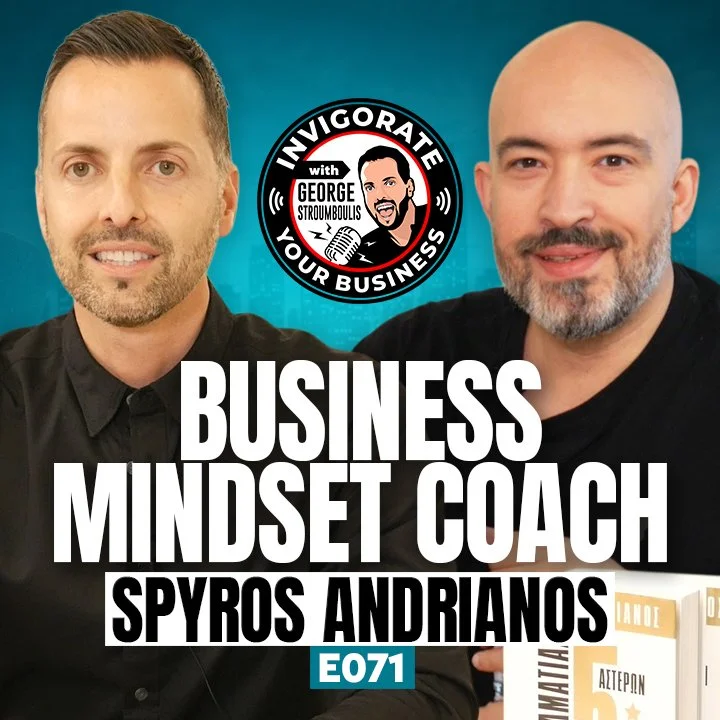
George Stroumboulis sits down with Spyros Andrianos in Plaka, Athens, Greece, to explore his journey as a business coach, self-help speaker, author, entrepreneur, TV host, and podcast host. Together, they dive into his philosophy on personal development, his approach to leadership and mindset, and how he’s helping shape a new generation of Greeks toward growth, clarity, and purpose.
“If you want to change your life, start by changing the story you tell yourself.”
MEDIA RELATED TO THE EPISODE
George Stroumboulis sits down with Σπύρος Ανδριανός in Plaka, Athens, Greece, to explore his path as a business coach, self-help speaker, author, entrepreneur, TV host, and podcast creator. Together, they dive into his philosophy on personal development, leadership, and mindset — and how he is shaping a new generation of Greeks toward clarity, confidence, and meaningful growth.
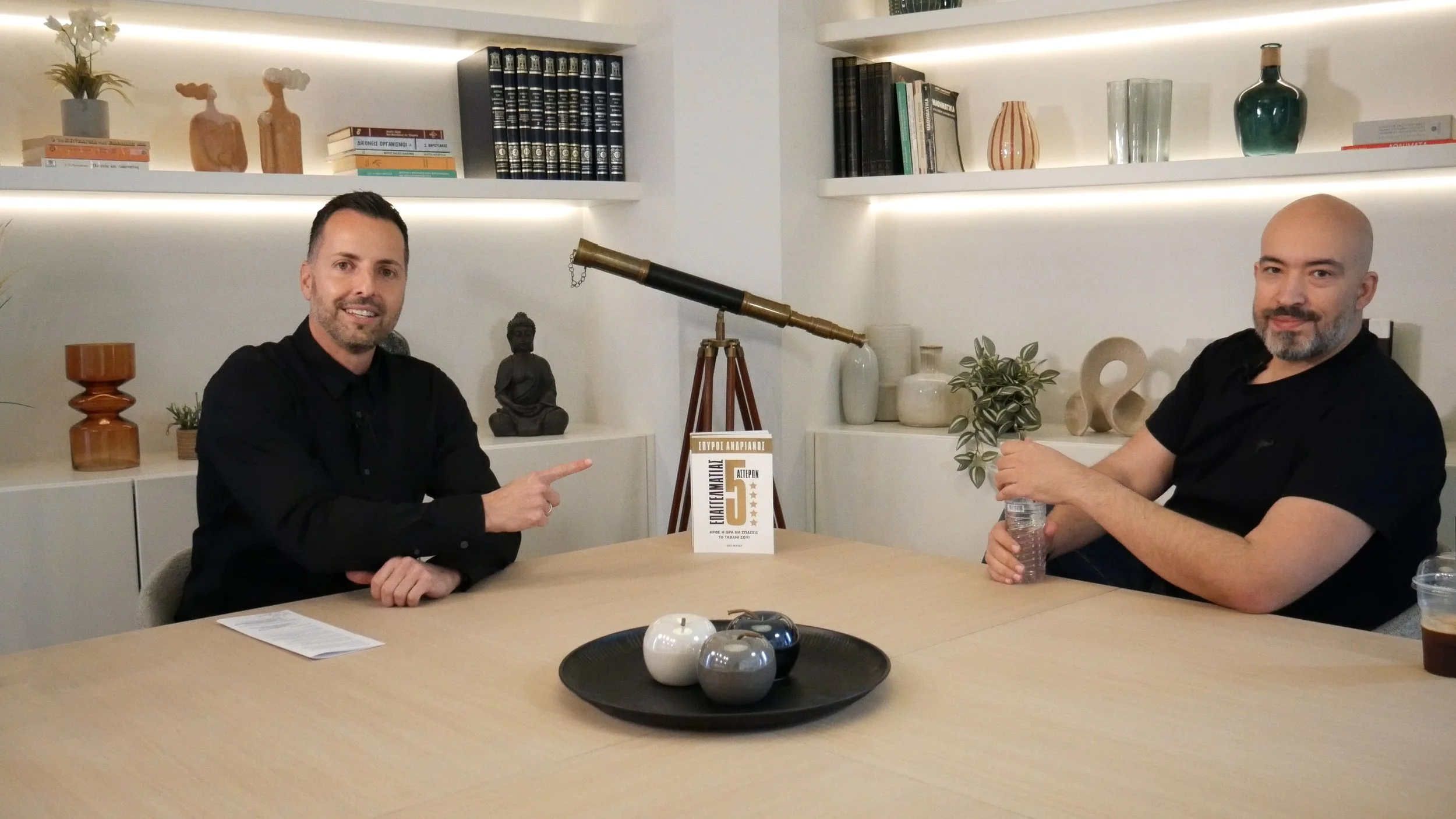
George Stroumboulis sits down with Spyros Andrianos in Plaka, Athens, Greece, to explore his journey as a business coach, self-help speaker, author, entrepreneur, TV host, and podcast host. Together, they dive into his philosophy on personal development, his approach to leadership and mindset, and how he’s helping shape a new generation of Greeks toward growth, clarity, and purpose.
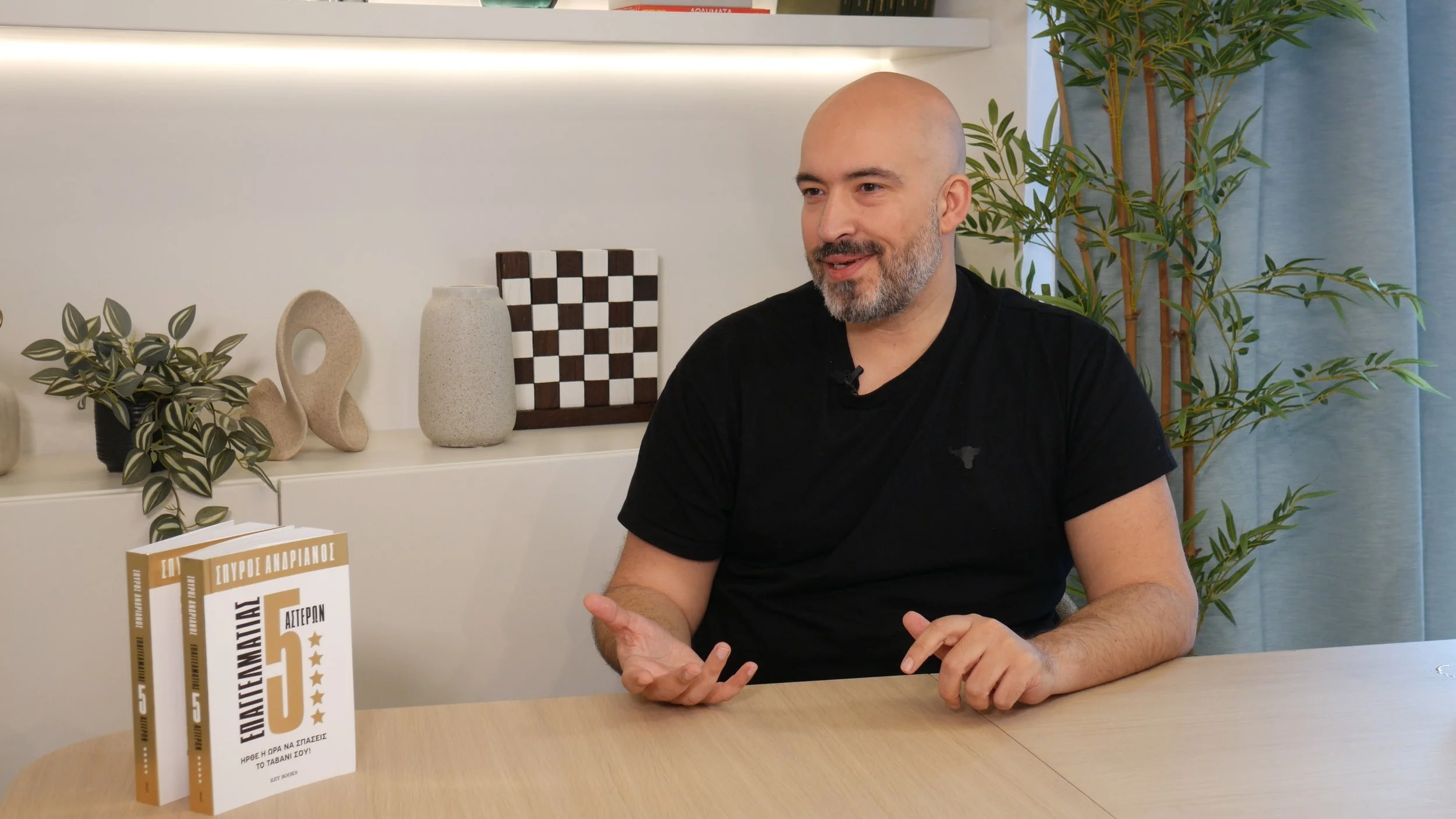
From the heart of Plaka in Athens, George Stroumboulis meets with Spyros Andrianos to uncover the path that led him to become one of Greece’s most influential voices in personal growth. Their conversation explores his principles on leadership, communication, mindset, and the impact he’s making on inspiring Greeks to elevate their lives.
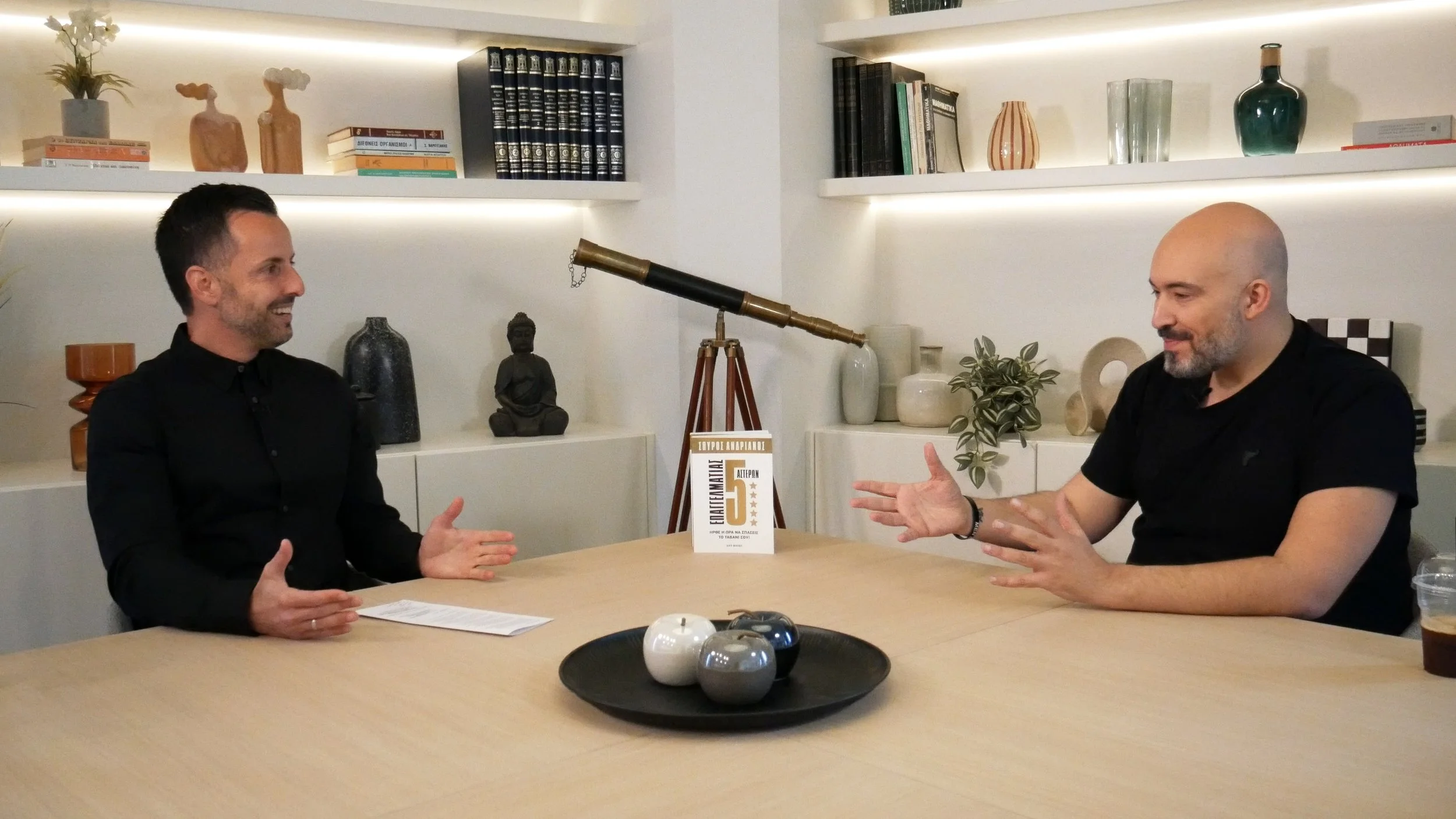
In Plaka, Athens, George Stroumboulis sits down with Spyros Andrianos to discuss his evolution as an entrepreneur, business coach, author, and media figure. They break down the frameworks, mindset, and strategies behind his success — and how he empowers the next generation of Greeks to thrive personally and professionally.
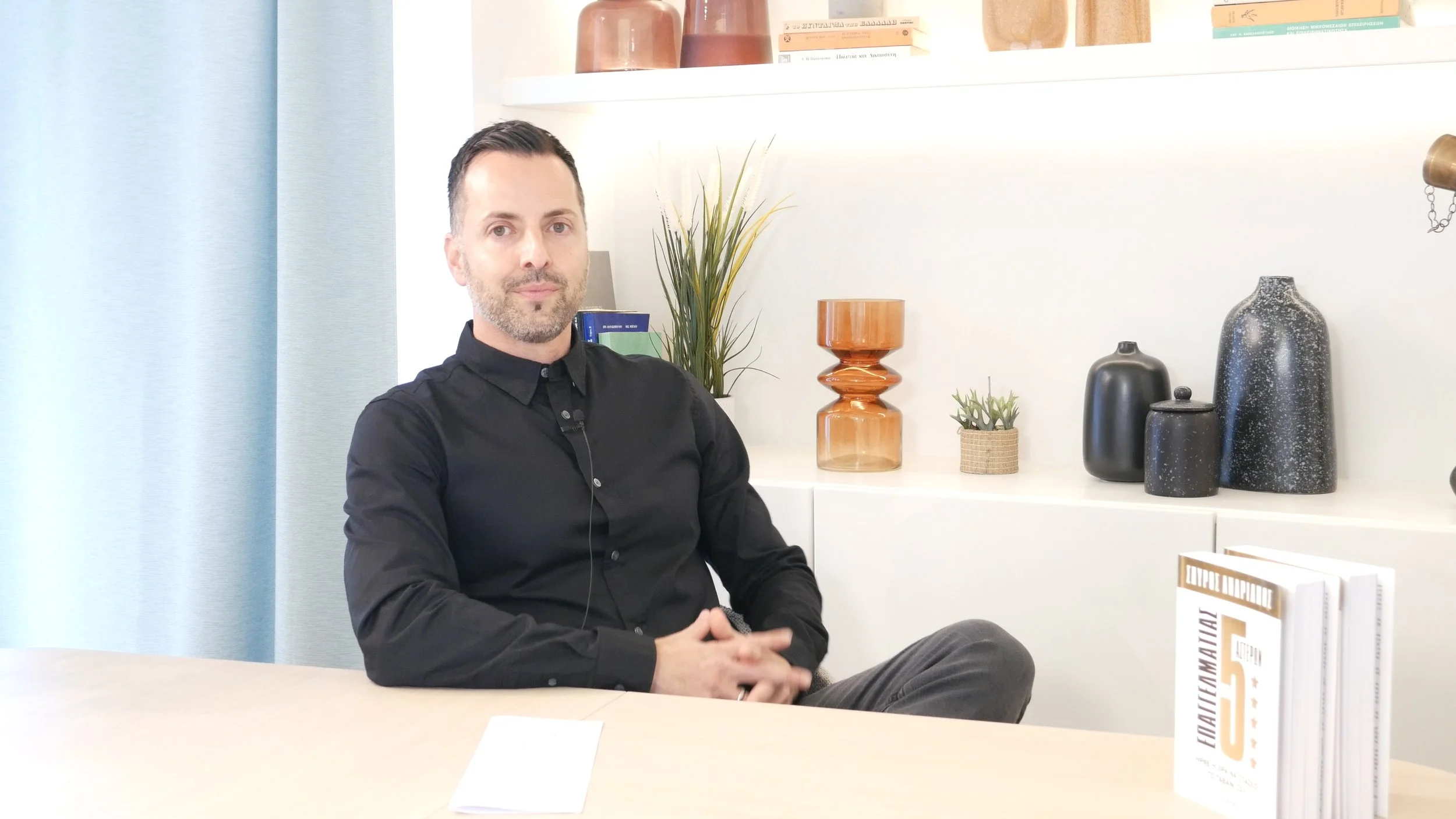
George Stroumboulis interviews Spyros Andrianos in Plaka, Athens, diving into his rise as one of Greece’s most recognizable voices in personal development and media. They explore his mindset philosophy, communication style, and how he uses TV, podcasts, and digital storytelling to guide thousands toward self-improvement and purpose.
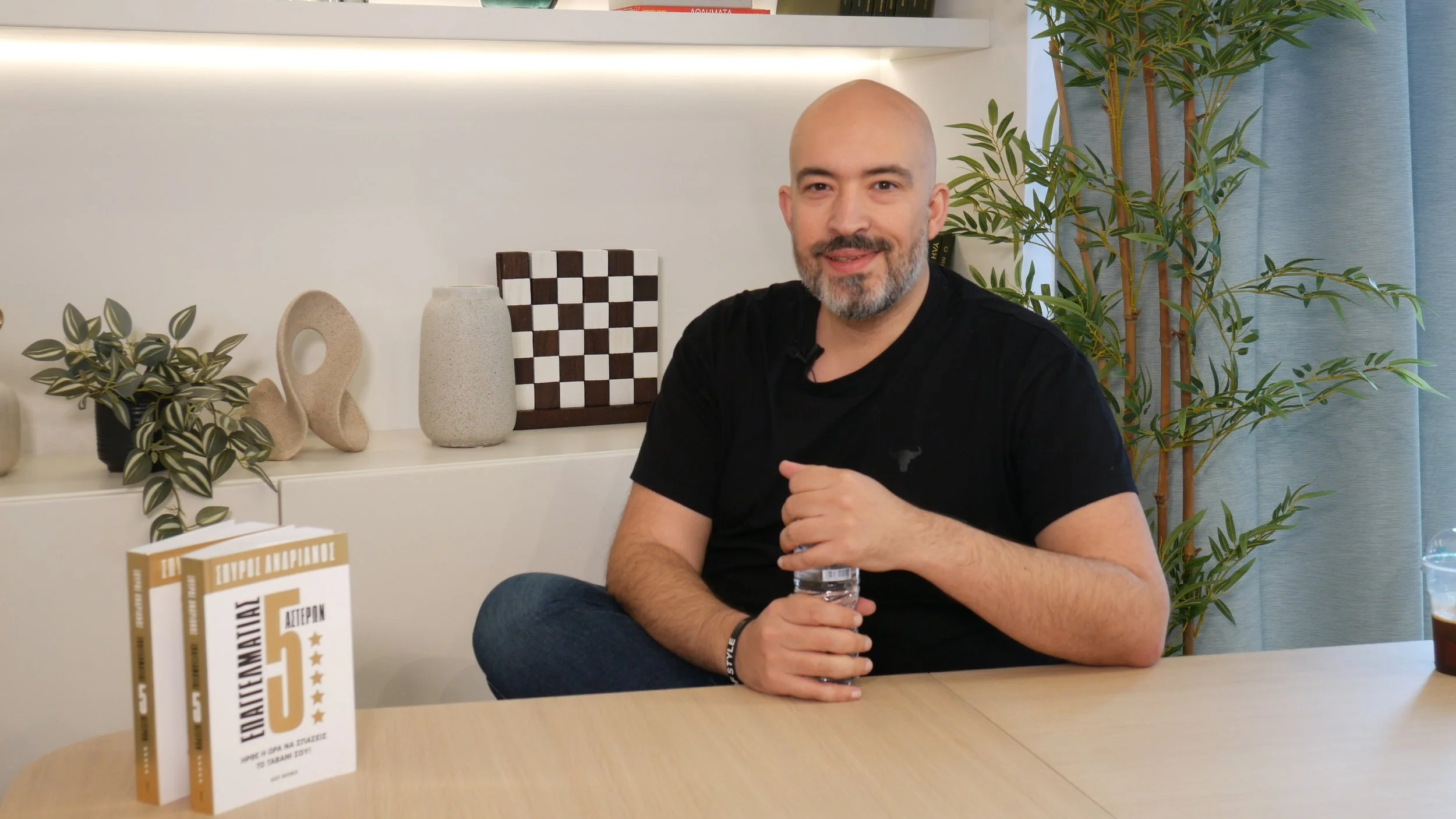
Filmed in Plaka, Athens, George Stroumboulis talks with Spyros Andrianos about his mission to elevate personal development in Greece through entrepreneurship, coaching, authorship, and media. The conversation unpacks his approach to mindset, leadership, and growth — and the tools he teaches to help Greeks build a better, more intentional life.
ABOUT THE “INVIGORATE YOUR BUSINESS” PODCAST
The Invigorate Your Business with George Stroumboulis podcast features casual conversations and personal interviews with business leaders in their respective fields of expertise. Crossing several industry types and personal backgrounds, George sits down with inspiring people to discuss their business, how they got into that business, their path to the top of their game and the trials and tribulations experienced along the way. We want you to get inspired, motivated, and then apply any advice to your personal and professional lives. If there is at least one piece of advice that resonates with you after listening, then this podcast is a success. New episodes weekly. Stream our show on Spotify, YouTube, Apple, Amazon and all other platforms.
ABOUT GEORGE STROUMBOULIS
George Stroumboulis is an entrepreneur to the core, having launched several ventures across multiple industries and international markets. He has held senior-level positions at progressive companies and government institutions, both domestically and internationally, building an extensive portfolio of business know-how over the years and driving profit-generating results. George’s ability to drive real change has landed him in several media outlets, including the front page of the Wall Street Journal. George was born in Toronto, Canada to his Greek immigrant parents. Family first. Flying over 300,000 miles a year around the world puts into perspective how important family is to George’s mental and emotional development. With all this travel to global destinations, the longest he stays even in the most far-out destination is 3 days or less - a personal rule he lives by to make sure he is present and involved in family life with his wife and three daughters. To read about George’s global travels, stay connected with his blog section.
STAY CONNECTED WITH GEORGE STROUMBOULIS
STREAM & LISTEN TO THE PODCAST:
SPOTIFY: https://open.spotify.com/show/1rW2CmxQoiJNEPOZupJlvd
YOUTUBE: https://www.youtube.com/user/Stroumboulis
APPLE iTUNES: https://podcasts.apple.com/us/podcast/invigorate-your-business-with-george-stroumboulis/id1607693240
AMAZON MUSIC: https://music.amazon.com/podcasts/8fc03929-71b3-483a-a64e-153e30b3d462/invigorate-your-business-with-george-stroumboulis
STROUMBOULIS SITE: https://www.stroumboulis.com/podcast
PODCAST SITE: http://www.invigorateyourbusiness.com
FOLLOW GEORGE STROUMBOULIS:
INSTAGRAM: https://www.instagram.com/georgestroumboulis/
YOUTUBE: https://www.youtube.com/user/Stroumboulis
LINKEDIN: https://www.linkedin.com/in/Stroumboulis/
TWITTER: https://twitter.com/Stroumboulis
FACEBOOK: https://www.facebook.com/georgestroumboulis
TIKTOK: https://www.tiktok.com/@georgestroumboulis
CONTACT GEORGE DIRECTLY: https://www.stroumboulis.com/connect
FULL SHOW TRANSCRIPT - ENGLISH
George Stroumboulis: 0:00
Awesome. Awesome. Awesome. Okay, let me put mine on mute. Perfect. So we are recording. Kostas set some stuff up, but he's been so busy lately. I have a guy in the States that does a lot of the editing for me. And then some startup has done some as well.
Spyros Andrianos: 0:32
Yeah.
George Stroumboulis: 0:32
So, 100%. I'll ask the questions in English. And then we go in Greek. And it's easier for the editor to understand.
Spyros Andrianos: 0:46
Okay, okay, okay.
George Stroumboulis: 0:46
So let's take one shot. That’s gonna be your headshot.
Spyros Andrianos: 0:51
Okay, perfect. Okay, let’s do one more, a more general one, that’s a general one.
George Stroumboulis: 0:58
Nice. So we have that one. We’re starting, all right? We’re starting. Got it. Good timing. Yeah, good timing. This looks really good, man. This looks good though, man. Okay, so we’re good. Listen, okay, I have to say this: we are in Athens, Greece. You’re in Athens, Greece, right?
Spyros Andrianos: 2:08
Yes. I'm here. Born and raised.
George Stroumboulis: 2:10
Born and raised, right? This is gonna be great. Like, I'm sitting down with Spyros Andrianos today, who is an expert in just helping people be better versions of themselves. So I'm gonna start with the introduction so people understand who you are, right?
Spyros Andrianos: 2:40
Thank you.
George Stroumboulis: 2:41
Okay, so today's guest is one of Greece's most influential voices in personal development, communication, and modern entrepreneurship. A European-awarded manager, speaker, and best-selling author who left a high-status corporate career to pursue his vision. Spyros Andrianos co-founded Men of Style, the leading self-help brand in Greece, helping thousands improve their confidence, relationships, and communication skills. His content has reached millions and millions, earning him a massive nationwide following here in Greece and in Cyprus. He also founded Brand You, a video marketing agency creating impactful content for companies and entrepreneurs, and is the best-selling author of Five Star Professional, which we have here, amazing, and Man of Value. Spyros has shaped the Greek self-improvement landscape through media, from “Apla & Andrika,” one of Greece's most successful self-help podcasts, to “Apla Sou To Eipa,” the first self-improvement TV talk show in Greece and Cyprus. He now hosts “Tha Sta Sto Businessmenoi” (The Businessmen), the number one business show on Spotify Greece, for 18 plus consecutive months, and is ranked among the top 20 most influential LinkedIn accounts in Greece. Ladies and gentlemen, Mr. Spyros Andrianos. Let's go.
Spyros Andrianos: 4:06
It’s perfect, it’s great. Thank you very much for the kind words. That really does capture the whole journey. It’s been a journey now of about 14 years. When you hear it and read it, you think, “Did all of that really happen?” I’m probably blushing, because I can talk, but you know, the only thing I ever wanted was to have a good time, to do things that are creative, and to help people. So I can’t imagine all this ever stopping, I can’t imagine myself in a situation where I’m not creating. So whether it’s Men of Style, or Brand You, or the podcast “I’ll Explain It to You,” which is also a consulting company with my partners—none of this can be achieved by one person alone. A single person can’t accomplish even one of these things; it takes a team that shares the same vision. I’ve been lucky to have good people next to me—my partners and my collaborators—and I think what we create shows, from the way the audience responds. That’s why they support the work, they support the shows, and I feel very focused. Creation is happiness for me.
George Stroumboulis: 5:04
Exactly. And with what you've built as a company and what you're doing, right? You're helping people, you're helping men, you’re focusing on men, but really it’s any young professional here that's trying to build their career and everything. Before we get into why people listen and pay to hear you speak, right? Where did you start? Because you started young in one of the largest corporations in Greece. You became a manager, you climbed the ladder, and then when you were making money and everything, you were like, you know what? Stop.
Spyros Andrianos: 5:38
Okay, let’s stop. I was very shy, extremely shy. I was a very closed-off person. Like, if you went to talk to a girl at a bar, I would be the one shaking, afraid for you. So at some point I said, “I have to fix this.” At the same time, of course, I had to work. So I started working at OTE. At first I was at OTENet, when the internet was starting—just to give a small backstory—but slowly things were developing. So we were doing technical support. I started to get good at that. But I was also trying to develop my communication skills, because I could see I was shy, and I said, “I have to fix this.” And the better I became at communication, the more I progressed in the corporate environment. At some point in OTE, I ended up managing my own teams, doing projects abroad, I became a ward manager—because OTE is divided into different areas—so I became a manager in that area, and at some point, after about 10–14 years, around the 10-year mark, the idea started eating away at me. I was thinking, “I’m doing this communication, this approach, this whole thing well… can we turn it into a business?” So I worked on it in parallel for about three years while I was still at OTE. And at some point, when Men of Style had grown large enough, I resigned and dedicated myself fully to it. I was around 29–30 years old.
At one point a journalist from a very well-known newspaper here came along. He took our seminars, he was blown away, he really liked them, and he put a small feature on the cover. And suddenly it went viral. And then a lot of clients started coming. So I had to leave something in order to focus on something else. And I chose to say to myself—like many people do, which is why this message resonates: “I want to do something of my own.”
No matter how good the salary was—and it was very good—no matter how much I learned—and I learned a lot, I really liked it, it developed me, it made me grow professionally, and I’ll always be grateful for that—after a point, you want to create your own framework, your own limits. So I made that leap of faith and went out into the market. I had prepared myself fairly well, but still, nothing is ever certain. It’s a different feeling going from the security of a monthly salary, where you know every month this will come in, to saying, “Now I’m going out into the market,” no matter how good that market is, no matter how good your partners are.
So I took the risk, a calculated risk, and the rest is history. Men of Style became very large; we are now many people, and we have over 22,000 students—I don’t call them clients, I call them students because they are learning something from us. Then Brand You came along, which was essentially an offshoot of Men of Style; it started as the small social media team of Men of Style, then it spun off into its own company, and now it’s 17, actually 19 people, producing social media and branding for other companies. And I also do consulting with Kathos Pitsios, and together we have the corporate side of this work, with the show “Business Podcast – Tha Sta Sto Businessmenoi,” which has a major impact both in the corporate world and for employees. These are the things—simply put.
George Stroumboulis: 8:53
Wait.
Spyros Andrianos: 8:54
It’s many years.
George Stroumboulis: 8:56
But when it comes to your career, you didn’t go to a small company of 5–10 people. You couldn’t really have gone to a bigger company here in Greece. And I believe that being in a corporation must have been very positive to learn structure, how big organizations work.
Spyros Andrianos: 9:16
It was very tough. We had a big opportunity because when I moved from OTENet to OTE, it was the Olympic Games period in Greece, in Athens. So many of the older colleagues went off to work on that big project, because it was huge. So they said, “Okay, who’s going to serve the existing clients if the older ones leave?” So they took some younger people. I remember my intake group was 12 people, and I was in that group. At first I was part-time, then because I proved myself good, they said, “Let’s make him full-time.” And then I moved into the B2B segment, and I stayed and progressed there. It was an opportunity; I didn’t chase it as such—it came my way. Luck plays a role, maybe 10%. But I also sent in the CV I needed to send.
And that’s what I tell people: yes, there is the right moment, there is luck; some people might have connections or advantages, but they still created something. Because at some point they put themselves in a position where they could grab the opportunity.
And as I said, I used to be shy. And I still am, in a way—I’ve just trained it with some exercises.
George Stroumboulis: 10:24
How can you be shy and still do this work—be on stage, speaking to hundreds of people, giving advice—and still have that inside you?
Spyros Andrianos: 10:34
It’s how the brain works. When you’re shy, your brain says, “What you’re about to do is dangerous, it’s risky, be careful.” And when it doesn’t know, it tries to predict based on what it understands—and it predicts negatively.
Now, my brain says to me, “The previous time you went up, it was okay; people laughed, they responded, it went well—so this will go well too.” And little by little, it starts predicting positively. The old programming is still there—anything new I do still triggers it—but for things like this podcast now, it’s easy for me. I feel like I’m just talking with a friend.
And many times, for public talks, I tell the people I coach, when they have to be on stage or speak to a large audience, to imagine they’re sitting in their living room and talking with their friends. If I’m doing a talk, whether it’s 4,000 people or a 50-person work group, I imagine I’m in my living room talking with my friends about things that matter to us. Because I’m talking about things that concern them.
This works. For me, and for many people. And the nice thing is that the brain can’t really distinguish—literally, it can’t separate—whether you’re living something in reality or just in your mind. Because what your senses feel in that moment—“I’m talking to my friends”—is stronger than the fear. So your body reacts accordingly.
George Stroumboulis: 12:08
You’ve done a lot in life and you’re still doing a lot. A lot has to do with politics and society, but listen—you’re influencing people’s lives, right? Before we talk about the book and everything, we’re going to talk later about what Greece does wrong, the negatives of Greece, the negative characteristics that typical Greek workers have. But first I want to talk about the positives—Greeks here in Greece, their characteristics.
Spyros Andrianos: 12:40
There are two specific things that I’ve seen both through my work in HR and now as a business consultant, where I advise companies and see the challenges they face, but also the strengths we have. And I’ve seen them as an employee too, at OTE, where we had projects abroad and I interacted with staff in other countries.
The first and main one—which all the studies also show—is that we work a lot. We are hardworking. There is currently a tendency to attack this idea of hard work, but even so, the workforce in Greece is extremely hardworking. People work many hours—maybe not always in the smartest way, but they do work many hours.
The second, and for me even more important, is that because of the lack of organization in the Greek state, we’ve learned to think in workarounds. If there is a problem or an obstacle, we will think of an alternative route around it in order to achieve our goal. This does not really exist abroad. Especially in Europe—not sure about a few other places—but in Europe, if it’s not written in the process, they don’t think it. It’s “off script.” If it’s not by the book, it doesn’t happen.
But foreigners appreciate this trait. In all the collaborations we’ve had abroad, they value this way of thinking in Greeks. That’s why many Greeks who go abroad have amazing careers—because they step outside the process, outside the beaten path, and they create their own routes, which can be even more effective for reaching targets.
George Stroumboulis: 14:10
That's a great point because typically it's A to B, linear, whereas the Greek mind will always find a way. What do you think that's a result of? Because the system here is so difficult that you’re forced to think differently to get a solution?
Spyros Andrianos: 14:27
As time goes by, things are getting better. Procedures are getting a bit easier, there’s the digitalization of the state which helps people have a better interaction with public services. But there are still many, many years behind us that have molded us into a mindset that says, “It’s going to be hard, you’re going to struggle.” So we look for what we can do around it.
From the infamous envelope to the doctor, to the under-the-table oiling of the system—which is illegal and should absolutely not be happening—but these things existed in our lives. Or, “I need to know someone in order to get this done.” These are all workarounds. In other countries they never existed, so their people never developed that mindset.
So what do they teach employees in most countries? “Follow the procedure.” They train a workforce to do what’s written. Here in Greece that never truly existed.
George Stroumboulis: 15:22
Exactly. And I see that. I have six offices around the world—different cultures: American, Canadian, Chinese, Argentinian, Greek, Middle Eastern. And every market brings a different set of values, different experiences. But why we're investing here and building a team here is for that purpose alone. It’s the “we’ll get it done” mentality.
Spyros Andrianos: 15:48
Right?
George Stroumboulis: 15:48
Like, it’s very much “we’ll make it happen” here.
Spyros Andrianos: 15:54
I’ve noticed that this mentality of “We’ll do it, it will get done,” and “we’re going to work hard to achieve it,” is systematically attacked in Greece—like in other Western societies as well. We’re trying—along with the whole team in “Tha Sta Sto Businessmenoi”—to push back against that in our own way, through the show, to strengthen these values.
There are some values both in our personal lives and in our work lives that we need to re-embrace. Hard work is a good thing. Giving value is a good thing. It’s good to receive value back, of course—but not to expect only to receive.
There’s a huge culture of entitlement—“I deserve something without having proven my value”—and I’m very much against that. Through my message and my rhetoric, I’m trying to help the people who are in the market and want to hear this, to give them time and tools to change this mentality. So they can connect with people who also want to offer value, who want to exchange value—because at the end of the day, that’s what our market is. You give value, you get value. If you give no value, why should you get anything back? That’s it. You’re not owed something just because you were born—you’re owed something because you contribute.
George Stroumboulis: 17:11
And that’s the positive side. Speaking as Greek people, as a workforce, there are certain things, certain traits, right, that you could say: typically Greeks are this, typically Greeks are that. We’re stereotyping, but from your experience—you’ve talked to thousands of people who want a better job, better salary, better life, better relationships—what’s something that holds back Greek people in general that you’re trying to break through with your tools?
Spyros Andrianos: 17:43
One part is exactly that entitlement we mentioned. “I deserve something because my mom and dad told me so”—and just to explain this clearly—mom and dad, and the school system, and society, often with good intentions, tell us, “You deserve to be a director and earn two thousand euros a month,” without us having proven anything. We graduate from university and we think, “I got my degree; it’s important, so the market should reward me for it.” But that’s not how it works.
What is true is that you got that degree so that you know some things and so you can demonstrate your abilities to the market, and then the market will pay you for that. That’s how it works.
The other thing I see, unfortunately more and more often, is a lack of patience. People get discouraged easily. Good things take time. If it doesn’t take time or effort, it probably isn’t worth much—and people don’t realize that.
We’re in a phase where TikTok, instant gratification, pushes the feeling that everything has to happen in a moment. But this is not true for things that have real value. People have to build that into their thinking, especially young people who may be listening now; if they want a career, a professional life that’s healthy, they have to work hard and they have to wait. I’m sorry, but that’s reality.
George Stroumboulis: 19:05
But that’s not just a Greek problem, it’s generational. I have nieces and nephews in Canada who are 16, 18, 21. Great kids, smart kids, and I see how much time they spend on their phones. The attention span is 3 seconds, 3 seconds. “I want food—bam. I want a girlfriend for tonight—bam.” Everything’s instant. And that mentality is entering the workplace, and then they have these expectations, and it’s just not normal.
Spyros Andrianos: 19:38
Yes. Totally agree. But here in Greece we also have the strong family element. I’m very pro-family, very much in favor of that intense bond between parents and children. But sometimes parents influence their children with an older mentality so heavily that it carries over into work. That mentality of, “You deserve a managerial position because you got a degree; we invested as a family.” Yes, families invested in their children, they made sacrifices, and they expect something back—but again, that’s not how the market works. That’s why it’s especially intense here in Greece.
George Stroumboulis: 20:12
I see it like this. For example, in Canada where I grew up, we had a family restaurant. And I worked from the age of six—peeling potatoes, dealing with oil, all that stuff we grew up with. At the time it felt tough, but in hindsight it was great.
I remember coming to Greece—my mom is from Kalamata—and I have over 30 first cousins. None of them worked in the summers or after university. Part-time jobs didn’t exist. And I remember one cousin was 16, I was around 10, my sister 15; he finished his studies and when we asked about work, my aunt said, “No, the child has studied, he needs to rest psychologically.” And I thought, “We’re on a different mindset.” The kid, from that age, needs to learn how to sweat.
Spyros Andrianos: 21:11
And I don’t think that comes from a bad place. The intention is good. Because our parents and grandparents went through tough times. For them it was literally about survival at some point. So they think, “Why should my child go through what I went through? I want them to have it easier.”
But without teaching them the way to have it easier, they just create entitlement. “You deserve this, my child.” No—you don’t deserve it automatically. Everyone has value as a human being, but because life is competitive, only the ones who are capable and who work will get those positions. You have to become that kind of person. That’s the whole point.
George Stroumboulis: 21:47
Andrew Tate—you know Andrew Tate—he talks about self-improvement, be a man, all that. He’s mainstream, right? So when we're talking about men in general, in Greece or anywhere, when they're in their mid-20s, late 20s, what are the biggest challenges that you're seeing, that you hear on a daily basis?
Spyros Andrianos: 22:18
It’s a huge topic. There are many issues, but the umbrella over all of them is a lack of purpose. A guy begins a job and says, “I want to succeed, I want to make millions, I want everyone in Greece to know me”—but that deeper purpose is missing. That goal that truly drives them.
Without that, there’s no drive to take action. So they are in a kind of “standby mode.” And that’s completely unattractive. A woman, if she wants a man, she wants someone with drive, strength, rhythm, pace, a purpose—someone who’s chasing something. And they don’t see that. So they complain. Of course, women have their issues too, but since we’re talking about men, that’s the big challenge: finding their purpose.
And why don’t they find it? I’ll generalize a bit, but broadly this is the issue: we don’t have role models.
If you take someone like me, Spyros Andrianos, honestly, I don’t think I’ve achieved that much. I’ve done some good things, yes, but I shouldn’t be the role model. Nor should it be some influencer, or a random “celebrity.” We should have serious, noteworthy people—top-level people in many fields, academics, leaders—whom someone can trust and say, “That’s where I want to go.”
We lack those role models in Greece, unfortunately. So young men have nothing solid to follow. We try, in our own way, because we have a good direct connection with the audience and a good communication code with them, to convey values and principles that will lead them to their own purpose—not mine, theirs. Whatever makes each one happy.
For me, I care about doing business. I want to grow Brand You, expand it, make it global. Great. That’s my thing. Someone else’s purpose may be to build a family, have seven kids, live happily on a farm with animals. Fantastic. Both are fine. But you have to find the road—and I believe you find it by walking alongside people who have already achieved something. And there aren’t many of those visible right now.
George Stroumboulis: 24:35
There aren’t. I think the system is built this way.
Spyros Andrianos: 24:39
I believe we’ve attacked those who could have been role models. Let me be bold here—even if the state or whoever doesn’t like it. There was a period in Greece where we had one such case; he’s also a friend and he’ll be at my book presentation at Public and speak there. He’s the most successful contemporary Greek author—millions of copies worldwide.
He had an advertising agency that did very well. There were some debts, but they were procedural—basically tax and accounting processes that slipped. And he went to jail for a short time over it. A few days, five days, whatever it was.
The amount of joy some people felt over this, in the media and in public, in order to tear down their “hero,” was crazy. Because when we raise someone up, we also enjoy knocking them down. That’s what happens in Greece. Terrible. The level of character assassination was such that many people came out publicly to support him, because they felt, “If this can happen to him, imagine what could happen to me.”
So whenever someone raises their head, there’s always someone ready to cut it off. People see this and are afraid—and I’m trying, through my actions and my words, to help them build the courage to say, “Okay, if they attack me when I grow, I’ll still move forward. I’ll rely on my work.”
And I want your audience to understand this: your hospitality and how you approached me—with such respect for my work—is not obvious or common in Greece. Many won’t appreciate another Greek’s effort the way someone outside the country would. It’s something unique to our people. From the city-states of ancient Greece until now, we often divide into camps and tear each other down.
If that ever stopped, everything would be better—but it’s thousands of years old, so it will take a long time to shift.
George Stroumboulis: 26:59
Now to how you help. If someone sits down in front of you—how do you build someone's confidence? I'm sitting here, I'm a man. Not 25—I’m 44 years old—and I’m sitting here, my wife, my job is a mess, I’m earning very little money, my life sucks, blah blah…
Spyros Andrianos: 27:28
Okay, so when someone presents like that, the main issue is always that they’re focusing on what’s most painful. In our group of companies around Men of Style, we have specialists for everything. There’s the “36+ Club,” as we call it. So if someone has an issue in their professional life, they’ll come to me. If they have something around flirting, dating, relationships, they’ll go to Christos Panikas, who is top in that area. If they need help with mental health—which is a major factor—they’ll go to the psychologists we have in the company.
So depending on the request, we assess it and we guide the person within the structure of the group.
Now, if I have in mind someone whose professional life isn’t going well, I first want to see what they actually want to achieve. What does “going well” even mean for them? Because sometimes everything is objectively fine—they have a solid salary, strong prospects—but their own soul doesn’t allow them to see it that way, because of past experiences. We all carry a cross, as I like to say. So I’ll first identify that cross, and if it needs psychological help, I’ll refer them to a mental health professional.
If, on the other hand, they are simply missing some skills or a roadmap to achieve what they say they want, then I’ll help give them those tools. But I can’t do one-to-one consulting with everyone—that’s why I wrote the book. I took all those practical strategies that helped me personally reach a healthy level in my professional life and I put them into something people can access without me being physically there. So I can offer those tools even to people I’ll never meet.
George Stroumboulis: 29:09
Talk about this now. This is one of the top self-help books in Greece.
Spyros Andrianos: 29:15
It became a best-seller within three days.
George Stroumboulis: 29:18
That's insane.
Spyros Andrianos: 29:21
It came out on the 25th of September, recently. In the first three months we passed the five-figure mark in sales, which is very significant for the size of our market. Thank God, people have connected with it. Will it go to 100,000 copies? I don’t know—probably. It will likely be released abroad too; my previous book was translated into English.
But honestly, and I want to say this without sounding arrogant, I didn’t need to write another book. I wasn’t in need of one. I was simply tired of hearing excuses. I didn’t want to hear one more person say, “It can’t be done, it’s impossible.” Now, when I hear that, I know I can say, “Do what’s written here. If you do all this and it doesn’t work, come back and tell me.” It’s practically impossible for it not to work.
The book has five pillars—hence Five Star Professional. Five sections you need to develop in order to be top-notch, top-level.
George Stroumboulis: 30:25
In life, not just in work.
Spyros Andrianos: 30:28
I focus on business, because as a business consultant that’s where I want to push people, but the same principles can be applied in personal life. For example, the second chapter is about networking—if you don’t have a good network of people, both in your personal and professional life, I show you how to build it, how to maintain it, what having a network actually means. It’s not just a pile of business cards from some event. It means relationships that you nurture over time. I explain all of that in my own way.
George Stroumboulis: 30:57
What's the feedback been from this so far?
Spyros Andrianos: 31:00
If you see the critics, if you see the reviews, you’ll see only five-star reviews. I believe it’s… yes.
George Stroumboulis: 31:08
So when you're helping someone—give an example, obviously you can't share names—but what's the worst you've seen someone come in to Men of Style, completely broken down, maybe suicidal, feeling life isn’t worth living, and then what’s been the successful outcome?
Spyros Andrianos: 31:27
If we’re talking about clinical psychiatric issues, we don’t take those on. There, first you need a doctor to address the psychiatric condition. We’re not talking just about feeling a bit down; we’re talking about borderline conditions or other disorders that need medical management. That’s not just coaching.
George Stroumboulis: 31:47
So suicidal tendencies, for example, need a psychiatric approach.
Spyros Andrianos: 31:51
Exactly. So in those cases we refer people on. Likewise, when psychiatrists see that someone has overcome such issues and now needs help in life or in their career, they send them to us.
Putting those aside, there are people dealing with very harsh breakups. One specific story that Christos Panikas and I often share: a man who was recently engaged, they were preparing for a wedding, they’d beautifully furnished the house. One day he comes home from work, opens the door, and the entire apartment is empty. The woman is gone. And to this day he doesn’t fully know what happened—whether she left with someone else or simply left him.
Imagine that picture for a moment.
We’ve also had people with serious illnesses, terminal illnesses, who just want to enjoy a bit more of their lives and who have never dared to approach a woman because of fear. And for a man, being able to approach someone is really significant. They want to overcome that and we do it together—and I’ll admit, I’ve cried with some of them, experiencing that journey.
On the professional side, beyond the big corporations where I go in and work—from a professional standpoint that’s great, working with a large organization—there are also the small shops. Those tiny businesses that represent a family’s dream and survival. Their income depends on that little shop.
Here’s an example I really love. I want people to hear it and imagine it fully.
George Stroumboulis: 33:33
It’s powerful.
Spyros Andrianos: 33:36
Tsokonero is a pastry shop brand run by a young guy named Telos. Telos had a difficult relationship with his parents, tough family dynamics. At some point he took over this small place. The business had no income—he couldn’t even cover his daily expenses.
Within a year, he managed to expand, hire more staff, and turn it into a very recognizable brand in the dessert space. A 25-year-old kid, who, to survive while he was building this shop, was doing delivery for Wolt. He delivered food by day so he could have some cash, and he invested everything—almost all the money he had—into me for coaching and into his business.
And in a year he took it way up. That also says a lot about his parents, because maybe they didn’t handle everything perfectly, but they did eventually allow him to do what he wanted. They let him bring in his new ideas and trusted the drive of a young person. That’s not easy for parents who are also entrepreneurs.
George Stroumboulis: 34:46
Exactly. Come on. I want to share something now, as a friend and also for someone who might need help. We all need someone to talk to. I arrived at the airport in Athens the other night, around midnight. I get in a taxi, and before I jump in to go find food that late, I grab some pasteli—those sesame-honey bars—I take five or six, put them in my bag, then get in the taxi.
The driver’s name is Christos. As we start driving, his wife calls with the kids from America so they can say goodnight to him. He hangs up, I ask, “Do you have kids?” “Yes.” “Beautiful.” I tell him I have three kids as well, that I’m Greek-Canadian living in the States. We chat.
And as we talk more, he says, “Yeah, now my wife has left me after 23 years of marriage.” Just like that.
Spyros Andrianos: 35:50
Wow.
George Stroumboulis: 35:52
And he kept talking, and as he was sharing, I said, “Okay, my friend, take a pasteli, this is for you.” He takes it, looks at me, and his eyes fill with tears. And I’m thinking, “Please don’t crash the car,” but inside me I was like, “Dude, everyone is fighting a battle every day.” For him, that tiny act with two little pasteli…
Spyros Andrianos: 36:26
It’s an incredible story, an incredible gesture. It was good for him and also good for you, to reconnect with your own compassion. Life is full of those stops—one train station, then the next. He’ll get through it.
My only disagreement is with the phrase “Greece is done” that he might have said. I don’t think Greece is finished. We face many difficulties, at different times, individually and collectively, and society is under pressure—for all the reasons we mentioned and for external factors. We live in a region with wars; there’s migration, we see suffering, and this enters our psyche even if we don’t directly live it.
I still keep saying we are strong. Everyone has something they’re going through. That’s why when someone snaps at you and says, “Good morning,” in a harsh tone, he may be going through something. Could he handle it better? Yes. But we don’t know what’s behind it. It’s like going to a hospital and judging a parent who speaks badly to someone while their child is in intensive care. You just don’t know.
So things would go better—for Christos and every Christos out there—if we all thought the same way I always repeat in my talks: “Everyone is fighting a battle.” If we saw people like that, things would be better.
George Stroumboulis: 37:52
Even when they see you online, you’re still fighting stuff every day.
Spyros Andrianos: 38:01
100%. And because of my role, I probably get even more. My family will come to me with their problems because they think, “He’ll handle it better.” So my brother’s problem becomes my problem, my parents’ issues become my issues, and so on.
George Stroumboulis: 38:21
What about you—what’s your outlet? Where do you go?
Spyros Andrianos: 38:30
There are two, three things I do. First, in my company we’re friends before we’re partners. I don’t generally recommend people start companies with their friends, because it can complicate relationships, but I was lucky to have people around me who don’t hold secrets and who support each other. So I always have the option: “Let me go talk to Chris, to Christos, to Panikas, to Anestis or whoever,” not just about work but about personal things.
Second, I’ll take myself out—go to a lounge, sit quietly, and have a conversation with myself. The hardest conversations are with ourselves, because there you have no excuses. Everything is bare and honest. And it’s “bare” because your self knows when you’re talking bullshit. It knows. And I try not to lie to myself.
George Stroumboulis: 39:40
Yes. I do it with myself too. Sometimes I’m not doing something right with my wife, or with work, or whatever it may be, and I catch myself trying to lie to myself—“It’s okay”—but you can’t lie to yourself.
Spyros Andrianos: 39:53
Exactly, that’s the point. And if you’ve done work on yourself, that work should show you that you still have value despite your mistakes. All people have value in spite of their mistakes. We look at the mistakes to correct them, and we still have value—and more of it precisely because we did that inner work.
And the third thing I do is I have my own advisors. I can’t preach that consulting is valuable, that coaching is important, and then not have my own. I have a mental-health professional and a business coach. And generally, I read a lot. I take in information.
I like to create things. So that process feeds me: I hear something from, say, Hormozi or Gary Vee, and I ask, “How can I apply this in my business?” I mix their practices with what I know about the Greek market and people, and I turn it into something of my own.
So I call my team, “Tomorrow we’re doing a meeting on this.” They say, “Another meeting?” But we do it, and we move forward. For me, they are far ahead; they’re very advanced, all these creators. Everything I’ve done in Greece is an application of things I learned from people like Gary Vee. And everything I’ve taken from Gary worked 100%—as long as I actually applied it. Ideas are great, but execution is everything. Gary is a great source of ideas and perspective; then you adapt it and implement.
George Stroumboulis: 42:07
Just in terms of mindset, right? Greeks are like, “Come on, man,” they’re skeptical. If people in general here aren’t open to it—and it’s not the “American Dream” mindset—it’s harder to do what you’re doing. In the States, the mindset is, “American dream, yeah, I’ll pay for this course, I’ll try that.”
Spyros Andrianos: 42:26
Yeah, yeah, yeah.
George Stroumboulis: 42:27
It’s a different mindset.
Spyros Andrianos: 42:28
They’re more open to investing and trying things. Here you have to convince someone ten times as much. But maybe that makes it more worthwhile. Maybe we’ll never make the same money as a Gary Vee or a Hormozi, with the same effort—but we’re not doing it only for that. We’re doing it to change some people along the way, to bring them closer to how we think.
Because otherwise it’s lonely. When you think a bit differently, you feel like you’re the only crazy one. You start doubting yourself, “Am I doing this right?” But there are others out there thinking similarly. By making a podcast, by writing a book, we show that there are other people like us, and we can all support each other.
George Stroumboulis: 43:08
What did people say at the beginning when you started sharing your positivity—friends, family?
Spyros Andrianos: 43:20
Just to clarify, we’re not sharing “positivity” in the sense of pure positive thinking. We’re realistic; we know it comes with effort and struggle. What we say is that you don’t have another real option. Because if you stay where you are, the pain is greater. So choose the pain we suggest—the pain of growth. There will be pain either way.
Now, about reactions: without wanting to sound melodramatic, even my parents until recently didn’t really understand what I do. They didn’t grasp it. They saw me on TV—that’s when it clicked. When we did the TV show “Apla Sou To Eipa,” they saw the show and thought, “Okay, something is happening.”
It’s not that TV was the goal; we did one season, it was fun, a good production, great people, and we’re proud of it. But seeing me on TV made them understand that society recognizes this. Before that, it was, “Okay, our son quit his secure job to talk about relationships on the internet.”
And after Men of Style, other companies appeared. We created the market. Now with Brand You, when we started there were maybe two or three serious players in content production; now there are fifty agencies.
I’m fairly good at spotting trends early and understanding consumer behavior. For me business is human connection. That’s what I say in the book: business is human connection. You don’t need to know tons of numbers or complicated marketing jargon or massive business plans. If you can truly connect with people, your business will go well.
George Stroumboulis: 45:51
Exactly. And people don’t buy from companies, they buy from people.
Spyros Andrianos: 45:57
Exactly. I say that in the margins of my talks—people tell me I have a good ability to “sell” my services and myself. And I explain in chapter three, which is about being “marketable,” that I never start with selling.
First, I want to really understand the person: what they want from life, what they want from me by extension, what need they have that I can help with. If I can’t help, we’ll just have a nice conversation, drink our coffee, and stay friends—and I’ll recommend someone else. That’s how you build a network.
If I can help, I’ll show very clearly that I can do it—one, two, three—without any pressure or manipulative tactics. “This is the value, and this is the price.” That’s it. And this approach works, especially with large companies.
George Stroumboulis: 46:50
Me too. In my company, which I’ve had for 10 years, I’ve never done a single sales pitch. It’s all what you just described.
Spyros Andrianos: 46:59
Perfect.
George Stroumboulis: 47:00
You make people feel comfortable. In any meeting I do, I just want to learn one or two things from whoever I meet today—at least let me leave with something. But back to value: you can’t go into any relationship—work, business, life, marriage—thinking you’re just going to take. For me, I’m programmed to bring value first. I feel good after that, and the rest will sort itself out.
Spyros Andrianos: 47:28
I totally agree—that’s exactly what I say in the book. First, give maximum value, let the other person understand what they can get from you, and then be open to receiving.
But because there are relationships at every level—professional and personal—you must also set boundaries. I have a rule for myself, because I’m a bit “soft” in that sense. I like to give, to offer, and especially as I get older and I have more means, I like to help people even financially where I can.
So my rule, which I also suggest to others, is this: if within six months from the moment I give you something important, you don’t at least make an effort to offer something back, you’re out of my network. I won’t cut you off with hatred, but you’ll never see another favor from me.
It’s not that I need what you give me back; most of the time I don’t. What I need is to see that you want to reciprocate, that you appreciate it. Otherwise, you’re just a weight on the system.
And because there are many good people who have resources and the desire to help with no conditions, I say, “Let’s focus on them instead. Let’s set some limits.”
George Stroumboulis: 48:59
That's a good way. I need to do a better job of that. You give too much, and then it becomes, “Oh, I saw George, he’ll do this, he’ll do that…”
Spyros Andrianos: 49:06
Use this rule.
George Stroumboulis: 49:07
Yeah. Absolutely. Six months.
Spyros Andrianos: 49:09
In a six-month period, everyone can find a way to give back. If they’re not willing to look for it, they’re not valuable to you.
George Stroumboulis: 49:20
Absolutely. And then you just cut it out. Yeah. Let me ask you—when you left and you had this idea for Men of Style, “We’re going to bring value,” did you ever feel imposter syndrome? You know the term. In the beginning, when you thought, “Oh my god, they’re paying me to do this,” even though you believed in yourself—did you feel that?
Spyros Andrianos: 49:40
Yes, I did—but not full-blown imposter syndrome. What happens is that before a talk, I often have a kind of stage fright, which the body needs as a boost. It’s useful. Deep down, though, I know that after all these years I can do it. I don’t believe anymore that my first talk would go perfectly—but, for example, that first big talk we did in Crete with 250 people, I really doubted myself.
We were in Heraklion with Christos Panikas, doing our first major event there. It was a five-hour seminar. Five minutes before it started, there were five people in the room. Just five. I turned to Christos and said, half-joking, “Okay, this is going to be us and five people.”
And then suddenly people started flooding in—so much that they ran out of chairs and had to bring more from the lobby. It was packed. And my legs started shaking. Not just because there were lots of people, but because it was the first big time, and emotionally it was huge.
I was supposed to start the seminar. I wasn’t feeling ready. So I told Christos, “Let’s go backstage for a second.” And I said, “You start.” He looked at me—tie on, all serious—slapped me lightly and said, “You’re going to start. You’re going to go out there and do what you know how to do. You like this. It will go well. Imagine people applauding you and feeling good with you.”
So I went out, I opened with a joke I had prepared, everyone laughed, and from that moment I felt, “Okay, I’ve got this.” And things went great.
Even now, when I’m in a new venue or a new situation and I really want it to go well, I think, “Remember how it felt after you finished that talk.” I bring that feeling into the present.
George Stroumboulis: 51:59
That's amazing. A couple more questions—this has been amazing. Salaries in Greece. You guys have workshops, right? It’s called “Tha Sta Sto Businessmenoi.” Actually, before we talk about that, you guys recently interviewed the Prime Minister, Kyriakos Mitsotakis. When I saw that, I’m like, “Holy shit. That’s incredible,” right?
Spyros Andrianos: 52:20
Thank you.
George Stroumboulis: 52:22
He wanted to come on your show, right? Clearly, you guys are targeting the youth, the demographic that he wants. Talk to me in general about sitting down with him—what was your plan going into that? And then what’s the state of politics?
Spyros Andrianos: 52:39
It’s a very polarized situation in Greece right now. You have the government of Kyriakos Mitsotakis, and then everyone else. One criticism of the opposition is that they’re not strong or capable enough to be the leadership—almost as if Mitsotakis is playing alone. So all arrows are aimed at him.
There have been many mistakes, and not just mistakes—there have been delays and failures too. But I still think there’s been a positive overall balance in his years of governance. We had a good management of COVID. There was decent handling of the crisis with Turkey four years ago. Things are moving in taxation, even though much more needs to be done.
When you’re doing a show, however, you need to maintain some balance and bring in critical questions. Some of the questions we asked were answered and clarified. Some others I would have liked to go deeper on—but we’re limited by time, by the format, and by how much a political leader can say publicly.
There was a huge reaction from supporters of other parties. But people have to remember: we are a podcast, a business podcast. It’s unusual in Greece for politicians to go on podcasts. We’re among the first to host such conversations—for the political system to come into this more relaxed, long-form environment.
My personal experience with him—he doesn’t know me personally—was very positive. He didn’t ask for anything special beyond the broad topics we would cover. Nothing more.
George Stroumboulis: 54:52
So afterwards he didn’t say, “Cut this, don’t put that in”—nothing?
Spyros Andrianos: 54:56
Absolutely nothing. And that’s very important; people may or may not believe it, but it’s the truth. When we finished recording and sent the episode over, since our production company also works with other brands, there are many guests who ask for cuts and edits—“remove this, change that.” From his side, no such request. The only thing his team asked was to coordinate the release date because the next day they had the budget announcement in Parliament. That’s it.
And I thought, “How is it that some mid-level guests demand the world, but the Prime Minister asks for nothing?” That made us happy.
We didn’t have to negotiate questions beforehand. Of course he’s trained from a young age for this. Questions about SYRIZA, about other scandals—he’s answered these dozens of times already.
From our side, I think we stayed true to the emotions and vibe we want for the show. We asked what we needed to ask; we didn’t have time for two or three more important questions, but there will be a next time, I hope. And as you said—we’re not journalists.
George Stroumboulis: 56:18
You’re successful, you’re great, but you’re not a trained journalist. And I find that with a business podcast—the number one business podcast in Greece—you’re held to a different standard now. People say, “You should have asked this,” “You were too nice,” and so on. But at the end of the day, it’s a business podcast. It’s crazy how people hold you to a different standard.
Spyros Andrianos: 56:45
Exactly. I’m not a journalist. A typical journalistic approach would have killed the relaxed tone we wanted with Mitsotakis. If we had asked the same questions he gets on TV, he would have stayed in the same defensive mode he always has on TV. That’s not what we wanted.
We wanted something more around business and the economy, with humor and lighter moments. That matters, especially for the audience we’re speaking to.
George Stroumboulis: 57:18
I think it helped him.
Spyros Andrianos: 57:20
I think he enjoyed it. We’ve already had Haris Doukas from PASOK—who is now mayor of Athens and a former PASOK spokesperson—and Vasilis Kokkalis and Zachariadis from SYRIZA, and we’ll bring others. We’ll make a full round.
We don’t want to change the mood of the podcast—it’s a business podcast, not a political show—but we can’t ignore politicians either, because they influence business conditions in Greece.
George Stroumboulis: 57:52
It’s good to hear all sides.
Spyros Andrianos: 57:58
I’d love to talk at some point with Koutsoumbas from KKE to hear his perspective, or with people from other parties in the European Parliament. I want to bring different views to the table and see where we can agree.
The reason this podcast exists is exactly that: there’s one “pole” of employers and one of employees—can they come closer? We want convergence, not conflict.
George Stroumboulis: 58:43
Let me ask you about Greece. So you guys have these amazing workshops, right? And in your workshops, you work with the people to make them better.
Spyros Andrianos: 58:53
Yes.
George Stroumboulis: 58:54
Salaries in Greece—it’s tough. How can you actually help people in Greece when it comes to salaries, salary negotiation, when people are dealing with low salaries to begin with and rising expenses? For the listener: if someone's making 1,200 euros a month and they live in Athens and their rent is 400 euros, the car is another 300, and so on—you know what I mean.
Spyros Andrianos: 59:25
Right. The minimum wage has increased in Greece and there has been some progress, but we still need a lot of work. Most of the people who come to our talks or seminars will certainly have this as a request: “How do I make more money?”
My answer is: see yourself as a brand moving in the market. You are the brand. You already have clients (your employers), you already provide value, and you’re trying to show the market this value so you can gain more or better clients—or higher prices.
There’s a process behind that, and I guide people through it, but in essence I tell them: “See yourself as a brand.” You are an employee, yes, but you’re also providing a service, which you can sell to the highest bidder.
So if someone comes and says, “I earn 1,000 euros but I bring in much more,” I will help them show it. I tell them, “Let’s prepare a presentation. Show your boss what you’ve brought to the company. Put it down in numbers. He might have good intentions but not see it clearly, because he has his own job to do.”
When a collaborator comes to me and says, “This project took more time, it costs more,” I need them to show it to me. I don’t do the editing myself, so I might not notice.
So I encourage people to go in with a clear presentation: “This is the value I bring, and this is why you should pay me more.” From that point, if the employer understands that the extra cost now brings them more return tomorrow, they will give more. Or, if they don’t, someone else in the market will.
George Stroumboulis: 1:01:15
And Brand You—does it help people as well with their personal brand or business?
Spyros Andrianos: 1:01:19
We focus on businesses, but there are also individuals—coaches, psychologists, freelancers—for whom their name is the business. So they need to understand how to be on social media. Without that, they basically don’t exist.
Lead management, lead generation, brand awareness, employer branding—all of this is in the digital world now. We’re all here. TV isn’t what it used to be. And the money it costs to advertise on TV for one month is the equivalent of two years of solid online presence if you invest wisely.
George Stroumboulis: 1:03:15
So Spyros, this has been amazing. Thank you for sitting down with me, man. What is the best way for people—because we want to get you in the States too. It’s not just that you’re doing this in Greece; you have an international footprint. What’s the best way for people to get in contact with you?
Spyros Andrianos: 1:03:30
Instagram. Instagram. Send me a message there. Thank you so much, George, this has been amazing. Thank you.
George Stroumboulis: 1:03:30
Thank you.
Spyros Andrianos: 1:03:30
Thank you.
FULL SHOW TRANSCRIPT - GREEK
Γιώργος Στρουμπούλης: 0:00
Τέλεια. Τέλεια. Τέλεια. Ωραία, ας βάλω εγώ το δικό μου στο mute. Τέλεια. Οπότε γράφουμε. Ο Κώστας έχει ρυθμίσει κάποια πράγματα, αλλά είναι πολύ απασχολημένος τελευταία. Έχω έναν άνθρωπο στην Αμερική που κάνει το editing για μένα. Και κάποια startup έχουν κάνει επίσης στο παρελθόν.
Σπύρος Ανδριανός: 0:32
Ναι.
Γιώργος Στρουμπούλης: 0:32
Οπότε, 100%. Εγώ θα κάνω τις ερωτήσεις στα Αγγλικά, και μετά πάμε στα Ελληνικά. Είναι πιο εύκολο για τον editor να καταλαβαίνει.
Σπύρος Ανδριανός: 0:46
Οκέι, οκέι, οκέι.
Γιώργος Στρουμπούλης: 0:46
Πάμε να κάνουμε ένα κλικ. Αυτή θα είναι η headshot σου.
Σπύρος Ανδριανός: 0:51
Οκέι, τέλεια. Πάμε άλλη μία, λίγο πιο γενική.
Γιώργος Στρουμπούλης: 0:58
Τέλεια. Έχουμε κι αυτή. Ξεκινάμε, ε; Ξεκινάμε. Τέλειο timing. Φαίνεται πολύ ωραίο αυτό, φίλε μου. Πάμε. Λοιπόν, πρέπει να πω το εξής: είμαστε στην Αθήνα, Ελλάδα. Είσαι στην Αθήνα, Ελλάδα, σωστά;
Σπύρος Ανδριανός: 2:08
Ναι. Εδώ είμαι. Γεννημένος και μεγαλωμένος.
Γιώργος Στρουμπούλης: 2:10
Γεννημένος και μεγαλωμένος, ωραία. Λοιπόν, σήμερα κάθομαι με τον Σπύρο Ανδριανό, που είναι ειδικός στο να βοηθάει ανθρώπους να γίνουν καλύτερες εκδοχές του εαυτού τους. Οπότε θα ξεκινήσω με την εισαγωγή ώστε ο κόσμος να καταλάβει ποιος είσαι.
Σπύρος Ανδριανός: 2:40
Ευχαριστώ.
Γιώργος Στρουμπούλης: 2:41
Λοιπόν, ο σημερινός καλεσμένος είναι μία από τις πιο επιδραστικές φωνές στην Ελλάδα στον χώρο της προσωπικής ανάπτυξης, της επικοινωνίας και του σύγχρονου επιχειρείν. Ένας ευρωπαϊκά βραβευμένος μάνατζερ, ομιλητής και best-selling συγγραφέας, που άφησε μια υψηλόβαθμη εταιρική καριέρα για να ακολουθήσει το όραμά του.
Ο Σπύρος Ανδριανός συνίδρυσε το Men of Style, το κορυφαίο brand αυτοβελτίωσης στην Ελλάδα, βοηθώντας χιλιάδες ανθρώπους να βελτιώσουν την αυτοπεποίθησή τους, τις σχέσεις τους και τις επικοινωνιακές τους δεξιότητες. Το περιεχόμενό του έχει φτάσει εκατομμύρια views, χτίζοντας μια τεράστια πανελλήνια κοινότητα σε Ελλάδα και Κύπρο.
Ίδρυσε επίσης το Brand You, ένα video marketing agency που δημιουργεί ισχυρό περιεχόμενο για εταιρείες και επιχειρηματίες, και είναι ο best-selling συγγραφέας των βιβλίων «Five Star Professional» και «Man of Value».
Ο Σπύρος έχει διαμορφώσει το τοπίο της αυτοβελτίωσης στην Ελλάδα μέσα από τα media: από το «Απλά & Ανδρικά», ένα από τα πιο επιτυχημένα podcasts αυτοβελτίωσης, μέχρι το «Απλά Σου Το Είπα», την πρώτη τηλεοπτική εκπομπή προσωπικής ανάπτυξης σε Ελλάδα και Κύπρο.
Σήμερα παρουσιάζει το «Θα Στα Σω Μπιζνεσμένοι», το νούμερο ένα business show στο Spotify Greece για πάνω από 18 συνεχόμενους μήνες, και είναι ανάμεσα στους Top 20 πιο επιδραστικούς λογαριασμούς στο LinkedIn Ελλάδας.
Κυρίες και κύριοι, ο Σπύρος Ανδριανός. Πάμε!
Σπύρος Ανδριανός: 4:06
Τέλειο, πολύ ωραίο. Σ’ ευχαριστώ πολύ για τα καλά λόγια. Αυτό όντως αποτυπώνει όλη τη διαδρομή. Είναι μια πορεία περίπου 14 χρόνων. Όταν το ακούς μαζεμένο, λες “Όλα αυτά έγιναν;” Μάλλον κοκκινίζω λίγο, γιατί εντάξει, μπορώ να μιλάω, αλλά η αλήθεια είναι ότι το μόνο που ήθελα ήταν να περνάω καλά, να δημιουργώ και να βοηθάω κόσμο. Δεν μπορώ να φανταστώ τον εαυτό μου να μην δημιουργεί.
Είτε μιλάμε για το Men of Style, είτε για το Brand You, είτε για το podcast «Θα Στα Σω», που είναι και αυτό μια συμβουλευτική εταιρεία με τους συνεργάτες μου… Κανείς δεν μπορεί να κάνει όλα αυτά μόνος του. Δεν γίνεται. Χρειάζεται ομάδα με κοινό όραμα. Και είχα την τύχη να έχω πολύ καλούς ανθρώπους δίπλα μου—συνεργάτες, φίλους—και αυτό φαίνεται, γιατί ο κόσμος στηρίζει πολύ αυτό που κάνουμε.
Ο κόσμος το βλέπει, γι’ αυτό υποστηρίζει το έργο, τις εκπομπές. Εγώ νιώθω πολύ στοχοπροσηλωμένος. Δημιουργία για μένα είναι ευτυχία.
Γιώργος Στρουμπούλης: 5:04
Έτσι. Και αυτό που έχεις φτιάξει σαν εταιρεία και σαν έργο, έτσι; Βοηθάς ανθρώπους, βοηθάς άντρες, εστιάζεις στους άντρες, αλλά στην πραγματικότητα είναι για κάθε νέο επαγγελματία εδώ που πάει να χτίσει καριέρα, ζωή, τα πάντα.
Πριν μπούμε στο γιατί ο κόσμος σε ακούει και πληρώνει για να σε ακούσει, πες μου από πού ξεκίνησες. Γιατί ξεκίνησες πολύ νέος σε μία από τις μεγαλύτερες εταιρείες στην Ελλάδα. Έγινες μάνατζερ, ανέβηκες στην ιεραρχία, άρχισες να βγάζεις λεφτά και όταν όλα πήγαιναν καλά, λες «ξέρεις τι; Στοπ».
Σπύρος Ανδριανός: 5:38
Οκέι, ας το σταματήσουμε εκεί. Ήμουν πολύ ντροπαλός άνθρωπος, πάρα πολύ ντροπαλός. Ήμουν πολύ «μαζεμένος».
Δηλαδή, αν πήγαινες εσύ να μιλήσεις σε μια κοπέλα σε ένα μπαρ, εγώ ήμουν από δίπλα και έτρεμα για σένα. Φοβόμουν για λογαριασμό σου. Οπότε κάποια στιγμή είπα ότι «αυτό πρέπει να το φτιάξω». Και ταυτόχρονα έπρεπε κάπως να δουλεύω.
Ξεκίνησα να δουλεύω στον ΟΤΕ. Στην αρχή ήμουν στην ADSL εποχή που έμπαινε τότε το ίντερνετ – μικρή ιστορία – αλλά σιγά σιγά αναπτυσσόταν. Κάναμε τεχνικές πωλήσεις, από εκεί ξεκίνησα. Άρχισα να γίνομαι καλός. Και επειδή έβλεπα ότι είμαι πολύ ντροπαλός, είπα «πρέπει να δουλέψω την επικοινωνία μου». Όσο γινόμουν καλύτερος στην επικοινωνία, τόσο ανέβαινα και στην εταιρική ιεραρχία.
Και έφτασα σε σημείο να έχω δικές μου ομάδες, να κάνω έργα στο εξωτερικό, να γίνω World Manager γιατί ήμουν στο αγοραστικό κομμάτι του ΟΤΕ – ένας μάνατζερ σε περιοχές που τότε ήταν πολύ σημαντικές. Και κάπου εκεί, μετά από δέκα–δεκατέσσερα χρόνια, γύρω στα δέκα χρόνια άρχισε να με «τρώει το σαράκι», να μου μπαίνει η ιδέα:
«Αυτό που κάνουμε με την προσέγγιση, την επικοινωνία, με τους φίλους κ.λπ., μπορούμε να το κάνουμε επιχείρηση;»
Το δούλευα παράλληλα τρία χρόνια, όσο ήμουν ακόμα στον ΟΤΕ. Και κάποια στιγμή, όταν το “πλάι” έγινε μεγάλο, παραιτήθηκα και αφοσιώθηκα σε αυτό. Ήμουν τότε γύρω στα 29–30.
Κάποια στιγμή ήρθε ένας άνθρωπος από μια πολύ γνωστή εφημερίδα εδώ. Έκανε μαζί μας ένα σεμινάριο, ενθουσιάστηκε, του άρεσε πάρα πολύ. Έγραψε ένα μικρό κομμάτι στο εξώφυλλο της εφημερίδας, έγινε viral, και άρχισε να έρχεται πάρα πολύς κόσμος.
Οπότε έπρεπε να αφήσω κάτι για να αφιερωθώ σε κάτι άλλο. Και είπα στον εαυτό μου – όπως λένε και πολλοί άνθρωποι, γι’ αυτό έχει και απήχηση αυτό – «θέλω να κάνω κάτι δικό μου».
Όσο καλός και να είναι ένας εργοδότης, όσο καλά κι αν σου φερθεί, εγώ έμαθα πολλά, πραγματικά. Μου άρεσε η εταιρεία, με εξέλιξε, με «έχτισε» επαγγελματικά και πάντα θα είμαι ευγνώμων γι’ αυτό. Αλλά από ένα σημείο και μετά θες να δημιουργήσεις τα δικά σου πλαίσια, τους δικούς σου κανόνες.
Οπότε έκανα το λεγόμενο leap of faith και βγήκα στην αγορά. Είχα στηθεί αρκετά καλά, αλλά ποτέ δεν είναι σίγουρο. Είναι άλλο να είσαι στη σιγουριά του μισθού, που κάθε μήνα μπαίνει, κι άλλο να βγεις έξω στην αγορά, όσο καλή κι αν είναι αυτή, όσο καλούς συνεταίρους κι αν έχεις.
Πήρα λοιπόν αυτό το ρίσκο – υπολογισμένα, δεν το έκανα τυφλά – και τα υπόλοιπα είναι ιστορία. Το Men of Style έγινε πολύ μεγάλο, είμαστε πολλοί άνθρωποι πια, έχουμε πάνω από 22.000 «μαθητές» – εγώ δεν τους λέω «πελάτες», τους λέω «μαθητές», μαθαίνουν κάτι από εμάς.
Το Brand You ήταν στην αρχή ένα παρακλάδι του Men of Style, η ομάδα που έκανε τα social media του Men of Style. Μετά έγινε spin–off εταιρεία και πλέον είμαστε 17–19 άτομα που κάνουμε production, social media και branding για άλλες εταιρείες.
Και παράλληλα κάνω και συμβουλευτική με τον Χρήστο Πίστιο μέσα από την εταιρική μας δραστηριότητα, το Business Podcast – Θα Στα Σω Μπιζνεσμένοι, που έχει πολύ μεγάλη απήχηση σε εταιρικά περιβάλλοντα και εργαζομένους. Τα υπόλοιπα είναι ιστορία.
Γιώργος Στρουμπούλης: 8:53
Κάτσε…
Σπύρος Ανδριανός: 8:54
Είναι πολλά χρόνια πράγμα.
Γιώργος Στρουμπούλης: 8:56
Ναι, αλλά όταν μιλάμε για την καριέρα σου, δεν πήγες σε μια μικρή εταιρεία με πέντε–δέκα άτομα. Δηλαδή, δεν είναι ότι δεν μπορούσες να πας σε μεγαλύτερη εταιρεία στην Ελλάδα. Ήταν από τις μεγαλύτερες. Και πιστεύω ότι αυτό που έμαθες εκεί, σε corporate περιβάλλον, ήταν πολύ θετικό – έμαθες δομή, διαδικασίες, πώς δουλεύουν οι μεγάλες οργανώσεις.
Σπύρος Ανδριανός: 9:16
Η αλήθεια είναι ότι ήταν πολύ δύσκολο, αλλά είχαμε μια μεγάλη ευκαιρία τότε. Όταν πήγα από το κατάστημα στη διοίκηση, ήταν η περίοδος των Ολυμπιακών Αγώνων στην Ελλάδα, στην Αθήνα.
Πολλοί παλιότεροι συνάδελφοι είχαν πάει να απασχοληθούν σε αυτό το τεράστιο project. Οπότε υπήρχε το ερώτημα: «Ποιοι θα εξυπηρετήσουν τώρα τους υπάρχοντες πελάτες;»
Και τότε πήραν νέα παιδιά. Θυμάμαι, η «φουρνιά» μου ήταν γύρω στα 12 άτομα, και ήμουν μέσα σε αυτούς. Στην αρχή part–time, μετά είδαν ότι πάω καλά και με πήραν full–time. Μετά μπήκα στο B2B κομμάτι και εκεί έμεινα, εξελίχθηκα.
Ήταν ευκαιρία. Δεν θα πω ότι το κυνήγησα με φοβερή στρατηγική, απλά βρέθηκα στο σωστό σημείο τη σωστή στιγμή, αλλά ήμουν έτοιμος. Παίζει ρόλο η τύχη, γύρω στο 10%, αλλά έπαιξε ρόλο ότι είχα στείλει και το CV εκεί που έπρεπε.
Και αυτό λέω και στους ανθρώπους: «Ναι, η τύχη παίζει ρόλο. Μπορεί κάποιοι να έχουν τα μέσα, τις γνωριμίες, τα connections. Αλλά κάπου δημιούργησαν και οι ίδιοι τις προϋποθέσεις για να αρπάξουν την ευκαιρία.»
Όπως είπα πριν, ήμουν πολύ ντροπαλός. Και ακόμη είμαι, απλά έχω πια εργαλεία.
Γιώργος Στρουμπούλης: 10:24
Πώς γίνεται όμως να είσαι σε αυτή τη δουλειά, να είσαι πάνω στη σκηνή, να μιλάς σε εκατοντάδες ανθρώπους, να δίνεις συμβουλές, και να κουβαλάς ακόμα μέσα σου αυτή τη ντροπαλότητα;
Σπύρος Ανδριανός: 10:34
Έχει να κάνει με το πώς λειτουργεί ο εγκέφαλος. Όταν είσαι ντροπαλός, ο εγκέφαλος σου λέει ότι αυτό που πας να κάνεις είναι επικίνδυνο – «πρόσεχε».
Και όταν δεν έχει δεδομένα, προσπαθεί να προβλέψει. Και συνήθως προβλέπει αρνητικά.
Τώρα όμως, μέσα μου, ο εγκέφαλός μου μου λέει: «Την προηγούμενη φορά που το έκανες, πήγε καλά. Ο κόσμος γέλασε, συμμετείχε, πέρασε ωραία. Άρα και τώρα θα πάει καλά». Σιγά σιγά, εκπαιδεύεται να προβλέπει θετικά.
Βέβαια, παραμένει η παλιά φωνή. Οτιδήποτε νέο κάνω – όπως τώρα αυτό το podcast – για μένα είναι απλά σαν να μιλάω με έναν φίλο.
Πολλές φορές έχω ομιλίες και λέω στους ανθρώπους που προετοιμάζω, όταν έχουν μια θέση προβολής σε ένα stage, να φανταστούν ότι είναι στο σαλόνι του σπιτιού τους και μιλάνε με τους φίλους τους.
Αν είμαι σε μια ομιλία, μπορεί να είναι 4.000 άτομα, μπορεί να είναι 50, ένα work–group. Εγώ φαντάζομαι ότι είμαι στο σαλόνι μου και μιλάω με τους φίλους μου για κάτι που μας ενδιαφέρει. Γιατί μιλάμε πάντα για θέματα που απασχολούν τον κόσμο.
Και αυτό δουλεύει. Σε μένα δουλεύει, και σε πολλούς ανθρώπους που το έχουν δοκιμάσει.
Ο εγκέφαλος δεν μπορεί να ξεχωρίσει εύκολα αν αυτό που βιώνει είναι πραγματικό ή αν είναι «φανταστικό». Γιατί, εκείνη τη στιγμή, η αίσθηση στο σώμα σου είναι «μιλάω με φίλους».
Και έτσι αντιδρά και το σώμα.
Γιώργος Στρουμπούλης: 12:08
Έχεις κάνει πολλά στη ζωή σου και κάνεις ακόμη. Και έχεις να κάνεις κι άλλα πολλά. Αλλά το θέμα είναι ότι επηρεάζεις τις ζωές των ανθρώπων, έτσι; Πριν μιλήσουμε για το βιβλίο, θέλω να πούμε κάτι.
Στην Ελλάδα όλοι λέμε τα αρνητικά – τα “κακά” της Ελλάδας, τα αρνητικά χαρακτηριστικά των Ελλήνων εργαζομένων. Πριν πάμε εκεί, θέλω να μου πεις ποια είναι τα θετικά χαρακτηριστικά που βλέπεις στους Έλληνες εδώ στην Ελλάδα.
Σπύρος Ανδριανός: 12:40
Είναι δύο πολύ συγκεκριμένα πράγματα, που τα έχω δει και από την ενασχόλησή μου με την εργοδοσία, με το προσωπικό, αλλά και ως σύμβουλος επιχειρήσεων – βλέπω τι προκλήσεις αντιμετωπίζουν οι εταιρείες, αλλά και τι θετικά έχουμε.
Και ως εργαζόμενος στον ΟΤΕ που είχα έργα στο εξωτερικό και συνεργασία με προσωπικό σε άλλες χώρες.
Πρώτον – και το λένε όλες οι έρευνες – δουλεύουμε πάρα πολύ. Είμαστε εργατικοί.
Τώρα τελευταία υπάρχει μια τάση να «χτυπάμε» την εργατικότητα. Παρ’ όλα αυτά, παραμένουμε μία αγορά εργασίας στην Ελλάδα με πολύ εργατικό προσωπικό. Δουλεύουμε πολλές ώρες. Τώρα, το αν δουλεύουμε πάντα παραγωγικά, είναι άλλη κουβέντα, αλλά δουλεύουμε.
Το δεύτερο – και για μένα πιο σημαντικό – είναι ότι, λόγω της ανοργανωσιάς του ελληνικού κράτους τόσα χρόνια, έχουμε μάθει να σκεφτόμαστε workaround.
Δηλαδή, αν υπάρχει ένα πρόβλημα, ένα εμπόδιο, ο Έλληνας θα σκεφτεί εναλλακτικό τρόπο να πάει γύρω από αυτό και να πετύχει τον στόχο του.
Αυτό στο εξωτερικό, ειδικά στην Ευρώπη, δεν υπάρχει στον ίδιο βαθμό. Αν κάτι δεν είναι γραμμένο στη διαδικασία, δεν το σκέφτεται κανείς. Αν δεν είναι «by the book», δεν γίνεται.
Όμως οι ξένοι αυτό το εκτιμούν. Δηλαδή όσες συνεργασίες έχουμε με το εξωτερικό, μας λένε πόσο εκτιμούν αυτόν τον τρόπο σκέψης των Ελλήνων – ότι ξεφεύγουμε από την πεπατημένη, από την τυφλή διαδικασία, και δημιουργούμε νέους δρόμους, που πολλές φορές είναι και πιο αποτελεσματικοί.
Γιώργος Στρουμπούλης: 14:10
Πολύ ωραίο αυτό. Γιατί συνήθως έξω τα πράγματα είναι A–B, γραμμικά. Ενώ το ελληνικό μυαλό πάντα θα βρει τρόπο. Πιστεύεις ότι αυτό είναι αποτέλεσμα του συστήματος; Δηλαδή επειδή είναι τόσο δύσκολο το σύστημα εδώ, είσαι αναγκασμένος να σκεφτείς διαφορετικά για να βρεις λύση;
Σπύρος Ανδριανός: 14:27
Όσο περνάει ο καιρός, τα πράγματα βελτιώνονται. Δηλαδή οι διαδικασίες γίνονται πιο εύκολες, η τεχνολογία βοηθάει τον πολίτη να έχει καλύτερη επαφή με το κράτος κ.λπ.
Αλλά έχουν περάσει πάρα πολλά χρόνια, τα οποία μάς έχουν «πλάσει» σε μια νοοτροπία που λέει «είναι δύσκολο, θα ταλαιπωρηθούμε».
Οπότε ψάχνουμε workarounds:
– Από τον «φάκελο» που δίνουμε στον γιατρό, το λάδωμα – που όλα αυτά είναι παράνομα και δεν πρέπει να γίνονται –
– μέχρι το «πρέπει να έχω έναν γνωστό, να μιλήσει αυτός για να γίνει η δουλειά».
Όλα αυτά είναι workarounds. Στις άλλες χώρες αυτά δεν υπάρχουν ή είναι πολύ λιγότερα. Άρα και ο άνθρωπος δεν εκπαιδεύεται να τα σκέφτεται.
Σε άλλες χώρες σου λένε: «Αυτή είναι η διαδικασία, ακολούθησέ την». Εκπαιδεύουν work–force, όχι work–around–force.
Εδώ στην Ελλάδα δεν υπάρχει αυτό—ή τουλάχιστον δεν υπήρχε για πολλά χρόνια.
Γιώργος Στρουμπούλης: 15:22
Αυτό ακριβώς. Και εγώ που έχω έξι γραφεία σε όλο τον κόσμο – διαφορετικές κουλτούρες: Αμερικανούς, Καναδούς, Κινέζους, Αργεντινούς, Έλληνες, Μέση Ανατολή – κάθε αγορά φέρνει άλλες αξίες, άλλες εμπειρίες.
Αλλά ο λόγος που επενδύουμε εδώ, που θέλουμε να χτίσουμε ομάδα στην Ελλάδα, είναι ακριβώς αυτός: το «θα το κάνουμε, θα γίνει». Θα βρούμε τρόπο.
Σπύρος Ανδριανός: 15:48
Σωστό.
Γιώργος Στρουμπούλης: 15:48
Δηλαδή είναι αυτό το «θα το φέρουμε βόλτα».
Σπύρος Ανδριανός: 15:54
Ναι. Παρατηρώ όμως ότι αυτή η νοοτροπία – του «θα δουλέψουμε σκληρά, θα το πετύχουμε, θα γίνει» – χτυπιέται συστηματικά στην Ελλάδα. Όπως και σε άλλα κοινωνικά πλαίσια.
Και προσπαθούμε, και με το «Θα Στα Σω Μπιζνεσμένοι» και με όλα τα περιεχόμενα που βγάζουμε, να ενισχύσουμε αυτή την αξία και να την αλλάξουμε λίγο.
Δηλαδή να πούμε:
– είναι όμορφο πράγμα η εργατικότητα,
– είναι όμορφο πράγμα να δίνεις αξία,
– είναι όμορφο πράγμα να παίρνεις πίσω αξία.
Αλλά δεν μπορείς να περιμένεις μόνο να παίρνεις. Υπάρχει μια τεράστια κουλτούρα δικαιωματισμού – «μου αξίζει κάτι χωρίς να έχω αποδείξει την αξία μου» – με την οποία διαφωνώ έντονα.
Και προσπαθώ, με τη ρητορική μου και τα εργαλεία που δίνω, να βοηθήσω τους ανθρώπους της αγοράς να το αλλάξουν αυτό. Να συνδεθούν με ανθρώπους που θέλουν να δώσουν αξία, να ανταλλάξουν αξία.
Γιατί στο τέλος της ημέρας, η αγορά τι είναι; Δίνεις αξία – παίρνεις αξία. Αν δεν δώσεις αξία, γιατί να πάρεις πίσω;
Δεν μας αξίζει κάτι επειδή γεννηθήκαμε. Μας αξίζει κάτι επειδή προσφέρουμε.
Γιώργος Στρουμπούλης: 17:11
Κι εδώ τώρα αυτά είναι τα θετικά. Αν μιλήσουμε και σαν Έλληνες γενικά, σαν workforce, υπάρχουν κάποια χαρακτηριστικά που μπορείς να πεις “τυπικά ο Έλληνας είναι έτσι, είναι αλλιώς”.
Γενικεύουμε, αλλά από την εμπειρία σου – έχεις μιλήσει με χιλιάδες ανθρώπους που θέλουν καλύτερη δουλειά, καλύτερο μισθό, καλύτερη ζωή, καλύτερες σχέσεις – ποια είναι κάποια πράγματα που κρατάνε πίσω τους Έλληνες, που προσπαθείς να σπάσεις με τα εργαλεία σου;
Σπύρος Ανδριανός: 17:43
Ένα κομμάτι είναι αυτός ο δικαιωματισμός που είπα πριν.
Ότι «μου αξίζει κάτι επειδή έτσι μου είπε ο μπαμπάς και η μαμά».
Για να το εξηγήσουμε: ο μπαμπάς, η μαμά, το σχολικό σύστημα, μας λένε – σε κάποιο βαθμό με καλή πρόθεση – «σου αξίζει η θέση του διευθυντή, σου αξίζουν 2.000 ευρώ τον μήνα» χωρίς να έχουμε αποδείξει τίποτα στην αγορά.
Λένε: «πήρες πτυχίο, σπουδασες, άρα η αγορά πρέπει να το επιδοτήσει». Δεν ισχύει αυτό.
Ισχύει ότι πήρες ένα πτυχίο για να ξέρεις κάποια πράγματα, ώστε να δείξεις τη δυναμική σου στην αγορά και μετά η αγορά – αν δει αξία – να πληρώσει γι’ αυτό.
Το δεύτερο κομμάτι είναι ότι δεν έχουμε υπομονή. Εγκαταλείπουμε εύκολα.
Τα καλά πράγματα θέλουν χρόνο. Αν κάτι δεν χρειάζεται χρόνο και κόπο, μάλλον δεν αξίζει τόσο. Αλλά ο κόσμος δεν το ξέρει αυτό.
Ζούμε στην εποχή του TikTok, του instant gratification, που μας δημιουργεί την ψευδαίσθηση ότι όλα πρέπει να γίνουν τώρα, σε λίγα δευτερόλεπτα.
Δεν ισχύει αυτό για τα πράγματα που έχουν πραγματική αξία.
Θέλω ειδικά οι νέοι, όσοι μας βλέπουν, να το βάλουν αυτό στο νερό τους. Αν θέλεις μια πορεία, μια καριέρα, έναν επαγγελματικό βίο με υγεία, πρέπει να κοπιάσεις και να περιμένεις. Σε ηλικία 22… εντάξει.
Γιώργος Στρουμπούλης: 19:05
Αλλά αυτό δεν είναι μόνο «ελληνικό» πρόβλημα. Είναι γενιάς. Έχω ανίψια στον Καναδά 16, 18, 21 χρονών. Καλά παιδιά, έξυπνα παιδιά, αλλά βλέπω πόσο είναι κολλημένοι στο κινητό. Προσοχή τρία δευτερόλεπτα, τρία δευτερόλεπτα.
Θέλουν φαγητό – τώρα. Θέλουν σχέση – τώρα. Τα πάντα instant. Και αυτό μεταφέρεται στην εργασία – στις προσδοκίες τους – και δεν είναι φυσιολογικό.
Σπύρος Ανδριανός: 19:38
Συμφωνώ απόλυτα. Απλά εδώ στην Ελλάδα έχουμε και πολύ έντονο το κομμάτι της οικογένειας. Εγώ είμαι υπέρ της οικογένειας, πολύ. Αλλά ο πατέρας και η μητέρα πολλές φορές επηρεάζουν το παιδί με μια παλιά κουλτούρα τόσο έντονη, που αυτή μεταφέρεται και στην εργασία.
Αυτό το «σου αξίζει η διευθυντική θέση επειδή πήρες πτυχίο», ή «εμείς ως οικογένεια επενδύσαμε σε σένα, άρα τώρα πρέπει η αγορά να το αναγνωρίσει»… Ναι, επενδύσαμε, αλλά αυτό δεν σημαίνει ότι η αγορά είναι υποχρεωμένη να πληρώσει κάτι.
Γι’ αυτό το βλέπω λίγο πιο έντονο στην Ελλάδα.
Γιώργος Στρουμπούλης: 20:12
Το βλέπω κι εγώ. Παράδειγμα: στον Καναδά που μεγάλωσα, είχαμε οικογενειακό εστιατόριο. Και εγώ από έξι χρονών δούλευα – πατάτες, λάδια, κουζίνα. Τότε το έβλεπα δύσκολο, αλλά τελικά μου έκανε πολύ καλό.
Και θυμάμαι όταν ερχόμουν στην Ελλάδα – είμαι από χωριό έξω από την Καλαμάτα – έχω πάνω από τριάντα πρώτα ξαδέρφια. Και κανείς δεν δούλευε το καλοκαίρι ενώ σπούδαζε. Δεν υπήρχε «part–time».
Και θυμάμαι μια θεία μου που έλεγε για τον ξάδερφό μου, που είχε τελειώσει σπουδές:
«Μα το παιδί μόλις τελείωσε, πρέπει να ξεκουραστεί ψυχολογικά».
Κι εγώ από μέσα μου έλεγα «μα πώς θα μάθει;». Γιατί το παιδί από μικρή ηλικία πρέπει να μάθει να ιδρώνει.
Σπύρος Ανδριανός: 21:11
Δεν πιστεύω ότι αυτό έρχεται από κακή πρόθεση. Έρχεται από καλή πρόθεση.
Οι παππούδες μας και οι γονείς μας πέρασαν πολύ δύσκολα. Για αυτούς ήταν θέμα επιβίωσης.
Οπότε λένε: «Γιατί να περάσει το παιδί μου τα ίδια; Θέλω να περάσει καλύτερα».
Το πρόβλημα είναι ότι, χωρίς να του μάθουν τον τρόπο να περάσει καλύτερα, του δημιουργούν δικαιωματισμό:
«Σου αξίζει αυτό, παιδί μου».
Όχι, δεν σου αξίζει από μόνο του. Αξίζει σε όλους τους ανθρώπους θεωρητικά, αλλά επειδή ο κόσμος είναι σκληρός, αυτό θα το πάρουν αυτοί που είναι ικανοί να το αρπάξουν.
Πρέπει να μάθεις να γίνεις ικανός.
Γιώργος Στρουμπούλης: 21:47
Ο Άντριου Τέιτ – τον ξέρεις – μιλάει συνέχεια για self–improvement, «γίνε άντρας», αυτά. Πολύ mainstream.
Αν τώρα μιλήσουμε γενικά για άντρες, είτε στην Ελλάδα είτε αλλού, όταν είναι στα mid–20s ή late–20s, ποια είναι τα μεγαλύτερα προβλήματα που βλέπεις; Τι ακούς καθημερινά;
Σπύρος Ανδριανός: 22:18
Είναι τεράστιο θέμα, υπάρχουν πάρα πολλά. Αλλά η «ομπρέλα» όλων αυτών είναι η έλλειψη σκοπού.
Ξεκινάει ένας νέος μια δουλειά και λέει: «Θέλω να πετύχω, θέλω να βγάλω εκατομμύρια, θέλω να με ξέρει όλη η Ελλάδα». Αλλά λείπει ο πραγματικός, βαθύς σκοπός.
Όταν δεν έχεις σκοπό, δεν δημιουργείται drive. Δεν κάνεις πράγματα. Μένεις σε ένα “stand–by”, σε ένα «χειρόφρενο». Και αυτό είναι αντικίνητρο.
Και οι γυναίκες, αν θες να το δούμε κι από αυτή την πλευρά, θέλουν έναν άνθρωπο με σκοπό. Έναν άντρα με ρυθμό, με ένταση, με κατεύθυνση. Να κυνηγάει κάτι. Και συχνά δεν το βλέπουν αυτό.
Οπότε μετά οι άντρες παραπονιούνται ότι «δεν έχω σχέσεις», «δεν έχω γυναίκες» κ.λπ. Φυσικά έχουν και οι γυναίκες τα δικά τους θέματα, αλλά αν μιλήσουμε για άντρες, το μεγάλο challenge είναι αυτό: να βρουν τον σκοπό τους.
Και γιατί δεν τον βρίσκουν;
Θα κάνω μια γενίκευση, αλλά σε μεγάλο βαθμό οφείλεται στο ότι δεν υπάρχουν πρότυπα.
Δηλαδή, εγώ ο Σπύρος Ανδριανός – ειλικρινά – δεν πιστεύω ότι έχω πετύχει κάτι τρομερό για να είμαι «πρότυπο». Έχω κάνει κάποια καλά, αλλά δεν θα έπρεπε να είμαι εγώ το πρότυπο.
Δεν θα έπρεπε να είναι ο Χρήστος Παππάς, ο συνεργάτης μου, ή ο Ανέστης Μήτρου μόνο αυτοί τα πρότυπα.
Θα έπρεπε να υπάρχουν σοβαρές προσωπικότητες, ακαδημαϊκοί, άνθρωποι top στον χώρο τους, ώστε ο νέος να πει: «Θέλω να γίνω σαν αυτόν».
Λείπουν αυτά τα πρότυπα στην Ελλάδα, δυστυχώς. Δεν έχουν κάτι να ακολουθήσουν τα παιδιά.
Εμείς προσπαθούμε, με τον τρόπο που έχουμε πολύ άμεση επαφή με το κοινό και με έναν απλό κώδικα επικοινωνίας, να περάσουμε αξίες και εργαλεία που θα τους βοηθήσουν να βρουν τον δικό τους σκοπό – όχι τον δικό μου, τον δικό τους.
Εγώ, ας πούμε, θέλω να κάνω επιχειρήσεις. Βλέπω το Brand You και θέλω να το αναπτύξω, να το κάνω παγκόσμιο. Αυτό είναι το δικό μου όνειρο.
Κάποιος άλλος μπορεί να έχει σκοπό να κάνει οικογένεια, να κάνει επτά παιδιά, να ζει ευτυχισμένος σε μια φάρμα με ζώα. Τέλεια.
Το θέμα είναι να έχει σκοπό και να βρει τρόπο να τον κυνηγήσει. Και ο καλύτερος τρόπος είναι να αναζητήσει ανθρώπους που έχουν ήδη πετύχει. Αλλά δεν έχουμε πολλούς τέτοιους ορατούς στην Ελλάδα.
Γιώργος Στρουμπούλης: 24:35
Δεν υπάρχουν. Νομίζω φταίει το σύστημα γενικότερα.
Σπύρος Ανδριανός: 24:39
Πιστεύω ότι όντως το έχουμε «χτυπήσει» ως κοινωνία.
Να σου δώσω ένα παράδειγμα – και θα είμαι ευθύς:
Υπήρχε ένας άνθρωπος στην Ελλάδα, φίλος μου, που θα είναι και στην παρουσίαση του βιβλίου μου στο Public. Είναι ο πιο επιτυχημένος σύγχρονος Έλληνας συγγραφέας. Έχει πουλήσει εκατομμύρια αντίτυπα σε όλο τον κόσμο.
Είχε μία διαφημιστική εταιρεία, πήγε πολύ καλά, υπήρξαν κάποια χρέη, διαδικαστικού τύπου – ένα φορολογικό θέμα. Και βρέθηκε για λίγες μέρες στη φυλακή. Τρεις, πέντε μέρες, κάτι τέτοιο.
Το τι «χαρά» ένιωσαν πολλά μέσα και πολλοί άνθρωποι για να «γκρεμίσουν» τον ήρωα, δεν περιγράφεται.
Γιατί στην Ελλάδα, όταν ανεβάζουμε κάποιον, απολαμβάνουμε μετά να τον ρίξουμε.
Ήταν τέτοια η ανθρωποφαγία, που πολλοί άνθρωποι που τον αγαπούσαν βγήκαν να τον στηρίξουν, γιατί φοβήθηκαν και για τους ίδιους:
«Αν τρώει τέτοιο χτύπημα ο τάδε συγγραφέας, φαντάσου τι θα γίνει σε μένα».
Οπότε, την ώρα που κάποιος πάει να σηκώσει κεφάλι, θα βρεθούν πολλοί να θέλουν να το κόψουν. Και πολλοί φοβούνται αυτό και κρύβονται.
Εγώ προσπαθώ, με τις πράξεις μου και με τον λόγο μου, να δώσω θάρρος σε ανθρώπους να βγουν μπροστά. Να μην φοβηθούν το φως. Γιατί αν πεις «θα με γκρεμίσουν, ας κάτσω ήσυχος στη γωνία μου», τότε δεν αλλάζει τίποτα.
Και να σου πω και κάτι άλλο: όταν ήρθα εδώ σε σένα, ο τρόπος που με υποδέχθηκες, με την φιλοξενία σου, με τον σεβασμό στη δουλειά μου, δεν είναι αυτονόητος στην Ελλάδα.
Πολλοί άνθρωποι εδώ δεν θα εκτιμήσουν κάποιον Έλληνα με τον ίδιο τρόπο που θα τον εκτιμήσει ένας παρατηρητής από το εξωτερικό. Είναι ιδίωμα της φυλής μας αυτό, δυστυχώς.
Από τα χρόνια των πόλεων–κρατών μέχρι σήμερα, χωριζόμαστε σε «στρατόπεδα». Θέλει πολύ δουλειά και πολλά χρόνια για να αλλάξει.
Γιώργος Στρουμπούλης: 26:59
Αυτό. Τώρα, πες ότι κάποιος κάθεται απέναντί σου. Πώς του χτίζεις την αυτοπεποίθηση;
Κάθομαι εγώ, άντρας 44 χρονών, και σου λέω: «Η γυναίκα μου δεν με πάει καλά, η δουλειά μου χάλια, βγάζω λίγα λεφτά, η ζωή μου είναι χάλια…» Πώς ξεκινάς;
Σπύρος Ανδριανός: 27:28
Εντάξει, συνήθως το αίτημα έρχεται με αυτό τον τρόπο: εστιάζουμε σε αυτό που είναι πιο «επώδυνο».
Στον όμιλο που έχουμε με το Men of Style, είμαστε 36 άτομα. Οπότε για κάθε θέμα υπάρχει ο ειδικός.
– Αν κάποιος θέλει κάτι για τα επαγγελματικά του, θα έρθει σε μένα.
– Αν θέλει κάτι για φλερτ / dating, θα πάει στον Χρήστο Παπανίκα.
– Αν θέλει κάτι για την ψυχική του υγεία, θα πάει στους ψυχολόγους μας.
Ανάλογα λοιπόν με το αίτημα, κάνουμε μια αξιολόγηση. Αν υποψιαστώ ότι το πρόβλημα είναι πιο βαθύ – π.χ. ψυχιατρικό, κατάθλιψη, αυτοκτονικός ιδεασμός – τότε παραπέμπουμε σε ψυχίατρο ή ψυχολόγο. Δεν είναι μόνο θέμα «συμβουλής».
Αν όμως λείπουν κάποιες δεξιότητες ή δεν έχει χαραχτεί ένας δρόμος, τότε εκεί μπορώ να βοηθήσω εγώ.
Θέλω πρώτα να δω τι σημαίνει «δεν τα πάω καλά επαγγελματικά». Γιατί μπορεί να τα πάει μια χαρά, αλλά να μην μπορεί να το αναγνωρίσει, γιατί έχει δικά του «θέματα» μέσα του.
Αν δω ότι εκεί υπάρχουν πιο βαθιά τραύματα, του προτείνω ψυχολόγο να δουλέψει αυτά τα θέματα.
Αν δω ότι του λείπουν εργαλεία, τότε του δίνω εγώ τα εργαλεία.
Και δεν μπορώ να κάνω προσωπική συμβουλευτική σε όλους. Έτσι, πήρα όλη αυτή την εμπειρία και την έβαλα μέσα στο βιβλίο, σε πρακτικές και στρατηγικές που βοήθησαν εμένα – και τώρα μπορούν να βοηθήσουν κι αυτούς που δεν μπορώ να δω προσωπικά.
Γιώργος Στρουμπούλης: 29:09
Μίλα τώρα γι’ αυτό. Αυτό είναι ένα από τα κορυφαία βιβλία αυτοβελτίωσης στην Ελλάδα.
Σπύρος Ανδριανός: 29:15
Είναι best–seller. Μέσα σε τρεις μέρες έγινε.
Γιώργος Στρουμπούλης: 29:18
Τρελό.
Σπύρος Ανδριανός: 29:21
Βγήκε 29 Σεπτεμβρίου – τέλος Σεπτεμβρίου – και τώρα έχουμε ξεπεράσει τις πενταψήφιες πωλήσεις στους πρώτους τρεις μήνες, που είναι πολύ σημαντικό για την ελληνική αγορά. Δόξα τω Θεώ. Ο κόσμος το έχει αγκαλιάσει.
Θα πάει στις 100.000; Δεν ξέρω, μάλλον θα πάει. Θα βγει και στο εξωτερικό; Πιθανότατα ναι. Το προηγούμενο βιβλίο μου βγήκε στα αγγλικά.
Αλλά να σου πω κάτι σημαντικό, χωρίς να ακουστώ αλαζόνας: Δεν είχα «ανάγκη» να γράψω βιβλίο. Δεν το έκανα για να πω ότι είμαι συγγραφέας.
Το έκανα γιατί είχα βαρεθεί να ακούω δικαιολογίες. Δεν άντεχα άλλο να ακούω «δεν γίνεται, δεν γίνεται, δεν γίνεται».
Τώρα, όταν κάποιος μου πει «δεν γίνεται», του λέω: «Κάν’ το όπως γράφω εδώ. Αν τα κάνεις όλα και δεν γίνει, έλα να το συζητήσουμε».
Έχω μέσα πέντε πυλώνες – γι’ αυτό λέγεται Five Star Professional – πέντε κομμάτια που πρέπει να δουλέψεις για να είσαι top–notch, στο ανώτερο επίπεδο.
Γιώργος Στρουμπούλης: 30:25
Στη ζωή, όχι μόνο στη δουλειά.
Σπύρος Ανδριανός: 30:28
Ναι, κάνω focus στο business, γιατί και εγώ ως σύμβουλος επιχειρήσεων εκεί κινούμαι. Αλλά οι ίδιες αρχές ισχύουν και στην προσωπική ζωή.
Π.χ. το 2ο κεφάλαιο είναι για το δίκτυο. Αν έχεις καλό δίκτυο ανθρώπων – και στην προσωπική σου ζωή και στην επαγγελματική – θα πας μπροστά.
Και εξηγώ:
– Πώς χτίζεις δίκτυο,
– πώς το συντηρείς,
– τι σημαίνει «έχω δίκτυο» – δεν σημαίνει απλά ότι έχω μια καρτούλα που βρήκα σε ένα event.
Όλα αυτά τα εξηγώ με βάση τη δική μου εμπειρία.
Γιώργος Στρουμπούλης: 30:57
Τι feedback έχεις πάρει μέχρι τώρα;
Σπύρος Ανδριανός: 31:00
Αν δεις τις κριτικές, αν δεις τα reviews, είναι σχεδόν όλα πέντε αστέρια. Πιστεύω ότι είναι ένα «ναι» από τον κόσμο.
Γιώργος Στρουμπούλης: 31:08
Όταν βοηθάς κάποιον – δώσε ένα παράδειγμα, χωρίς ονόματα – ποια είναι η πιο δύσκολη περίπτωση που ήρθε σε εσάς, στο Men of Style, κάποιος πραγματικά διαλυμένος; Κοντά στην αυτοκτονία, που να λέει «η ζωή δεν αξίζει», και ποια ήταν η επιτυχημένη έκβαση;
Σπύρος Ανδριανός: 31:27
Αν μιλάμε για ψυχιατρικά ζητήματα, εκεί δεν αναλαμβάνουμε. Θέλει αγωγή. Θέλει ειδικό για να φτιάξει το ψυχιατρικό ζήτημα. Δεν μιλάμε μόνο για «λίγο άγχος», μιλάμε για borderline διαταραχές, για παθήσεις που θέλουν ιατρική διαχείριση, όχι μόνο συμβουλευτική.
Γιώργος Στρουμπούλης: 31:47
Δηλαδή τάσεις αυτοκτονίας, κατάθλιψη, εκεί θες ψυχίατρο.
Σπύρος Ανδριανός: 31:51
Ακριβώς. Οπότε εκεί παραπέμπουμε εμείς.
Όπως και οι ψυχίατροι, όταν δουν ότι κάποιος έχει ξεπεράσει το κλινικό κομμάτι και θέλει βοήθεια για τη ζωή του και τα επαγγελματικά του, μπορεί να τον στείλουν σε εμάς.
Αν βάλουμε αυτά στην άκρη, έχουμε δει ανθρώπους που περνάνε πολύ σκληρούς χωρισμούς. Μια περίπτωση που έλεγε ο Χρήστος Παπανίκας:
– Ένας άνθρωπος ήταν αρραβωνιασμένος, ετοίμαζαν σπίτι, έπιπλα…
– Γυρνάει μια μέρα από τη δουλειά, ανοίγει την πόρτα και το σπίτι είναι άδειο.
– Η γυναίκα έχει φύγει, δεν ξέρει πού είναι, δεν ξέρει αν έφυγε με άλλον ή απλά τον άφησε.
Κάνε λίγο εικόνα αυτό…
Ή άνθρωποι με σοβαρές ασθένειες, terminal, που θέλουν απλά να ζήσουν λίγο καιρό ακόμη, αλλά δεν έχουν κάνει ποτέ μια προσέγγιση σε μια γυναίκα λόγω φόβου.
Το να μπορέσει ένας άντρας να ξαναβγεί στο φλερτ, είναι τεράστιο βήμα.
Και τους βλέπουμε να το κάνουν μαζί μας, και κλαίνε από συγκίνηση.
Στο επαγγελματικό κομμάτι, πέρα από τις μεγάλες επιχειρήσεις που αναλαμβάνω – που είναι όνειρο να δουλεύεις με πολύ μεγάλους οργανισμούς – για μένα τρομερή αξία έχουν και τα μικρά μαγαζιά.
Γιατί εκεί παίζονται τα όνειρα μιας οικογένειας. Όλο το εισόδημα της οικογένειας βγαίνει από αυτό το μαγαζί.
Ένα παράδειγμα που αγαπώ πολύ είναι το Tsokonero – ένα ζαχαροπλαστείο–καφέ που το τρέχει ο Τέλος.
Ο Τέλος είχε μια πολύ δύσκολη σχέση με τον παππού του και κάποια στιγμή του λένε: «Πάρε το μαγαζί, δείξε τι μπορείς να κάνεις».
Δεν είχε έσοδα ούτε για να περάσει την ημέρα. Και μέσα σε έναν χρόνο, κατάφερε να κάνει expand, να φέρει προσωπικό, να προσλάβει άτομα, να γίνει γνωστό brand στον χώρο των γλυκών.
Ένα παιδί 25 χρονών που, για να επιβιώσει, έκανε delivery στη Wolt, ενώ δούλευε στο μαγαζί.
Και επένδυσε τα τελευταία του χρήματα στη συμβουλευτική με εμάς και στο μαγαζί του.
Μέσα σε έναν χρόνο, το απογείωσε.
Αυτό δείχνει τι μπορεί να κάνει μια γωνιά – η οικογένεια – όταν αφήνει το παιδί να φέρει νέες ιδέες. Πόσο δύσκολο είναι για έναν γονιό να το κάνει αυτό…
Γιώργος Στρουμπούλης: 34:46
Έτσι. Καλά τα λες. Τώρα θέλω να μοιραστώ κάτι πιο «γήινο».
Όλοι χρειαζόμαστε κάποιον να μιλήσουμε.
Προχθές, φτάνω στο αεροδρόμιο στην Αθήνα, 12 το βράδυ. Μπαίνω στο ταξί. Πριν προλάβω να φάω κάτι, πάω και παίρνω παστέλι – αυτό το μαλακό, όχι το σκληρό. Παίρνω 5–6, τα βάζω στην τσάντα, μπαίνω στο ταξί.
Ο κύριος Χρήστος. Τον παίρνει η γυναίκα του τηλέφωνο με τα παιδιά από την Αμερική να πουν καληνύχτα.
«Έχεις παιδιά;» του λέω. «Ναι, δύο», μου λέει. «Πολύ ωραία, να σου ζήσουν».
Του λέω κι εγώ έχω τρία παιδιά. Πιάνουμε κουβέντα.
Και κάπου εκεί μου λέει: «Ξέρεις, τώρα με άφησε η γυναίκα μου. Μετά από 23 χρόνια γάμου».
Και άρχισε να μιλάει, να ανοίγεται. Του δίνω ένα παστέλι και του λέω: «Πάρ’ το, να γλυκαθείς λίγο». Το παίρνει, με κοιτάει, και βουρκώνει.
Κι εγώ από μέσα μου λέω: «Μακάρι να μην τρακάρουμε τώρα, για όνομα του Θεού».
Και σκέφτομαι: «Ο καθένας δίνει μια μάχη κάθε μέρα. Για αυτόν, εκείνη τη στιγμή, δύο παστέλια ήταν σαν αγκαλιά».
Σπύρος Ανδριανός: 36:26
Φοβερή ιστορία. Φοβερή κίνηση κι αυτό που έκανες.
Και καλό και για εκείνον, αλλά και για εσένα – σε επανέφερε σε μια άλλη οπτική.
Όλα αυτά είναι «σταθμοί». Φεύγει ένα τρένο, πας στο επόμενο. Θα το ξεπεράσει.
Διαφωνώ όμως με την προσέγγιση ότι «η Ελλάδα είναι χαμένη». Δεν το πιστεύω.
Περνάμε δυσκολίες, σε διαφορετικές στιγμές ο καθένας, αλλά και συλλογικά σαν κοινωνία πιεζόμαστε.
Από αυτά που είπαμε πριν, αλλά και από εξωγενείς παράγοντες – πόλεμοι γύρω μας, μετανάστευση, εικόνες δυστυχίας. Όλα αυτά μπαίνουν μέσα μας, ακόμη κι αν δεν τα ζούμε άμεσα.
Εγώ συνεχίζω να λέω ότι είμαστε όλοι δύναμη, αν το δούμε έτσι. Και θα ήμασταν όλοι καλύτερα, και ο κύριος Χρήστος και καθένας, αν σκεφτόμασταν το εξής – το λέω συχνά:
Όλοι οι άνθρωποι δίνουν μια μάχη που δεν τη βλέπουμε.
Αν το θυμόμαστε αυτό, θα είμαστε πιο ήπιοι, πιο καλοί, και με τον εαυτό μας και με τους άλλους.
Γιώργος Στρουμπούλης: 37:52
Ακόμα κι αν βλέπουν εσένα online, σου λένε «ρε συ, έχεις πετύχει», πάλι κι εσύ δίνεις μάχη κάθε μέρα.
Σπύρος Ανδριανός: 38:01
100%. Και λόγω της ιδιότητάς μου μάλλον έρχονται και περισσότερα. Γιατί και η οικογένεια, και οι φίλοι, θα έρθουν σε μένα για βοήθεια – σου λένε «κάπως θα το χειριστεί καλύτερα ο Σπύρος».
Οπότε ένα πρόβλημα του αδερφού μου γίνεται και δικό μου πρόβλημα. Το δικό μου πρόβλημα γίνεται πρόβλημα των συνεργατών μου. Είναι αλυσίδα.
Γιώργος Στρουμπούλης: 38:21
Εσύ πού «ξεσπάς»; Ποιο είναι το outlet σου;
Σπύρος Ανδριανός: 38:30
Είναι δύο–τρία πράγματα που κάνω:
Πρώτον, στην εταιρεία μου οι συνεργάτες μου είναι πρώτα φίλοι μου. Δεν το προτείνω σε όλους να κάνουν εταιρεία με φίλους, γιατί μπλέκονται οι ρόλοι. Αλλά εγώ είχα την τύχη να έχω ανθρώπους χωρίς κρυφές ατζέντες, που με στηρίζουν.
Οπότε, αν δεν είμαι καλά, παίρνω τον Χρήστο, παίρνω τον Κώστα, παίρνω τον Ανέστη, πάμε για καφέ, μιλάμε. Αυτό βοηθάει πολύ.
Δεύτερον, κάνω μόνος μου «βόλτες». Πάω για έναν καφέ, κάθομαι μόνος, κάνω μια ουσιαστική συζήτηση με τον εαυτό μου.
Οι πιο δύσκολες συζητήσεις είναι αυτές που κάνουμε με τον εαυτό μας.
Γιατί εκεί δεν έχει δικαιολογίες. Εκεί τα πράγματα είναι γυμνά.
Και ο εαυτός σου ξέρει πότε λες βλακείες. Το ξέρει.
Προσπαθώ να είμαι ειλικρινής με τον εαυτό μου, να μην του λέω παραμύθια.
Γιώργος Στρουμπούλης: 39:40
Το κάνω κι εγώ αυτό. Καμιά φορά, όταν δεν φέρομαι σωστά στη γυναίκα μου, ή στη δουλειά, το πιάνω στον εαυτό μου και λέω «ψεύδεσαι στον εαυτό σου». Και αυτό δεν βγάζει πουθενά.
Σπύρος Ανδριανός: 39:53
Ακριβώς. Γιατί αν έχεις κάνει δουλειά με τον εαυτό σου, η δουλειά αυτή πρέπει να σου δείξει ότι έχεις αξία παρά τα λάθη σου.
Όλοι έχουμε αξία, παρά τα λάθη μας.
Χρειάζεται να δούμε τα λάθη, να τα διορθώσουμε, και συνεχίζουμε να έχουμε αξία – μάλιστα, περισσότερη, ακριβώς επειδή κάναμε αυτή τη δουλειά.
Και τρίτον, έχω κι εγώ συμβούλους. Δεν γίνεται να λέω στον κόσμο ότι «η συμβουλευτική είναι χρήσιμη» και να μην έχω κι εγώ τον δικό μου σύμβουλο.
Έχω ψυχολόγο για την ψυχική μου υγεία, έχω business coach.
Γενικά, διαβάζω πολύ, καταναλώνω γνώση. Μου αρέσει να δημιουργώ.
Ό,τι καινούργιο παίρνω, προσπαθώ να το μετατρέψω σε κάτι δικό μου. Π.χ. αν δω κάτι από τον Γκάρι Βάινερτσουκ (Gary Vee), λέω «πώς μπορώ να το εφαρμόσω στη δική μου επιχείρηση;».
Και μετά παίρνω την ομάδα μου και λέω «έχουμε meeting, να το συζητήσουμε». Μπορεί να γκρινιάξουν ότι «πάλι meeting», αλλά τελικά περνάμε καλά και προχωράμε.
Γιώργος Στρουμπούλης: 42:07
Από θέμα mind–set, έτσι; Γιατί ο Έλληνας θα πει «έλα μωρέ τώρα».
Αν ο κόσμος εδώ δεν είναι ανοιχτός σε αυτή τη λογική, δεν είναι σαν το American Dream, είναι πιο δύσκολο να κάνεις αυτό που κάνεις.
Στις ΗΠΑ είναι πιο εύκολο νοητικά. Δεν είναι εύκολο πρακτικά, αλλά υπάρχει η νοοτροπία: «American Dream, θα πάω σε αυτό το course, θα επενδύσω στον εαυτό μου».
Σπύρος Ανδριανός: 42:26
Ναι, ναι.
Γιώργος Στρουμπούλης: 42:27
Εδώ είναι αλλιώς.
Σπύρος Ανδριανός: 42:28
Εδώ είναι πιο κλειστοί στο να επενδύσουν και να δοκιμάσουν. Πρέπει να τους πείσεις δέκα φορές περισσότερο.
Ίσως όμως αυτό το κάνει πιο αξιόλογο, γιατί όποιος μένει, μένει συνειδητά.
Δεν θα βγάλουμε ποτέ τα χρήματα που βγάζει ο Γκάρι Βάινερτσουκ, με την ίδια δουλειά. Αλλά δεν το κάνουμε γι’ αυτό.
Το κάνουμε για να αλλάξουμε ζωές. Για να φέρουμε κάποιους ανθρώπους πιο κοντά σε ένα διαφορετικό τρόπο σκέψης – που εμείς μαθαίνουμε και από έξω – και να μην νιώθουμε μόνοι.
Γιατί πολλές φορές νιώθεις ότι «σκέφτομαι διαφορετικά, άρα είμαι μόνος μου».
Και μετά βλέπεις ότι υπάρχουν πολλοί που σκέφτονται έτσι, μέσω ενός podcast, ενός βιβλίου, ενός event, και λες «ωραία, δεν είμαι μόνος».
Γιώργος Στρουμπούλης: 43:08
Τι σου λέγαν στην αρχή, όταν άρχισες να μοιράζεσαι όλη αυτή τη θετική προσέγγιση; Από φίλους, από οικογένεια;
Σπύρος Ανδριανός: 43:20
Μια παρένθεση: Δεν κάνουμε «share positivity» με την έννοια του «positive thinking μόνο».
Ξέρω ότι υπάρχει pain, κόπος, μάχη. Δεν λέω «σκέψου θετικά και όλα θα φτιάξουν».
Λέω: πάντα θα υπάρχει πόνος.
Αν μείνεις εκεί που είσαι, θα έχεις μεγαλύτερο πόνο. Οπότε διάλεξε τον πόνο που σου λέω εγώ – τον πόνο της προσπάθειας.
Τώρα, κλείνω την παρένθεση και πάω στην ερώτησή σου.
Χωρίς να θέλω να ακουστώ μελό: ακόμα και οι γονείς μου, μέχρι πρόσφατα, δεν είχαν καταλάβει τι ακριβώς κάνω.
Όταν βγήκαμε στην τηλεόραση, στο «Απλά Σου Το Είπα», τότε κατάλαβαν:
«Α, κάτι γίνεται εδώ, τον καλούν στην τηλεόραση».
Πριν από αυτό, ήταν:
«Καλά θα αφήσει τη δουλειά του, τον μισθό του, για να πάει να μιλάει για σχέσεις στο ίντερνετ;»
Ναι. Γιατί δεν το έκανε κανείς άλλος τότε.
Και τώρα βλέπεις ότι, μετά το Men of Style, βγήκαν κι άλλες εταιρείες. Δημιουργήθηκε αγορά.
Το ίδιο και με το Brand You. Όταν ξεκινήσαμε, δεν υπήρχαν τέτοια soft–format content agencies. Τώρα υπάρχουν πάνω από 50.
Αν είμαι καλός σε κάτι, είναι στο να βλέπω λίγο νωρίτερα τις τάσεις και να καταλαβαίνω τη συμπεριφορά του καταναλωτή.
Γιατί μου αρέσει να μιλάω με ανθρώπους. Και αυτό με βοηθάει στο business.
Στο τέλος της ημέρας – και το γράφω στο βιβλίο –
business είναι ανθρώπινη σύνδεση.
Δεν είναι τίποτα άλλο.
Δεν χρειάζεται να ξέρεις όλα τα οικονομικά μοντέλα, όλα τα marketing buzzwords.
Αν μπορείς να συνδεθείς με τους ανθρώπους, θα πας μπροστά.
Γιώργος Στρουμπούλης: 45:51
Ακριβώς. Και ο κόσμος δεν αγοράζει από εταιρείες, αγοράζει από ανθρώπους.
Σπύρος Ανδριανός: 45:57
Ναι, ακριβώς.
Το λέω και στο βιβλίο. Κάποιοι μου λένε ότι έχω καλή ικανότητα να «πουλάω» τις υπηρεσίες μου.
Αλλά στο 3ο κεφάλαιο γράφω ότι δεν κάνω πωλήσεις με την κλασική έννοια.
Πρώτα θέλω να δω τον άνθρωπο απέναντί μου.
– Τι θέλει από τη ζωή του;
– Τι θέλει από μένα;
– Ποια ανάγκη μπορώ να καλύψω;
Αν δεν μπορώ, θα κάνουμε μια ωραία κουβέντα, θα πιούμε τον καφέ μας, θα είμαστε φίλοι, και ίσως του συστήσω κάποιον άλλον.
Αν μπορώ, του δείχνω τι μπορώ να προσφέρω: 1, 2, 3. Χωρίς να προσπαθώ να τον «πείσω» με το ζόρι. Και του λέω «αυτή είναι η τιμή, γιατί έχει ένα κόστος όλο αυτό».
Και δουλεύει. Ιδίως στις μεγάλες επιχειρήσεις.
Γιώργος Στρουμπούλης: 46:50
Εγώ, Σπύρο, στην εταιρεία μου, που την έχω δέκα χρόνια, δεν έχω κάνει ούτε ένα τυπικό sales pitch.
Είναι όλο αυτό.
Σπύρος Ανδριανός: 46:59
Τέλειο.
Γιώργος Στρουμπούλης: 47:00
Να νιώθει ο άλλος άνετα. Σε κάθε συνάντηση θέλω να φύγω έχοντας μάθει ένα–δύο πράγματα από τον άνθρωπο που είδα.
Και, όπως είπαμε, είναι θέμα αξίας. Δεν μπορείς να μπεις σε καμία σχέση – δουλειά, business, γάμο – και να περιμένεις μόνο να πάρεις.
Εγώ είμαι προγραμματισμένος να δίνω. Και νιώθω καλά όταν δίνω αξία. Τα υπόλοιπα τα βρίσκουμε.
Σπύρος Ανδριανός: 47:28
Συμφωνώ 100%.
Το λέω και στο βιβλίο: πρώτα δίνουμε αξία, να καταλάβει ο άλλος τι έχει να πάρει από εμάς. Μετά είμαστε ανοιχτοί να πάρουμε.
Αλλά – επειδή υπάρχουν όλες οι μορφές σχέσεων – πρέπει να βάζουμε και όρια.
Εγώ, επειδή είμαι λίγο «μαλακός», θέλω να δίνω, να βοηθάω. Και ειδικά όσο μεγαλώνω, θέλω να αφήσω καλή εικόνα στους ανθρώπους, και έχω και τη δυνατότητα πια να βοηθήσω και οικονομικά.
Έχω βάλει έναν κανόνα:
Αν μέσα σε έξι μήνες, από τη στιγμή που θα σου δώσω κάτι σημαντικό, δεν έχεις κάνει ούτε μία προσπάθεια να δώσεις κάτι πίσω – όχι απαραίτητα σε μένα, αλλά γενικά – τότε βγαίνεις από το δίκτυό μου. Δεν σε ξαναβλέπω.
Όχι γιατί θέλω αντάλλαγμα με το ζόρι, αλλά γιατί θέλω να βλέπω ότι αυτό που έδωσα εκτιμήθηκε.
Αν δεν υπάρχει ανταπόδοση σε έξι μήνες, κάτι δεν πάει καλά.
Και το προτείνω αυτό σαν κανόνα.
Γιώργος Στρουμπούλης: 48:59
Πολύ καλό αυτό. Πρέπει να το εφαρμόσω κι εγώ. Γιατί καμιά φορά δίνεις, δίνεις, δίνεις και μετά «ο Γιώργος θα το κάνει, άσ’ τον, θα μας βοηθήσει…».
Σπύρος Ανδριανός: 49:06
Εφάρμοσε αυτό τον κανόνα.
Γιώργος Στρουμπούλης: 49:07
Έξι μήνες.
Σπύρος Ανδριανός: 49:09
Ναι, σε ένα διάστημα έξι μηνών, όλοι ξέρουν έναν τρόπο να επιστρέψουν κάτι. Αν δεν είναι διατεθειμένοι να τον βρουν, δεν είναι τόσο πολύτιμοι για σένα.
Γιώργος Στρουμπούλης: 49:20
Σωστό. Και απλά το κόβεις.
Να σε ρωτήσω: όταν έφυγες από τον ΟΤΕ και είχες την ιδέα για το Men of Style, να φέρετε αξία στον κόσμο, ένιωσες ποτέ «σύνδρομο του απατεώνα»; Αυτό που λένε imposter syndrome;
Δηλαδή, στην αρχή, που σου έδιναν λεφτά για να κάνεις αυτό που κάνεις – παρόλο που πίστευες στον εαυτό σου – ένιωσες ποτέ ότι «ποιος είμαι εγώ;»;
Σπύρος Ανδριανός: 49:40
Ναι, το ένιωσα. Όχι ακριβώς σαν σύνδρομο, αλλά σαν ανασφάλεια.
Όταν δίνεις μια ομιλία και πάει καλά, είναι γιατί χρειάζεσαι κι εσύ αυτό το boost. Ίσως γιατί βαθιά μέσα σου δεν έχεις 100% πίστη ότι θα τα καταφέρεις.
Θυμάμαι την πρώτη μου μεγάλη ομιλία στην Κρήτη με τον Χρήστο, στο Ηράκλειο.
Πέντε ώρες σεμινάριο. Πέντε λεπτά πριν ξεκινήσει, ήταν μέσα στην αίθουσα πέντε άνθρωποι.
Λέω του Χρήστου: «Ε, εντάξει, ωραία, πέντε άνθρωποι, θα κάνουμε μια ωραία κουβέντα».
Πέντε λεπτά μετά, ψάχναμε καρέκλες. Είχε γεμίσει ασφυκτικά.
Με πιάνει άγχος. Ήταν η πρώτη φορά που έβλεπα τόσο κόσμο για μένα.
Και του λέω: «Χρήστο, να ξεκινήσεις εσύ».
Κι εκεί, που ήμουν με το κουστούμι και τη γραβάτα, μου ρίχνει μία ανάποδη – φιλική – και μου λέει: «Θα βγεις εσύ».
Και είχε δίκιο.
Βγήκα, είπα ένα αστείο από αυτά που είχα πρόχειρα, γέλασαν όλοι, και εκεί «ξεκλείδωσε» το σώμα μου.
Και από τότε, όταν είμαι σε ένα νέο μέρος, σε ένα νέο venue, σκέφτομαι πάντα:
«Το έχω ξανακάνει, πήγε καλά, θα πάει κι αυτό καλά».
Γιώργος Στρουμπούλης: 51:59
Φοβερό.
Πες μου κάτι ακόμα, δύο–τρεις ερωτήσεις. Είναι τρομερή η κουβέντα.
Μισθοί στην Ελλάδα.
Εσείς έχετε workshops, σεμινάρια, εκπαιδεύετε κόσμο. Πριν φτάσουμε εκεί, θέλω να σε ρωτήσω: εσείς πρόσφατα κάνατε συνέντευξη με τον Πρωθυπουργό, τον Κυριάκο Μητσοτάκη. Όταν το είδα, είπα «ουάου, αυτό είναι τεράστιο».
Σπύρος Ανδριανός: 52:20
Σε ευχαριστώ.
Γιώργος Στρουμπούλης: 52:22
Ο ίδιος ήθελε να έρθει στο show σας, σωστά; Προφανώς, στοχεύετε στο κοινό των νέων, που είναι και δικό του target.
Πες μου γενικά για το να κάθεσαι απέναντί του. Ποιο ήταν το σχέδιό σου μπαίνοντας σε αυτή τη συνέντευξη; Και ποια είναι γενικά η κατάσταση της πολιτικής σήμερα;
Σπύρος Ανδριανός: 52:39
Είναι πολύ πολωμένη η κατάσταση στην Ελλάδα. Υπάρχει η κυβέρνηση του Κυριάκου Μητσοτάκη και όλοι οι υπόλοιποι.
Μία από τις βασικές κριτικές προς την αντιπολίτευση είναι ότι «δεν είστε αρκετά δυνατοί, ούτε ικανοί για να κυβερνήσετε». Άρα σχεδόν εμφανίζεται ότι «παίζει χωρίς αντίπαλο».
Οπότε όλα τα βέλη πέφτουν σε εκείνον.
Γίνονται λάθη – σοβαρά λάθη – και υπάρχουν παραλείψεις.
Παρ’ όλα αυτά, πιστεύω ότι υπάρχει και θετικό πρόσημο σε πολλά πράγματα που έγιναν αυτά τα χρόνια:
– η διαχείριση της πανδημίας,
– η διαχείριση κρίσεων με την Τουρκία,
– κάποιες φορολογικές μεταρρυθμίσεις…
Χρειάζονται πολύ περισσότερα, αλλά κάτι γίνεται.
Τώρα, στο πλαίσιο ενός business podcast, πρέπει να φέρεις και αντιπολιτευτικό λόγο, για να είσαι ισορροπημένος.
Κάποιες ερωτήσεις που του κάναμε, απαντήθηκαν και με κάλυψαν.
Θα ήθελα να είχαμε χρόνο για δύο–τρεις ακόμη.
Υπήρξε πολύ έντονη αντίδραση από κόσμο που υποστηρίζει άλλα κόμματα – αναμενόμενο.
Αλλά πρέπει να θυμόμαστε ότι είμαστε ένα business podcast.
Στην Ελλάδα δεν είναι σύνηθες να πηγαίνουν πολιτικοί σε podcasts. Είμαστε από τους πρώτους που το κάνουν.
Και σιγά σιγά αυτό θα φέρει την πολιτική συζήτηση σε ένα πιο χαλαρό, ανθρώπινο πλαίσιο, που μιλάει και στη νέα γενιά.
Η εμπειρία μου μαζί του ήταν θετική.
Δεν μου ζήτησε τίποτα, πέρα από το να ξέρει τις βασικές θεματικές. Δεν είχαμε λογοκρισία.
Γιώργος Στρουμπούλης: 54:52
Δηλαδή μετά, δεν σου είπε «κόψε αυτό, βγάλε εκείνο, μην βάλετε το άλλο»;
Σπύρος Ανδριανός: 54:56
Τίποτα.
Και αυτό είναι πολύ σημαντικό, και θέλω να το κρατήσει ο κόσμος:
Όταν τελειώσαμε το γύρισμα, στείλαμε το υλικό για έγκριση, όπως κάνουμε με όλους.
Άλλοι καλεσμένοι – από άλλα brands – λένε «κόψε αυτό, βγάλε το άλλο, άλλαξε αυτό».
Εκείνοι δεν ζήτησαν καμία αλλαγή.
Το μόνο που ζήτησαν ήταν συγκεκριμένη ημερομηνία ανάρτησης, γιατί την άλλη μέρα είχαν τον προϋπολογισμό στη Βουλή.
Και λέγαμε μετά μεταξύ μας: «Πώς γίνεται κάποιος άλλος, πολύ μικρότερου βεληνεκούς, να ζητάει ελέγχους και αλλαγές, και ο Πρωθυπουργός να σε εμπιστεύεται 100%;»
Ήταν μεγάλη χαρά για εμάς αυτό.
Δεν είμαστε δημοσιογράφοι.
Μια δημοσιογραφική προσέγγιση θα είχε άλλο στυλ – πιο επιθετικό, πιο συγκρουσιακό.
Εμείς θέλαμε να δείξουμε και την ανθρώπινη πλευρά του, το χιούμορ του, το πώς μιλάει σε ένα νεανικό κοινό.
Μέχρι εκεί.
Γιώργος Στρουμπούλης: 56:18
Δεν είσαι δημοσιογράφος. Είσαι πολύ καλός σε αυτό που κάνεις, αλλά δεν είσαι «trained journalist».
Κι όμως, σε αντιμετωπίζουν σαν να είσαι.
Λένε: «Έπρεπε να ρωτήσεις αυτό, ήσουν πολύ μαλακός, ήσουν πολύ έτσι».
Και εσύ λες: «Παιδιά, έχω business podcast».
Τρελό πώς σε βάζουν σε άλλο standard.
Σπύρος Ανδριανός: 56:45
Ναι. Μια καθαρά δημοσιογραφική συνέντευξη θα ήταν άλλη εκπομπή.
Εδώ θέλαμε ένα μείγμα – λίγη πολιτική ουσία, αλλά με έναν χαλαρό τόνο, χιούμορ, ζωντάνια, για το κοινό που μας ακούει.
Θεωρώ ότι τον βοήθησε κι εκείνον, και άρεσε και σε εμάς.
Ήδη έχουμε φέρει τον Χρήστο Τσιόδρα από το ΠΑΣΟΚ, τον εκπρόσωπο τύπου, και τον Βασίλη Κεγκέρογλου.
Θα φέρουμε κι άλλους από όλα τα κόμματα.
Δεν θέλουμε να χαλάσουμε τη φυσιογνωμία του show, είναι business podcast, αλλά δεν μπορείς να αφήσεις την πολιτική εκτός, γιατί επηρεάζει την οικονομία και το επιχειρείν στην Ελλάδα.
Γιώργος Στρουμπούλης: 57:52
Σωστά.
Να σε ρωτήσω τώρα για την Ελλάδα.
Έχετε αυτά τα φοβερά workshops, δουλεύετε με κόσμο για να γίνουν καλύτεροι.
Σπύρος Ανδριανός: 58:53
Ναι.
Γιώργος Στρουμπούλης: 58:54
Οι μισθοί στην Ελλάδα, γενικά, είναι δύσκολο κομμάτι.
Πώς μπορείς να βοηθήσεις πρακτικά έναν άνθρωπο στην Ελλάδα με διαπραγμάτευση μισθού, όταν οι βασικοί μισθοί είναι χαμηλοί και το κόστος ζωής ανεβαίνει;
Δηλαδή κάποιος που βγάζει 1.200 ευρώ τον μήνα, μένει Αθήνα, δίνει 400 για ενοίκιο, 300 για αυτοκίνητο, άλλα έξοδα… Πώς;
Σπύρος Ανδριανός: 59:25
Πολύ σωστή ερώτηση.
Τα νούμερα στην Ελλάδα, ειδικά μισθολογικά, είναι όντως χαμηλά, αν τα βάλεις δίπλα στο κόστος ζωής.
Έχουν ανέβει λίγο τα τελευταία χρόνια, αλλά θέλουμε πολύ δουλειά ακόμη.
Οι περισσότεροι άνθρωποι που έρχονται στις ομιλίες ή στα σεμινάρια έχουν αυτό το αίτημα:
«Θέλω να βγάλω περισσότερα χρήματα».
Η προσέγγισή μου είναι η εξής:
Πρέπει να δεις τον εαυτό σου σαν brand.
Όπως μια εταιρεία λέει: «Είμαι αυτό το brand, έχω αυτούς τους πελάτες, προσφέρω αυτή την αξία, άρα ζητάω αυτές τις τιμές», έτσι πρέπει να λειτουργεί και ο εργαζόμενος.
Πουλάω τις υπηρεσίες μου στην αγορά.
Άρα, πώς γίνεται να αυξήσω την αξία μου;
Οπότε τους καθοδηγώ:
– Πρώτα να βελτιώσουν τις δεξιότητές τους – να έχουν κάτι παραπάνω να προσφέρουν.
– Μετά, να το επικοινωνήσουν σωστά στον εργοδότη:
«Να σου δείξω τι έφερα στην εταιρεία. Αυτή είναι η αξία που πρόσθεσα. Αυτά τα projects έφερα, αυτά τα αποτελέσματα».
Πολλές φορές ο εργοδότης – ακόμη κι αν έχει καλή πρόθεση – δεν το βλέπει ξεκάθαρα, γιατί έχει το δικό του φορτίο, τις δικές του έγνοιες.
Άρα χρειάζεται να του το παρουσιάσεις καθαρά.
Και να πεις: «Γι’ αυτό τον λόγο θεωρώ ότι δικαιούμαι μια αύξηση».
Αν δεν στο δώσει, υπάρχουν κι άλλες αγορές, κι άλλοι εργοδότες.
Δεν είμαστε δέσμιοι ενός εργοδότη.
Οπότε:
– Δουλεύουμε το skillset,
– δουλεύουμε την παρουσίαση,
– δουλεύουμε και τη στρατηγική να κινηθούν – αν χρειαστεί – και σε άλλη εταιρεία, ίσως και σε άλλη χώρα.
Γιώργος Στρουμπούλης: 1:01:15
Το Brand You βοηθάει και ανθρώπους ατομικά με το brand τους; Ή είναι πιο για επιχειρήσεις;
Σπύρος Ανδριανός: 1:01:19
Εστιάζουμε κυρίως σε επιχειρήσεις, αλλά υπάρχουν και άνθρωποι – coaches, ψυχολόγοι, γιατροί – όπου το όνομά τους είναι η επιχείρησή τους.
Οπότε εκεί το Brand You βοηθάει να χτίσουν την παρουσία τους στα social media.
Γιατί πλέον δεν υπάρχει επιχειρηματική δραστηριότητα χωρίς social media.
Είναι όλα εκεί:
– lead generation,
– brand awareness,
– employer branding,
– πωλήσεις.
Η τηλεόραση έχει πια μικρότερη απόδοση. Με τα χρήματα μιας καμπάνιας ενός μήνα στην τηλεόραση, κάνεις δύο χρόνια στοχευμένης παρουσίας στα social.
Οπότε, ναι, βοηθάμε και επαγγελματίες ως «προσωπικά brands».
Γιώργος Στρουμπούλης: 1:03:15
Σπύρο, αυτό ήταν απίθανο. Σε ευχαριστώ που κάθισες μαζί μου.
Ποιος είναι ο καλύτερος τρόπος για να έρθει κάποιος σε επαφή μαζί σου; Θέλουμε να σε δούμε και στην Αμερική – δεν είναι μόνο Ελλάδα πια, έχεις διεθνές αποτύπωμα.
Σπύρος Ανδριανός: 1:03:30
Το καλύτερο είναι το Instagram. Εκεί είμαι πιο ενεργός, απαντάω στα μηνύματα, βλέπω τα πάντα.
Σε ευχαριστώ πάρα πολύ για την πρόσκληση. Πέρασα υπέροχα.
Γιώργος Στρουμπούλης: 1:03:40
Κι εγώ. Ευχαριστώ πολύ.
CONTENTS OF THIS VIDEO
00:00:00
WHAT DOES IT TAKE TO BE A LEADER IN THE BUSINESS COACHING AND SELF HELP GAME
Being a leader in the business coaching and self-help world is not about flashy quotes, viral videos, or high-energy speeches. Those help — but they are not what sustain influence, authority, and impact.
True leadership in this space demands a combination of credibility, depth, consistency, and personal evolution. It’s a craft, not a performance.
Here’s what it really takes to rise above the noise.
1. Authentic Experience — Not Theoretical Advice
Anyone can repeat motivational lines.
A true leader draws from:
real business experience
real failures
real wins
real people they've helped
real systems they’ve built
Leadership is earned through proof, not performance.
2. A Strong Personal Philosophy
All great business coaches have a framework that defines their message:.
Whether it’s:
mindset before money
habits before ambition
action before perfection
clarity before confidence
A leader stands for an idea — not just information.
3. The Ability to Teach Complex Concepts Simply
The best in the game break down business growth, personal development, and communication into:
clear steps
memorable principles
repeatable systems
They make people say:
“I finally get it.”
That clarity is a superpower.
4. Consistency Across Platforms
Modern leaders don’t operate in one lane. They show up consistently on:
podcasts
YouTube
Instagram
TikTok
books
workshops
TV interviews
keynotes
Because influence today is multi-platform, not one-dimensional.
5. Emotional Intelligence and Communication Mastery
Influence requires understanding:
people
behavior
insecurities
fear
ambition
Great coaches listen deeply, read between the lines, and speak to the heart of the problem — not the surface-level symptoms.
6. Proof of Transformation
Real leaders create:
measurable results
client wins
personal transformations
shifts in mindset
improved communication
breakthroughs
The self-help world is built on trust, and trust is built on results.
7. The Courage to Be Vulnerable
Leadership today requires honesty about:
mistakes
struggles
burnout
uncertainty
lessons learned the hard way
People follow leaders they can relate to — not those who pretend to be flawless.
8. A Mission Bigger Than Themselves
The strongest creators and coaches don’t chase attention —
they chase impact.
Their mission is to:
elevate people
simplify the path to growth
make others feel capable
shift mindsets
build confidence
Purpose, not ego, is what makes their voice last.
THE BOTTOM LINE
Being a leader in the business coaching and self-help space means embodying the work — not just teaching it.
It requires:
lived experience
a strong philosophy
consistent content
emotional intelligence
communication mastery
proven results
and a mission that inspires people
This is what separates a coach from a category leader.
WHO ARE THE TOP LEADERS IN SELF HELP AND BUSINESS COACHING IN THE WORLD
Below are the figures widely considered the most influential today — based on global reach, content impact, bestselling books, speaking tours, and business coaching influence.
1. Tony Robbins
The world’s most recognized life strategist and business coach.
Millions have attended his seminars, and he coaches CEOs, founders, and professional athletes.
Known for high-energy events and transformative frameworks.
2. Simon Sinek
Leadership expert behind “Start With Why” and “The Infinite Game.”
A global authority on purpose-driven leadership and organizational culture.
3. Mel Robbins
One of the biggest modern voices in practical self-help.
Her “5 Second Rule” and habit-based coaching dominate global media.
4. Jay Shetty
A former monk turned global storyteller.
His podcast “On Purpose” is one of the world’s most downloaded self-growth shows.
5. Brendon Burchard
Founder of the High Performance Academy.
Coaches executives and entrepreneurs on productivity, clarity, and personal mastery.
6. Tim Ferriss
Host of “The Tim Ferriss Show,” bestselling author of The 4-Hour Work Week.
A global thought leader in experimentation, productivity, and lifestyle design.
7. Robin Sharma
Author of The Monk Who Sold His Ferrari, a global voice in personal mastery and leadership mindset.
8. Gary Vaynerchuk
Entrepreneur and brand-building expert.
Leads in business motivation, social media strategy, and modern career development.
9. Jim Rohn
The philosophical father of modern self-help and mentor to Tony Robbins.
Still hugely influential despite passing away.
10. Marie Forleo
Creator of B-School and one of the strongest female voices in entrepreneurship coaching.
11. Eckhart Tolle
Global authority on mindfulness and presence — foundational for deep self-help and inner transformation.
🇬🇷 BONUS: Leading Greek Voices in Personal Development
• Σπύρος Ανδριανός: One of Greece’s most influential business coaches, self-help creators, and media personalities.
• Νίκος Μουρατίδης: Known for communication, self-expression guidance, and long-standing influence in Greek media.
WHY IS SPYROS ANDRIANOS AND WHY IS HE RELEVANT
Spyros Andrianos is one of the most influential figures in Greece today in the fields of personal development, communication, and modern entrepreneurship.
He has become a leading voice for mindset, confidence, and professional growth — especially for young Greeks navigating an evolving digital and business landscape.
Below is a clear, high-level breakdown of who he is and why he matters.
🔹 1. Business Coach & Personal Development Leader
Spyros is best known as a business coach and self-help educator, guiding thousands of people toward developing stronger confidence, better communication, and a more disciplined mindset.
He has coached:
entrepreneurs
business professionals
young creators
individuals seeking personal transformation
His frameworks are practical, modern, and easy to apply — which is why he’s built a huge following.
🔹 2. Co-Founder of Men Of Style — Greece’s #1 Self-Help Brand
He co-founded Men Of Style, the leading personal development organization in Greece.
The brand focuses on:
confidence building
communication skills
personal development
relationships
mindset training
It has become a cultural force, especially among younger audiences searching for clarity, structure, and guidance.
🔹 3. Founder of BrandU — A Fast-Rising Media & Content Agency
Spyros also built BrandU, a video marketing and content production agency serving entrepreneurs and businesses.
This positions him not just as a coach — but as a media operator shaping how stories are told in the digital age.
🔹 4. Best-Selling Author
He wrote two best-selling Greek books:
5 Star Professional — a guide to becoming a high-performing professional
Man of Value — a blueprint for becoming a stronger, more grounded individual
These books have become staples in the Greek self-help space.
🔹 5. Major Media Presence (Podcast, TV, Digital)
Spyros has shaped the Greek self-improvement landscape with multiple media formats:
Apla + Andrika — one of Greece’s top self-help podcasts
Απλές Κουβέντες — the first self-improvement TV talk show in Greece & Cyprus
Θα Σας Ειδοποιήσουμε — #1 business podcast on Spotify Greece for 18 straight months
This makes him one of the most visible voices in the personal development and business coaching industry.
🔹 6. A Recognized Thought Leader
Spyros is consistently ranked among the Top 20 Most Influential LinkedIn Accounts in Greece, demonstrating his strong impact on:
leadership conversations
business growth insights
personal development trends
motivational and educational content
⭐ WHY HE IS RELEVANT TODAY
Because he represents a new era of Greek leadership — blending:
business coaching
mindset development
personal growth
digital media influence
entrepreneurship
communication strategy
He is shaping how Greeks learn, grow, and improve in a rapidly evolving world.
Spyros doesn’t just give advice — he shapes a culture of modern Greek self-improvement.
📍 Στο επεισόδιο, ο Γιώργος Στρουμπούλης φιλοξενεί τον Σπύρος Ανδριανός, έναν από τους πιο επιδραστικούς σύγχρονους εκπροσώπους της προσωπικής ανάπτυξης, της επικοινωνίας και της επιχειρηματικότητας στην Ελλάδα. Από τη δουλειά του ως business coach και self-help speaker, μέχρι τη συγγραφή best-seller βιβλίων και την παρουσία του σε τηλεόραση και podcast, ο Ανδριανός μοιράζεται τη φιλοσοφία του για την προσωπική εξέλιξη, τη νοοτροπία ηγεσίας και τον τρόπο με τον οποίο βοηθά μια νέα γενιά Ελλήνων να αποκτήσει καθαρότητα, αυτοπεποίθηση και σκοπό.
BLOG POST
From Shy To Spotlight
Building Value-Driven Careers In Greece
How A Greek Entrepreneur Turned Personal Struggle Into National Impact
From “Ela Re” To “Elevate”: Why Workarounds Win
Purpose, Patience, And The Price Of Progress
What if the trait that holds you back—shyness, doubt, a thin resume—becomes the reason you surge ahead? Sitting down in Athens with Spiros Andrianos, we trace a path from anxious beginnings to building Men of Style and Brand You, two platforms that have helped thousands sharpen confidence, communicate with clarity, and turn effort into outcomes. Spiros doesn’t romanticize the grind. He breaks it into moves you can make today: reframe stage fear by “bringing the living room to the room,” map your value before any salary talk, and protect your energy with a simple six‑month reciprocity rule that keeps your network alive and honest.
We explore the double-edged character of Greek work culture. On one side, relentless work ethic and a genius for workarounds shaped by rigid systems. On the other, entitlement and impatience amplified by instant gratification. Spiros argues for purpose as the antidote—especially for men drifting through their 20s. Purpose fuels drive, makes rejection tolerable, and sends a clear signal in relationships and careers. He shares how his best-selling Five Star Professional distills five pillars for top performance, with “network” treated as a living practice: consistent check-ins, real help, and proof you’re worth the call.
We also go behind the scenes of hosting Greece’s Prime Minister on a business podcast—why a relaxed, human tone mattered more than hardline journalism, and how politics inevitably touches business. From tough salary realities to practical negotiation scripts, from personal branding on social media to translating global ideas for local realities, this conversation delivers clear, usable steps. If you’re ready to trade vague ambition for measurable progress—and build a career people trust—hit play, take notes, and start compounding your wins. If this resonated, subscribe, share it with a friend who needs a push, and leave a review to help others find the show.
BLOG POST
Spiros Andrianos did not stumble into influence; he engineered it from a quiet, anxious start to a career built on communication, service, and relentless creation. His journey from a major Greek corporation to founding Men of Style and Brand You offers a blueprint for professionals who feel stuck between low wages and high expectations. What stands out is not a miracle pivot but a decade-plus of deliberate practice: learning to speak under pressure, reframing fear as feedback, and choosing environments that reward value. He speaks openly about Greece’s culture—its top-tier work ethic, its inventive “workaround” mindset forged by rigid systems—and how those very traits can become strategic advantages in global business.
The heart of his message is purpose and patience. Many men, he says, lack a clear aim, confusing vague desires for impact with the daily grind required to earn it. Social media’s instant rush teaches speed, not stamina, yet careers mature by compounding small wins: better conversations, sharper follow-through, and clean boundaries. Spiros’s approach to confidence is practical. When the brain predicts danger on stage, he advises imagining you’re at home talking with friends, letting the body settle into familiarity. It’s cognitive rehearsal without gimmicks, turning dread into presence. He also insists on personal accountability: the talk you have with yourself when no one is watching. If you’re not honest privately, you’ll be fragile publicly.
On the economic front, he refuses fatalism. Low salaries are real, but so is the leverage that comes from documented value. He coaches professionals to treat themselves like brands: map contributions, quantify outcomes, and present them clearly during negotiations. Don’t demand more because you “deserve” it; show the cost saved, revenue gained, time reduced, or customers retained. If a manager misses your impact, that’s a visibility issue you can solve with a simple narrative and proof. His rule for relationships—give first, then set a six‑month boundary—protects energy while keeping goodwill. If someone can’t reciprocate in half a year, part ways kindly and keep moving.
Spiros’s best-selling book, Five Star Professional, distills five pillars for top performance across work and life, emphasizing network as a living system, not a drawer of business cards. Maintenance matters: consistent check-ins, exchanged favors, and clear offers when you can help. He points to creators like Gary Vaynerchuk as pattern-breakers, not templates—borrow ideas, adapt them locally, and execute. That bias to action led his team to host Greece’s Prime Minister on a business podcast, navigating political heat while preserving a relaxed, human tone. It signals a broader thesis: business is human connection. People don’t buy from companies; they buy from people they trust. In a market where patience is rare, those who combine purpose, proof, and steady service win.
MORE EPISODES

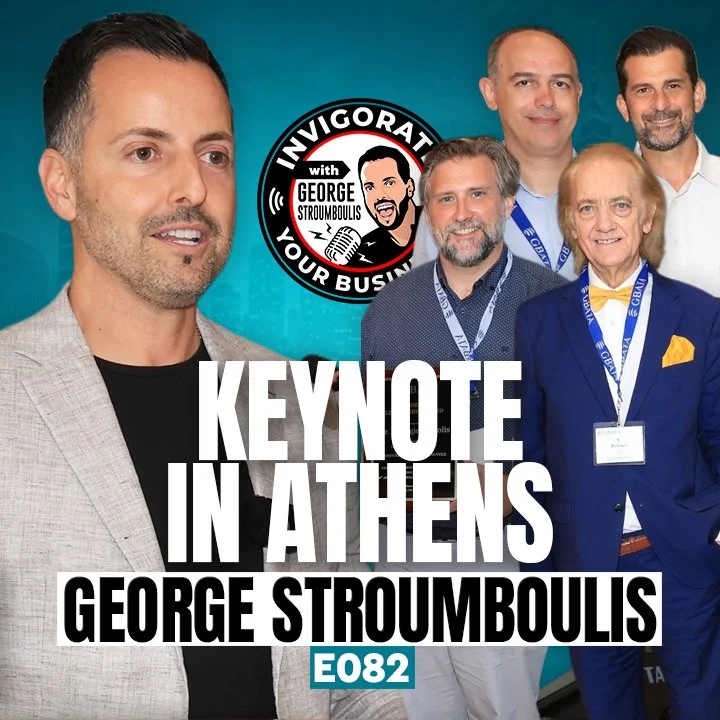



George Stroumboulis sits down with Dean Karnazes, world-renowned endurance athlete, bestselling author, and the legendary "Ultramarathon Man." Filmed in Newport Beach, California, they explore the mindset behind extraordinary resilience, pushing beyond perceived limits, and the life lessons endurance can teach entrepreneurs, leaders, and anyone striving for excellence.