
BUILDING OAKBERRY INTO A GLOBAL AÇAÍ EMPIRE WITH GEORGIOS FRANGULIS | E075
LISTEN TO THIS EPISODE




ABOUT THE GUEST
Georgios Frangulis is a Brazilian-Greek entrepreneur and global visionary, best known as the founder and CEO of Oakberry, one of the fastest-growing superfood brands in the world. Under his leadership, Oakberry has expanded to hundreds of locations across dozens of countries, redefining the açaí category through a scalable, franchise-driven model built on simplicity, speed, and strong brand identity.
Frangulis’ journey is one of resilience and relentless ambition. Starting with limited resources, he built Oakberry from the ground up into a global powerhouse—overcoming significant personal challenges, including a battle with cancer, which reshaped his perspective on life, discipline, and long-term vision.
Beyond Oakberry, he has strategically expanded into multiple industries, including luxury fashion, sports ownership, and global partnerships. His portfolio includes investments in premium brands such as Poubel, ownership in European football through Le Mans FC, and brand presence within Formula 1—positioning him at the intersection of business, culture, and global influence.
Known for his sharp execution, global mindset, and ability to scale across markets, Frangulis represents a new generation of entrepreneurs building borderless brands. Outside of business, he maintains a high-performance lifestyle and is engaged to world-renowned tennis champion Aryna Sabalenka.
Georgios' Instagram: https://www.instagram.com/georgiosfrangulis/
Oakberry Instagram: https://www.instagram.com/oakberry
Website: https://www.oakberry.com/
George Stroumboulis sits down with Georgios Frangulis, the Brazilian-Greek founder and CEO of Oakberry, one of the fastest-growing superfood brands in the world. Filmed in Miami, they explore his journey from humble beginnings to building a global empire, along with his expansion into sports, luxury, and international partnerships.
“We didn’t build stores. We built a global lifestyle brand.”
MEDIA RELATED TO THE EPISODE
George Stroumboulis sits down with Georgios Frangulis, the Brazilian-Greek founder and CEO of Oakberry, one of the fastest-growing global superfood brands. Filmed in Miami, they explore his journey from starting with limited resources to building Oakberry into a worldwide empire, along with his expansion into sports ownership, luxury investments, and global partnerships. Together, they dive into the mindset, discipline, and resilience required to scale across industries, overcome adversity, and operate at a global level.
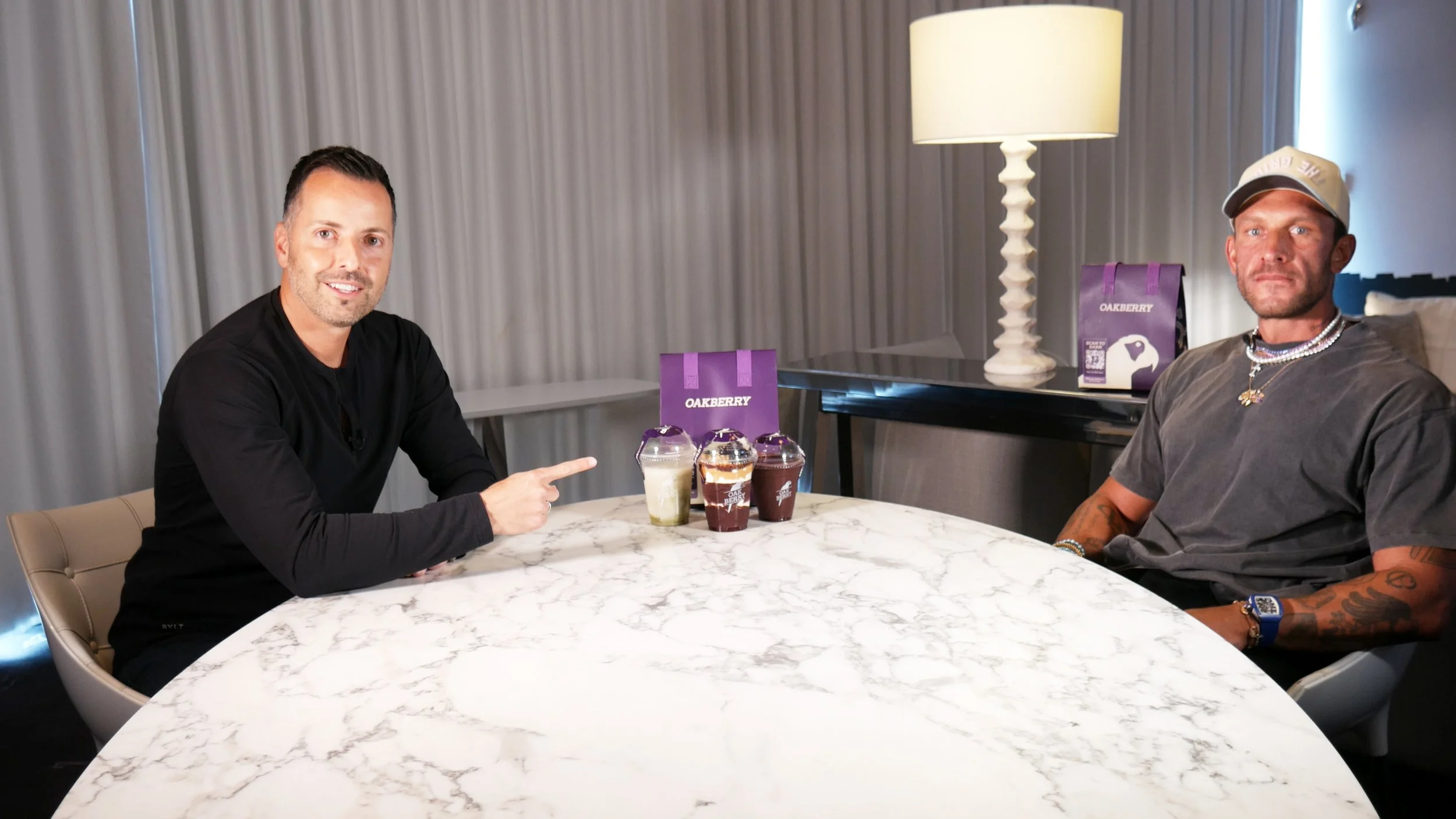
George Stroumboulis sits down with Georgios Frangulis, founder and CEO of Oakberry. Filmed in Miami, the conversation traces his path from starting with no capital to scaling Oakberry across dozens of countries, and how he’s now building influence across business, sports, and global brand partnerships.
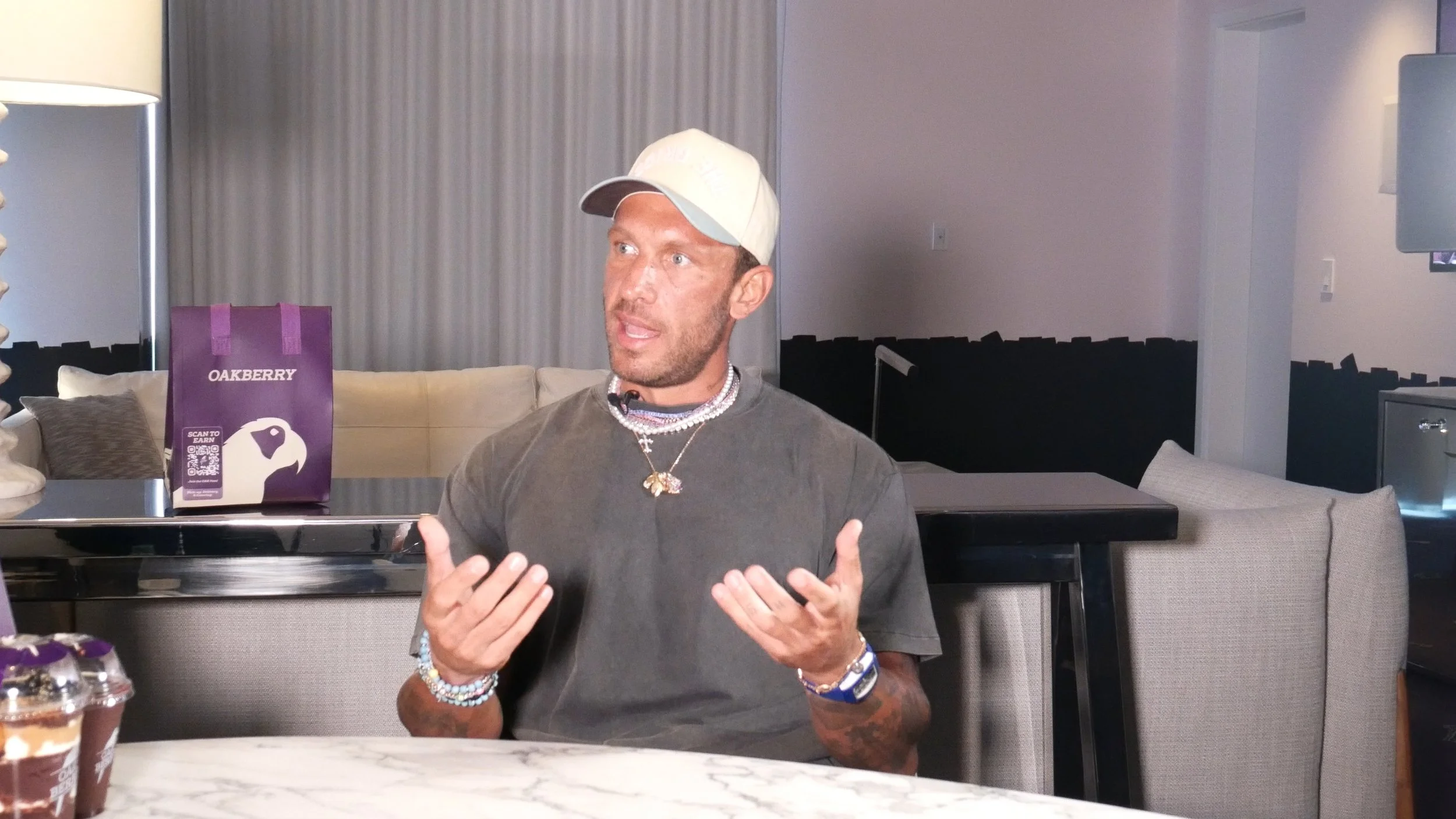
George Stroumboulis sits down with Georgios Frangulis, the visionary behind Oakberry, a global franchise brand with hundreds of locations worldwide. Filmed in Miami, they break down how he built, scaled, and positioned Oakberry as a dominant player in the global wellness space.
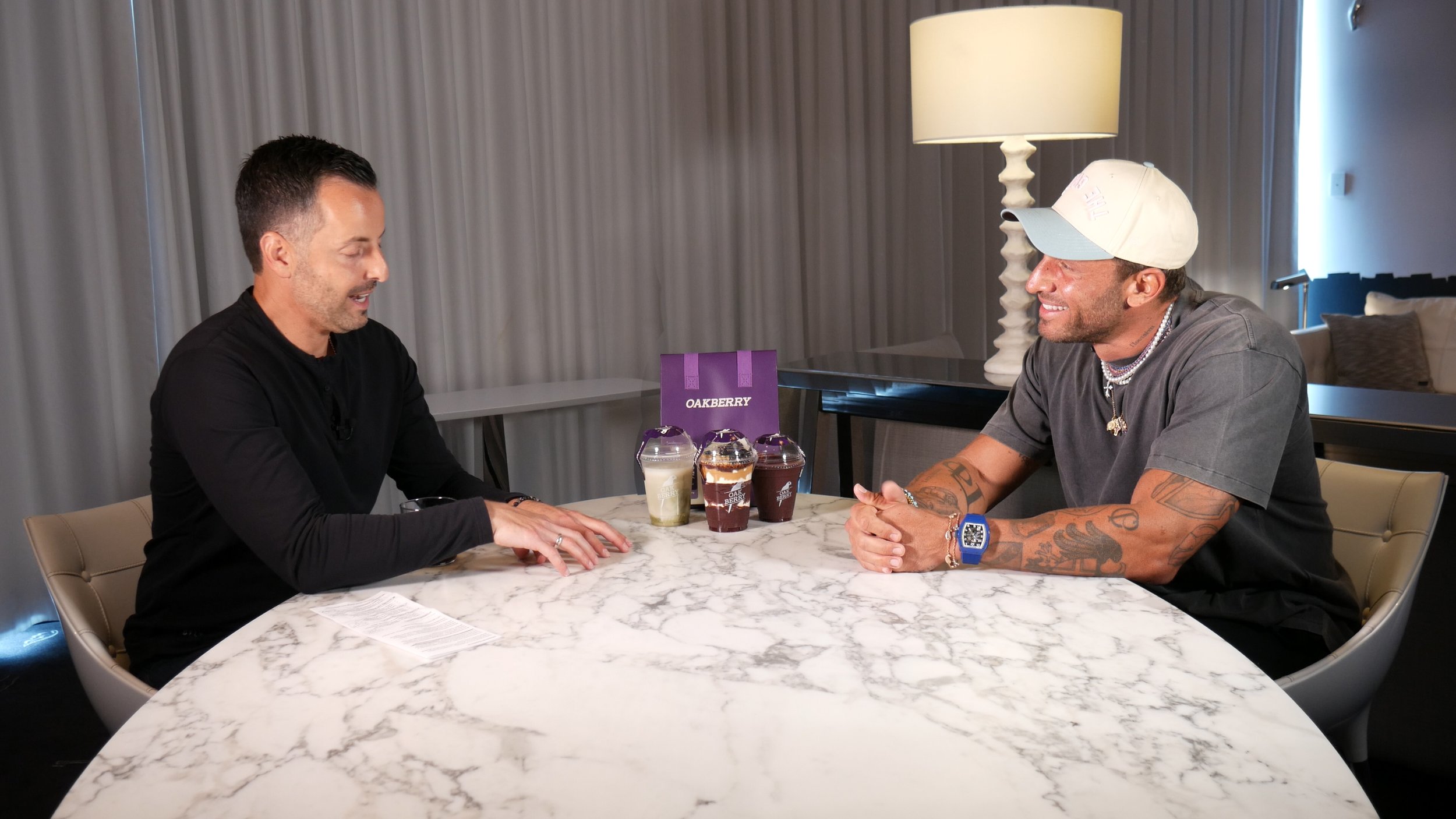
George Stroumboulis sits down with Georgios Frangulis, founder of Oakberry. Filmed in Miami, they dive into how he went from having no money to building a global brand, overcoming personal adversity, and expanding into sports ownership and high-level partnerships.
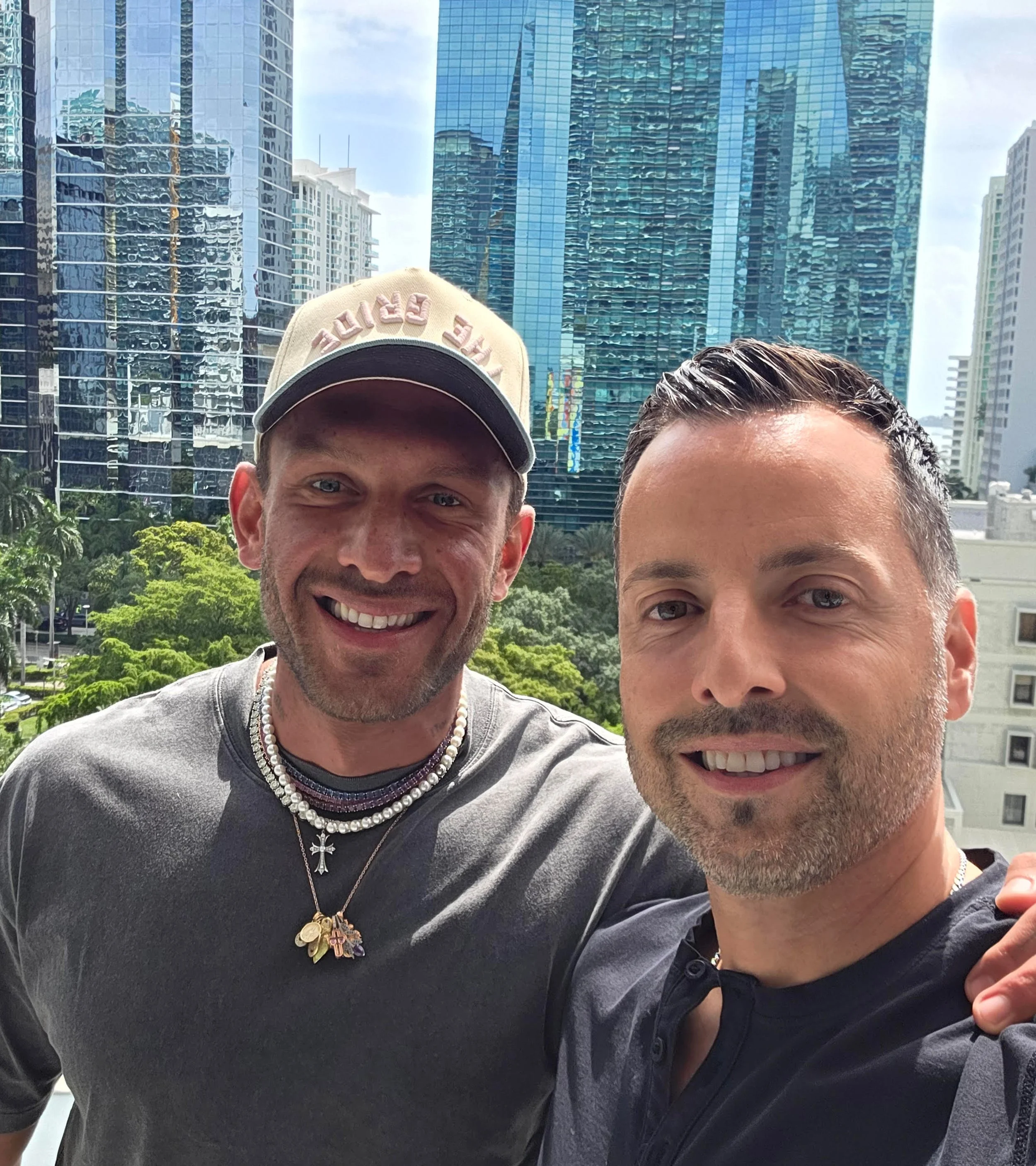
George Stroumboulis sits down with Georgios Frangulis, the Brazilian-Greek entrepreneur behind Oakberry. Filmed in Miami, they discuss the mindset, discipline, and resilience required to build a global business, overcome a battle with cancer, and operate at the highest level.
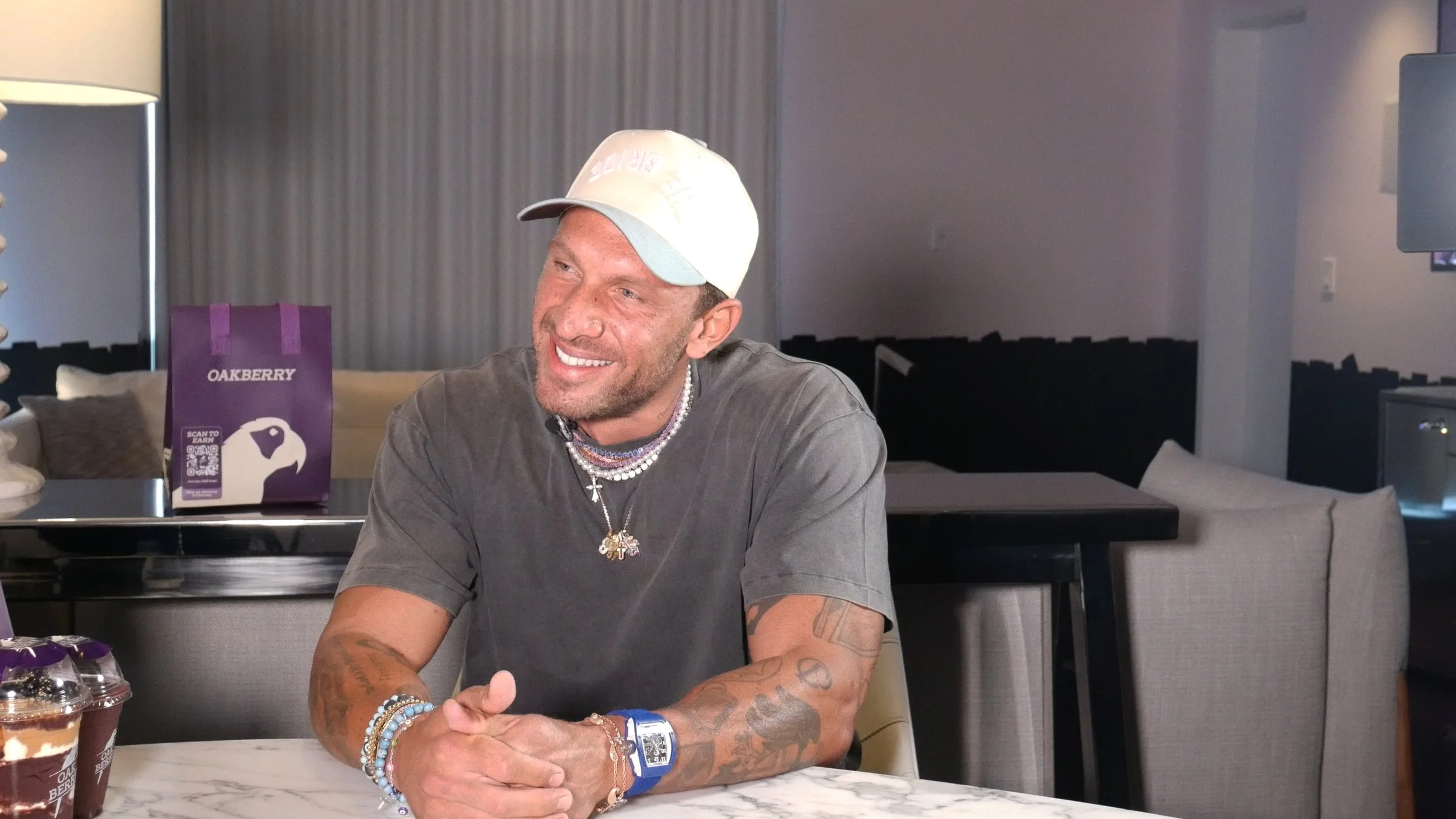
George Stroumboulis sits down with Georgios Frangulis, founder and CEO of Oakberry. Filmed in Miami, they explore how he built a global brand and expanded into a broader ecosystem spanning food, sports, luxury, and international partnerships.
ABOUT THE “INVIGORATE YOUR BUSINESS” PODCAST
The Invigorate Your Business with George Stroumboulis podcast features casual conversations and personal interviews with business leaders in their respective fields of expertise. Crossing several industry types and personal backgrounds, George sits down with inspiring people to discuss their business, how they got into that business, their path to the top of their game and the trials and tribulations experienced along the way. We want you to get inspired, motivated, and then apply any advice to your personal and professional lives. If there is at least one piece of advice that resonates with you after listening, then this podcast is a success. New episodes weekly. Stream our show on Spotify, YouTube, Apple, Amazon and all other platforms.
ABOUT GEORGE STROUMBOULIS
George Stroumboulis is an entrepreneur to the core, having launched several ventures across multiple industries and international markets. He has held senior-level positions at progressive companies and government institutions, both domestically and internationally, building an extensive portfolio of business know-how over the years and driving profit-generating results. George’s ability to drive real change has landed him in several media outlets, including the front page of the Wall Street Journal. George was born in Toronto, Canada to his Greek immigrant parents. Family first. Flying over 300,000 miles a year around the world puts into perspective how important family is to George’s mental and emotional development. With all this travel to global destinations, the longest he stays even in the most far-out destination is 3 days or less - a personal rule he lives by to make sure he is present and involved in family life with his wife and three daughters. To read about George’s global travels, stay connected with his blog section.
STAY CONNECTED WITH GEORGE STROUMBOULIS
STREAM & LISTEN TO THE PODCAST:
SPOTIFY: https://open.spotify.com/show/1rW2CmxQoiJNEPOZupJlvd
YOUTUBE: https://www.youtube.com/user/Stroumboulis
APPLE iTUNES: https://podcasts.apple.com/us/podcast/invigorate-your-business-with-george-stroumboulis/id1607693240
AMAZON MUSIC: https://music.amazon.com/podcasts/8fc03929-71b3-483a-a64e-153e30b3d462/invigorate-your-business-with-george-stroumboulis
STROUMBOULIS SITE: https://www.stroumboulis.com/podcast
PODCAST SITE: http://www.invigorateyourbusiness.com
FOLLOW GEORGE STROUMBOULIS:
INSTAGRAM: https://www.instagram.com/georgestroumboulis/
YOUTUBE: https://www.youtube.com/user/Stroumboulis
LINKEDIN: https://www.linkedin.com/in/Stroumboulis/
TWITTER: https://twitter.com/Stroumboulis
FACEBOOK: https://www.facebook.com/georgestroumboulis
TIKTOK: https://www.tiktok.com/@georgestroumboulis
CONTACT GEORGE DIRECTLY: https://www.stroumboulis.com/connect
FULL SHOW CONTENTS
00:00:00 Welcome From Miami: Georgios Frangulis
00:02:36 Roots In Brazil And Greece
00:05:12 Law School For Street Smarts
00:07:22 Miami Real Estate And Currency Shock
00:11:13 LA Açaí Hype And Product Gap
00:15:48 Starting In Brazil When No One Believed
00:23:48 Cancer Surgery And Finding Funding
00:32:05 Franchising Growth And Category Creation
00:34:01 Naming Oakberry And Building A Global Look
00:38:32 US Expansion And Corporate Store Bet
00:50:58 Raising Capital While Keeping Control
00:57:40 Amazon Supply Chain And Vertical Integration
01:03:05 Marketing That Prints Attention
01:08:52 Formula One Sponsorship Strategy Explained
01:13:19 Tennis Tournaments And The Super Bowl
01:16:43 Life In The Spotlight Together
01:21:42 Buying Le Mans And Building A Sports Brand
01:28:22 Money Mindset, Network Traits And Favorites
01:32:55 Closing And Listener Call To Action
FULL SHOW TRANSCRIPT
George Stroumboulis 0:00
Welcome to another episode of Invigorate Your Business with George Stroumboulis. Today's episode comes from beautiful downtown Miami here in Florida. I get to sit down with Georgios Frangulis. Georgios is a dynamic entrepreneur from Brazil. He has built an incredible brand with over 1,000 locations in over 50 countries around the world. Georgios is the mastermind behind Oakberry. We're going to sit down and talk about all things business, his idea when he was battling cancer, what he had to do to push forward and bring his vision to a reality, where he's taking the company next. We're going to talk about his investments in professional football clubs in Europe, in luxury brands, and just a bunch of different things packed with advice. He is very charismatic, and we're going to learn a lot today. So enjoy this episode starting now. My name is George Stroumboulis, and I'm extremely passionate about traveling the world, meeting new people, and learning about new businesses. Join me as I sit down with other entrepreneurs to learn about their journey. This episode of Invigorate Your Business Starts Now. And I think it's great and inspiring, right, for people to see that. We'll do a little intro. If people don't know who you are, they're going to know right after today. So let's start. So today's guest is a true visionary, a dynamic Brazilian Greek entrepreneur who's built one of the fastest growing global brands in the world. He's the founder and CEO of Oakberry, with hundreds of locations across dozens of countries, scaling a simple idea into a worldwide phenomenon through relentless focus, branding, and execution. But behind the growth and global expansion is a powerful story of resilience, overcoming adversity, including a battle with cancer, and coming back stronger with even greater clarity and purpose. Beyond Oakberry, he's expanded into luxury, sports ownership, and global partnerships, from investing in premium brands to owning a football club and stepping into the world of Formula One. This is a conversation about vision, resilience, and what it truly takes to build something global. So let's get into it with Georgios Frangulis.
Georgios Frangulis 2:39
Such a big pleasure to be here with a fellow Greek, a fellow Georgios. You know how proud we are about our heritage. So yeah, I think it's the first time I'll do a podcast with a with a fellow Greek. Amazing. Super, super excited to be here and to yeah, to tell you a bit more about the story. But I mean, after this intro, probably the best intro I've ever got. It's gonna be easy, but a bit of pressure.
George Stroumboulis 3:05
No, no, there's there's no pressure, man. And uh, you know, you see a certain persona online, right? And anytime you see someone and you're like, oh, you know what, I like what he's doing or she's doing. And then, you know, when you meet a person, a lot of the times you're either disappointed or you're like, ah, it's all image, it's whatever. Like you have that energy, man. Just hearing the stories about your upbringing in Brazil and the story, like you're just you're a good dude, you're a cool dude. So I I'm excited to know you now in person officially. Um, also, uh, two months ago was the first time I actually tried oak berry, right? Like grew up in Canada, acai is not really a thing, right?
Georgios Frangulis 3:42
Uh we're trying, we're trying to make it a thing in uh in Canada too.
George Stroumboulis 3:45
Well, if you're making it in Greece, I'm sure Canada will adopt it too, right? Um, but living in New York City, I was obsessed with acai. I live in California now, there's so many options, but uh oak berry has become like the if my daughter does good in her soccer tournament, she has to go to Oakberry now. Cool. And we have to actually drive to Huntington Beach, and it's amazing. But but let's go back. So Brazilian, Greek upbringing, um, you're around the world, you have global business. Like, talk to me about your upbringing in Brazil. Let's start there.
Law School For Street Smarts
Georgios Frangulis 4:15
Yeah, so basically, I'm uh I'm a Greek Brazilian Greek family, so my my dad's family is Greek Austrian, my mom's family is Italian-French, but uh yeah, for some reason at some point everybody moved to Brazil, and that's uh that's why I was uh born born and raised in Sao Paulo. Uh through super oriented super like Greek oriented roots and and the way uh the way the family was built and the way not just me but my my brother, my cousins, uh the way we were raised was just super super close to to the Greek like heritage and and culture and I think that definitely uh made me made me the person I am, not not just on uh on the resilience, on business, uh, but on the relationship with people, on the way you respect your family, and the way you respect the the elderly and and so on. So yeah, I was born and raised in São Paulo, uh lived there basically my whole life, went to uh law school in Brazil, always knew I wouldn't be a lawyer. I just wanted to go to college and learn something that could be useful in any anything I would choose to do with my life.
George Stroumboulis 5:32
So you want sorry, really quick, you you went to law school knowing you didn't want to be finish and become a lawyer?
Georgios Frangulis 5:37
Yeah, I mean from day one I knew I wouldn't be a lawyer. I just uh basically I thought, okay, business administration, I that's something that I can learn in the streets. Yes. You know? Uh law and law in Brazil is something else. It's not, you know, like uh basically they they can change the past in Brazil, which is crazy and it happens all the time. So knowing that I wanted to be an entrepreneur and that I would like start a some sort of business at some point, I just thought it would be useful for me to uh know like the legal grounds or or uh how how to operate in such a tough like legal environment. And and yeah, that was the idea, and actually it worked. Like uh I remember our first franchise agreement at Oakberry. Uh I wrote it myself. So basically, like it wasn't definitely the best franchise agreement ever written, but uh it was it was good enough. It worked, it worked, and it was uh actually the one that we were using for like maybe three, four years, and yeah, and probably saved me some bucks also because uh yeah, lawyers are not not cheap.
George Stroumboulis 6:45
And no chat GPT when you first did this, right?
Miami Real Estate And Currency Shock
Georgios Frangulis 6:47
No, no chat GPT. Uh so yeah, I mean I I knew I wouldn't be I wouldn't be a lawyer, but I just wanted to uh choose something that could help me in in like anything. And and it did. So I I finished law school, and I was telling you before that I was always super connected to the American culture also, uh American business culture, the freedom that you have in the US to be an entrepreneur, to to go and get stuff, and and uh first thing I did after I graduated was moved to Miami. Okay. So while I was in Brazil, I like I tried a bunch of stuff. I worked as a realtor. I I opened a bar with uh with some friends from college. It was it was good, he was paying the bills back in the day, but the bills were like, okay, I wanted to go to Greece in the summer. That was there was the bills, you know. I was still living with my with my parents, I mean with my dad back then. So yeah, it was it was a good experience for sure. It helped me a lot on because basically it's so also like food, food and beverage, you know. Yeah, so definitely build like a uh a base for what would come after with uh with oak berry. And when I moved to Miami, my main idea was real estate because that was what my family was doing uh after my granddad uh sold the company that he founded when when he started uh to to work in Brazil, which was also F and B. So hold on.
George Stroumboulis 8:20
So your grandfather was in food and beverage, then real estate was essentially the family business after?
Georgios Frangulis 8:26
Yeah, basically he he he was able to build uh uh real estate portfolio, and he was managing that portfolio uh throughout his uh I'd say last 30-35 years. Okay. So when I was born, that was that was what uh what I used to see in and and like hear people talking about when we were having lunch. So it was my dad and my granddad talking about real estate, basically, you know? Oh, we have to yeah, the rent of this and that. So it was something that it was like familiar.
George Stroumboulis 8:58
Yep.
Georgios Frangulis 8:59
And then I said, okay, that's maybe something that I can uh uh you know operate with. Uh ended up I couldn't. So I I came to Miami, uh, I bought an apartment to sleep. I didn't have the money, so I got money landed from family and friends in Brazil. Okay. Uh what year are we talking? Early 2000s? That's 20 uh 13, 2014. Okay, so after the crash in the markets, you came post post-market crash, but still, like I'd say real estate in Miami was highly undervalued, so uh nothing close to to what we see now.
George Stroumboulis 9:37
Right.
Georgios Frangulis 9:37
Probably like 80% discount to to the prices that we see now. And yeah, so I bought an apartment to flip. I bought a piece of land with uh with a friend of mine uh in Wynwood here in Miami. I mean, he bought the piece of land and I I joined him on that. And the whole idea was okay, let's let's build something on this piece of land, and and I'm gonna like flip this apartment at some point. So back then the currency between the US dollar and the Brazilian money was two to one.
George Stroumboulis 10:09
Two to one, okay.
Georgios Frangulis 10:10
That's 2014. Then we got the election, the wrong person, in my opinion, got elected. Lula? It was the it was Dilma, which was like the Lula uh successor.
George Stroumboulis 10:22
Okay.
Georgios Frangulis 10:23
It was crazy.
George Stroumboulis 10:24
I mean, that's another podcast. We'll get into that.
LA Açaí Hype And Product Gap
Georgios Frangulis 10:27
She was impeached afterwards and everything, so yeah. But basically, yeah, from uh June to October, it went from two to one to four to one. Jeez. I didn't have the money, so I had to figure out people to lend me money in Brazil, and now I needed double what I needed three months uh before that. I said, okay, yeah, fucked up. Just sold the sold the apartment, uh, sold the piece of land back to my friend, and at least I got lucky enough to make some money on the US dollar, on the currency. Okay. Paid everybody that I owed money to and kept this money, and I said, okay, now I have to, with with this buffer that I uh luckily created here, I have to figure out what I'm gonna do with my life. And then then I moved to California, and while I was in California, uh I started to see people uh craving acai balls and going, and that's 2014 in in in LA. 2014 LA was I would say still like golden era of LA uh healthy food, organics, etc. The city was booming. Not the shit it is today, but anyways, well dude, it's uh it I feel super bad when I go to to LA and I go to LA a lot. And the places that I used to walk around when I was basically like having the idea, the insights for Oakberry, the coolest places back then. Now it's like it's yeah, it's a shithole. Yeah, yeah, yeah. It's crazy. So yeah, bad uh bad management can screw something up super fast, like in 10 years you see the difference, and it's uh yeah, it's terrible. Oh yeah, it's happening in Canada, but that's yeah, it's happening in I'd say in the in a good part of the world. It's uh it's not not easy times, but yeah, we gotta just keep doing our part, stay in our lane and go. Uh so I saw people like craving and and lining up for asay bowls in LA, and I thought, okay, probably super good asay bowls because it was 25 bucks a piece. It's uh something that was like people were willing to wait like 20 minutes for an asay bowl, and and then I came to try the first time and it was shit, like super bad. Doesn't didn't taste like asay, and I know how asay tastes and how it should taste because asay is something that only comes from the Amazon forest in Brazil. That's the only place where asay grows, yeah, and it's it's a native fruit from the region. So because of that, I grew up seeing asay everywhere.
George Stroumboulis 12:54
I wasn't like a crazy addict on asay, even in Brazil, so it wasn't a daily thing you wanted in Brazil.
Georgios Frangulis 13:00
I would have asaí maybe once every two weeks or something, you know, because it was even like too mainstream in Brazil, too common. Yeah, nobody was even thinking about it, you know, because it was just like just another commodity, another another fruit that it's uh like uh widely available. Uh but in California I had that hype about it exactly because it's uh of course it's it's a superfoot full of antioxidants and this and that, plus it comes from the Amazon forest, so there's the whole like you know, the whole like aura about something that you can you can eat, something that has been sourced by the local communities in the Amazon forest, there's not many options. So I said, okay, this guy is like they they have lines in front of their shops, they're not doing the best uh product, definitely not the best experience, definitely not the right price point. But if I can come up with uh uh an operation that gives the opportunity to the customer to have like the the right way to to eat asai, yeah, plus uh with the right standards that the American customer is expecting from a from a fast food or or a fast casual operation, which is it has to be the right price point, has to be a cool brand. Uh the standards of the product has to be the same every day. Back then, they were like mixing acai with apple juice or whatever and just blending, and it was never the same because you know you cannot you cannot have standards uh when you when you have to do your own recipe. So yeah, started to draw very from scratch back then. Uh came up with the whole idea, figure out a machine to use to make sure that the acid would come uh out of the machine always on the exact texture, uh standardized taste, and etc. Uh this is all in LA.
George Stroumboulis 14:57
So LA you moved there. You're doing your research, and then how how long are you doing this while you're doing this process?
Starting In Brazil When No One Believed
Georgios Frangulis 15:03
It was like 18 months. So yeah, a bit over a bit over a year. And then I was uh I was trying to start a business in LA, but again, I was broke. I had no money, so I had no credit score. Yep. Uh and I was trying to start a business selling something that wasn't like super well known in California. So whatever landlord or realtor that I went to, you know, I want to open an ASI shop in Santa Monica back then. So like, okay, what's what's AI first? Then you have to explain, and then you're like, okay, but uh what's what's your background, you know? And yeah, my background is I went to law school in Brazil. You have a credit score, no, I don't. So basically it was impossible for me to get a good spot to open up the first location. And and then I said, okay, I'm not gonna be just waiting because I think the opportunity is just too good. And and then I just flipped the script and uh moved back to Brazil and said, I'm gonna start this in Brazil. And even though it was something that was super available, uh nobody was doing it in the right way. Nobody was giving the people uh again uh an operation that had standards, that had cool branding, and that could actually put ASI on the level that it should be. And basically from the moment that we opened our first location in Brazil, the customer understood what we were doing and that it was different.
George Stroumboulis 16:29
The local Brazilians understood that. Exactly.
Georgios Frangulis 16:41
How are you gonna pay rent selling asay on this shopping mall since we have another 20 like juice spots or whatever? Every restaurant, every bakery shop, everybody sells acai. And then yeah, no, I'm gonna do it differently. It's like, you know, it's a it's it's an asay uh-based operation. We're not doing other stuff, it's different. I'm gonna serve it in a in a in a cup. We're gonna say it's a bowl, but it's not a bowl. So people can layer with uh all sorts of toppings. I'm gonna have a machine, so it's gonna be super fast. I'm I can I can help one customer every minute, every 90 seconds. Uh they said, yeah, okay. Nope, nope, also nobody wanted. So I got like my last choice for the first location was the one that actually uh ended up happening, basically because it was uh December and it's a shopping mall, and then they don't want any empty spaces in a shopping mall before Christmas time. So they said, Okay, yeah, open up here. Open up here. And and we took we took the the opportunity, and I'll say from day one, it was uh more successful than we thought it would be. And I say us because back then I have already uh I had already invited uh Henato, which is my co-founder and it's a friend from school days, to join me on the on the journey. He was also on a similar situation, like just graduated from college. He he went to uh marketing uh school, and yeah, he was crazy enough to to to join me on the on the oakberry journey. And I think because because I developed everything thinking about the American market that has much higher standards for F and B than the Brazilian market, right? Because it's much more competitive uh and much more mature. Once we started to offer something with this kind of standard to the Brazilian population, they immediately fell in love with it. Even though it was a product that was super widely available, the standards are not were not available on to the same point. And yeah, then we started to grow organically in Brazil from this first location, second location reopened after three months.
George Stroumboulis 18:49
It's all Sao Paulo. So you're opening first one Sao Paulo, then second one as well?
Georgios Frangulis 18:53
We opened the first like 25, 30 stores in Sao Paulo.
George Stroumboulis 18:56
Across the city. Okay. Was your goal always, hey, back from LA, let me go back, refine it, and then I'm coming back to the American market? Was that your goal?
Georgios Frangulis 19:03
Yeah, that was always the goal. It's still the goal now. I don't think we're anywhere close what we can be in the in the US. Right. Uh, but still, US is the most competitive and toughest market in the world. And I can say that now with uh a lot of confidence because I have stores in over 50 countries.
George Stroumboulis 19:20
1,000 plus locations.
Georgios Frangulis 19:22
1,000 plus, yeah.
George Stroumboulis 19:23
50 countries around the world. 50 countries. How many countries around the world? 200 in change?
Georgios Frangulis 19:27
Yeah.
George Stroumboulis 19:28
Yeah, so you you got a good cover. Okay.
Georgios Frangulis 19:30
Yeah, I mean, we we still uh that that actually is one of the things that keeps me going, you know, because it feels like when you when you thousand locations, it seems like a lot, but we barely tap the American market. I have like 50 locations in the US. The US has potential for over a thousand locations just in the US market.
George Stroumboulis 19:48
Absolutely.
Georgios Frangulis 19:49
I haven't tapped China, I haven't tapped India, I haven't tapped Japan. Those are the biggest actual like franchise markets in the world. So just on this like four markets, we can have another 5,000, 6,000, 8,000 locations. So I I feel like already changing a bit the subject, but I feel like Oakberry is still a startup, and that's how I manage the business still, which is a problem at some point because it is a corporation, you know. There's we have to have uh a bit of bureaucracy, we have to have a bit of a corporate uh uh structure, but it's uh very tough for me to understand that because I still have this startup feeling within myself, and sometimes I just have to make sure that everybody in the company understands that that culture understands that okay, we're we're big, but we're not a massive corporation because in order for you to understand the size of a business, you have to understand the addressable market. Right. So for us to be actually big, we have to be 10 times what we are right now. And if we did what we did basically bootstrapping until the first like 500 locations, and then yeah, then we okay, investment come in and and it helps uh on uh on like opening more stores, expansion, uh professionalize the business. But the I'll say the base is the same, right? It's taking care of the business as a as a startup because I th I really feel that's what we are.
George Stroumboulis 21:22
And you're 10 years in?
Georgios Frangulis 21:24
We're gonna be 10 years in December this year.
George Stroumboulis 21:26
Jeez, but you you don't I I get what you're saying. I'm I'm in a similar situation, 10 years with my company. You feel like you just started it yesterday, right? Exactly, yeah. But hold on, we're we're gonna get into like the the the the packaging, the branding, how you guys market, but go back to that first location. There's a very important story that you had Cantor, yeah, right, and then I I'm not gonna say the story for you, but you didn't have enough money to open your first location here in LA, which by the way, did you have a network there at the time?
Georgios Frangulis 21:56
In LA? Yeah, zero, zero.
George Stroumboulis 21:58
So, like socially, did you? You know people kind of hanging out here and there?
Georgios Frangulis 22:02
I I knew I knew people because I was living there. So you meet people at the gym, you meet people, you know, like so uh But not us not your core No zero zero my my core was Sao Paulo that's why I chose to go back and do it there just because uh I wasn't willing to wait more. I just said okay I have to take the opportunity and even though it wasn't the the strategy that I chose, it was basically those are the facts, you know. That's uh and you you you have to just squeeze the lemon and try to try to do like best you can with uh what with with the cards that you have.
George Stroumboulis 22:35
Or give up on your vision.
Georgios Frangulis 22:37
Exactly, which which were not uh was not an option.
George Stroumboulis 22:41
Not an option. Where did you get your money for your first location if you didn't have it in LA?
Georgios Frangulis 22:45
So okay. When I uh figured that it would be impossible for me to open the first location in LA and I had to open the first location in Sao Paulo, uh I had probably like 20k in my bank account because I was living out of that profit that I made on the on the currency uh a year and a half, two years before that in Miami. And I was basically living out of that.
George Stroumboulis 23:09
Yep.
Cancer Surgery And Finding Funding
Georgios Frangulis 23:10
So that's uh 20 2015, 2016. I was uh going to get married in October 2016, and Oakberry was ready to ready to go, ready to open the first location, but I didn't have the money to open the first location of Oakberry. Uh neither Renato did. And and we had we had another partner that came in the business uh just a bit after that, and then we ended up uh opening up the second location with uh with his uh investment, which helped a lot. But that first location, like we were struggling because it was like October, I was going to get married, uh tapping on the cancer point. So I I was diagnosed with the cancer, tyroid cancer in August 2016. So basically in August 2016, I had 15 grand in the bank. Right. Uh I I figured that I had cancer. I was going to get married on October the 1st. I had to go to surgery on October 16th for the for the removal of the the thyroid and the cancer, and and I had to open the first shop. So it was a rough six month. But I was always super confident that I mean it first I'm not gonna lose to cancer. Uh you know, like it makes no sense for me to, you know, like why why would I why would I die? Why would something bad happen to me? Like, so I I had a lot of faith on on uh just moving forward and and keep a good positive like mindset and energy towards something that could help me.
George Stroumboulis 24:48
Oh, you had that the whole time, even when you were diagnosed, you're like, fuck this, I got it.
Georgios Frangulis 24:52
I mean, of course, of course, when you see the diagnosis, then you you're afraid because you I mean it's a it's a first and uh hopefully the last time in my life that then I'm gonna get this kind of news. Yeah. Uh there's a strong like genetic factor on that. So my mom had uh the same kind of cancer, my her dad also had the same. On my dad's side, my grandma also had it. So thyroid cancer is something that it's super, super uh uh genetic. Yep. And like in my case, I had like good examples that people did they went through it and everybody was okay. So I said, okay, I'm gonna be okay either. And yeah, I just didn't want to focus on that. I had a business that I really wanted to start, and uh thanks God I did, because then you can focus on something else. Yeah, of course. So if if I was like already doing good and yeah, with uh with a I don't know, with a lot of money in the bank, maybe then you end up uh focusing on the bad more because you're not that concerned about building building your life. And so I didn't I basically I didn't had uh the time to to to be depressed, yeah. I had to I had to figure out, I had to to move forward, and and it happened. So uh after I did the surgery, then I had uh the 15k became like 2, 3k maybe in the bank account. Oh shit. So and that's uh that's mid-October.
George Stroumboulis 26:25
And then what's your fiance saying at this time? Because you're getting ready to get married.
Georgios Frangulis 26:30
She was already my wife. Oh, she was okay. Yeah, ex-wife now, but uh back back then, yeah, she was already my wife because I got married on October the 1st. So I got I got the surgery like two weeks after the after the wedding. Uh she was she was not saying much. I mean, sh she was also like confident that everything would be okay. I was trying to to pass on this confidence, not just towards her, but towards my my family, towards Renato, you know, like there was already like a lot of people involved. And and I'm I'm a super optimistic guy, and I'm super faithful also. Uh I was always very, I don't think like religious is the word, but uh super connected to Christianity, super connected to God. I was always praying, it's something that helps me to keep going. So I just uh made sure that I was doing that even more during that period to to try to yeah, just uh keep me keep me up and running. And and then I said, okay, on on a on a uh let's deal with the facts now. I need to save every dime, every cent. And and I started to call like the bank to or like banks and insurance companies, like, you know, those insurance that people sell you throughout your life, yeah, 20 bucks here, 100 bucks there, and this and that, and then it's like 500 bucks at the end of the month. I didn't have the 500 bucks to spare back then. So I called one, like I called the uh Citibank, and because I saw that they were charging me 64 uh of 64 hey's, which is the Brazilian money back then, basically 15 bucks a month. And I called to cancel the insurance, life insurance. And then the lady that got the got the phone call, she was like, Oh no, why are you gonna cancel this? Is such a good insurance because it also covers uh some some uh uh major diseases. So, yeah, like like which? So like cancer. I said that's uh it's bad, but it's good. So I I told her, okay, I just uh I just got diagnosed and I just got surgery. And I said, so yeah, you have uh you have the right to claim 75% of the of the insurance. Uh I said, okay, what should I do? So just email like your diagnosis and etc. to this email and wait to hear from them. So in two weeks, they wire me, which was like 50k back then. Uh and that's like November November, first week of November. First week of December, we opened the first Oakberry shop.
George Stroumboulis 29:05
Would you have opened it if you didn't get that wire?
Georgios Frangulis 29:07
I don't know. I don't know.
George Stroumboulis 29:09
Uh that's crazy, dude.
Franchising Growth And Category Creation
Georgios Frangulis 29:10
Because I mean, I would have to ask for ask around for money. And when you're just like, okay, you're you're a kid, you're a boy, you're desperate, and you're asking for money. Because nobody thought it would work. When I was telling people that I was going to open an assay shop, which was actually a kiosk, it was six square meters, like it was a tiny operation. Even my friends, like super close friends and family, they were like, Are you sure you're gonna do that? Because you know that asai is literally everywhere. Why are you gonna do it? It's like uh like telling someone that I'm gonna open a water shop, or you know, like or a or a bakery shop. Uh but you and I understand them. They were not trying to go against, they were trying to protect me, sure, which makes sense because it wasn't the most obvious idea, and that's why nobody did it before us. Uh so I don't know if I would be able to raise the money in such a short period uh without any like without any credit, yeah. So and not credit with the bank, credit with the people. Like I I wasn't like, okay, yeah, this is a very good entrepreneur. He already had like four successful exits, and whatever he asked, I'm gonna give him. I had zero, like I had nothing. Yeah, so yeah, I I think uh it happened this way, and and once I you get this freaking thunderstorm, everything is going wrong, and you know, and there's like the kens, and then there's that, and there's like you have to open the business, nothing is looking good, and then when you start to get like any any sort of good news, you say, Okay, it's uh you know, tight as on, yeah, yeah, yeah. And and the optimism that was already there, it just became like more and more uh uh like I I became more and more optimistic, and yeah, I said, okay, I can I can focus on something now because we have the money, we're gonna open this first shop. Uh I have Renato, I had Fabiano, the other partner, coming in with money for us to open a second shop in like two or three months. Uh I had Ricardo, also uh a friend from school, co-founder that knew a lot about franchising. Okay, his family owns the biggest uh franchise consultancy company in Brazil. So any any doubts I would have, I would call him because basically I wanted to franchise the business from day one. Uh I mean I wanted the business to be a franchise business from day one because that was the only way for me to grow. I didn't have like funding. So you either make a very, very good and profitable business for other people to say, okay, I want to open one of those, or uh it will take me forever. For me to open 10 shops will take me, I don't know, two, three years. You have to get payback, then you have to, you know. So basically the that's the beauty on the franchise market. It's other people invest in your brand and then you can expand. And yeah, that's uh that's what ended up happening. We in the first year we opened uh 10 locations in in Sao Paulo. First year, wow. And because it was all organic, so we didn't we we were not like trying to sell franchises. It was customers that fell in love with the brand, and then they realized, okay, this this would work like close to my house, this would work close to the university I'm I go to, this would work close to the the uh office building I work, and and then we started to grow in a like around that first location.
George Stroumboulis 32:35
Okay.
Georgios Frangulis 32:36
So in Sao Paulo. The 10 locations first year, another uh 60 locations second year. Jeez. Then we start to do Rio, then we start to do uh a bit more like coming north uh in in Brazil. Basically, we had like 200 locations in in the first three years.
George Stroumboulis 32:55
Hold on, at that point, is that the biggest ASIE brand in Brazil? Were there other franchises?
Georgios Frangulis 33:00
It was there was other franchises, no one doing what we started to do. Basically, uh like ice cream shops that also had ASI almost as a as an ice cream flavor, but nobody like doing a super ASIE-oriented operation with the standards, with the with with the brand, uh with the with the approach that we had towards the market with a product that was better for you, like comparing to whatever else like uh people were selling. So I would say there was uh there was a like a commoditized competition, but not a brand competition. Gotcha. We we we were able to take over the market as a brand, and basically the play was to create a category out of us, uncommodize it and create a category out of asai.
George Stroumboulis 33:50
Which didn't exist. No, yeah, pizza change, you have hamburger change, you have okay.
Georgios Frangulis 33:54
Exactly.
Naming Oakberry And Building A Global Look
George Stroumboulis 33:55
So you get to 200 locations in Brazil. Yeah. Before we come back to the States, where did the name actually come from? Like the brand, the logo, like are you involved down to that level?
Georgios Frangulis 34:05
Yeah, yeah. I mean, it was it was just me. So I was uh basically doing everything. The name came because first I wanted to, so I was developing the business for the US.
George Stroumboulis 34:16
Okay.
Georgios Frangulis 34:17
So and I I always had the idea of having an international business and and making Oakberry an international business. So I wanted to make sure that I would have a word or a name that would work anywhere and everywhere. And uh I wanted to make sure that I would get IP on that intellectual property, which is super important for uh on a brand and branding perspective. Oak berry doesn't mean anything because oak trees doesn't give any berries. So uh how I came up with the name, basically, I'm a big Arnold Schwarzenegger fan.
George Stroumboulis 34:52
Okay.
Georgios Frangulis 34:53
I was reading his uh his book back then, and his nickname when he started on bodybuilding was the Austrian Oak. And then I was just reading it, and then I was living in in California, working out at uh Gold's gym in Venice, you know, the Mecca of bodybuilding and Schwarzenegger, and yeah, I mean I just I I love the story, the life story of the guy. Uh and and when I read the Austrian oak, I said, fuck, that makes a lot of sense because oak has this uh this uh meaning of like strength, uh, but at the same time it's super biblical. There's a lot of sayings around oak in in the Bible. So I said that's yeah, that's a cool name. And I'll just like throw in the berry so people understand uh I'm not a uh a hedge fund or something because there's a lot of hedge funds and private equities and stuff, all capital, all three capital, woke this, op that. Yeah, so that was that was how the idea came.
George Stroumboulis 35:48
Hold on, does Arnold even know about this? Have you reached out to him?
Georgios Frangulis 35:51
I I tried to reach out to him, but he's I would say I met everyone that I uh that I wanted like in in my life. Arnold I didn't met yet, and this is a guy that I really you know I really look up to, and um I'm sure I'm gonna meet him at some point.
George Stroumboulis 36:07
There's gotta be the Arnold ball. Like if he were to do his own bowl, what would be it?
Georgios Frangulis 36:11
I I I literally texted, I mean I DM'd the guy. I don't want to I don't want to go over, like of course I could ask people that I know that know him, like, okay, I want to, you know, please connect. I want it to be I want him to see that. So uh I'll just keep telling the story. At some point, someone is gonna send it to him, and yeah, and I hope he reaches out back.
George Stroumboulis 36:30
Yeah, through your network, you're one degree away from anyone on this planet. Like, let's be honest, right? Yeah, yeah. Okay, so hold on. That's where the name comes, the brand, everything.
Georgios Frangulis 36:40
And the parrot, uh, so the the Macau, the the bird is a Macau. Yep, it's a a bird from the Amazon region, and it's the biggest acai eater in the Amazon region. So Ah, okay. Because I I didn't want it to make a brand that was uh Brazilian. Because I didn't want it to stereotype the brand. I wanted to build a brand that was global.
George Stroumboulis 37:04
Yep.
Georgios Frangulis 37:04
So we're super proud of the Brazilian heritage, of the the fruit and and uh everything around it, but I just felt like okay, I want people to eat this every day. Whatever you stereotype and you put a flag on it becomes uh something like with a dim, you know, like a dim park or a dim restaurant, like Rainforest Cafe. You don't go to Rainforest Cafe every day with a gorilla like you know knocking his chest while you eat. So I wanted it to be uh something without like full of brand identity, but without a national identity. Yeah, and and I think that was one of the mistakes that everyone that tried to sell ASI outside of Brazil before, they would just throw in a Brazilian flag, put some like samba to play and bossa nova and stuff, and and full of fruits and like pictures of the beach and like surfers. That's the stereotype. I didn't want like this is the people that surfers they're gonna come to the store because they're already hooked on Asai.
George Stroumboulis 38:05
Exactly.
Georgios Frangulis 38:05
Yeah, but I I want the office people to come and try this, so I have to make it more like uh friendly and familiar to them. So that's that was the the approach, and I just thought the parrot would look nice, and then uh another friend of mine uh came up with the logo. She's uh she's a designer, and then yeah, she designed the logo, and I said, Okay, this is perfect.
George Stroumboulis 38:24
That's perfect, and that's the original one from 10 years ago. Yeah, that's the OG.
Georgios Frangulis 38:28
That's the OG, yeah.
US Expansion And Corporate Store Bet
George Stroumboulis 38:29
Dude, and it's been on any. We'll get into the marketing. So you get to 200 locations, now you're looking at the US market. What goes into finding? By the way, of the 200 locations, how many were corporate owned versus franchised?
Georgios Frangulis 38:40
Back then, like five, six corporate and then all franchised.
George Stroumboulis 38:43
Okay, and then the franchise, and then okay, so then where where do you look in the USA and decide I'm going here? Who's funding that?
Georgios Frangulis 38:50
So uh the company was super profitable from day one. And basically, when you like we had a super small structure and we were selling a lot of franchises. When you sell franchises, you get the franchise fee. Basically, you have like a lot of money coming in up front because your franchisee is paying you an upfront fee, and and then he's opening the store, and then after that, of course, you're gonna get the royalties and and so on. But uh, we were able to sell 200, 300 uh franchises in a short amount of time in Brazil. So basically, okay, we said, okay, we can we can start to try and and test like other markets. Uh so we opened up one store in Wynwood here in Miami. That was the first US location. That's the first US location. We tried before before that, we tried the dolphin mall in Miami, didn't work. We tried uh Sogras Mall in Miami, didn't work. And that was because like in Brazil, shopping malls are the destination. That's where like everybody goes to shopping malls because it's safe, because it's easy to park, and that's basically how it how it works in Brazil. Okay. Here in the US, you want your store to be on the street. In Miami, everybody's driving in Miami. So uh you don't have to be in a shopping mall. It's actually better if you're not, depending on the shopping mall. Of course, we have one store in Brico City Center now. It's the best store in the country.
George Stroumboulis 40:14
Is it really?
Georgios Frangulis 40:15
Yeah.
George Stroumboulis 40:16
That's an exception here though, the small, right?
Georgios Frangulis 40:18
It's open, it's it's open, it's basically like it's hotel office build office buildings, everything like combined. Uh and and it's good now. Four years ago, five years ago, Brico City Center before COVID was empty. Okay. Nobody wanted you could like give real estate there for free. And now it became like the the best-selling shopping mall in Miami. Jeez. Uh so it's and yeah, there is like Brico grew a lot, and then people used the Brico City Center as their service center for everything to go to the barber shop, to go to this, to do that, to go to the gym, to go to we work. So yeah, we we basically enjoyed that uh that that uh uh opportunity and and it's been very good.
George Stroumboulis 40:58
And that was a corporate owned one, or that was that's corporate.
Georgios Frangulis 41:01
So US we basically took a different approach when we did our last raise in 2023. Okay, we said, okay, the US is the market that we cannot screw up. It's the most competitive, it's the toughest one. Uh we have to make sure that everything is up to the standards that we uh say we want. And then we decided to open only corporate locations in the US, uh, starting in South Florida, Southern California, and uh New York, Manhattan.
George Stroumboulis 41:35
And New York. So any location now here is corporate-owned.
Georgios Frangulis 41:38
On these three states, yeah.
George Stroumboulis 41:39
And those three states, amazing. Okay.
Georgios Frangulis 41:40
And then then we got other stuff, we got stores in Milwaukee, we got stores in in Colorado, we got stores in opening up Texas now, Hawaii, those are franchised. Okay. But these three markets, because theoretically they're the toughest markets, and I I cannot even say that was the right strategy for us. Maybe it would make more sense to just okay, let's double down in South Florida first, and after we got like 50 locations in South Florida, then we do New York, and then we do California. But because the the like the culture at Oakberry was always uh expanding fast and trying different waters, yeah, and it was working, we said, okay, let's do the same here. Uh it's working, but it's uh it was a I would say a super uh aggressive bet because it's the three toughest markets in the US, which makes it the three toughest markets in the world. And we were doing it corporate, so we were a big franchise business, and then you switch to become a big store operator in the in this like tricky markets, tough conditions on on labor and and and everything. PL is not comfortable in these areas because you're paying LA rent, you're paying Manhattan rent, you're paying like uh prime Miami rent. So definitely we learned a lot from it, but after you break through, then it's like I mean, and I think we're right on that tipping point in the US. I'm I'm uh getting so much good feedback. The brand is getting more and more well known, so the awareness is uh just growing a lot. People coming to me in the streets like, oh, I love oakberry, I love oakberry, I love oakberry. So it's uh yeah, I'm I'm super bullish on the US market for us. And and it was a strategy that took longer, a lot of money, a lot of investment. Uh but yeah, it's paying off.
George Stroumboulis 43:35
I I have like a million questions and I know time today, but okay, so you're the face of this, right? People know Yoros is is the face of this. The bigger it gets, do you do you try to maintain that? Like what what's the end goal? Because I do want to talk about the rest of the world and the markets, but what is the end goal? Because this is already a billion dollar brand, right? Like in the market, there's I think so, yeah. Well well, if you look at uh Uh certain hamburger chains. We don't have to they get to 20, 30 locations, they show whatever and they could sell for a few hundred million. Yeah. And so clearly with a thousand locations, the brand equity and growing, this is a billion dollar. Is that the path? Or are you just like, dude, I got another 10 years in me? I want to get to 20,000 stores. Like, what motivates you today? Because it's going to change.
Georgios Frangulis 44:21
So I think like I'm uh humble enough to know that I don't have another 10 years uh at Oak Berry just because I think it's impossible for us to keep this startup feeling for another 10 years. Right. So at some point we have to get more corporate. Not now, not in the next two years, but maybe in five years. So yeah, I I I still have like a lot to give to the business. Uh I think it's impossible to detach myself and my face from Oakberry.
George Stroumboulis 44:59
Right.
Georgios Frangulis 44:59
And I'm and I'm proud of it because basically, and even uh so the friend that I was uh telling you about that we bought this piece of land in Winwood, he's now uh Oakberry's head of US. Hugo. Super close friend of mine. Uh he moved to Miami on the same uh year that I moved to Miami, 2013. He was here throughout the whole time, went to finance, was working at Merrill Lynch, and then I said, okay, don't you want to like let's uh you know let's let's uh do something different. And then he joined Oakberry in 2020, 17, 18. Uh and he always tells me that Oakberry is basically like the personality of the company, it's my personality. So even if I I don't want it, and he's like the the all of the failures that Oakberry has and the problems, it's the same that you have. Okay. And he knows me quite well, you know? Yeah, yeah. So I don't think like, yeah, um, um, but then yeah, on a personal level, then you you look for ways to improve yourself. You maybe you're gonna find a shrink, maybe you then you go or you're gonna go to the gym, or you're gonna do this and that, and then you you try to be yourself. Yeah, absolutely. So the same is gonna happen with Oakberry. Uh so at some point I think that yeah, maybe the face is gonna still be there. Um I'm uh super proud, proud of the company, proud of uh of being the founder of the company, and I think I still have a lot to give. But at some point, we like I know that there's people better than me on a corporate uh structure to maybe run the business in the US, to run the finances of the business for sure. I cannot like you give me an Excel sheet, I cannot do anything with an Excel sheet. I have zero experience on that, and I don't want to have the experience on that.
George Stroumboulis 46:45
That's not my there's people that can do that for you, yeah. Exactly.
Georgios Frangulis 46:48
So I know that there's people much better than me in most of the stuff that I'm gonna need moving towards uh the future of Oakberry. So yeah.
George Stroumboulis 46:58
That's mature to say though, like to know that hey, this is gonna outgrow my skill set, exactly, right?
Georgios Frangulis 47:03
And this that's a big deal, but at the same time, uh like oakberry is me. So there's still a lot that is in my head. So whenever like I'm we're gonna okay, we have to let's come up with a different product, with a different bowl or something, most of that still comes from me. And because I think the the again, it's a startup company with the size of a big company.
George Stroumboulis 47:30
Yep.
Georgios Frangulis 47:30
And which which the I mean we have the advantage of being a startup company that grow growth uh uh 40-50% a year. Jeez, but we're we're profitable, so we're we're not you know, like there's of course the struggles and the day-to-day struggles, and you have to adjust your cash flow and this and that because we're we have we're our own suppliers, we're verticalized. But I don't see any other like, or you don't see many companies in F and B that grow in the pace that we're growing with the amount of locations we have. So you can see 40-50 percent when you have 10 locations. When I have a thousand locations and you're growing system-wide sales at 40%, and uh number of locations at 25-30% a year. Jeez, and you have a profit on on the bottom line, that's something you know that okay, we're doing we're doing something right over here.
George Stroumboulis 48:27
It's a movement beyond the SIE, it's a movement. Yeah, right? It's like a phenomenal 10 years ago, you were scraping together 50 grand, yeah, right? Fast forward 10 years. As a leader in those 10 years, how were you in the beginning versus today? Like how how have you evolved if you have?
Georgios Frangulis 48:43
Dude, I'm I'm Mahatma Gandhi now. Yeah, I'm I'm Buddha now, you know.
George Stroumboulis 48:48
Is that because there's money in the bank?
Georgios Frangulis 48:50
No, no, no. I just uh I think like money in the bank, I love money. Everybody loves money. I love money because it gives me uh the tranquility of knowing that my family is okay, that I can provide to them, that nobody has to worry about you know paying paying their bills, and that's what gives me peace. So for sure that helps, but I think that I like I learned a lot about myself throughout this journey. I learned a lot about how to care about stuff that really matters, and that something is not a problem until it becomes a problem, so not to be overthinking about stuff that can go wrong, because most of the times it's not gonna even happen. So I think that that ended up like teaching me on how to react to stuff in a different way, and that's something that my my co-founders they they also tell me like, okay, you're like you're a different person now, you and and not just on on leading the business, but uh whatever. If I'm I'll be in the airport and then you have an issue with the airline, I would be that guy. Like you know, you know how it is. I'm I'm Greek, you know. I would be screaming, I would be, you know, I want to uh I wanna uh jump in and I wanna solve it, figure it out, figure it out in in whatever way. Yeah, now I'm gonna be the one maybe controlling other people, and like, dude, like this, you know, it's not important enough. It's okay. Like, okay, we're gonna spend another 200 bucks, 300 bucks, a thousand bucks, whatever, to get another flight, or yeah, yeah, they lose their bag and it's gonna be home like in two days, you have more stuff in the house. So this kind of stuff, you know. And I think I learned a lot through the the growth of the business, through the difficulties, because of also like after you go through a lot, then you realize what what is really a problem, what is not a problem. And uh yeah, so I'm uh I'm a I'm a chill guy comparing to what it was.
Raising Capital While Keeping Control
George Stroumboulis 50:55
So what it was, yeah. And I'm sure like being in love helps that too, right? Like it changes all this stuff, and we'll we'll get into that, but uh raising money, right? So it's hard in the beginning when hey, I'm a nobody, I'm Brazilian, I'm in LA, versus now people are probably trying to throw money and get in on this. How how was it raising your first round and raising and raising it's uh so there's I'd say both sides.
Georgios Frangulis 51:23
Of course, when you have a company and and it's successful and so like facts and people are seeing what you're doing, it's easier for you to raise money. Uh but at the same time, the expectations they're much, much higher because you're delivering so much. And then even though you're saying, Yeah, but I'm like I'm gonna keep delivering, and next year we're gonna do like 40% again or 50% again, okay. Why do you think you're gonna do 40% again or 50% again? Basically, because I did it the past year and the year before, and and and so on. Uh but so the game changes a lot because you're talking with super uh like high uh net worth investors with with the biggest like private equities in the world, and and then there's always a risk of doing something too big and losing this startup feeling that I think the company still needs. That's why we we never uh even considered giving control of the company, like selling a majority stake in the company. That's why we still control the business. And we did a we did a raise in 2021 to verticalize the company.
George Stroumboulis 52:41
Okay.
Georgios Frangulis 52:42
It was like uh not a big a big round, just enough for like proceeds enough for us to to build our own factory in in the Amazon.
George Stroumboulis 52:51
Oh, an actual factory in the Amazon.
Georgios Frangulis 52:53
Yeah, it was it was super strategic for us to make sure that to keep up with the growth that we had full control on our supply chain. So we did that in 2021. Since then we're fully verticalized, and then we did another round with a major private equity from from Latin America in 2023. Okay, with the proceeds going towards the expansion in the US through corporate locations. So So how much have you raised?
George Stroumboulis 53:17
Can you share that? Is it public?
Georgios Frangulis 53:18
Like how much have you raised to date since we raised uh combined, we raised around uh hundred miles.
George Stroumboulis 53:25
USD. Yeah. Oh wow, geez.
Georgios Frangulis 53:28
So yeah, combining first round, second round. Uh of course we get like I got some early investors, Brazilian investors that came in in the business uh in 2018.
George Stroumboulis 53:39
Yep.
Georgios Frangulis 53:40
All minority stakeholders, small uh small equity. Uh and yeah, I think that again it's definitely easier for you to raise money, but this money comes at a price, and it's super tricky for you to make sure that you can keep control of the business. And I don't know, maybe I'm just too again, too optimistic. So whenever I'm discussing uh evaluation, oak berry valuation with anyone, and someone wants to look the year before, I'm gonna say, we're never gonna have a deal here because like I'm I'm growing 40% a year. If I sign one agreement with the right group in China, the company is gonna double in two years. Yes. Why would I dilute myself to do something if if basically I don't need it? Exactly. So yeah, we we're always getting offers, uh, but I think it's a it's a long-term kind of play for me, and I think that I have to still uh get more mature on that before doing like a massive deal. But I'd say like the the uh game plan was always for me, it was always to go public with Oakberry.
George Stroumboulis 55:02
Yes.
Georgios Frangulis 55:02
I think it's it's a super IPOable company.
George Stroumboulis 55:06
Absolutely.
Georgios Frangulis 55:07
Because of the because of the growth, because of being profitable while growing in the in the the pace that we do, and because there is still so much to grow. So you I mean you're a company that has a thousand locations, 50 countries, and you're growing at a 40% uh pace year over year, that's very good. But we we can still deliver to uh I mean after your public company, you can still deliver to to the investors 10x, 15x, 20x. So I think that's the the beauty of the addressable market is so big uh that yeah, there's there's a big opportunity for us in the in the stock market, but it's also tricky. It was always my my dream. Uh we I mean I'm I'm gonna try to move towards that, but I mean we never know what's uh what's gonna happen. I I could see you in the New York Stock Exchange ringing that that's gonna be the last time you see me, man, because uh I'm I'm I I'm definitely not gonna be like I cannot be CEO of a public company in the US because it's uh too many skeletons in the closet. No, there's like it becomes like too corporate. Yeah, yeah, of course. And then that's the thing that I know there's people much better than me to to do that. I'm happy, I'm I'm happy to be the the chief branding officer, I'm happy to be the chairman and to like and I still I still think that I after that, and I'm not saying it's gonna happen anytime soon, but maybe it's gonna happen at some point in three years, four years, five years. I don't know. Uh I'm like I need to have someone better than me on a on a corporate structure to to be able to deal with all of the shit. You know, I don't want to deal with all of the shit. I want to deal with this. I want to come up with the new products, I want to talk to my master franchisees, I want to choose the locations where we're gonna open. I'm a I'm a big observer. I like uh I like stuff. Yes, I know what's cool and I know what's not cool, and that's my biggest advantage. And that's something you cannot you cannot buy. So I'm uh that's what I want to keep like doing, and and and that's basically how I choose all of my other investments also. Is it cool or is it not cool?
Amazon Supply Chain And Vertical Integration
George Stroumboulis 57:19
And that's it. And you have a gauge of that, right? And we'll we'll talk about that really quick before we talk about the branding F1, how you actually market. It's brilliant, right? With with a limited budget, you're able to cover the world. Uh, I was listening where you said, you know, there's 24 plus F1 events that are watched 200 countries around the world. So that's basically half the year, and you guys have that exposure. For the listener who doesn't know about acai, you had mentioned that the minute you cut it, you only have like a four-hour window until it goes bad. Yeah. Just talk about that and how you integrate it in the Amazon.
Georgios Frangulis 57:51
So the first the acai is uh it's a superfood only available in the Amazon region in Brazil. So we have like four states in the Amazon region in Brazil where you can source acai, different species of acai. We use two different species in oak berry. So every oak berry you're gonna have, there's two. One is tastier, more endogent, the other one has more antioxidants. So we have like a our own blend. Uh so the only place you can find acai is, I mean, there is, if you think about the whole acai market now, less than two percent of the acai available, native acai available in the forest is being used for the whole asai market in the world. Less than two percent. Less than two percent. So there's no acai farms or whatever. You don't have to plant the acai and then harvest it because the acai is simply there hanging in the forest, and 98% is just falling off the trees and uh just rotting. Yeah, that so uh of course we have uh it's much easier because the whole uh transportation cycle is done by rivers in in the middle of the forest. So our factory is just by a river in the forest, and then you link up with the local communities, the riverside communities, then we professionalize them, uh, and they have their what we call uh co-ops, so it's cooperatives, and then uh we make sure that they have for us because we have to certify them because we we export to everywhere. So in order for us to get FDA, USDA, European, uh Middle East, uh China, like every sort of certification, everybody wants because the Amazon is like everybody wants to make sure that there's no cutting trees, there's no kids working, so it's a lot of responsibility, and that's why it was super strategic for us to verticalize the company. Wow. So basically, this uh co-ops, uh they're gonna harvest the ASI, then they're gonna put it in baskets, and they're gonna take it straight to my factory.
George Stroumboulis 59:56
So refrigerated factory?
Georgios Frangulis 59:59
No, the in after it gets to the factory, yeah. But the from the moment they harvest, that's why you have a window, super short window, around four hours before the fruit starts to go bad, because it's uh it's it's uh very oxidative, the fruit, just like if you think about uh think about like wine, you know, right? Oxidation, so but but uh to to another level, and then once we got the fruits to the factory, they're gonna because the the an acai looks like a blueberry, with a difference that it's 90% seed and 10% poop. Okay, so we're gonna separate the poop and the seed, uh then we're gonna make massive poop bars of fruit, and then we're gonna freeze it.
George Stroumboulis 1:00:49
Seed is tossed, seed is tossed, the pulp is taken, and so so that balance is taken as that's what you used.
Georgios Frangulis 1:00:55
Exactly. Okay, gotcha. So and then after we got the poop frozen in our factory, then it's basically frozen fruit. So then the shelf life is two years. Of course, it's not gonna be sitting there for two years, but it's gonna be frozen, and then I'll say in in a month or in two months, uh, then we're gonna add the other uh ingredients to make the final product, which is the sorbet. Yep. Uh so basically you're gonna add water, you're gonna add agave, and and yeah, the the rest. And then uh after you got the final product, we have it in seven kilo buckets, and then we export everything from the factory uh to all of the shops.
George Stroumboulis 1:01:33
Refrigerated, wherever it goes in the world.
Georgios Frangulis 1:01:35
Frozen.
George Stroumboulis 1:01:36
Frozen, yeah. Jeez, just that alone is a logistical nightmare, no?
Georgios Frangulis 1:01:39
It is the the advantage that we have is that Brazil is a big uh export country, and they export a lot of frozen stuff. Okay. Export meat uh and and a lot of like other fruits and pulps and stuff. So it was it was already uh well developed. Okay, and uh and then yeah, and we have we have the best team on that for sure. We have like our ASI factory is definitely like the most state-of-the-art like factory on ASI, on how to do it, on making sure that everything is happening the right way. And yeah, that that uh uh it's basically a necessity for us since we we want to be in so many different markets. We have to be sure that everything is going to be perfect.
George Stroumboulis 1:02:23
Which is crazy. Like if you go to a Domino's pizza, I'm sure they're sourcing pepperoni locally from whatever market they're in. If you're in Switzerland, that pulp bar is coming from exactly. Yeah, yeah. That's so you're getting the same.
Georgios Frangulis 1:02:36
Same, same, same from from yeah, comes from the exact same place. That's incredible. Plus, we can source like uh we we can track like from this bowl where did it came from, you know? I know who harvested this fruit when, in which like specific tree, like from the batch all the way back, yeah. So it's all all fully like traceable.
Marketing That Prints Attention
George Stroumboulis 1:03:04
That's incredible. Talk to me on the marketing side. So, like what was your strategy, tight budget, trying to get the most bang for your buck? Like, how do you approach that?
Georgios Frangulis 1:03:14
Uh first we had to be super smart on how to how to uh use our marketing because again, we were like growing at a pace, and after you open these locations, it takes a while for you to see the revenues coming from those locations and then for you to separate part of it to invest in marketing.
George Stroumboulis 1:03:37
Right.
Georgios Frangulis 1:03:38
But the 200 locations, 300, and then a thousand locations, they're already operating. But again, we're growing at a at a fast pace, and you have to keep up and you have to make sure that the awareness is there. So we we always had to make sure first that the customer is gonna be our biggest marketer. So it had to be super Instagrammable. I want people to buy it, and first thing they do, and still, if you go to an Oakberry store and you keep looking at people, they're gonna buy it. One out of two, they're gonna take a picture and they're gonna post in their stories.
George Stroumboulis 1:04:08
It's beautiful. I mean, like the layers, yeah, it looks nice.
Georgios Frangulis 1:04:11
Looks, you know, it's it's uh it's just nice to nice to look at it. So uh that was the first like first uh step for us, and then we had to come up with uh ideas of other brands or events that would help us to position ourselves up to their level. So, okay, let's try to connect our brand to what is super cool, and uh you don't have to to explain much. Tennis tournaments, F1, uh the Super Bowl, this kind of stuff. Yeah, okay, how how am I going to be able to be at these places? The only way we figure was like, okay, we have we have a an exclusive product here, and all of these events, they offering you hot dogs, burgers, chicken wings, beer, but the the world is changing and people wanna they they want to eat healthy and they want like something that they can actually like they're in in a in an NBA match, they want to buy something, they want to go back to their seat and they want to eat over there. So like that's why there's not many like healthy options that you can do on on you know with this uh uh with with like this kind of uh this kind of product. So we we're basically pitching to these tournaments, like okay, the Miami Open, the US Open, the Asian Wells, uh like we have this product, and I think it will be a great addition for you to offer it to your like to your public. And and then once we get access to become vendors in these places, we end up making money. Of course. But the way we tell the story, we are in The Miami Open. We are in the US Open. We were in the Super Bowl selling Oakberry.
George Stroumboulis 1:06:06
Were you in the Super Bowl as well?
Georgios Frangulis 1:06:08
Actually making money, you know, to be there. But when we tell the story, it's like Oakberry is the first Brazilian brand to ever sell its products at a Super Bowl.
George Stroumboulis 1:06:16
That's crazy.
Georgios Frangulis 1:06:17
And it's true. So we had to we had to be super smart on the way uh we communicate where we were. And and then of course when we got to a certain level and we have to tap on so many different markets, then you start to think, okay, what's the right platform for me to position my brand? Uh since I I don't have unlimited funds, I don't have unlimited time, and I have to make sure that whoever sees this brand, they're gonna understand we're we're a premium brand. Yeah. And F1 for me is like the most obvious uh platform. I'm fully biased on that because I'm crazy about F1.
George Stroumboulis 1:06:54
You grew up loving it, you I grew up loving it.
Georgios Frangulis 1:06:56
My biggest dream in my life was always to own a Formula One team since I was eight, nine years old. I was racing a good part of my life also. Uh not in F1, of course, but in GT cars. So I just love motorsports and I love cars and I love F1, of course. Uh but that doesn't make it less true. F1 is the biggest platform in sports in the world, uh exactly because of what we were saying before. So yeah, you have specific events like the World Cup, like the Super Bowl, they're gonna get more awareness, but one is gonna happen every four years, the other one is gonna happen once a year for a night.
George Stroumboulis 1:07:36
Exactly.
Georgios Frangulis 1:07:37
Formula One happens 24 times a year, broadcasted in literally the whole world, in 24 different markets, and it has this aura of uh whoever's seeing a brand in F1, you don't have to understand anything about motorsports or whatever, can be my grandma. She's gonna see a brand there, and she's gonna put that brand on the same shelf that F1 is because it's like that. It's the pinnacle of motorsports, it's the pinnacle of super premium.
George Stroumboulis 1:08:09
Yeah, yeah.
Georgios Frangulis 1:08:09
So it is expensive, like it's uh it's it's it was always like a big argument between myself and everyone in the company, uh, because I always wanted to do Formula One and because what do you mean to do?
George Stroumboulis 1:08:23
So you sponsor like a driver or sponsor a team. So a team, so how does that work? Because I grew up in Canada, there was always the Toronto F1, and then I'm not a big F1 fan, but ironically, we're doing all the lighting now for Montreal, Montreal. Montreal, but Toronto used to have it back in the day at some point, didn't they?
Georgios Frangulis 1:08:40
I remember like 20, 30 years ago.
Formula One Sponsorship Strategy Explained
George Stroumboulis 1:08:43
That's when when Jean Villeneuve was a big racer back then. Uh and now there's all these new F1 arcades opening up. I don't know if you've seen them, the bars we do all the lighting, so like full circle, it's growing here. Nice. Um, but like what do you actually sponsor? Break it down for the listener.
Georgios Frangulis 1:08:58
And so uh usually sponsorships in F1, you you're gonna deal with a team, or we're gonna you're gonna deal with a driver. Okay. Drivers, they have access to one or two spots in their racing suit and their helmets. That's it. So all of the other sponsorships, everything you see in a car, it's not uh through the driver, it's through the team. Every team has two cars. So basically every brand that you see in a car, they sponsoring that specific team.
George Stroumboulis 1:09:27
Okay.
Georgios Frangulis 1:09:28
In our case, we we were sponsoring Haas, which is the American team, for uh for four years straight, and then we moved to Alpine, which is the former Renault team, two years ago.
George Stroumboulis 1:09:39
Okay.
Georgios Frangulis 1:09:40
Uh and yeah, so basically the negotiation is okay, like uh what's uh this is my budget, and then you try to find the best spot in the car uh for you to be seen, but also because you want uh you want to be able to bring people to the races, you want to be able to use the drivers to come to your stores, to you know, to try to create a whole like uh atmosphere around around this and and really connect the the brands. Right. And and I think we always did a good job on that, on on trying to to make sure that Oakberry is super connected to to the team that we are uh sponsoring. So when when I do the math, and and again, uh what I was saying is that it was always a big argument between me and my investors and my board, because it's expensive when we think about okay, what's your Mac marketing budget? It's nothing nothing big, you know, like when we compare it to other thousand location brands, uh it's uh it's not anywhere near. Uh so we have to be effective. And when you see like F1 is nothing is less than like two million dollars a year. But when you do the math and you you basically divide those two million dollars, let's say, uh, by the number of countries that I have to tap by the number of races that I have throughout the year, you end up like if you do the reverse, I'm spending maybe two thousand dollars per country where I have operations at per weekend to be in an F1 car.
George Stroumboulis 1:11:23
Now it's crazy. It's a steak dinner in that city, correctly.
Georgios Frangulis 1:11:26
Exactly. So what else could we do? You know? Yeah, I could I could sponsor a uh football club in in 50 countries, yeah, I would spend a hundred million dollars, easy.
George Stroumboulis 1:11:37
Yep.
Georgios Frangulis 1:11:38
Uh and so on. So that's why I'm still super bullish and and I think and because I'm I'm around and I travel a lot and and I talk to people like all the time, it really changed the way people see Oakberry outside of Brazil. So it when when you in an A1 car, it is a statement like without having to say anything, you know, like you don't have people people put you in a different shelf. So uh yeah, I'm I'm I I think it's one of the most effective for a company like us that you have to tap into so many different markets at the same time on a limited budget. I think there's uh and and position the brand on a premium level. I think there's nothing uh more effective.
George Stroumboulis 1:12:24
No, and and it's brilliant. Like you see uh David Gruppman at his restaurants, elevated restaurants, top ones here in Miami, and then you guys do the cool event and they're bringing out the Asibles, like it's already associated with premium quality, like that's brilliant, right? That's your brand, that's your passion.
Georgios Frangulis 1:12:41
Exactly. Yeah.
George Stroumboulis 1:12:42
Talk to me about the tennis world. First of all, how's your tennis game?
Georgios Frangulis 1:12:45
Could be better. Could be better.
George Stroumboulis 1:12:47
Did you play tennis growing up?
Georgios Frangulis 1:12:48
I I used to play tennis when I was uh I'd say from like 11 to 14. Okay. So, and I used to I used to love it. Then I I never played tennis again. I can play, I can hit, uh, but I mean I cannot hit with my fiance, of course.
George Stroumboulis 1:13:04
Clearly, no. Yeah, but and we'll we'll talk about marriage and everything. Um, so you also sponsor a lot of the events, right? So you're at the tennis event. So what is it? Is it is it like a mobile cart truck that goes on site and then they're just serving it from there?
Tennis Tournaments And The Super Bowl
Georgios Frangulis 1:13:18
Yeah, it it it depends on the on the event. So, but usually again, we don't sponsor these events, we're vendors invited to be selling our products on these events. Ah so let's say okay, Indian Wells now, like two months ago. Yeah, we had two two operations, two stores in Indian Wells. Uh we sold over $500,000 in ASI in basically a week. Holy shit. Indian Wells. It's great for us because basically you're gonna like everyone that is there, they're there and they love attending an event like this, and then they're gonna have your brand related to that super nice experience that they had, and they're gonna talk about it, and they're gonna post about it, and then and you and uh they they buy an open and then they go to watch the match, and then the cameras are filming, and it's like full of people having asai. Uh plus they're making money also because they could have an other operation there and they take a big piece of it. Yeah, so it's it's a win-win. So uh and and then of course I'm gonna have my video maker there, and he's gonna be shooting stuff in Indian Wales because basically that's the true story. We're not sponsoring, we're actually there, we're part of the event. That's great, you know? So, and that's the same on on the Miami Open, on the US Open. Uh this year, hopefully on the French Open, uh Madrid next week. Uh so we yeah, we started to, and that's that's that's how we got to the Super Bowl. So we did the Miami Open in the Hard Rock Stadium here. That's 20 2019. First year we did the the Miami Open. And when I went on the first meeting with them at the Hard Rock Stadium, they so the the people from the Miami Open, they were not there to talk to me. So they just okay, because the guy's here, they brought someone from the Miami Dolphins, which is basically like the team that plays in the stadium, to talk to us. And then I said, Yeah, so I have this business and this and that, and uh I think it would be a great fit for the Miami Open because I've I've been to the Miami Open before, and I know there's like nothing fresh and healthy, and it's super hot, it's Miami. And they said, I don't know about the Miami Open, but we need you guys for the NFL. I said, Okay, I'm down. Jeez! So then they basically gave us a spot at the stadium for the NFL, the whole season of the NFL. And luckily on that year, the Super Bowl was in Miami in 2020, in February 2020. Yes. So, and when they do the Super Bowl, they because it's a it's a different operation, the Super Bowl, so they take everyone from the stadium and they bring all of the vendors from the Super Bowl. And then we said, okay, most likely they're gonna kick us out, and then we come back next year. Then they said, no, no, no, you guys stay because we don't have another option, like of healthy organic food, vegan, that someone can buy in a minute and go back to their seat and and have it sitting, you know. So yeah, then we ended up uh doing the Super Bowl, and that that's that's how most of it, most of it happened. That's incredible in the in the tennis world, and uh yeah, yeah, and clearly it's working.
Life In The Spotlight Together
George Stroumboulis 1:16:34
Tennis, and then I just want to talk about like just wealth, and then I know you got to get out of here, you're a busy guy, but it's okay. So talk to me, you're recently engaged, congratulations. Thank you. That's a big deal. Um high profile, right? Like it's it's out there. How how is it being in a relationship and just kind of being out there? Like you're you're under the like the eye now, right? Yeah, how how is that for you and for your fiance?
Georgios Frangulis 1:17:01
I mean, I think that uh we don't think much about it, to be honest. Irina's used to be on the spotlight because she's been top ten player for the past almost 10 years. She is uh and like past say two or three years, she's very much in the spotlight because she's number one in the world for two years straight. She's winning everything, and uh so she's she's used to that, but she's super super humble and yeah, doesn't get to her head at all. Uh she enjoys it sometimes, sometimes she just wants to chill. And I would say for me it's it's different. Uh um I feel like it's uh when people are talking about it with joy, it's super nice.
George Stroumboulis 1:17:50
Yeah.
Georgios Frangulis 1:17:50
When people are talking about it with uh envy, it's not that nice. And and when when people are just like hating on you, that's also uh I think it's nice in a hate in a way, yeah. Because uh I have a strong belief that haters are like your biggest lovers. They love you to a point that they wanted to be you and then they rather talk shit about you. So because if someone is actually spending their time and energy on talking something like bad about you, and they know that you don't even know them, it's uh for me it's uh it's uh it's flattering, you know.
George Stroumboulis 1:18:30
Like what's going on in their life to have to like it always blows my mind, yeah. But but to be at at that level. So, first of all, uh is Arena like her energy that I see interviews and she's always like laughing and TikToks and just like is that she just like that?
Georgios Frangulis 1:18:45
That's that's Arena. That's she's uh I mean she's super authentic, and I think that's why people relate to her so much because she's uh she's the same. Right. Whenever she she's pissed on court, she's gonna curse the coach, she's gonna smash a record. Uh, but at the same time, five minutes after that, she's smiling, and that's basically everyone. Everyone is like that, you know, on on like nobody's smiling all the time, no matter nobody's pissed all the time, and she just shows like what she is, and being authentic, I think nowadays it's one of the one of the the hardest like features, you know. So that's why people and brands they relate to her so much, and that's why she she she's been able to enjoy the opportunity of uh of of yeah being being such an idol for for like for the new generations and and not just the new generations, like people people really love her. It's crazy. Like and uh and it for me it's very cool to see she's like the the highest level of an athlete uh in the world, of course, she is, but like to see it from from very close, to understand how uh professional she is, uh how much work she puts in to be able to be where she is, uh and and how serious she takes that, but at the same time that she's still a girl, and she's 27 years old, and she needs she needs love and she needs, you know, it's uh it's just cool to cool to see and to participate and to understand. And and on the other side, I think it's uh I feel the the admiration coming from her towards me also, because that's something that she's not used to. Uh like okay, I'm a I'm good in other stuff. I'm a I'm a businessman, I'm I'm building something in a different way. So it's two two different kind two different kinds of uh accomplishments. Huge, yeah. But uh we can both admire, like, you know, like how how we both operate in our fields and learn from each other on how to how to manage emotions and and yeah, it's just uh I mean yeah. It's beautiful. I love her ending. For me, it's easy to for me it's easy to talk about it. It's just uh it's a very cool experience.
George Stroumboulis 1:21:12
Yeah, man, and it's not like you're um just sitting at home eating off of an athlete, like you run your own empire, right? You're traveling the world, you're doing that, and you're still supportive, you're there, you're supporting, like yeah, as much as I can. As much as you can. It can't be easy, right? Like you guys are a power couple doing your thing. Um, that's beautiful, man. And then you got the next chapter with the kids and all that.
Georgios Frangulis 1:21:32
Yeah, hopefully.
George Stroumboulis 1:21:33
Nice little Greek names you'll give them both.
Georgios Frangulis 1:21:35
Yeah, for sure, for sure.
Buying Le Mans And Building A Sports Brand
George Stroumboulis 1:21:36
I'm gonna do uh you travel the world. Oh, really quick, super important. You bought a friggin' football team, dude.
Georgios Frangulis 1:21:42
I did, yeah.
George Stroumboulis 1:21:43
You went talk about Laman's. Like, how does that even come to be? Uh, we got to share the link of you going and signing and doing that. Like, that's great. You gotta do more of those.
Georgios Frangulis 1:21:52
Yeah, no, I'm uh it's basically lack of time, but I know that I have to have someone with me just recording everything because there's you have the life that like the hustle, the grind, the ups, the downs.
George Stroumboulis 1:22:03
Like, you gotta document that more because it's super interesting. I agree. Like even the one with the contracts with all the lawyers in the room, and everyone's kind of this, and you just all right, guys, like let's recalibrate here. I came all this way. You you know what I'm talking about? Yeah, of course. I I love seeing that. And I'm just just some feedback, very cool.
Georgios Frangulis 1:22:21
Thank you, man. No, I and I agree. I I think uh yeah, it's gonna it's gonna happen more and more. I'm I'm I'm working on that.
George Stroumboulis 1:22:28
So talk to me about the football team and your partners with uh Djokovic.
Georgios Frangulis 1:22:31
Yeah, okay, not just uh Novuk, but other other cool people came on board. So uh that's May, June last year. I was talking to one of my friends that uh had he has a private equity in in Brazil because as I told you before, like my biggest dream was to own a Formula One team. Yep. Uh we were talking about the opportunities in F1 and this and that, and then he was like, Yeah, uh, but I want to tell you about something else that we're looking at. We're looking at uh uh like some football clubs in Europe, in Portugal, and Spain, and France, and then he said, and the coolest club that we found up to now is Lima, and then I said, Fuck Lima, because Lima is the city that has the biggest racing heritage in the world because of the 24 hours of Lima, which is the most important race in the world. Even if you ask an F1 driver, he's not gonna say it's Monaco, it's Lima. That's that's the pinnacle of racing. Yes, Lima. So for me, like a motorhead, when he said Lema, I said, damn, this is uh this is so cool. And then yeah, then I just started to uh study more and dig into the the story of the club, and then flew there to to like see how how it is, how it operates. Uh, and I fell in love with the story. Like, I actually fell in love with the story in 30 seconds because for me it was just like a an insight. Yeah. Like, okay, we have the the opportunity here of creating a massive global power brand in sports with Le Mans because we can relate motor sports, which is again premium, and everybody knows it's premium with football, which is the biggest sport in the world. So connecting these two worlds would be like we can do something super, super uh like impressive and and and big and uh and and create a uh uh like a nice project out of it. So yeah, then we negotiated, acquired the the the club, myself with uh this friend of mine, uh Bruno and uh Pedro, which is the head of Outfield, which is basically the fund that ended up like acquiring the team, and we're all part of the part of the fund. Yeah. Uh and then I said, okay, but we have to, if we're gonna we're gonna build around this story, we have to get investors that are aligned with what we're what we want to do with the club. And then I called uh Felipe Massa, okay, former F1 legend, very close friend of mine, uh Kevin Magnusson, same former F1 legend, very good friend of mine. Both of them, it took me like 30 seconds to convince for the the same reasons that I got convinced in in 30 seconds, and then I called uh Novak and Novak's team, and it was also he was on board, yeah, easy with them because just the story is like the story is so nice, and and the the info so you cannot you cannot separate like Le Mans Football Club and Le Mans. Our stadium is inside of the track, so literally inside of the racing track. That's crazy. From one side of my stadium, we see I can see the street for the other side from the other side of the VIP area, you can see the the center of the of the track. So it is like deeply related. Plus, Le Mans is a city that it's uh a 15-minute ride, train ride from Paris. So basically, you have Paris infrastructure there to help you if you want to do show, if you want to do concerts, if you want to do uh events at at the stadium. And and the the team itself was super well managed by Tiahi, which is a former owner, still the president. Uh, it's the person who we acquired the team from. He took the team from sixth division to second division in in a nine-year window, 80 eight-year window. Before that, Lemon was a first division club. And they they uh they went through uh finance problems, took a financial hit, and then a financial penalty, and they got dropped to sixth division. The guy managed to bring the team back. So yeah, it's just a cool story overall, and I think that uh it's a big opportunity for us to create a uh a global uh power brand and powerhouse in sports, combining these two words. That I I'm crazy about football too. I love soccer, right? Uh I mean Brazilian Brazil. Yes. And and it's Brazilian Greeks are also crazy, and Italians are so I had I had it all. And uh and yeah, so I'm I'm super excited about this, uh, about this project. And now we're we're third on the second division. There's four more matches this season, so there's a big chance of qualifying to the to the first division in a year.
George Stroumboulis 1:27:23
Takes the top two teams or just the top team?
Georgios Frangulis 1:27:25
They talk, they take the top two, they go straight, and then uh third, fourth, and fifth, they play uh like a playoff to see if they're gonna qualify or not.
George Stroumboulis 1:27:33
For that third spot. So the three teams will go to first division.
Georgios Frangulis 1:27:37
No, no, and then so they they play a playoff against each other. Third place waits. Fourth and fifth place of the second division, they play against each other. Whoever wins plays against the third place.
George Stroumboulis 1:27:48
Gotcha.
Georgios Frangulis 1:27:49
Whoever wins plays against the third last on the first division, and then either the third last is gonna stay there or the the third place on the second division is gonna move uh.
George Stroumboulis 1:28:00
Suspenseful, man.
Georgios Frangulis 1:28:01
Dude, that's why I want to I want to qualify on first or second, you know. I don't want to go through this hustle. I don't need that that that pressure. Um I have enough pressure sitting on the box watching Arena play.
George Stroumboulis 1:28:10
I don't exactly well you could have like PSG in your stadium next year if it all goes well. Yeah, yeah.
Georgios Frangulis 1:28:16
If if all goes well, that's gonna happen.
Money Mindset Network Traits And Favorites
George Stroumboulis 1:28:18
Good luck, man. That's exciting. Thank you, man. Close out on just finances, right? Up and down throughout the career, all this stuff. You you scraped enough money to get your first store located. When in the last 10 years did you feel like financially like I'm good? Whether this imploded tomorrow, I'm like, when did you have that first sense of like I could do whatever I want within reason and I have that financial freedom?
Georgios Frangulis 1:28:43
I don't think I do still. I'm uh I'm heavily allocated on Oakberry and the other investments that I have. So, and I think that uh that's the kind of stuff that keeps you keeps you going, keeps you humble, keeps you focused. So, I mean, of course, I'm not not complaining and saying, yeah, you know, I'm I'm broke on a personal level, but uh I just I just trust so much what I'm doing here that I rather be heavily allocated there because it means like if I'm cashing out a lot from the company, even through profits, it means I'm not investing that money on the company. Uh if I'm selling too much equity on the company, it means that I'm diluting on something that I really believe that I spent my my past 10 years and that I that I want to keep going for another I don't know how many.
George Stroumboulis 1:29:36
Yeah.
Georgios Frangulis 1:29:37
So I can say I have financial freedom, but uh I can guarantee you I'm not good for life. If everything goes south now, dude, uh and and I'm I'm a big spender because I like I like good stuff, you know? And uh and I and I basically I like uh not that I like I have to provide to my family also. Uh so yeah, it it will be it will be rough times. But I'm but I'm positive that I I can build something else from from scratch again, which is not gonna be from scratch because now you have the experience, you have the knowledge, you have the network, yes. So anything that you choose to do, theoretically it's gonna be less of a hustle. Uh but yeah, maybe after like at least if if I have to think about a uh a certain point, yeah, after we we did our last raise, we were like 600 locations. Then you you say, okay, I own X amount of this company that it's worth 300 million dollars. Then you say, Okay, like I know that if you know if I have to uh to get liquid, if I have to sell the business, uh I'm gonna be okay. There's there, yeah.
George Stroumboulis 1:30:44
Yeah, that's incredible. And then last question: you have a strong network, right? People at your level, and you you keep climbing. By no means are you at like you keep climbing.
Georgios Frangulis 1:30:56
Yeah, I still didn't met Arnold Schweizenaker, so I gotta keep climbing.
George Stroumboulis 1:30:58
Until you meet that. Once you meet that, then you could throw in the towel. You're good.
Georgios Frangulis 1:31:01
Then I'm good.
George Stroumboulis 1:31:02
Arnold. What's the common characteristic, trait, feature, benefit of everyone in your network? From someone lower on the totem pole that you're cool with and you're uh helping out, uh, a contact that like Pubel, the Stadt guy, to like the Gruppman, to uh Ronaldo. Like, what's what's the common characteristic that you find in everyone where you're like, yeah, I like this person in my network?
Georgios Frangulis 1:31:27
Uh there's zero envy and there is admiration towards the others. So yeah.
George Stroumboulis 1:31:37
That's amazing. Last one, what's your favorite city in the world? And you can't say your hometown. Like, but where do you still travel to today?
Georgios Frangulis 1:31:44
It's not my hometown, dude. It's not your hometown. No, I would say uh I love Miami. It's tough to choose one. I love Miami. I love LA a lot, but I think they fucked up Los Angeles badly, so yeah. Uh so let's go with Athens.
George Stroumboulis 1:32:05
With Athens, yeah.
Georgios Frangulis 1:32:06
I love Athens. Vulameni, if we have to say it's a municipality, so it's a city, Vulliameni for me, it's the best place on earth.
George Stroumboulis 1:32:12
Look, if Novak moved there, had anywhere in the world he could go to and he moved there, that's a big deal.
Georgios Frangulis 1:32:17
It is, it is.
George Stroumboulis 1:32:18
That just elevates it even more. Not that Athens needs elevation, but pretty awesome.
Georgios Frangulis 1:32:22
No, yeah, Vulliameni is the best. If you guys never been to Vulliameni, because everybody goes to Greece and then they want to go to all of the islands and stuff, which are like beautiful, and it's a super cool experience. But 20 minutes from the airport in Athens, you have Vulliameni, which is as cool as most of the islands.
George Stroumboulis 1:32:37
100%. And you're right there.
Georgios Frangulis 1:32:39
Right there.
George Stroumboulis 1:32:39
Dude, I uh this was amazing. I I can talk to you for hours.
Georgios Frangulis 1:32:43
Yeah, me too.
George Stroumboulis 1:32:44
We're connected now. I really appreciate it.
Georgios Frangulis 1:32:46
Let's do it again. We gotta do the chapter two.
Closing And Listener Call To Action
George Stroumboulis 1:32:48
Absolutely, man. Keep rocking and uh to the IPO. Let's go, baby. Thank you so much, man. Appreciate it. Thank you. Thanks for listening to this episode of Invigorate Your Business with George Strombolas. Please hit the subscribe and like button and follow me on all the main podcast streaming channels. Also, please share your comments when you can. I appreciate your help in expanding this network to a worldwide audience. Until next time, stay invigorated.
WHAT IS ACAI, WHY IS IT SO POPULAR AND WHAT ARE THE TOP RETAILERS IN THE WORLD
What is açaí?
Açaí (pronounced ah-sigh-EE) is a small, dark purple berry that grows on palm trees in the Amazon rainforest, primarily in Brazil. For centuries, it has been a staple in Brazilian diets, often consumed as a thick purée rather than eaten raw due to its large seed and naturally bitter taste. Traditionally, it was served savory with fish or cassava, but over time it evolved into the sweet, smoothie-style bowls now popular worldwide.
Nutritionally, açaí is known for its high antioxidant content—particularly anthocyanins, which give the berry its deep color—as well as healthy fats, fiber, and essential nutrients. When blended into a frozen base and combined with fruits, granola, and nut butters, it creates the now-iconic açaí bowl: a product that sits somewhere between a dessert and a health meal.
Why is açaí so popular?
Açaí’s global rise is not just about nutrition—it’s about positioning. It perfectly aligns with several powerful consumer trends: health consciousness, convenience, customization, and visual appeal. In a world where people want food that is both “good for you” and enjoyable, açaí delivers on both fronts.
One of the biggest drivers of its popularity is its versatility. Açaí bowls can be customized endlessly, allowing consumers to choose toppings based on taste, dietary needs, or aesthetic preference. This has made it especially popular among younger audiences and fitness communities.
Equally important is its role in social media culture. Açaí bowls are visually striking—bright, colorful, and highly photogenic—which has made them a staple on platforms like Instagram. This visual appeal has helped transform açaí from a regional Brazilian product into a global lifestyle symbol associated with wellness, energy, and modern living.
Finally, the business model behind açaí retail has contributed significantly to its growth. The product is relatively simple to produce, requires a limited menu, and can be served quickly—making it ideal for scalable, franchise-driven concepts.
Top açaí retailers in the world
Several companies have capitalized on açaí’s global appeal, but a few stand out as leaders in the category.
The most prominent is Oakberry, a Brazil-born brand that has rapidly expanded into a global franchise powerhouse. With hundreds of locations across dozens of countries, Oakberry has built its success on a simple, efficient model: a limited menu, strong branding, and a premium yet accessible product. Its focus on speed, consistency, and visual identity has made it one of the most recognizable names in the space.
Another major player is Sambazon, which pioneered the commercialization of açaí in North America. Unlike Oakberry’s retail-heavy model, Sambazon focuses more on packaged goods, supplying açaí products to grocery stores, cafés, and smoothie chains while emphasizing sustainability and fair trade sourcing.
In the United States, brands like Playa Bowls and Jamba have also helped popularize açaí bowls, integrating them into broader smoothie and healthy food offerings. These companies have contributed to making açaí a mainstream option rather than a niche health product.
The bigger picture
Açaí is more than just a fruit—it represents a shift in how consumers think about food. It sits at the intersection of health, convenience, and branding, making it one of the most successful examples of a natural product turned into a global category.
The brands that win in this space are not just selling nutrition—they are selling a lifestyle. And that is ultimately why açaí has gone from a local Amazonian staple to a worldwide phenomenon.
WHO ARE LE MANS FOOTBALL CLUB, WHO OWNS IT AND WHAT IS THEIR RELEVANCE
What is Le Mans Football Club?
Le Mans FC is a professional football club based in Le Mans, a historic city in western France best known globally for the 24 Hours of Le Mans. The club has experienced multiple phases throughout its history, including competing in France’s top division, Ligue 1, as well as financial collapse and rebuilding periods.
Today, Le Mans FC competes in the French football league system and is considered a rebuilding club with strong upside potential—a team with history, infrastructure, and a recognizable brand, but still in growth mode competitively.
Who owns Le Mans FC?
Ownership of Le Mans FC includes a group of investors, with involvement from entrepreneurs like Georgios Frangulis, the founder of Oakberry.
This reflects a growing trend in global sports where business leaders and brand builders invest in football clubs not just for sporting success, but for long-term strategic value—branding, global exposure, and cultural influence.
Rather than traditional ownership models, clubs like Le Mans are increasingly backed by multi-industry entrepreneurs who bring expertise in scaling, marketing, and international expansion.
Why is Le Mans FC relevant?
Le Mans FC is relevant not because it is currently a top-tier powerhouse, but because it represents a modern sports investment opportunity—a club with heritage that can be rebuilt and scaled.
First, football (soccer) is the most global sport in the world. Owning even a mid-tier European club provides access to a massive international audience, media rights exposure, and long-term asset appreciation.
Second, clubs like Le Mans offer a high-upside entry point. Compared to elite clubs worth billions, smaller clubs can be acquired and developed at a fraction of the cost, with potential for significant value creation through promotion, player development, and commercial growth.
Third, there is a growing intersection between sports, lifestyle brands, and global business ecosystems. Investors like Frangulis are not just buying clubs—they are integrating them into broader strategies that include branding, partnerships, and cross-industry visibility.
The bigger picture
Le Mans FC is a perfect example of how football is evolving from purely sport into a global business platform. It’s no longer just about winning matches—it’s about building brands, communities, and long-term enterprise value.
For entrepreneurs like Georgios Frangulis, involvement in a club like Le Mans is not random—it’s strategic. It places them at the center of global sport, culture, and influence, while creating opportunities that extend far beyond the pitch.
HOW DOE DYNAMIC RELATIONSHIPS HELP YOU SUCCEED LIKE GEORGIOS FRANGULIS AND ARYNA SABALENKA
A dynamic relationship is one where both individuals are actively growing, pushing, and elevating each other. It is not about one person supporting the other from the sidelines—it is about shared ambition and aligned standards. In the case of Georgios Frangulis and Aryna Sabalenka, you have two high performers operating at elite levels in completely different worlds, yet connected through discipline, resilience, and a relentless drive to win.
One of the most powerful aspects of a dynamic relationship is the standard it creates. When both individuals are committed to excellence, the baseline expectation rises. Early mornings, structure, consistency, and performance are no longer optional—they are the norm. You are no longer explaining your ambition to someone who does not understand it; instead, you are living alongside someone who operates at the same level, which naturally accelerates your growth.
Equally important is the role these relationships play in mental resilience. High-level success comes with pressure, criticism, and constant uncertainty. Whether it is performing on a global tennis stage or scaling a business across continents, the ability to handle stress is critical. A dynamic partner understands that pressure firsthand. They do not slow you down—they stabilize you. This creates an environment where you can reset, refocus, and continue performing without losing momentum.
Another key advantage is the development of a global mindset. When both individuals are operating internationally—traveling frequently, adapting to different cultures, and making decisions across markets—the relationship itself becomes a platform for expansion. It broadens perspective, sharpens thinking, and reinforces the ability to operate at scale. Instead of being anchored in one place or mindset, both individuals evolve together in a global context.
There is also a misconception that relationships can limit ambition. In reality, the right relationship does the opposite. It provides clarity, reduces distractions, and reinforces purpose. When you are aligned with the right person, you are not pulled away from your goals—you are pushed further toward them. The relationship becomes a source of focus, not friction.
Ultimately, dynamic relationships are built on energy, not dependency. There is a constant exchange of inspiration, accountability, and drive. You are exposed daily to someone who is also competing, adapting, winning, and learning. That energy is contagious and forces both individuals to continuously evolve.
The broader truth is that success is rarely built in isolation. The right relationship can accelerate growth, strengthen mindset, and expand vision—but only when both individuals are aligned in values, ambition, and execution. The right partner does not complete you—they elevate you.
BLOG POST
Building Oakberry
From Açaí To 1,000 Stores Across 50 Countries
A Cancer Diagnosis Helped Him Build A Global Brand
He Turned A Tiny Kiosk Into A Worldwide Açaí Empire
What Makes A Brand Feel Premium Everywhere
A single diagnosis, a shrinking bank account, and a product most people were selling the wrong way set the stage for one of the fastest-growing modern food brands. From downtown Miami, we sit down with Giorgios Fragulis, founder and CEO of Oakberry, to trace how an açaí concept turned into 1,000-plus locations across 50-plus countries and why he still runs it like a startup.
We talk about his Greek Brazilian upbringing in São Paulo, why he studied law even though he never planned to be a lawyer, and how a Miami real estate pivot plus a currency shock forced him to rethink everything. Then the real origin story: watching the LA “healthy food” wave, seeing lines for expensive açaí bowls that didn’t taste like açaí, and building a standardized fast casual model obsessed with texture, speed, and brand consistency. When leasing and credit realities blocked the first US store, he took the idea back to Brazil and proved that a commodity can become a premium category with the right execution and franchising strategy.
Giorgios also shares the hardest chapter: getting diagnosed with thyroid cancer right before his wedding and surgery while trying to fund the first location, and how an unexpected insurance payout helped him open the doors. From there we dig into raising capital while keeping control, vertical integration with an Amazon factory and certified co-ops, and the marketing math behind global awareness plays like tennis tournaments, the Super Bowl vendor opportunity, and Formula One sponsorship.
If you care about entrepreneurship, franchising, brand building, supply chain strategy, and scaling a global business, you’ll get practical takeaways and a few hard truths. Subscribe, leave a review, and share this conversation with one founder or operator who needs a new level of momentum.
BLOG POST
Oakberry’s founder Giorgios Fragulis shares a modern entrepreneurship story built on resilience, timing, and obsessive execution. Raised in São Paulo with Greek Brazilian roots, he chose law school not to practice law but to understand a tough legal environment and protect future deals. That decision later helped him draft early franchise agreements himself and move faster while cash was tight. After a failed real estate push in Miami and a brutal currency swing that forced him to unwind positions, he faced the classic founder moment: a small financial buffer and a big question about what to build next.
The spark came in Los Angeles during the health food boom, when he saw long lines for overpriced açaí bowls that tasted wrong and lacked consistency. He understood the product intimately because açaí is native to the Amazon in Brazil, and he realized the opportunity was not “selling açaí” but building a standardized fast casual experience with repeatable texture, taste, speed, and branding. He spent roughly 18 months working from scratch on the concept, including the machine-driven approach that made serving fast and consistent. When he couldn’t secure leases or credit in the US, he flipped the plan and launched in Brazil, betting that even a common product could be “uncommoditized” through standards and brand.
The turning point became deeply personal. While preparing to open the first small kiosk location, he was diagnosed with thyroid cancer weeks before his wedding and surgery, with little money left in the bank. Instead of pausing, he stayed focused on momentum and mindset, and a surprising lifeline arrived when he discovered an insurance policy benefit that paid out after his diagnosis. That cash injection helped fund the first store and kick-start a franchising model designed for speed, because franchising lets other entrepreneurs invest in the brand while the company scales systems and demand. Early growth in São Paulo proved the concept, and Oakberry rapidly expanded across Brazil before pushing internationally.
Scaling a global food brand also requires supply chain control, and Oakberry leaned into vertical integration. Açaí has a short window after harvesting, so the company built a factory near the Amazon and partnered with local cooperatives to harvest, certify, and trace the fruit for global compliance standards. The pulp is processed and frozen, extending shelf life and enabling reliable export logistics to stores worldwide. On the marketing strategy side, Oakberry focused on making the product inherently shareable and then used high-status platforms like tennis tournaments, the Super Bowl vendor program, and Formula One sponsorships to signal premium quality across many countries at once. The broader business lessons are clear: protect the brand, standardize the product, respect distribution realities, raise capital carefully, and keep a startup mindset even as the company approaches IPO-scale ambition.
MORE EPISODES
George Stroumboulis sits down with Matt Gates, business development executive and sales leader. Filmed in Newport Beach, California, they discuss the principles of high-performance sales, building lasting client relationships, and the mindset required to achieve long-term success in business.