
CANADIAN MEDIA ICON WITH GEORGE STROUMBOULOPOULOS | E078
LISTEN TO THIS EPISODE




ABOUT THE GUEST
George Stroumboulopoulos is one of Canada's most respected broadcasters and interviewers, with a career spanning radio, television, and digital media. Renowned for his thoughtful interviewing style and genuine curiosity, he has become a trusted voice in conversations that bridge culture, politics, sports, and entertainment.
He began his career in radio before joining MuchMusic as a VJ, where he helped shape a generation's connection to music and popular culture. He later hosted George Stroumboulopoulos Tonight on CBC, one of Canada's most acclaimed long-form interview programs, where he conducted in-depth conversations with some of the world's most influential figures.
Throughout his career, Stroumboulopoulos has interviewed presidents, world leaders, celebrated artists, and cultural icons, earning widespread recognition for his authenticity, empathy, and ability to create meaningful dialogue. He has also hosted CNN's Stroumboulopoulos and served as host of Hockey Night in Canada, one of the country's most iconic sports broadcasts.
Beyond broadcasting, he is deeply committed to humanitarian and philanthropic work, supporting causes related to human rights, refugees, environmental sustainability, and youth empowerment. In recognition of his contributions to Canadian media and public service, he was appointed a Member of the Order of Canada.
Strombo’s Instagram: https://www.instagram.com/strombo/
Strombo’s LinkedIn: https://www.linkedin.com/in/strombo/
Strombo’s Website: https://future.strombo.com/

George Stroumboulis sits down with George Stroumboulopoulos, one of Canada's most influential broadcasters, for an intimate conversation about identity, discipline, and the pursuit of a meaningful life. Filmed in Newport Beach, California, they explore Strombo's journey from pirate radio and MuchMusic to CBC, CNN, and Hockey Night in Canada, sharing lessons on authenticity, resilience, burnout, and the human connections that have defined his career.
“The secret to life, honestly, is the grace of others.”
MEDIA RELATED TO THE EPISODE
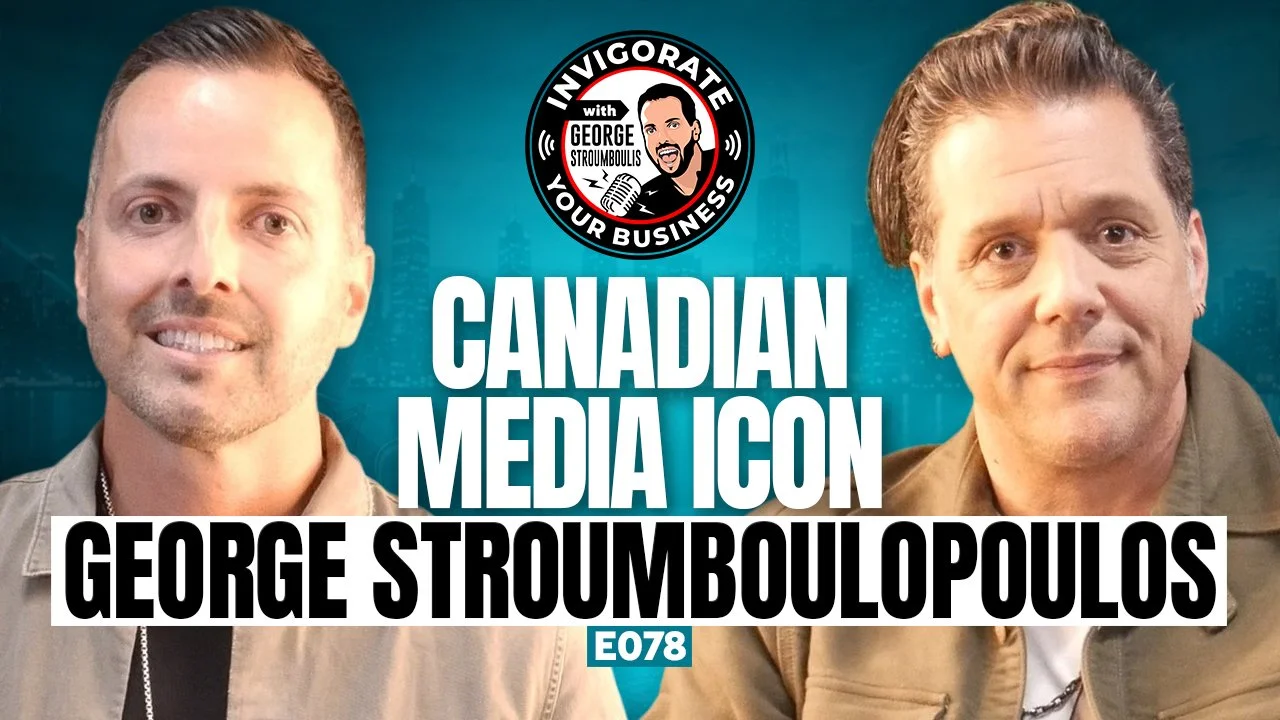
George Stroumboulis sits down with George Stroumboulopoulos, one of Canada's most influential broadcasters, for an intimate conversation about identity, discipline, and the pursuit of a meaningful life. Filmed in Newport Beach, California, they reflect on Strombo's journey from pirate radio and MuchMusic to CBC, CNN, and Hockey Night in Canada, exploring the lessons that shaped both his career and character.
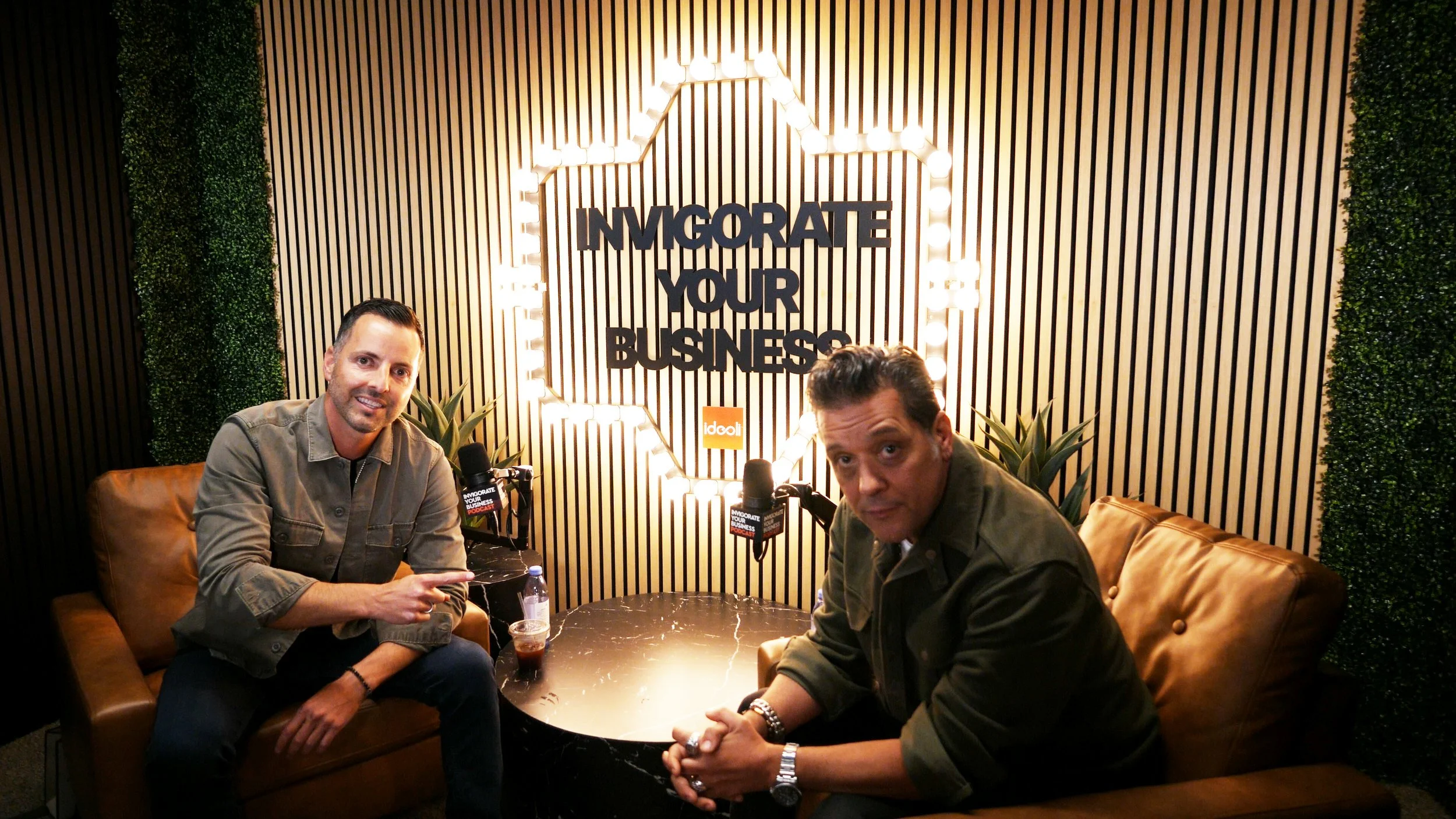
George Stroumboulis welcomes George Stroumboulopoulos for a candid conversation about the experiences that defined his life on and off the air. Filmed in Newport Beach, they discuss his rise from pirate radio to becoming one of Canada's most recognizable media personalities, while unpacking themes of authenticity, resilience, and purpose.
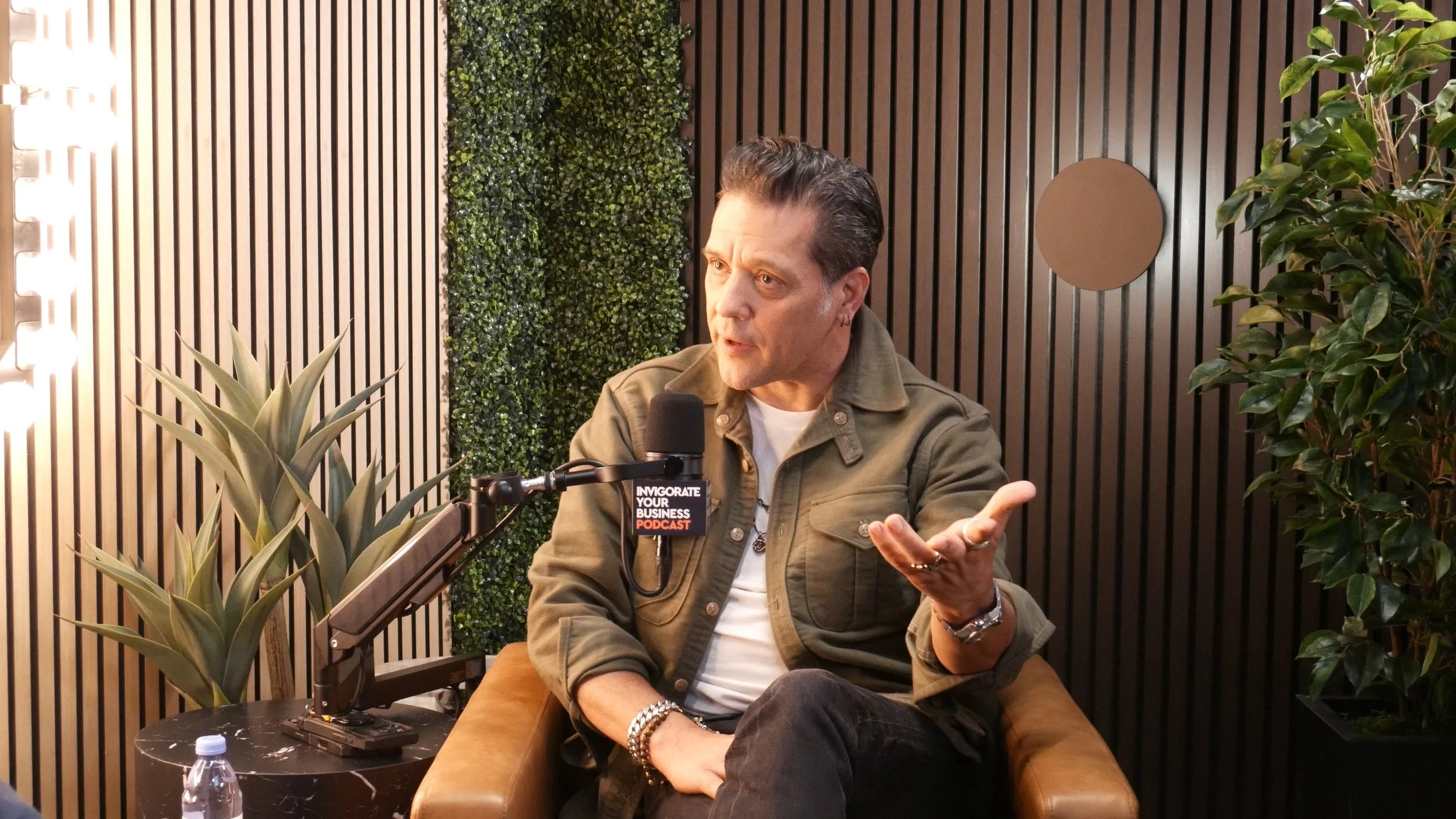
From pirate radio to MuchMusic, CBC, CNN, and Hockey Night in Canada, George Stroumboulopoulos has built one of the most remarkable careers in Canadian media. In this episode, filmed in Newport Beach, California, he joins George Stroumboulis to share the lessons he's learned about discipline, identity, burnout, and human connection along the way.
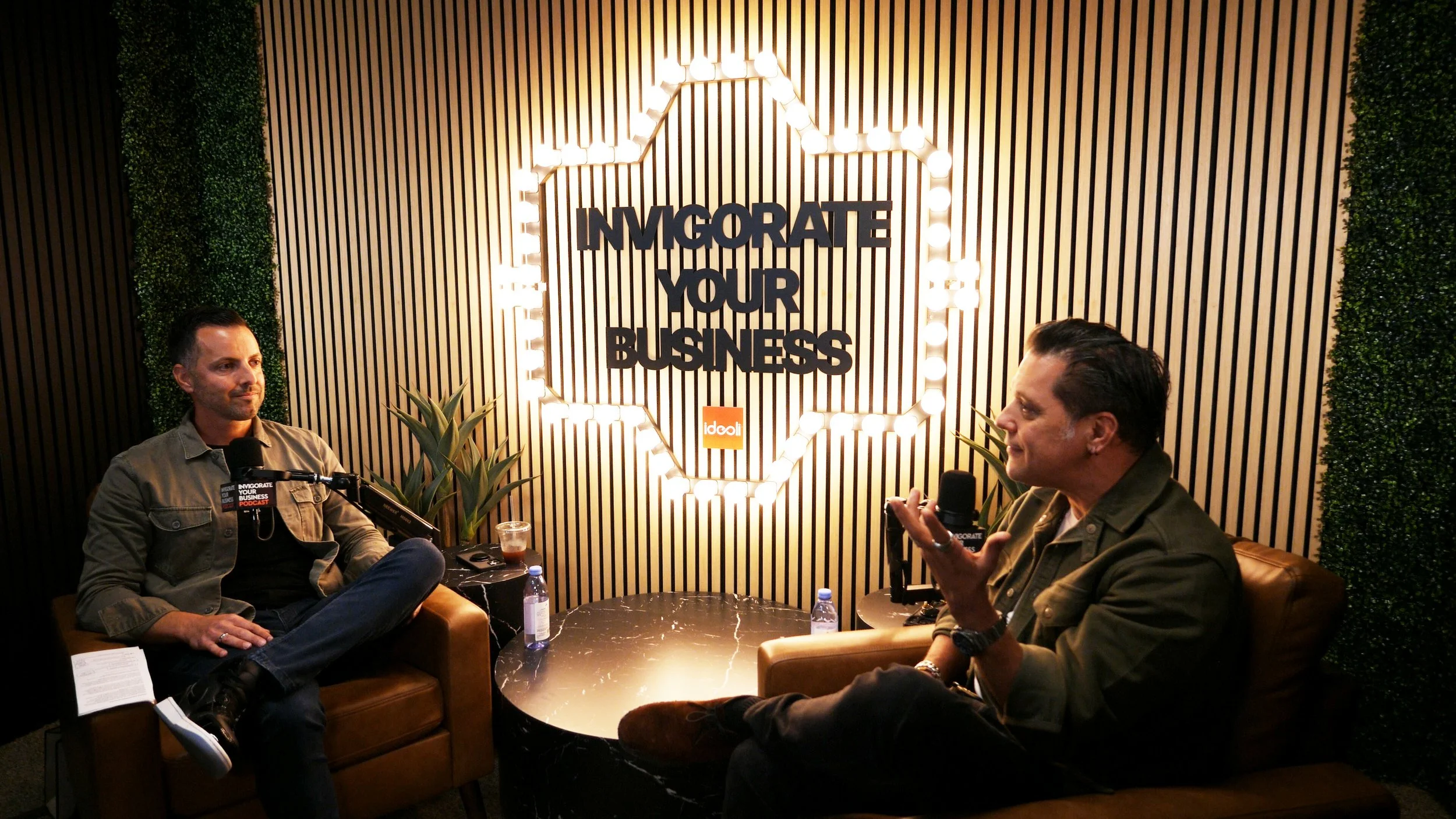
In this episode, George Stroumboulis sits down with George Stroumboulopoulos to explore the mindset behind a decades-long career in media. Filmed in Newport Beach, their conversation covers everything from discipline and reinvention to authenticity, philosophy, and finding meaning beyond professional success.
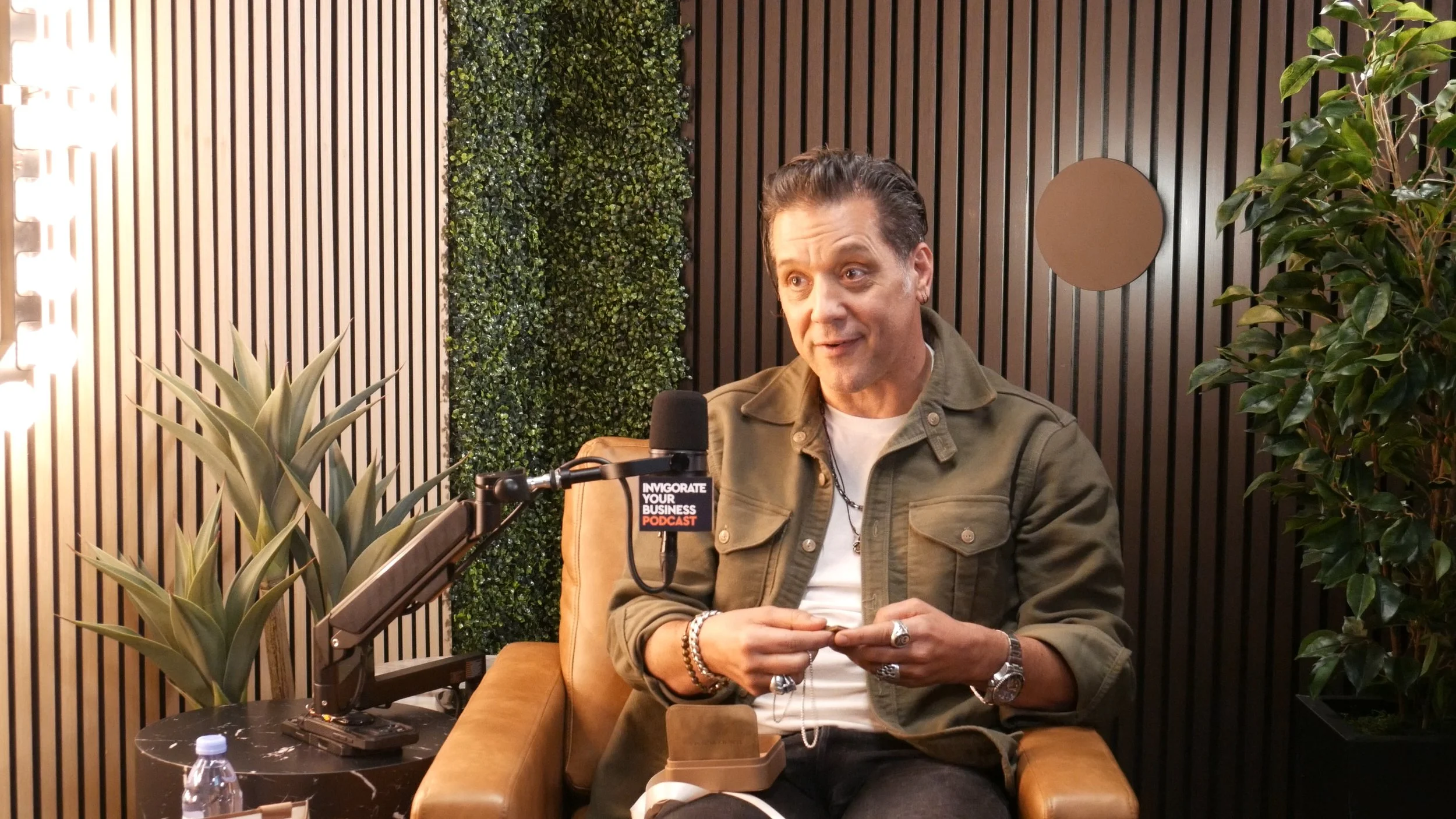
George Stroumboulis sits down with George Stroumboulopoulos, the iconic broadcaster behind MuchMusic, CBC's George Stroumboulopoulos Tonight, CNN, and Hockey Night in Canada. Filmed in Newport Beach, California, this wide-ranging conversation examines the values, relationships, and life lessons that have guided one of Canada's most respected interviewers.
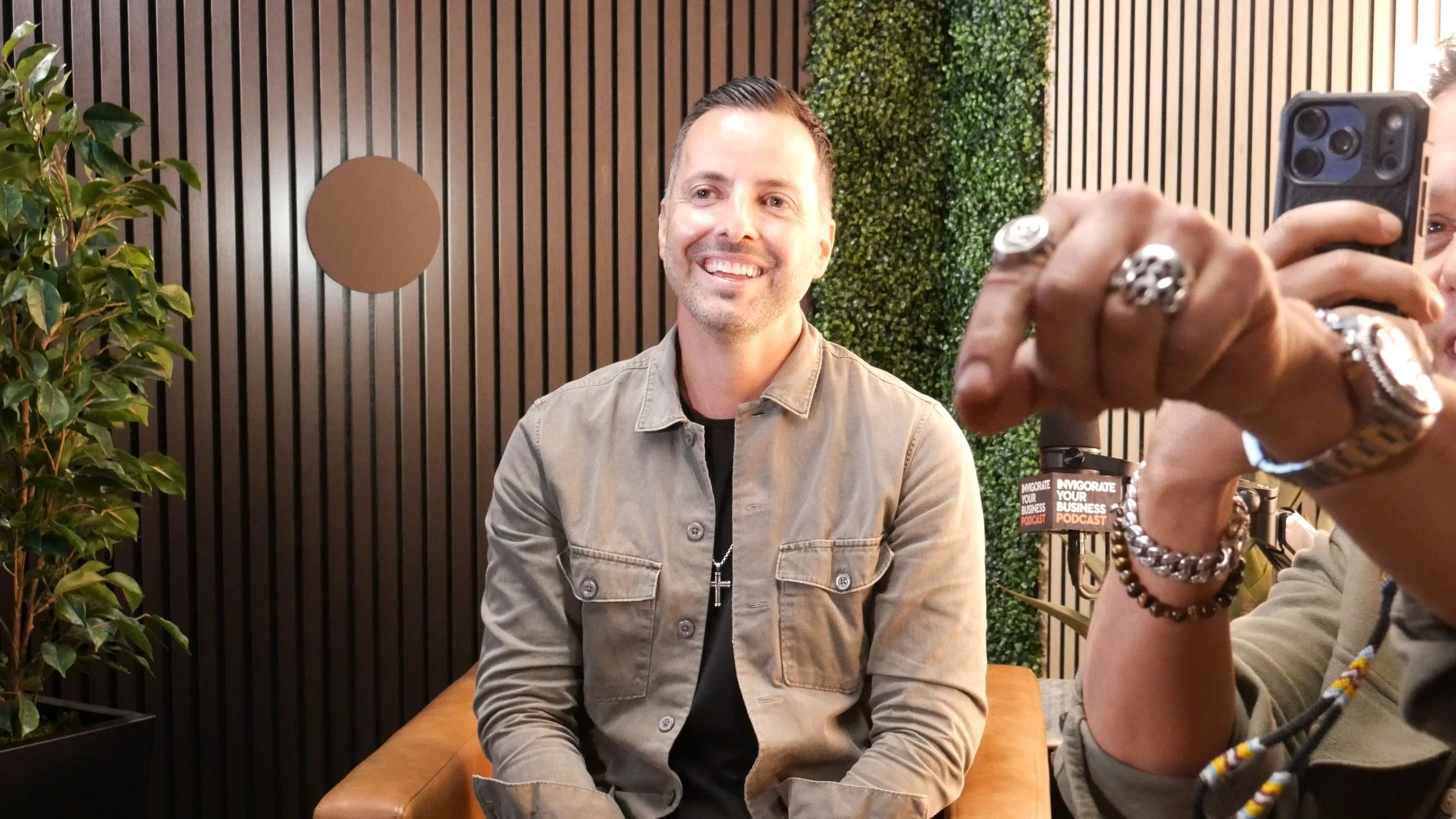
George Stroumboulis sits down with George Stroumboulopoulos for an honest conversation about success, burnout, identity, and what truly matters. Filmed in Newport Beach, California, Strombo opens up about his journey from pirate radio to becoming one of Canada's most influential voices in media, sharing the principles that have shaped his life and career.
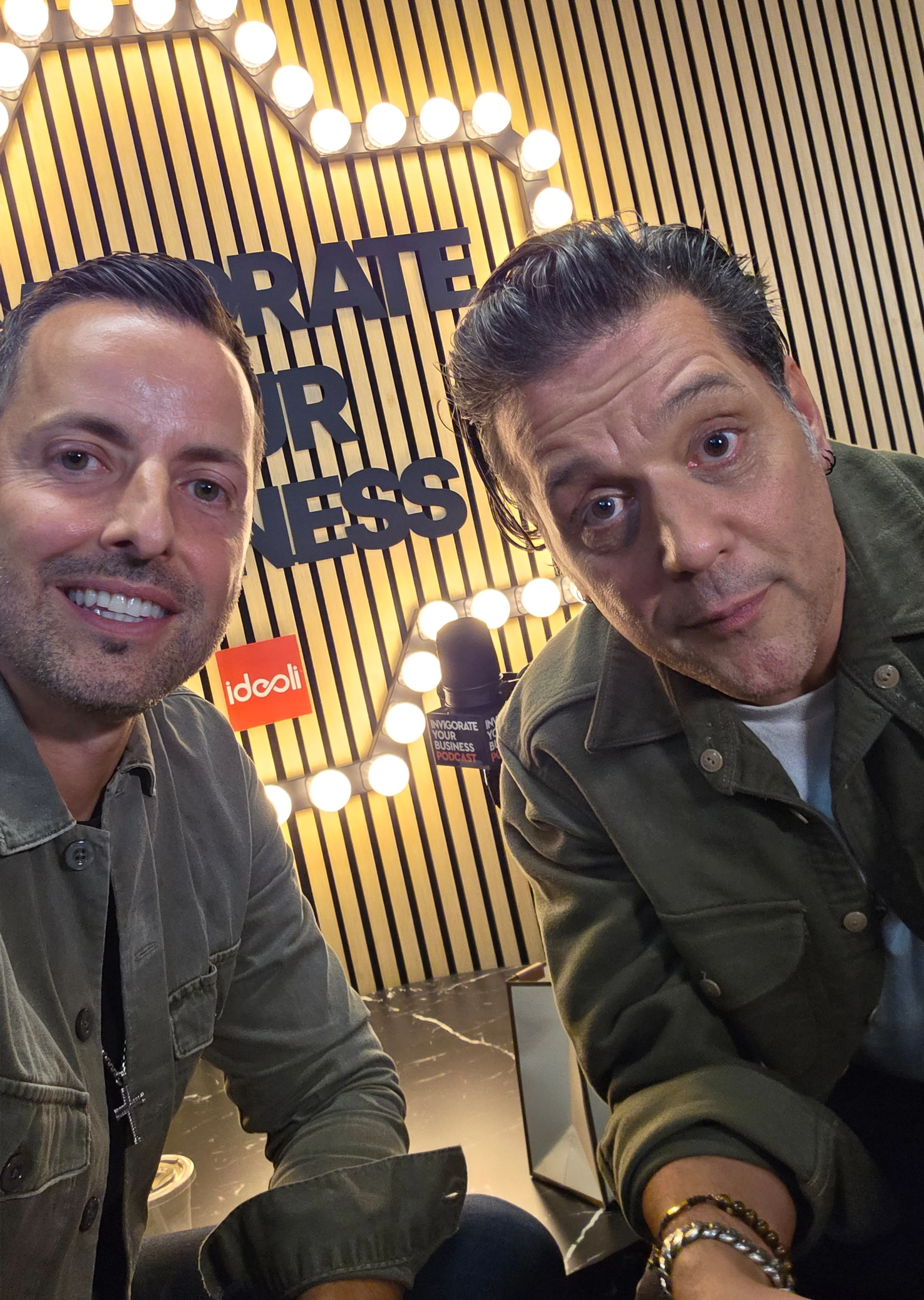
George Stroumboulis welcomes George Stroumboulopoulos for a candid conversation about the experiences that defined his life on and off the air. Filmed in Newport Beach, they discuss his rise from pirate radio to becoming one of Canada's most recognizable media personalities, while unpacking themes of authenticity, resilience, and purpose.
ABOUT THE “INVIGORATE YOUR BUSINESS” PODCAST
The Invigorate Your Business with George Stroumboulis podcast features casual conversations and personal interviews with business leaders in their respective fields of expertise. Crossing several industry types and personal backgrounds, George sits down with inspiring people to discuss their business, how they got into that business, their path to the top of their game and the trials and tribulations experienced along the way. We want you to get inspired, motivated, and then apply any advice to your personal and professional lives. If there is at least one piece of advice that resonates with you after listening, then this podcast is a success. New episodes weekly. Stream our show on Spotify, YouTube, Apple, Amazon and all other platforms.
ABOUT GEORGE STROUMBOULIS
George Stroumboulis is an entrepreneur to the core, having launched several ventures across multiple industries and international markets. He has held senior-level positions at progressive companies and government institutions, both domestically and internationally, building an extensive portfolio of business know-how over the years and driving profit-generating results. George’s ability to drive real change has landed him in several media outlets, including the front page of the Wall Street Journal. George was born in Toronto, Canada to his Greek immigrant parents. Family first. Flying over 300,000 miles a year around the world puts into perspective how important family is to George’s mental and emotional development. With all this travel to global destinations, the longest he stays even in the most far-out destination is 3 days or less - a personal rule he lives by to make sure he is present and involved in family life with his wife and three daughters. To read about George’s global travels, stay connected with his blog section.
STAY CONNECTED WITH GEORGE STROUMBOULIS
STREAM & LISTEN TO THE PODCAST:
SPOTIFY: https://open.spotify.com/show/1rW2CmxQoiJNEPOZupJlvd
YOUTUBE: https://www.youtube.com/user/Stroumboulis
APPLE iTUNES: https://podcasts.apple.com/us/podcast/invigorate-your-business-with-george-stroumboulis/id1607693240
AMAZON MUSIC: https://music.amazon.com/podcasts/8fc03929-71b3-483a-a64e-153e30b3d462/invigorate-your-business-with-george-stroumboulis
STROUMBOULIS SITE: https://www.stroumboulis.com/podcast
PODCAST SITE: http://www.invigorateyourbusiness.com
FOLLOW GEORGE STROUMBOULIS:
INSTAGRAM: https://www.instagram.com/georgestroumboulis/
YOUTUBE: https://www.youtube.com/user/Stroumboulis
LINKEDIN: https://www.linkedin.com/in/Stroumboulis/
TWITTER: https://twitter.com/Stroumboulis
FACEBOOK: https://www.facebook.com/georgestroumboulis
TIKTOK: https://www.tiktok.com/@georgestroumboulis
CONTACT GEORGE DIRECTLY: https://www.stroumboulis.com/connect
FULL SHOW CONTENTS
00:00:00 Meeting Strombo And The Backstory
00:07:53 Keeping An Ethnic Name On Air
00:12:43 Immigrant Roots And Toronto Upbringing
00:17:43 No Ambition Until Radio Found Him
00:25:13 Teachers, Reading, And The Grace Of Others
00:32:03 Politics, Parties, And Following The Money
00:37:33 Loner Life And The Adventure Code
00:42:03 Beating Burnout With Three Rules
00:47:53 Ego, Identity, And Walking Away
00:54:03 CNN, Apple, And Why LA Fits
01:00:13 Hockey Night Risk And Getting Fired
01:06:33 MuchMusic Magic And Icon Encounters
01:13:03 Media Advice And Handling Hate
01:19:23 Canada Lightning Round And Grandparents
01:26:03 Immigration, Mosaic Edges, And The Rope
01:48:03 Invested In You And What’s Next
FULL SHOW TRANSCRIPT
George Stroumboulis 0:00
Okay, so we're gonna start, George. Uh when I launched this podcast a few years ago, right? Just something casual. There was like the list and it was Strombo was always at the top. Come on, yeah much. They're all fake and phony. You know what I mean?
George Stroumboulopoulos 0:20
When I first saw your name, I I started laughing and I thought I gotta meet this guy someday. I gotta meet this guy someday.
George Stroumboulis 0:25
So you I knew you, obviously, in Canada culture. Um I'm gonna get into how, but I want to read an intro about you. It doesn't do justice, it would be several pages long, like if we really covered what you've done and what you've done for Canadian culture. But we're gonna read this. Uh okay, so today's guest is one of the most respected voices in modern media, a broadcaster who's built his career across radio, television, and the global stage. George Stroumboulopoulos started in radio, where he developed the voice and curiosity that would define his career before becoming a VJ on Much Music, helping shape a generation of music and culture in Canada. He went on to host George Stroumboulopoulos Tonight on CBC, one of the country's most respected long-form interview shows, and later brought his signature style to a global audience through CNN. He's also the host, was the host of Hockey Night in Canada, one of the most iconic institutions in Canadian culture, which is just crazy to think. Over the years, he's interviewed presidents, world leaders, cultural icons, athletes, earning a reputation for authenticity, depth, and real conversation. And in recognition of this impact in media and philanthropy, he was recently awarded the Order of Canada. Absolutely incredible. Today we're going beyond the career into the mindset and lessons behind it all. Mr. Strombo, welcome to the show. Mr.
George Stroumboulopoulos 1:44
Strombo, thanks for having me.
George Stroumboulis 1:45
Oh man, this is great.
George Stroumboulopoulos 1:47
So we're prepared to hear my career because I live so much in what I'm doing now and what I'm trying to do that I don't really think too much about what I've been a part of. Yeah. It's strange.
George Stroumboulis 1:59
For how many years? Decades.
George Stroumboulopoulos 2:01
I'm 30 plus years now. I think my first pirate radio show was in 1991. Christmas of 1991, yeah.
George Stroumboulis 2:08
Trevor Burrus, Jr. Which now it feels like, oh, that was 15 years, 20 years ago, right? No. I know. Yeah. You've been a household name. You helped me actually making the name normal. Like, you know, in high school, elementary school, ah, the Greek, uh this, the that, the name. Like you you helped mate make it cool for people with like truly ethnic names.
George Stroumboulopoulos 2:27
You know, when I when I went to high school, my mother, I think they enrolled me in school under a short form because some of my family had shortened it to Strombels.
George Stroumboulis 2:36
Yep.
George Stroumboulopoulos 2:36
Somebody had shortened it to Strom. And so my mother put me in high school as Strombels, and on the first day of class, I saw the teacher called out the names, and she said George Strombels, and I just thought, no. No, no. And I went down to the principal's office, uh, to the office, and I said, use my real name. Use my real name. And I don't know where that came from inside me, but I just said, no, like my name is my name. Use it. When I started in radio in BC in Kelowna, I was told by somebody pretty senior in a radio station that ethnic thing might fly in Toronto, but it's not gonna work out here. And I remember looking at them thinking, what? Because it didn't occur to me that my last name was something, right? Because I grew up in a part of Toronto where everybody was ethnic. We were we either had it an Italian name or a Greek name, Maltese name, Portuguese name, we were from wherever, Jamaican name, we were from everywhere. So I it didn't occur to me that it would matter, and it wasn't until an old Greek man on the street stopped me in Toronto, and he was he was in a wheelchair, he was with his son, uh his grandson, and the papo said to me, uh, you don't know what it meant to us to see that name on television.
George Stroumboulis 3:46
Wow.
George Stroumboulopoulos 3:47
Yeah, and and then he got tears in his eyes. You know, when an old grandfather starts to get emotional, you get emotional.
George Stroumboulis 3:52
Yeah.
George Stroumboulopoulos 3:52
And he said, and I said, Thank you. And he goes, No, you don't understand. When we came here, nobody could keep this name. It was so made fun of. No one even dared try to pronounce the names. But I, you know, in Toronto, there was me, there was George Chuchulus, and George Lagogenis. So there were three of us with these names. Nick Kiprios was playing in the NHL. So there was a there were we were present, these names were present. And I I didn't realize it at the time that it that it actually mattered to keep that.
George Stroumboulis 4:20
Absolutely mattered. I was I remember late teens, started going to the bars and the clubs. I grew up in Fort Erie, right? Born Jane and Finch Toronto, grew up in Fort Erie, then went to university.
George Stroumboulopoulos 4:29
Jane and Finch Roman, yeah, yeah, I lived right to the end of her life. She wouldn't move out of there. Yeah, yeah, she wouldn't move out. No, no, no. She got mad when I suggested it.
George Stroumboulis 4:39
That's amazing. But I I remember uh going to the bars or clubs in Toronto, early 20s now. Every bouncer I would go up to and give my ID, yeah. Hey, you related? Hey, so like I would never lead in.
George Stroumboulopoulos 4:52
That's funny.
George Stroumboulis 4:53
It became a thing for several years until I moved out or bounced around the world, yeah, where it was like, and I ended up going with him and be like, uh, cousin, I cut five letters out of my name. Like, that's a lot, right? 12 to 17. And it became a thing. That's funny. And to the point, when I was early 20s, I was living in Ireland, yeah. My mom gets a call at home in Fort Erie. Hi, uh, is George there? My mom's like, no, he lives in uh wherever he was living. Um, I I would love to meet him. And my mom, oh yeah, you want to meet my Yeah, you know, uh, we love him and this and finally my mom clued in. She's like, What George are you looking for? George from the TV. She goes, honey, that's not my son.
George Stroumboulopoulos 5:33
That's funny.
George Stroumboulis 5:34
Yeah, they would go through the yellow pages and try to So there was a lot of overlap, and it helped me. Oh, I'm glad.
George Stroumboulopoulos 5:40
I'm glad I remember doing the talk show in Canada, and you know, it was called George Strombolopoulus Tonight, and I remember walking out on stage when I got introduced, and there was a couple in the audience that were really confused when they looked at me, and I just looked at them and said, Where are you from? They said, Well, we're from Maryland. I went, Do you think you're here to see George Stephanopoulos? And they said, Yes. And I said, Well, you're welcome. So they stayed and hung around. They were great. That's so funny you say that. So George Stephanopoulos, I know too, we're pals. So every I'll see him every year at this Michael J. Fox fundraiser. Okay. And Mike loves the fact that two of his good friends are have these names, and so we're always around him with these two last names.
George Stroumboulis 6:14
That's crazy. So when you went on CNN jumping around here, uh so that fizzled off because I moved to New York. And then when you got your so show on CNN, I was in Seattle going through TSA checkpoint, and the guy ID'd me. He goes, Hey, he goes, I've seen
Keeping An Ethnic Name On Air
George Stroumboulis 6:30
your show. I and then I'm like, wait, Canadian? Maybe no, it was when you had the CNN. That's funny. I go, dude, that's not me, but it brought me back because it's been years since that happened again. I love that. That's the power of a name. It's a good badge. Crazy. Yeah, and not a bad guy to just kind of latch on. Take it, take it. Yeah.
George Stroumboulopoulos 6:46
I'm glad I didn't get cause trouble for you. No, no, no, absolutely.
George Stroumboulis 6:50
So Greek last name, your mother, just just tell me about family dynamic heritage.
George Stroumboulopoulos 6:54
Greek father uh from Egypt. So my dad was born in Cairo, my grandparents were born in Alexandria, so but Greeks, of course. Yep. And my mother's Ukrainian, born in Poland. Uh, and so they met in and my dad, when his family, when they left Egypt, they went to Brazil before coming to Toronto. My papu started co-founded the Greek Egyptian Society in Toronto. Come on. I think it was down here, Don Lens area, and my mother, yeah, was Ukrainian.
George Stroumboulis 7:20
Okay. Yeah, yeah. So then when you were growing up in Toronto, what what was the ethnic mix? Like what was that upbringing like?
George Stroumboulopoulos 7:25
So in Rexdale and Moulton, it was everywhere. Everybody from everywhere. What I loved about the west side of Toronto at the time, I I'm sure it existed in the east side too. I just didn't see it with my own eyes. But it was this amazing mix of post-war immigrants and also Caribbean culture. So the Caribbean culture was enormous in our life. You know, so you know, Jamaicans and Trine's and Haitians, it was just it was just so beautiful. Yeah. Yeah. You know, in my home though, because my parents English wasn't their first language, English was the language we spoke in the home. So they they were all learning how to uh to work in Canada. My mother was only in Canada a handful of years before she got pregnant with me. My dad, too. Oh, really? They were young, yeah. They didn't they got to Canada, I think, when they were in their early teens.
George Stroumboulis 8:09
From from from Egypt and Ukraine.
George Stroumboulopoulos 8:11
Yeah, from Brazil and Ukraine, yeah, and Poland, yeah. And then suddenly they had a kid. Yeah, yeah, yeah. So yeah, yeah, I was I was the first person in my family and my media family born in Canada, and it was really interesting to kind of to grow within that neighborhood. What I loved about it was just because everybody in my neighborhood was from everywhere else, I think it prepared me better for what life would be like today.
George Stroumboulis 8:35
Right.
George Stroumboulopoulos 8:35
What it what life would be like when you are a mix of everything and you don't get angry at it, it the differences don't scare you. The differences become the things you celebrate. Yes. And I think I I I'm I'm certain that my upbringing and the ethnic diversity of my neighborhoods are the reason I'm like this.
George Stroumboulis 8:53
Absolutely. And and so you're growing up in this environment, Toronto is the ultimate melting pot. Yeah, yeah. Right? Like every culture, everything. Like just talk, where do you jump to get to where you are today? Like where does that really start where you're like, oh, media is something.
George Stroumboulopoulos 9:07
Never thought about it, to be honest with you. Didn't want to be a media, didn't think it was an opportunity, was not remotely on my radar. I grew up with zero ambition.
George Stroumboulis 9:16
Really?
George Stroumboulopoulos 9:16
Zero. So what but before it even fell on your lap, what were you thinking you were gonna do? You know, my my grandmother wanted me to be a bus driver, a streetcar driver. I was a movie theater usher. I thought maybe I'd become an assistant manager at the at a movie theater in Rexdale. Honestly, my because I come from a family, we didn't have careers, we had jobs. So uh the idea of a career was not even remotely on my radar. But also, I I could never have afforded university, so I didn't go to university. I had no plan, I also had no desire to. I grew up in that era where I was really influenced by George Carlin and Hunter S. Thompson and people like this, and Patty Smith and Chuck D and the Beastie Boys. So in my brain, it was just I don't want to play along. Yes, so I was never, ever, ever going to be a part of a thing. But when I got that job at the movie theater, I was also driving a forklift on the weekends at Pearson unloading airplane containers, cargo, and I was making subs at a sandwich shop. I was working for Mr. Submarine, and it was a Greek guy that owned it. Of course, yeah, yeah. It was a big change at one point. Yeah, and so there was a Greek guy who hired me over the phone. So I gr I just watched how hard you have to work to have any chance at a life you want. And I and I just saw it firsthand. My mother, of course, the hardest working person I'd ever met, selflessly too. So I was at this theater and I was sixteen, seventeen, thinking, wow, I have no plan. No plan. I joined the army on a dare, which was a bad idea. Jeez. And then I thought, oh, well, the uh the language I speak is music and film. Movies and music are the languages I speak, really. So I thought I'd become some strange independent film director. I just thought I'd make weird independent films. But there was this woman who was working at the Italian woman working at the Humber College Adult Learning Center right beside my movie theater I worked at. Right. And I was sweet on her. And I used to just hang around on my breaks and talk to her. And she handed me a course calendar and said, Maybe you should look at something. Well, I don't know, you've got to do something with your life. And I I had gone there because Humber College was where you would get your motorcycle license in the parking lot. Yeah, yeah.
Immigrant Roots And Toronto Upbringing
George Stroumboulopoulos 11:20
And I flipped through the calendar and I saw radio and I went, Oh, screw it, I'll do that. Because I loved music and I loved radio and I loved reading and I loved communication. Yeah. I just didn't know you could do it for a living. Because she handed you that. Yeah, that's it, man. Her name was yeah, that's it, Laura. If she had to get the date with her after that? No. But she she was out of my league anyway. It didn't matter. She was older than I was, she was out of my league. I was I was just a young, dumb boy, sweet on this older woman, but older, she was like three years older than me at the time. At the time, it's a big deal. Yeah, yeah, of course. She's in her twenties, you know. But I yeah, and so I just applied to radio and I got in. And you know, it was there was an unlock where I went, Oh yeah, yeah, this is what I can do. This is what I can do. But I o only thought I was gonna be on the radio doing playing songs overnight or maybe doing talk shows. I'd never planned on this. TV was never on my agenda. When I got offered TV shows, I turned them down because I thought I don't why would I want to work there?
George Stroumboulis 12:15
Right.
George Stroumboulopoulos 12:16
I I I I'm so to a fault, and it really is to a fault, so it's not always a good thing. But I have no interest in being inauthentic at all. I don't have any interest in changing. I want to grow, I want to adapt and evolve. I like learning and becoming different that way, but I want to change to fit a mold. That's not how I want to be. And I always thought media was that. Which which it is, yeah, yeah, it's still to this day. It is a mold, yeah, yeah. But coming from that neighborhood in the Gen X era, we didn't have to. And then I got lucky that a couple of my bosses in radio they looked at me and they went, Whatever this kid is over here, let's let him run wild.
George Stroumboulis 12:54
Really?
George Stroumboulopoulos 12:54
And yeah, and I had a really good boss, a couple of really good bosses at radio. And radio. Okay. Yeah. And they and they put me on a path that I I I can never thank them enough. Really? But the other thing that happened was I was in in my high school, I was very bad at school. Really bad at school. And I Because you didn't apply yourself, you didn't give a shit. I didn't apply. I also don't think I have the brain to learn those kinds like math and science. I don't care, I don't care. I I care about the science, the neuroscience of life, but at the things I was learning I was not. And I was very rebellious. I still am, which is a problem. But at the time I had failed the courses I needed to graduate, and so the only way I could graduate was if I took an arts course, and the only arts course I could take that was available was drama, and that was the last class of all the whatever classes you could choose, drama was by far the last thing I would have chosen.
George Stroumboulis 13:43
Right.
George Stroumboulopoulos 13:44
But I had to graduate. And I met a teacher there uh called Rob Chicatelli and a teacher called Kathy Hollowitz, and these two again, I was a problem. People laugh, they go, Were you a troubled kid? I'm like, No, I was a troubling kid. I was a problem. And these two teachers who I have later found out were not even that much older than I was in their early twenties. Yeah, exactly.
George Stroumboulis 14:07
Um who you tried to date one of them, yeah.
George Stroumboulopoulos 14:09
Actually did. She wasn't having it. But the they uh they really uh saved me, man. And these two teachers helped me kind of understand how to take the fire that I had inside me that was maybe raging out of control, and how to turn it into a power source for communication and storytelling and performance. And they weren't that uh overt about it. But now when I look back now, I I there's no chance I'm this guy without those teachers, man. There's like four teachers in my high school. There's no chance I had a teacher called Miss Ahmad who Maureen Ahmad who gave me a copy of a book by Khalil Giron the Prophet. Like everybody, you know, it's like a classic. She said, Hey, I think you might if you like this kind of music, I was listening to The Doors and Dylan, John Bryan. She said, I think you might like this, and I was listening to Metallica too. And I I I'm just there's no chance that I have this worldview if I didn't have these adults who had no reason to care about me. Just go the extra mile. So wh why do you think that is though?
George Stroumboulis 15:13
Is that is that like fate? Is that they saw potential?
George Stroumboulopoulos 15:16
Like what do you think that is? I don't know. I I I'm always comfortable saying it's luck. Uh it's luck and they're and I think the secret to life, honestly, dude, is the grace of others. You you require the grace of others. And grace doesn't come with anything in expected in return. It's just the grace of others. And I have benefited greatly from the grace of others, and I recognize that. And I I I and you know, the older you get to, the more you're aware of the big picture pattern in your life. But I'm still so very much influenced by a handful of adults who just said, Yeah, you know, there's another way to look at this. And it's really like I'm so grateful for it, man. And that's how media became a thing for me because I learned in these really interesting ways why not media for the sake of it, but why a story and the human connection matters. Right. Why it actually matters. So when I went on much music and was talking about music or politics, or on the CBC show, pol the news show, politics or something a breaking news story, like it's never about the
No Ambition Until Radio Found Him
George Stroumboulopoulos 16:20
presentation. It's about the the two human beings coming together to try to move that boulder a little bit further away from the the entrance way to the grave, right? And that's but I I don't think I would have known that if I didn't have these the grace of others that just took that moment to just say, hey, dude, we don't do that anymore. Here's another way to look at it. I'm just so grateful for it.
George Stroumboulis 16:42
But grateful, but also having the mindset where it's like, let me listen. Even though you're rebellious and you're doing your thing, like to be able hold on, before we get into TV.
George Stroumboulopoulos 16:50
Well it's because I was one of those kids who never wanted to be a kid. So I was always the like I the infantilization of our culture is I think a dangerous thing. And I have always wanted to be at the adults' table. Okay. I've always wanted to read what they were reading, speak about what they were speaking about. I I was a rough and tumble kid, but in my mind, you want to be the poet's heart, you want to be the politician's brain, you want to be that. And so I I have never, and that's why I was willing to listen to them, because I just was not that interested in the folly of youth. Wow. I've never been interested in it.
George Stroumboulis 17:29
But what's triggering, like I'm just curious, like what's triggering that in childhood? Because again, now that I have kids, I'm just curious. Certain things, like you see, people are successful because of this. Four teachers went out of their way. I look at it differently now and like, okay, what can I help my kids influence or just reflect on my life?
George Stroumboulopoulos 17:47
You know what you can do is give them good ideas. Give them good ideas and don't put too much pressure on them to achieve anything. I didn't grow up in a home where I was expected to achieve anything. There was no pressure put on me whatsoever to pick a career or have a job. I had to work. My mom said, Don't be lazy, be humble and be a good person. And she'd be happy with that, and that's it. In fact, many times throughout my career, she's tried to talk me into leaving my career and just go get a job and don't have so much pressure. I I am so lucky that my brain chemistry didn't betray me, and I don't have anxiety in the way that people talk about it because I n I was only pressured to treat people well. I was never pressured to achieve anything. And I think chasing achievement and parents don't want to hear this, even though especially from a guy who doesn't have kids, but I can tell you I've interviewed more than 10,000 people in my career. I've interviewed a lot of people who a lot of people's kids. If you grow up with this unnerving pressure to achieve something in a world that you don't even have that much control over, it messes your brain chemistry. The people who have had the best time as they get older are the people who really can sit in their ideas and talk about stuff. That's the thing, man. Get your kids to read. Get those girls to read. Read that's the other thing in my career. So what set me up for the success in the career if if that is what I had, was I read a lot when I was young. Reading was the escape, right? Reading was a world that I could learn about that was much bigger than the world I would ever think to have. And so when I sat down and started meeting people, I wasn't just some kid who didn't know stuff. I didn't know about you know, I didn't have academic success by any means. But I understood poetry and I understood philosophy, I understood the human condition, but because I read and that the the greatest gift of my adult life is the fact that I read a bunch as a kid. Right.
George Stroumboulis 19:47
And But that didn't teach you human connection. Like when you're sitting on your red chairs talking to uh king, queens, presidents, like that you're born with that. You didn't learn that. Like that right?
George Stroumboulopoulos 19:59
Maybe. Or or it was the fact that I grew up realizing that the only thing that mattered was the is the way that I behaved that would then prepare me to behave properly. Not follow rules. I'm not good at that, but definitely not good at that. Still so bad. I mean it's it's I have I yeah, sometimes I wonder if you can if it is nature versus nurture. So I know it's both, but sometimes I think it is just nature. Yeah. Because no matter how my life has evolved, I'm still I'm still always rebelling against something which is exhausting.
George Stroumboulis 20:32
Yeah, but like what's an example now? Yeah, but what do you rebel versus before is like the man, the system? Like right now. More. Oh, more so the man, the system. Because now it's more poor than it feels.
George Stroumboulopoulos 20:43
Because now this is one of the real downsides of growing up listening to Metal and Punk and reading the books I read when I was in, you know, and growing up as a Gen Xer, is that we were right. Yes. We were right. Now like I I laugh because you know I uh my politics are very progressive, but I I meet people who are who are very right wing and they'll go on and on about the government and the system, and I'll laugh at them and they'll say, What are you laughing at? I'll say, it's you people that made this the system. Like that I consider in the US the Democrats the same as the Republicans in many respects. But it's it's it's it was always the punk kids and the outsiders and the artists that were saying that the system's broken. At least now we all agree. We know it, yes. Now we agree that it maybe wasn't broken, it was designed this way. Yeah. And so there's a certain group of us that listened to the clash records and the pistols records and read Patty Smith's stuff, and we just went, oop, guess we were right. Guess we were right.
George Stroumboulis 21:33
But who's gonna listen to that now? Yeah, yeah. Look, not to get political, the only statement I'm gonna say is I've realized in my forty-five years on this planet, I've started caring about politics maybe the last seven, eight years. Growing up in Canada, I literally didn't know what party my dad was.
George Stroumboulopoulos 21:47
Yeah, yeah.
George Stroumboulis 21:48
He would just vote based on I like what they're doing in there. It was never worth it.
George Stroumboulopoulos 21:51
It was such a gift in Canada at that time, didn't we? Yes, we did. Such a gift. I didn't realize it until recently. Yeah. We're we're in you're in the U.S. Yeah. This place isn't
George Stroumboulis 22:05
No, no, no, no. And now even flying a flag. Yeah. Well, you're in this bucket. It's gotten so much. But my point is whether you're this aisle or this aisle, all this when you filter all the way down, you and I, we have way more in common than what party we're in. Like there's a few little things, but w we're the same.
George Stroumboulopoulos 22:24
I'm always amazed that people I agree with you, and I'm always amazed that people in business don't look at this life the way they look at their business, which is who's paying for it? Who's funding the politicians? Who's who's lobbying for this legislation change? That's it's always just it's always follow the money. Yep. Follow the money and follow the the money, usually will tell you where they're spending it, what kind of zealots they're funding. You'll see what their goal is.
George Stroumboulis 22:52
And it's more obvious today than what it was in the past.
George Stroumboulopoulos 22:54
Yeah. Because we have access to that information now. Yes.
George Stroumboulis 22:57
Would you ever run for office? No, no, thanks. Never. No.
George Stroumboulopoulos 23:00
I couldn't I couldn't pick a party. I mean, I could pick a party, but not really.
George Stroumboulis 23:04
Yep.
George Stroumboulopoulos 23:04
And I think I'm more effective this way. I also believe that I mean you never say never, but anything, I suppose, but it's a pretty hard never.
George Stroumboulis 23:14
It's a hard never.
George Stroumboulopoulos 23:15
Yeah, I think I think so. I I I I don't like party politics. I like policy.
George Stroumboulis 23:20
Right.
George Stroumboulopoulos 23:20
And I want to work with policy. I also think governments, when I say government, I don't just mean the elected party, but I'm in Canada, you know, the House, here you have your branches in the United States. I I look at the system and I just think until they ban money in politics, until they remove that campaign finance reform at a dramatic level, never going to get better. Never going to get better.
George Stroumboulis 23:42
And you're going to have to sell out to someone. Yeah. Yeah.
George Stroumboulopoulos 23:45
And I'm not doing that. But I also don't think any polit party would. I mean, I've been asked to run for three
Teachers, Reading, And The Grace Of Others
George Stroumboulopoulos 23:50
different parties in Canada. Yeah. Four actually. Come on. Yeah, yeah. And I was like, no, no, no, no, no.
George Stroumboulis 23:54
No. No. Plus, then that just kills the image you've developed all these years of just being neutral, doing my thing. Right. I'm not saying neutral, but I mean you're out there, you're influencing change. You have a platform.
George Stroumboulopoulos 24:05
I have a platform, but I don't want to tie I don't want to tie it to a party. And also I'm just not really big on joining groups. I'm not really big on joining groups. And I feel like when you join a party, you're joining a group. I don't get mad at people for it because I think lots of people like being a part of a group. I don't.
George Stroumboulis 24:21
Are you a loner like now?
George Stroumboulopoulos 24:22
Very much so. Like even to this day. I'm borderline. I'm not borderline. I'm properly antisocial, man. I am properly antisocial. You know that sounds crazy, right? I know, I know, but I really am. This public life I have is this is a learned language. I learned how to do it. But I learned how to do it by not doing anything other than be myself. And I very much like to put on my motorcycle helmet. Like if you could ask me what is the thing I wish I could be doing in my life all the time, helmet, motorcycle, road trip, no phone.
George Stroumboulis 24:53
Really?
George Stroumboulopoulos 24:54
Yeah. Quiet, alone in my head, maybe some headphones, listening to some Metallica. Like that's what I want out of my life. Just pulling up to a new town. Yeah. Yeah. Yeah. I love um I think it occurred to me a bunch of years ago that I'm in this for the adventure. I'm in it for the adventure. And I'll be dead soon, however long I have. I'm certainly in the back nine and my age. And it's I think, well, what's the point? What's the point of all this if not to s what did Tom Waits say? Squeeze all the life out of a lousy two-day pass? Yeah. That's what I'm trying to do. So I've very I'm very much a loner. I've also realized it's not good for me to do this, especially for men when we get older. Every human being gets trapped by their narratives. So I spend a long time breaking my narratives. I even though I'm a loner and antisocial, I do things that are out of that narrative because I think my narratives are dumb. And I think that all of our narratives are very limiting, and I don't ever want to be limited by a thing. I don't want to be governed by a narrative. I want to push myself to learn and be better all the time. So the loner part of it I have to work on.
George Stroumboulis 26:00
But you say work, so there's people who are loners and just keep riding their bike, or they're you do that, and then it's like I gotta be in Ottawa and get the order of Canada in front of a nation. Yeah, yeah.
George Stroumboulopoulos 26:10
If I don't have this career, yeah, if I didn't have this career though, like I wouldn't be doing that. You know, it's just because the career. Yeah. So I'm I'm I think in business and in life, it's so simple. In relationships, it's so simple. It's what's the assignment? What's the assignment? What is a win for you, the person you're working with? What is a win for you as it relates to you? What is the assignment? I don't grieve a thing that doesn't exist. I don't try to make a thing a thing it never wanted to be. Together you can mold and move something into a direction that works better for everybody involved, but I don't try to make a thing something it doesn't want to be. So I understand in this career, this is the assignment.
George Stroumboulis 26:52
Yes.
George Stroumboulopoulos 26:52
The assignment is, you know, come down here and see you. But also I was happy to see you and I wanted to meet you because we've been sort of in contact over the years without knowing each other.
George Stroumboulis 27:00
Uh first of all, I've been annoying the shit out of you. No, you have no no no This is like the biggest honor that you're here. But anyways, keep going.
George Stroumboulopoulos 27:07
I'm thrilled to be a part of this. And and so, but I also know that this to be good at this job, not the podcast, this is a thing I want to do with you, but to be good at the job, it the assignment is you have to go do stuff. Yes. So I'm not going to lament, oh poor me. No, you know what you signed up for, bro. Go do the job and stop whining.
George Stroumboulis 27:26
So when you're hopping on a plane, go in Africa, you know there's a start, there's the actual action, and there's a finish, and then you could go back to riding your bike or whatever, right?
George Stroumboulopoulos 27:33
Like that's what you mean there's there's a job, or there's a bit on a I've been on a I've been on this run for about 30 odd years, but the kind of crazy pace for about 25, and I've been on tour essentially for the last two and a half straight. So I have not had time to be anywhere. I realized that last year I slept more nights in a hotel room in Vancouver than any other place in the world.
George Stroumboulis 27:57
Oh wow.
George Stroumboulopoulos 27:58
So I haven't been home much. Where's home? Well, I mean, Toronto's home. In my heart, I will always be Toronto. Yeah. I have a place in LA, a cabin in the woods here. I have an apartment in the East Village in New York. So I kind of bounced. Literally a cabin in the woods here. It's a cabin in the woods. I have a cabin in the woods, you know, and to get to my place, you lose the cell signal. Yeah. And there's just before you see the sign that says Bear Crossing. I have a cabin in the woods in Topanga. And I love it. Because when I was a kid, I read that Neil Young went to Topanga when he was 18. So I went there when I was 18. I drove. That influenced you then. Music, poetry, good writing, films, that's that's you know, I don't have my mom has religion. I don't have religion. Right. I have I have music. And it influences you, right? Yeah. Hugely. I'll do a thing just cuz. When I leave Toronto to get on my motorcycle and ride to LA, which I do I've done it. From Toronto. Yeah, many times. I've done it many, many times. What's that? A week? Yeah, I've done it in four days and I've done it in ten days. It depends on how long it takes on the journey, but I don't have a path. I don't set out with a path. I don't I don't have a route. I don't even I know how to get here without a map. I can get from LA to Toronto on my bike without a map. I'll get lost a couple times, but I know how to do it.
George Stroumboulis 29:09
Yeah.
George Stroumboulopoulos 29:10
So what I'll do though is I'll start looking up. Oh, I love this musician. I know he's from this state or she's from this province. Where do where'd they take their first breath? Where'd they take their last breath?
George Stroumboulis 29:21
Come on.
George Stroumboulopoulos 29:21
And I'll just ride there. And that's my version of going to Mecca, right? That's my version of finding some spirituality. I don't have church, I have songs. Yeah. And and and so if I can drive by Robert Johnson's gravestones in in in Quito, Mississippi, he's got three. I've been to all three. He died on my birthday, so many years before. What's your birthday? August 16th. Okay. Yeah, yeah. August 16th. So I'll I'll uh music is is is my portal to the ethereal. Film is my portal to the ethereal, and that's and that's what I doubled down on.
George Stroumboulis 29:56
That's incredible. So where where are you? I know this is morbid, but this came up recently for me. When your time comes and you're gone, where's George's tombstone going to be?
George Stroumboulopoulos 30:05
Where they're gonna bear my body. Well, first of all, they're never gonna find my body. Okay. I've got friends who know their job is to make sure that my body is never found. Really? Yeah, just a mystery to no, I don't know. Yeah, this is this is good Yeah, probably Toronto Toronto. Toronto, yeah. Okay, so Toronto.
George Stroumboulis 30:19
To me, that answers everything.
George Stroumboulopoulos 30:20
Like, where do you want to do it? Yeah, Toronto is I love California. I love California. I love Los Angeles, I love Topanga. I really love Topanga. I love Adventure as we as you know, to me that's the place. But as a motorcycle guy, I want 12 months a year.
Politics, Parties, And Following The Money
George Stroumboulopoulos 30:40
I love riding horses too, which is something that came later in my life. Just Western, I'm not a good rider. But I live in a I live by a bunch of places you can ride, and I love this. So I like being away. And I think one of the cool things about being Canadian, and I'm fundamentally a Toronto boy. Fundamentally a West Side Toronto boy, even more specific. That what is the point of not seeing the world? I don't want to go to my grave having only lived in one place. Some people value that. I I don't want that. I want to see it all as much as I can. And so because it's such a singular experience to be alive, and it's singular alongside billions of other people. What a what a gift.
George Stroumboulis 31:24
Have you always been this philosophical, this spiritual?
George Stroumboulopoulos 31:27
I think so, yeah. Yeah, maybe more philosophical than spiritual, but I think so. You know, when you're young and you read Jim Morrison and you also read Greek mythology, and what I always respected about Greek mythology was the gods were also dicks. You know? Oh yeah. They were dicks, and I there's something really powerful about that. You just go, I don't think they like us. Yeah, I think that's really cool. And it and so there's no uh there I I pledge no allegiance or fealty to anybody or anything. But I do think that a lot of life's questions are are I was thinking about this the other day. Because I was just reading a book that I had read previously, and I read it differently now as a grown man, and I was thinking that whatever questions you have about life, somebody has already had those questions for the most part. And whatever room you feel locked in, somebody else was already there, and they've already scribbled the instructions on the wall. The key is to find out for you how do you like how do you turn the switch on to see what's on the wall. For me, reading was that, music is that. So there's a line in in Albert Camus The Stranger or The Outsider, depending on how you get it, but it it said you know, he had committed a crime, turned out not to be a crime, but the line he wrote was it felt like four sharp knocks at the door of unhappiness. And I read that line and I went, Well, I'm gonna be different now. I'm gonna be different now, and that's what I want. I want to be unlocked all the time. I want to be I want to be on the verge of tears and epiphanies every second I'm alive, and I can't do that in my own world. I I can only do that if I connect with you and you say something that changes my life, or somebody who watches this or listens to this sends me a message on LinkedIn. I had a woman send me a message on LinkedIn the other day because I said something in an interview about love, and she was said she was crying at her desk and she didn't plan on that. And I didn't plan on that either. But now we've we had a moment together.
George Stroumboulis 33:28
Yeah, yeah, of course. I think that's cool.
George Stroumboulopoulos 33:30
Yeah, absolutely. It's really cool. So I think to me, philosophy is uh everything. I I mean if I was teaching media classes, I would only teach these kids philosophy. Because I can teach you the technique of how to do this. Sure. But but this without heart is useless. It's useless to me. So I I I think philosophy is where I want to to lose myself because there's some pretty brilliant stuff that people have written and documented over the years. And it's made me a better interviewer, it's made me a better friend, hopefully it's made me a it's made me uh hopefully a more curious, not curious, because curiosity is not really a thing, a more invested human.
George Stroumboulis 34:08
Yeah, yeah. But you okay, that's insane.
George Stroumboulopoulos 34:11
Sorry if this is not good for business.
George Stroumboulis 34:12
These conversations This is amazing we're invigorating. We're invigorating, but you have the luxury though of nothing's tying you down. You have obligations, there's business, you still need to earn money and pay and all that stuff. But you have the luxury, which you've created this for yourself, like there's a reputation where if, hey, I'm not in a good mental place, yeah, you know what? Uh I could take these 10 days and go do that. Where your average person can't do that because they they're working in nine to five, they got kids, they got that 100%. Right? So, like when you get, do you get to dark places even now?
George Stroumboulopoulos 34:44
Sure, of course I do, but I don't get to take any time off because I am the business. And so that's the that's the other thing I learned over the years. So about 15, no, maybe 12, 13 years ago, I was burning out big time.
George Stroumboulis 34:56
Where were you career-wise at 15 years ago?
George Stroumboulopoulos 34:58
Doing the talk show.
George Stroumboulis 34:59
Okay.
George Stroumboulopoulos 35:00
I was burning out in an epic way, in a way that I never thought I could. And I don't recommend anybody do this, by the way. What I did was I sat on the edge of my bed and I thought, okay, so I think I'm finished. I don't think I can do this anymore.
George Stroumboulis 35:16
Life or the career. Okay. Just work.
George Stroumboulopoulos 35:19
No, I'm never not life is always I'm not that guy. Yep. I'm not uh survival is beautiful to me. Yep, it's very punk rock. And so I went into work, I had an assistant at the time, and I had said to her, hey, bring in the requests, bring in the binder of all the because I I would be too busy to do stuff. I was always doing the show every night. Was it an everyday thing? It was an everyday show. The show was a talk, daily show, daily show. Plus I had a weekly radio show, and I was just busy as hell. And she came in and she started saying, Okay, there's this, and I said, Yes. She said this, I said yes. And uh she said, Well, you can't do that because it's an hour after this, and you'd have to I said, I'll do both. And at one point, about a page in, she closed the binder and she looked at me and she said, Are you trying to kill yourself?
George Stroumboulis 36:04
Wow.
George Stroumboulopoulos 36:05
I said, I'm not trying to kill myself, but I'm trying to end this. I'm trying to I'm not gonna be the guy that
Loner Life And The Adventure Code
George Stroumboulopoulos 36:10
bends and then leaves, and two years later go, Oh, I had more in the tank. I said, What I'm gonna do is I'm gonna I'm gonna shatter this so I know. And she said, I I don't I'm not okay with that. And I said, Cool, say yes. So I said to her, There's only three rules that I have though. One, make sure that I I'm I'm like I'm not eating junk food. Like I don't I I gotta have good food. Um two, I I'm gonna turn the ringer off on my phone. You know, the annoying vi vibrating sound of the blackberry. Oh dude. And three, I'm not walking fast anywhere. If any if if somebody if I'm in a rush, I'm not walking fast. I'll get there when I get there. And she said, okay. Literally, that last one, okay. Yeah, like because they'd have to run from studio to this, run that. So I'm just gonna get there. Which sounds so crazy to say to say now. But I said, those are the three things. And she said, You're never gonna survive it. And about three weeks in to this crazy schedule, I had a moment where I thought, oh bro, I'm fine. Like I I've broken through whatever the ceiling I had was, and now I'm in another now I'm on in another place where I cannot be stopped. And I and I broke through, and so the burnout was gone. And so I don't feel I never felt it again. I'm I work more now than I have ever in my career. I work now more than I ever have in my career. I travel more now than I ever have in my career. So much so that I can sometimes tell how the plane who the pilot was based on how the Air Canada plane lands because I've been on the road so much. That's crazy. And I mean I'm half joking about that, but only half. Because I learned what it was that was dragging me down, which is it's like that sound of the phone was killing me. The constant demands on my time are a lot, but just do what you can.
George Stroumboulis 38:06
Yeah.
George Stroumboulopoulos 38:07
Do what you can. My capacity is I can do a lot, but do what you can. And also none of this matters, man. Like none of this matters except for how you treat people. So I want to be in the room and I want to be a real human being with somebody. And if uh if me in the room with them makes them feel something great. If it makes me feel something great, but I know that I'm trying. And so I broke through all of that burnout. And so now if I have any darker moments, I just take stock and I go, what's going on? What did I eat? Am I resting? Am I working out? Am I drinking enough water? Do I not have enough sun? Is there something that I think is nagging at me, but I actually know what the real thing is nagging me, and I'm too much of a coward to deal with it? So I just hold myself to a very high standard of why do I feel this way? Sometimes it's clinical. I don't have that. Depression and that and clinical anxiety, you know, acute panic disorders, those are real things that require different treatments. But for me, I just thought, what role am I playing in making me feel this way? Then I address all the things I have control over. And then if I still feel it, now I look at the external thing. But I just approach my life the way I would approach almost like a ledger sheet. And I just make sure that it's powered by philosophy and heart. But it's the same thing. I don't feel good. Why? Because you didn't do this. This email is bothering you. This thing you're too much of a character to deal with is still hanging over your head. So then I start addressing the issues. And honestly, bro, that is and I like I said, I am busier than I've ever been in my life. I'm physically more taxed than I've ever been in my life, but I am weirdly I'm not making more money than I ever, because I've made choices, I walked away from things that were paying my life to do it as an independent, so I have to work. But I also realize because I had a deal I was working on that I walked away from you know, eight months of negotiations and it's there, and then something bugs you about it, and you're like, you know what, I'm not gonna do this. And someone said, What? How are you gonna that's your life? I said, if I can't live in an East Village apartment writing, reading, and painting and be happy with that, then there's something wrong with me. If if I am defined by my career choices, then I have a sickness of the heart. My career is not the man that I am. The man that I am is the way that I exist,
Beating Burnout With Three Rules
George Stroumboulopoulos 40:40
and I don't want it to be connected to this deal at that moment. Oh, you know, when I got fired from hockey night in Canada, everybody thought my friend came over to my house, Bob, like one of my best friends, my conciliary. I have two conciliaries in my life, and I'm grateful to have them. One in LA and one, she's my ex-girlfriend, she's my best friend. Still best friends, okay. Which uh her and her husband and their kid, like that's that's a family.
George Stroumboulis 41:03
Come on.
George Stroumboulopoulos 41:03
Yeah. And I couldn't be more lucky. I'm grateful for have that. But they said, How do you feel? And I said, relieved. Because now who knows? I was on a path. Now who knows? Yes. Now who knows is better for me. And so I refuse to make decisions based on fear or expectation. Ego is the worst thing. It's the worst thing. I don't won't make choices based on that. Hold hold on, George, on ego right there.
George Stroumboulis 41:33
You said these were the five things that were dragging you down back then, and you fixed that.
George Stroumboulopoulos 41:37
Yeah.
George Stroumboulis 41:37
Okay. But what was propelling you to want to keep doing all this stuff overlapping? Like it was it immigrant mentality. You saw your mom doing three jobs, you're like, come on, man, I could do this. Yeah.
George Stroumboulopoulos 41:47
It's just like I I come from a home where adults go to work.
George Stroumboulis 41:51
Yeah.
George Stroumboulopoulos 41:51
We go to work. So it's funny because my mom, we were laughing not that long ago. I posted on my Instagram, we have nothing in common politically, religious, social, nothing, right? And she just paused and she said, At least you're not lazy. But that but that to me, that's the win. You know, that's the win to me. It's it's because I don't think that lazy is wrong, by the way. I think you should do whatever suits your heart. I think this is No, it's wrong.
George Stroumboulis 42:20
I think it's wrong. I don't know. I know you gotta do it.
George Stroumboulopoulos 42:22
But you know, like the relentless grind culture I think is bad for us. I do. That's true. It's bad for us, right? I think you know what if I think if you can be at peace, walking your dog, reading a book, and making art, you win. Absolutely. You win. So that's not lazy. Like the this idea of having to work for somebody, the whole well, I think it's pretty apparent in this era that that system doesn't work anymore. There are fewer jobs, terrible money. That's it's a handful of private equity companies own everything. It's really a problem, you know. And and so for me, I think I just thought, well, I love I I made a commitment to my team and to the network. I was gonna do this show. I'm under contract for X amount of months. Well, I'm gonna go all in because that's what I do. I just go to work. It's just work ethic. I don't have that much ambition, I don't have that much motivation to be honest with you. What I have is discipline. And I think I got that from growing up as an ethnic kid in Toronto with a mom who worked harder than anybody I've ever seen. She just Of course I'm not motivated. Why would I be motivated to get up and do stuff when I could just lay down? Oh, absolutely. But it I have discipline, and that's the difference.
George Stroumboulis 43:37
Absolutely. Where where's the ego come from? Well, not where it comes from, but ego. You must have had an ego check at some point in your career where you're like, hey man, this I am the guy, it's getting to me. There there's there's gotta be a point, no?
George Stroumboulopoulos 43:51
I don't think so. Well, I can tell you this. I I when things were in my career were really building in Canada. And you know, I had this talk show and I was on TV all the time and it w I had a lot of opportunities. Uh right around that same time I rented a small guest house in LA that smelt like a gas leak that nobody knew who I was.
George Stroumboulis 44:18
Okay.
George Stroumboulopoulos 44:18
And so I came down here all the time because I would come down here with DVDs of the show and I would go meet with publicists and I would tell them who we were and who I was so they could bring their guests to my show in Toronto.
George Stroumboulis 44:31
Okay, so you were promoting down here to get American guests here. Yeah, American guests here.
George Stroumboulopoulos 44:35
Okay, yeah. To get or British guests, anybody, yeah. Uh motorcycles son. I I was down here for a lot of reasons. But what I very quickly realized is a lot of my reality in life in Canada was entirely tied to how people viewed me because of my job. I got none of those same benefits or privileges down here.
George Stroumboulis 44:58
Right.
George Stroumboulopoulos 45:00
And instead of trying to recreate it in California, I thought it's much healthier to be here and not known because this is normal. What I have is a hyper experience in Canada. And that's not normal.
George Stroumboulis 45:19
That's not normal.
George Stroumboulopoulos 45:20
So uh very quickly I was like, yeah, there's no ego here. Because I also know that I am successful because of an amazing group of people I've worked with, producers who made me a better host, you know, writers who made me smarter, people per you know, networks who took chances on me. So I was I'm I am anybody who is successful in in that era is the result of a team. And once you say that out loud, you better believe yourself. Right, right. You better believe it. So I don't have this I I don't think that I'm successful because of anything I did except for discipline. My discipline is almost unhealthy. And it it it's benefited me greatly, but I don't think there's any sign of what kind of person I am.
George Stroumboulis 46:05
Right.
George Stroumboulopoulos 46:05
My success in my career is irrelevant to the kind of man that I've become. And I I realized, and I don't know if you've had this experience, I don't know what your relationship is like with yourself, but or somebody watching or listening. There's the guy that you think you are, and then there's the guy you are. Which one are you gonna move to get closer? The guy that I thought I was was better
Ego, Identity, And Walking Away
George Stroumboulopoulos 46:30
than the guy that I was. So I was like, well, I'm not gonna turn this into a marketing exercise and move the guy that I think I am closer. No, no, I'm gonna make the guy that I am more like the guy that I think I am, the guy that I wanna be. And that's the role. That is the number one thing when you become an adult is to say, hey, be better. Don't be better at your job, but be better. Better be better for your community, for your neighborhood. Like none of us. I I think about you know, in Toronto, the Greek community, the Eastern European community, like they we were raised by neighborhoods. We were raised by neighborhoods, man. Those are grown men and women who, by the way, were only 30. You know, we're better because they were better. So that's our job too, is to be better. And so I just I looked at myself, so it wasn't an ego check necessarily, but it was more because I never valued the ego, but it was more who are you really though? How are you actually living? So I've I'm I'm a work in progress like all of us, trying to get myself to be really unified with the guy that I want to be. And I'm pretty close now. You're close now. I'm pretty close now, yeah, yeah, yeah. Pretty close. That's incredible, man. I better be. I'm in my fifties. I better be.
George Stroumboulis 47:40
Yeah, but hold on, you you let LA be that escape where it's like, hey, they don't know me, and then you go get a show on CNN.
George Stroumboulopoulos 47:46
Yeah, yeah, yeah, yeah. But that wasn't part of the plan. So I was I was at home uh driving this beat-up old cop car, and my agent said, Hey, can you go down to CNN today, meet them? And I said, sure.
George Stroumboulis 47:56
Atlanta.
George Stroumboulopoulos 47:57
No, it was in uh in Hollywood. In Hollywood. And I drove down and they said, Hey, we want to do it so it was uh Anthony Bourdain and Casey Neistat were giving them a show on Sunday nights. We want to put you in between those two.
George Stroumboulis 48:10
Huge.
George Stroumboulopoulos 48:11
Do you want to do it? And I said, sure. And that was it. And I shot 13 shows or 10 shows in four days. And that was it. So it it was a once see how it goes. Yeah, well, because I had a sho I had the show in Canada still, so I was here in the summers, and my the way my contract worked is I couldn't do a show that overlapped with the Canadian network dates. But also, and this is the thing, and nobody that I worked with in the business in Canada ever believed me. I had no interest in working in the United States. I mean, sure I'd like to do that. Sure. But not at the expense of what I was doing in Canada. I never wanted to not do a show in Toronto. Never. And I still do shows out of there. I go back and make all my videos out of Toronto because that's important to me. I never want I wanted to do shows in England, I want to do shows in Ireland, and I've done them, and I want to do shows in South Africa, and I've done them. But I I w want to do shows in Canada.
George Stroumboulis 49:01
Right.
George Stroumboulopoulos 49:01
Because I do believe when Bono said the world need more needs more Canada, he was right. Which Canada? But the Canada I believe in, the Canada that's a promise. So I I don't care where I do them from, but I'm always the Canadian boy and I want to be connected to Canada. It's always been important to me. Always been important to me. LA is fun because it's where I actually fundamentally believe this is where the wild things are. LA is a wild place. It it shifted the last few years, right? Bro, it's crazy. It's crazy. I love it. But it to now LA today is more like LA was when I got here in 1989.
George Stroumboulis 49:37
Really?
George Stroumboulopoulos 49:38
Yeah. Okay. Just on the verge. LA is always on the verge. You know, it's we're either a what was how I say I describe it to some people. It's like if the earthquakes don't get you, the mudslides will. If the mudslides don't get you, the um crackheads will. Or the fire will. Yeah, the fires. If the fires don't get you, the crime will. And if the crime don't get you, the cops will. So there's always something in LA that's going to get you. And I am built for that. I like the chaos of the city.
George Stroumboulis 50:07
Right, right, right, right, right.
George Stroumboulopoulos 50:08
So I like, and you know, in in where I live in Topanga. I mean, again, Toronto is home, but my place in Topanga is really where the wild things are. Really where the wild things are. When I get out of my, I have a this 1971 El Camino and I have a pickup truck. So when I pull up, and I like the El Camino because it rumbles, and that lets the rattlesnakes know and the wildlife know that I'm home. Because there's bears, there's mountain lions, there's snakes, and I just think, yeah, man, and there's guns everywhere. I don't have guns, but there's guns everywhere. So I I look at now it's all kinds of other people that'll get you. Um but it's it's it's wild, it's adventurous. So to me, California was always the adventure. I like doing shows here. I like doing the stuff for CNN. I did a thing for ABC. I got offered a show a couple years ago on a US network. I said no to it. Maybe I should have said yes, but I said no because why politically you said no? No, I said no because I had just started doing a show for Apple. Okay, and I liked what I was doing at Apple, and I didn't want to leave that. So I but I it was a neat offer, but I I I was working with a friend of mine at Apple, and I I enjoyed that. So I did a show for Apple for five years around the world. So I was on an air in 165 countries. I liked that. But but LA's a crazy place, man. And then the pandemic and after the murder of George Floyd and there were the uprisings. You could really LA is always the city where whatever's bubbling under in America is happening here at a higher level.
George Stroumboulis 51:38
That's true.
George Stroumboulopoulos 51:39
You know, and uh and I and I I think this is a frontline city in a lot of ways. You know, and I think also most of my friends here are Canadian. That's so true. So so I'm it's like we're just a bunch of Canadians. To me, LA is just uh you know, another city in Canada in a lot of ways. Absolutely.
George Stroumboulis 51:54
Yeah, it's good. I I've been here eleven years, still can't get into it.
George Stroumboulopoulos 51:57
Yeah.
George Stroumboulis 51:57
Mind you, I'm in Orange County.
George Stroumboulopoulos 51:59
Yeah, you're in a different part of it. Yeah, yeah, yeah.
George Stroumboulis 52:00
Different, but when I go in there, there's certain parts I like, but I just it's a crazy place. It's a crazy place. But for me, New York's amazing. Yeah.
George Stroumboulopoulos 52:08
To me, I lived in Brooklyn briefly, and I thought I found it very boring. Uh when I moved to back to the East Village, that's where it's at. I I would live in New York if I had parking and I could Yeah, and no winter. Coming from Toronto, I just hate the winter, man.
George Stroumboulis 52:22
Yeah.
George Stroumboulopoulos 52:22
I hate the winter.
George Stroumboulis 52:23
And the older we get, the more yeah, you just don't want to deal with that shit.
George Stroumboulopoulos 52:25
Yeah, and I get it. I have a 58 airstream, I have a vintage airstream, I'll go and I'll take it out to the desert. I'll take my motor. I'll regularly. You had asked what do I do if I feel like I need to take a break. I never get to take 10 days off, but I remember not that long ago, I was sitting at home and I was writing
CNN, Apple, And Why LA Fits
George Stroumboulopoulos 52:40
a script, and I thought, I'm gonna spend four days writing the script. Nah, I'm not feeling good. Here's what I'm gonna do. I went, I put a tent in my pre-packed bag on my motorcycle. I drove out to Joshua Tree, and I just camped in Joshua Tree, and I read and I just thought about what I had to write. And I felt I felt better. I can do that here. Yes. In Toronto, I have to ride for 90 minutes to get out of Toronto. Yeah. You know?
George Stroumboulis 53:05
North or you're going down to Niagara yet. Right. You're absolutely right. Talk to me hockey night in Canada. So I've heard you in different interviews say going into that, you thought you didn't think it was a great idea, right? Or I'm not sure what I'm saying.
George Stroumboulopoulos 53:16
I thought it was a great idea. I didn't think it was going to work. Okay. Sorry.
George Stroumboulis 53:19
So on the record, I think that's not what you but how iconic, like that's the most iconic show in Canada, would you say it was at the time, yeah, for sure.
George Stroumboulopoulos 53:27
At the time, right?
George Stroumboulis 53:28
Institution. Yeah. How does it even come that you get the opportunity to be there and represent hockey with the last name Stroumboulopoulos?
George Stroumboulopoulos 53:36
Pretty wild.
George Stroumboulis 53:36
I was like, we'll talk about the Habs fan too, which pisses me off.
George Stroumboulopoulos 53:39
Big time Habs fan. You know, um I was doing the talk show. I had built up a reputation as a pretty solid broadcaster in the country, and I was a huge hockey fan. I'm a huge motorcycle racing fan and Moto GP fan. Um so the two sports I was watching the most were that hockey and uh and Moto GP. And over the course of the run I had got to meet Gary Bettman and NHL owners and NHL players because I had interviewed them a bunch. And I think hockey was trying to grow the game differently. They wanted to to evolve.
George Stroumboulis 54:13
Yep.
George Stroumboulopoulos 54:14
And somebody once asked me, Do you want to do Hockey Night in Canada? I said, Yeah, it's sure, it's a death sentence, but sure. You know? And then one random day I was in leaving a film festival in Whistler and I got a text message from somebody who said, Let's talk. And they said, Do you want to uh talk about hosting a hockey night in Canada? And I remember saying, because I called Gary right after this, and I said, You're crazy. You guys don't want this. You called Gary Bettman for the record, yeah, commissioner of the NHL. Okay, yeah. You guys don't want this. He said, We do. I called the network the network who offered me the job, I said, You don't want this. You do not have the stomach for this. They said we do. And I said, No, you don't. We do. Okay. And I thought about it. And I thought, okay, if I take this job, I know I'm gonna get crushed. I know people loved the established way, especially a certain generation. So if I didn't take it, why wouldn't I take it? Well, I wouldn't take it because I would be worried about the backlash. Oh, well, that's ego and fear. Screw it. Plus, I had done the talk show for 10 years. There was a new boss at the network. I didn't think we were gonna be able to continue the way we were. I had met with them, they said, we'll figure out a contract, we'll so I looked at the writing on the wall and I just kind of went, you know what, I'm gonna do it. And I said, My manager, who loves hockey, he's an American guy, but he loves hockey. Okay, he um he said to me, What do you think? And I said, make sure when they fire me, they have to pay every cent of the contract now.
George Stroumboulis 55:42
Oh, geez.
George Stroumboulopoulos 55:43
Make sure. You said that going in. Oh, 100%. They I my first I had a conversation, they said, We we'd like to offer you a 12-year deal. And I I countered with a three-year deal. Wow. Because I did not think it was gonna work. We settled on a deal. I figured I'd get fired after three years. I got fired after two.
George Stroumboulis 56:01
Okay.
George Stroumboulopoulos 56:01
Totally fine. Totally fine. And they had to pay me out.
George Stroumboulis 56:05
But what was that firing like?
George Stroumboulopoulos 56:07
I was uh at the dentist and they called me and said, Well, they wanted to talk about what next year would look like. Hey, we're gonna talk to you about next year, and I just said, hey, call my lawyer, and that was it. And I've not talked to them so that's true. I actually randomly bumped into one of them at an event and it was a very brief one second, hey dun, and that was it. Like, yeah, I did not I'm not emotional about the career. Okay. I'm not emotional about the business. I know how the business works.
George Stroumboulis 56:32
That's straight business for you. Straight business. Black white, yeah.
George Stroumboulopoulos 56:34
Yeah, it was just straight business. Now, the guy who ended up primary told me that now I'd also told my manager to get me out of the deal about three months earlier, but he told me that the ratings were going up with women and people under 30, which was the job.
George Stroumboulis 56:49
That's that's what I thought to do.
George Stroumboulopoulos 56:52
Um that's what he told me. But he wanted to, you know, the guy who hired me left. And the moment the boss who hires you leaves the company, you're screwed. Of course. And that's because the new guy's gonna bring in his guy. And so he did. He brought the old guy back, but it was an adventure, man.
George Stroumboulis 57:07
And it was But like in two years, what were some of the highs on that? Like that you experienced as a fan. You know you got to meet everyone.
George Stroumboulopoulos 57:15
Yeah. Okay. But honestly, I there weren't that many, if I'm being honest. I mean, I enjoyed doing it. Sure. Doing the show, I love doing the show, but it was such a difficult experience behind the scenes. It was such a difficult experience for a lot of reasons with the network. And I just thought, yeah, this isn't I'm not in this business for this.
George Stroumboulis 57:36
Right.
George Stroumboulopoulos 57:36
I don't want to do this. It's not big enough. Also, I didn't think they were progressive enough. And then when the world fell apart, they were ill-equipped for it to handle it. Because you have to be on your game.
George Stroumboulis 57:48
Right.
George Stroumboulopoulos 57:48
And I think that so the highs were just I had a great time with the guys on the air. That was fun.
George Stroumboulis 57:56
So with with the with the actual cast, you guys were all cool.
George Stroumboulopoulos 57:59
Yeah, because I knew all of them for years. I I had worked in sports radio early in my career at the fan. I was I did a show on the the sports radio station in Toronto when I was 21 years old. So I knew Elliot from then, Elliot Friedman, who was the one of the Hockey Night Canada guys. Kelly Rudy was a player at that time. So I knew all those guys. The producer of that show, Hockey Knight, who I love, a brilliant guy called Brian. He, Brian Speer, he and I worked together when we were 22. So I knew everybody.
George Stroumboulis 58:25
Yeah.
George Stroumboulopoulos 58:25
And it was in the same building that I did my talk show in CBC.
George Stroumboulis 58:29
Downtown?
George Stroumboulopoulos 58:29
Yeah, downtown Toronto. And much music was on the same street. So I I worked on John Street for 20 years in Canada in three different networks, four different networks. So it was there weren't that many highs with the experience. And when it was over, uh, like I said, I looked back and went, cool. Cool. It was cool, man. Kidding me. It was fun that I got to do it.
Hockey Night Risk And Getting Fired
George Stroumboulopoulos 58:50
But to be honest with you, I uh growing up in Toronto, I didn't have cable, but I had in the that meant you had something called City TV, a local TV channel, L A H K T L A, I guess, or something. They had a show on that called The New Music in the late 70s on channel 79. And that's where I saw music journalism. And when I went to Much Music, they offered me the job to be the host of the new music. That was the actual dream job. So Hockey Nine Canada was great, but I got to host the new music. That's that show predates MTV. That show is the show. Yes. That was the highlight because that's where I got to be with. I got to hang out with the Clash with Bono, or sorry, Joe Strummer. I got to be with Ozzy and Lemmy from Motorhead and Public Enemy and go do interviews in the streets of Harlem with KRS1. You know, I got to be on a tour bus and hanging out with Carl Cox and talking about Dan, you know, David Bowie, and that's the dream. That was the dream. And turning Lemmy Kilmister down on a Jack and Coke at ten o'clock in the morning on a Saturday, that's the dream.
George Stroumboulis 59:53
That's what we just said in October, right? Around that time.
George Stroumboulopoulos 59:56
I had got cleaned up probably only like six years earlier. Oh, geez. So I guess the dream would have been to say yes to Lemmy, but saying no. So being on tour with you two, being on you know, doing shows in an alley with Green Day, that was the dream. Hockey Night Canada, I respected the institution. I thought it could have been so much more. I I I I think they have a kid who's working for them now who should be the next host of that show, a guy called Kyle Bukowskis. He's incredible. Yep. He should be the host of that show. When when when the time is right.
George Stroumboulis 1:00:28
They had him at the Olympics too, I think. I think I saw yeah.
George Stroumboulopoulos 1:00:32
He's he's he's really a special broadcaster. He's got something. He's got the thing you need to have. The thing you can't teach people, he has.
George Stroumboulis 1:00:38
He has, okay.
George Stroumboulopoulos 1:00:39
I I I I think we could have made Hockey Night in Canada something really powerful beyond what it is. Yep. The new music was that already. So to be a part of the new music, that was the real thing.
George Stroumboulis 1:00:51
That was your Oh my god. But but so talk about the access you had to everyone. Like Canada was you wouldn't say it was the afterthought, but they would come to Toronto as well as it's a small town.
George Stroumboulopoulos 1:01:00
Small town relatives relatively speaking.
George Stroumboulis 1:01:02
But you were the guy. Like they came on your show. Yeah. Right? So you met everyone. Everyone. Like in I saw somewhere you don't get starstruck. No. Okay. Never. Who was it where you're like, oh, okay, this is cool.
George Stroumboulopoulos 1:01:14
A couple moments where you sit across from somebody and it dawns on you that you're I one Sunday afternoon I was sitting there having a conversation about coming to terms with how your failures aren't actually your failures. And and there's there are things you'll never learn unless you get it wrong, but you have to be so bullheaded and think it's right in the first place. And I'm having this really in-depth conversation with this one guy about this. And then I had this zoom out moment where I went, It's fucking David Bowie. I'm talking to David Bowie. What the hell? Like, there's moments like that. Um, I was walking down the hallway once in and much music, and uh, some guy's like, Hey George, some voice, do you know where the elevator is? And I turn around and I froze because it was Prince. Oh, jeez. And I went, uh let me take you. Yeah. Yeah. We talked basketball in an elevator with Prince.
George Stroumboulis 1:02:06
With Prince. As he's just floating, because he's got this aura.
George Stroumboulopoulos 1:02:09
He wore his bell bottoms and he really did look like he was floating. It was pretty cool. So I I definitely, it's not that I was starstruck, but I have a profound appreciation for the magic that those people have harnessed.
George Stroumboulis 1:02:25
Right.
George Stroumboulopoulos 1:02:26
You know, for John Pryan, who wrote one of the most beautiful many of the most beautiful songs of all time, he's one of Bob Dylan's favorite songwriters, comes to my house in Toronto, and he is talking to my Uncle Paul, who introduced me to his music, and Gordon Lightfoot. And I'm looking at those three men, and all three have passed since then, and I'm looking at this and I'm thinking, that's what this is about for me. That's what it's about. So it's not starstruck, but it's really I'm really appreciative of the beauty that is modern life. You know, the real beauty in it. Talking to Stephen King was really cool because I mean I'm I grew my first book I ever about with my own money was a Stephen King book. That's true. And I read all his books in the 80s and and the 70s. So those kinds of things I think are cool. But the mu like Joe Strummer from The Clash, when he got out of the car, and Tony, this amazing woman who worked in the music business, still does in Canada, she said, Joe, George, George, Joe, and he goes, How you doing, mate? And he shook my hand, and I just looked at him and went, Oh my god, you're the guy from The Clash. That's great. Joe Strummer. I listen to Joe's solo music now more than any other artist in the world.
George Stroumboulis 1:03:34
That's insane, man. And you were able to do that like I had breakfast with Jean Bellevaux.
George Stroumboulopoulos 1:03:38
That was pretty massive too for hockey. Yes. That was significant. And can I tell you one funny side? So I don't want to ever say anything that sounds like a brag ever. Never. I I'm I'm I'm I'm mortified by it. But I was in a box at a hockey game once with a bunch of guys, and Gary Bettman introduced me to somebody incorrectly as the David Letterman of Canada, which I wasn't, but he was saying I had a talk show. Letterman is the god. I'm not in that case.
George Stroumboulis 1:04:10
But Bettman's not wrong in saying that at all. Yeah, yeah.
George Stroumboulopoulos 1:04:13
And there's a guy beside me who just elbows me a little bit, and then he elbows and goes, Oh no, he's better than that. That's what he said. And I looked over and it was Henri Richard.
George Stroumboulis 1:04:22
Oh, it's a good thing.
George Stroumboulopoulos 1:04:23
The pocket rocket. And it was the sweetest thing that it was the sweetest thing that he did and said that. Like he just he had no reason to need to stand up for me, but he kind of he took a he had a because he had a moment of pride in a Canadian guy having a moment. Like that was so I was and I looked and it was God, that's Henri Richard. Come on. That's the pocket rocket, man. So that was a that was a really sweet moment. It was a sweet moment.
George Stroumboulis 1:04:45
Where do those the habs come from growing up in Toronto?
George Stroumboulopoulos 1:04:48
So my Papu is a Leaf fan. Papoose was a Leaf fan, and he used to in in he lived in this apartment in the west side of Toronto, and him and my yeah, yeah, and in the back room where he would just watch TV and smoke all day, Benson Hedges. So we on Saturday nights we'd have these hazy secondhand smoke days of watching hockey. He was a Leaf fan.
MuchMusic Magic And Icon Encounters
George Stroumboulopoulos 1:05:10
My dad was a Habs fan, but he split. My uncle was a Bruins fan. So the men of my life, there's a guy in the neighborhood who's married to my mom now, called Lon, another gem of men. He was a Wings fan. My uncle was a Bruins fan. My grandfather was a Leaf fan.
George Stroumboulis 1:05:24
All original Sixties.
George Stroumboulopoulos 1:05:26
And so in my family, we got together to cheer against each other, not to cheer with each other.
George Stroumboulis 1:05:31
Yep.
George Stroumboulopoulos 1:05:32
And so my grandfather, my papoose, would gear me when the Habs, when the Leafs would score, and I'd gear him when the Habs would score. And so I built this bond of um of in fun adversarial relationships over hockey. And in my neighborhood, everybody was a Leaf fan or an Oilers fan because of Gretzky.
George Stroumboulis 1:05:48
Yep.
George Stroumboulopoulos 1:05:48
And the punk rock thing to do was to not be a Leaf fan.
George Stroumboulis 1:05:51
Yeah.
George Stroumboulopoulos 1:05:51
Yeah. So it's again. I'm a bad Leaf fan, man. Yeah.
George Stroumboulis 1:05:54
In my lifetime, never seen it. I don't think I ever will.
George Stroumboulopoulos 1:05:57
You well, you're gonna get the first overall draft pick, it depends what they do with it. We'll see. Yeah. Yeah.
George Stroumboulis 1:06:00
And what a series now, stable tabs, not to date this episode, but like just awesome. It's awesome. Okay. So I I just want to hear some advice, right? Because there's a lot of people that look up to you, right? Male, female, what a career you've had. There's fans of you, everything. But like people who want to follow a path, just media in general, right? Like, what's some advice to give today getting into it with different, like this is different landscape than 30 years ago, obviously. It is. What's some advice you'd give?
George Stroumboulopoulos 1:06:28
In a way, it's much better now. It's much easier now than it's ever been. Because now you can do it independently. The fact that you and I can do this here like this, this could not have existed 15 years ago. Although I was part of the first Internet radio station in Canada in 1995, 6. So I've spent my whole career waiting for the technology to catch up to me.
George Stroumboulis 1:06:50
What was it called back then?
George Stroumboulopoulos 1:06:51
Virtually Canadian. Virtually Canadian. First Internet radio station back in the United States. Yeah, as a network, yeah, in Canada. This is the mid-90s. Internet was brand new, right? What what was the audience base like numbers-wise then? Never knew. Never knew audience. People were still on 14.4 modems and 28.8 modems back then. But there was a guy who's no longer alive, but he had a vision. He thought this could be a cool thing.
George Stroumboulis 1:07:09
Yeah.
George Stroumboulopoulos 1:07:09
And he was right. I I would say the the like the most important thing, there's two things you have to do. Number one, you have to remind you have to understand the assignment. What is the job? Like what do you want? Actually, what do you want? And then you have to realize the things you have to do to teach yourself how to get there are not the most obvious things. So if you're gonna walk into a pressure-filled environment, do you have the mental health training and the emotional resilience to do that? Don't just read business books. Don't just read business books. Business books, first of all, most business books are scams. Most business books are ghostwritten. Most business books follow a formula because that's what the CEO does. That's what the COO does, the CTO, the CMO. Most business books are scams. I used to work at a bookstore. Okay. We get them come through all the time. I've interviewed most of the successful writers of many decades I've had on my show. I can tell you, a lot of it is just smoke and mirrors. Yep. A lot of it is.
George Stroumboulis 1:08:14
And really quick side note, most of those business books are written by people who've been successful, right? So we're not all reading Elon Musk's books or whoever it may be, right?
George Stroumboulopoulos 1:08:23
Yeah. Do you remember? I mean, you might be slightly too young for this, but if you have people watching or listening who are a little bit older, Lee Yakoka wrote a book that became the book. Yeah, of course. Right? That everybody read in business. I always liked the David Chilton book, The Wealthy Barber. I haven't read it. It was like a Canadian investor book in the in the 80s. It was groundbreaking. Okay. Self-published. Um, but so I I spend a lot of time working on the things. It's it's basically karate kid, bro. It's wax on, wax off. The thing that you don't think is training you for the fight is training you for the fight. So I never lose sight of the assignment. What is a win here for me? What is a win here for the person who's giving me the money? I don't try to make them my thing. I don't try to make or they don't try to make me their thing. We just figure out what is the middle ground. Can we do a deal together? Yes. And now I make sure they're satisfied and they make sure I'm satisfied. The moment that deal doesn't work, you walk away from it. But I always understand the assignment. I am never, ever, ever emotional about it. I mean, I'm emotional and I'm a human, but I'm never governed by my emotions, nor am I governed by fear. You've always been like that? I think yeah, I was probably much more scared kid. And I think part of the reason I'm fearless, relatively fearless now, is because when I was a kid, you know, you leave your house in Rexdale and I gotta walk down Islington Avenue in Toronto, pretty rough neighborhood to walk to school when I'm five and six. You're managing fear the moment you step out of the house.
George Stroumboulis 1:09:53
Yeah. For the listener who doesn't know Toronto or that neighborhood, like a lot of action going on. There's action going on there.
George Stroumboulopoulos 1:09:58
You know, every time I would walk down the in Malton, if I would leave my house to walk to school, and you saw three other boys across the street, you didn't know if it was going to be a fight. It wasn't always a fight. And in fact, it was rarely a fight. Yep. But sometimes it was a fight. When you're a kid, you're just managing fear all the time. So I think I learned how to process my fear young. So I have things that I'm afraid of, but not really. And certainly not in nothing in business for my career. Because who cares? Who cares? Who cares? Whatever I like the conversation I had with David Bowie. I had to do this, and I didn't even know that that actually would set up this. So I've I've I've been around long enough now to understand that I'm constantly working on the the things that would make me better at business are the things that would make me better as a person and the things that would make me more interesting, but more importantly, more interested in a person as a person. So I really feed that part of me. And the other part is I'm very clinical about the job. Okay. This plus this equals this. Is there any other math to get there? No. Then do the math. This plus this equals this. Any other math? Yes. Okay, what's the more what's better math for me? So I'm really working on on removing all emotion from the project. The emotion is in the the content I make. But the stuff around it, no, that just gets in the way.
George Stroumboulis 1:11:27
Okay, hold on.
George Stroumboulopoulos 1:11:28
There's a million obstacles in life, bro. Why be one of them? Right? Totally. Yeah, yeah.
George Stroumboulis 1:11:31
But but so when you first started in radio, there was no instant feedback loop. No. Maybe your producer or whatever would say something. You get into TV, similar
Media Advice And Handling Hate
George Stroumboulis 1:11:40
social media is not really a thing. Now anything you put out there, there's there's there's a lot of instant feedback.
George Stroumboulopoulos 1:11:47
Has that affected you in any way when you hear people There's there have been times in my career when you get slammed a bunch that you feel it, but don't.
George Stroumboulis 1:11:58
Please give me an example, because I think it's good for the listener.
George Stroumboulopoulos 1:12:01
I worked at Hockey Night in Canada, man. Like they were writing articles ripping me off, even though things were actually working in in the demographics they're supposed to be. I knew behind the scenes that articles were being planted and people were writing stuff. Twitter was going crazy. Like I knew that. I was wearing skinny suits, people lost their minds on it. People would yell at me when I would walk down the street. Come on. Oh yeah, man. Like it was uncool the way people acted. But I always knew Well, there's still more than a million people watching. So sometimes it gets to you, but then you have to allow yourself to just sit in it for a second, acknowledge that it's getting to you, figure out why it is getting to you, and then decide is it gonna is it going to stop me from continuing? No. Then stop whining, dude. Move on. And that's it. What a lesson though. Yeah, yeah. Yeah. I mean, I got humbled to the point where I got fired for it. Because they were just reacting to that. And okay. Yeah. But I went ended up getting the Apple job, which weirdly was double. Like big the biggest job my career came after high.
George Stroumboulis 1:13:07
Financially or viewership?
George Stroumboulopoulos 1:13:08
All of it.
George Stroumboulis 1:13:08
All of it. Okay, yeah.
George Stroumboulopoulos 1:13:09
Like the like I was in 165 countries around the world. It was uh that was my next gig and it was so much fun. So you never know what's going to happen, right? My career doesn't I was interviewed by a guy like in Canada a while ago and he had said to me, Your career doesn't make any sense. And I said, Right, because I'm not following anybody else's path, right? This is what I want to do. But I am very, very, very pragmatic and clinical about the assignment. The the if you want to carve your own path, do not get in your own way. It's not enough to say that. You now have to, because every human being is different, everybody's brain chemistry is different. I interviewed a neuroscientist who said there are many different brains as there are faces. And you have to figure out for you what are the foundational things you can work on to make you better at life. That is the key. That's it. That is it. And it's people don't like hearing that because it's work. They don't like it because it's the work. And old Gallagher said to me once, the reason people don't want to make change make life-changing decisions is because it changes their fucking life. He said that so my mind was blown by the way when Old Gallagher said that. It's obvious, yes, but when you hear it so clearly, you think, oh right. Yeah. So are you gonna be the kind of person who wonders what if? Or are you gonna be the kind of person that just goes, Woo! That didn't work. Or it did. I'm the latter. I'm the I'm never gonna be the guy that goes, I wonder what if.
George Stroumboulis 1:14:39
Yeah.
George Stroumboulopoulos 1:14:39
Never. And if you are governed by fear, that's fine. Because you have your brain chemistry, you have a family, you have things to protect, that's okay. Then let yourself off the hook for not doing the other thing. I think you have to make the decisions mentally. Let yourself off the hook. You don't have to achieve anything based on anybody else's expectation of you. Most of the people I interviewed who are unhappy, they don't feel like they're enough. And I look at them and I think, God, that's the saddest thing in the world.
George Stroumboulis 1:15:07
Right. Where you're sitting across someone where on the outside you're like they have everything or they have everything.
George Stroumboulopoulos 1:15:12
Their kids, their kids' kids, never, but nobody in their family history will ever have to work again. And they don't feel enough, and then they're dead, either by their own hand or something else.
George Stroumboulis 1:15:21
Bourdain, you were after his show, right? Like just bringing that back. And it's like Tony, he was an amazing guy. Yeah, you've met him?
George Stroumboulopoulos 1:15:27
Yeah, Tony, yeah, we would message each other. Tony all knew each other. Yeah. Was he ever on your show during CNN? Yeah, he was and he was on my CBC show before that.
George Stroumboulis 1:15:34
Oh, really?
George Stroumboulopoulos 1:15:35
Yeah, Tony was amazing. We we bonded over music and and and punk, right? Okay. Um but also human rights and and and the human experience. Yeah, you Tony is like, how much better would the world be today if we had Tony and George Carlin?
George Stroumboulis 1:15:48
Oh my God.
George Stroumboulopoulos 1:15:49
You know, I never got to meet George.
George Stroumboulis 1:15:51
But the stuff George said then, when you listen to you're like, oh my, I don't even think people at the time listening to him understood how advanced he was. Dude, you go back 40 years ago and he was right. Were people appreciating him then and what he was saying?
George Stroumboulopoulos 1:16:05
There was a, you know, again, being a Gen Xer, there was a group of us who were George Carlin devotees. Okay. Yeah. You know, I was at Burning Man last I go to Burning Man all the time. I've been like 10 times. How do you do that sober? No, it's fucking crazy. That's crazy. No, I I like it. You know, drinking was you know, drinking is easy to cut out. Drugs weren't really my thing. So it's not that's not, you know, but I just haven't drank in 30 years, right? And I 30 plus now.
George Stroumboulis 1:16:29
Congrats, man.
George Stroumboulopoulos 1:16:30
That's a long time. Thank you. That's a long time. Thank you. But I was at Burning Man, I was met some young comic, a sweet guy, nice dude. We're just a group of us talking. He's part of them the new wave of Joe Rogan, Theo Vaughn kind of comics, you know, where they're edge lords. And he had said something and I brought up Carlin. He goes, Carlin's a good example of a guy who, you know, the older he got, maybe he wasn't as funny and he wasn't and I looked at him and I said, Are you talking about his HBO specials, like his last five? He said, Yeah, they weren't. And I looked at him and went, son, take a knee. Like those things changed the world. Right. You should go back and watch those. He said, Well, they weren't that funny. And I said, Do you think Dave Chappelle exists without that? Yeah, I was just gonna say Ricky Ricky Gervais, like those guys, Carlin's the god. Prior Carlin in the post-Lenny Bruce world, Phyllis Diller was really important. Um but these guys now they go back and listen to Carlin and they think, oh, Dick Gregory was another one. Some of those early Dick Gregory things, game changing. Yeah, Carlin to me was so in my mind, I'm kind of a Joe Strummer, Chuck D, and George Carlin were the three, you know, that all reported to Neil Young. Okay. Neil Young is the North Star. Because Dylan's my favorite, but no one could be Dylan. Dylan's not from Earth, right?
George Stroumboulis 1:17:52
Yeah.
George Stroumboulopoulos 1:17:53
And but Neil Young and those three dudes, those those were like my mentors without actually having mentors.
George Stroumboulis 1:17:58
Without having them.
George Stroumboulopoulos 1:17:59
Yeah.
Canada Lightning Round And Grandparents
George Stroumboulopoulos 1:18:00
That's incredible, man.
George Stroumboulis 1:18:01
I wanna I wanna ask you, this is related to Canada, okay? This is gonna be uh ten questions. Yeah, yeah. You it's one word answers or one name answers.
George Stroumboulopoulos 1:18:12
Okay, one word or one.
George Stroumboulis 1:18:13
Okay, whatever comes to mind first, and then you can elect.
George Stroumboulopoulos 1:18:16
But let's try. But you'll see, okay?
George Stroumboulis 1:18:18
All right. So, Ted, this is all related to Canada, okay? So the greatest Canadian of all time. Tommy Douglas.
George Stroumboulopoulos 1:18:25
Why? He's the guy that ushered in public health care. He's the guy that made the arts important, he's the guy, he was one of the most progressive leaders we ever had. He was the premier of Saskatchewan, but he was a preacher. So he did it because he believed it was he was an example of how you could use the social gospel for good. Um he was imperfect, like a lot of those Canadians, that what they did with indigenous people were terrible. So in that way, he's not. But practically speaking, health care is a fundamental reason why Canada was Canada, is Canada, so I would say Tommy Douglas. Amazing. Most underrated Canadian. My grandmother. Your grandmother. My grandma's a badass man. But somebody they would know, Mike Fox. Michael J. Fox. Yes. Even though he's rated quite highly, he's better than that.
George Stroumboulis 1:19:18
He's better than that.
George Stroumboulopoulos 1:19:19
Yeah. My favorite band is a band called Propagandi. They're very underrated. Okay. Yeah.
George Stroumboulis 1:19:23
But hold on, go back to your grandma, though. And by the way, I think Terry Fox needs to be somewhere up there on that list of things. Terry Fox incredible. Incredible, incredible.
George Stroumboulopoulos 1:19:29
Tell me about your grandma. Oh, my Baba, my mom's mom. Yeah, yeah. I think about this woman who, you know, boats to Canada with she had four kids, four kids, and a husband. Husband dies young. Single mother, raising all these kids in Toronto, cleaning golf course bathrooms and kitchens. Built a life, complained when they made her retire at 65, hardworking, converted the backyard into a proper garden farm, small, like in a city. Yeah. Cut my hockey sticks in half to, you know, use for plants for the tomatoes. But I would say 75% of what we ate came from her backyard. And the the steadfast resolve of this woman is I mean, that's where it's at. That's where that generation, that post-war grandma, who was just a mother when they showed up, not just, but they were the mother at the time, they the things they saw, the countries they left don't exist anymore, right? They're the time-locked generation. They exist only in their brain. A lot of our friends who came from Greece or Italy or Poland or Ukraine, that doesn't exist anymore. Those countries have changed. And and they showed up from hillside farms into cities that were difficult and racist, at the very least prejudiced. And they just did it.
George Stroumboulis 1:20:56
Absolutely.
George Stroumboulopoulos 1:20:58
Toronto is Toronto because of those grandparents, man. That's why Toronto is that post-war generation, geez, man. You're absolutely right. So yeah, my grandmother, man, was bad. What was her name? Anastasia. Anastasia. Anastasia, yeah.
George Stroumboulis 1:21:12
She's no longer.
George Stroumboulopoulos 1:21:12
She's passed, yeah. She's passed. She got to her 90s.
George Stroumboulis 1:21:14
She got her. So my grandma's 94 right now in Greece. Same story. Four kids lost her husband in Brooklyn. Oh man. And just she broke her nose a few months ago. She's still, ah, it's okay. I've survived the war. We're good. We're good.
George Stroumboulopoulos 1:21:27
Keep it moving. My grandmother, yeah. You still have her, that's so special. Oh, dude. It's like touch what she's the most of this. If I ever feel like my job's hard or anything in life's hard, she was gored by a bull. She was um smacked around by Nazi soldiers. She was almost, well, she was assaulted by Soviet soldiers. And this is all before she was 14. Come on, dude. Come on. Fuck me. Right? Sorry for swearing. But it's like, what? Yeah.
George Stroumboulis 1:22:03
And now we won't let our 14-year-olds cross the street by themselves.
George Stroumboulopoulos 1:22:05
These ones are my baba was unbelievable. That's unbelievable. And taught me how to cook some traditional dishes, which I like. She taught me how to make pierogies. My papu taught me how to make postizio. I make an amazing vegan. Get out of here. I love I was a vegan, but I still like Greek food, so I make a vegan postizio. I just went vegan the other day, which I live for. And so I look at that generation, those immigrants. It's why I'm always mortified by the racism that exists with the for the whoever the most current crop of immigrants are. It's a crop. Yeah. Yep. And I just think, man, I hope they realize that there's so many of us rooting for them in the way that we wish they were rooting for my grandmother when she came to Canada.
George Stroumboulis 1:22:52
Absolutely.
George Stroumboulopoulos 1:22:52
You know? Because they got shit on too. Big time. Big time. Absolutely. Big time, man. Greeks went through it. What's why Greeks all ended up in the same restaurant business. It's a safe place for them to be. Exactly. You know, it's everybody goes through it. Everybody. It's harder when you're not white because it's more visible. Yes. So it's obviously much harder. But but I still I still root for them, man, and the way I wish they rooted for my papu, my yaya, my my baba, my guido. I wish they did.
George Stroumboulis 1:23:17
Absolutely. On that comment. It's also very important to respect the country you're in.
George Stroumboulopoulos 1:23:24
Depends on how you find that, but yes.
George Stroumboulis 1:23:26
And that's a big broad. But yeah, I think it's just back then it was like you had all these different countries, they blended in. Now it's more I don't know. Do you think so?
George Stroumboulopoulos 1:23:36
Because like most of my but my grandmother got through her 90s, she could barely speak English, man.
George Stroumboulis 1:23:41
You're not wrong. You're not wrong.
George Stroumboulopoulos 1:23:43
You know, and she and they hung around with other I I always look at a country and a like a flag and an anthem as a promise. Not a static thing. What could it be? There are human rights values that I don't think should ever change. So if somebody comes from a country that doesn't treat women the same way, too bad. Right. We have laws here for this. But culturally, I mean growing up in Toronto, bro, I uh what's Canadian food? Beaver tails and puts it. Exactly. There's no no no So I I we can't take the benefits of these cultures and not and ask them to abandon the rest of their cultures. There's nothing better than Indian food except for maybe Greek food, except for maybe Afghan food. So, except for maybe Vietnamese food. Yes. So we we we benefit from their cultures all the time. I look at all these racist people who do yoga. I think, where do you
Immigration, Mosaic Edges, And The Rope
George Stroumboulopoulos 1:24:40
think that came from? Yes, it came from. You don't get to take the stuff you like from their culture and be mad when they want to hold on to the things they like from their culture. You know, it's a great point. It's just it's just I I look at us as a m we you know, we were raised to think Canada was a mosaic, right? And it's true. But I think what people forget about mosaics are they're often made by assembled pieces of shattered glass. So from a far vantage point, yeah, look at that beautiful piece of art. But when you get up close, it's a lot of jagged edges. And they don't all fit together perfectly. But if we can just remember that their jagged edges are no different than your jagged edges, not next person's jagged edges, and collectively maybe we make something pretty rad. Pretty rad. Most of it is racism because I I believe in there should be immigration policy, for sure. Yep. I believe that there should be laws, for sure. I get all that. But the w the onslaught of hate in Canada towards South Asians is different. It's different. It's different. And if they were Swedes, they wouldn't you wouldn't see that. You just don't like the way it sounds or the way they look.
George Stroumboulis 1:25:51
George, really quick, yeah. I was probably 10. I come back from a trip from Greece with my sister. Yeah, I'm in the restaurant, and then being around my cousins in Greece at the time there were a lot of Albanian immigrants in Greece. Uh Albanians, this and that, and whatever. And I remember coming back home and I'm sitting at the restaurant, and something came up, and I'm like, yeah, and those stink Albanians. Or I said something like that, and my dad lost. Exactly. He goes, excuse me. He goes, I was that Albanian when I came to this country. And when I get emotionally even stinked, I just got I was welded up when you said that.
George Stroumboulopoulos 1:26:23
Yeah.
George Stroumboulis 1:26:23
And my dad is like, you know, off the boat Greeker who you could say he's pre no, but he saw that and he's like, Don't you ever talk about that about anyone coming to this country? Yeah. It's stuck with me since, dude. This is it, man.
George Stroumboulopoulos 1:26:36
I love that. The thing about Greeks, and this is what I find, especially those that era those generations, because of philosophy, and it was so integral to the that the that the that the Greeks, I experienced this when I was in Syria. I was in Syria. We're all the same people. If you're from the Mediterranean, right, uh culturally. How recently were you in Syria? Two years ago? Yeah. Yeah, two, three years ago was there. Which is still a disaster there, right? Yeah, it's different now because it's been changed, but it's it's a problem, yeah. Okay. But when I was there, it was one of the most like I've never met people quite like the Syrians. But when you come from peoples, Greeks particular, particularly, who have a long history of being people of ideas, they like anybody, they can fall into prejudicial traps and all that stuff. But many of them don't, because many of them see it. And your dad was one of those. My grandfather was one of those. He was one of those. Yeah, my grandfather was one of those men who really who really said many because my mom to make to so we could afford a living, she uh turned her home into a rooming house. So she rented our rooms to different people. And a Turk moved in. Okay. Turk. And uh somebody said, Oh, Turks and Greeks. And I said it to my grandfather, my papu. I said, Turks and Greeks. He goes, What about 'em? I said, Ah, there's a a Turk that moved into the house. And he said, He's here? And I said, Yeah. He said, Let's leave all that stuff back there. He says, Here we're just people trying to make a better life.
George Stroumboulis 1:28:04
So you don't think his shaped you and who you are today and how you see everything?
George Stroumboulopoulos 1:28:08
For sure it did, man.
George Stroumboulis 1:28:09
That's Canada.
George Stroumboulopoulos 1:28:09
That's Canada, man. And I and I and I I want to make sure that I am as diligent today as we wish they would have been to them back then. You know?
George Stroumboulis 1:28:18
Yep.
George Stroumboulopoulos 1:28:19
And I I maintain a lot. Yes, you're right about I understand that there's a complex conversation to be had about what is a country and what are those countries' values. But there are plenty of countries that don't exist anymore. And countries change and countries grow, and that's part of the game. Canada particularly should just belong to indigenous people. You know, and inok people it should belong, but it doesn't. So colonizers changed it. Our every generation we showed up, we changed it. It's gonna we are part of the change for better or for worse, sometimes both, often both. But that is going to happen for the next group. And I I again going back to that whole thing about being really and this is goes to the business conversation about lessons learned. Be very honest with yourself and very accountable to yourself about what you're saying and why you're saying it. I I I spend a lot of energy wrestling to the ground why I have a narrative. And then I have to sit there and go, that narrative's not strong enough. It doesn't hold up. I need to change. Really? Yeah, because I don't I don't want to be subject to my own narrow my worldview is wide, but it it's my brain. There are people who've lived lives I've never led. I need to be around them. I need to learn, I need to see their experience. I don't I don't have this idea that Canada has to be what I want it to be. It's not my country. I'm just a part of it. Passing through. Yeah. And I'm grateful that my grandmother was able to get into Canada. And I know what it gave me. Why would I want to be look at those old photos uh in the civil rights movement of who's trying to integrate and who's yelling at the people integrating. Look at those photos and just ask yourself which one are you in the picture? When they show those pictures 40 years from now, which one are you? I know which one I am. You know? I'm not yelling at them. I I have a very strong disdain for religion and politics. All religions in all politics. I'm universal that way. Yep. But I understand that religion is important to people. I will fight against religion and law all the time. But I'm not mad at that person with the religious values. They're they have no power. They didn't invent this. They're trying to get make sure their kids are okay. Those kids go to school every day worried that someone's gonna give them a hard time because they're from Pakistan or India or Bangladesh. Like who are you in that photo? You know, I'm not I I'm there to make sure that their version of Canada could be as interesting as the one that my grandmother made it. You know, Canada's Toronto's dope because of my grandmother, because of my papoose, because of my yaya, because of my mom. Toronto's better because of them. None of them were born in that place. So that means Toronto and Canada and Los Angeles and anywhere could be that much better if those people feel welcome, whoever those people are, whatever part of the world that they're from.
George Stroumboulis 1:31:21
That's powerful. That's my old deal. Yeah, it's powerful.
George Stroumboulopoulos 1:31:24
This is where you're gonna watch the comments because people hate that. Absolutely.
George Stroumboulis 1:31:27
And the narrative is that, but that that's so powerful.
George Stroumboulopoulos 1:31:31
We have to be accountable to ourselves and we don't get to act like we're right. We get to act like here's what we think works. But you know, the guys who created civilization, like a modern civilization, and what led to democracy, also thought it was cool to have slaves. They were wrong.
George Stroumboulis 1:31:46
Absolutely.
George Stroumboulopoulos 1:31:47
They were wrong. Yes. They were right about this, but they're wrong about that.
George Stroumboulis 1:31:50
Ancient philosophers were pedophiles a lot of the things.
George Stroumboulopoulos 1:31:57
So um and now enough you get re-elected if you're that. Yes, exactly. Oh my god. But but I do I I'm I I I think the reason my career has lasted as long as it has is is irrelevant to me as much as I'm always pushing myself to be hopefully lovelier, hopefully know more, hopefully feel better, hopefully be lovelier. But it is a constant work to make sure you don't succumb to your own narrow narratives. And that's what happens when we get older. We just close our minds. And I just don't want to be that guy. I would and I won't be that guy.
George Stroumboulis 1:32:34
Well, you're inspiring us not to be that. All right, we're going back down to the first time. This is great. One word answers we're on number four, most Canadian city. Toronto. Toronto. For sure. Can't disagree. I mean, can't disagree. No, yeah. This whole podcast has been about Yeah, we're all from there.
George Stroumboulopoulos 1:32:50
Absolutely. We're not from there, but but everybody around the world can end up in Toronto and it'll work.
George Stroumboulis 1:32:55
And you know what? Of the people I know, people who are in sports broadcasting here, everyone raves about Toronto. Oh yeah. Americans, we're talking Americans or around the world. Like it is a world-class city.
George Stroumboulopoulos 1:33:05
It's incredible.
George Stroumboulis 1:33:05
Yeah.
George Stroumboulopoulos 1:33:05
My favorite city in the world, if I could live anywhere other than Toronto, would be London, England. Because to me, I think Toronto and England have London have a lot of similarities.
George Stroumboulis 1:33:12
For sure. Yeah.
George Stroumboulopoulos 1:33:13
Okay. Yeah. Are you going to put this whole podcast up, by the way? 100%.
George Stroumboulis 1:33:16
I love that. I love it. Unedited. Unless it's a good idea. No, long form. This is where this is where the real shit happens. This is amazing. Yeah. Dude, you're you're on another level. Uh best Canadian bands.
George Stroumboulopoulos 1:33:26
Propagandy.
George Stroumboulis 1:33:27
Okay.
George Stroumboulopoulos 1:33:28
Winnipeg. Winnipeg. Or Godspeed You Black Emperor from Montreal. But really, it's Neil Young. You said band. Yes. You could make an argument for Rush. Okay. You know? Even the hip and blue rodeo, of course, but for me it's propagandy. It's propagandy. Yeah. Which by the way, you were in the hip documentary, too.
George Stroumboulis 1:33:46
I was. I still haven't seen that house. How huge is that? Yeah. My Canadian buddy who lives in Laguna Beach was a big hip fan. I wasn't a big hip fan, but I respected what it was. And he's like, man, they had the Greek guy Strombo in there, this and that. And I remember talking about it.
George Stroumboulopoulos 1:34:00
Just one of the craziest text messages I ever got in my life was from Dee Snyder from Twisted Sister, who I loved Twisted Sister when I was a kid, who I'd met over the years, who had my number, and he freaked out watching the hip documentary. He couldn't believe it. That story. And he saw me in it.
George Stroumboulis 1:34:14
Can I ask you about Gord? So I recently saw your uh The Hour interview from maybe 14 years ago with Gord. Yeah. And uh was he was he uh a timid guy, more shy? It was a great interview, and it was like he felt so comfortable.
George Stroumboulopoulos 1:34:29
He's very shy.
George Stroumboulis 1:34:29
Shy guy.
George Stroumboulopoulos 1:34:30
Yeah, he's very careful in how he speaks. I sometimes think that those kinds of artists are gifted a big sword, and the really smart ones and lovely ones are careful how they wield it. Strummer was like this. He was a little bit more direct. Gord had that very Canadian um power of being a little understated. Gord's the kind of guy that if I was riding a motorcycle from LA to Toronto, he would send me a text message and he would just say, I won't sleep comfortably until I know your home's safe. He's that guy. He was a sweetheart, like a proper sweetheart. Um yeah, Gord was better than you wanted him to be. Like he was better than the expectation in many ways. He wasn't the easiest guy to deal with in the band, as you saw. Like there was lots of tr troubles and challenges. He was a human. But when you got when you got the poet, you got the phil philosophical side of Gord. There's just no no other room you wanted to be in.
George Stroumboulis 1:35:32
Come on. Yeah.
George Stroumboulopoulos 1:35:33
What was the last time you've communicated with him before he He sent me a message a few months, maybe about a month and a half before he passed. He was listening to a show that I had done. You know, I'd done a little thing for him, and he was really grateful and really sweet about it. You know. Last time I saw him, he gave a big hug and a big kiss. He kissed like my papoose did. How those old Greek men that would grab you by the head and kiss you right on the mouth. Yes. You know, like that. That big thing. That's how Gord did. Come on. Yeah, and he and we had a big hug. We didn't share many words. We didn't have to. It was just a nod. That's what I liked about my relationship with Gord. We didn't see each other all the time. But it was we could stand beside each other and experience a thing and just a nod, share a couple of words here and there. Alex Trebek was like that too.
George Stroumboulis 1:36:20
Really?
George Stroumboulopoulos 1:36:21
Didn't say much, but you could just share a moment with them and and it said everything you needed. Gord was like that.
George Stroumboulis 1:36:26
Because they felt comfortable with you.
George Stroumboulopoulos 1:36:28
They were comfortable with me for sure. I was comfortable with them. I think they recognized that um I'm not fooling around. Like I'm serious business. I'm a grown-ass man. And I and I I'm playful and I'm edgy and all that other dumb stuff, and I ride motorcycles in the woods and I all that, right? But at my core, I believe in the heart of a human being and what we can do together. And I think that that's why we just got along, you know. You know? That's amazing. Yeah, and Gordon's always just scored down, he made dude.
George Stroumboulis 1:37:00
Thanks for that insight. That's huge on that. Uh most Canadian moment ever.
George Stroumboulopoulos 1:37:07
I have two. Okay. Well, because they're in my lifetime, so I can't speak to what happened before. One of them's political. Well, one of them's cultural. One of them is the last tragically hip show that they broadcast on TV where way more than half the country watched and said goodbye and balled through that. Right. Even people who weren't hip fans or didn't know it were caught up in it. But when Jean Chrétien stood up in the like Chrtien choking that protester was pretty Canadian. The fact that, you know, a prime minister, a guy get that close to the prime minister. And like I asked him about that, Chrtien once, the Prime Minister. I said, Well, what the I asked him, what happened? He's like, I looked around and there wasn't any security, so I had to take them all myself. And I just, even though I I was on the side of the protester, I still could laugh at him. But when when the invasion of Iraq happened, and George W. Bush was desperate to get Canada to show up, and when Jean Chrétien stood up in the House of Commons and said, We're not going. Without the United if it's not a United Nations thing, we're not going. I remember the temperature dropping in the room significantly. Because that would have ruined us. And look at the bill the US are paying today for that. Regardless of what you feel about Hussein. When he stood up and did that, that was the last time where I saw a Prime Minister pull that move. You know, in a weird way, Mark Carney at Davos did a little bit of that, you know. But this was significant when Christian and I think it's grossly underappreciated.
George Stroumboulis 1:38:46
It is. In because people forget about it. And it affected our economy, like the to take that stance. Yeah.
George Stroumboulopoulos 1:38:51
I remember Niagara Falls was ghost town, you know, it it had its effects, but it's effects, but it was really and the US government is I I know guys who worked in the time, they lost their mind. They lost their mind about it. But I think the UK are still paying for that bad decision, and I think we didn't get that bill. And I think it's pretty incredible what happened to us by not being there. Because Canadians, man, when we send them like what we did in Afghanistan, Canadian soldiers like we put them in harm's way. Canadian soldiers have a pride that is not connected to the flag, it's connected to the mission. And that would have been an unfair thing to do to them, I believe. People can disagree with me, and they have the right to do that, and I I respect their opinion. I respect their position, not their opinion. But we we are so much better off because of that. I think that's a very significant moment.
George Stroumboulis 1:39:43
Most Canadian stereotype.
George Stroumboulopoulos 1:39:46
A and the apology. Yeah, the apology gets me. I don't know. I I'm I I'm I'm rolling my grocery cart through the thing. I don't know, pick a grocery store, and somebody will cut in front of me. I'm like, oh sorry. Like I I don't it's really weird how do you get pissed off at yourself after you say it? No, I do. I kind of laugh at myself because I I I use the S word the way I use the F word. It's so true. And and it's it's funny the apology thing. The other thing that's very Canadian, uh so there's a bunch of them. One, being a Canadian in the U in LA, you talk about the weather all the time. All the time. All the time. Uh it's weird, it's really weird. When you meet other Canadians. Yes. You know, I think the apology is a really I don't think we mean it, but I think we're yes, yeah.
George Stroumboulis 1:40:32
But you're right. Even my daughter right now, my 11-year-old, she'll do something and she'll be like, uh, oh, sorry, sorry. I'm like, there's no reason for an apology there, but I do the same thing. Yeah. We're walking in the same aisle. Sorry, it's like anyway, yeah. You're right.
George Stroumboulopoulos 1:40:45
I think it's a better default position. Um I I I like that as an act because I think in a weird way we're training our subconscious to still be aware of the word. And then I think humility and growth comes when you can acknowledge that you might need to do something different or apologize to somebody. So even though we just it doesn't lose its meaning to me, even though I just say it. Yes. So I think on some deeper level, I I think there's power in it. But yeah, I hear it, I hear it everywhere from Canadians. It's so true. It's funny you do make it. It is a default. Yeah.
George Stroumboulis 1:41:18
And you know what? It is what it is. It is what it is. It is what it is. Um two more. Canadian identity in one word. And it can't be sorry.
George Stroumboulopoulos 1:41:26
That's right. Canadian identity is that it's not in one word? Two to three if you have to. Undefinable.
George Stroumboulis 1:41:34
Wow.
George Stroumboulopoulos 1:41:35
We don't have an identity. We are a collection of identities. And can I give you one of my ridiculous analogies? Please. Here's how I look at it. Go to a hardware store and and look for a cable or a rope that you have to hang something heavy on. They always talk about how many strands are in the rope. That's your strength, right? When Canadians, people in the United States, anywhere around the world, when they reject the notion of multiple identities, what they're admitting to you without knowing it is they want a weak rope. The multiple pieces of twine wrapped together individually themselves, but coming together, that's the rope that the load can that that can bear the load. And there is nothing so important than taking care of democracy and other human beings. And so for Canada to have not one identity, and I will fight to my death to make sure there isn't one identity, because that means other people can keep theirs, but those are the things that come together to make the strongest rope, man. And I'm I'm amazed by all these people who think we need to have one thing. I did this show across Canada last year, the What is a Canadian identity story, right? Through through film and TV. And this you know, really well-known Canadian sent me this message. We don't have an identity anymore. It's just hockey and that and that's it. And I looked at his text message and I thought you just mean white. What do you mean we don't have identity? You're telling me that your papu's identity is invalid? No chance. You're telling me that my friends who I grew up with in Maltin who are from India or Pakistan, their identity is invalid? No, of course not. They're all a strand in this enormous rope that keeps us together. I would respect these guys much more if they would just say it out loud, we don't like them. Right. Stop sugarcoating it. Stop telling me you you don't like immigration. You don't like them. Right. You don't like them. Because we're immigration. And immigration, that doesn't mean that you can't have a nuanced, difficult discussion about what the reform and the policy should be. 100%. Yep. I don't think we I yes, in theory, open borders are wonderful, but that's not the world we live in, and I don't have a better answer. So I can't criticize the thing, I don't have a better answer. But what I do know is that the strongest things in the world are made up of multiple things coming together. And I just looked, I was had to get aviator cable to hang a thing in in the at the cabin. And I looked at, and this and I thought about this when I looked at how they marked what was stronger. How many pieces were wrapped together? And I went, that's Canada. That's it. That's uh every strong country identifies it. You get to be your own strand of rope, but we're gonna come together for a handful of things, and we can hold up this beautiful thing that is a country that maybe somebody else wants to come to. Wow.
George Stroumboulis 1:44:33
So that's what triggered it, seeing the ropes to bring this.
George Stroumboulopoulos 1:44:35
Yeah, yeah. So it doesn't have to be one thing. And more than that, it would be terrible if we had one Canadian identity. If I could pick a thing, I would say equity for all. Everybody, human rights for all. Sure, but what does that mean in practice?
George Stroumboulis 1:44:52
Yep. You know, powerful man. Last one, one word or sentence that represents George Thrombolopoulos.
George Stroumboulopoulos 1:45:02
Invested in you. I'm invested in everybody that I come across with. Like I want you to win, man. I want you to win. I w I really do. And your win, whether it has anything to do with me or not, is irrelevant. Your win is your win. Your win means your wife wins, means your daughters win. This person fighting for this change in legislation which gives more people access to healthcare equal rights day win. I want everybody to win. I don't want faceless corporations to win. I want people to win. And I genuinely everybody I meet, I'm invested in their success in some way, shape, or form.
George Stroumboulis 1:45:46
It shows, George. Like the minute you stepped in and were grabbing a coffee before we started this, we're talking, shooting the shit, and uh immediately. What about you? What's going on? Like whether it's like fabricated or not, and I know it's not, like you show that you care. And I bet you that's how you are with the grocery person or the barista.
George Stroumboulopoulos 1:46:06
I care. I I do also I understand the assignment. If you and I are gonna sit here and talk, and how many podcasts have we watched, right? There is nothing worse than two guys sitting behind microphones just using a bunch of words and saying nothing. And we live in the era of the word buffet. Garbage. Garbage. Yeah, yeah. And cool. If you get more people into your funnel, cool. But I'm not going to do that. I want to talk to real thing, uh, talk to you about real things. That's why I was one of the one of the reasons I was excited to see you. And somebody watching this or listening,
Invested In You And What’s Next
George Stroumboulopoulos 1:46:40
they might they don't have to agree with me, but they might pick up on something and apply it to themselves. Absolutely. That's the win, man. Absolutely. Everybody's better off. Yeah.
George Stroumboulis 1:46:47
Uh to close us out, yeah. I almost forgot this. Uh again, you career-wise, you you're one of the greatest conversationalists. Uh, you make people feel good. Uh, I've been watching you for years, right? Obviously, there's that Greek Greek connection culturally. Um, there's some I just wanted to get you at the uh just keep rocking.
George Stroumboulopoulos 1:47:07
Very kind, brother.
George Stroumboulis 1:47:08
If you don't like it, you still gotta wear it. Yeah, I'll wear it.
George Stroumboulopoulos 1:47:11
But um thank you, man.
George Stroumboulis 1:47:12
It represents part of our culture too on the Greek side as well.
George Stroumboulopoulos 1:47:15
That's why I can't wait. You and I should go do something together there.
George Stroumboulis 1:47:18
100%. 100%. Greek Greeks would be lucky to uh have you on board. But this this is the Greek uh evil eye. Oh, I love it. You're all about energy, so we gotta ward off uh that energy, man.
George Stroumboulopoulos 1:47:32
Bro, this is gonna this is a daily driver.
George Stroumboulis 1:47:34
Hey man, thank you so much. Appreciate you, brother. Thank you so much. So that's that's oh um what do we is there anything plugging, anything on the horizon coming up?
George Stroumboulopoulos 1:47:43
We've got a few things coming, but I think nothing I can say at the moment. But uh the Strombo Show YouTube channel? Yes. And me on social media, it's coming all coming there. And soon there'll be a food product for you.
George Stroumboulis 1:47:53
A food product. Can you share anything yet or not?
George Stroumboulopoulos 1:47:56
Are you kidding? Yeah. Really it's it's it's healthy, it's good for the environment, it's all the blah blah blah, as if that's important to you, but it just tastes good and it works. And it's coming soon.
George Stroumboulis 1:48:05
What's it what's driving that?
George Stroumboulopoulos 1:48:06
Is that just a gap in the market that you're like, hey, I would I think there's a gap in the market. I think it's so obviously it's a business thing, so I want it to do well. It started from how can you can you of course you can have a business success that also isn't extractive to the culture to give something back. Right. And climate's important to me, environment's important to me. So it started that way. Amazing and then it evolved into this.
George Stroumboulis 1:48:32
Amazing. Thank you, brother. Launching in Canada?
George Stroumboulopoulos 1:48:34
Launching in Canada. We're gonna sell in the US, but it'll be direct to consumer because I don't really want to get involved in the US store business.
George Stroumboulis 1:48:39
Yeah, yeah, yeah. Another animal, yeah.
George Stroumboulopoulos 1:48:40
Another animal altogether, yeah, yeah. Yeah.
George Stroumboulis 1:48:42
That's awesome, man. Well, I appreciate you coming on. This uh you just changed the trajectory of this show and having you on, honestly.
George Stroumboulopoulos 1:48:48
I listen, man, I've uh I'm I'm thrilled. This has been really fun. Awesome.
George Stroumboulis 1:48:52
That's us, brother. That's us.
WHAT IS THE HISTORY OF STROMBO’S CAREER
George Stroumboulopoulos' career spans more than three decades across radio, television, digital media, and international broadcasting.
He began in radio in the early 1990s, getting his start in local stations in Western Canada after studying broadcast journalism at Humber College. Known for his curiosity, authenticity, and deep knowledge of music and culture, he quickly built a reputation as a distinctive on-air personality.
His national breakthrough came when he joined MuchMusic as a VJ in the early 2000s. There, he became one of the defining voices of Canadian youth culture, conducting interviews with musicians, artists, and public figures while covering major cultural events.
In 2005, he launched The Hour on CBC, which later evolved into George Stroumboulopoulos Tonight. The long-form interview program became one of Canada's most respected talk shows, featuring conversations with presidents, world leaders, actors, musicians, athletes, and changemakers. The show ran for over a decade and solidified his reputation as one of the country's premier interviewers.
In 2013, Stroumboulopoulos expanded onto the international stage by hosting Stroumboulopoulos on CNN, bringing his interview style to a global audience.
He later became the host of Hockey Night in Canada (2014–2016), one of the most iconic institutions in Canadian broadcasting. Although his tenure was brief, it represented a bold effort to modernize the presentation of hockey coverage for a new generation of fans.
Alongside his television work, he continued his passion for radio through The Strombo Show, a music-focused program featuring artist interviews, storytelling, and curated playlists. The show eventually found a home on Apple Music, where he hosted STROMBO, reaching listeners in more than 160 countries.
Beyond broadcasting, Stroumboulopoulos has been actively involved in humanitarian and philanthropic initiatives, supporting causes related to refugees, human rights, youth empowerment, and environmental sustainability. In recognition of his contributions to Canadian media and public life, he was appointed a Member of the Order of Canada.
Today, George Stroumboulopoulos continues to create meaningful conversations across multiple platforms, remaining one of Canada's most influential cultural voices through his work in media, storytelling, and advocacy.
What Is the Order of Canada — and Why Did George Stroumboulopoulos Receive It?
When George Stroumboulopoulos joined The Stroumboulis Podcast, the conversation covered everything from identity and burnout to discipline, curiosity, and what it means to build a meaningful life. But one aspect of Strombo's story that often sparks curiosity is his appointment to the Order of Canada — one of the country's highest civilian honours.
So, what exactly is the Order of Canada, and why was George Stroumboulopoulos recognized with it?
WHAT IS THE ORDER OF CANADA?
Established in 1967 as part of Canada's centennial celebrations, the Order of Canada recognizes individuals who have made extraordinary contributions to the country. Its motto, "Desiderantes meliorem patriam," translates to "They desire a better country."
The honour celebrates Canadians whose work has had a lasting impact on society through achievement, service, innovation, or leadership. Over the years, recipients have included scientists, artists, entrepreneurs, activists, athletes, and public figures who have helped shape the nation's identity.
The Order is divided into three levels:
Companion (CC) – for national or international impact of the highest degree.
Officer (OC) – for outstanding achievement and service at the national level.
Member (CM) – for distinguished service or significant contributions to a particular field or community.
George Stroumboulopoulos was appointed a Member of the Order of Canada.
WHY DID STROMBO GET IT?
While many know Stroumboulopoulos as one of Canada's most recognizable broadcasters, the Order of Canada recognized a much broader body of work.
Throughout a career spanning more than three decades, Strombo has built a reputation for creating thoughtful conversations that go beyond headlines and celebrity. From his early days in radio to his work at MuchMusic, CBC, CNN, Hockey Night in Canada, and later Apple Music, he has consistently used his platform to explore ideas, elevate diverse voices, and foster meaningful dialogue.
His appointment also acknowledged his commitment to humanitarian causes and public service. Over the years, Stroumboulopoulos has supported initiatives focused on refugees, human rights, environmental sustainability, and youth empowerment.
In other words, he wasn't recognized simply for being a successful television personality. He was honoured for the impact he made through the way he used his influence.
What has always distinguished Strombo is his approach to conversation.
He has interviewed presidents, world leaders, musicians, athletes, actors, and activists, yet his style remains grounded in empathy and genuine curiosity. Rather than seeking headlines, he seeks understanding.
That mindset was evident throughout his conversation on The Stroumboulis Podcast, where he reflected on the values that have guided his life and career.
One of the episode's most memorable moments came when he shared:
"The secret to life, honestly, is the grace of others."
It's a perspective that mirrors the spirit of the Order of Canada itself — recognizing that individual success is often built through service, community, and the willingness to make life better for others.
Awards and accolades can define a résumé, but Strombo has often spoken about not allowing professional success to define personal identity.
As he shared during the episode:
"My career is not the man that I am."
Perhaps that's part of why the Order of Canada feels particularly fitting. It acknowledges not just what someone has accomplished, but the values they represent and the contributions they've made to the broader community.
The Order of Canada remains one of the country's most meaningful honours because it celebrates people who leave Canada better than they found it.
George Stroumboulopoulos earned that recognition through decades of storytelling, thoughtful dialogue, and a commitment to causes larger than himself.
His appointment serves as a reminder that influence isn't measured solely by ratings, titles, or fame. It's measured by impact — the conversations we create, the people we elevate, and the legacy we leave behind.
And in that respect, Strombo's contribution to Canadian culture extends far beyond the microphone.
BLOG POST
Keep Your Real Name
How George Stroumboulopoulos Built A Career On Curiosity
I Refuse To Be Governed By Fear
Skinny Suits And Hockey Night Chaos
What If Canada’s Strength Is Being Undefinable
You can tell a lot about someone by the hill they’re willing to die on, and for George Stroumboulopoulos it starts with something most people dismiss as trivial: his name. We talk about why he refused to shorten it, what it meant to immigrant families watching, and how identity becomes a kind of quiet courage that shapes everything that follows.
From there, we trace the real origin story, and it isn’t a straight line. George shares how he grew up without “career” language, how mentors and teachers redirected a rebellious kid into storytelling, and why reading and philosophy mattered more than any media tactic. We also get practical about pressure and mental health: his blunt framework for understanding “the assignment,” plus the three rules he used to break through a brutal burnout stretch during the daily-show years.
We go behind the curtain on fame, criticism, and the Hockey Night in Canada era, including what it’s like when the internet piles on, when executives change, and when you get fired even while the job is “working.” George explains why he won’t be governed by fear, why he’s willing to walk away from money, and why Canada’s identity isn’t one thing but many strands woven into a stronger rope.
If you care about authentic communication, Canadian culture, media careers, resilience, and building a life that still feels like yours, this conversation is for you. Subscribe, share it with a friend who needs a reset, and leave a review with the biggest idea you’re taking from it.
George Stroumboulopoulos’s story is a masterclass in authenticity, identity, and career resilience from someone who’s lived modern media from pirate radio to MuchMusic, CBC long-form interviews, CNN, and Hockey Night in Canada. He starts with something deceptively simple: keep your real name. Choosing “Stroumboulopoulos” over a shortened version becomes more than branding. It becomes a signal to immigrants and kids with “hard-to-pronounce” names that they don’t have to compress themselves to fit. That theme expands into a wider lesson about belonging, especially in Toronto’s multicultural neighborhoods where difference isn’t a threat, it’s the default setting and often the source of strength.
A surprising through-line is how little “career ambition” drove his early life. He describes a family culture of jobs, not careers, with real work ethic learned from watching adults grind without romance or status. Media didn’t feel like an option until a small nudge toward a radio program opened a door, and mentors in drama class taught him how to turn raw rebellion into communication, storytelling, and performance. The episode lands hard on the idea of the grace of others: the overlooked teachers, bosses, and elders who step in without expecting anything back. It’s also a sharp reminder for parents and leaders that pressure to achieve can warp brain chemistry, while reading, curiosity, and good ideas create durable confidence.
Strombo’s mindset around discipline and burnout is practical, almost clinical. He reframes success as understanding “the assignment” and refusing to make things into what they never wanted to be. When he hit an epic burnout period during a daily show run, he didn’t romanticize suffering. He changed inputs: good food, turning off the constant phone demands, and stopping the frantic pace of rushing everywhere. The deeper takeaway is a repeatable system for mental health and resilience: check sleep, movement, water, sun, and the uncomfortable issue you’re avoiding, then decide what you can control before blaming the outside world. It’s a grounded approach for anyone navigating media pressure, executive workloads, or entrepreneurship.
Fame and criticism show up as tests, not trophies. He explains how being unknown in Los Angeles helped dissolve ego and reset his sense of normal, even while his platform grew. His Hockey Night in Canada experience becomes a case study in public backlash, planted narratives, and learning not to be governed by fear. He’s clear that career choices are not character, and walking away from money can be healthier than bending your values. The conversation closes on Canadian identity, immigration, and democracy with a strong metaphor: a country is a rope made of many strands. If you demand one identity, you’re asking for a weaker rope. For listeners interested in leadership, authentic communication, Canadian culture, and building a meaningful media career, this episode offers both philosophy and usable tactics.
MORE EPISODES




George Stroumboulis sits down with Dean Karnazes, world-renowned endurance athlete, bestselling author, and the legendary "Ultramarathon Man." Filmed in Newport Beach, California, they explore the mindset behind extraordinary resilience, pushing beyond perceived limits, and the life lessons endurance can teach entrepreneurs, leaders, and anyone striving for excellence.