
HOW TO BUY, SCALE & EXIT BUSINESSES WITH PETER POLITIS | E076
LISTEN TO THIS EPISODE




ABOUT THE GUEST
Peter Politis is a seasoned entrepreneur and operator known for building, scaling, and successfully exiting businesses in some of the most competitive and margin-sensitive industries.
Originally from Canada, Peter began his career in finance and asset lending, developing a strong foundation in capital strategy and risk management. He later made a bold transition into the food distribution sector - acquiring a small, underdeveloped produce company in Miami and rebuilding it from the ground up.
Through disciplined execution, operational excellence, and a relentless focus on growth, he transformed the business into a large-scale operation serving thousands of customers across multiple markets.
What started as a modest company with limited infrastructure evolved into a highly efficient, institutional-grade platform - ultimately culminating in a successful exit valued in the hundreds of millions.
Peter’s journey is a testament to what it takes to win in complex, low-margin industries, where precision, consistency, and leadership define success.
Peter’s Instagram: https://www.instagram.com/peterpolitislife/
Peter’s LinkedIn: https://www.linkedin.com/company/politis-group-llc/
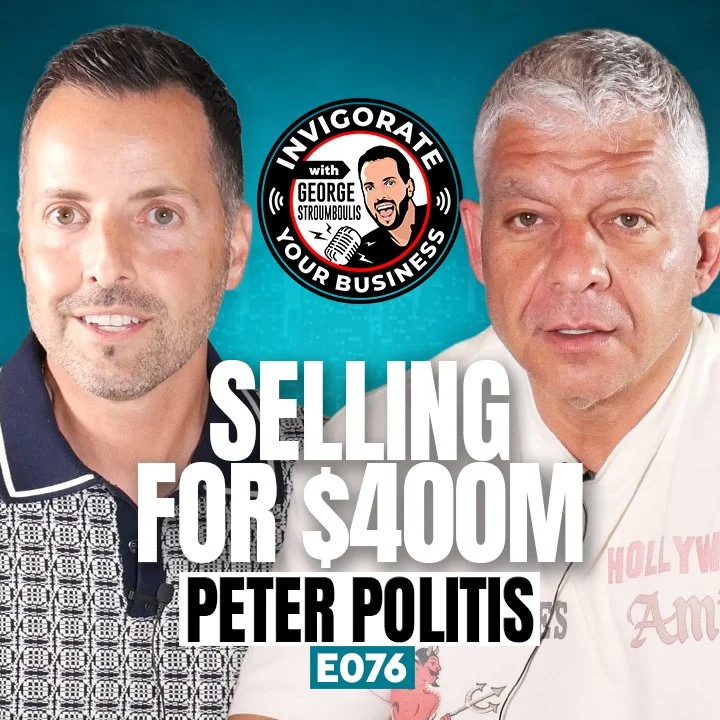
George Stroumboulis sits down with Peter Politis, a seasoned entrepreneur known for buying, scaling, and exiting businesses in highly competitive industries. Filmed in Miami, Florida, they explored his journey from finance into food distribution, where he transformed a small produce company into a multi-market operation and ultimately exited in a deal valued in the hundreds of millions - breaking down the mindset, discipline, and execution required to build businesses that scale and sell.
“Don’t deliver the message when you want to. Deliver it when they’re ready to hear it.”
MEDIA RELATED TO THE EPISODE
George Stroumboulis sits down with Peter Politis, a seasoned entrepreneur known for buying, scaling, and exiting businesses in highly competitive industries. Filmed in Miami, Florida, they explored his journey from finance into food distribution. Breaking down the mindset, discipline, and execution required to build businesses that scale and sell.
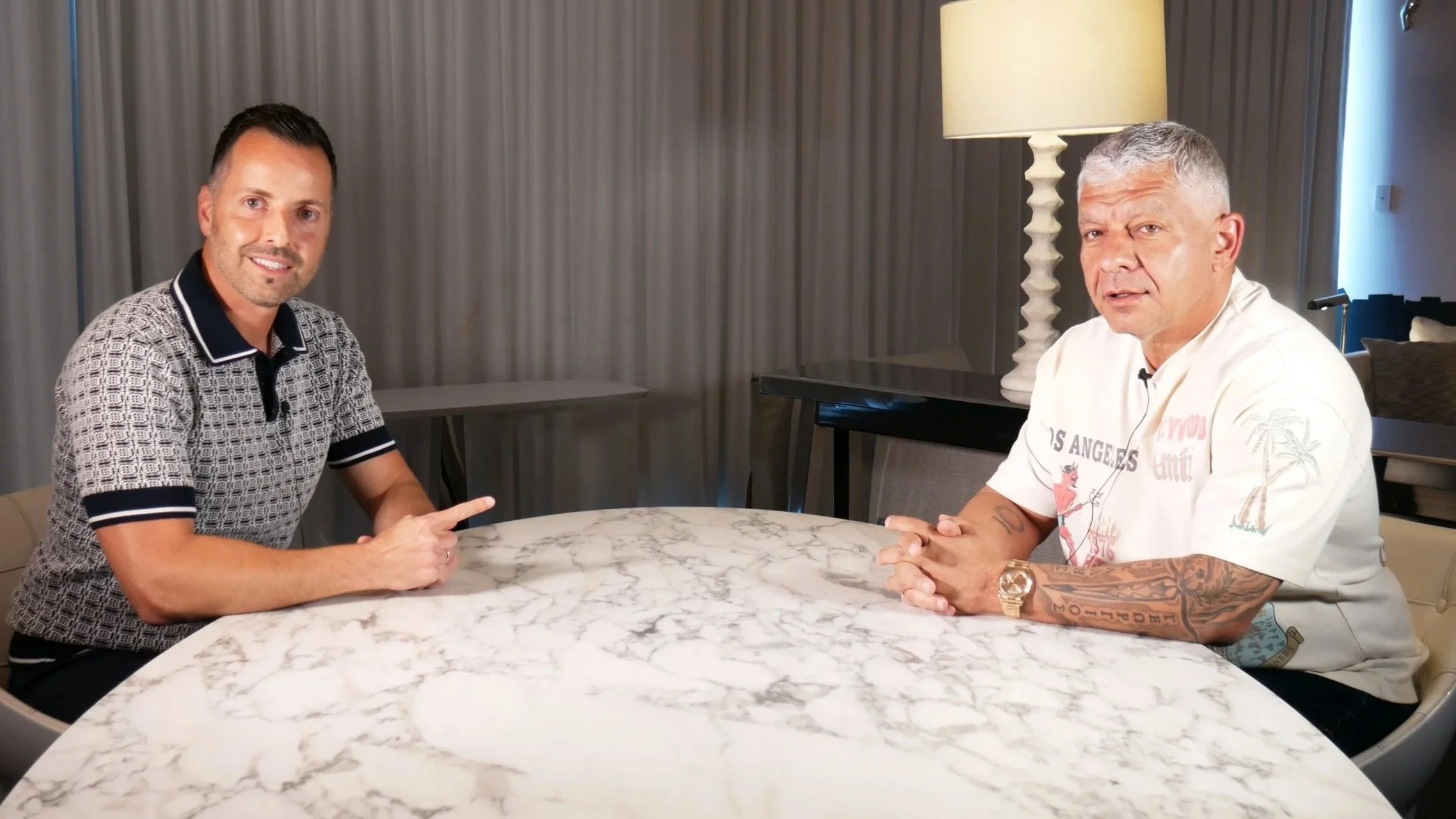
George Stroumboulis sits down with Peter Politis, a proven entrepreneur who built, scaled, and exited a business in one of the toughest industries. Filmed in Miami, Florida, they explored how he turned a small produce company into a multi-market operation and ultimately sold it for hundreds of millions.
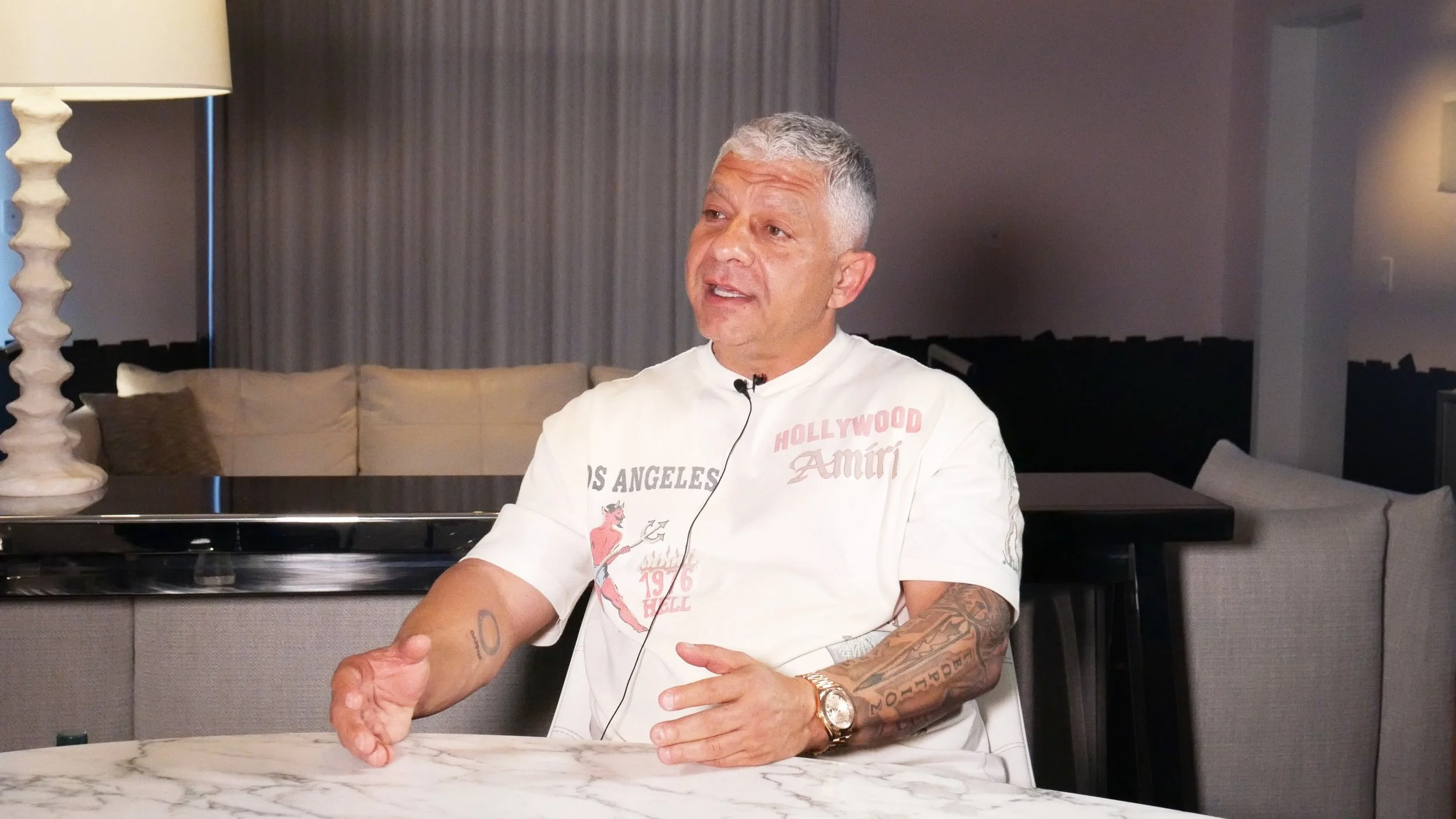
George Stroumboulis sits down with Peter Politis, a serial business builder known for buying, scaling, and exiting companies. Filmed in Miami, Florida, they explored his journey from finance into food distribution and how he built a company that achieved a nine-figure exit.
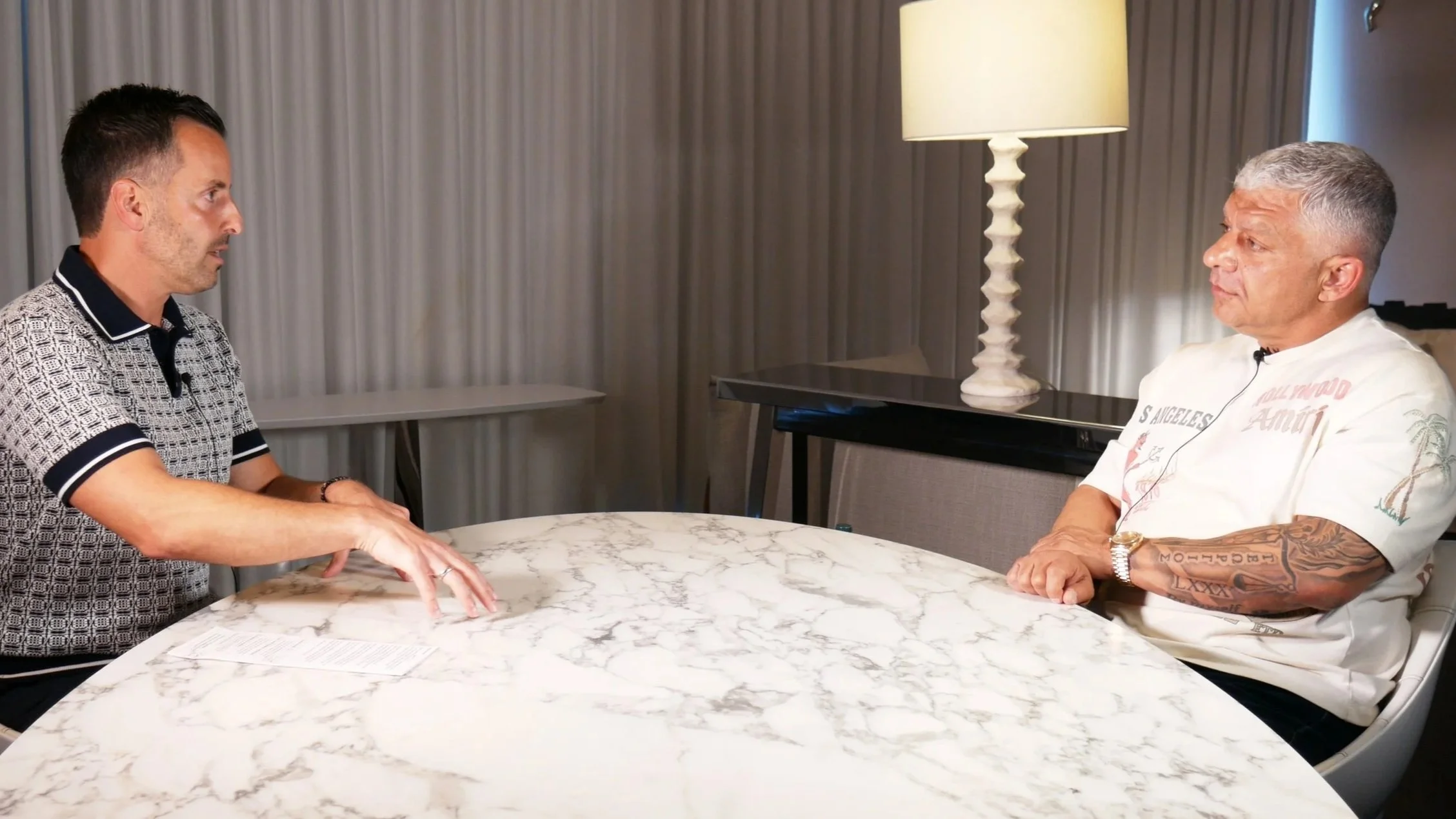
George Stroumboulis sits down with Peter Politis, an entrepreneur who mastered the art of building and exiting businesses. Filmed in Miami, Florida, they explored how he scaled a modest produce operation into a dominant player before successfully exiting for hundreds of millions.
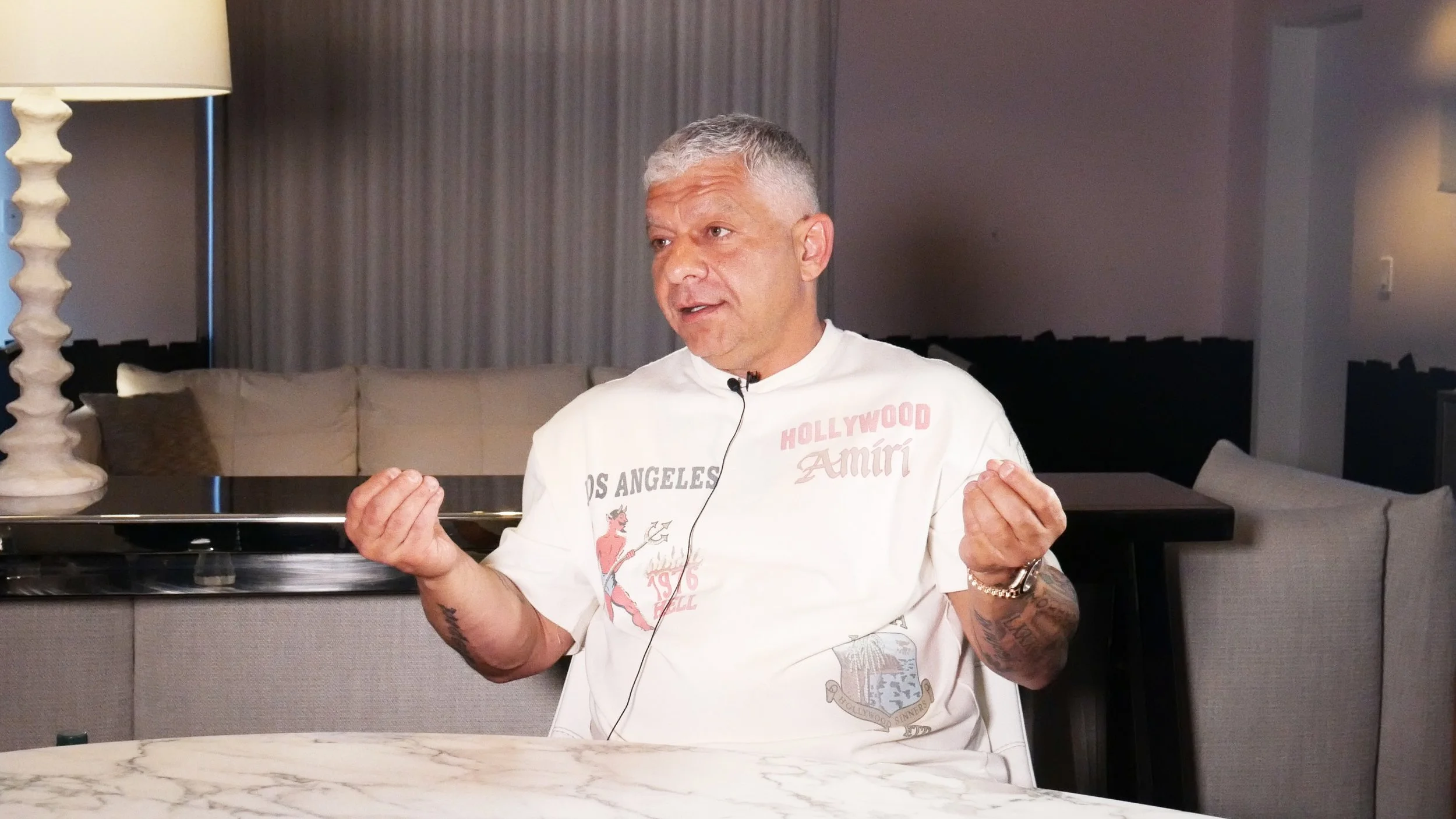
George Stroumboulis sits down with Peter Politis, a disciplined operator who transformed a small Miami-based produce company into a large-scale enterprise. Filmed in Miami, Florida, they explored the strategy, execution, and mindset behind building a business designed to sell.
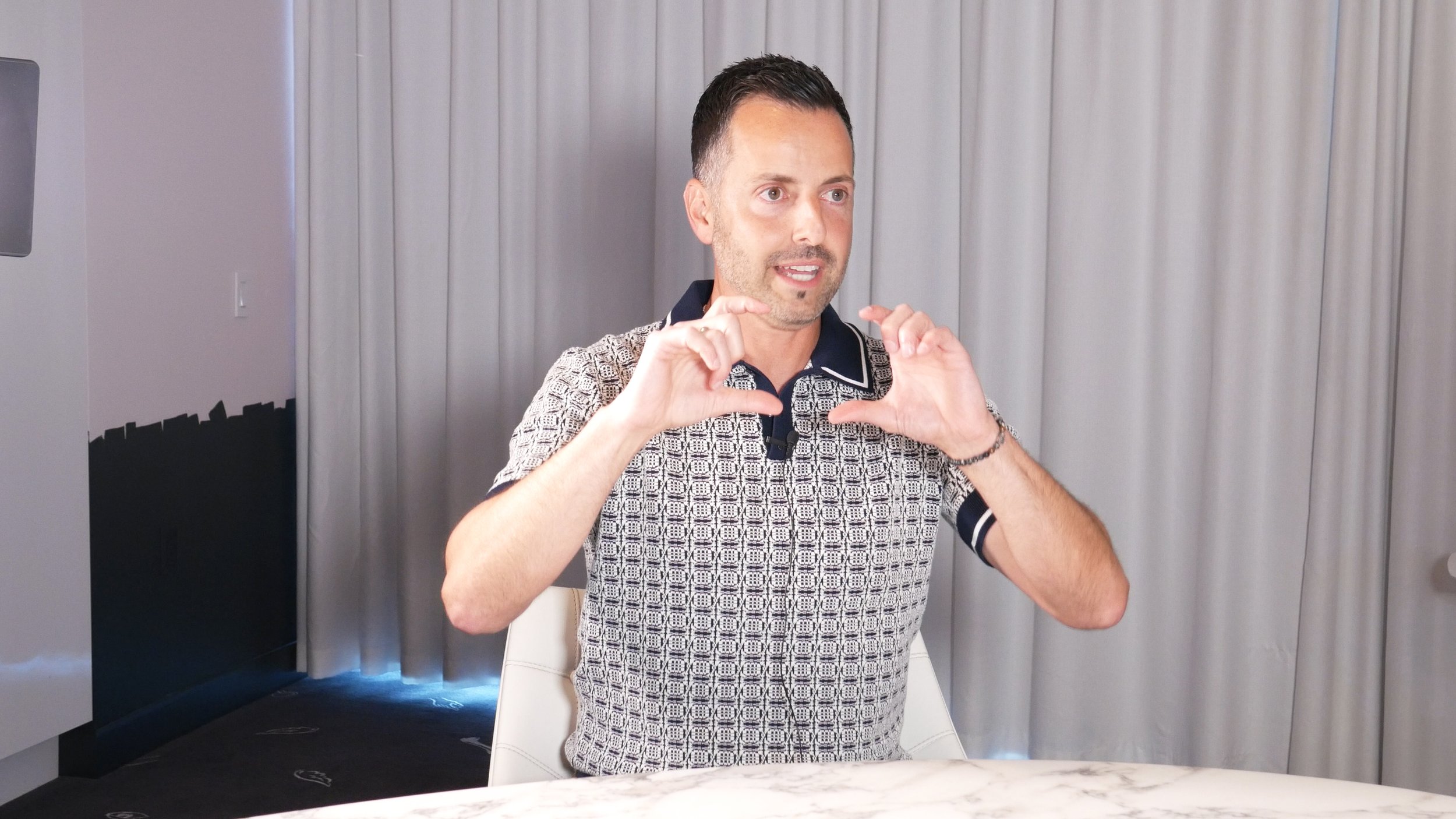
George Stroumboulis sits down with Peter Politis, an entrepreneur who turned a small acquisition into a multi-market success story. Filmed in Miami, Florida, they explored how he scaled, optimized, and ultimately exited the business in a deal worth hundreds of millions.
ABOUT THE “INVIGORATE YOUR BUSINESS” PODCAST
The Invigorate Your Business with George Stroumboulis podcast features casual conversations and personal interviews with business leaders in their respective fields of expertise. Crossing several industry types and personal backgrounds, George sits down with inspiring people to discuss their business, how they got into that business, their path to the top of their game and the trials and tribulations experienced along the way. We want you to get inspired, motivated, and then apply any advice to your personal and professional lives. If there is at least one piece of advice that resonates with you after listening, then this podcast is a success. New episodes weekly. Stream our show on Spotify, YouTube, Apple, Amazon and all other platforms.
ABOUT GEORGE STROUMBOULIS
George Stroumboulis is an entrepreneur to the core, having launched several ventures across multiple industries and international markets. He has held senior-level positions at progressive companies and government institutions, both domestically and internationally, building an extensive portfolio of business know-how over the years and driving profit-generating results. George’s ability to drive real change has landed him in several media outlets, including the front page of the Wall Street Journal. George was born in Toronto, Canada to his Greek immigrant parents. Family first. Flying over 300,000 miles a year around the world puts into perspective how important family is to George’s mental and emotional development. With all this travel to global destinations, the longest he stays even in the most far-out destination is 3 days or less - a personal rule he lives by to make sure he is present and involved in family life with his wife and three daughters. To read about George’s global travels, stay connected with his blog section.
STAY CONNECTED WITH GEORGE STROUMBOULIS
STREAM & LISTEN TO THE PODCAST:
SPOTIFY: https://open.spotify.com/show/1rW2CmxQoiJNEPOZupJlvd
YOUTUBE: https://www.youtube.com/user/Stroumboulis
APPLE iTUNES: https://podcasts.apple.com/us/podcast/invigorate-your-business-with-george-stroumboulis/id1607693240
AMAZON MUSIC: https://music.amazon.com/podcasts/8fc03929-71b3-483a-a64e-153e30b3d462/invigorate-your-business-with-george-stroumboulis
STROUMBOULIS SITE: https://www.stroumboulis.com/podcast
PODCAST SITE: http://www.invigorateyourbusiness.com
FOLLOW GEORGE STROUMBOULIS:
INSTAGRAM: https://www.instagram.com/georgestroumboulis/
YOUTUBE: https://www.youtube.com/user/Stroumboulis
LINKEDIN: https://www.linkedin.com/in/Stroumboulis/
TWITTER: https://twitter.com/Stroumboulis
FACEBOOK: https://www.facebook.com/georgestroumboulis
TIKTOK: https://www.tiktok.com/@georgestroumboulis
CONTACT GEORGE DIRECTLY: https://www.stroumboulis.com/connect
FULL SHOW CONTENTS
00:00:00 Miami Intro And Big Exit Tease
00:02:44 Modest Upbringing And Early Hustles
00:09:55 Real Estate Wins And Moving South
00:13:17 Buying A Tiny Produce Business
00:16:07 Scaling Fast By Building The Team
00:18:44 Partial Exits And The Auction Process
00:20:00 Infrastructure That Drives Valuation
00:24:36 Logistics Realities In Food Distribution
00:30:24 The First Exit Wire And Its Toll
00:34:50 Wealth Rules And Real Estate Discipline
00:39:07 Starting A New Distribution Company
00:47:17 Leadership Timing And Getting 120%
00:52:26 Family Office And Logistics Operations
00:56:02 Polita Steak And Seafood Growth Plan
00:58:11 Social Media And Course Seller Reality
01:05:50 Starting Over With Investors And Operators
01:09:32 Closing Thanks And Subscribe Ask
FULL SHOW TRANSCRIPT
GEORGE STROUMBOULIS 0:00
This episode of Invigorate Your Business with George Stroumboulis comes from Miami here in Florida. I get to sit down with Peter Politis. Peter is a dynamic entrepreneur who has done it all. He is an expert when it comes to building, scaling, and exiting businesses. On one of his biggest transactions, he exited for over $400 million. Peter is a wealth of knowledge, whether it comes to how to build a team, how to buy a company, how to operationally scale it up, how to prepare it for an exit down the road. It is so jam-packed in this episode of advice on how to lead, how to be a leader. It is absolutely incredible what you're going to listen to today. Peter is a genuinely nice person and a killer in business. So enjoy this episode of Invigorate Your Business Starting Now. My name is George Stroumboulis, and I'm extremely passionate about traveling the world, meeting new people, and learning about new businesses. Join me as I sit down with other entrepreneurs to learn about their journeys. This episode of Invigorate Your Business starts now. This is awesome. So this is recording. I've been following you. I've done research, the success you've had of just like a leader, someone who's sure been extremely successful in the investing and turnaround companies exiting so selfishly. Like this is exciting, right? I always want to be learning from people. I'm just going to read a quick little intro and then we're going to jump into everything about your background, your style, like how you got into investing, sure, sure. All that stuff, right? So today's guest is Peter Politis, a true builder, someone who took on one of the toughest, lowest margin industries in the world and turned it into a platform worth hundreds of millions of dollars. He began his career in finance and asset lending before making a bold move into food distribution, acquiring a small, underdeveloped produce company in Miami and transforming it from the ground up. What started with just a handful of employees and a modest facility became a scaled operation serving thousands of customers across multiple markets. Ultimately, he didn't just grow the business, he built it into an institutional level and exited in a deal valued in the hundreds of millions of dollars. This is a conversation about discipline, execution, and what it really takes to win in a space where margins are tight and mistakes are costly. Let's get into it with Mr. Peter Politis.
Modest Upbringing And Early Mistakes
PETER POLITIS 2:33
Pleasure to be here.
GEORGE STROUMBOULIS 2:34
Thank you so much for coming. So let's before we get into everything, like, where are you from? You know, like what was your upbringing like?
PETER POLITIS 2:41
Upbringing was um, for lack of better words, modest, uh, hardworking family, hardworking father. If anything I learned was how to work from my father, that's all he did. And uh got into business. I had a lot of dreams as a young man, uh, tried everything, made a million mistakes, 10 million mistakes maybe, and uh found my way. I loved business and uh explored the idea of possibly uh investing into Florida in the 2010, 2009, 2010 era when the uh Florida real estate market was at its lowest. Yeah. And uh worked out, uh found another opportunity through an in through a uh business broker out here in uh plantation, Florida, told me about a small little produce business that was for sale. I told him, let's go take a look at it. I went, it was a little dock, 800 square feet, maybe, I don't think more than that. Had three or four employees. Jeez. Um, asked him how much he wanted, told me uh 400,000, I told him I'd offer him 300, and uh off to the races. I bought a small little business, didn't speak any Spanish. That neighborhood is all, all, all, all Spanish speaking.
GEORGE STROUMBOULIS 4:02
Oh, really?
PETER POLITIS 4:02
So yeah, so there were challenges after challenges after challenges. So uh and then fell in love with the business, fell in love with the people. I really had good people, and you know, I came from Montreal. Montreal's a little bit of a city where you know you learn a lot, and uh it's not exactly a farm. So um you have to be quick on your feet and uh you have to be thinking, looking for angles. So coming from there to Miami wasn't a big change in terms of um, you know, having the ability to uh to see a potential issue or a problem. And uh I took those skills and went on and built a very successful business.
GEORGE STROUMBOULIS 4:42
Yeah.
PETER POLITIS 4:43
And um soon, soon after, growing that business required real estate because you can only do so much sales in so much square footage. So as I grew that business, I required uh larger buildings every time. So I probably moved seven, eight times in a period of eight years. Just larger facilities.
GEORGE STROUMBOULIS 5:10
Were you learning the industry as you went? Like before you bought this business for 300 grand, did you know produce?
PETER POLITIS 5:16
I thought there was one tomato. I didn't I didn't know there were several types of tomatoes. Right. I didn't know. But you know, again, I have you know, if anything I think I'm good at is, you know, finding the right people um to work with me. Right. It might not be the right people for someone else, but with me, they were the best. And it's the team I built. It's that group I built around me. They were the best. And this is who really built the business. I mean, at the end of the day, it's about the people.
GEORGE STROUMBOULIS 5:45
It absolutely is, and we're gonna dive into that. Like, talk to us about Montreal. So I I was born in Toronto, I grew up in Niagara, Fort Erie. You grew up in Montreal. For the listeners who don't know anything about Montreal, like it's French speaking, but what is it about the cultures and the community that made you think differently? Like you said, you came here and you had to think certain ways to adapt to that, Margaret. Like what is it about Montreal?
PETER POLITIS 6:08
Well, Montreal is very separated. It's it's uh, for lack of better explanation, it's a very separate separated type city. You have the French-speaking and uh you have the east side and then you have the west side. West side's very English-speaking. The east side's very French-speaking, the north and south are both French. So I lived in a predominantly English type of area. You know, again, I grew up my whole group of friends, not the most, not many doctors or lawyers came of us. Super hardworking, super strong guys, super smart people too. Um, and I happened to be, you know, on the lower end of the uh education pool. So uh they all went on to uh, you know, colleges and and uh what they call CJPs over there, and someone even went into university. And they very for the most part, they've done very well for themselves.
GEORGE STROUMBOULIS 7:01
All first generation immigrants? Like all of them. All of them, okay. So everyone's parents were born in another country.
PETER POLITIS 7:07
Correct. All their parents came between, I'd say, 55, 50, and and 60. Okay. Most of my friends' parents were the same. So we all went home to a home speaking a different language other than English or even French. So uh, but the that work ethic was there. All these guys, all these older people came in with one thing in mind, and that's to work. So we all did the same thing.
GEORGE STROUMBOULIS 7:34
So um what were the aspirations there? So, like parents, I I know growing up, like Greek culture, many parents were like, hey, you're gonna take over the restaurant, you're gonna do this, right? Like, what was it similar aspirations? Identical, right? Identical, right? Yes. Yeah. And almost pigeonheld in many situations, like this is what you're gonna do.
PETER POLITIS 7:50
Correct. So, you know, my father was part of a factory or worked in a factory, and you know, I even did that out of school. I left very early. I didn't even, I did I didn't even graduate high school, so uh, you know, but um but yeah, hardworking. I got involved, I bought my first little business, a car wash at 18, 19 years old, you know, and then again, made a million mistakes. The next five, six years were a bunch of mistakes. I finally settled down, uh, got married, and uh had two children and started building a life. You know, I did a lot of um mortgages, a lot of real estate. Things worked out well. I mean, between, I would say, between the ages of 25 and 35, I got into the cell phone business, the digital business. I got involved in so many things. I tried so many things. And again, a lot came with some a lot of failure.
GEORGE STROUMBOULIS 8:40
Yeah. Okay, you're you're building this up in Montreal, you're multiple businesses, so it didn't matter if it was cell phones, car washes, like you understood what a business needed, even from that age, right?
PETER POLITIS 8:50
Yeah, from very young.
GEORGE STROUMBOULIS 8:51
Yeah. So you get all that skill set and then you decide, you know what, Canada in general, Montreal, like there's only so much for you to expand to grow. You saw an opportunity in Florida.
Moving To Florida For Opportunity
GEORGE STROUMBOULIS 9:01
Like, what was that leap over here?
PETER POLITIS 9:03
Yeah, I mean, I started to learn a lot about uh real estate specifically uh in Montreal. I owned a number of properties in Montreal. I remember one of my first bigger properties that were 45 or 40, 46 apartments uh over two floors. And underneath was a big commercial center. I had 16 apartments. I bought that with very little money down. I think, you know, the the owner just wanted to exit. It was a disaster. I mean, there were very extremely low income, no one was paying him rent. I don't even know how I got that for as cheap as I did, but very little money down. He even arranged financing for me. Wow. So it was a wonderful, ex wonderful deal. I cleaned it up. I mean, I I fought for every dollar coming in, turned around, sold it, built some equity, you know, bought homes, sold homes. I was always on the move, always doing things.
GEORGE STROUMBOULIS 9:52
That's incredible. Yeah. That's incredible. And then you're there, and then you fast forward today, right? Like there's there's a lot we're gonna cover, but today, uh, extremely successful, right? Financially, you built a lifestyle for you and your family. Yeah, nothing's missing from right. I'm sure if you're sitting there dreaming of stuff, you have it.
PETER POLITIS 10:10
Yeah.
GEORGE STROUMBOULIS 10:11
Right?
PETER POLITIS 10:11
Yeah, pretty much.
GEORGE STROUMBOULIS 10:12
So talk to me. Like, where do you go from like buying these buildings to today? Like, how does that, does it just snowball? Like, I'm just so curious.
PETER POLITIS 10:20
So, so yeah. So, as you're doing well in a city like Montreal, you're you're kind of almost thinking, well, can you imagine me doing that well in another's place or you know, with better climate or possibly lower taxes, or you know, with less regulation? And, you know, imagine living a lifestyle like that. My children's my children were going to great schools. Can you imagine them going to schools in in the U.S.? And to make a long story short, I simply came here to buy real estate, ended up falling in love with the place, I saw an opportunity, I bought the business, and then I started thinking even more. Can you imagine I owned a great business down here and it worked out? And and I went to work and I focused and put good people around me. The good the people around me was the most important element to this success.
GEORGE STROUMBOULIS 11:07
Yeah. And I feel like Canada now, there's a mass exodus of people now.
PETER POLITIS 11:11
But you came before when it wasn't really common for Canadians to just be Yeah, it was it was it wasn't as sexy to leave then as it is today. Yes. Or the last five years, specifically with how uh the government's held uh hung on with COVID for for such a long time. And I think, you know, and then the the weather and uh, you know, the political climate over there, I'm not so sure. I don't follow it too much, but from what I get-better off, yeah. I think I think people are better off here. I think you know, this is a wonderful place, it's a great country, and um, you know, I have only good things to say. Again, maybe one day uh uh I'll head back or possibly head to Europe. I'm not so sure.
GEORGE STROUMBOULIS 11:51
Right.
PETER POLITIS 11:52
But for now, my children are here and uh they're prospering, so I'll be here for a few more years for sure.
GEORGE STROUMBOULIS 11:57
And the big thing is you've built financial freedom where you can make those decisions. It's up it's up to you, right? Where you want to go. That's a big deal. And to be able to do that at your age and be so young to be able to do that is huge. So let's jump into like food distribution, that business, right? Because I've seen clips and interviews with you, bought the business, sold it, bought it again, sold it again, different. Like just talk to me. Was it the business that you were attracted to, or was it it doesn't matter what it is? Food distribution?
PETER POLITIS 12:27
No, the business, the the actual vehicle is the produce, was the item sold, but the business was really distribution, and it wasn't again, it wasn't a uh business based on technology, or it wasn't, you know, uh medical devices. It wasn't something I couldn't learn or couldn't
Buying A Tiny Produce Business
PETER POLITIS 12:45
understand because of the lack of maybe education. This was a very simple thing. It's onions, potatoes, it's tomatoes. I just happened to make a very big business out of it. And um what attracted me most to it was it's not a storefront business. It was my ability to go out and or my team to go out and get more clients and more clients and more clients. It was essentially endless. The opportunity and where I can go was in my mind was endless from the beginning. I didn't I went I didn't have a 200-seat restaurant where I'd have to say no to the 201st person. I can I can sell produce to as many people as I want, you know, all depending on if I had the infrastructure and I was good at building infrastructure.
GEORGE STROUMBOULIS 13:32
Right. But like were you in the beginning, were you getting in front of clients and going to this restaurant or never.
PETER POLITIS 13:38
Never bought a box of produce. I never loaded a truck, I never took an order over the phone, I never went on a sales call.
GEORGE STROUMBOULIS 13:47
Come on.
PETER POLITIS 13:48
I never received a truck of product. I simply was the a manager of putting people together and onboarding more talent and more talent and strategically placing the business to be able to scale and go into other markets. If I was busy on the phone all day trying to fight for 50 cents for product, I I wouldn't have the time to onboard hundreds and hundreds of people over a period of seven or eight years.
GEORGE STROUMBOULIS 14:16
Well, and you weren't the face of the company then, right? So what was it easier to sell the company because it wasn't Peter assigned to it?
PETER POLITIS 14:22
Well, I was the face. I was the owner of the business. However, my job was not a you know, I didn't go in in the morning just buy product or make sure the trucks were out on time or looked after sales. I looked after all that. And and I had a great team, and they we had management meetings daily, and they came to me, gave me the results and where we were missing, where we were very strong, and I used all that information to grow the business.
GEORGE STROUMBOULIS 14:49
That's incredible.
PETER POLITIS 14:50
So uh when you're going from one level to the next level to the next level, like when you bought the business, uh can you share what they were doing, revenue or there was a million dollars of revenue, and when it's that small of a business, actually it wasn't even a million, it was 900,000 of revenue. Uh and when it's that small of the business, they don't even call it profits, they call it owner benefits. Okay. Because it's so low that, you know, you have your cell phone bill in there, you have your fuel bill in there, you have a uh uh you have uh uh restaurant expense in there, and uh so low they they add all that back, and then they say you made 160,000 on the the million dollars, but you know, it's not really 160, it was barely 50 or 80,000 of pro real profit. And then the the following year I did nine million or ten million, and then the year after that I did twenty-five million. Jeez. Yeah, it skilled very, very quickly. Again, it was the right time. Miami was a very, very small city then in comparison to what it is today. Right. Restaurants were opening up left, right, and center. The big, big players didn't take notice of me until it was too late. And um, and again, you know, I would take uh two, three days a month. This is very important, and I would just travel the country, going into produce terminals in the country from Los Angeles to New York to Philadelphia, finding talent, finding uh, you know, picking up guys that wanted to either relocate or experts, you know, on this type of uh product, or you know, what they call it Eastern Veg, Western Veg, you know, tropicals. So, you know, we needed these people. So I'd bring them down, I'd hire them, I'd I'd onboard them, say come down, come work with us.
GEORGE STROUMBOULIS 16:32
Wow. So you'd go around and just find the best of the best.
PETER POLITIS 16:34
The best. I got the best team, the best team.
GEORGE STROUMBOULIS 16:37
And relocated, and they were based here.
PETER POLITIS 16:39
The best produce guys in the country worked for me. Jeez. Barnon, yeah.
GEORGE STROUMBOULIS 16:44
So then how do you go from one to ten? Like you 10x it in a year.
PETER POLITIS 16:48
Yeah, well. That's insane. Yeah, well, you 10x it in a year, and um, you know, and then in 2014, December of 14, my cousin, that's actually from Toronto, came on board. And uh he had a great sales background, super smart guy, and he handled all sales
Scaling Fast With Talent And Facilities
PETER POLITIS 17:05
from that then on. And he was very sales-driven, very tough, super smart, and uh he helped us get to where we got to on the exit. And then uh, you know, how these exits work is that you know you sell a portion of the company, not all. You retain a big piece. So we kept a smaller piece of the business, and then they went out. Well, yeah, they take control. So they sell they take between 60 and 70 percent of a company. We keep 30 percent, 35, whatever that number is, and then they exit again. So we sold in 19 for over 100 million, and then we sold again in 23 for over 400.
GEORGE STROUMBOULIS 17:42
Come on. So can you explain for us the the strategy? They come in and they say, hey, you keep 30%, we'll pay you, you stay on board, you know the next goal as well. Like they want you on board for the next round?
PETER POLITIS 17:55
When they come on board and they uh and you go to market to sell, it's basically an auction. So your book is presented to various potential uh firms that would be interested in you or are looking to buy companies like you. And um they go back to, you know, they examine everything that you've done, where the sales started, what kind of team you have, how strong your team is, not necessarily their skills, but how much infrastructure you have. Okay. So a lot of the mistakes a lot of these companies make, they build this big business, but there's no infrastructure. You know, you need a good finance department, you need a very robust HR department, you need a good buying team, your books have to be audited. I mean, so I had done all that. I had learned from very, very strong bankers between 2013 and 15, 16 to have all that in place. It's expensive to do it. A lot of business owners don't want to incur those types of expenses. Sure. Uh I did it, and maybe I did it because I didn't know so much about the pieces of the business. And that was just validating my numbers.
GEORGE STROUMBOULIS 19:05
Okay. But did you start doing that knowing you wanted to exit down the road?
PETER POLITIS 19:08
No. No, you just want to make sure I audited my I audited a very expensive audit myself my first year. Probably gave away half my profit to audit myself because I wanted to make sure my numbers were real.
GEORGE STROUMBOULIS 19:21
Wow.
PETER POLITIS 19:22
You know? Yeah, you buy a business for 300,000 and you know, your first year you make 1.5 million, you want to make sure. And you're not really seeing the 1.5. I mean, it's in inventory, it's in receivables, it's in some assets you bought. It's here, it's there. So you're you're you're almost questioning the numbers.
GEORGE STROUMBOULIS 19:39
It's not an account, just sitting there, right?
PETER POLITIS 19:41
Exactly. You know, you're not just peeling away dollars all the time. So you you know, your books and records are showing you made so much money, you want to make sure it's there. So I engaged with a very, very prominent firm here in Miami to audit my books, and they did. They brought in a whole team of young guys, and they spent a whole week there and they went through it left, right, and center. And and I kept that practice going to the day I sold it.
GEORGE STROUMBOULIS 20:04
Always auditing, third party, just always, always auditing.
PETER POLITIS 20:07
And it gave a lot of credibility even when I started doing business with the banks. Banks were very helpful. My vendors were very helpful. You know, when the vendors know you're audited, they know they're dealing with a r the real player.
GEORGE STROUMBOULIS 20:19
Right.
PETER POLITIS 20:20
You know, you're buying hundreds of millions of dollars of product and you've never met them, there's no contract, there's no signatures, there's no nothing. You're just picking up the phone and ordering. You know, at one time avocados were, I don't know, eighty, ninety dollars a case, and we were buying, I don't know, three, four, five loads a week, however many loads. So, you know, we were buying four or five hundred thousand dollars of product, and you know, after two, three weeks, you owe them a million dollars or a million and a half, and they don't even know your first name.
GEORGE STROUMBOULIS 20:47
So And there's terms, right? And then they won't.
PETER POLITIS 20:49
There's terms, of course. You know, you have to live up to what you said you would do. And and and sometimes, you know, when you couldn't make that day and you had to pay the next day or the week later, you know, it's simply calling up and explaining your story. This is what's happened, this is this is where I'm at. You're helping me grow. They know you're the real deal.
GEORGE STROUMBOULIS 21:06
How important see, it's great. I live that right now, right? It's sometimes it's just a phone call versus you know, AP going to AR and vice versa. Like it helps tremendously, right?
PETER POLITIS 21:16
Absolutely. You you create relationships, especially in that world. It's a good old boy world. There's a lot of honor.
GEORGE STROUMBOULIS 21:22
Yep.
PETER POLITIS 21:22
And some of the industries are very much like that. The the unsophisticated businesses are very much like that. They work on handshakes and deals, right? You know, and um, there's not too much technology, at least there wasn't when I was running that business.
GEORGE STROUMBOULIS 21:36
So now it's changing. It's like uh talk to me about just bank relationships, right? Huge. And really quick, before we get there, you were talking about just talk to me about multiple. So you self audited, you got everything clean just because you wanted to understand your business. Does that help with the multiple when you go to school? Absolutely.
PETER POLITIS 21:52
Okay, so it all helps. You have to demonstrate the ability to scale, replicate your business. So I I by the time I went to market, I was already Already in three markets. By the time I went to sell my business, I was already in three different markets within Florida.
GEORGE STROUMBOULIS 22:05
W within Florida, okay, yes.
PETER POLITIS 22:07
Yeah. So I west coast of Florida, we did Central Florida at the time. We were looking at an acquisition in Texas. I'd already tried an acquisition in uh in Atlanta, Georgia. So they know your model is replicable within other areas. And then, you know, your your organic piece, that scale, that continuous scale, still obtaining that margin or that percentage uh percentage margin was very, very important. It's very important.
GEORGE STROUMBOULIS 22:35
When you're going from Florida to Texas, geographically, now you're in the middle of the country, is it new vendors locally or you're it's typically the same vendors' produce, it's the same vendors.
PETER POLITIS 22:46
Like a box of lettuce would cost more at the same time of year in Florida than it would be in, for example, in California. Okay. Simply because the lettuce is coming from California. So, you know, you can have a $20 box of lettuce, but what people in Florida don't know is that $10 of that $20 is freight.
GEORGE STROUMBOULIS 23:05
Right.
PETER POLITIS 23:05
The box was only $10 at at the dock of the lettuce grower. So we paid $10. The guy in Los Angeles pays $10, but it's only costing him $2 a box in freight. It's costing us $10. Gotcha. So that's what happens, and it's very transitional. So you're going from, you know, the south part of the country to the north, and products range from the the west coast to the east coast, the center being a lot of root products, like potatoes and onions and stuff like that.
GEORGE STROUMBOULIS 23:33
Really? Okay. And then when you're sitting there trying to go, can you go national? Are there big distributors that are national?
PETER POLITIS 23:40
The biggest. It's a it's a Cisco owned company. Cisco, okay. It's called Fresh Point. Yeah. And they're national.
GEORGE STROUMBOULIS 23:46
Okay.
PETER POLITIS 23:47
They're in many, they have many, many markets.
GEORGE STROUMBOULIS 23:49
And do you have aspirations to go national?
PETER POLITIS 23:52
No, not that big, no.
GEORGE STROUMBOULIS 23:53
No, you were like again, we're talking 400 million.
PETER POLITIS 23:56
Yeah, the only way to get into that um level would probably be through acquisitions. Okay. It wouldn't be in my lifetime. It's very hard to grow a business at that speed.
GEORGE STROUMBOULIS 24:07
Aaron Powell But when you sell again and you have a piece of it and it's 400 million, what like is that a couple how many employees? Like what what does that operation look like?
PETER POLITIS 24:15
Well, it goes from, you know, my four employees and that's 700 million, or at uh sorry, at at my exit in 19 was maybe 400 employees, and now they're closer to 700 or 800 employees, and probably at 2,000 now. Who knows? How many?
GEORGE STROUMBOULIS 24:30
Do you still have skin in the game in that?
PETER POLITIS 24:32
Very little. Very little. Very little enough to want to cheer for them. Yep. I'm their biggest cheerleader, but uh very little skin, yeah.
GEORGE STROUMBOULIS 24:41
Okay. For me personally, I'm I'm good at the startup mode. Hey, you got an idea, let's figure this out, let's get it to a certain point. And then after a certain point, you got to bring in certain people. When you go from a million dollars to 10 to 20 to 100, like where did you start feeling like, hey, I'm out of my comfort zone? I need someone else.
PETER POLITIS 25:00
That's good. Well, uh, not uh uh that's when I decided maybe it's time to exit, is when when you sell the people that are interested in buying you, they come with an uh a very experienced finance team, a very experienced um uh structure. They don't understand necessarily your operation or your business or even what you're selling. However, they come with the proper Rolodex or the proper group of people to help you with all the consultants to help navigate the business and secure the business from the finance department to HR to everyone else. You brought it to that level, they're gonna help you bring it to that next level. Exactly. Very, very smart.
GEORGE STROUMBOULIS 25:39
So if you're looking at a company that's trying to exit now, do you consult with them? Do you usually try to get a piece of it, like if you see potential?
PETER POLITIS 25:46
Like I I'm just curious. Yeah, I get offered many times. Uh, you know.
GEORGE STROUMBOULIS 25:50
How do you filter that?
PETER POLITIS 25:52
Like, how do you even Well, it's I just need to know a few numbers and a few situations. I need to know what type of business it is, if it's something I'm even understanding or comfortable with.
GEORGE STROUMBOULIS 26:03
Yep.
PETER POLITIS 26:03
Again, if it's something too fancy, I'm probably not qualified. However, if it's distribution, if it's food, I can understand it. Again, uh, you know, you you need to understand what they're doing very well. And uh, you know, I sat on some consulting meetings for other firms that wanted to buy food companies, their distribution businesses, and um it didn't go well. I mean, they're looking at one part of the business. I'm listening to the meeting happening. At the end of the meeting, I'm looking over and I'm saying, guys, this is not a business for you, you know, bluntly, at least my opinion is won't it won't work. Right. You know,
Exits Explained And Building For Buyers
PETER POLITIS 26:40
either they have too much concentration. I really don't like concentration.
GEORGE STROUMBOULIS 26:44
So how how good are you at reading people? Like when you're hiring all these people over the years or sitting in these boardrooms, is a lot of it just like personality clicks or it doesn't feel right or it does feel right?
PETER POLITIS 26:56
Um, you're reading, I I think my reading people ability is as good as anyone else's. I don't think it's that good. I I I read the business well.
GEORGE STROUMBOULIS 27:04
Okay.
PETER POLITIS 27:05
And they're looking to sell their business. So they're positioning and modeling their business to the promised land. I feel I'm able to determine if it can get there or not.
GEORGE STROUMBOULIS 27:14
Yeah. I was listening to Joe Rogan. There's a clip where he's saying, you know, he signed a hundred million dollar deal with Spotify, but he was, I'm I'm gonna butcher it, but he was saying when he got offered a hundred thousand dollars for some sitcom years ago, like he's never had that feeling again from that hundred thousand dollars when rent was covered, you know, just feeling great. It felt better than the hundred million and so on. All these years, like you uh car wash when you were 18, you sold that and made money, you know, millions and millions here and there. Like if you look back, what was I'm not asking the amount, or maybe you can share that, but what was that one moment where you're like that was the best feeling financially?
PETER POLITIS 27:52
Well, the best one was the exit of um of the produce business.
GEORGE STROUMBOULIS 27:57
The the first 100 million or 400?
PETER POLITIS 28:00
No, the first one.
GEORGE STROUMBOULIS 28:00
Because that was more that's Yeah, sure.
PETER POLITIS 28:02
That's that was significant.
GEORGE STROUMBOULIS 28:04
And and what does that feel like? So you go through the process, you sell the company, and then when that money's wired to your account.
PETER POLITIS 28:12
Yeah, it's a it's a basically uh usually happens at the end of the week, sometimes eight, nine, nine in the morning, and there's a call. There's probably 15 people on that call. It's the sellers, it's the buyers, it's the bankers that are financing the deal. Lawyers. It's lawyers on both parties, it's insurance people, there's so many people on that call. Usually you're the last one to approve the to approve the sale. And the call goes around and are you set to close? Are you set to close? Everybody says yes, yes, yes, and it gets to you, and you say yes, and you know, usually the biggest wire is yours, and uh that's the last one that comes out. So mine came out at four or five in the afternoon. And then when you get that wire, that's when you realize it's it's an you're you're in a different, you know, different world.
GEORGE STROUMBOULIS 29:03
D different world. Like it it's different. There's rich, there's money, there's rich, and then there's wealth, right?
PETER POLITIS 29:08
Like Yeah, I mean, I I I I was equally strong with the real estate. But it's in it's in it's real estate. I mean, you're not really touching it. I mean, it's complete revenue, it's you're doing deals, you're making money, but it's not the same. But you know, the real estate was equally as pro uh big for me as the uh as that payout. As that payout. I it just you don't realize it. You don't see it, you just look back on it. The economy's doing well, the rates fall, cap rates, you know, they they drop. So you're making, you know, a tremendous amount of money, you know, in terms with respect to your value or your net worth, but you're not really grabbing it. Right.
GEORGE STROUMBOULIS 29:50
This so like a hundred million dollar sale, you get a large portion of that, that hits your bank account versus, hey, I have equal amount in real estate, but like that's a different feeling.
PETER POLITIS 29:59
That's a different, different, different number.
GEORGE STROUMBOULIS 30:01
So, so like where were you when you got that wire? Like, what went through your mind? Like, how did you prep? Were you nervous that someone would fuck up this deal going like that?
PETER POLITIS 30:08
Well, they did fuck up. I mean, I could tell you the story was a mess. It was the deal was supposed to close sometime in April and uh and only ended up closing in July. Oh shoot. And it was uh um incident that had happened, and I had to hold off for a few months, and it took it took a toll, it took a real toll on me.
GEORGE STROUMBOULIS 30:27
Did you sleep in those three months?
PETER POLITIS 30:29
Yeah, no, I slept, but you know, it took a toll, definitely.
GEORGE STROUMBOULIS 30:32
So what what what changes when when you wake up now it's Monday? That's in the like what changes like, hey, now I can buy this, I could do this. Like what changes, like for you, your spouse, your kids, like what changes?
PETER POLITIS 30:44
Well, not much. Yeah, it really I don't think I went through, well, I'm gonna go buy this or I'm gonna go do that. That happened gradually. Uh, you know, I built homes and a couple of homes in the uh around the country and uh had a good time building these fancy monuments and bought a few cars, but not really I didn't really do much. I was always big in watches. I bought a lot of watches in my time, but not necessarily because of the transaction.
GEORGE STROUMBOULIS 31:10
Yeah.
PETER POLITIS 31:11
Um, no, it was just it was just security. It was just a big security.
GEORGE STROUMBOULIS 31:15
Yeah. Do you do you have more stress now to try to hold on to that?
PETER POLITIS 31:19
No. No, it it's it's peace. It's I have a very, very smart son that pretty ha pretty much handles all of that today.
GEORGE STROUMBOULIS 31:28
That's incredible. So in the family, right?
PETER POLITIS 31:30
Yeah, he handles just about everything. I don't I don't deal very much. Of course, I direct it and I make the bigger moves. And uh, but he he he manages our day-to-day finances.
GEORGE STROUMBOULIS 31:42
Yeah, so you we're talking millions and millions of dollars, but if someone comes into a little money, right? And little related to you, but sells a car wash and comes in fifty thousand dollars, a hundred, a million, like what advice would you give on not to screw up? Because you said you made a lot of mistakes early on and you made money. Like, what advice would you give someone coming into any amount of money?
PETER POLITIS 32:04
Well, they're not mistakes that I haven't made myself. So I could tell you, hold on to the money, look for more opportunity. You know, uh when it when is enough? Well, the next dollar is gonna be enough. And the question after that will be when's enough again? You're gonna say, well, the next dollar. Right. It's never going to be enough. You know, for you to be completely comfortable, you'll never go through that money. I'm a believer in real estate. The real estate for me has been completely sound, solid, uh, month-to-month income.
Audits Banks And Vendor Trust
PETER POLITIS 32:40
Yeah. Everything's been good. So if if they make some money, they should definitely put their money into real estate. Into real estate. Something. If it's excess, if they don't need the money to expand or to to to get into a new business, I think real estate is very important.
GEORGE STROUMBOULIS 32:53
So when is enough enough, right? Because you're in your 50s, you're young, right? Like, God willing, there's another 40 years. Yeah. Right. So it now is it just a matter of, hey, it's part of the game. Like I'm I'm alive, I want to produce, it's part of the game. Like, what are next goals when you're in a position like that financially?
PETER POLITIS 33:10
Well, I decided to get back into business. And um You took a pause? I took a pause. Yeah, basically I've been on uh on vacation since 2019 when I exited. I sat and helped the company I sold continue to grow. It did wonderful numbers, and um, it had a big help with COVID, big COVID bump there.
GEORGE STROUMBOULIS 33:34
Uh, it helped during COVID, the business.
PETER POLITIS 33:37
It oh yeah, it exploded in COVID.
GEORGE STROUMBOULIS 33:39
Just because of restaurants take out everything.
PETER POLITIS 33:41
Rest not take out restaurants, and everybody wanted to move to Florida. Uh everybody wanted to move to the southern states, so all the restaurants, migration. I think Florida picked up five, six million people in those years. So everything just took off and they had a great, great, great run. Uh, the business I was in. And then um, so I stayed on board. I it's an honorary type title. It's a chairman. You have a lot of say, you have a lot of power, but it's not really day-to-day. It's basically advisory. Yeah. It's advice, it's, you know, you try to keep the culture intact, you try to keep the momentum going, and uh of a much bigger business. And then in 2023, upon that exit, um, I was not involved with that business anymore. Had some skin in the game, very little. Again, I'm their biggest cheerleader, but I don't have anything to do with it other than that. I have no say, no, no matter at all.
GEORGE STROUMBOULIS 34:33
Nothing was handed to you as a kid, right? Like your dad worked in a factory, right? Like laborers. So your kids got to experience, have they ever seen you struggle over the years?
PETER POLITIS 34:43
Well, I definitely struggled. Uh if they saw it, I don't think so.
GEORGE STROUMBOULIS 34:47
But like financially, they they've always had a good life, right? Good education.
PETER POLITIS 34:51
They've always had they've always had a good life. Yeah.
GEORGE STROUMBOULIS 34:53
So what how do you how do you try to instill them? Like the hard clearly they're doing well, right? They're in banking, they're supporting, they want to be part of the business. But how do you instill that when there's a nest egg? Like, how do you instill that in your your kids? Like, what's some advice for us?
PETER POLITIS 35:07
I don't know. I mean, I have to tell you, my children are uh both of them they're super, super, super um responsible, frugal to a point to an extent, very careful with the money. They have a lot of goals on their own and they know that they need the money to make more money. Right. Um, they're they're thinking uh, you know, like a real banker. They're very, very, very, very conservative. You know, almost opposite than the way I behaved. Uh I guess maybe they have less gamble in them than I do.
GEORGE STROUMBOULIS 35:39
Right.
PETER POLITIS 35:40
You know?
GEORGE STROUMBOULIS 35:40
Which is good. If you had three people going at it hardcore, you kind of need the yin and the yang.
PETER POLITIS 35:45
Yeah, they're definitely the uh the better side. The better side, right? There's no question. There's no question.
GEORGE STROUMBOULIS 35:50
Well, at least you know they have like they have your back.
PETER POLITIS 35:53
Yeah. So I got involved in this uh another distribution type business. Same clients, same workforce, same environment, so to speak, um, same type of uh facility, uh refrigerated space, same clients, uh refrigeration, the trucks, everything's almost identical. The only thing that changed was the product.
GEORGE STROUMBOULIS 36:12
Okay. Sorry, this is a new company now, new company.
PETER POLITIS 36:15
Yeah. However, in the first business, I didn't know anything about the product. And in this one, I don't know anything about the product.
GEORGE STROUMBOULIS 36:22
So uh there's a trend here, Peter.
PETER POLITIS 36:24
There's a trend, yeah. Again, I put together the right team, and I started less than a year ago, 10 months ago, and uh we're set to do record numbers. In fact, I'm doing my first acquisition tomorrow.
GEORGE STROUMBOULIS 36:36
So you're back in this space, different product?
PETER POLITIS 36:39
Back in the space, different product, same clients, uh, same type of workforce, and uh been at it for 10 months and started with not one customer, didn't know left to right, didn't know anything about the business, put people together, lost a lot of money learning.
GEORGE STROUMBOULIS 36:57
Already in 10 months?
PETER POLITIS 36:58
Oh, yeah. Uh yeah, sure. I mean, you put a whole team together with no revenue, someone has to pay for that.
GEORGE STROUMBOULIS 37:04
Right.
PETER POLITIS 37:04
So um, but it's cheaper than writing a check and buying a business. And uh and I knew the industry. I don't know the the the meat and seafood industry, but I understand the distribution business. Right. All I needed to do is get the f three, four, five experts that understood the product, and I managed to get those people. So things have been great, you know, the better part of the last 10, 12 months. And um, tomorrow we do our first acquisition. So we double in size. So to give you an indication, we should be an $80 million business tomorrow. Within a year. Within 10 months, yeah.
GEORGE STROUMBOULIS 37:40
Are you kidding me?
PETER POLITIS 37:41
No.
GEORGE STROUMBOULIS 37:42
So so what? This has got you you already know the exit down the road with this?
PETER POLITIS 37:46
Yeah, this this has legs for four to five hundred million in the next five years.
GEORGE STROUMBOULIS 37:50
100% under you.
PETER POLITIS 37:52
Correct.
GEORGE STROUMBOULIS 37:53
Come on, man.
PETER POLITIS 37:54
Well, I have a great team.
GEORGE STROUMBOULIS 37:55
So of course, right? But you're you're steering that ship.
PETER POLITIS 37:59
Correct.
GEORGE STROUMBOULIS 38:00
Come on, man. Okay, so within a year to be an $80 million business and through acquisition, like how much money, or like is that money out of your pocket or are you leveraging with good banking relationships?
PETER POLITIS 38:11
No, because you know, regardless of someone's wealth or all their assets, when you go into a business and you want leverage for that business, you have to either put up some collateral, you have to sign. I happen to be in a position where I'm able to write the check, so I simply wrote the check and I finance the startup of the business. Oh, maybe it's basically a startup. Yeah. You know, and um, you know, you need a couple of years of operations, um, good books and records to be able to get into the banking world.
GEORGE STROUMBOULIS 38:40
Wow. You know? So when you go into investment, and this is like major, this isn't like Mickey Mouse, you're opening up a hot dog stand or a hamburger stand. Do you have advisors, your sons, whoever financial advisors who are like, hey, if this doesn't go well, like it could affect your your wealth? Like, or are you leveraged across multiple?
PETER POLITIS 38:59
No. Uh well, that's one good thing. I've never really had any leverage real estate or anything else.
GEORGE STROUMBOULIS 39:05
So geez, good for you, man.
PETER POLITIS 39:07
Yeah, minimal.
GEORGE STROUMBOULIS 39:08
But that that's record like within a year to be at $80 million.
PETER POLITIS 39:12
Of revenue.
GEORGE STROUMBOULIS 39:13
Of revenue, yes.
PETER POLITIS 39:14
Yeah.
GEORGE STROUMBOULIS 39:14
That that's incredible. And then margins are better in the in the seafood space?
PETER POLITIS 39:18
No, not necessarily. Uh margins, the PL profile between produce and meat and seafood is similar. Okay. A little less in meat and seafood into material margin, but EBITA margins within the industry are very similar.
GEORGE STROUMBOULIS 39:32
Okay.
PETER POLITIS 39:33
Just that it's a lot less operating cost simply because of the case value.
GEORGE STROUMBOULIS 39:36
The case value. And then spoiling, like lettuce can spoil in a few days versus meat in the fridge.
PETER POLITIS 39:41
Like Well, fish is the same thing as um is uh lettuce. You have a five-day window, six-day window in there.
GEORGE STROUMBOULIS 39:49
Jeez. I'm already thinking like post this exit down the road. Yeah. Like what what's Peter's mind thinking about the next one?
PETER POLITIS 39:55
Post exit, I don't know. I don't I I don't know if there'll be another one, but but I just, you know, I wanted to do it. I I I wanted to make sure the first one wasn't just, you know, a fluke. Right. And um and I wanted to do this one again. There's no question.
GEORGE STROUMBOULIS 40:11
How much does ego tie into this? Like, oh, heavy. Really? Okay, talk to me about that. Like what heavy. You you're an alpha, right? Clearly, like successful, you know, take care of yourself. Is this to prove to yourself more than anything? Like I think.
PETER POLITIS 40:26
No, absolutely, to absolutely to do to, you know, I mean, thing and things are different now, right? The city's stabilized. Um, it's not growing at the pace it was growing. However, I have many more advantages. I'm very well known within the culinary world down here in Florida.
GEORGE STROUMBOULIS 40:40
Okay.
PETER POLITIS 40:41
I have a very strong reputation within the restaurants. I've made great relationships. I have good relationships with a lot of the bigger groups, guys that own 10 restaurants, 15 restaurants. So it wasn't hard to to to at least get in.
Starting Again With Meat And Seafood
PETER POLITIS 40:55
Yep. And but I needed the quality to stay in. And I needed that whole service aspect. I needed that whole integrity piece behind the product uh to be able to stay in the restaurant. I got everybody's attention. Yes. And that's what's helped me uh grow to how I've grown.
GEORGE STROUMBOULIS 41:12
Wow. So steak, right? Seafood. You're going to the same vendors that your competitors go to, essentially?
PETER POLITIS 41:19
Uh I'm I'm going to the same clients my the I'm going to the same clients my competitors go to for sure.
GEORGE STROUMBOULIS 41:25
Okay, but you don't you don't study, you you kind of go in there, right? Like we'll figure this out, right? Like you you didn't study the product, but you're like, I know I'm gonna do this. Yeah. So so how do you differentiate yourself? Do you get better quality meats? Is it better efficiencies? Is it better management for the margins? Like, how do you go into this?
PETER POLITIS 41:42
Like a disturber. You want to disturb the market. You want to have give a fair price. You don't want to give anything away. You want to give a fair price, and you want that service. Florida, specifically, Miami, needs a high service company to take care of them.
GEORGE STROUMBOULIS 41:55
Right.
PETER POLITIS 41:56
They need multiple deliveries throughout the day. They need, you know, all companies make mistakes, and so do we. Uh we just want to be able to recover quicker than than the others, than our competitors.
GEORGE STROUMBOULIS 42:09
Wow. Yeah. So so an $80 million company, is there a fleet of trucks here?
PETER POLITIS 42:14
There's a fleet of trucks, yeah. We are at eight trucks today, and as of tomorrow, we're at twenty, I think.
GEORGE STROUMBOULIS 42:19
At twenty. Refrigerated facilities, everything.
PETER POLITIS 42:22
All of it. And I'm building a new facility um in uh north part of Miami. Oh wow. That should be ready in about a year, year and a half. So uh basically it's a real estate play as well. Correct. So if you add the real estate component to this investment, it's it's approaching $45 million. Jeez.
GEORGE STROUMBOULIS 42:41
Yeah.
PETER POLITIS 42:42
If you add the real estate piece to this, maybe more.
GEORGE STROUMBOULIS 42:44
That's incredible. So do your sons get involved with this from day one when you're building this out?
PETER POLITIS 42:49
Well, my older one has been started day one with me. I mean, and he's he's really the center of all of it, him and and the team.
GEORGE STROUMBOULIS 42:58
Yep.
PETER POLITIS 42:58
If if anything, I've taken a step back, you know, more guided uh the team. Uh again, we took on recently some very, very smart people, very good people, that allowed me to to complete this acquisition that's gonna allow me to move to Central Florida in the next six months or eight months, open up another facility over there. So it'll be a very similar playbook to what I did with the produce.
GEORGE STROUMBOULIS 43:21
What what kind of leader are you? Like what what kind of boss 10 years ago versus today? Like or or go like 15 years ago when your bank account maybe wasn't as big as it is today.
PETER POLITIS 43:30
Uh have you changed? I don't think I've changed. I think I'm the same person. I think that uh, you know, I'm I'm extremely driven, and I think that wears off on everyone else. Hard working, so again, that wears off on everyone else. And I think that uh I think being kind and being cool with everybody is very important.
GEORGE STROUMBOULIS 43:49
Yeah.
PETER POLITIS 43:50
And uh, you know, I like to fight for the underdog. I like to support the underdog and you know, just you you you work with people. I think, you know, I have I think. I have the ability of taking on an employee that for someone else he might be an 80% employee or a 70% employee. I feel with me he's going to be 110, 120%. He's going to give it his all and then some with me. Only only because of the way I communicate with them. You know, the the real secret in business, at least if I had to give somebody one piece of advice is one thing. When when delivering a message, don't deliver a message to the employee or to your team when you want to deliver the message. You have to deliver the message when it they're ready to hear it, when it's best taken to the employee. Not when you just want to just wake up one day and run downstairs and yell and scream and say, We've got to do this, we've got to do this, we've got to do this. It's got to be when they're ready to hear it.
GEORGE STROUMBOULIS 44:49
So give an example there. Like what when do you mean? Like if you're reacting emotionally to something and you want to we it can't be emotional, that's the whole point.
PETER POLITIS 44:57
And it's got to be strategic. If you want to deliver a message, you've got to pick the right time. You know, you engage with the employee first, maybe, you know, find out what's what's going on with him at that moment. How is he? How's his family life? What's going on? If things are well, you can deliver the message. If he's not in the right place, delivering that message is pointless.
GEORGE STROUMBOULIS 45:18
So when did you actually learn?
PETER POLITIS 45:20
So then we get a guy working from 80% to 120%.
GEORGE STROUMBOULIS 45:24
They're receptive.
PETER POLITIS 45:25
They're receptive, they they understand, you can communicate, you could you can show some humility, be vulnerable, it's fine.
GEORGE STROUMBOULIS 45:32
Yeah. That's a big big piece of advice there.
PETER POLITIS 45:36
Yeah. Well, it's I think it's important. That that in business, I think, is one of the biggest keys.
GEORGE STROUMBOULIS 45:40
Yeah.
PETER POLITIS 45:41
You know, too many directives and turn your back is not a good thing. Also, depending on the quality of your labor force, right? You know, a lot of these guys, you know, they're um extremely hardworking. They have certain skills and good people, but they don't have so many opportunities. Maybe a lack of education, maybe, you know, lack of opportunity, or maybe some they've had some hard luck. Yeah. You know. So giving them that opportunity and speaking to them accordingly is very important.
GEORGE STROUMBOULIS 46:07
Do you find people try to take advantage of you, whether it's directly, indirectly, because of your position or finances, or people are always trying to ask for something?
PETER POLITIS 46:18
No, I don't. Um, I mean, occasionally, you know, I'll get a a business pitch to me that doesn't make sense, but I think it's just simply because they don't know better.
GEORGE STROUMBOULIS 46:29
Exactly.
PETER POLITIS 46:30
You know, I I don't think people come to me for necessarily money and you know. You know how to Yeah, and it really doesn't really happen like that. You know, you know.
GEORGE STROUMBOULIS 46:41
I had uh yeah, story offline, but uh before we started the podcast downstairs, we're grabbing a coffee, you told me something that was going on in the business world, and obviously we won't share it here, but for me it would be like, oh my god, and you just like have this tone, hey, we were dealing with this, we addressed it. Like, is that always your demeanor? Is just Yeah.
PETER POLITIS 46:59
Have the right people around me. That's I keep saying it. I mean, the smartest people around me, I take their advice, and I obviously I make the final call, but usually it's what the census is in the room. Yeah, that's my call. I I usually don't go against the green. And sometimes I make big decisions and I invite people to my office and I ask them what their opinion is, or I tell them what I'll be doing. And depending on their tone, their mood, their facial expression is how I'm gonna proceed.
GEORGE STROUMBOULIS 47:27
Oh, okay. Oh, so you really tap into like Yeah, I need their acceptance. Otherwise it's not going forward, is that well it's them.
PETER POLITIS 47:35
At the end of the day, it's it's your team that's gonna have to work with it and do it. Jeez. So it's just because I want to go do something, well, that's well said, but they're gonna have to have to deal with it.
GEORGE STROUMBOULIS 47:47
So So this this next play, do you do employees get a piece of the action? Is there like Absolutely?
PETER POLITIS 47:52
Well, there's a profit sharing. There's not a profit sharing, there's incentives. Yeah. I create incentives for a lot of the employees.
GEORGE STROUMBOULIS 47:58
Wow.
PETER POLITIS 47:59
You know?
Leadership Communication And Incentives
PETER POLITIS 48:00
Sure. Uh absolutely.
GEORGE STROUMBOULIS 48:01
So what's a normal week for you? Because you you're you're in real estate, you're looking at different deals, you're building your next chapter and next chapter. Like what's a typical day or week, like even physically? Are you in the office? Are you traveling a lot? Yeah.
PETER POLITIS 48:15
Well, I run a separate business uh called GSG Logistics. G, okay. And we are um freight brokers. We have a number of clients, about a dozen clients. And uh basically they call into our office or you know, our uh brokers call into them asking them if they need any loads or freight from state to state or city to city being handled. And they give us the order to either pick up this or pick up that or pick up that, and our team handles that, and we offer a freight business. That's a very big business for me. That's a good business for me.
GEORGE STROUMBOULIS 48:47
Jeez. So so you're diversity.
PETER POLITIS 48:49
That's since 2015.
GEORGE STROUMBOULIS 48:51
Okay. In the U.S.
PETER POLITIS 48:52
Yeah, absolutely. Well, their office is in my office. Oh, wow. So I run pretty much everything out of one place, and I have the small family office that handles, you know, other investments I've made, whether it's, you know, uh investments into some pure private equity firms, um, whether it be parallel or within the firm as an LP. And um so we run everything out of there, our real estate uh portfolio runs run out of there. Yeah. Initial uh most recently we moved our management firm to a outside, we uh outsourced it. Okay. Only because of the lack of uh visiting the property. We weren't visiting the properties as much, and we wanted people a little bit more on hand. So we got a in-house, uh not we uh we got an out-house um uh management firm. So I run a family office, the j uh logistics business, and this uh distribution business all out of one building.
GEORGE STROUMBOULIS 49:44
Wow. But but for you personally, do you have a specific gatekeeper or gate you know executive assistant where everything filters through them?
PETER POLITIS 49:53
No, I have uh my my main uh two, three people in every business that I speak to. Those are basically the people I communicate with 80% of the time, and the other 20%, I just wander around, bother people, and just and just pick up, pick up on situations. And I like to walk around simply to to get temperature.
GEORGE STROUMBOULIS 50:13
Okay. Like when you're stressed out or you have certain things come up, like what is your mental release? Like what like what do you go to? Obviously, you work out, but like what what is it where you're like, you know what, I need to unwind, I'm gonna go here or do this. Like, what is that?
PETER POLITIS 50:29
I really don't have anything. Uh I travel, I have uh another home. So um until recently I had a beautiful home in California. So I'd go relax there for a little while. I had a home in Vegas, go there, and uh cause trouble over there.
GEORGE STROUMBOULIS 50:43
Okay. And uh politically now, are you out of California?
PETER POLITIS 50:47
Um I not not for political reasons. I was never a resident there, it was just a vacation home. Okay. So it was no political reason. Uh just that I wasn't going there with how busy I'd been here. I just spent so much time here.
GEORGE STROUMBOULIS 50:58
Right.
PETER POLITIS 50:59
There was no reason for me to head west every every week or two or every, you know, a week, a month.
GEORGE STROUMBOULIS 51:04
Okay. Oh, you would go that frequent.
PETER POLITIS 51:06
Yeah, it wouldn't make any sense.
GEORGE STROUMBOULIS 51:08
Yeah.
PETER POLITIS 51:08
So the last four or five years I've been, you know, relaxing. So the last year has been when it's picked up.
GEORGE STROUMBOULIS 51:14
Yeah, and now you're ramping up with this new venture. Correct, and we're very excited about it.
PETER POLITIS 51:19
Extremely excited.
GEORGE STROUMBOULIS 51:20
That's you can you share the name right now?
PETER POLITIS 51:21
Yeah, it's Polita's steak and seafood.
GEORGE STROUMBOULIS 51:23
Yes. Yeah, and I've been following it.
PETER POLITIS 51:25
Like it's it's no, it's becoming a thing. And we have only scratched the surface, and we picked up um a beautiful seafood business, super high touch, super high level, excellent quality, and we bring another element of expertise, which is um scaling, structure, infrastructure, ERP systems. We bring uh a different element of support to this business. Oh, right. But with this acquisition, doubles our size, and uh it'll all be folded into one brand, and we'll be going from there.
GEORGE STROUMBOULIS 51:57
Incredible.
PETER POLITIS 51:58
Yeah. So we bring a certain level of of products that we didn't carry prior.
GEORGE STROUMBOULIS 52:02
Yes, that's awesome. Now, um, this has been great. I I want to talk social media, the promotion side of it, right? Like just um the personal brand. Obviously, there's a brand you have tremendous, you know, advice and knowledge like to start sharing. You've spoken at universities here in Florida. Just talk to me like how important that is, how you're pushing that into the next chapter as you're growing as well.
PETER POLITIS 52:26
Well, in terms of social media, I basically am selfish about it. I I really don't uh promote myself for any other uh reason than just like anyone else, just to zoom by it and and put my own little life stories on it and what I'm experiencing, what I'm touching and seeing or eating every day. Yep. I really don't use it too much for business. I know all our businesses have some sort of social media attached to it. I don't handle too much of that, but I find it entertaining and very educational. And it tells it teaches me a lot about other young entrepreneurs or entrepreneurs that want to achieve who who's good?
GEORGE STROUMBOULIS 53:03
Like who do you see online where you're like, you know what? I like who so-and-so is saying.
PETER POLITIS 53:07
The best at the higher level, probably I I I I think he's brilliant, is uh probably Alex Ramosy.
GEORGE STROUMBOULIS 53:16
Yes, yeah, he's great.
PETER POLITIS 53:17
Yeah, I think, you know, I've happened to have spoken to him in person, I've had dinner with him, and uh I think he's 100% real.
GEORGE STROUMBOULIS 53:26
On the sales side in general, like what like what do you what do you think is so great about him? Like what what is it? Because I've looked into his stuff, I've heard him on podcasts, the guy's brilliant, but I've noticed a lot of his stuff doesn't apply to my business, which is lighting for commercial spaces globally.
PETER POLITIS 53:43
A lot of his he's extremely sales driven. Yeah. And you know, a lot of his a lot of his message is scale in and um onward growth. However, he has the complete business acumen. When you do speak to him, he understands the complete DNA of a business. Yes. There's no question about that. Yeah, absolutely. And he's probably made a million mistakes himself, whether he admits it or not. He probably
Social Media Private Equity And Starting Over
PETER POLITIS 54:10
would. And um, you know, and he's extremely smart, and his ability to deliver a message for me is beyond belief. Absolutely. You know, he's extremely well spoken.
GEORGE STROUMBOULIS 54:22
Would you ever want to do Shark Tank or Dragons then in Canada?
PETER POLITIS 54:25
Uh no, I don't think so. I mean, you know, I uh being, you know, having had the success I've had with investors, because when you I sold the portion of Mr. Green's the first time, when I sold the produce business the first time, you create a little bit of a following from private equity firms and bankers. Sure. Not necessarily the banker you would see at the corner of uh you know of your neighborhood, private banking, uh, you know, another level of banking that fund commercial deals, large deals. So what ends up happening is they tend to lean on you for either consulting or advisory positions in future businesses that they're attracted to. Gotcha. So my opportunity to continue a business portfolio lies a lot with the content, with the contacts I've uh I've made with them.
GEORGE STROUMBOULIS 55:19
Right. You know, which is a huge ecosystem, right?
PETER POLITIS 55:22
It's huge, it's massive, and it's very well structured. You know, it's not like four guys getting around saying, hey, let's go open up, you know, a chain of restaurants. I mean, these guys really have the plan. They they know exactly what they're doing. Everything's forecasted, there's a budget for everything, and you know.
GEORGE STROUMBOULIS 55:37
Yeah, it's incredible. Do you have aspirations to get to the billion mark?
PETER POLITIS 55:41
I don't know. I don't think I don't I I I take it, I take that day by day. Again, I've been super successful and uh and you know, if I can if I can keep these teams keep going, I think uh I don't think there's a limit to anything. Uh just the ability to to to corral all these great people. I think I think and that's my biggest strength, I think, is to get good people around me.
GEORGE STROUMBOULIS 56:06
And and you're changing people's lives, right? You're building a team, you're yeah.
PETER POLITIS 56:09
I mean, definitely there's been a handful for sure, there's no question. You know, and it's for everybody. I I when uh you build a business, you try to give not necessarily ownership on paper, but you know, you give ownership in terms of power to everybody. Own what you do, be proud of what you do. You know, I say the same thing many times to to uh certain employees. You know, if you protect your family, one of the first places you should protect is where you make your money from to be able to protect your family.
GEORGE STROUMBOULIS 56:35
Right.
PETER POLITIS 56:35
And uh so they protect their business and somehow it works out at home. You know, I can't give you the exact path, but it somehow that works out.
GEORGE STROUMBOULIS 56:44
That's incredible. Again, you've been amazing with the time. I want to kind of close out with if you were to start over today at your age, yeah, right, and your fortune was taken away and you had to start over with the knowledge you know today. Okay, what would you do? Like you're in the United States, what would you get involved with? What would you try to do to start building your wealth up again?
PETER POLITIS 57:06
I'd create a I'd find an opportunity in some sort of industry, create a great business plan, approach a half a dozen wealthy investors, put together a little team of investors, put together a team of operators or people that can help me grow this business, and I'd be off to the races.
GEORGE STROUMBOULIS 57:24
You'd be off to the races. How much easier is it in the US to get money than in Canada? Like as a business, similar business.
PETER POLITIS 57:32
At my level, it's the same because I would just go to friends and family. Okay, but the U.S. offers a certain level of finance that Canada's I mean it it exists in Canada, but at a very, very small, very small. I think in the United States, I think there's 12,000 private equity firms. I think.
GEORGE STROUMBOULIS 57:49
Okay.
PETER POLITIS 57:50
And uh within Canada, I don't think there's 300.
GEORGE STROUMBOULIS 57:53
Jeez. Just shows you, yeah.
PETER POLITIS 57:56
Yeah. I mean it the it's very robust here. Private equity, I mean, large business, multiples. I mean, these things are spoken of in every type of business conversation. Yep. I mean, the U.S. has a lot to offer, and um again, there's a lot of criticism with the way the U.S. handles itself on the center stage, but they are the center stage. And I'd rather this center I'd rather this country be the center stage than any other country. There's no question.
GEORGE STROUMBOULIS 58:22
Absolutely.
PETER POLITIS 58:23
There's no question.
GEORGE STROUMBOULIS 58:24
That's amazing.
PETER POLITIS 58:25
So I if I have to pick a side, this is the side I pick.
GEORGE STROUMBOULIS 58:27
Yeah, yeah. If the states is winning, we're all winning, right? Let's be honest.
PETER POLITIS 58:31
That's the way I see it.
GEORGE STROUMBOULIS 58:32
Yeah, you you have a lot to share, and I think you should be sharing more.
PETER POLITIS 58:36
Again, I'm on my uh social. I'm not so business, I don't I don't throw too much business out there. I'm just living my life. I'm enjoying myself in my mid-50s, so having a good time doing that.
GEORGE STROUMBOULIS 58:47
Yeah, man. It's inspiring. Like on the outside looking in, it's inspiring. I saw your interview on the the School of Hard Knocks.
PETER POLITIS 58:54
Yeah, yeah.
GEORGE STROUMBOULIS 58:54
Two-minute clip, and I was like, man, this guy doesn't fuck around to the point. Great advice. Yeah. Like it's incredible. And he does a great job as well.
PETER POLITIS 59:03
Yeah, absolutely. Absolutely. Those are uh great sound bites you'd pick up.
GEORGE STROUMBOULIS 59:06
Absolutely. So keep rocking, man, and I really appreciate you sitting down with me.
PETER POLITIS 59:10
Absolutely.
GEORGE STROUMBOULIS 59:11
Thank you so much. Thank you very much. One last thing, fitness-wise, man. Yeah.
PETER POLITIS 59:16
What what do you do to stay so not too I'm not too fit today? I mean, uh over the last few years, I'd probably say over the last 10 years, I got really into the uh the fitness world or the gym world, but uh over the last few months I've taken a break.
GEORGE STROUMBOULIS 59:30
So it's okay. It it comes and goes, right?
PETER POLITIS 59:32
Yeah. I'll I'll get back into it.
GEORGE STROUMBOULIS 59:34
Amazing,
Final Thoughts Fitness And Closing CTA
GEORGE STROUMBOULIS 59:35
man.
PETER POLITIS 59:35
Yeah. Thank you, Peter. You're more than welcome.
GEORGE STROUMBOULIS 59:37
Awesome.
PETER POLITIS 59:38
Perfect.
GEORGE STROUMBOULIS 59:39
Thanks for listening to this episode of Invigorate Your Business with George Strombolas. Please hit the subscribe and like buttons and follow me on all the main podcast streaming channels. Also, please share your comments when you can. I appreciate your help in expanding this network to a worldwide audience. Until next time, stay invigorated.
HOW TO BUY A NEW BUSINESS AND SCALE IT
Starting and scaling a business from zero is difficult enough. Buying an existing business and transforming it into a scalable operation is an entirely different challenge. Many people believe growth comes from having the perfect product, the perfect market, or the perfect timing. In reality, scaling a business often comes down to leadership, infrastructure, people, and the ability to execute consistently over time.
One of the biggest misconceptions in entrepreneurship is that you need to know every detail about the industry before buying a business. Some of the most successful operators focus less on being product experts and more on understanding systems, operations, people, and scalability. A business can sell produce, logistics, seafood, lighting, or technology, but the fundamentals of growth remain similar. Strong leadership, financial discipline, operational visibility, and the right team are what create long term value.
The first step when evaluating a business acquisition is understanding whether the company has the ability to scale. Is there real demand in the market? Can the business expand geographically? Can the model be replicated? Many businesses remain small because they are dependent on one owner doing everything themselves. Scalable businesses are built around infrastructure, processes, and teams that can continue growing without the founder touching every transaction.
People are the most important asset in any company. The right team can completely transform a small operation into a major platform. Great entrepreneurs understand they cannot be experts in every category, so they focus on finding the best people possible and empowering them to perform. Hiring experienced operators, sales leaders, finance professionals, and logistics experts often becomes the true engine behind growth. Businesses do not scale because of one person. They scale because strong leadership creates an environment where talented people can thrive.
Financial discipline is another critical factor. Many companies focus only on sales growth while ignoring structure, reporting, audits, HR systems, and operational controls. Sophisticated buyers and investors look beyond revenue. They evaluate infrastructure, reporting accuracy, scalability, leadership depth, operational systems, and risk management. A business that is properly structured with strong financial visibility becomes dramatically more valuable in the market.
Another major lesson in scaling is understanding the importance of relationships. Vendors, banks, customers, logistics partners, and employees all play a role in long term success. Trust and credibility matter. In many industries, especially traditional distribution businesses, relationships still drive opportunities. Strong operators communicate clearly, solve problems quickly, and build long term trust with the people around them.
Scaling also requires emotional control and leadership maturity. Entrepreneurs constantly deal with stress, uncertainty, setbacks, delayed deals, operational mistakes, and financial pressure. The ability to remain calm, think strategically, and lead people through difficult situations often separates successful operators from those who fail. Great leaders understand that communication matters just as much as execution. Delivering the right message at the right time can completely change team performance and company culture.
One of the most important realities of business growth is that scaling never truly stops. The systems that work for a one million dollar company will not work for a ten million dollar company. The systems that support a ten million dollar company will fail at one hundred million. Every stage requires new infrastructure, new leadership, new discipline, and new thinking. Businesses either evolve or eventually break under their own growth.
Ultimately, buying and scaling a business is not about chasing fast money or overnight success. It is about building something sustainable, operationally sound, and valuable over time. The companies that succeed are usually led by people willing to adapt, learn continuously, surround themselves with great people, and stay disciplined through every phase of growth.
WHAT DOES A TYPICAL BUSINESS EXIT LOOK LIKE FOR THE SELLER
Selling a business is often viewed as the finish line for an entrepreneur, but in reality, it is usually the beginning of an entirely new chapter. Most successful exits are not overnight events. They are the result of years, sometimes decades, of building infrastructure, developing leadership teams, refining operations, and positioning a company to become attractive to buyers, investors, or private equity groups.
A typical business exit usually begins long before the company officially goes to market. Sophisticated buyers are not simply purchasing revenue. They are evaluating the entire operation. They want to see clean financials, audited books, scalable systems, strong management, customer diversification, operational consistency, and the ability for the business to continue growing after the founder steps back. Businesses that rely too heavily on the owner personally are often harder to scale and more difficult to sell at premium valuations.
Once a company is prepared for sale, investment bankers or advisors are often brought in to help structure the process. This usually turns into a competitive environment where multiple buyers review the opportunity. Financial records, contracts, margins, systems, employee structures, liabilities, vendor relationships, and future growth potential are all examined in detail during due diligence. For many entrepreneurs, this becomes one of the most stressful phases because every aspect of the business is under a microscope.
In many cases, the seller does not fully exit the business immediately. A common structure involves selling a majority stake while retaining a minority ownership position. For example, an entrepreneur may sell 60% to 70% of the company while keeping 30% to 40% equity. This allows the seller to take significant money off the table while still participating in the future growth of the company. Buyers often prefer this structure because it keeps the founder involved during the transition and aligns everyone toward growing the business further.
After the acquisition closes, the new ownership group typically brings additional infrastructure, systems, banking relationships, consultants, and operational resources to help scale the business to another level. The founder may remain involved as a CEO, chairman, advisor, or strategic operator for several years. In many situations, the second exit can become even larger than the first because the company now has more capital, stronger systems, broader geographic reach, and institutional support behind it.
Emotionally, an exit can be far more complicated than people realize. Many entrepreneurs spend years sacrificing time, energy, sleep, relationships, and personal finances to build their companies. When the deal finally closes and the funds arrive, there is often a mix of excitement, relief, pressure, uncertainty, and reflection. Financial freedom creates opportunities, but it can also create new questions about identity, purpose, and what comes next.
For some founders, exiting allows them to slow down and enjoy life more. Others quickly realize they miss the challenge of building, leading teams, solving problems, and competing in business. Many entrepreneurs eventually start new ventures, invest in other companies, acquire additional businesses, or shift toward mentorship and advisory roles. The mindset that built the first company rarely disappears after a successful exit.
Ultimately, a successful business exit is not simply about the final valuation or the wire transfer hitting the bank account. It is about creating something scalable, sustainable, and valuable enough that others are willing to invest heavily into its future. The strongest exits happen when a business no longer depends entirely on its founder and is built to continue growing well beyond the original entrepreneur.
HOW TO MANAGE YOUR WEALTH POST SALE OF YOUR BUSINESS
Turning a major exit into long term security, freedom, and opportunity
Selling a business can completely change an entrepreneur’s life overnight. After years of stress, sacrifice, risk, and relentless work, the financial reward finally arrives. For many founders, the moment the wire hits the bank account feels surreal. What once existed only on paper, in receivables, inventory, equity, or company valuation suddenly becomes real liquidity.
But one of the biggest misconceptions about a successful exit is that the hard part is over. In reality, managing wealth after the sale of a business becomes an entirely new responsibility. Many entrepreneurs know how to build companies, lead teams, and grow revenue, but managing significant wealth requires a completely different mindset, one centered around preservation, discipline, structure, and long term thinking.
One of the first mistakes people make after a major exit is dramatically increasing their lifestyle too quickly. Expensive homes, luxury cars, boats, watches, travel, and impulsive investments can create massive financial pressure if not managed carefully. While there is nothing wrong with enjoying success, the smartest entrepreneurs understand that wealth preservation matters just as much as wealth creation. The goal is not simply to look wealthy for a few years. The goal is to create lasting security for generations.
Real estate often becomes one of the most common places entrepreneurs allocate capital after an exit. Income producing real estate can provide stability, cash flow, appreciation, and diversification outside of operating businesses. Many successful founders prefer tangible assets because they understand them better than speculative investments. Well positioned commercial properties, industrial buildings, multi family projects, and strategic land investments can become long term pillars of financial security.
Another important shift post exit is building a trusted team around your finances. Accountants, tax advisors, estate planners, attorneys, banking professionals, wealth managers, and trusted operators all become critical. Entrepreneurs who attempt to manage everything alone often expose themselves to unnecessary risk. Sophisticated wealth management is about creating systems, controls, and structures that protect assets while positioning them for future growth.
Diversification also becomes essential. Many entrepreneurs spend years with most of their net worth tied directly to one company. After a sale, there is an opportunity to spread risk across multiple sectors, industries, and investments. Some founders invest into private equity, venture capital, real estate, logistics, hospitality, or distribution businesses. Others focus on more conservative income generating investments. The right strategy depends entirely on the individual’s risk tolerance, experience, and long term goals.
For many entrepreneurs, one of the biggest psychological adjustments after an exit is understanding that wealth alone does not create fulfillment. The drive that built the company often remains. Many founders quickly realize they miss building teams, solving problems, creating culture, and competing at a high level. This is why so many successful entrepreneurs eventually start another company, invest in growing businesses, mentor founders, or pursue entirely new industries after exiting.
Family also becomes a major focus post sale. Entrepreneurs often begin thinking more seriously about legacy, estate planning, succession, and preparing the next generation financially and emotionally. One of the greatest challenges wealthy families face is teaching discipline, work ethic, and responsibility to children who may never experience financial struggle themselves. Protecting wealth is not only about managing money. It is also about protecting values, culture, and long term family vision.
Perhaps the most important principle after a successful business sale is staying grounded. Markets change, industries shift, investments fail, and economies fluctuate. The entrepreneurs who sustain wealth long term are usually the ones who remain disciplined, humble, patient, and focused on fundamentals. They continue learning, continue surrounding themselves with smart people, and continue thinking strategically rather than emotionally.
Ultimately, a successful exit is not the finish line. It is simply the transition from building wealth to managing it wisely. The entrepreneurs who thrive after a sale are the ones who treat wealth management with the same seriousness, structure, and long term discipline that allowed them to build the business in the first place.
BLOG POST
Scaling In Tight Margins
How A $300K Produce Buy Became A $400M Exit
You Do Not Need Product Expertise To Build A Distribution Giant
I Thought There Was One Tomato
What If Your Biggest Advantage Is Hiring Better
A $300,000 purchase. A business he did not understand on day one. Two exits that ultimately reached north of $400 million. That is the arc behind Peter Politis, and sitting with him in Miami forced us to get real about what actually scales a company when margins are thin and mistakes are expensive.
We start with Peter’s modest Canadian upbringing, the early hustle years, and the leap from real estate into food distribution. He breaks down how he turned a tiny produce operation into a serious platform by doing the opposite of what most founders do: he did not try to become the best buyer or salesperson. He focused on hiring elite operators, running tight daily management meetings, and building the “boring” business infrastructure that buyers and banks care about, including audited financials, strong HR and finance, and systems that prove the model can replicate across markets.
Peter also walks us through the mechanics of a private equity exit strategy, why many companies miss their multiple by skipping back-office discipline, and what it feels like when the deal drags for months and the closing call finally ends with your approval and a life-changing wire. We then fast-forward into his next act with Polita Steak and Seafood, where he applies the same distribution playbook, grows with acquisition, and differentiates through high-touch service and faster recovery when things go wrong.
We close with leadership lessons, incentives, and his blunt take on social media business “gurus” versus real operators. If you care about business scaling, M&A, private equity, audited books, distribution, and building teams that can win without you, this one delivers. Subscribe, share with a founder who’s scaling, and leave a review with your biggest takeaway.
BLOG POST
Miami has no shortage of big business stories, but Peter Politis stands out because his growth comes from repeatable operating discipline, not hype. On Invigorate Your Business, he walks through how a modest upbringing and years of trial-and-error shaped a practical entrepreneurship mindset: learn fast, recover faster, and never confuse activity with progress. He moves from early small ventures and real estate to a clear focus on scalable business models, especially distribution businesses where demand can expand without the physical limits of a storefront. Keywords that define his approach include business scaling, operational execution, low margin industries, and leadership under pressure, all anchored by a relentless work ethic learned at home.
The turning point is his acquisition of a tiny Miami produce distributor, bought for roughly $300,000 after negotiating down from $400,000. He admits he did not understand the product at first, which becomes the lesson: you do not have to be the best buyer, driver, or salesperson to build a dominant company. Instead, he builds a high-performance team, recruits specialized talent from produce terminals across the country, and creates daily management rhythms that turn information into action. That focus drives explosive revenue growth from under $1 million to $10 million and then $25 million, showing how hiring, systems, and infrastructure can outperform raw industry knowledge in a fast-moving food distribution market.
A major theme is exit strategy and how to prepare a company for private equity long before you plan to sell. Politis explains that deals often run like an auction, with buyers evaluating whether the business is replicable and whether it has real infrastructure: finance, HR, buying teams, audited financials, and credible reporting. He spent heavily on third-party audits early, not as a vanity move, but to validate reality in a business where profits hide inside inventory, receivables, and working capital. That credibility strengthens banking relationships and vendor trust, which matters when purchases happen on terms with little paperwork. These details are pure M&A readiness: clean books, scalable operations, and a management structure that survives beyond the founder.
He also unpacks the emotional side of wealth creation. Closing a nine-figure sale is less champagne and more stress, delays, and long calls with lawyers, bankers, and insurers before the final approval and wire. Yet the real payoff is security and optionality, not instant lifestyle change. His advice to anyone coming into money is blunt: protect the capital, keep looking for opportunity, and consider real estate for durable cash flow if you do not need the funds for expansion. That wealth mindset pairs with a leadership philosophy centered on people: communicate at the right time, avoid emotional directives, and create incentives so employees feel ownership in outcomes.
Finally, Politis proves the playbook can run twice. After exiting the produce platform, he re-enters distribution with Polita Steak and Seafood, again without being a product expert, and aims to scale through service quality, fast recovery from mistakes, and targeted acquisitions. He discusses building facilities, expanding truck fleets, and using tools like ERP systems to professionalize operations. He also critiques “course culture” on social media, arguing that real business education comes from operators who have managed complexity, made expensive mistakes, and built teams through real risk. The overall takeaway is a blueprint for scaling a distribution business: recruit elite operators, formalize the back office, earn trust with audited numbers, and build a company that can grow without you.
MORE EPISODES



George Stroumboulis sits down with Alex Kouba, a business forensics expert specializing in uncovering what is really happening inside a company. Filmed in Toronto, Ontario, they discuss how to read a business, identify red flags, uncover hidden value, and understand what truly drives a company's success or failure.